Design of backdoor
Design of backdoor:
It is one of the types of doors in a car located next to the passenger seat, which provides access to the luggage compartment. Backdoors are differentiated on the bases of their mounting locations.
Some of the most commonly used Backdoors types are:
- Top mounted.
Top Mounted Backdoor is the most widely used type of Backdoor. It is a type of car backdoor that is mounted on the roof of the vehicle. It is typically found on vans and SUVs, and it opens upward to provide access to the cargo area. This type of backdoor is known for its convenience and ease of use, as it allows for easy loading and unloading of large or bulky items. Some top-mounted backdoors can also be opened remotely, allowing for easy access even when the driver is not in the vehicle. Some of the latest models are electric and can be operated with a button press.

- Side-mounted doors.
In the Side Mounted backdoor, the Hinges are mounted on the sides of the C-pillar which makes it easier for the consumers to open and close the door of the backdoor. This type is commonly used in big SUVs where the Backdoor is much heavier than B or C-segment cars.

- Bottom type.
A downwards-opening car backdoor refers to a type of car door that opens downward, rather than to the side like traditional car doors.
Rolls-Royce Phantom car (sold in the United Kingdom) reintroduced independent rear-hinged doors in luxury vehicle applications. Other luxury models with rear-hinged doors include the Spyker D8 and the Rolls-Royce Phantom Drophead Coupe four-seat convertible.
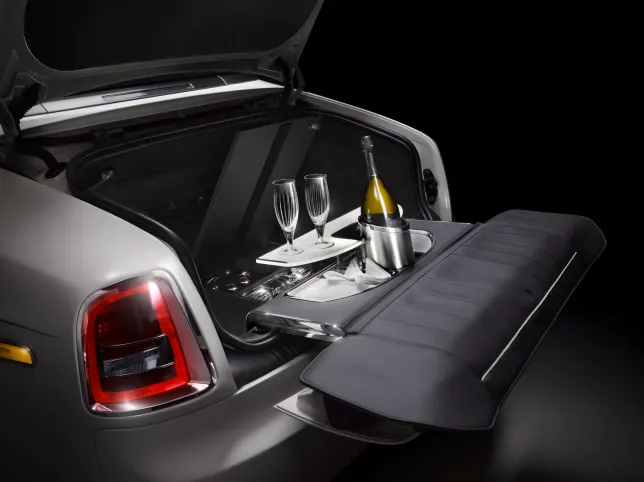
Functions of a Car Backdoor :
- Additional storage:
A car boot provides additional storage space for items not typically kept inside the passenger compartment of a vehicle.
- Convenient loading and unloading:
Some cars have backdoors that open downwards, known as "gullwing" doors, or upwards, known as "liftgate" doors, which can make it more convenient to load and unload items from the trunk.
- Secure storage:
A car's backdoor can be locked and provides a secure place to store valuables while the car is parked.
- Spare tire storage:
Many cars have spare tires stored in the trunk or under the car.
- Carrying larger items:
A car boot can be used to carry larger items such as bicycles, golf clubs, and furniture that would not fit inside the passenger compartment of the car.
Material Selection:
Material selection is the most crucial process before designing a component,
The material selection for a Backdoor can vary depending on the manufacturer and the specific model of the vehicle. Some common materials used in the construction of car backdoors include:
-
Steel: Steel is a durable and cost-effective material that is commonly used in the construction of car backdoors.
-
Aluminum: Aluminum is a lightweight and corrosion-resistant material that can be used to reduce the weight of the vehicle and improve fuel efficiency.
- Carbon Fiber: Carbon fiber is a lightweight, strong, and durable material that is used to make high-performance cars.
The selection of material will depend on the car's design, weight, and safety requirements.
Properties
Aluminum:
- Lightweight: about one-third the weight of steel
- Corrosion resistant
- Good thermal and electrical conductivity
- Low density
Steel:
- Strong and durable
- Low cost
- Good machinability
- High density
Carbon fiber:
- Extremely lightweight
- Very strong and stiff
- Good fatigue resistance
- High thermal conductivity
- Expensive
Each material has its own set of properties and advantages, and the choice of material will depend on the specific application and requirements of the car's design and safety.
Design Considerations:
Backdoor Visibility Criterion:
The backdoor visibility criterion refers to the guidelines and standards that manufacturers must follow to ensure that the rear view of the vehicle is not obstructed by the trunk or boot, also known as the backdoor. This is important for safety reasons, as the driver needs to be able to see behind the vehicle while reversing, changing lanes, and merging onto highways.
A good visibility criterion for a car's backdoor is essential for safety and ease of use when reversing, parking, or changing lanes.
Some car models have a rearview camera integrated into the outer panel of the trunk or boot, which can be used to improve visibility when reversing. Additionally, some cars have a rear window or a rearview camera integrated into the outer panel to improve visibility when reversing.
Boot Space:
The backdoor must be able to provide adequate storage space for the items that will be kept inside, and it should be easy to open and close.
Safety:
The backdoor should be designed to protect the contents of the trunk or boot from the elements and to provide a finished appearance to the vehicle also it should be designed to withstand daily use and exposure to the elements.
Components of a Backdoor:
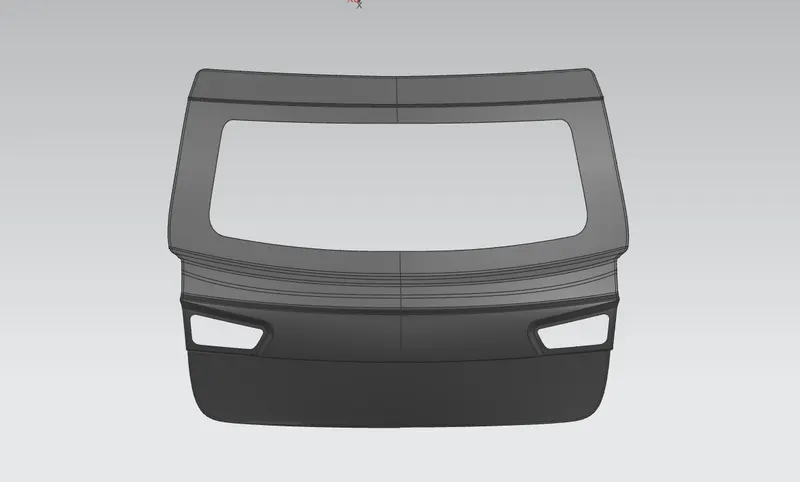
Outer Panel:
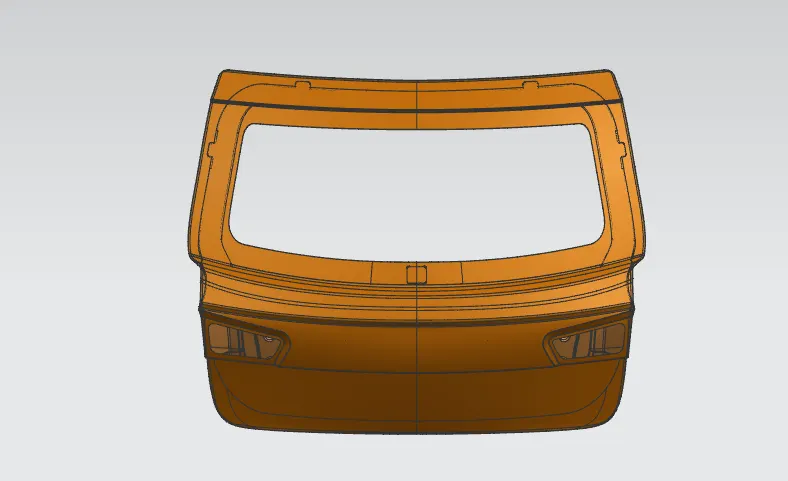
The Outer panel gives the outermost surface of the Backdoor, this provides the aesthetic look to the car. So, this surface needs to be designed by the Styling Engineer
Inner Panel:
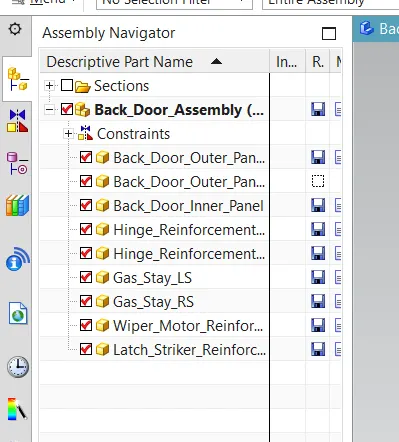
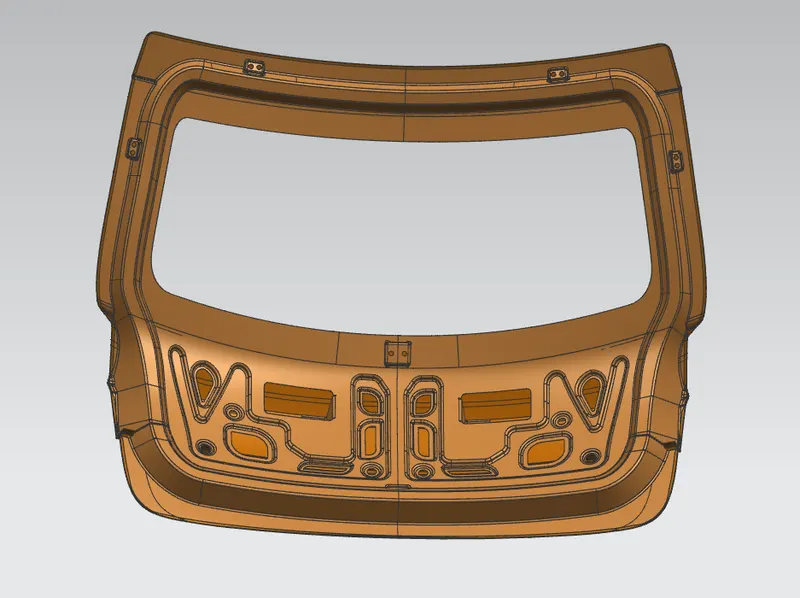
The Inner panel is the most important component of the Backdoor, this needs to be designed by keeping all the necessary calculations in mind all the hinges, Gas stay reinforcement latch striker reinforcement and wiper motor reinforcement needs to be mounted on this surface. and further, it is joined with the Outer panel using Mastic Sealant.
The Inner panel is responsible for the Strength of the Backdoor as it contains all the embosses of the Backdoor which further provides stability to the component.
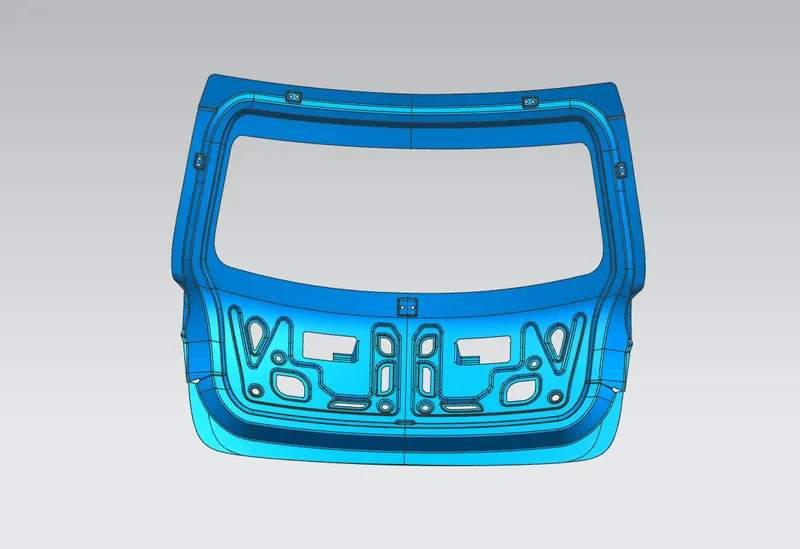
The Inner panel is the most important component of the Backdoor, this needs to be designed by keeping all the necessary calculations in mind all the hinges, Gas stay reinforcement latch striker reinforcement and wiper motor reinforcement needs to be mounted on this surface. and further, it is joined with the Outer panel using Mastic Sealant.
The Inner panel is responsible for the Strength of the Backdoor as it contains all the embosses of the Backdoor which further provides stability to the component.
Hinge Reinforcement:
Hinge reinforcement in a Backdoor assembly refers to the structural support that is added to the area where the hinges are located in order to ensure that the trunk or boot can be opened and closed smoothly and reliably. This reinforcement is necessary because the hinges must bear the weight of the trunk or boot as well as any items that are stored inside, and they must be able to withstand the forces of opening and closing the trunk or boot over time.

Gas Stay Reinforcement:
Gas stay reinforcement in a backdoor assembly refers to the structural support that is added to the area where the gas stay is located in order to ensure that the trunk or boot can be opened and closed smoothly and reliably. The gas stay is a type of strut that helps to hold the trunk or boot open when it is in the open position, and it works by using a pressurized gas cylinder to provide support.
Gas stay reinforcement is necessary to make sure the gas stay can withstand the forces of opening and closing the trunk or boot over time.

Wiper Motor Reinforcement:
Wiper motor reinforcement in a Backdoor assembly refers to the structural support that is added to the area where the wiper motor is located to ensure that it is protected and functioning properly. The wiper motor is a component that powers the wipers, which are used to clear rain, snow, and other debris from the rear window of the car.
Reinforcement is necessary to make sure the wiper motor is protected from damage and to ensure that it can operate smoothly and reliably.
Latch Reinforcement:
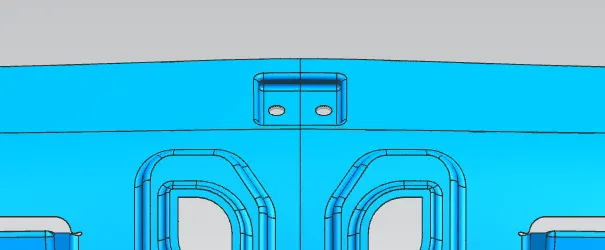
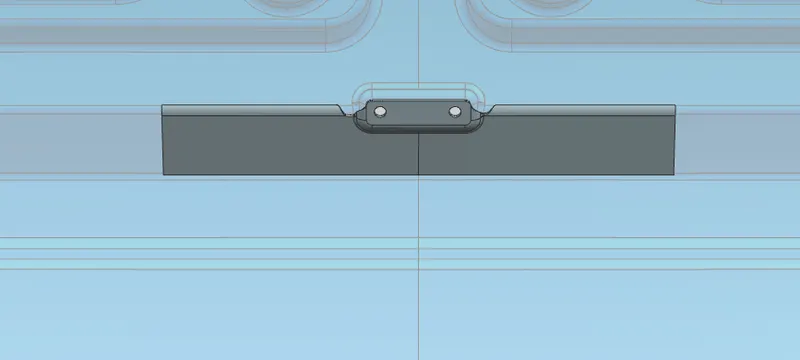
Latch reinforcement in a backdoor assembly refers to the addition of extra support to the latch mechanism in order to improve its strength and security. This can be achieved through a variety of means, such as adding a thicker or stronger latch or installing additional brackets or reinforcement plates around the latch. The goal of latch reinforcement is to make it more difficult for an intruder to break or tamper with the latch, and thus increase the overall security of the backdoor assembly.
Positioning of Latch & striker/ Latch Trajectory:
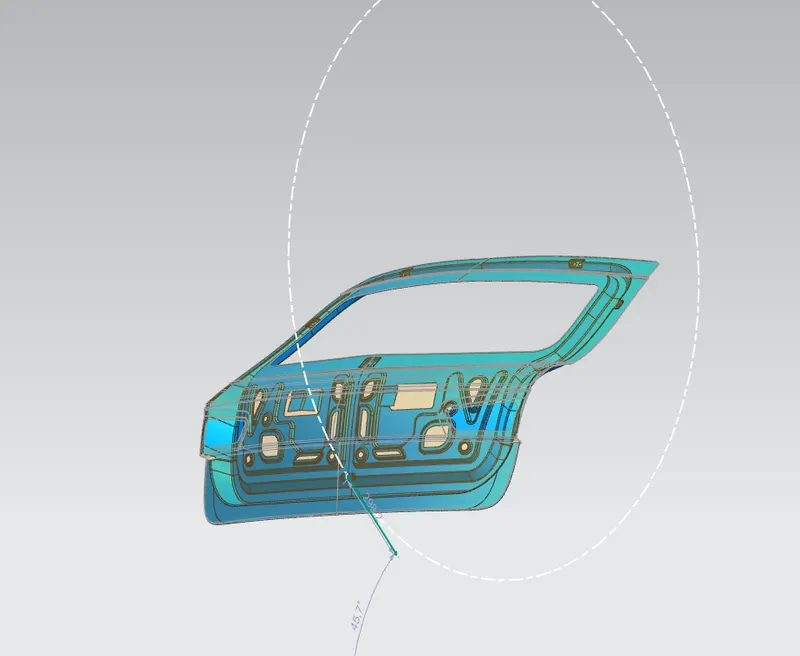
The backdoor swings around the hinge axis, which is the part that rotates. For the backdoor to open and close properly, the latch striker's position and orientation are crucial.
In order to determine the proper position of the hinge with respect to the inner panel, draw a circle in the center at the fixed position. The axis of the hinge passes through the striker at that location.
Draft Analysis:
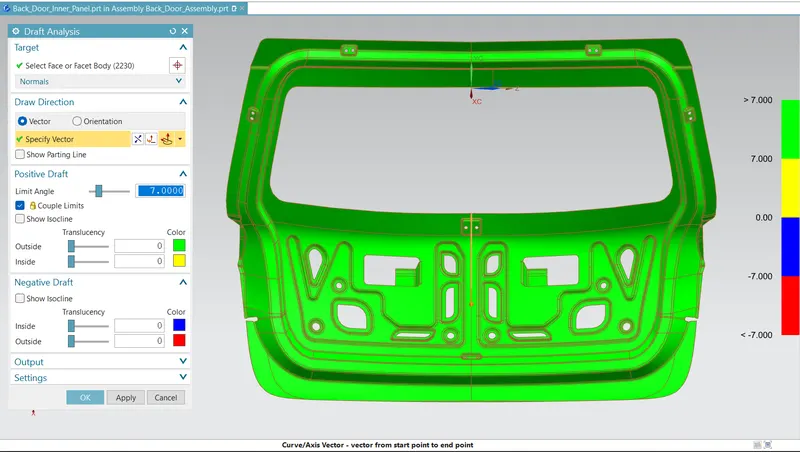
Draft analysis in deep drawing tool and die refers to the evaluation of the angle and slope of the punch and die surfaces to ensure that the metal sheet can be formed into the desired shape without tearing or stretching, and can be easily removed from the tooling.
The angle and slope of the punch and die surfaces is important for the proper functioning of the deep drawing process and must be designed to prevent defects and ensure the final product has the desired shape, size, and surface finish.
The draft analysis is typically performed using specialized software to simulate the deep drawing process and check for proper draft angles.
Assembly-
As in this assembly, a top-down approach was followed whereby the inner panel was created from the styling surface that had been provided using various tools and commands in NX in order to create this inner panel. It is then modeled one by one as per the requirements, and then the parts are fabricated until they are complete.
Top-Down Approach:
Conclusion:
Thus the design of Backdoor of a car has been designed using NX-CAD modeling and Assembly. The back door's outer and inner panels were designed with the help of the styling surface along the tooling direction. Also, the draft angle of more than 7 degrees is maintained while designing the Backdoor to ensure it clears the Draft Analysis and to manufacture the part. Along with that, all necessary calculations were precise and to the point.