Design of backdoor
BACKDOOR DESIGN
OBJECTIVE-
- Come up with a back door design By using the provided styling surface.
- use appropriate design methodologies and provide the necessary reinforcements and embosses.
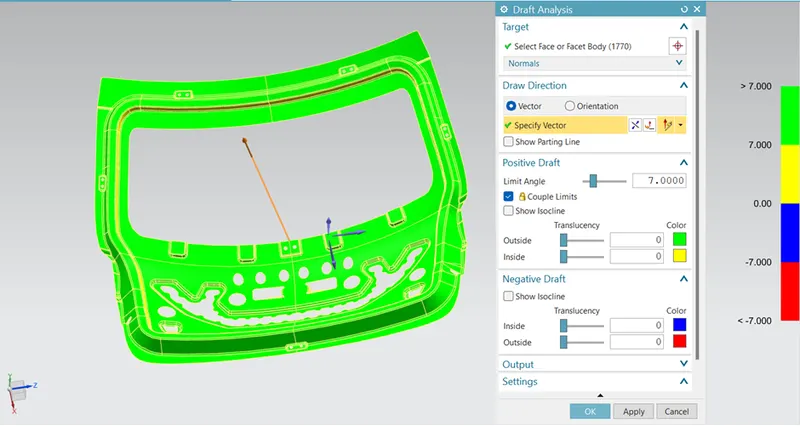
- Perform Draft Analysis along the tooling direction.
SOFTWARE USED-
NX CAD
INTRODUCTION-
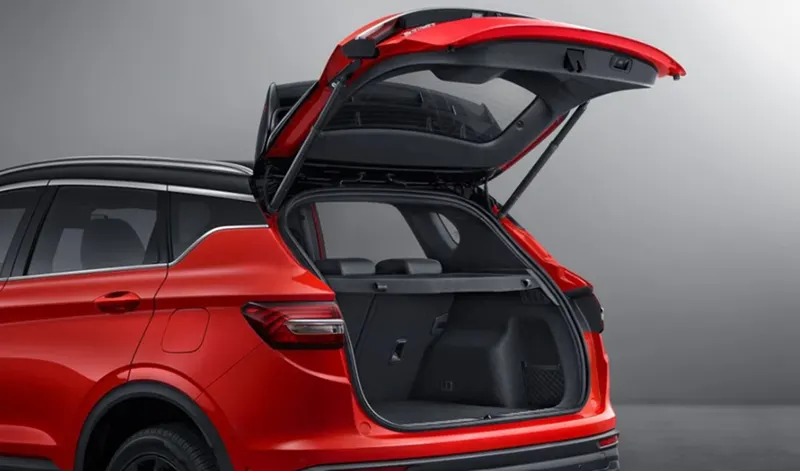
A Door is a hinged part which is used for entry and exit of the vehicles. Backdoor are one of the type of door of the vehicle which are located next to the passenger seat which provides access to the luggage compartment. In the most of the cars, these back door are operated with the help of gas stay which in turn reduces the effort required to lift the door. Some luxury cars have powered backdoor which in turn is driven by an electric motor. This kind of system is also called a powered trunk lid system hatchback or station wagons are sold as 3 doors or 5 doors models. In this case, the rear hatch is classified as door this is because it enters the passenger compartment. The naming is mainly used in Europe countries. In case of safety, the backdoor designed should meet the safety requirement of the rear collision.
DESIGN CONSIDERATION-
- Visibility criteria.
- Opening angle.
- Boot space and accessibility.
- Sealing flange.
- Rear crash regulation.
- Provide reinforcements.
MANUFACTURING PROCESS-
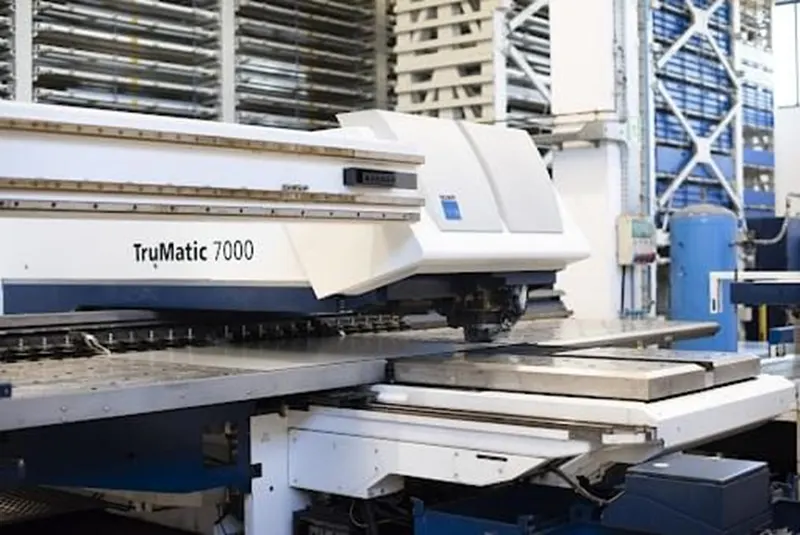
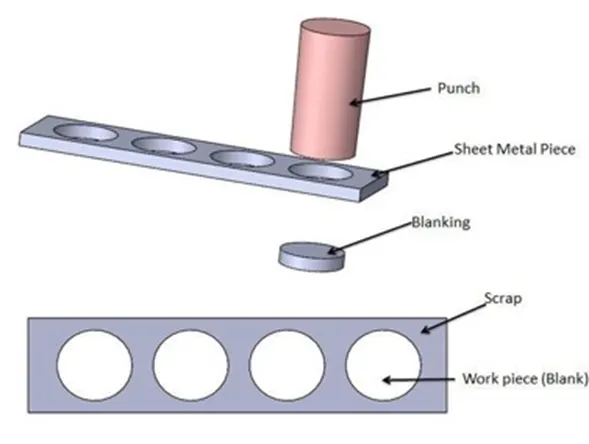
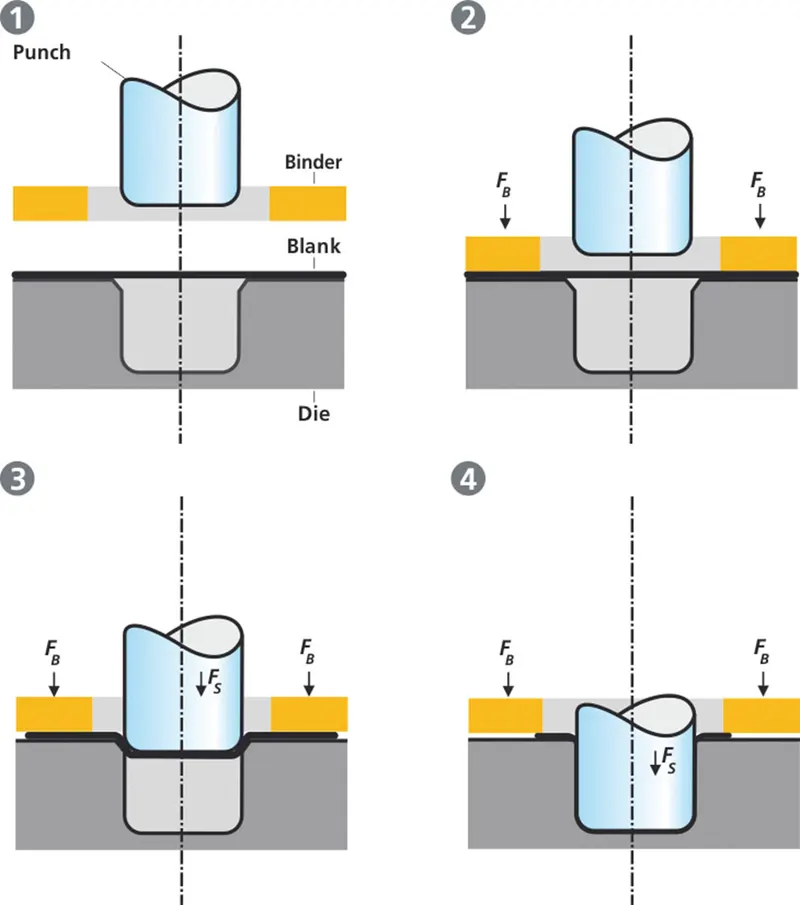
- Punching- It is a cutting operation by which various shaped holes are made in sheet metal. Punching is similar to blanking except that in punching, the hole is the desired product, the material punched out to form the hole being waste.
- Blanking- Blanking is the operation of cutting a flat shape sheet metal. The article punched out is called the blank and is the required product of the operation. The hole and metal left behind is discarded as waste.
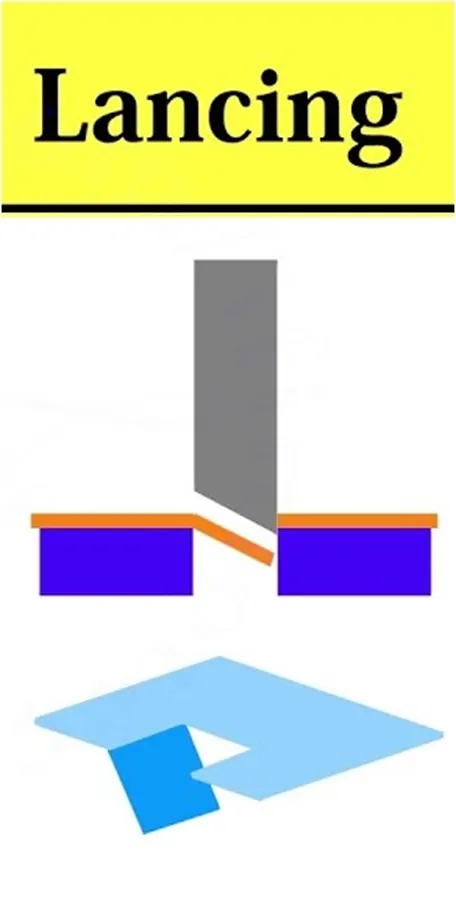
- Lancing- This is a cutting operation in which a hole is partially cut and then one side is bent down to form a sort of tab. Since no metal is actually removed, there will be no scrap.
- Deep drawing- The deep drawing process is a forming process which occurs under a combination of tensile and compressive conditions. A flat sheet metal blank is formed into a hollow body open on one side or a hollow body is formed into a hollow body with a smaller cross-section.
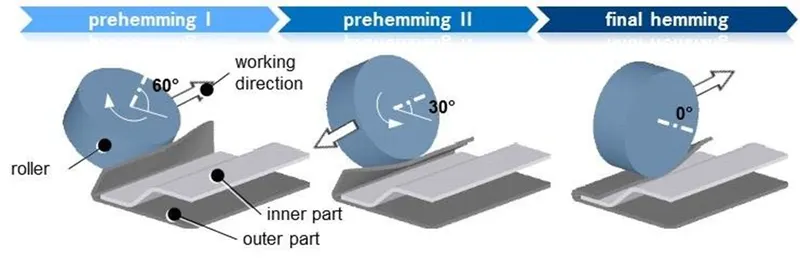
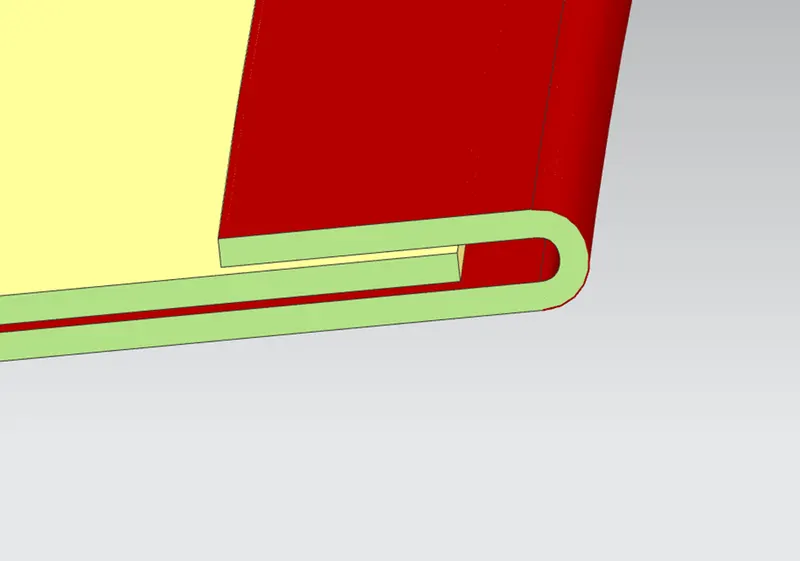
- Hemming- Hemming is a sheet metal forming process in which sheets are joined by bending it usually to 180°. Automotive body panels and automotive parts such as deck-lids, trunk-lids, doors, hoods and tailgates are formed by hemming process. This paper present a systematic review of sheet metal hemming process based on materials used in hemming process, analytical models, experimental and computational investigations made in the domain of sheet metal hemming process.
PROCEDURE-
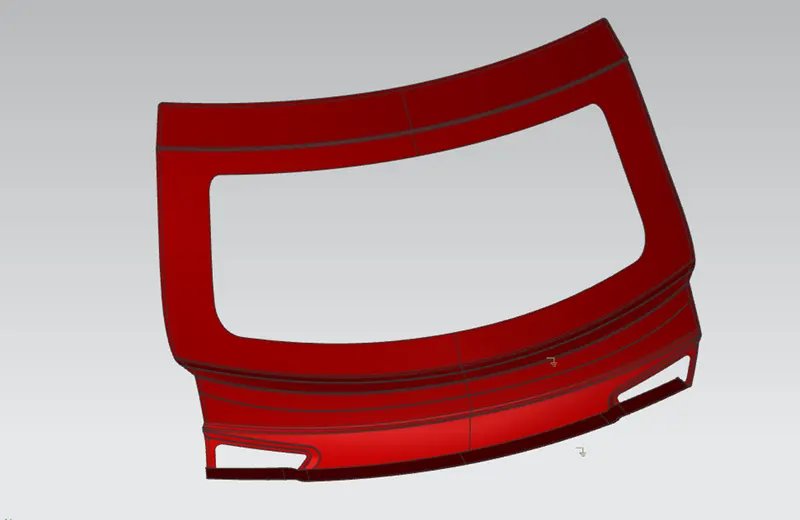
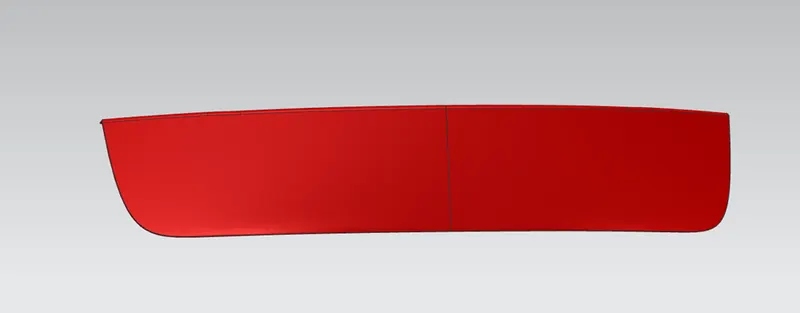
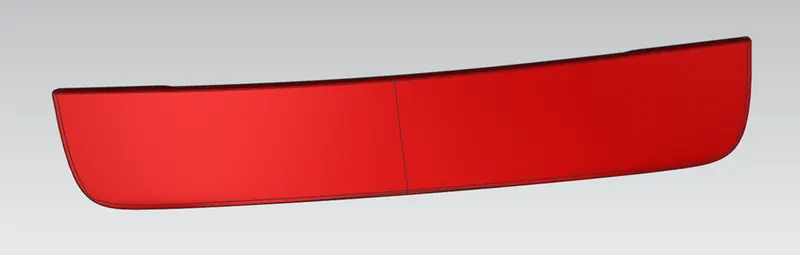
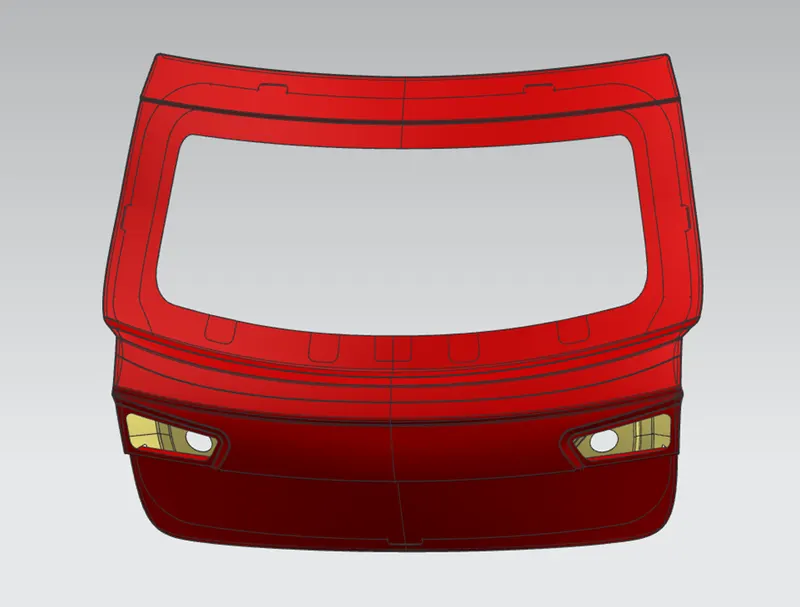
- Backdoor outer panel- Outer panels are the aesthetic elements of a car. It is the styling team who provides the skin for the outer panel. The shape, position and size of the hood should satisfy the safety norms. So while designing the hood we should give more importance to pedestrian safety. The outer panel is attached to the inner panel by hemming. So, it is necessary to provide required hemming flange and reliefs for the hemming operation. We also provide mastic sealants between outer panel and inner panel to reduce vibration.
Backdoor outer panel upper-
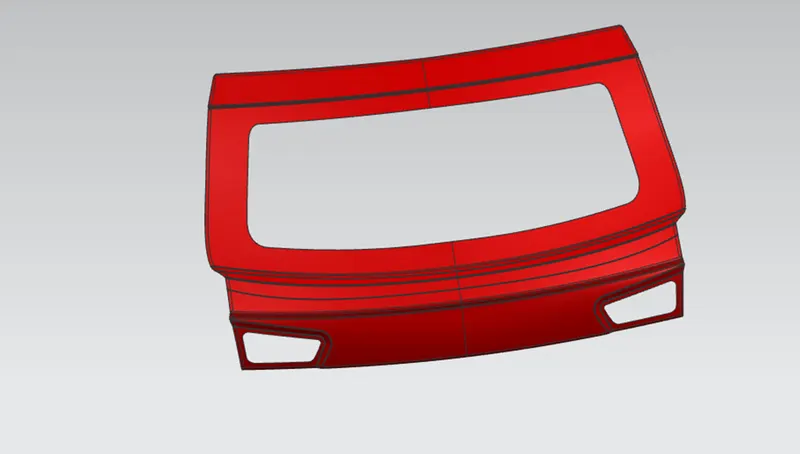
Backdoor outer panel lower-
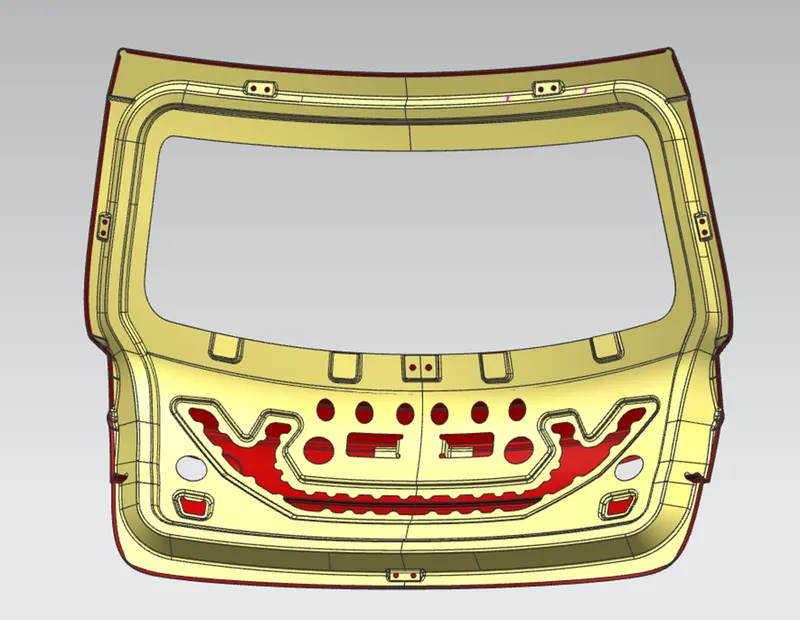
- Backdoor inner panel- The inner panel is one of the most important components of backdoor assembly. It provides strength and helps in dissipation of forces outside the part with the help of embosses made on it. It helps in mounting of accessories like hinges, wiper motor, gas stay, latch & striker etc.The inner panel is produced by either casting or through Deep drawing process.
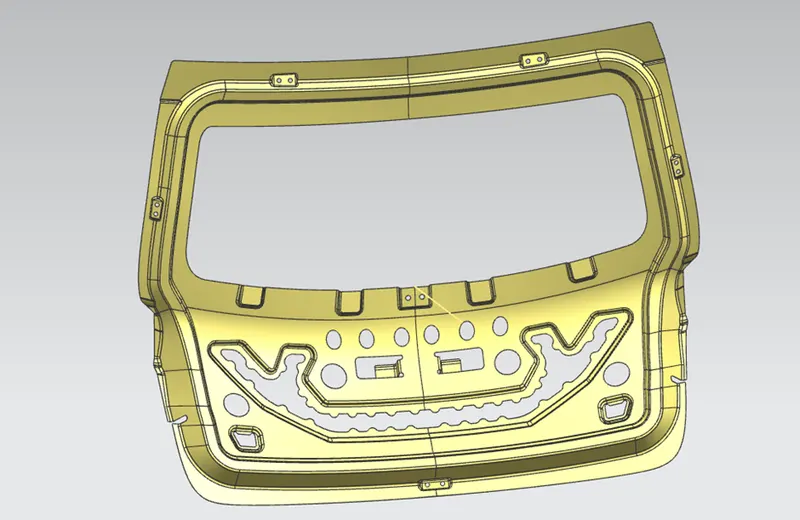
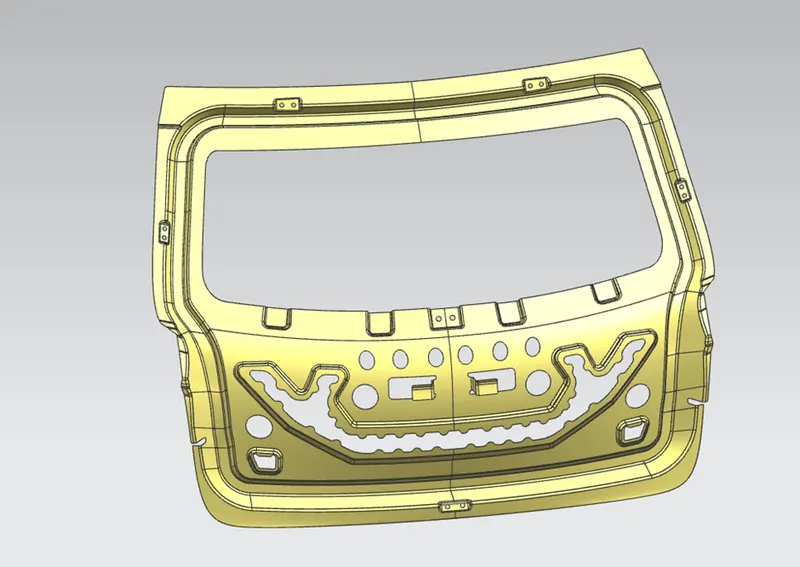
- Emboss- It is provided to give extra strength to sheet metal panel and to help dissipate forces/energy towards a specific direction. Here embosses (Y/V emboss) are designed in such a way so as to direct them towards the outer end of the backdoor.
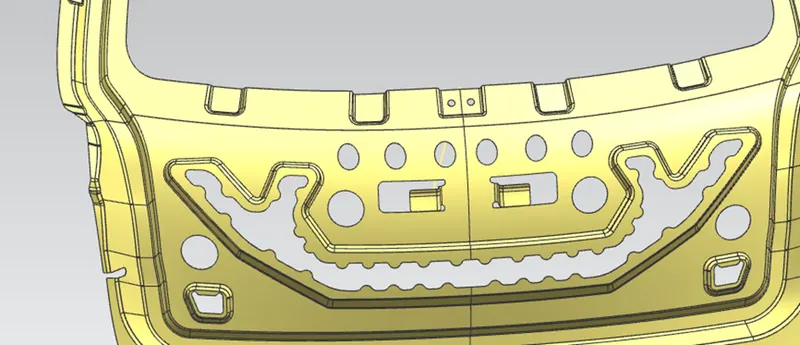
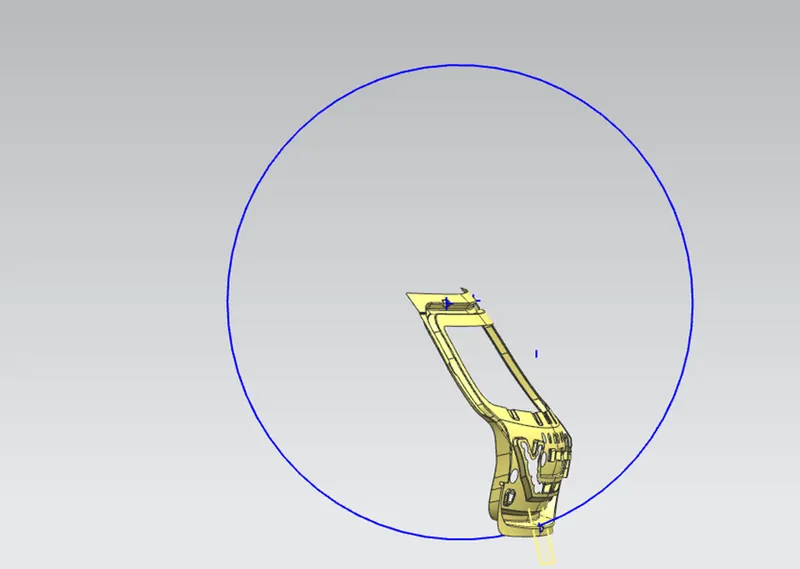
- LATCH AND STRIKER TRAJECTORY- This system is the attachment of hood assembly and vehicle body. The hood latch system must be able to catch the striker of the hood upon closing and instantaneously, as well as automatically, lock. Once in the locked state, it must remain locked and only unlock upon the operator’s control.
- Reinforcements- The reinforcement provided is of 4 numbers which consist of hinge reinforcement, gas stay reinforcement, wiper motor reinforcement and latch/striker reinforcement.
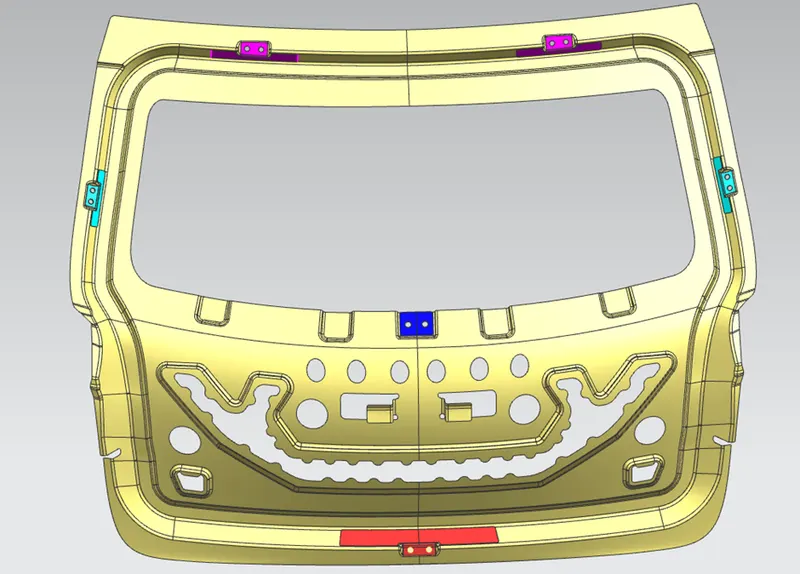
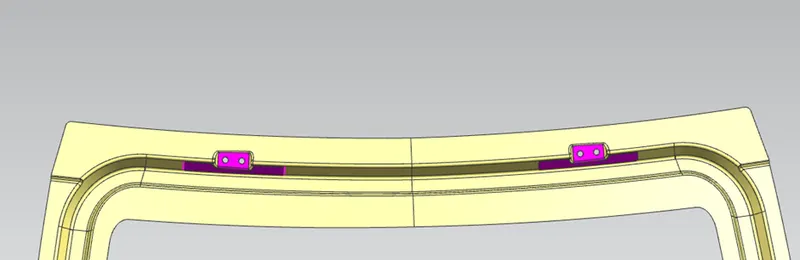
- Hinge reinforcement- Hinges enable the opening and closing of the back door. One end of the hinge is fixed on the backdoor and the other end on the Roof, on both sides. Hinges can be placed outside or inside the backdoor.The hinge reinforcements are added to compensate for the weak region due to the acting load over it.
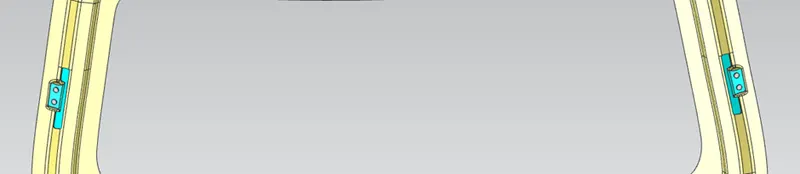
- Gas stay reinforcement- Gas Stay is a device used for supporting the back door in its open position. Gas stay requires no manpower and is engaged into support position automatically as the back door opens. One end of the Gas Stay is fixed on the backdoor and the other end on the Body Side or on the Back door stationary area. Embossing is provided at the Gas Stay mounting area to compensate for weakness and improve strength.
- Wiper motor reinforcement- Wiper is used to wipeout the dust particles/water on the windshield glass which affects the rear visibility. It is actuated by the motor which is mounted on the inner panel. Due to vibration and heat of the motor, inner panel gets deformed which results in loss of strength & rigidity of the panel thus leading to poor NVH. So reinforcement is provided to avoid these conditions.
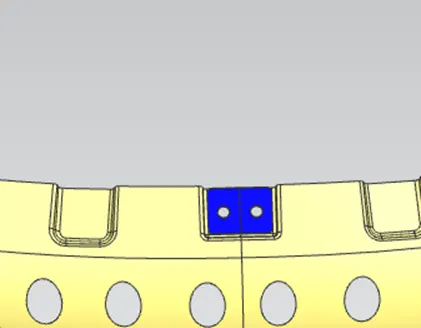
- Latch and striker reinforcement- The Latch & Striker forms the locking mechanism of the backdoor with the car. Due to regular opening, closing, and over slamming of the backdoor, there is stress developed in the Latch and Striker area. To compensate for the same, reinforcements are added in this area.
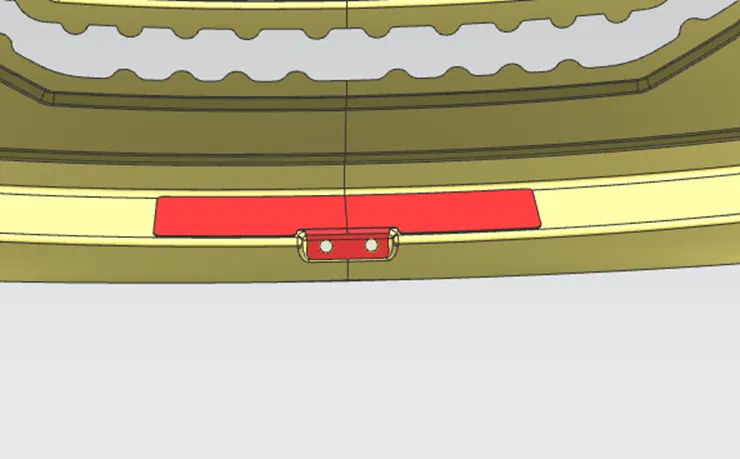
- Mastic Sealants- As we know the outer panel gives the aesthetic look to the vehicle, so we can’t use bolting or spot welding or any other joining technique which damages the aesthetic looks of the panel. Thus mastic sealants are used for joining the Inner panel elements with outer panel. A maximum gap of 5mm is to be maintained in between parts where mastics are to be applied.
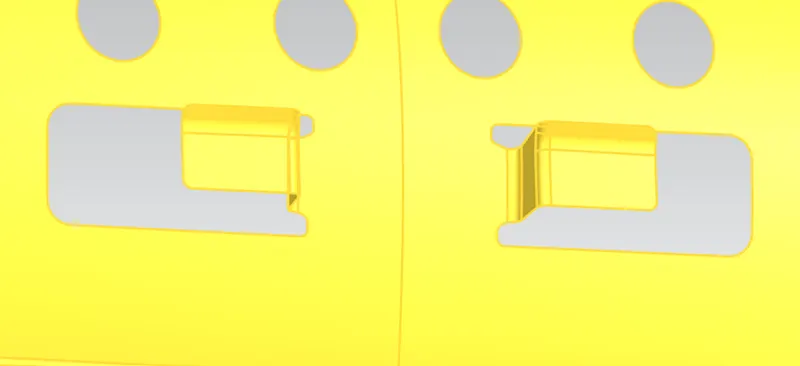
- CORNER RELIEF- Use the Corner Relief tool to add relief to one or more corners of a sheet metal part. When we add relief, sheet metal sections are removed from the model. we can apply corner relief automatically to all corners or manually to individual sets of corners. Relief helps to control sheet metal material behaviour and to prevent unwanted deformation during unbend operations.
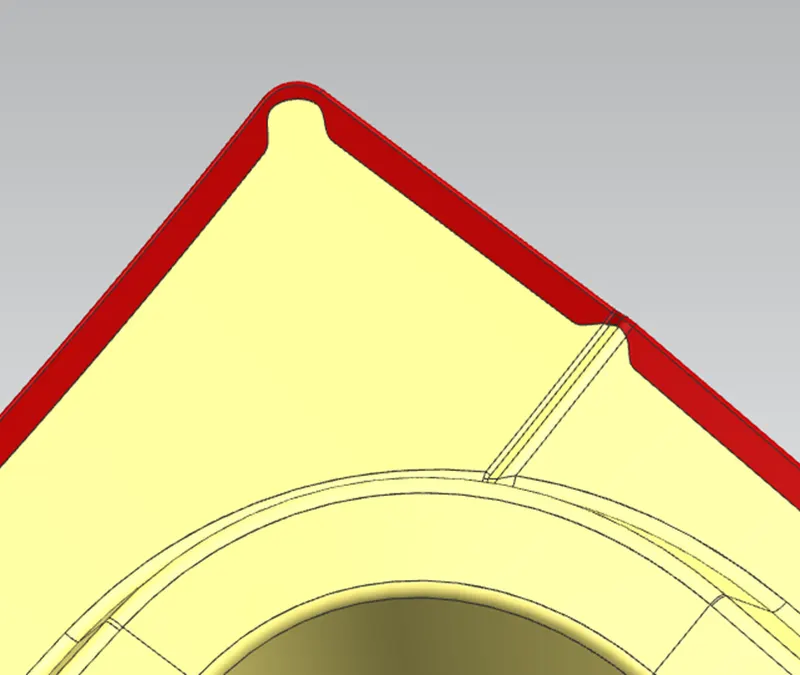
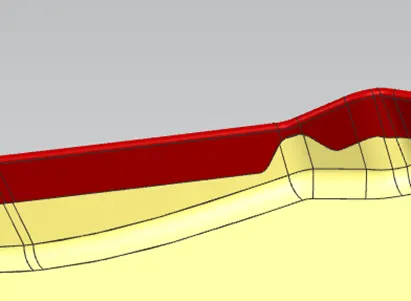
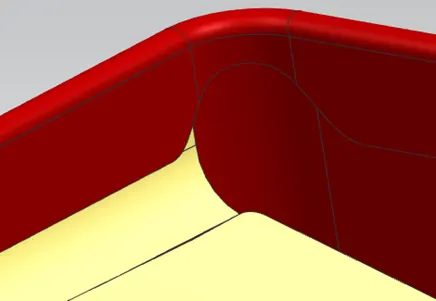
Draft analysis-
Every part which is manufactured from press tool or other forming tools require some positive draft on the faces which are parallel to the tooling direction. If we don’t give draft (Zero Draft) or give negative drafts on these faces it will stick to the mould surface and when the mould is in motion it will destroy surface thus reducing its surface finish. Thus Draft Analysis command enables us to detect if the part we have drafted can be easily ejected or not. It also give insights about the critical zones, so that appropriate changes in the design can be made if needed.
Final design-
CONCLUSION-
Thus the back door design from the given stylling surface and draft analysis is als done on the inner panel to check the manufacturing conditions.