Design of backdoor
Report:
Back Door:
AIM:
To design a back door of the given surface of the product. Developing the given surface Under repairing work to start the design, ensuring the components to be added to get finished Back Door.
SOFTWARE USED: CATIA V5
INTRDUCTION
Back door in a car also having some additional specification that may create additional streangthen to the product. BACK DOOR also called as TAILGATE. Which the outer surface of the back door needs the good surface finisihg and cachie colour added to the surface ultimatly capture the Coustomer who is seeking for the good surface finishing car. Preparing the good product leads to satisfy the costomer to be comnfertable to buy the product. it should be present with enough Cargo space inside the back portion of the car is the Major things to consider.
Types of doors based on working position
- Top Mounted Door
- Side mounted Door
- Bottom Doo
Top Mounted Door
Side Mounted car is the widely useing cars and it seams like comfertable with the Costemer For travel and to keep the Luggages into that without any distubence from that at all.
Advantages:
Comfertable with travell
It gives the good look for the Car
Can lower the Product price
Gives good stylish car
Disadvantages:
Small range of space only available for the occupancy of luggages
Not suitable to carry a bulk Luggages
Side mounted Door
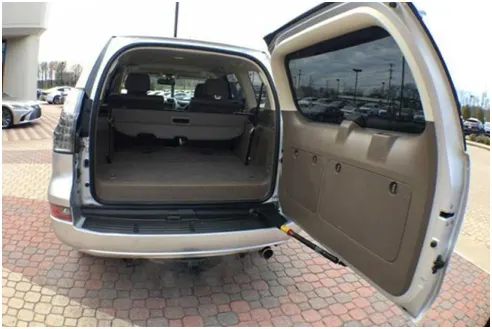
Advantages:
Comfertable with Bulk travell
can put many luggages
Can lower the Product price
It may use as human seating also
Disadvantages:
Poor outlook of the car when compared to top mounted car
Not gives a Rich look
Bottom Door
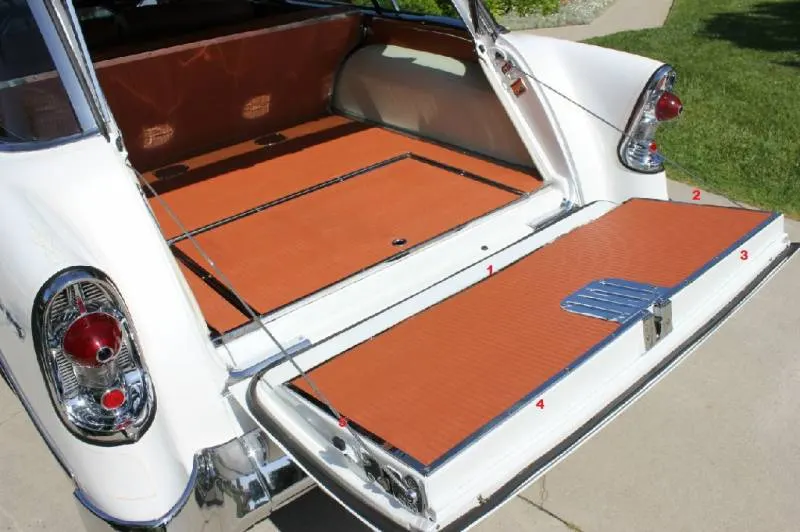
Advantages:
Comfertable with Bulk travell
can put many luggages
Can lower the Product price
Disadvantages:
Poor outlook of the car when compared to top mounted car
Not gives a Rich look.
OPERATION
The main purpose of these operation is to open the back door without heavy efforts, because the backdoor have different parts and the weight of the back door is high, so we will face little dificulties while opening the back door, so we introduced these two types Mechanism.
1. Electrically operated
2. Gas stay powered
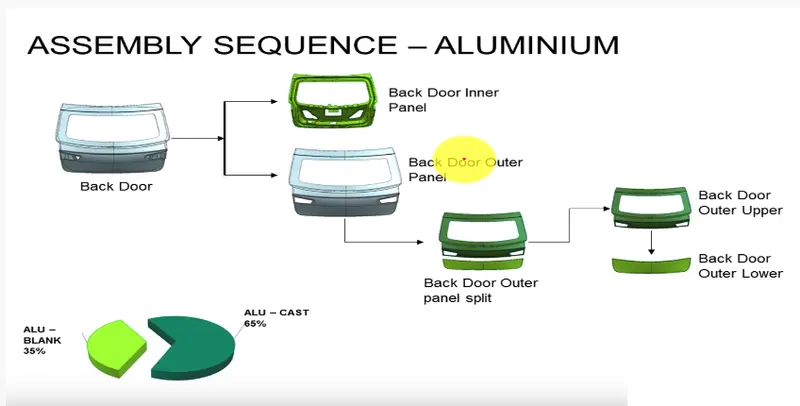
Back Door Assembly:
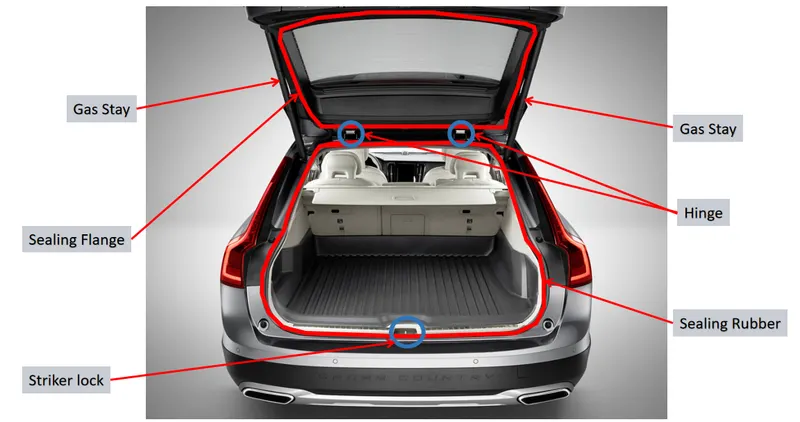
- Inner panel
- outer panel
- hinge
- wiper motor
- latch & stricker lock
- gas stay
- hinge reinforcement
- wiper motor reinforcement
- latch & stricker reinforcement
- gas stay reinforcement
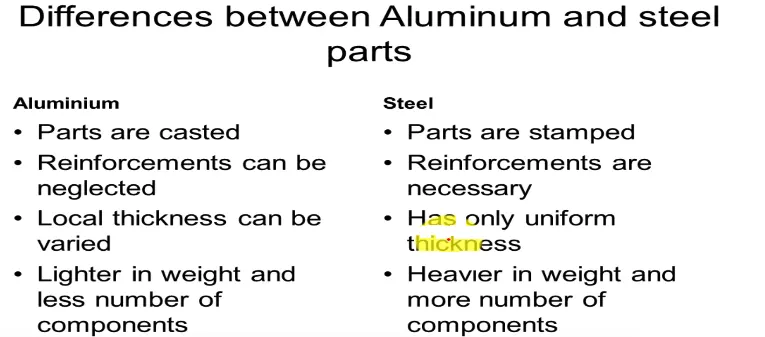
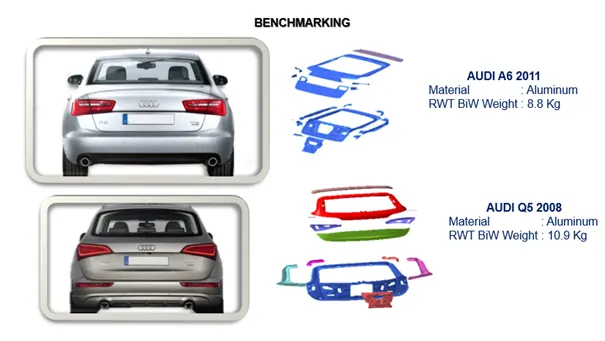
Material selection plays the major role in production of back door. olden days we used steel to create the back door. This is heavy material and it reduces the efficiency of the car and economy. Insted of steel presently in high end cars we are using aluminium to increase the efficiency of the car. and also timber, steel, fiberglass, or aluminum.
FORCE DISTRIBUTION
When an incident happens the force is distributed vis created embosses and splits the force like mentioned below
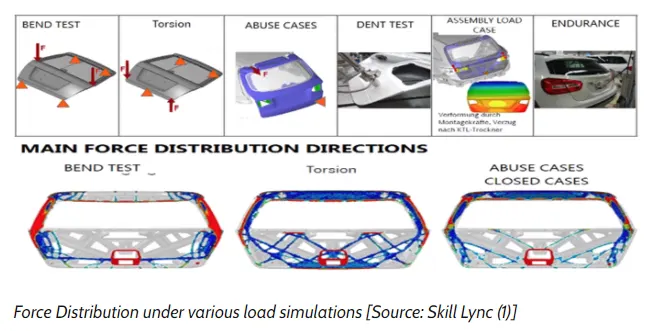
EMBOSS:
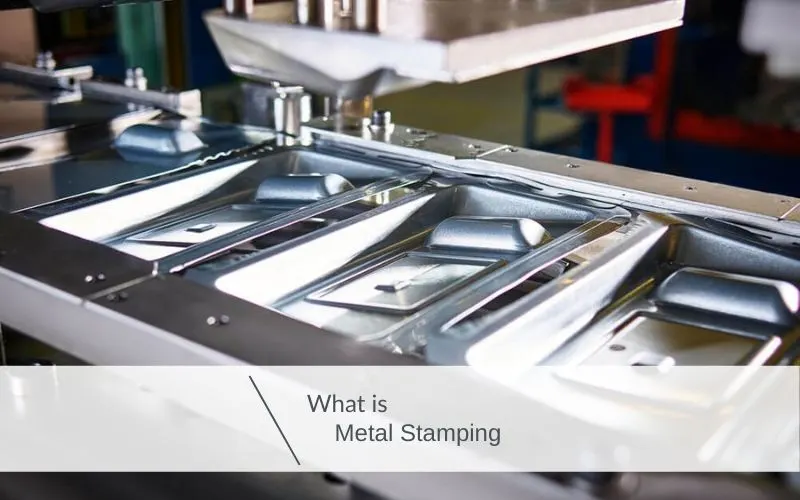
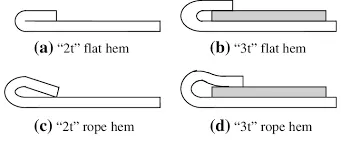
1. Closed hem.
Also known as a crushed hem, a closed hem is completely flush (as opposed to an open hem, which allows for a bit of space in the bend).
Closed hems are the most popular type of hem because they’re so easy to make: the sheet metal is simply flattened onto itself. There are, however, some material limitations.
This type of hem works best with material thicknesses of .040”-.125”. We try to avoid forming material over .125” because the sheet metal is likely to fracture. The flat length of the hem must also be a minimum of 4x the material thickness so that it doesn’t break.
We shape our closed hems by forming sheet metal to 145 degrees, then flattening the material onto itself with a press brake. As a rule, we don’t use closed hems for aluminum, as this type of material is highly susceptible to cracks and fractures.
2. Teardrop hem.
A tear drop hem is a flange that has been bent more than 180 degrees. We use teardrop hems for materials that lack the flexibility required of closed hems. This type of hem is perfect for aluminum and other fragile metals.
3. Open hem.
An open hem features a soft, curved outer edge and an air pocket in its bend. It’s ideal for handles and other applications that come into contact with people. Like a closed hem, an open hem works best with material thicknesses of .040”-.125” and a flat length that’s a minimum of 4x the material thickness.
We shape our open hems by forming sheet metal to 145 degrees, then inserting a shim and flattening the material onto itself with the shim in place. Common gap sizes are 060”, .090”, .125”, .187”, and .250”.
4. Rolled hem.
The purpose of a Rolled hem is to eliminate raw sheet metal edges from a part. This type of hem is common for door and figure edges. Rolled hems provide a nice clean look and a safe-to-handle part.
Think your part could benefit from a hem? At Approved Sheet Metal, we can help you determine the perfect hemming technique for your custom sheet metal part.
sheet metal thikness Followed to be
- Outer Panel - 0.75 mm
- Inner Panel - 0.75 mm
- Reinforcements - 1 mm
DRAFTING
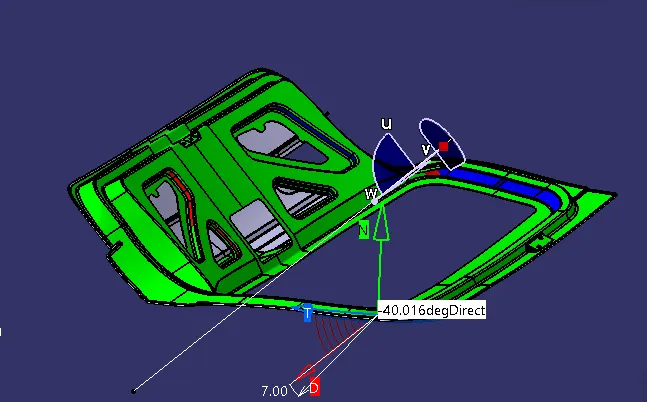
Draft which the product of sheet metal is pressed through the direction and the drafting angle of minimum should be maintained as 7'.
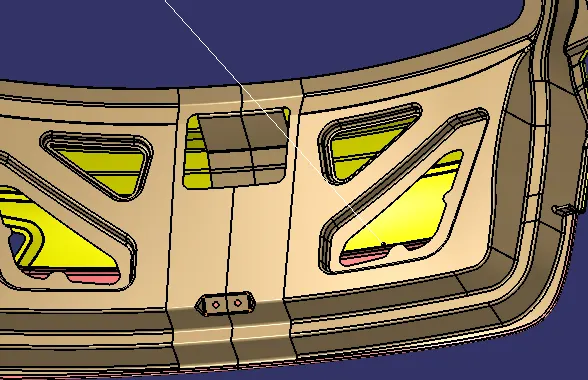
EMBOSS
Creating the emboss to increase the strength of the product
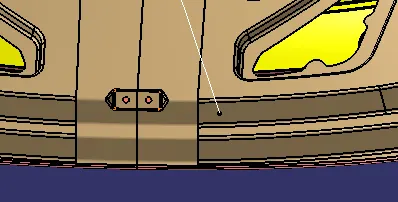
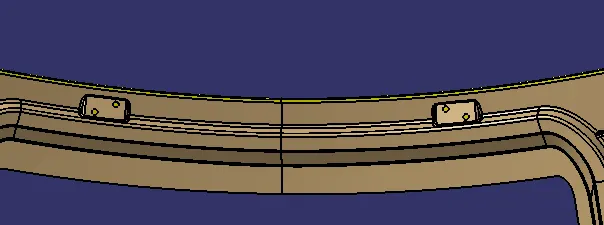
HING MOUNTING
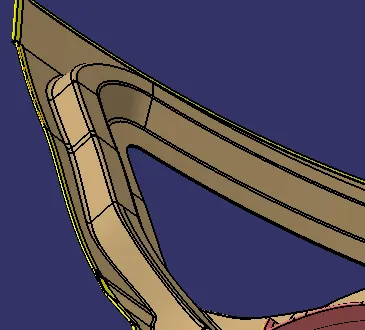
pla
Conclusion
Back Door inner panel and outer panel is designed with a proper requirement the connection of outer panel top and the outer panel bottom is to be present in the design. and the additional features also added into the product.
Finally draft analysis also done with respect to tooling direction the sheet metal thickness is maintaines as 0.75mm for all surface and minimum of 0.2 mm gap between the surface