Design of backdoor
Design of Backdoor
Objective: To design Back door of car using the given Class ‘A’ surface. Using the provided styling surface to come up with a back door and using appropriate design methodologies and make the necessary reniforcements and emboss
Introduction
- It is a hinged board or door at the rear of the vehicle that can be moved up or down during loading and unloading.
- Back Door is also referred as 'Hatch' or 'Tailgate' or 'Trunk-lid' or 'Boot-door'.
- Its the rearmost part of the vehicle which gives access to the trunk and has mounts for tail lamps, hinges, wiper motor, gas stayetc
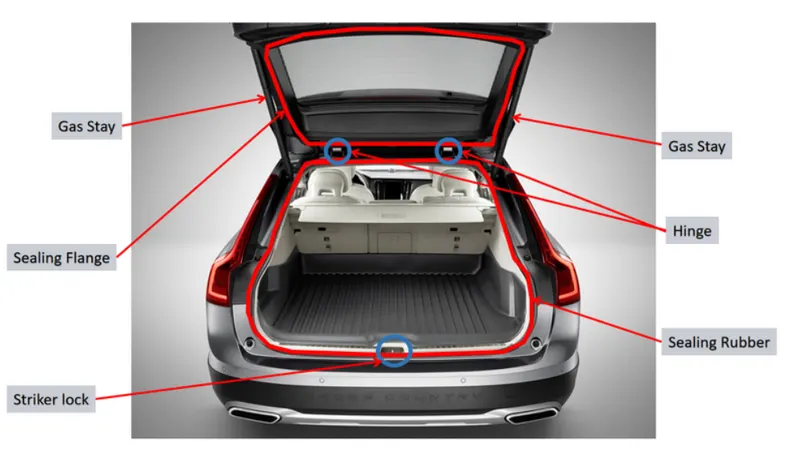
Functions of the Backdoor:
- It protects the occupants and luggage from getting damaged.
- It houses assembly of tail lamps, wiper motor and other components.
- It serves as entry and exit point for luggage/passengers.
- It houses windshield glass which helps in rear visibility.
- Parking sensors, rear view camera are mounted on it.
Types of Backdoor
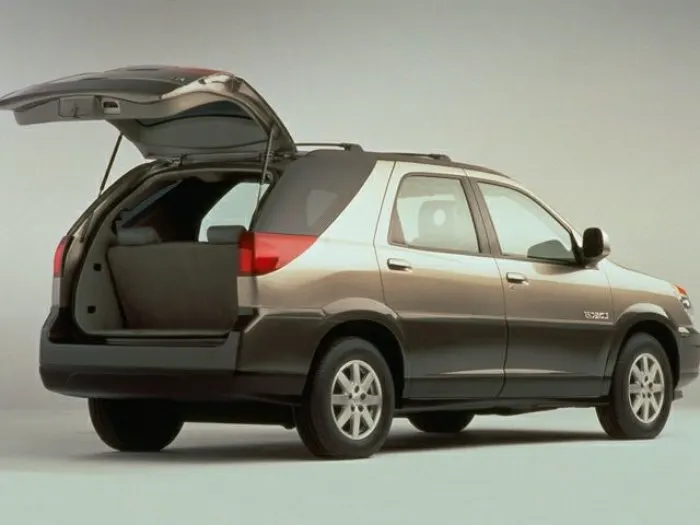
- Top mounted
- These type of back doors are used in a station wagon, pickup truck and some other sports utility vehicles.
- Today’s modern cars use top mounted tailgating systems which are both powered and also gas stay supported.
- These tailgates provide greater rear visibility compared to other types.
- Side mounted
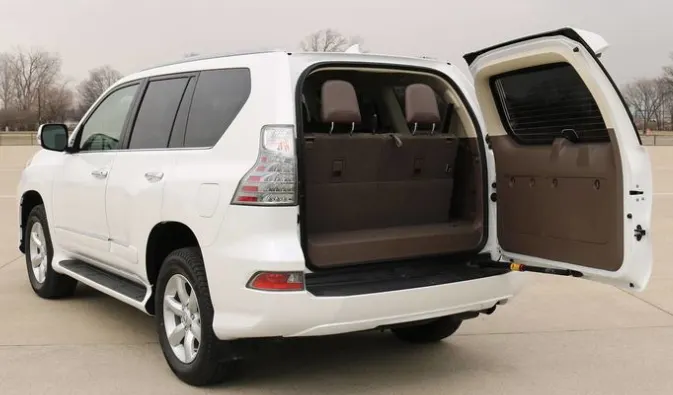
- It is generally used in van type MPVs, SUVs, pickup truck vehicles.
- These side mounted door/barn doors are a lot easier compared to top mounted ones.
- These doors are generally small in size and can be easily accessed.
- These doors are more convenient for the goods handlers carrying lengthy objects, long pipes where one door is kept open.
- It also saves accidental head impacts. It is a lot easier to load /unload things in vehicles having side-mounted doors.
- Bottom mounted
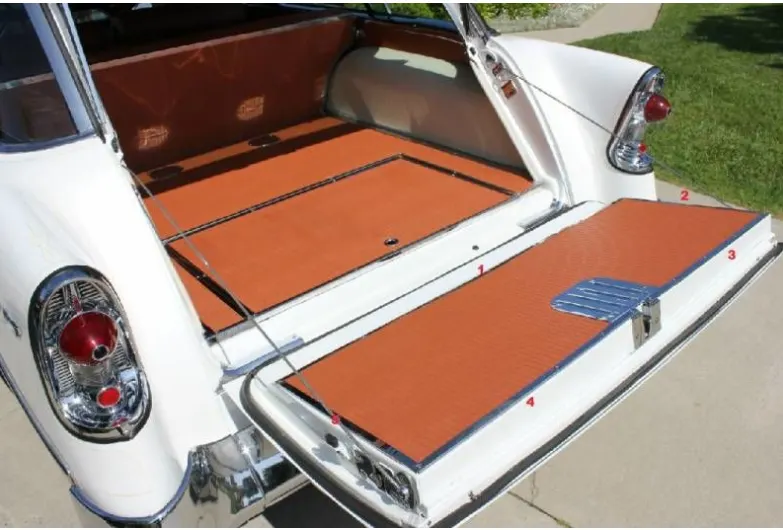
- Bottom type or split type backdoor system is used in estate type cars, pickup trucks and some luxury SUVs.
- These are most convenient type of backdoor in which the bottom split is used as a support or even as a table for the touring people.
Design Consideration:
- Visibility Critiria.
- Latch and Stricker position
- Hing Position
- Gas Stay Position
- Space Availability
- Drain Hole
- Hemming and Relief area's
Components of back door.
- Outer Panel
- Inner Panel
- Hinge Reinforcement
- Latch and Stricker reinforcement
- Gas stay reinforcement
- Wiper Motor Reinforcement.
Input Data:
- Class A of Back Door
- Outer Panel Thickness - 0.75mm
- Inner Panel Thickness - 0.75mm
- Reinforcement Thickness - 0.75mm
Components to be designed:
1) Outer panel
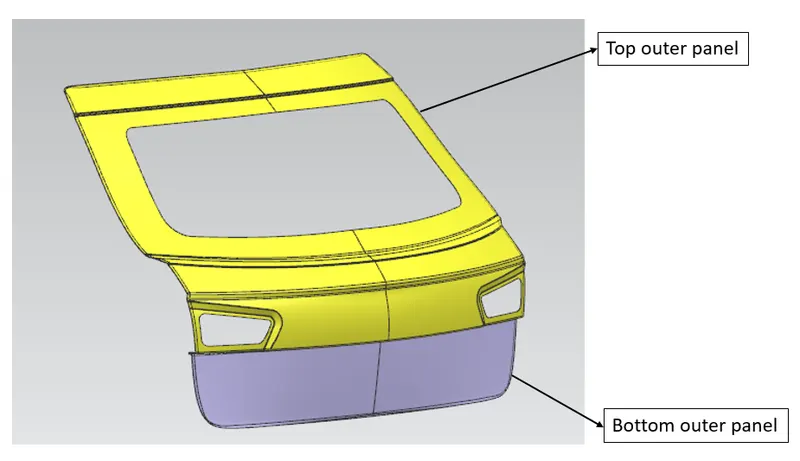
- It is the outer styling skin surface of the back door.
- It is provided with multistage coatings which has property of scratch resistance, rust prevention etc.
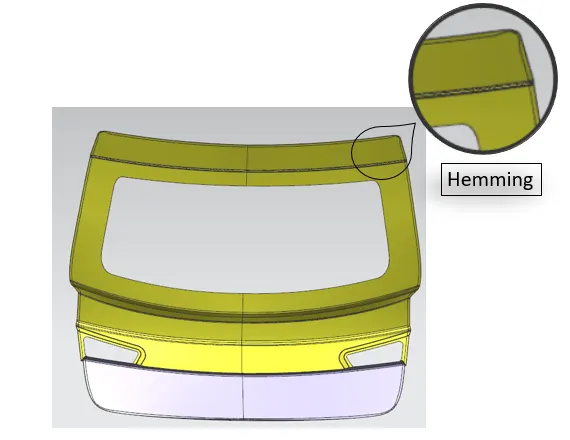
- It is wrapped around the inner panel through hemming process.
Hemming:
- Hemming is a forming operation in which the edges of the sheet are folded over another part in order to achieve a tight fit.
- Usually hemming operations are used to connect parts together, to improve the appearance of a part and to reinforce part edges.
- In car part production, hemming is used in assembly as a secondary operation after deep drawing, trimming and flanging operations to join two sheet metal parts (outer and inner) together.
- Typical parts for this type of assembly are hoods, doors, trunk lids and fenders.
2) Inner Panel
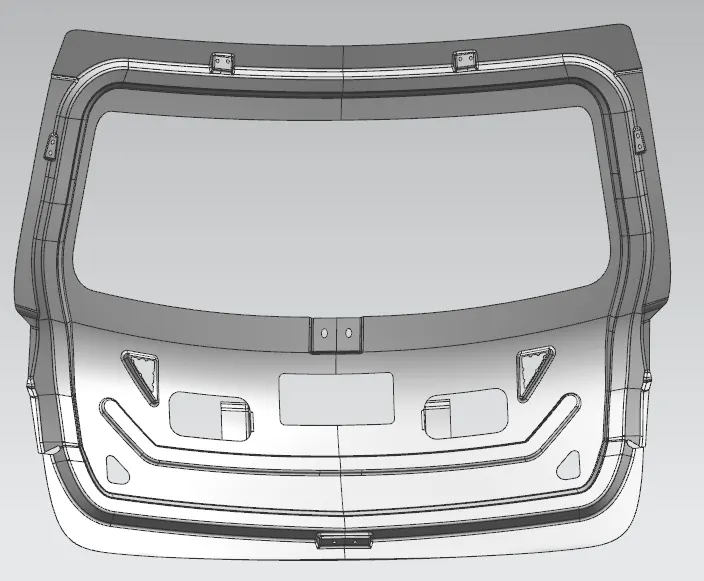
- The inner panel is one of the most important components of backdoor assembly.
- It provides strength and helps in dissipation of forces outside the part with the help of embosses made on it.
- It helps in mounting of accessories like hinges, wiper motor, gas stay, latch & striker etc.
- The inner panel is produced by either casting or through Deep drawing process.
- Mostly aluminum part is casted, steel inner panel are manufactured by deep drawing process.
- If deep drawn, there must be a tooling direction through which that panel must be deep drawn.
Tooling Axis:
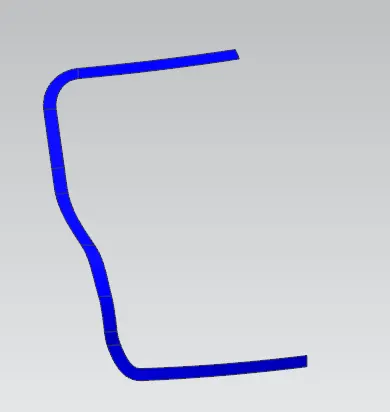
Sealing Flange:
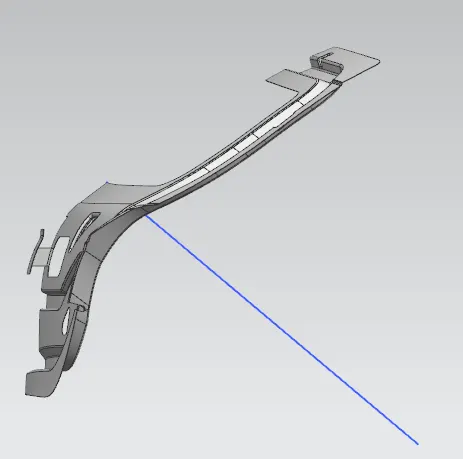
- It is that section of the inner panel which enables the backdoor to sit over the rear body side of the car.
- Its design is important as it decides how a backdoor is mounted on the rear body side of the car and also restricts any external matter to enter inside the vehicle
Embosses:
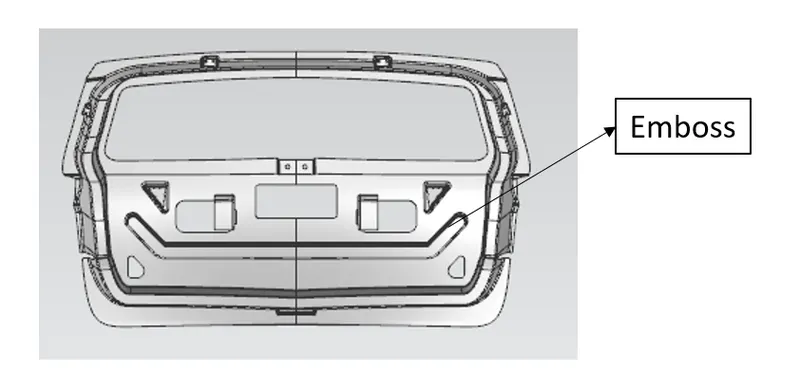
- It is provided to give extra strength to sheet metal panel and to help dissipate forces/energy towards a specific direction.
- Here embosses (Y/V emboss) are designed in such a way so as to direct them towards the outer end of the backdoor as shown in the image.
Mastic Sealants:
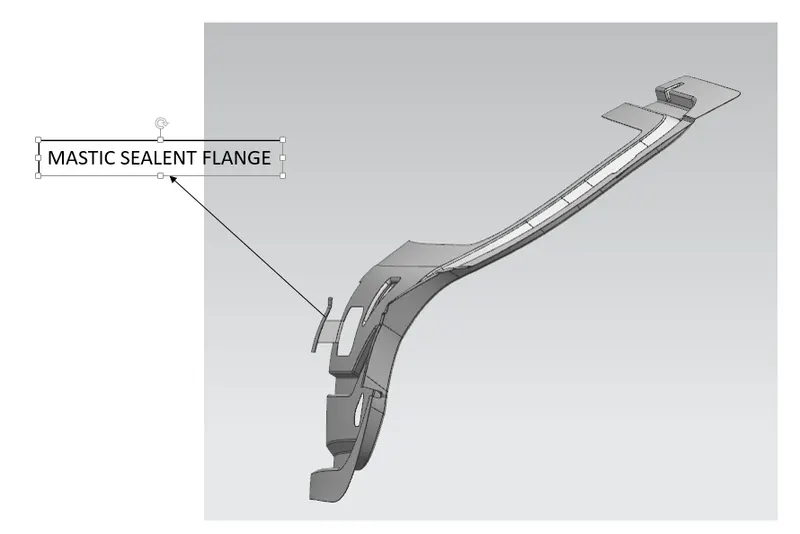
- As we know the outer panel gives the aesthetic look to the vehicle, so we can’t use bolting or spot welding or any other joining technique which damages the aesthetic looks of the panel.
- Thus mastic sealants are used for joining the Inner panel elements with outer panel.
- A maximum gap of 5mm is to be maintained in between parts where mastics are to be applied.
Reinforcements
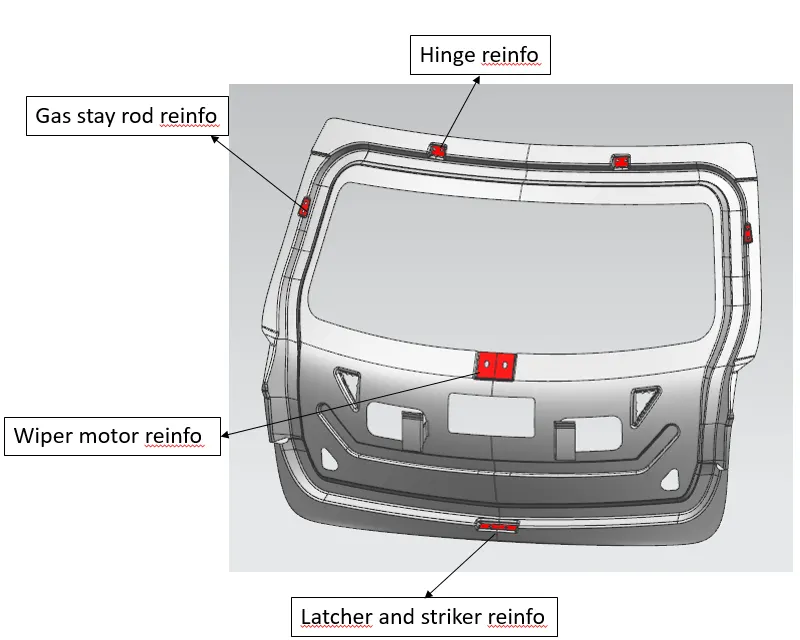
- Reinforcements are generally placed to increase the strength of the panel in localized areas which is relatively small compared to sheet metal parts for absorbing loads imposed thereon and dissipating such loads throughout the panel assembly to help maintain rigidity of the panel assembly.
- The reinforcements are usually 0.75-1.5mm thick as opposed to 0.75mm thick panel used in this part
- Hinge Reinforcement
- Latch and Stricker reinforcement
- Gas stay reinforcement
- Wiper Motor Reinforcement.
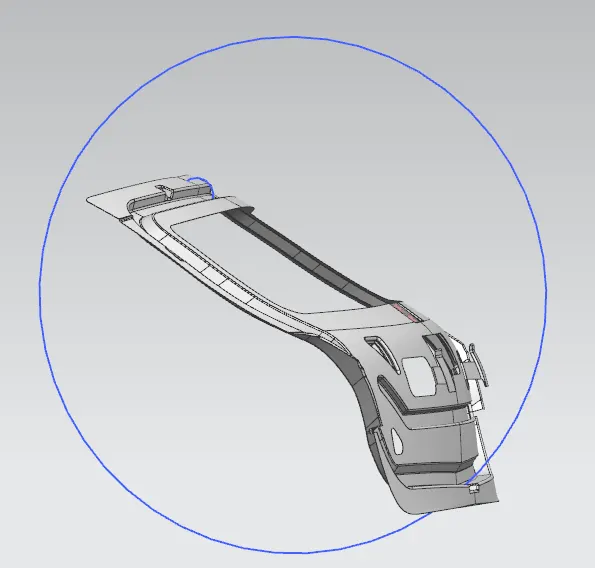
Positioning of Latch & striker/ Latch Trajectory:
- Backdoor is the swinging part which rotates about hinge axis.
- The position and orientation of latch striker is important for proper opening and closing of the backdoor.
- The positioning is done by sketching a circle with center as the axis of the hinge which passes through the striker at appropriate position with respect to inner panel.
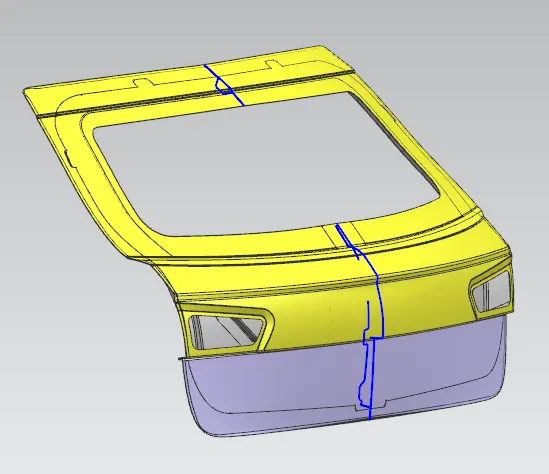
Section line:-
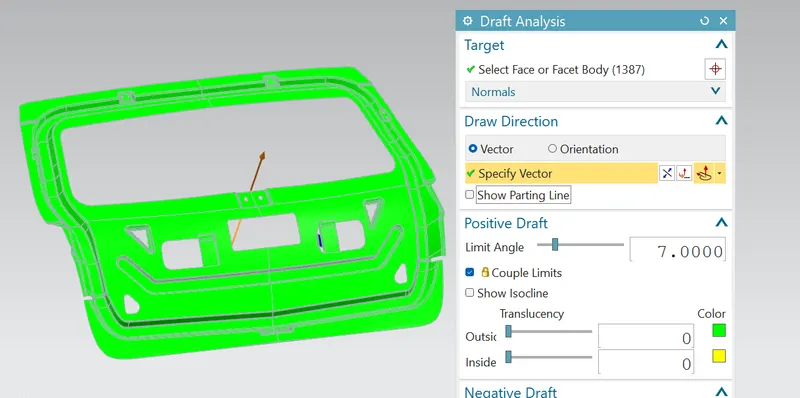
Analysis: Draft analysis
- Every part which is manufactured from press tool or other forming tools require some positive draft on the faces which are parallel to the tooling direction.
- If we don’t give draft (Zero Draft) or give negative drafts on these faces it will stick to the mould surface and when the mould is in motion it will destroy surface thus reducing its surface finish.
- Thus Draft Analysis command enables us to detect if the part we have drafted can be easily ejected or not. It also give insights about the critical zones, so that appropriate changes in the design can be made if needed.
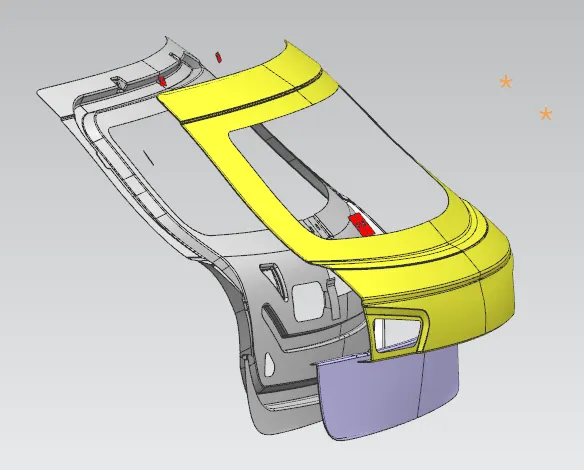
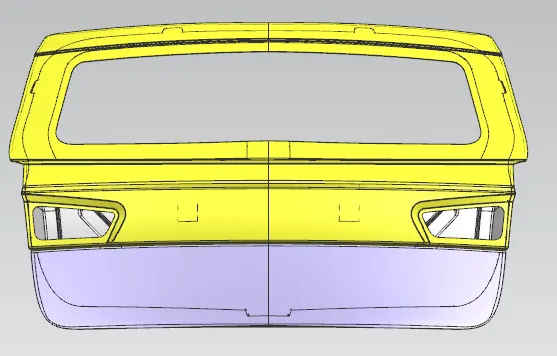
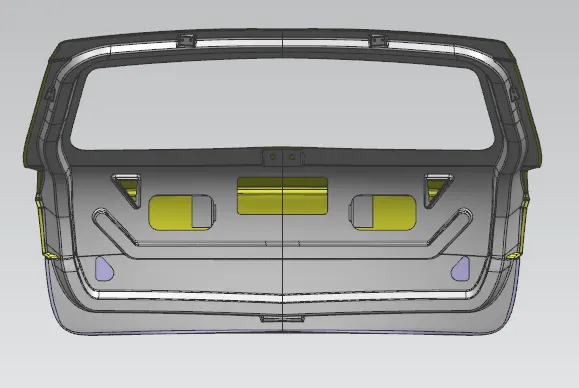
Exploded View of Assembly
Conclusion:
- In this challenge we learnt about the designing of back door using the given input surface.
- The various Parts required to design a back door like sealing Flange, Gas stay, Hinge Mounting And striker mounting.
- Hence as per the objective the Back Door is designed using nx12