Design of backdoor
FINAL PROJECT OF BACK DOOR
Aim:
To design the Back door (Tail gate) of a car from the styling surface provided using NX CAD. The ultimate aim is to design the Back Door by following the Industrial standards.
Introduction:
A door is a hinged part which is used for entry and exit of the vehicles. Back doors are one of the type doors of the vehicle which are located next to the passenger seat which provides access to the luggage compartment. In most of the cars, these back doors are operated with the help of gas stay which in turn reduces the effort required to lift open the door. Some luxury cars have powered backdoor which in turn is driven by an electric motor. This kind of system is also called a powered trunk lid system. Hatchback or station wagons are sold as 3 door or 5 door models. In this case, the rear hatch is classified as door this is because it enters the passenger compartment. The naming is mainly used in Europe countries. In case of safety, the back door designed should meet the safety requirement for the rear collision
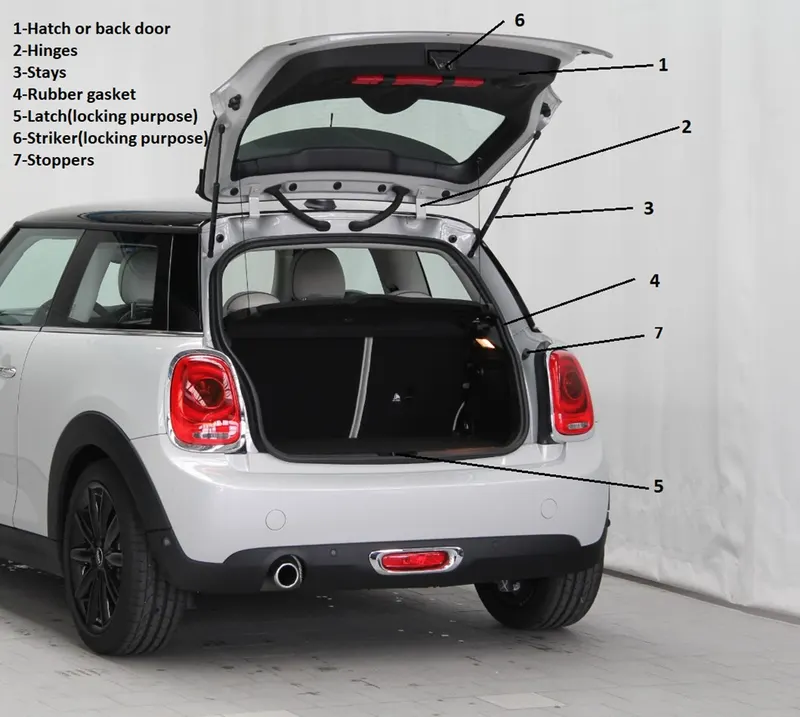
The material used in making the backdoor of the car is mainly steel but nowadays Aluminium is also used in making the panels.
The main advantage of Aluminium is that the density of Aluminium is very less as compared to steel so it reduces the overall weight of the car.
But Aluminium is more costly as compared to steel.
TYPES OF DOOR OPENING:
Top-mounted door
This type of back doors is used in a station wagon, pickup truck and some of the sport utility vehicles. Today’smodern cars use top-mounted tailgating systems which are both powered and also gas stay supported. These top mounted tailgates provide greater rear visibility compared to side-mounted or bar doors which have canter pillars in it.
Side-mounted door
As the name signifies side-mounted doors are the one which is used in the van type MPVs, SUVs, pickup truck vehicles. These side-mounted doors or barn doors are a lot easier compared to top-mounted doors. These doors are generally smaller in size and can be easily accessed.
Different processes used for manufacturing the Back Door:
Deep Drawing:
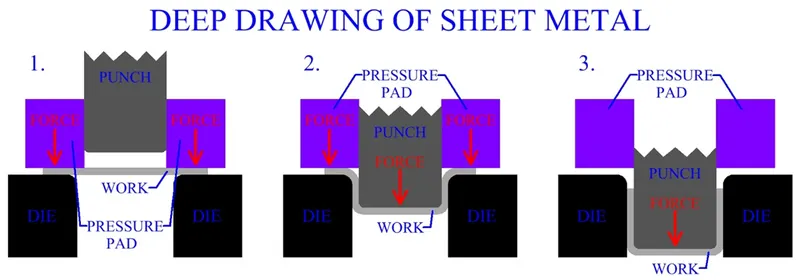
The metal deep drawing process is an effective method of manufacturing cups, cans, and other similar deep drawing products. The deep drawings having 2 main categories.
- First-stage drawing: The blank shape of metal is placed on the die and in contact with the punch. When the metal specimen is a flat piece of sheet metal is used in forming and finish the product. Initially, the punch moves in a downward direction. The outer rim of the blank is subjected to pure radial drawing (drawing toward vertical axes) between the die and blank metal. The metal becomes a bend and slides over the die and is also stretched between die and punch. The metal in the vicinity of the punch head and contact with it bend and slide over the radii and stretch over the punch head.
- Redrawing: The components drawn from the first stage again it is redrawn convert into more depth to form a cup shape in the die and punch. The second stage of drawing is called redrawing.
Hemming:
The inner & outer panels are joined by the process of hemming. Hemming is a forming operation in which the edges of the sheet are folded over another part in order to achieve a tight fit. Usually hemming operations are used to connect parts together, to improve the appearance of a part and to reinforce part edges. In car part production, hemming is used in assembly as a secondary operation after deep drawing, trimming and flanging operations to join two sheet metal parts (outer and inner) together. Typical parts for this type of assembly are hoods, doors, trunk lids and fenders. The accuracy of the hemming operation is very important since it affects the appearance of the surface & surface quality. Material deformations, which occur while the hemming process, can lead to dimensional variations & other defects in parts. Typical hemming defects are splits and wrinkles in the flange, material overlaps in the corner areas. So, it is very important to use simulation software tools to better understand the hemming process and minimize the number of “trial & error” during the try out.
There are different types of hemming operations:
Conventional die hemming
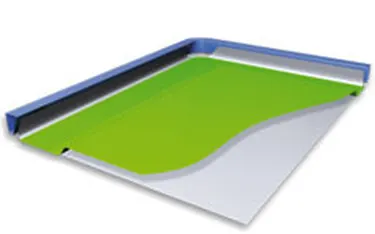
In conventional die hemming, the flange is folded over the total length with a hemming tool.
Roll Hemming
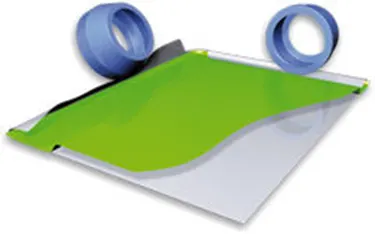
In roll hemming, the hemming roller is guided by an industrial robot to make the flange.
COMPONENTS OF BACKDOOR:
- Inner panel
- Outer panel
- Hinge reinforcement
- Gas stays reinforcement
- Wiper motor reinforcement
- Latch & striker reinforcement
DESIGN CONSIDERATION OF A BACKDOOR:
- Functional Requirement of Hinge and gas stay
- Rear visibility criteria
- Luggage volume area
- Crash Analysis
- Bend Test, Dent Test, Torsion Test & Endurance Test
- Rear Crash Regulation
- Gap and flushness Requirements
DESIGN OF BACKDOOR:
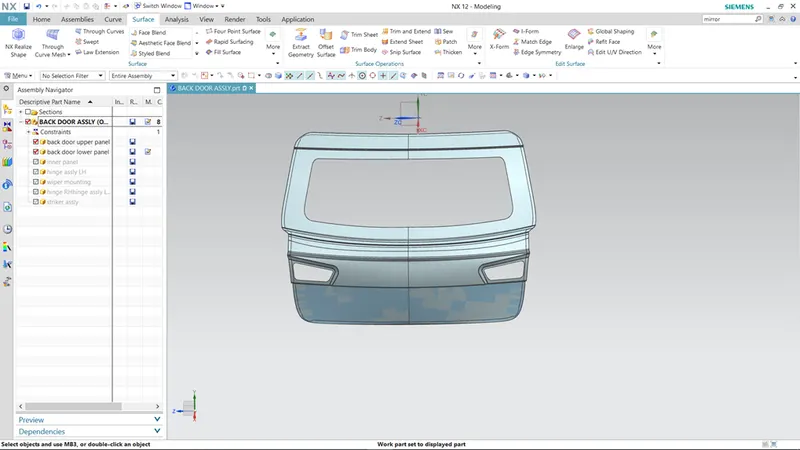
The Outer Panel is the styling surface of the back door design. Other components of the backdoor are designed with reference to the outer panel surface. It acts as the outer cover & deals with the aesthetics of the car.
In this design outer panel is divided into two-part.
- Outer Upper Panel
- Outer Lower Pane
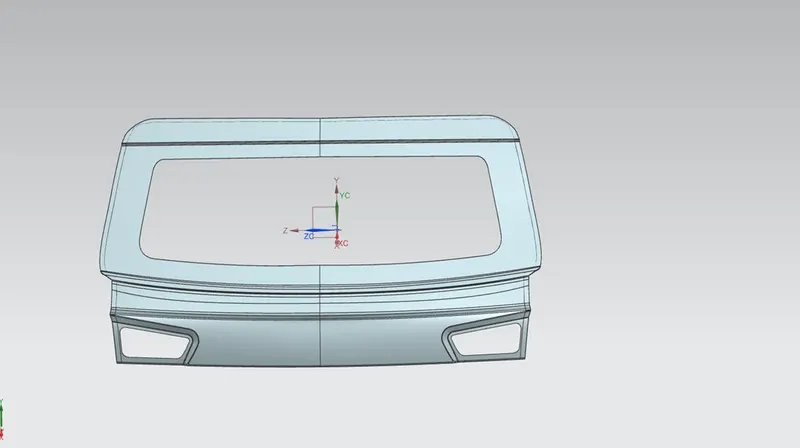
Outer Upper Panel:
The Outer Upper Panel Extracted from a provided styling surface.
The panel is modified for the required design with the surface tools of NX CAD.
The thickness provided to the outer panel is 0.75 mm.
Hemming is provided with corner reliefs.
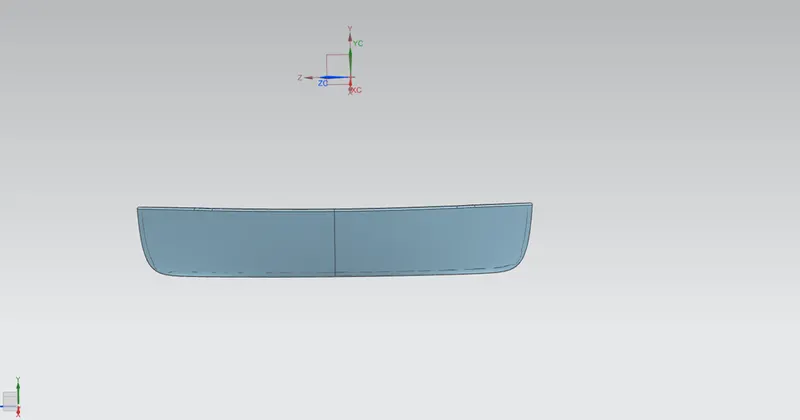
Outer Lower Panel:
The Outer Upper Panel Extracted from the given styling surface.
The panel is modified for the required design with the surface tools of NX CAD.
The thickness provided to the outer panel is 0.75 mm.
Hemming is provided with corner reliefs.
Outer Upper & Lower Panel:
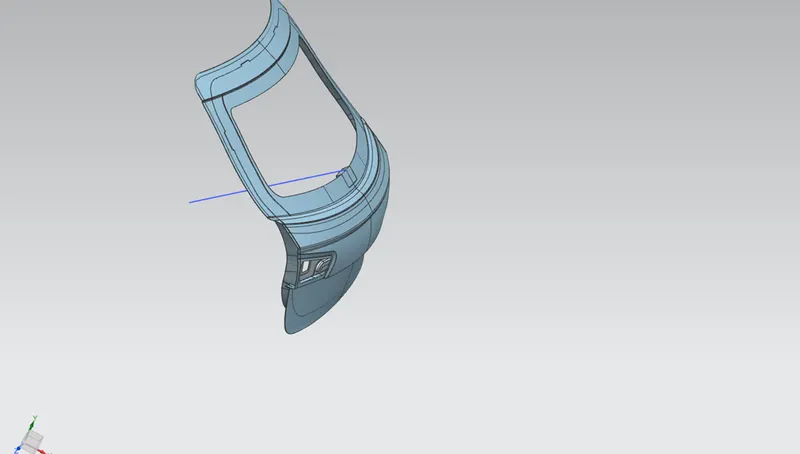
Tooling Direction:
- Before starting to design the inner panel of the back door the tooling direction for Deep Drawing purposes should be created.
- Then the styling surface needs to be checked properly and analysed since it might have irregularities, hence it must be fixed first.
- The back door was designed using a top-down approach.
DESIGN OF BACKDOOR INNER PANEL:
The Inner Panel Extracted from a given styling surface.
The panel is modified for the required design with the surface tools of NX CAD.
The thickness provided to the outer panel is 0.75 mm.
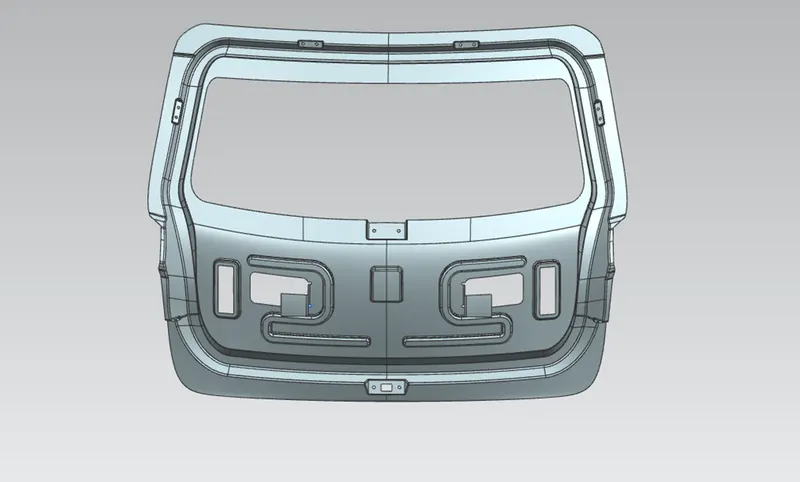
MASTIC SEALANT:
The mastic sealant is used to fix the inner panel and the outer panel which increases the NVH factor & stiffness of the back door.
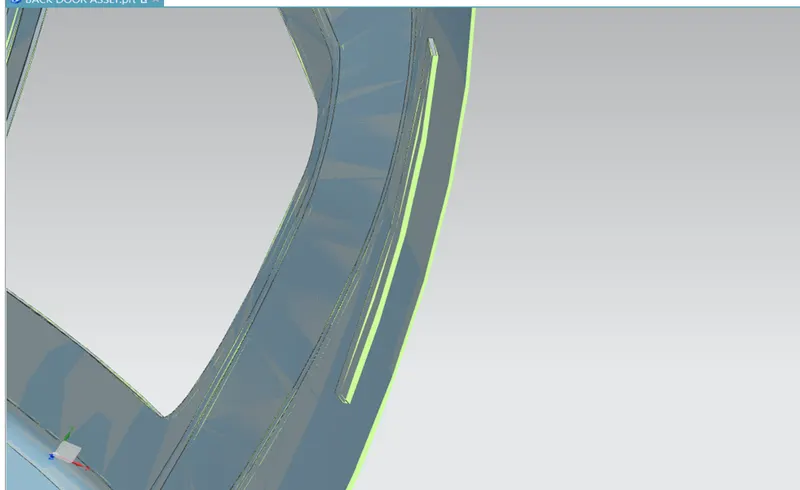
HINGE, GAS STAY, WIPER MOTOR & LATCH & STRIKER EMBOSS:
The top circle denotes the hinge emboss which was created using the datum plane and emboss feature in NX. It is also designed in a way that the emboss should have a flat surface for assembling the hinges using it. The side circle denotes the gas stay emboss which was created using the surface of the connecting flange. The middle circle denotes the Wiper motor emboss which was created using the surface of the connecting flange. The lower circle denotes Latch and Striker emboss were designed by creating a trajectory that follows the opening and closing of the back door with respect to the axis of the hinge.
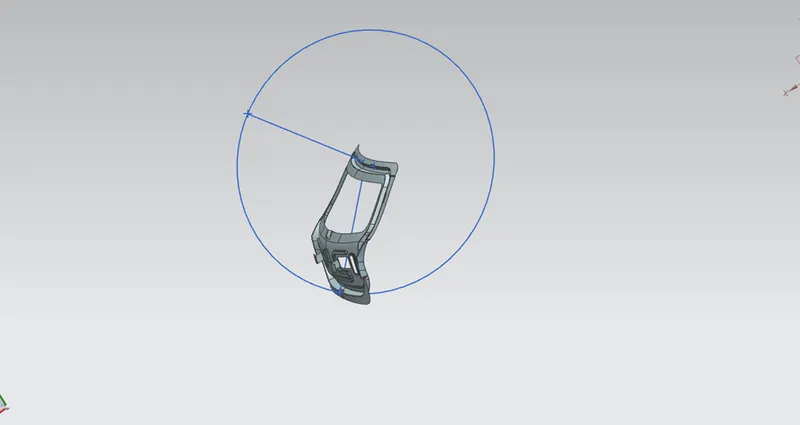
Trajectory:
The position of the hinge should be perpendicular to the latch at the time of latch and striker meets. The circle is drawn from the centre of the hinge axis to find the path of the striker and perpendicular to the path.
HEMMING:
Hemming & seaming are two similar types of metalworking processes in which a sheet metal edge is rolled over onto itself. Hemming is the process in which the edge is rolled flush to itself.
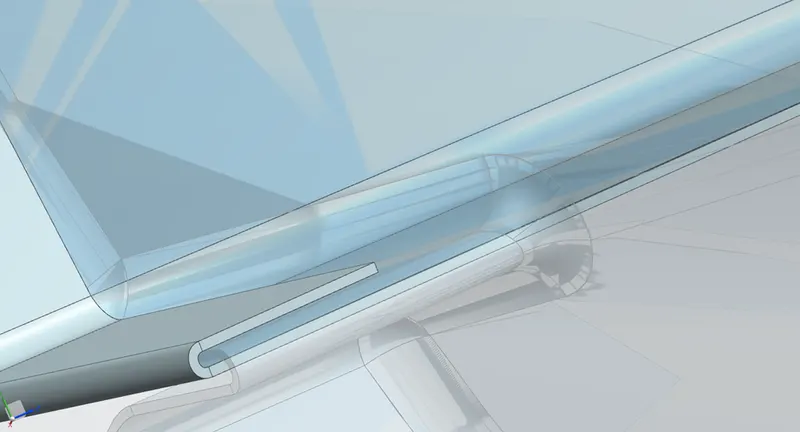
- The outer panel was designed as two different parts named as outer upper panel and outer lower panel.
- After designing the outer panel, the Hemming was created by offsetting the surface with the help of face blend & swept surface.
- The two different outer panels will be joined using Blanking
CORNER RELIEF:
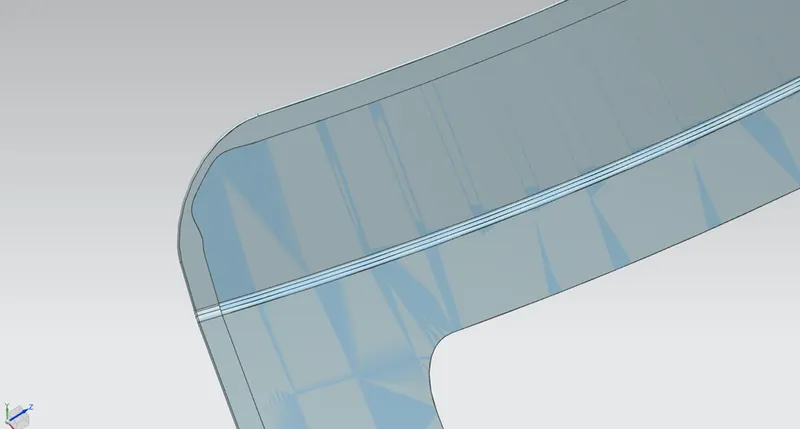
During hemming process multiple rollers are used which causes vibrations and stress concentrations at the some locations due to which design intent of the panel shouldn’t be changed (i.e the panel should spring back to original formation after roller is removed). But most of the time that is not the case at corners so to avoid that situation reliefs are provided at corners.
Spot welding:
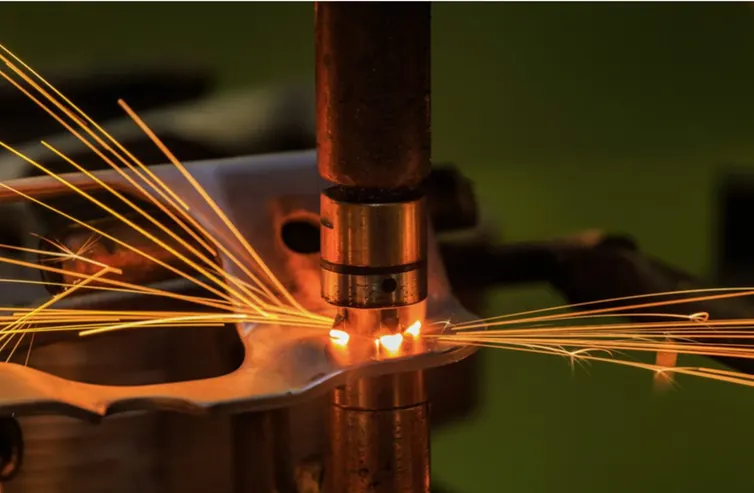
Spot Welding is a form of resistance welding also known as Resistance Spot Welding (RSW). Spot Welding involves using heat produced by resistance to an electrical current to join materials together. The current heats the materials to a point where they become malleable. The use of strong pressure bonds them together.
DESIGNING THE REINFORCEMENTS:
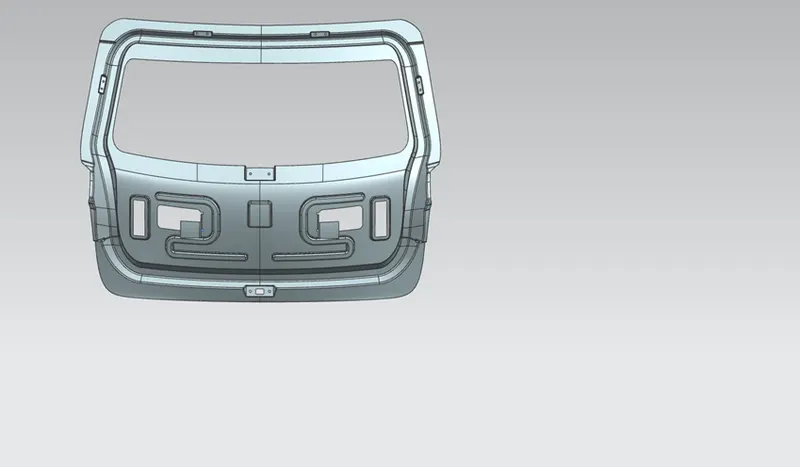
The thickness provided for all reinforcements is 0.75 mm.
- Hinge Reinforcement
- Gas stay Reinforcement
- Wiper motor Reinforcement
- Latch Reinforcement
Hinge and gas stay reinforcement:
Hinges allow the opening and closing of the back door. One end of the hinge is fixed on the backdoor and the other end on the Roof. Hinges can be placed outside or inside the backdoor. The hinge reinforcements are added to compensate for the weak region due to the acting load over it.
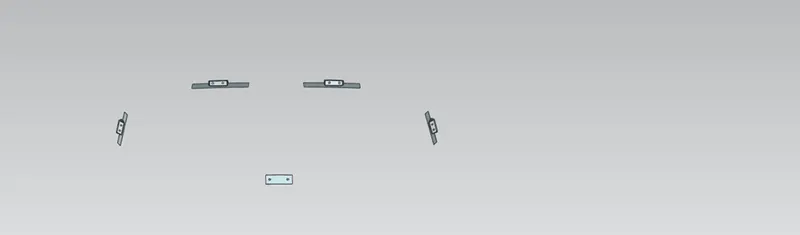
Gas Stay is a device used to support the back door in its open position. Gas stay requires no manpower & it is engaged into support position automatically as the back door opens. One end of the Gas Stay is fixed on the backdoor & another end is on the Body Side or on the Back door stationary area. Embossing is provided at the Gas Stay mounting area to compensate for weakness & improve strength.
Wiper Motor Reinforcement:
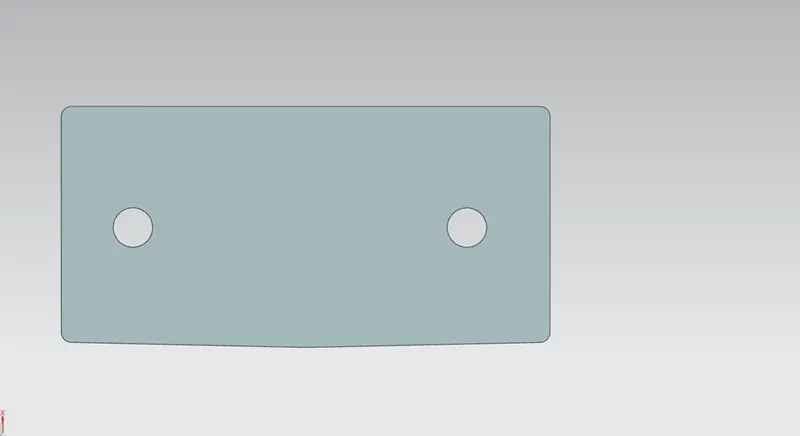
Wiper motor reinforcement is made to mount the wiper motor assembly.
Latch and Striker Reinforcement:
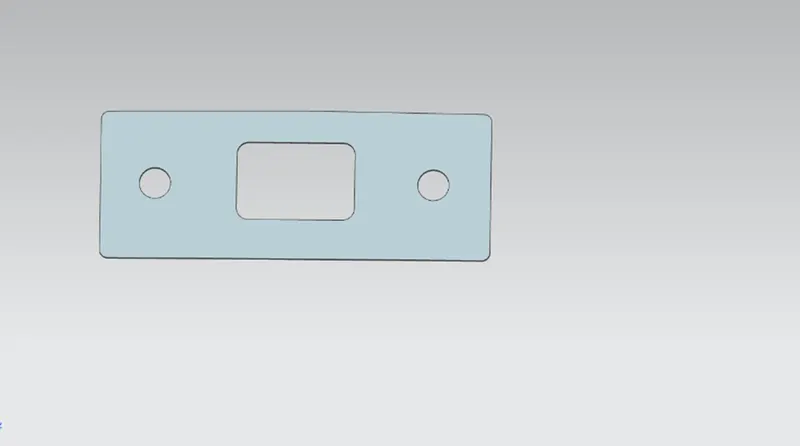
The Latch & Striker together form the locking mechanism of the backdoor with the car. Due to regular opening, closing, and over slamming of the backdoor, there is stress developed in the Latch & Striker area. To recoup for the same, reinforcements are added in this area.
DRAFT ANALYSIS:
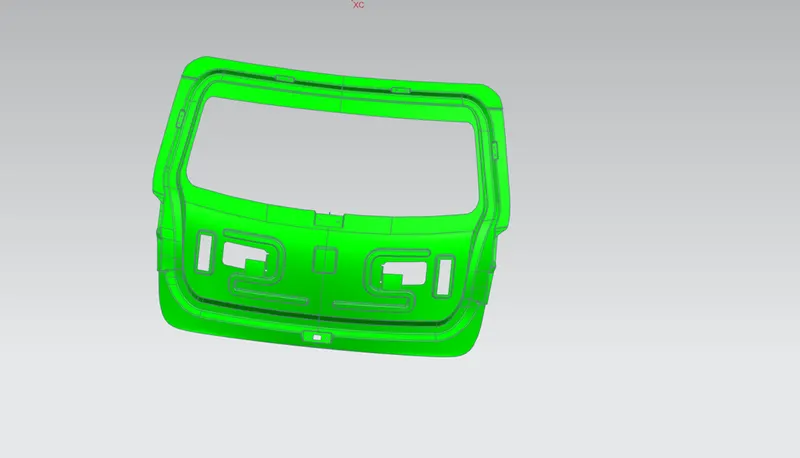
- The draft analysis was performed for the tooling direction created at first and checked that the model is suitable for manufacturing.
- Then to get a complete green portion the required changes to the draft angle of the embosses were carried out by optimizing the model.
- The Draft Analysis command is used to detect that the part drafted will be easily removed or not.
- This type of draft analysis is performed based on colour ranges.
- The identifying zones on the analysed element where the deviation from the draft direction at any point, corresponds to specified values.
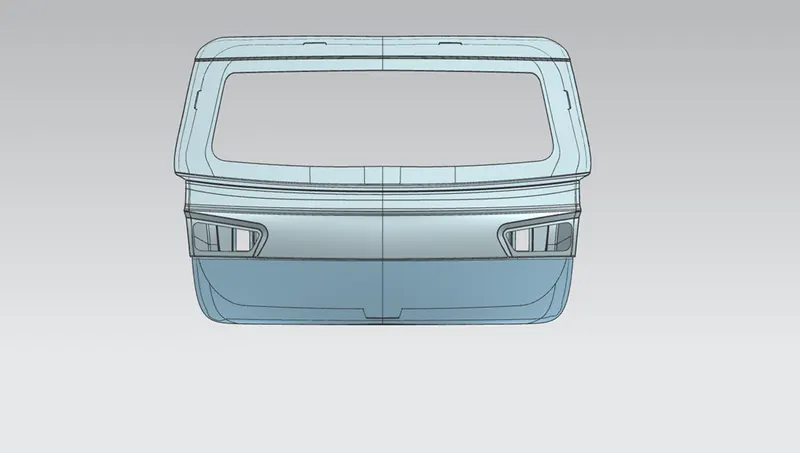
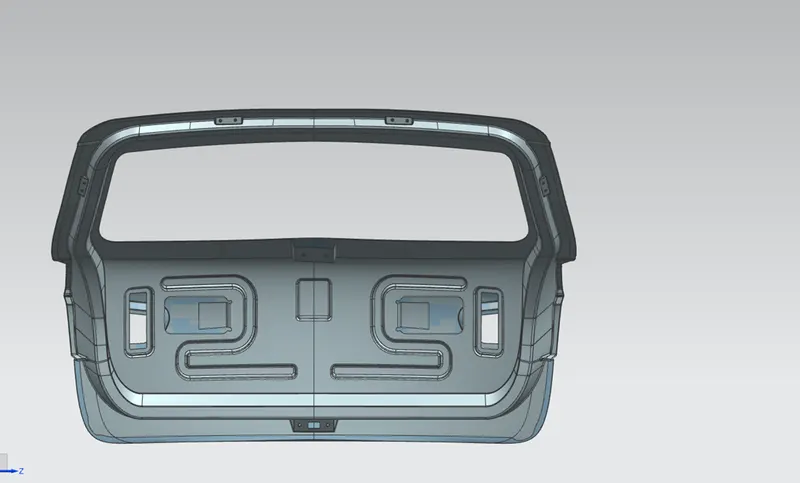
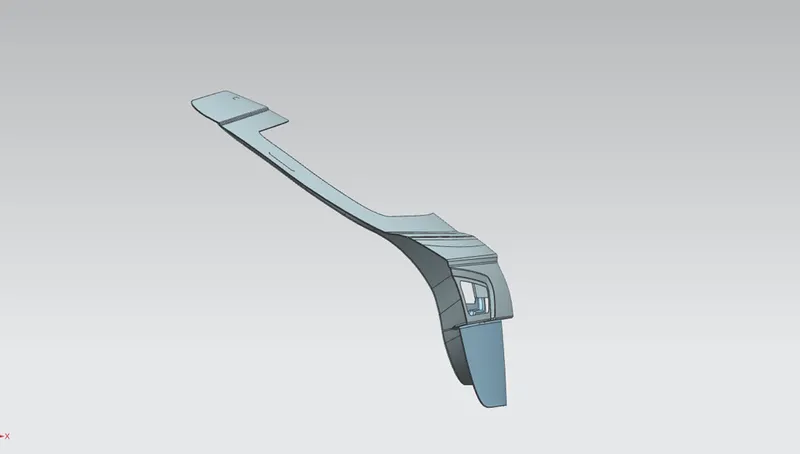
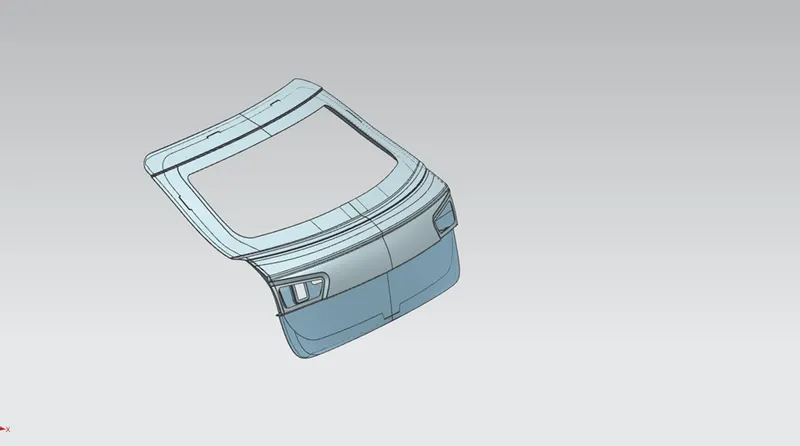
Views of Back door design
FRONT VIEW:
BACK VIEW:
SIDE VIEW:
ISOMETRIC VIEW:
CONCLUSION:
Thus, the BIW Back Door of a car is designed using the engineering standards & also the deep drawing
requirements consideration using NX cad software.