Design of Car back door
OBJECTIVE:
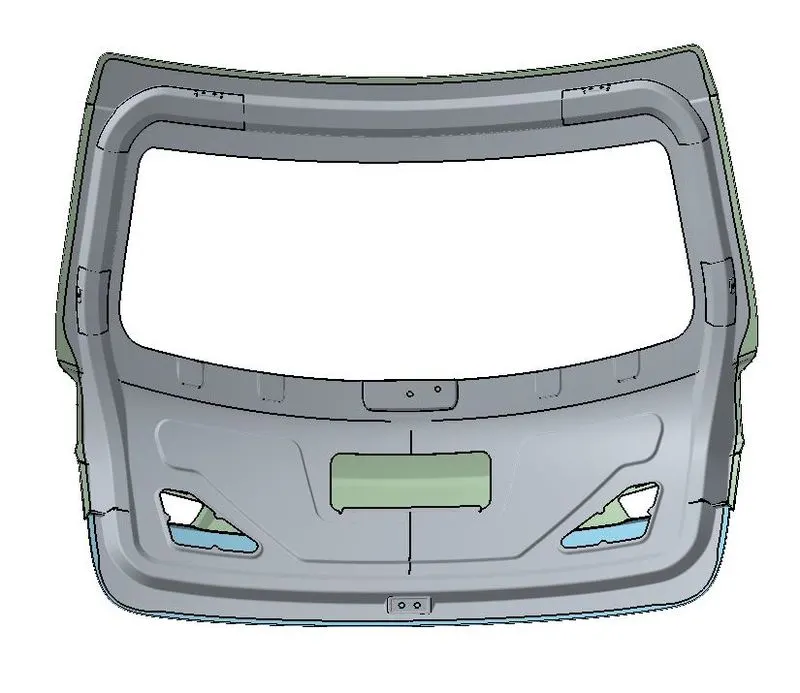
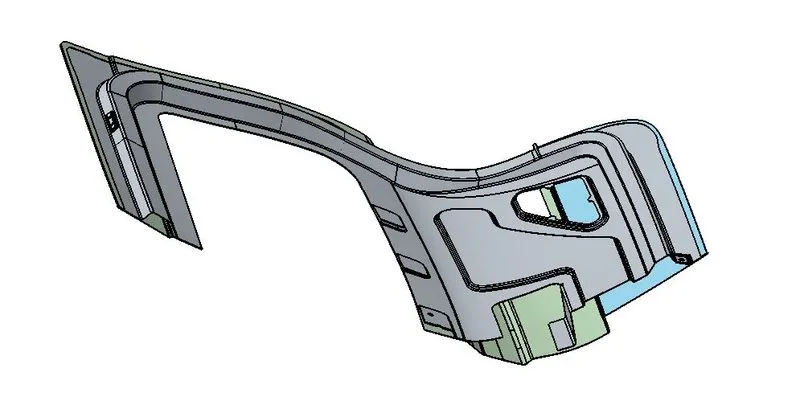
Design of the Outer upper and lower panel, inner panel, and the necessary reinforcements by following the Master section with the design parameters for the given class-A surface.
CONTENTS:
INTRODUCTION
DESIGN CONSIDERATIONS
HEMMING
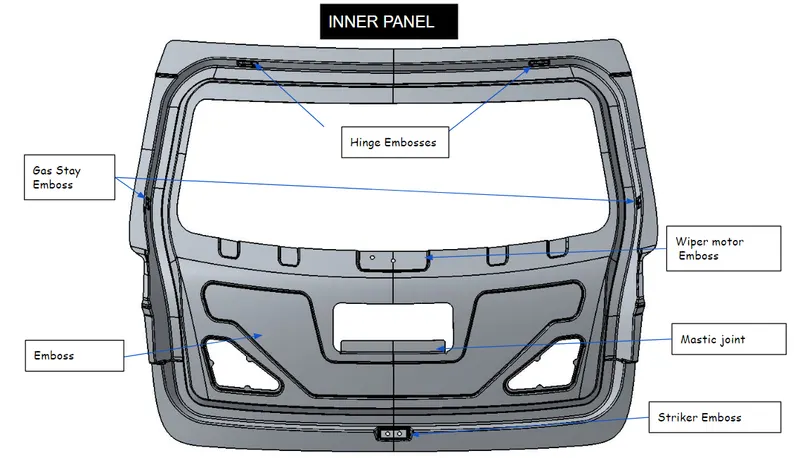
INNER PANEL
OUTER PANEL
REINFORCEMENTS
DRAFT ANALYSIS
Introduction:
A passenger car is a wheeled motor vehicle used for transporting passengers, which also carries its own engine or motor. Tailgate is the closing door of the luggage compartment. It provides the aesthetic outer appearance to the vehicle as well as wind flow aerodynamic surface. Tailgate is a single stamped or split outer panel. It integrates with the inner reinforcement panel. To avoid air rushing noise as well metal rubbing noise, protected with the sealer application process. Outer edges hemmed by Robot hemming process with 3 pass hemming to ensure sealer fill rate uniformly as well clinch tightness rigidly. in such a way easy to open at the same time, it should not pass external environmental noise inside the passenger compartment and should not lead to any water leak. High closing effort leads to improper locking. Gas Stay is used to easily access opening and closing.
TAILGATE OR BACK DOOR:
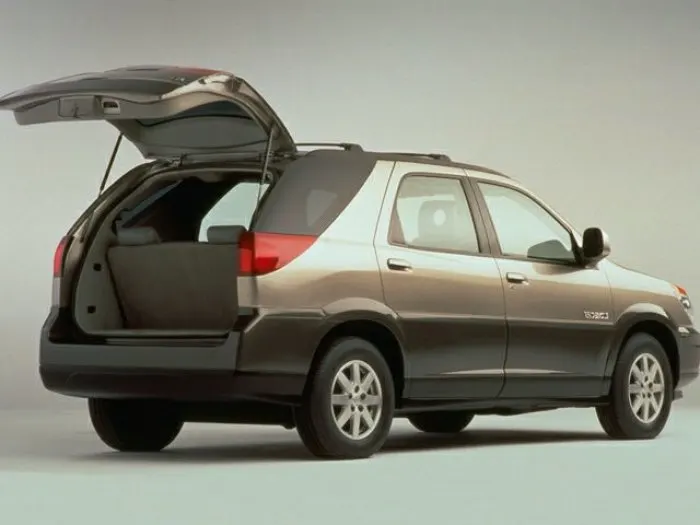
A tailgate is a door at the back of a truck or car, that is hinged at the bottom so that it opens downwards.
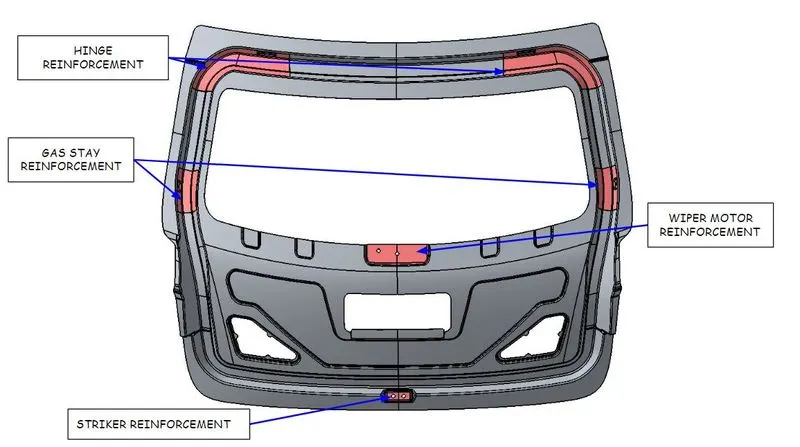
The Main Parts of the Back Door:
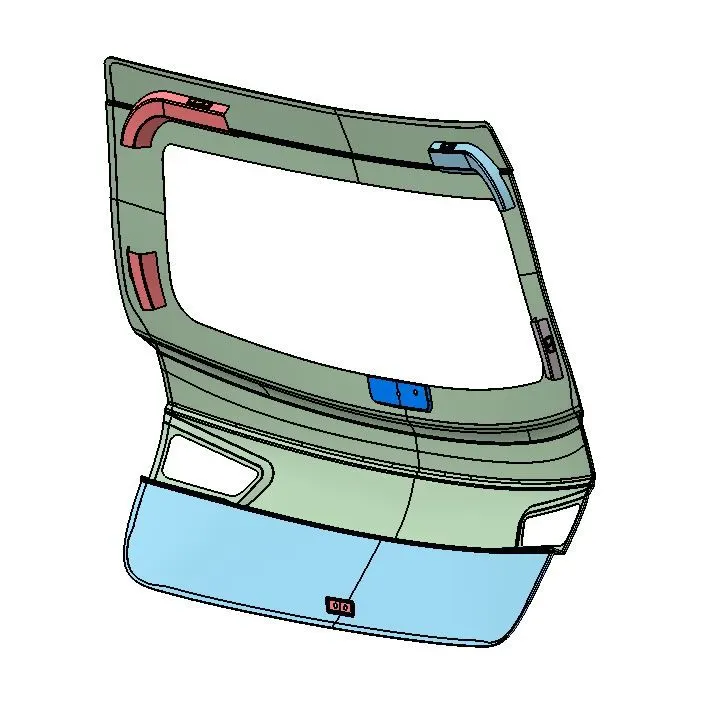
1. Outer Upper Panel.
2. Outer Lower Panel.
3. Inner Panel.
4. Gas Stay Reinforcement Left and Right
5. Hinge Reinforcement LH and RH.
6. Striker Reinforcement.
7. Wiper Reinforcement.
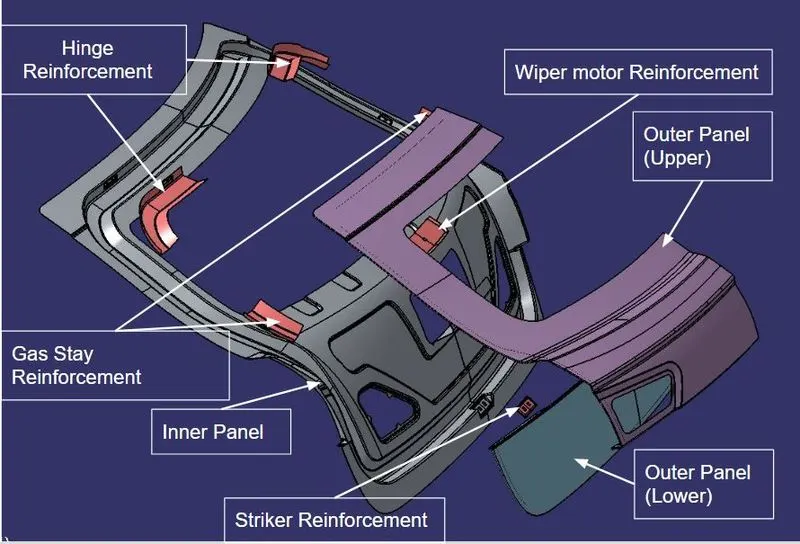
Design Considerations for Back Door:
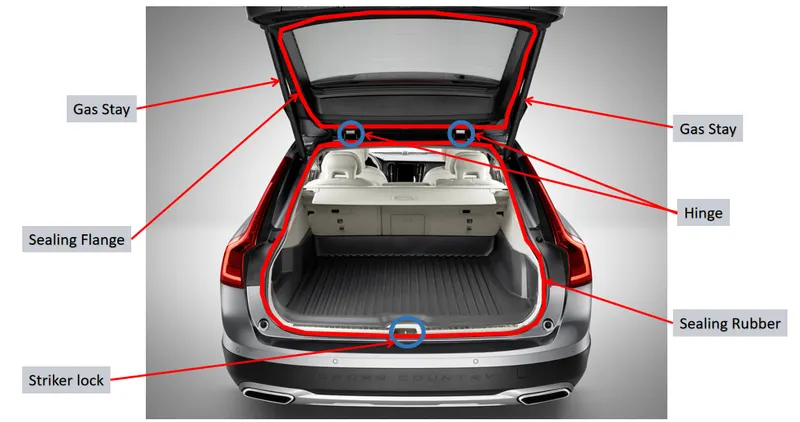
Functional Requirement: Hinge and gas stay are Functional Requirements
Striker Position:
The position of the hinge should be perpendicular to the latch when the latch and striker meets. for that, a circle is drawn from the center of hinge axis to find the path of the striker. and positioned it perpendicular to the path.
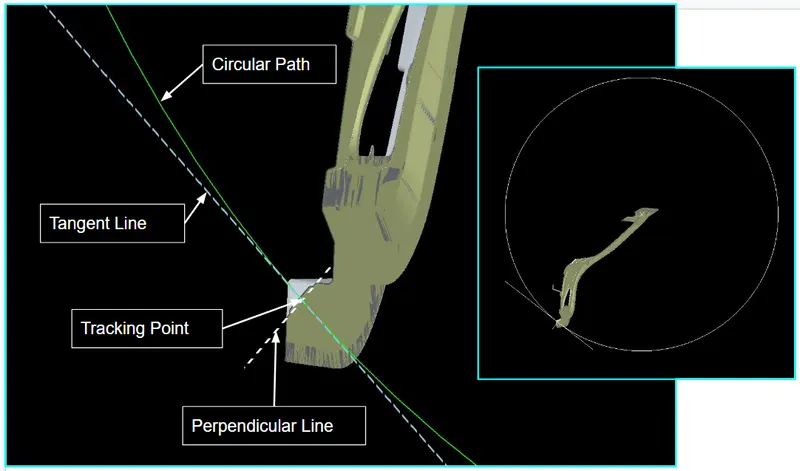
Rear visibility criteria: Federal motor vehicle safety standard (FMVSS) No. 111, “Rear Visibility,” currently requires that vehicles be equipped with rearview mirrors to provide drivers with a view of objects that are to their side or to their side and rear.
Rear crash regulation.
Requirement of sealing and its function: In order to prevent water from entering the cabin we are introducing a sealing area where the sealing flange is provided on the inner panel and rubber mounting area is provided on the body side.
Joining techniques: To join inner and outer panels the Hemming process is used and to join outer upper and lower panels laser brazing welding is used.
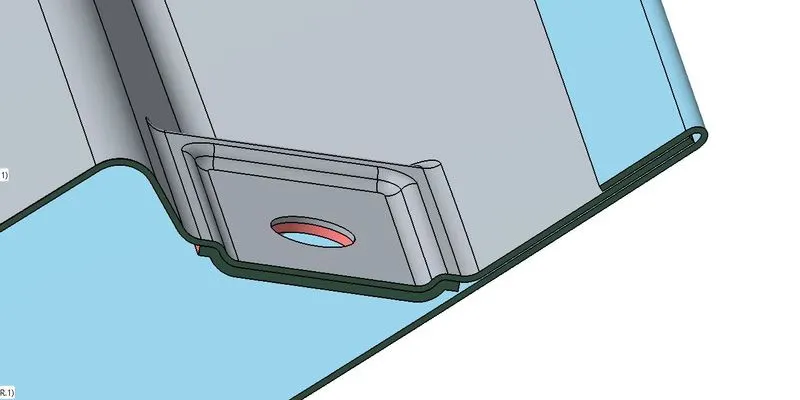
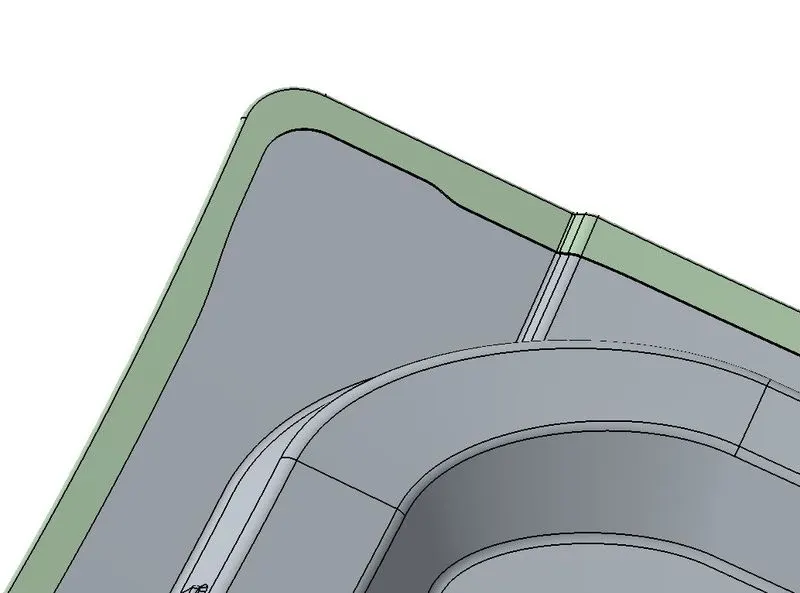
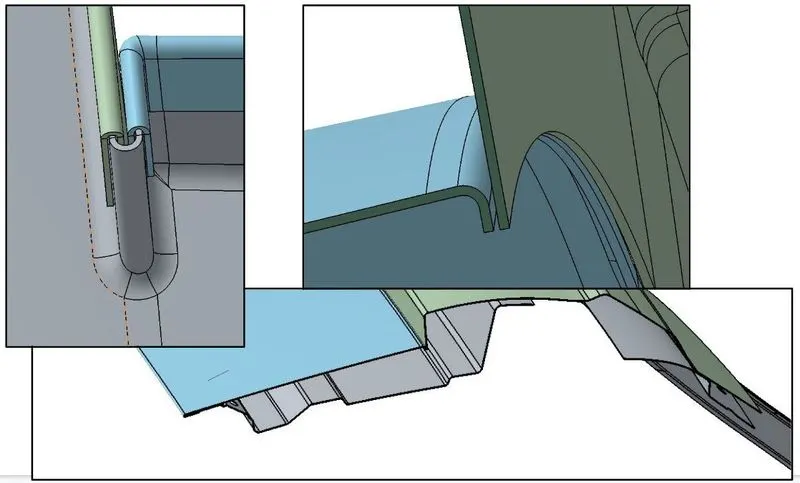
Hemming: Hemming is a forming operation in which the edges of the sheet are folded or folded over another part in order to achieve a tight fit. Normally hemming operations are used to connect parts together, to improve the appearance of a part, and to reinforce part edges.
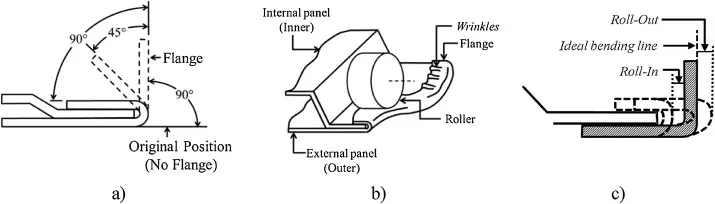
laser brazing welding:
Joining methods, in which the brazing solder is melted with the help of an industrial laser, have been used mainly in the mass production of vehicle bodies. There, laser beam brazing is mostly used for joining galvanized metal sheets or lightweight components made of aluminum, but also for other brazing material. Laser automobile brazing is usually realized with a brazing optic that is integrated in a robot. The laser beam is guided along the joint where it melts the brazing solder
Gap and flushness requirement: Mastic Seals: Mastic Seals place b/w Inner and outer panel to reduce noise, vibration, and harshness. Every Mastic will have an effect of 80mm Dia. The inner and outer panel gap is 4 to 5mm. 0.2mm gap is required for the Hemming and that gap will be filled by sealed past.
Adding reinforcements and stiffener pad: reinforcements are added were and all the weight is added. On the inner panel, we have Hinges and striker, which are attached to the inner panel so due to this attachment the strength of the inner panel is going weak. In order to strengthen the inner panel reinforcements will play a very important role. A stiffener pad is a sponge-like material place b/w Inner and outer panel to reduce vibrations.
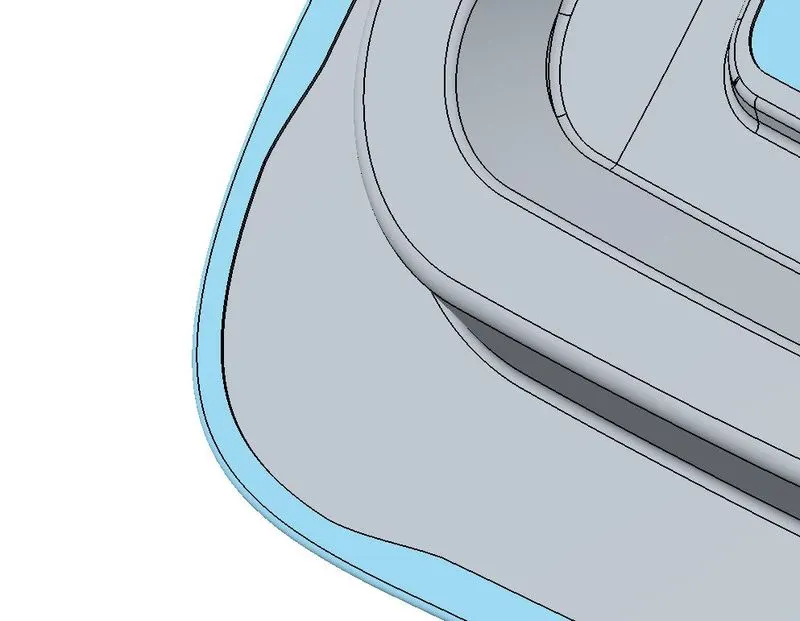
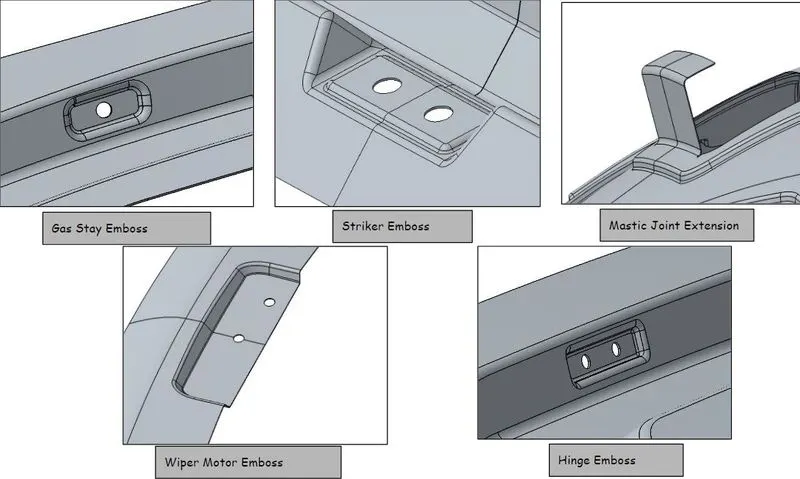
Emboss definition: Embosses are provided in the inner panel of the hood assembly. This helps in the weight reduction of the hood and also dissipates the force during the collision. Force dissipate is shown in the figure.
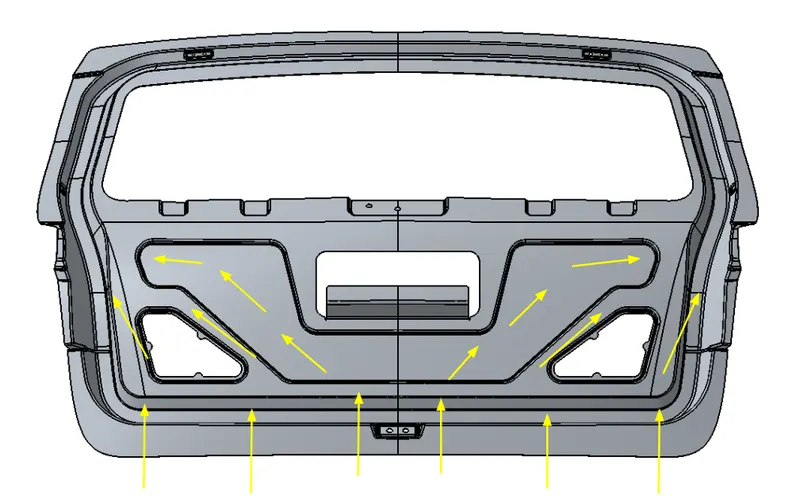
Force Dissipation
STYLING SURFACE:
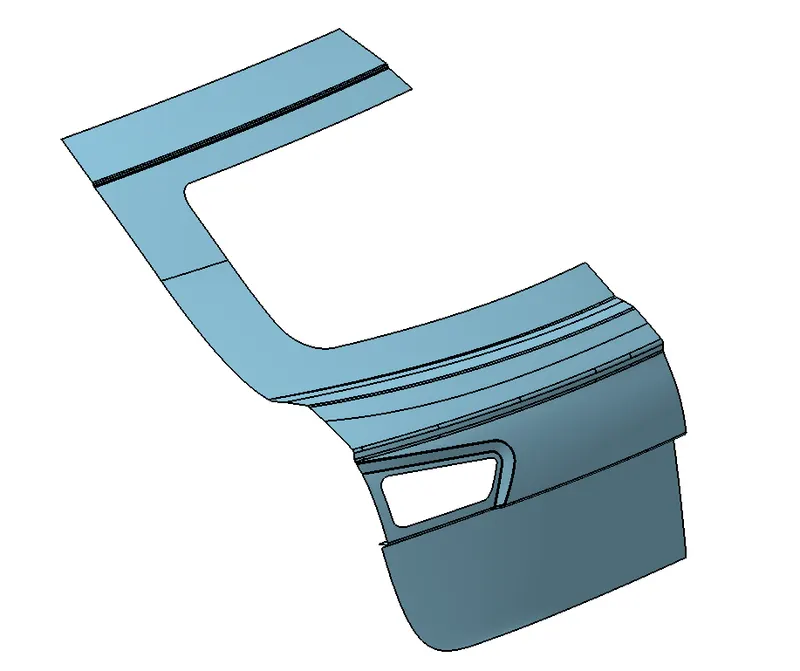
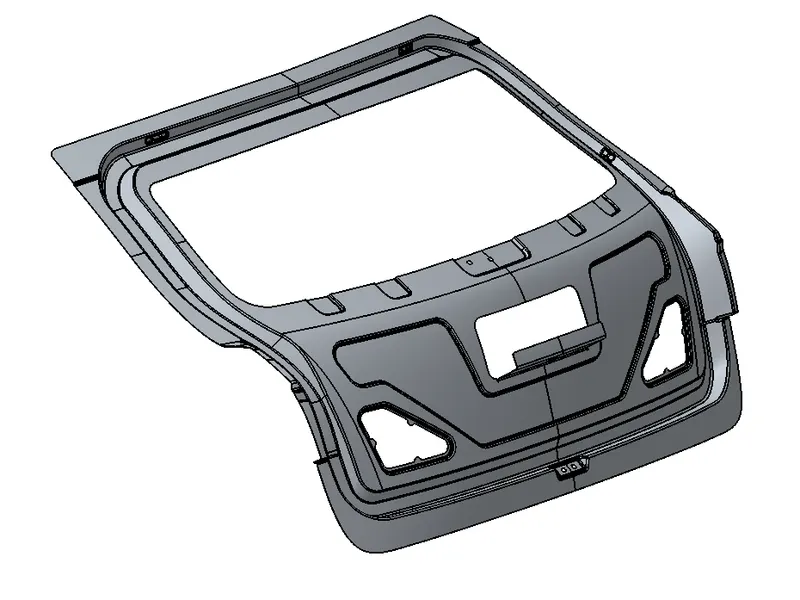
INNER PANEL DESIGN:
While designing the inner panel the consideration for its design are Thickness, the gap between the outer panel, and embossing.
The nominal thickness of the inner panel is 0.75.
The clearance gap between the inner and outer panel is 0.2mm
embosses of the inner should follow the force dissipation criteria.
TOOLING DIRECTION:
The Tooling Direction for the inner panel is derived using bisection lines of the part from two sides.
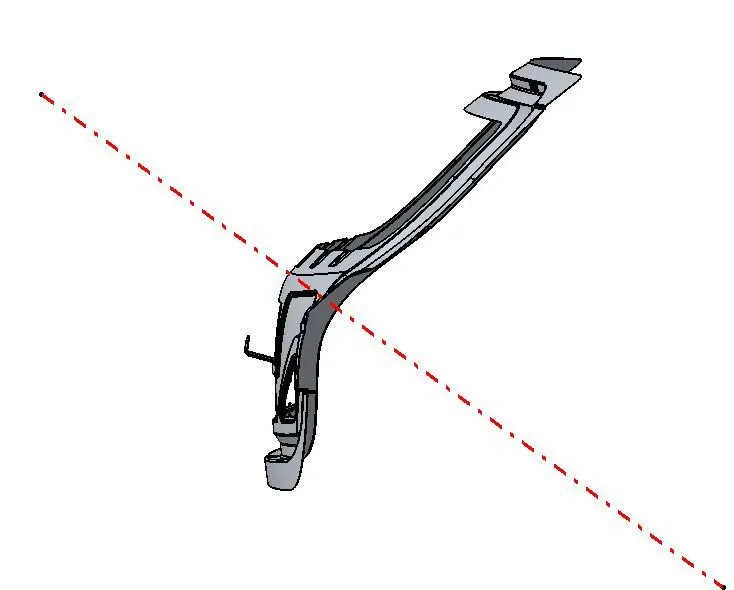
In part design, use a thick surface option to make a sheet, here 0.75mm is the thickness of the inner panel.
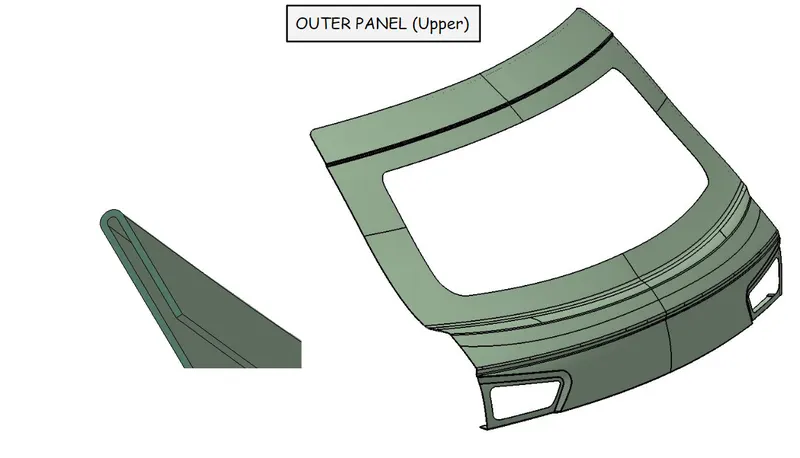
OUTER PANEL (UPPER):
The Outer Panel upper is developed from styling surface
The thickness provided for the outer panel is: 0.75 mm
Hemming is provided with corner relief.
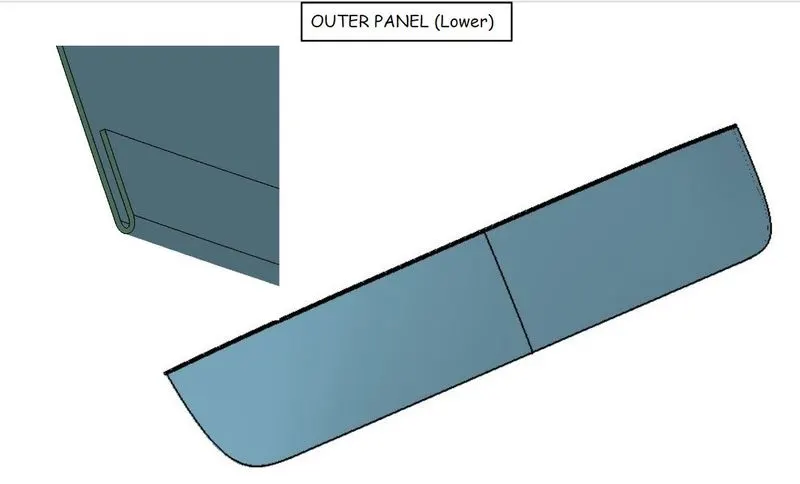
OUTER PANEL (INNER):
The Outer Panel upper is developed from styling surface
The thickness provided for the outer panel is: 0.75 mm
Hemming is provided with corner relief.
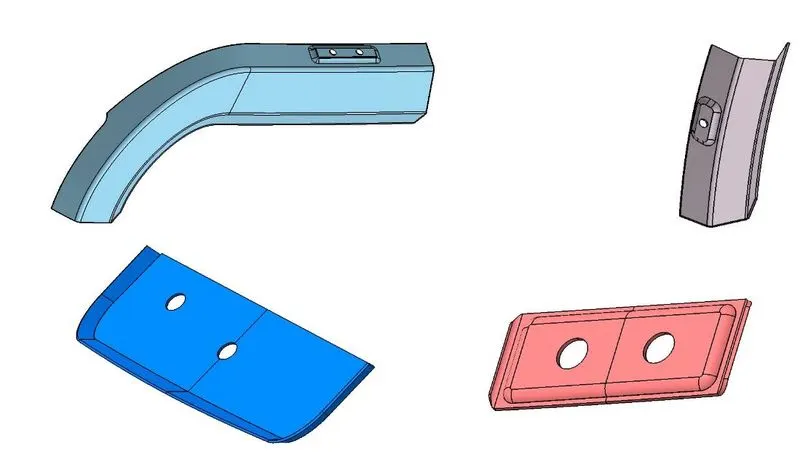
REINFORCEMENTS:
The thickness provided for reinforcements is 1.2mm
Draft Analysis:
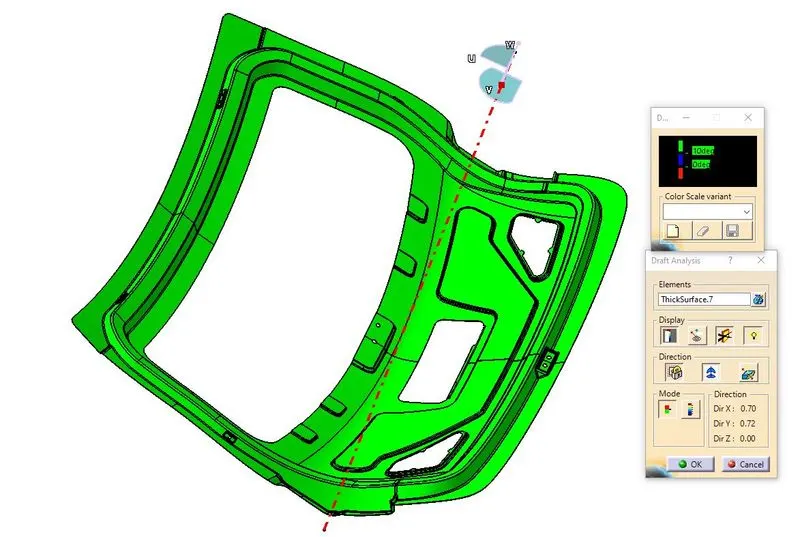
Draft analysis is a method of checking the draft angle on various faces of a part with a particular direction.
It should be more than 7 deg for aluminum for hard metals, min draft angle is 10 deg.
The draft analysis for the inner panel is shown below.
 FINAL OUTPUT: