Design of backdoor
Design Of Backdoor:
Objective :
To design backdoor of a car using the design surface provided.
Introduction :
Back door is the rear most part of a car. It gives access to the rear storage compartment of the vehicle. It has to be strong enough to sustain the rear crash.
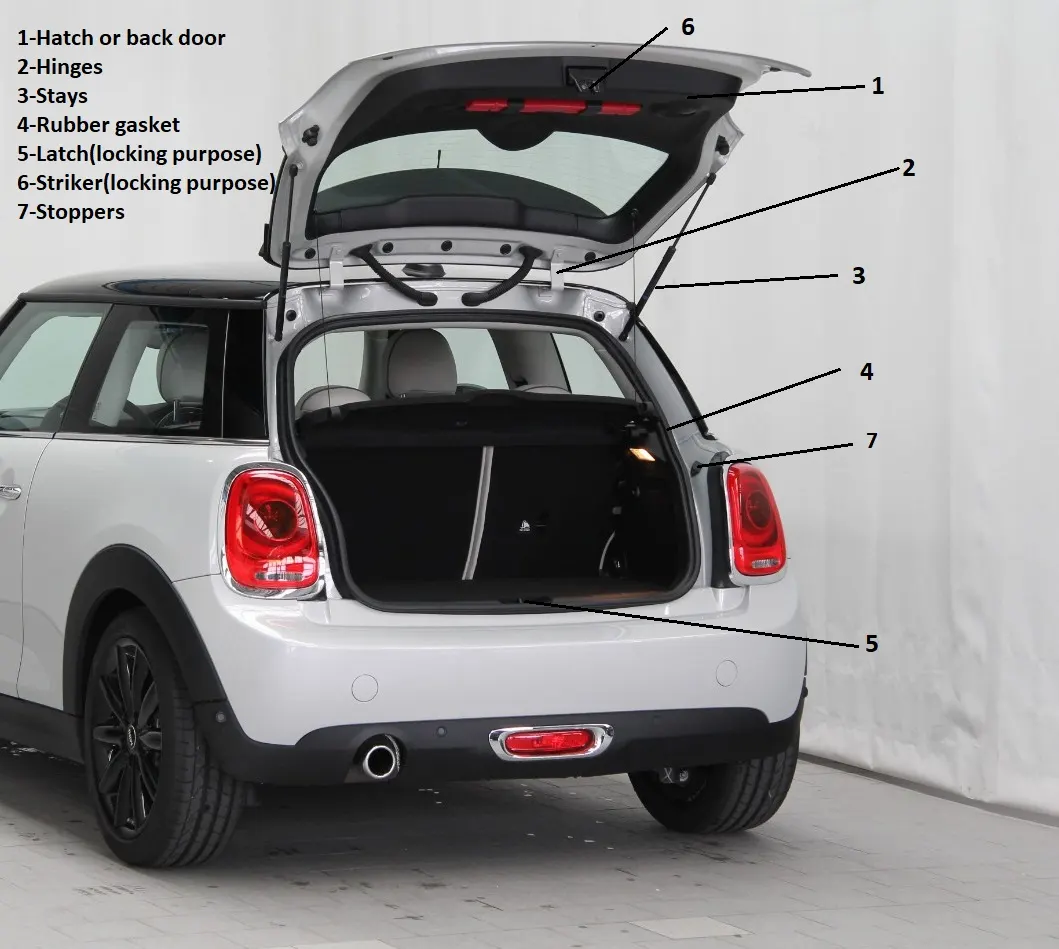
Back doors are made from steel/aluminum panels that swings (moves up or down during loading and unloading) with the help of a hinge mechanism. Back door is hinged with the car body. The door may be hinged at the top, side, or bottom. Hinges allow the panel to be raised. Devices such as a gas stay can keep the panel up in the open position.
Back door is securely locked to the vehicle body with the help of latch & striker mechanism, which may be locked to prevent unauthorized access from the exterior.
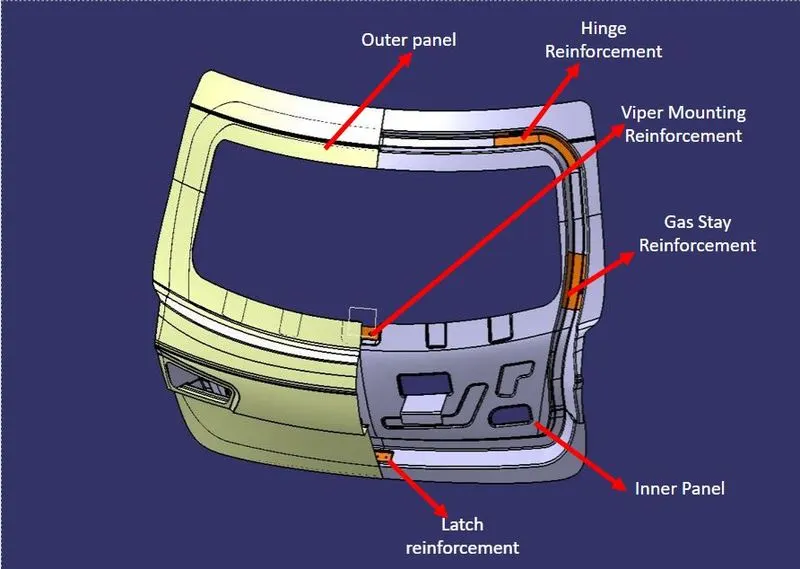
Back door consists of an inner panel, outer panel and some reinforcements, they are bonded together by hemming and welding processes. Embosses and reinforcements are used to increase the strength of the door.
The parts are made of steel/aluminum, based on the budget of the car. While using aluminum, we can achieve improved strength than steel, where we can avoid the reinforcements. We can vary the thickness of the part because they are casted. Therefore, we can reduce the number of parts. But aluminum is costlier than steel. While using steel parts, we cannot vary the thickness because they are stamped. Therefore, we cannot reduce the number of parts and reinforcements are needed to strengthen the part locally. Which would increase the weight of the part. Nowadays most of the car manufacturers are trying to use aluminum instead of steel. Therefore, the number of parts gets reduced, which in turn reduces the weight of the car drastically.
The car back door consists of the following parts,
- Outer panel
- Inner panel
- Hinge reinforcement
- Gas stay reinforcement
- Latch reinforcement
- Wiper motor reinforcement
Design Methodology :
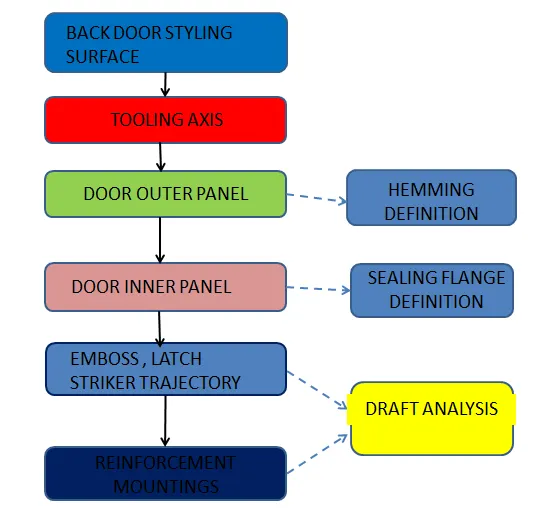
Door Inner Panel :
The inner door panel is a component which is used for strengthening the door assembly and it is one of the most important components on which all accessories are mounted like hinges, glass guide channel, moulded trim, latch etc. The possible method is the integration method. In the integration method, the part is stamped out of a single blank. This reduces the number of tools needed; the assembly cost and eliminates any fit ability problem.
For Designing the inner panel the class A surface is taken as offset and worked on the surafce .
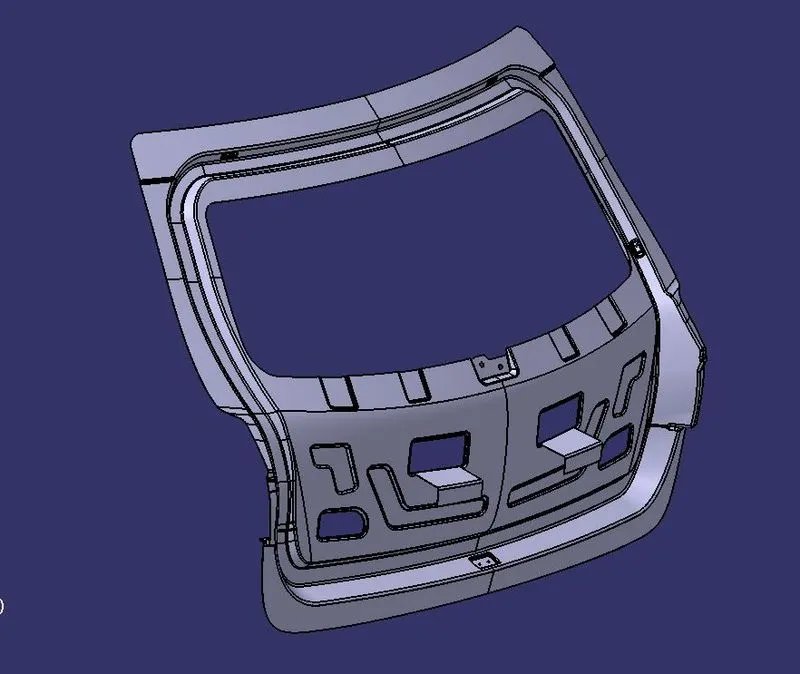
Fig.Door inner panel
Door Outer Panel :
The outer panel of the back door is similar to other BIW components where it is the aesthetic part of a vehicle. The coating provided is of multi-stage which has the property of scratch resistance, rust prevention and smooth and attractive finishes. The outer panel also has the provisions for the tail lamp, rear fog lamp and also has the provision for licence plate mountings. Most of the hatchback cars have the provision for wiper motor.
From the Given Class A surface the outer panel is simplified into two parts, The upper outer panel and the lower outer panel.Small portions and patches are modified according to the requirement.
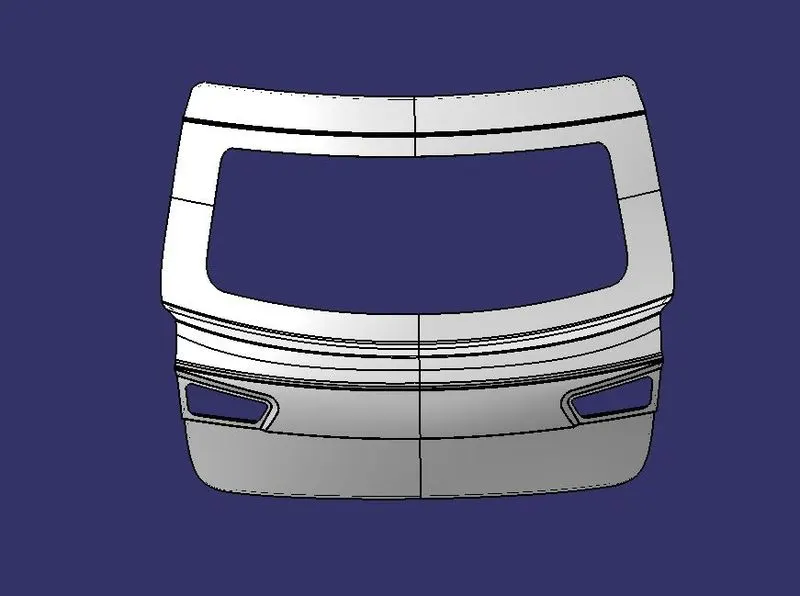
fig.Door outer panel
Tooling Direction :
Based on the Styling surface the foremost step is definition of tooling direction for Deep Drawn Steel process and all downstream metal operations are based on Tooling Axis.
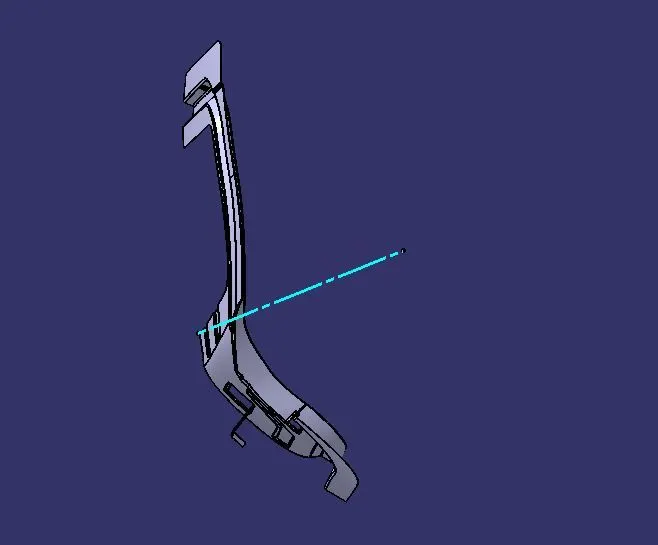
fig tooling axis
Latch And Striker Trajectory :
To define the opening and Closing Trajectory, the hinge and Latch are positioned based on the Hinge axis and Trajectory. The Circle drawn should perpendicular to the Latch’s Striker to satisfy the condition. Based on the Rotation trajectory the Hinge Axis, Latch Striker and predefined Gas Stay are correlated for smooth kinematics of door opening and closing.
Based on the type of Gas Stay, Door Weight and Kinematics the distance between the Gas Stay and Hinge axis is 60-90mm and an angle of 85-90.
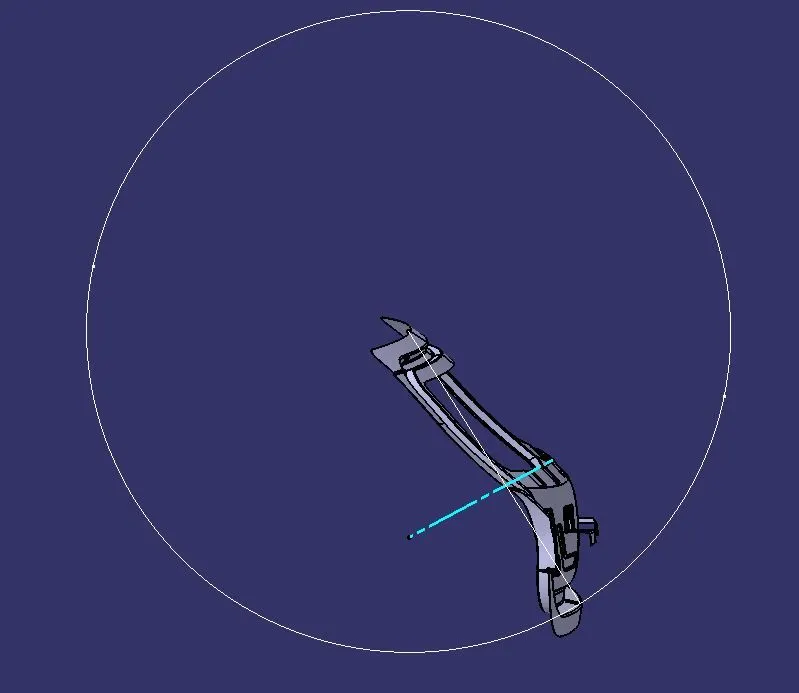
fig.Latch trajectory circle
Embossing Definition :
Based on the Load Simulations the Force acts in Y and hence emboss are defined on the inner panel to dissipate the force outwards caused due to slamming of door and Crash situations.Emboss are defined and drafted along the tooling direction for feasible manufacturing and imparts strength to the panel without the need for increase in thickness.
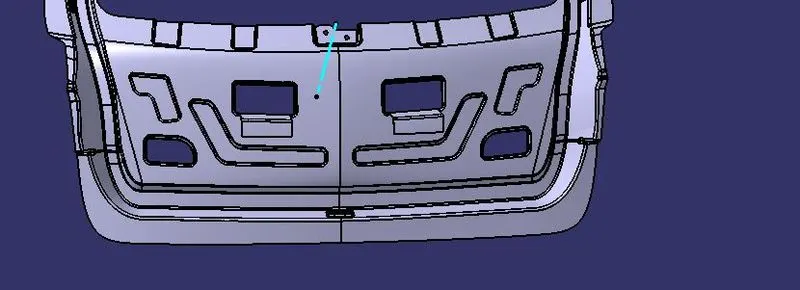
fig showing embosses.
Mastic Sealants :
Apart from Hemming the Outer and inner panel are joined using mastic influence points to avoid the rattle noise and improve the NVH and Trim part mounting points are provided which are usually snap fits.
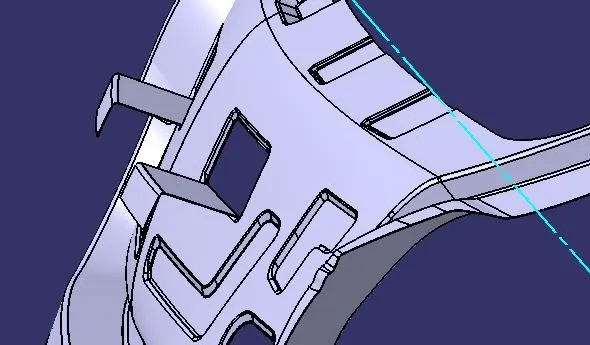
Fig. showing supprts for sealants
Hemming :
Hemming is a sheet metal joining process of inner and outer panel by eradicating the spot welded areas which affects the aesthetics of outer panel. It is also a safety requirement for door handling along the edges and suitable relaxations are provided along the corners to avoid stress concentration.
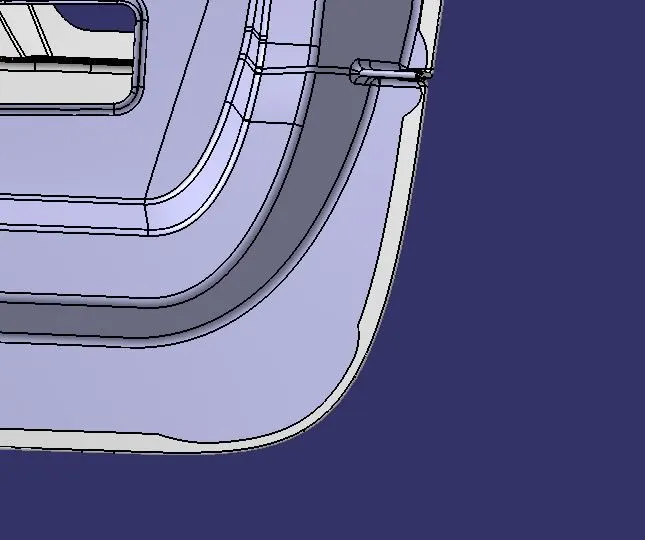
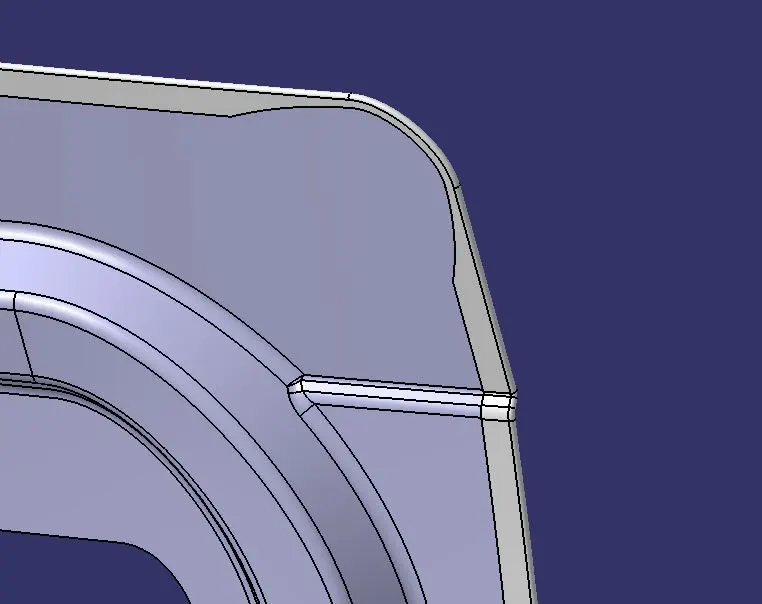
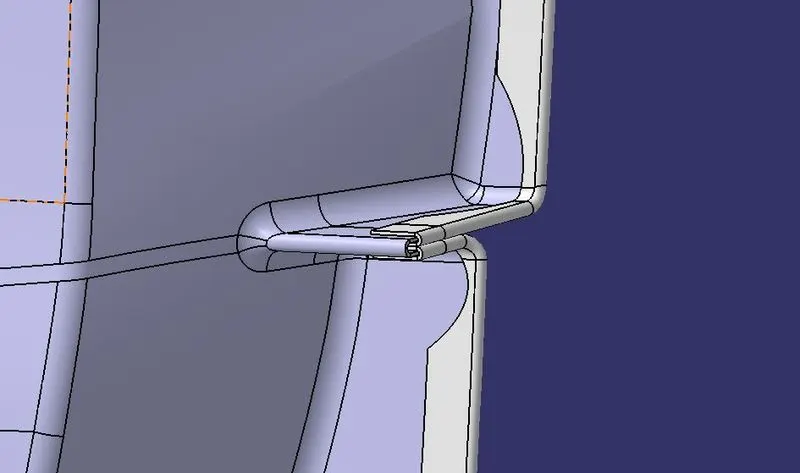
Fig. shoing the hemming of iiner and outer panel.
Reinforcements :
Reinforcement structures are provided to compensate the loss of strength on the embossed section of mouting points.
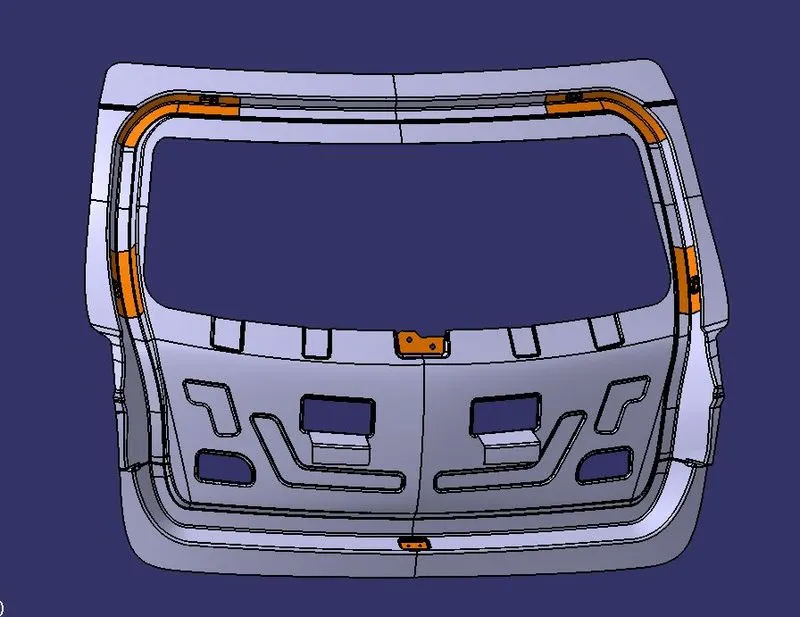
fig. Shows necessary reinforcements.
Final Part :
Conclusion :
Thus using the provided styling surface back door is designed with appropriate design methodologies and provided the necessary reinforcements and embosses.