Design of backdoor
Aim - To Design the outer upper and lower panel, inner panel with the necessary reinforcements by following the Master section with the design parameter for the given class A surface.
Introduction -
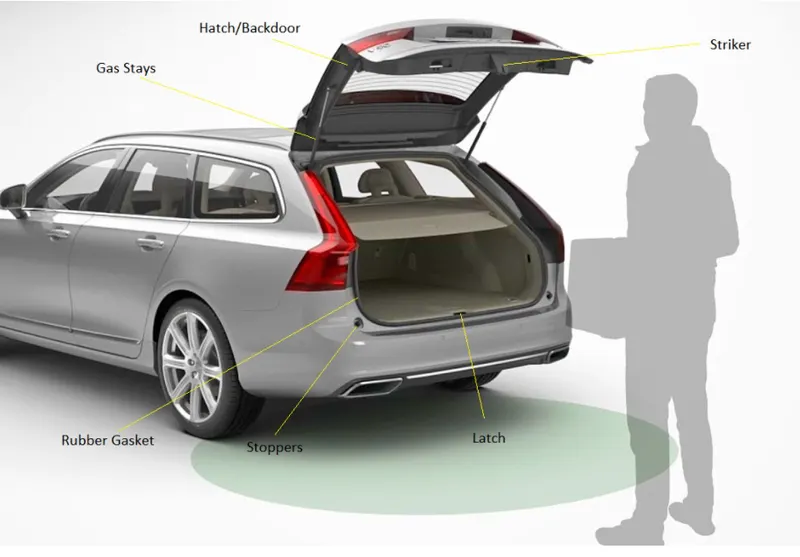
A door is a hinged part which is used for entry and exit of the vehicles. Back doors are one of the type doors of the vehicle which are located next to the passenger seat which provides access to the luggage compartment. In most of the cars, these back doors are operated with the help of gas stay which in turn reduces the effort required to lift open the door. Some luxury cars have powered backdoor which in turn is driven by an electric motor. This kind of system is also called a powered trunk lid system. Hatchback or station wagons are sold as 3 door or 5 door models. In this case, the rear hatch is classified as door this is because it enters the passenger compartment. The naming is mainly used in Europe countries. In case of safety, the back door designed should meet the safety requirement for the rear collision.
Types of back door -
Top-Mounted :
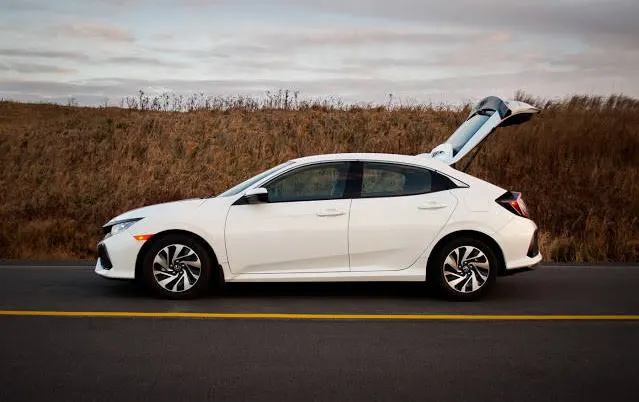
This type of back doors is used in a station wagon, pickup truck and some of the sport utility vehicles. Today’s modern cars use top-mounted tailgating systems which are both powered and also gas stay supported. These top mounted tailgates provide greater rear visibility compared to side-mounted or bar doors which have canter pillars in it.
Side Mounted -
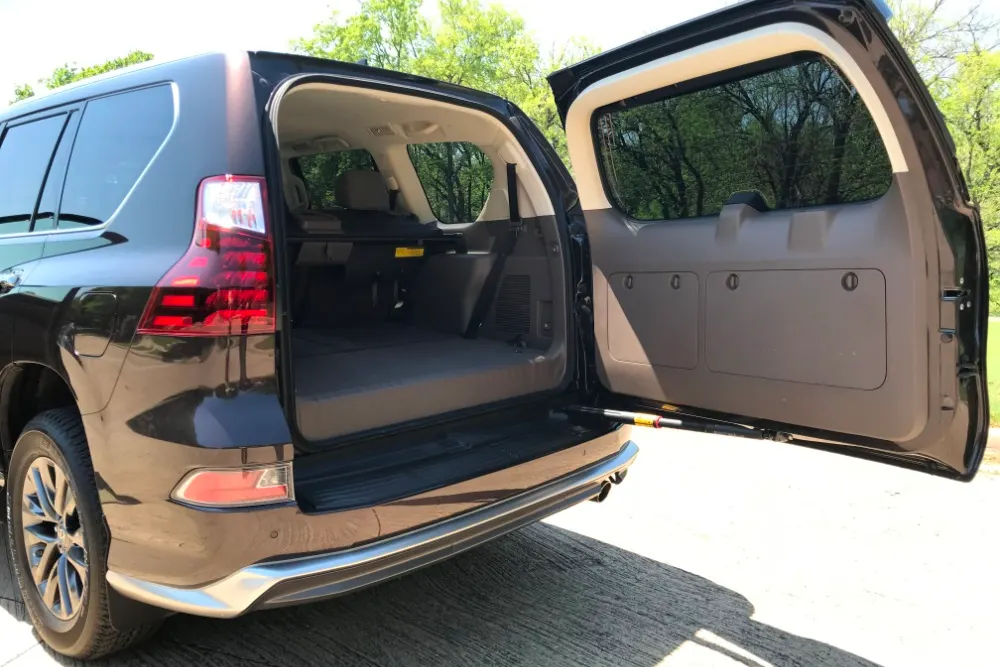
As the name signifies side-mounted doors are the one which is used in the van type MPVs, SUVs, pickup truck vehicles. These side-mounted doors or barn doors are a lot easier compared to top-mounted doors. These doors are generally smaller in size and can be easily accessed.
Design Consideration -
- Visibility Criteria
- Latch and Stricker Position
- Hing Position
- Gas Stay Position
- Space Avalibility
- Drain Holes
- Hemming and Relief area
Components of Back door -
- Inner Panel
- Outer Panel
- Hing Reinforcement
- Latch and Stricker Reinforcement
- Gas stay Reinforcement
- Wiper motor Reinforcement
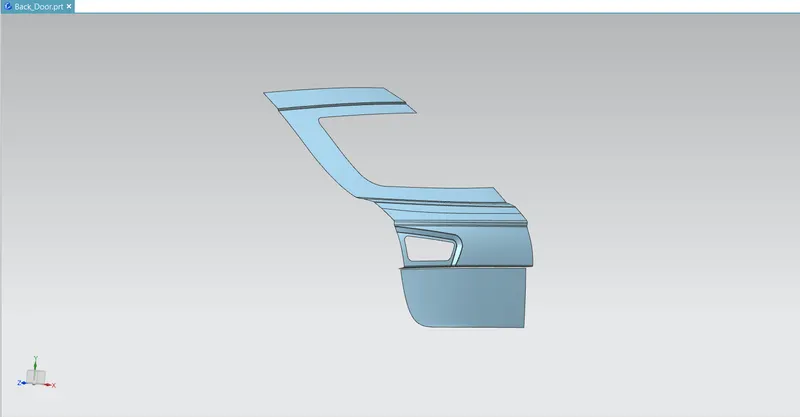
Given Class A Surface
Improving Class A Surface -
Try sew the surfaces
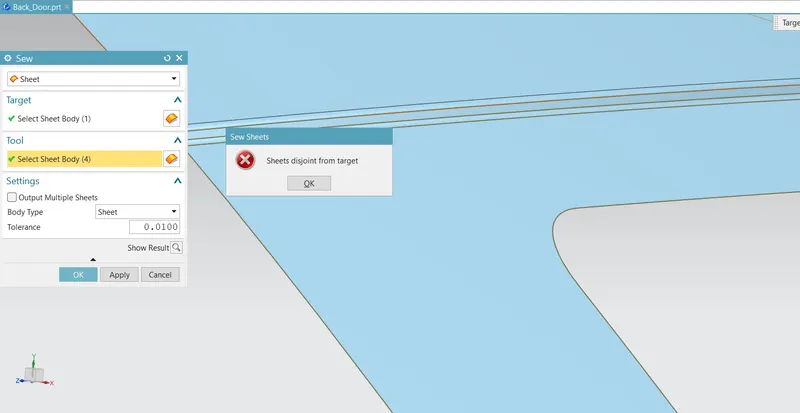
Surfaces cant be sewed together because there is gap between surfaces
We need to improve surfaces by creating new surfaces and then have to use sew operation so it makes complete one body.
Now we can hide the surfaces and make new surfaces by creating bridge curve between them and use of through curve mesh
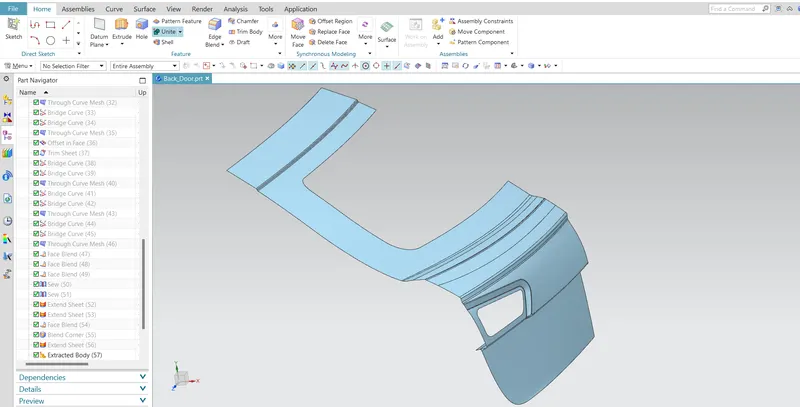
From tree panel we see that all operation are succesfully done
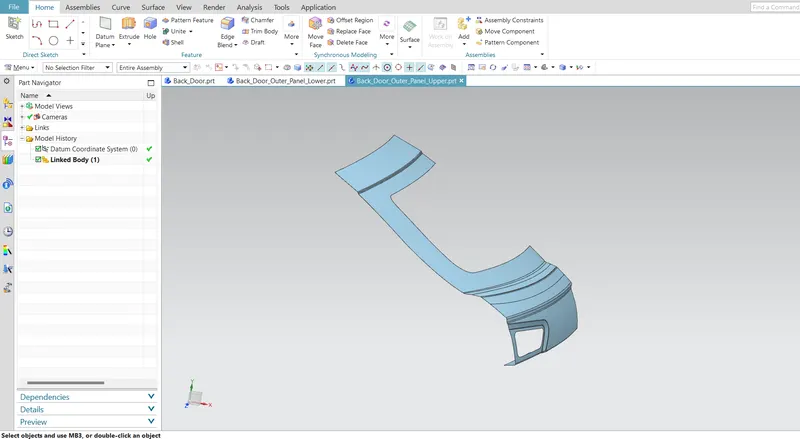
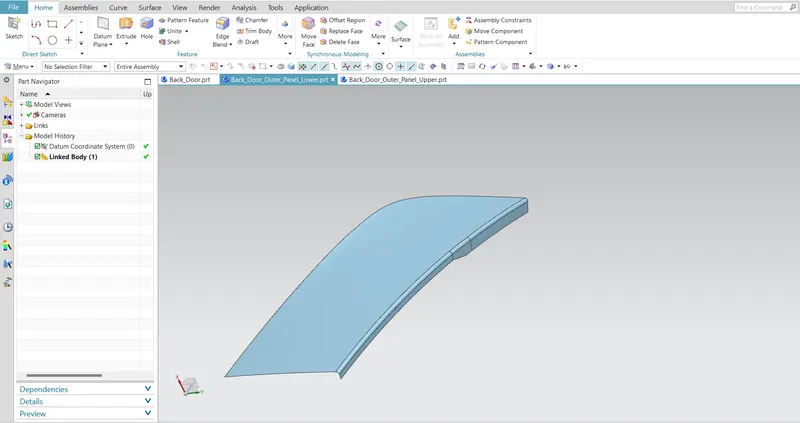
Now devide the body in two parts by extracting the body to create a new parts like back door outer panel upper back door outer panel lower
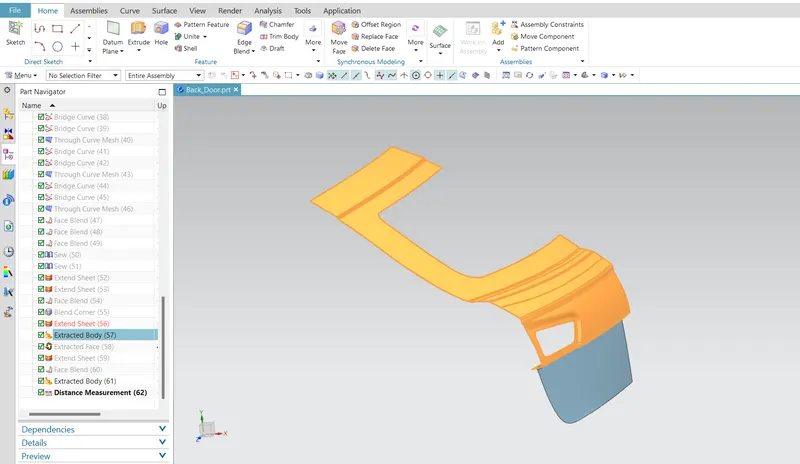
Highlited part is our back door outer panel upper
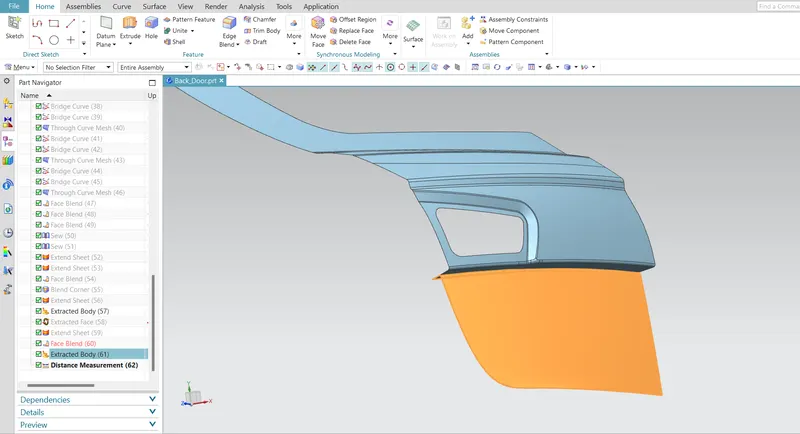
This highlited part is our back door outer panel lower
Now just create a new part file and make a copy of this extracted body to create a new part file
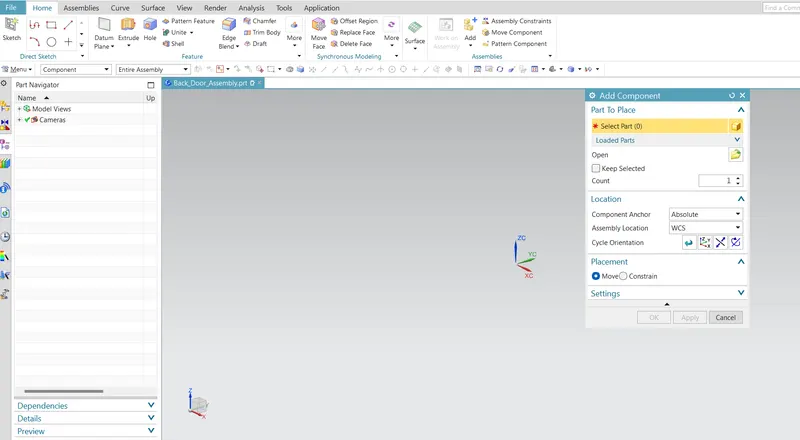
Now create a new assembly file and load this component in it
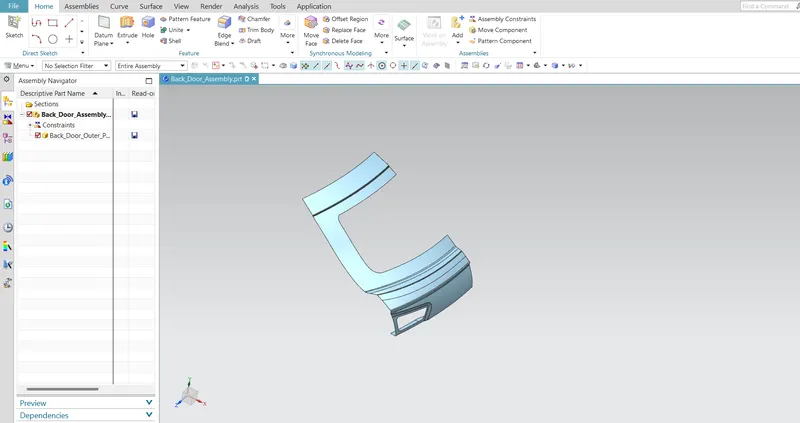
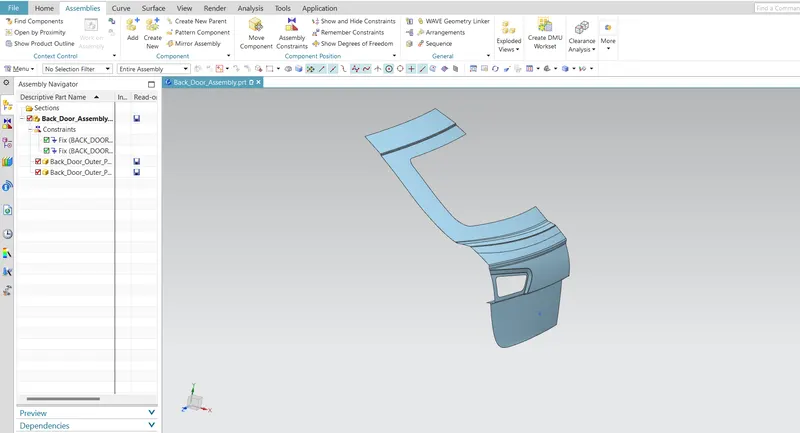
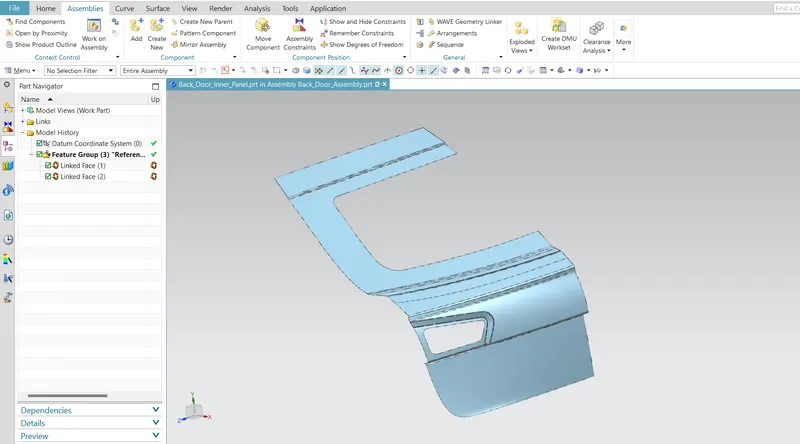
Now using wave geometry link make a linked required faces in inner panel of back door and then move the linked body in feature group called reference geometry
Back door Inner panel -
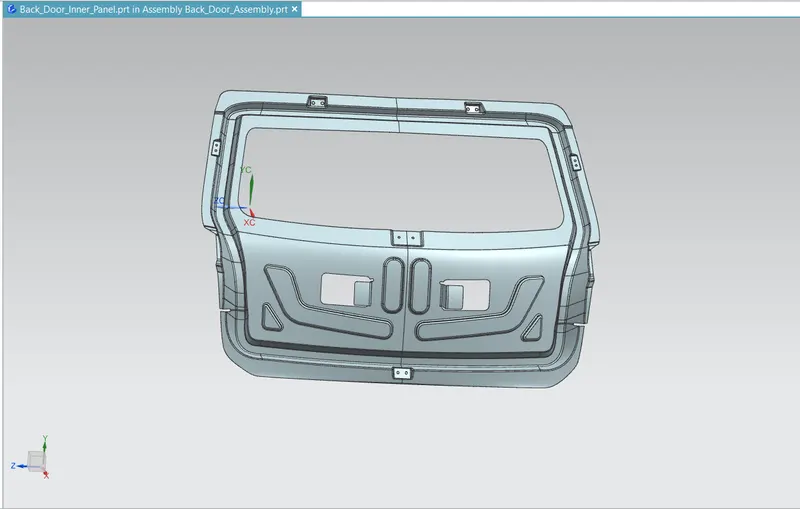
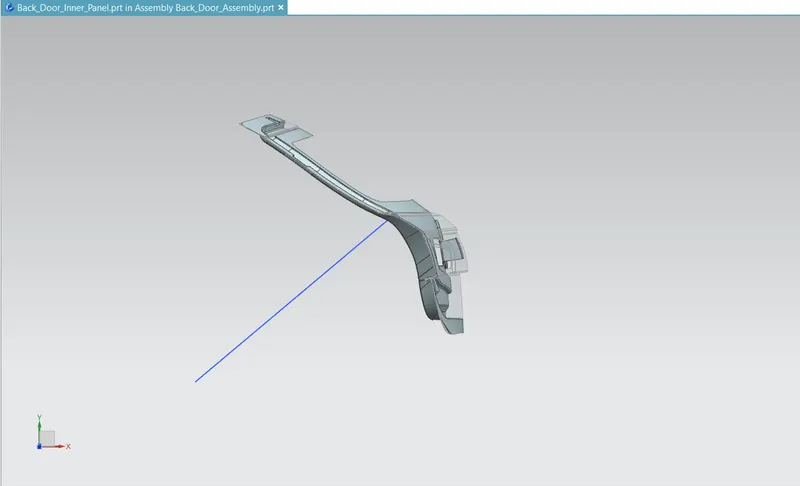
The inner panel, as the name suggests, is the inner part of the door. It is where most of the reinforcements and components are mounted. It is manufactured either by casting (aluminum) or sheet metal stamping (steel). Thickness of inner panel is 0.75 mm
Back Door Outer Panel -
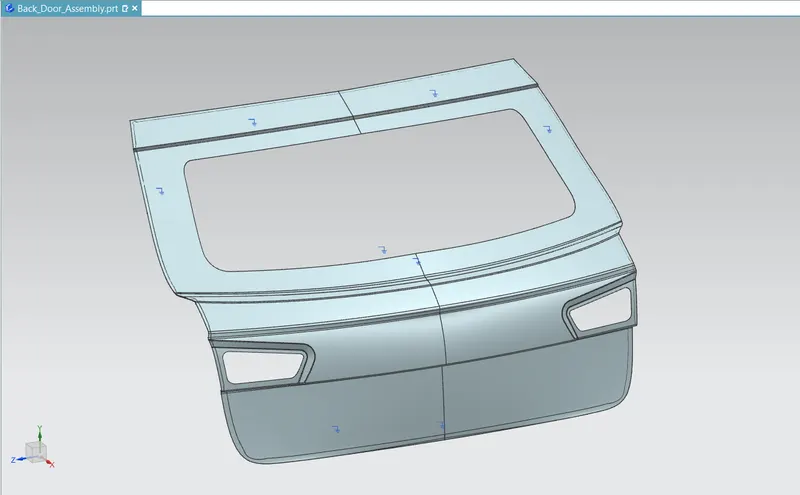
As the name suggests, it is the outer part of the rear door and is mostly responsible for aesthetics of the vehicle. Outer and inner panels are connected by mastic sealants in center and by hemming process at edges. The outer door handle and in some cases, the number plate may also be installed on the outer panel of the back door. We have considered a 2-part outer panel for our design, outer upper panel and outer lower panel prospectively. Outer panel is manufacture by stamping sheet metal. Thickness for outer panel is 0.75 mm
Reinforcements -
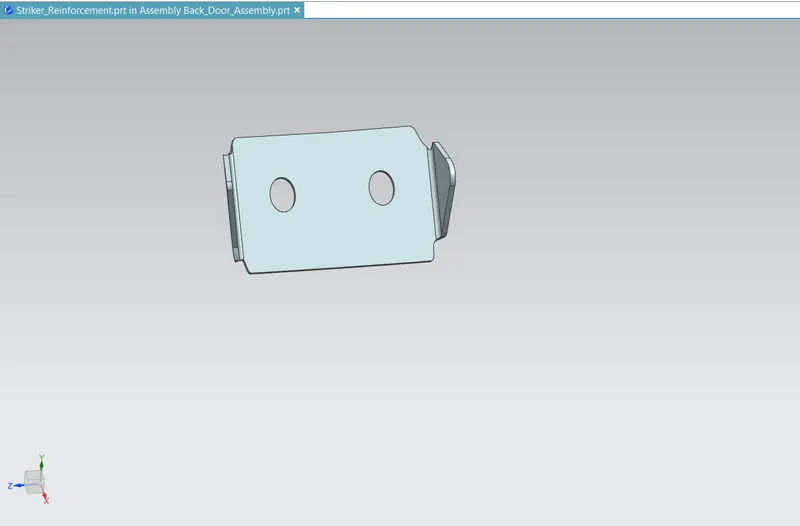
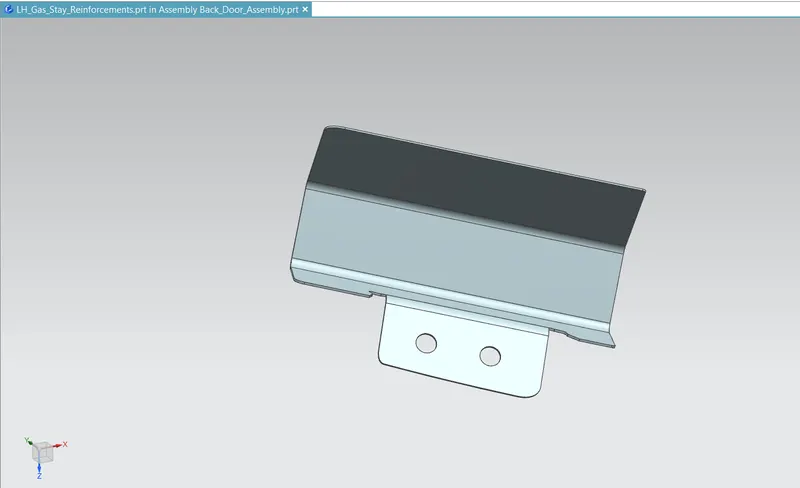
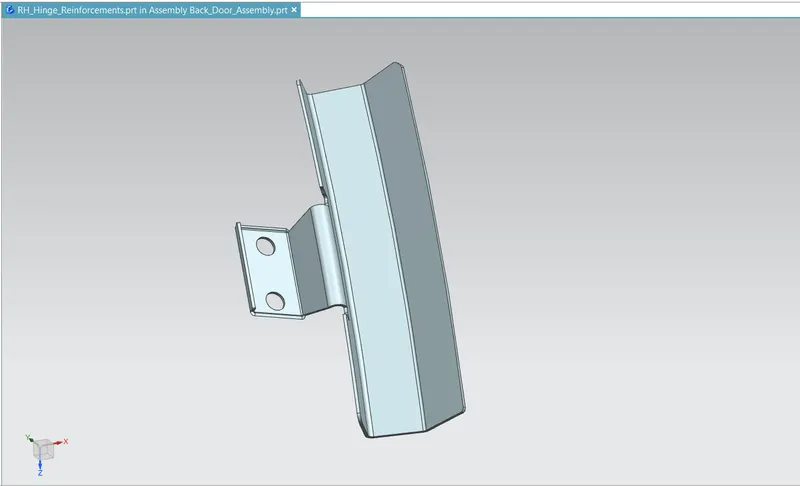
Reinforcements are provided to provide support and add extra material to the sheet metal part to increase its strength near component installation regions and minimize the impact of collisions. We have considered following reinforcements during our design. The reinforcements maybe manufactured by stamping. Thickness of all reinforcements is 1.5 mm.
Latch Striker Reinforcements-
Wiper Motor Reinforcements -
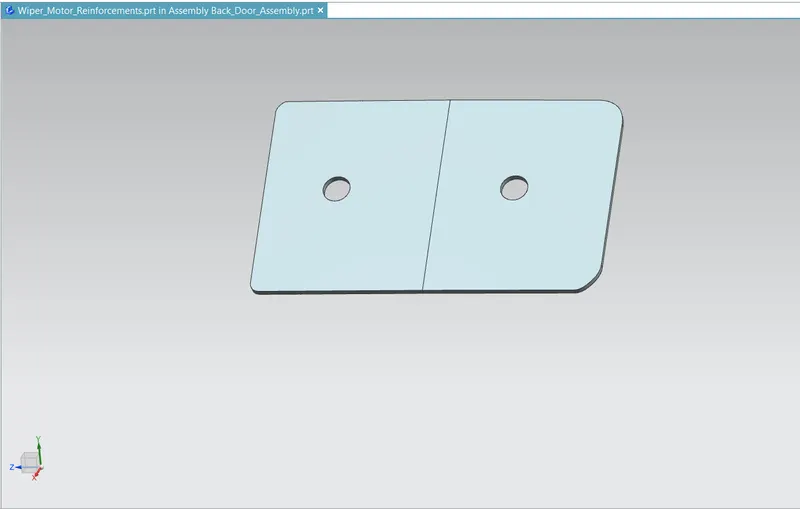
It is small mounting for electric motor which is mounted in the rear Tail gate. It used to clean the rear wind sheid for clear visibility.
Gas Stay Reinforcements -
Hinge reinforcements -
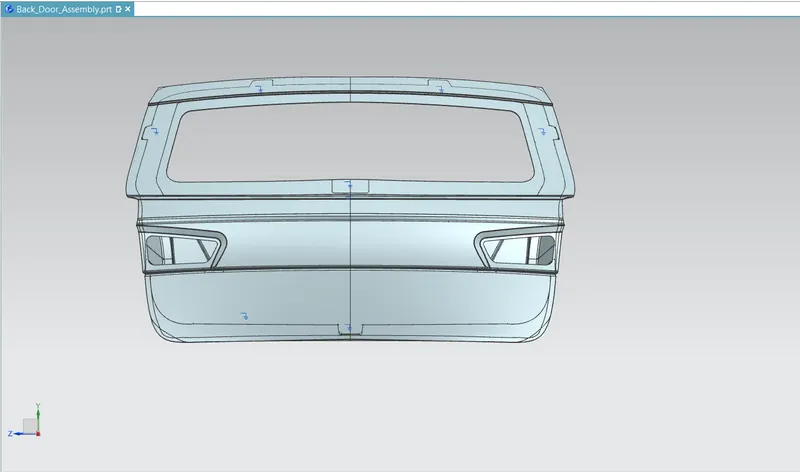
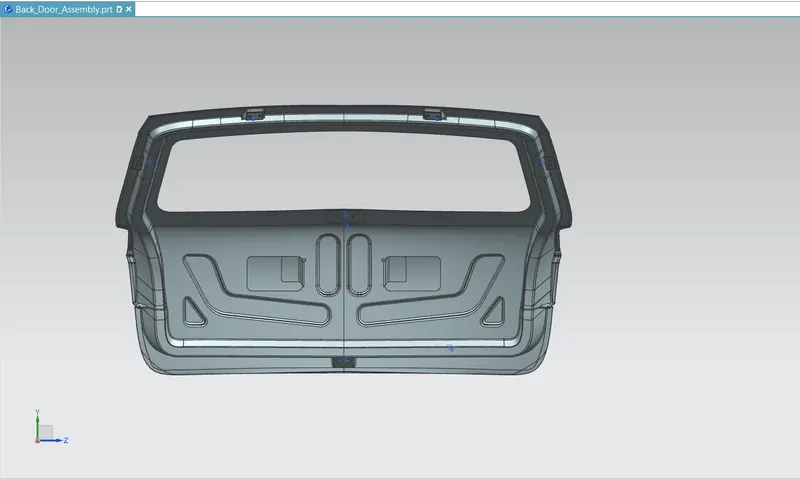
Assembly -
Corner Relief -
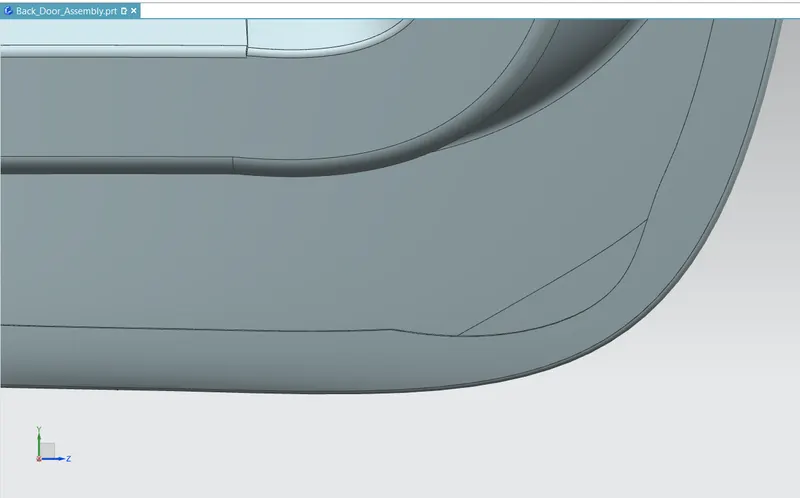
Relief helps to control sheet metal material behavior and to prevent unwanted deformation during unbend operations. So here gave two cornor relief for Back door.
Hemming -
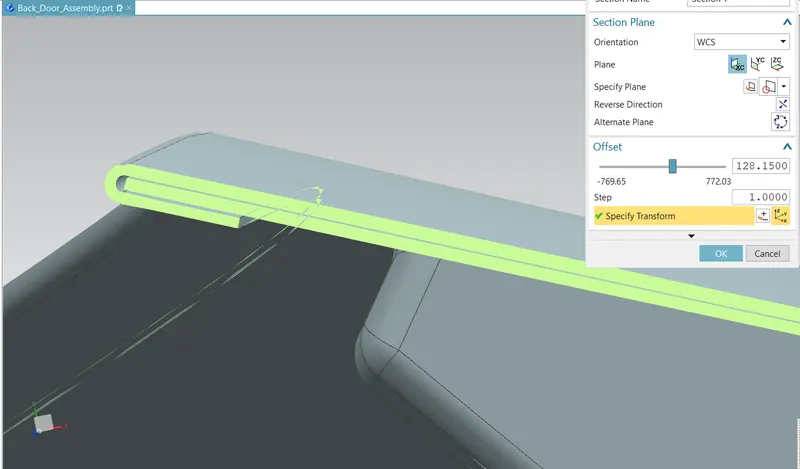
Hemming and seaming are two similar metalworking processes in which a sheet metal edge is rolled over onto itself. Hemming is the process in which the edge is rolled flush to itself, while a seam joins the edges of two materials.
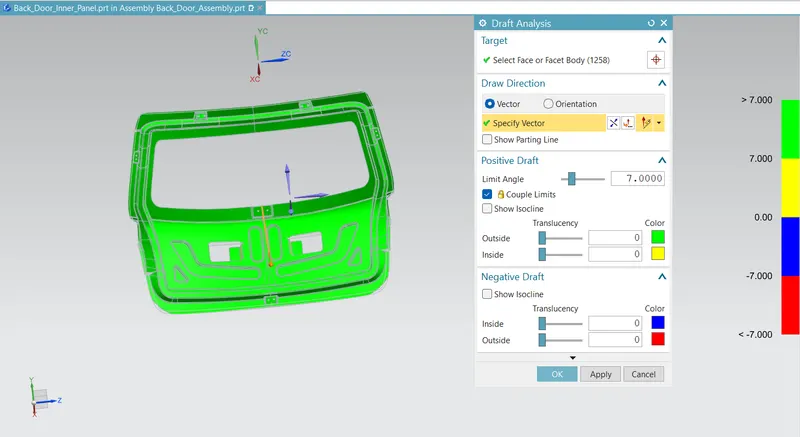
Draft analysis -
Back door Inner panel -
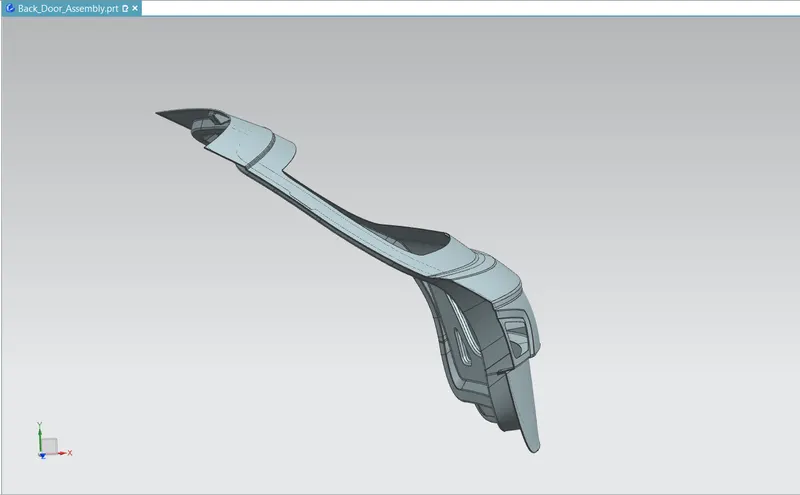
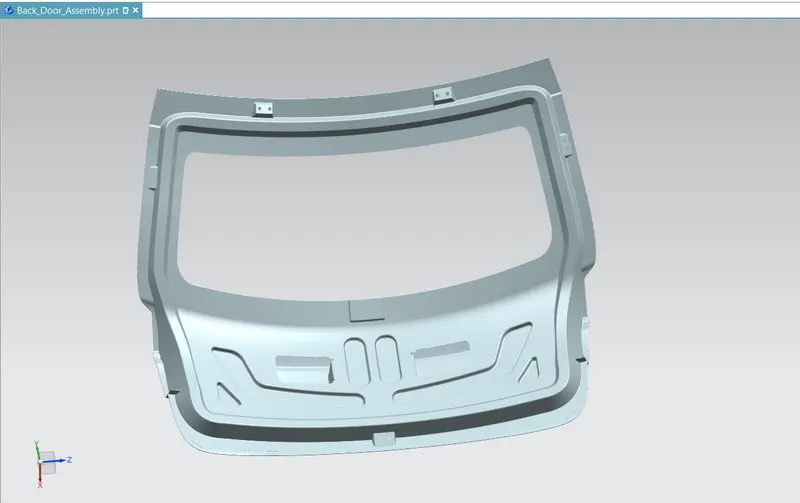
Final Part -
Conclusion -
We were able to successfully design the inner panel of the back door and then assembled all the other parts of the back door. We came to know about the various parts and process behind designing the inner panel of the back door and even the design comsiderations. We also learnt about the various tools used in NX Cad.