Design of backdoor
DESIGN OF BACKDOOR
AIM : Designing the BACK DOOR , REINFORCEMENTS AND EMBOSSES from given styling surface .
Introduction to Backdoor :
The back door of a car is used to access the boot of a car. The back door consists of two panels in which the outer panel and inner panel. The inner panel is used for providing strength to the outer panel.
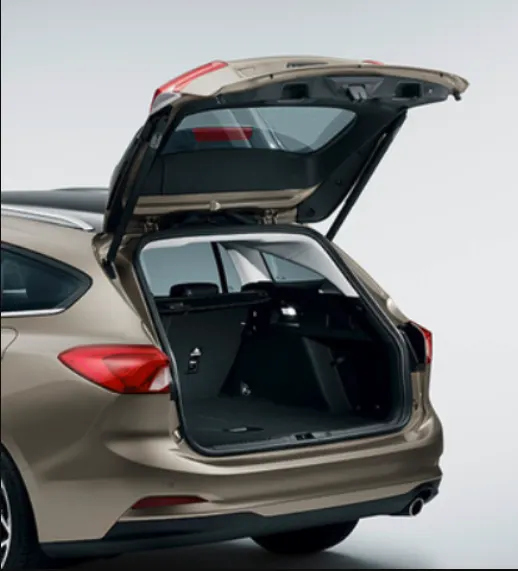
The Back Door of a car is the rearmost part of the vehicle which gives access to the trunk space of the vehicle. The rear door also supports the reinforcements and added weights of the Wiper Motor, Gas Stay, Tail Lamp, and Latch and Striker.
The Backdoor/tailgate is one of the closure commodities in BIW sheet metal design. The backdoor has a lot of components inside and is designed to incorporate them easily. It affects the rear visibility and luggage area.
The material used for door manufacturing depends on the budget and performance of the vehicle. Mostly Aluminium and Steel will be used whereas low-budget vehicles use Steel which makes the manufacturing process easy and cost-efficient since it follows the Stamping of Moulds.
DESIGN CONSIDERATIONS FOR BACK DOOR :
-
Functional Requirement of Hinge and gas stay
-
Rear visibility criteria
-
Luggage volume
-
Crash Analysis
-
Bend Test, Dent Test, Torsion Test & Endurance Test
-
Rear Crash Regulation
-
Gap and flushness Requirements
PARTS IN BACK DOOR DESIGN :
1. OUTER PANEL UPPER
2. OUTER PANEL INNER
3.INNER PANEL
4. HINGE REINFORCEMENTS
5. GAS STAY REINFORCEMENTS
6. WIPER MOTOR REINFORCEMENT
7. STRIKER REINFORCEMENT
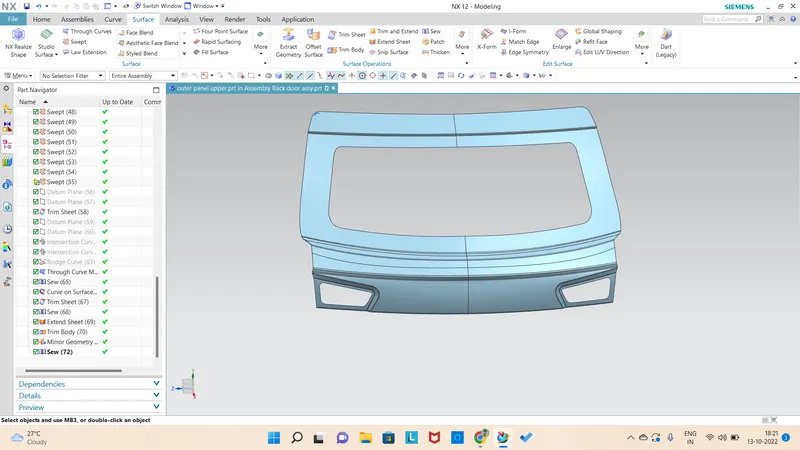
1. OUTER PANEL UPPER :
The Outer Panel upper is developed from styling surface.The thickness provided for the outer panel is: 0.75 mm .
Hemming is provided with corner relief.
2. OUTER PANEL INNER
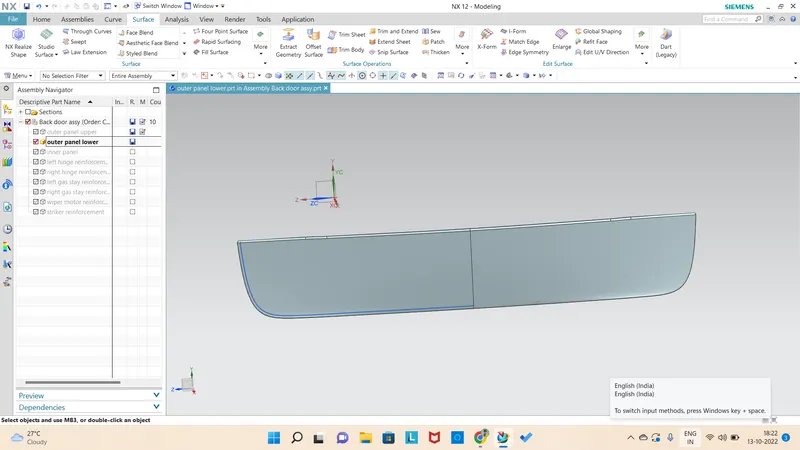
The Outer Panel upper is developed from styling surface.The thickness provided for the outer panel is: 0.75 mm.
Hemming is provided with corner relief.
3.INNER PANEL
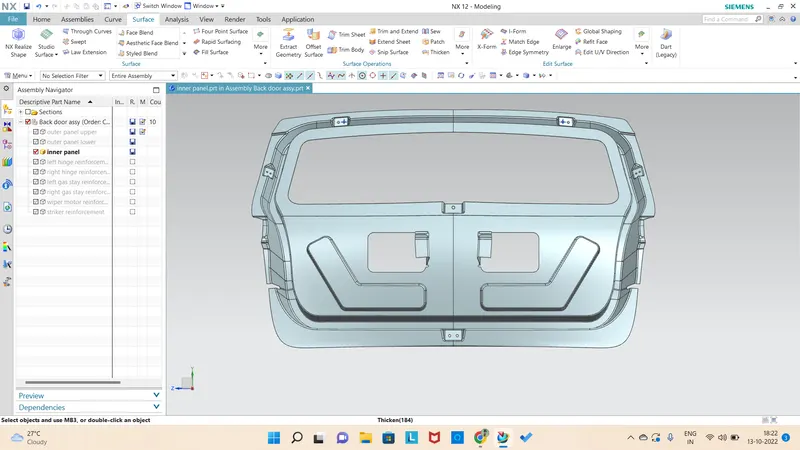
After creating the tooling direction the design of the inner panel will begin where we will first develop an effective sealing flange by checking all the boundaries and by following the shape of the inner panel design. By creating multiple flanges and by using surface modeling techniques the concept design of the inner panel was created.
After the concept of the inner panel is developed, then the child components like a hinge, latch, gas-stay locations, and their reinforcements must be designed. Which completes the overall design of the tailgate.
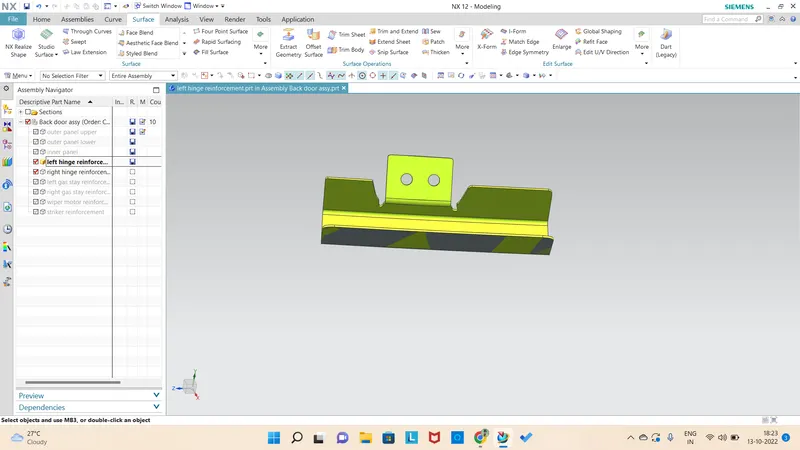
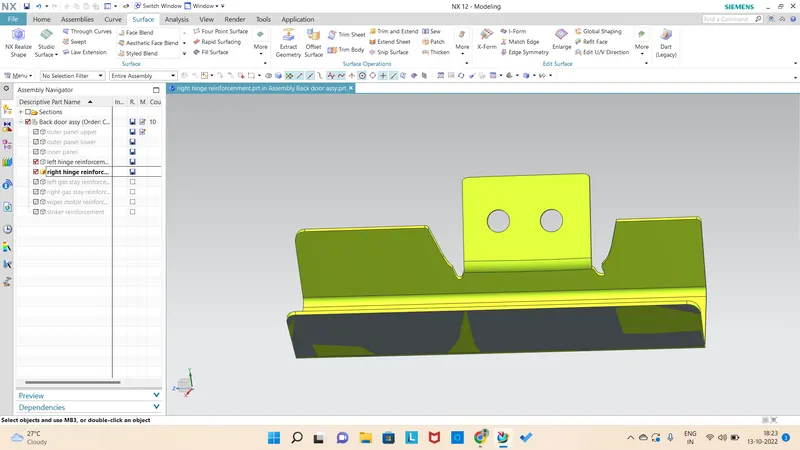
4. HINGE REINFORCEMENTS
Reinforcements are provided to provide support and add extra material to the sheet metal part to increase its strength near component installation regions and minimize the impact of collisions. We have considered following reinforcements during our design. The reinforcements maybe manufactured by stamping.The thickness provided for reinforcements is 1.5mm
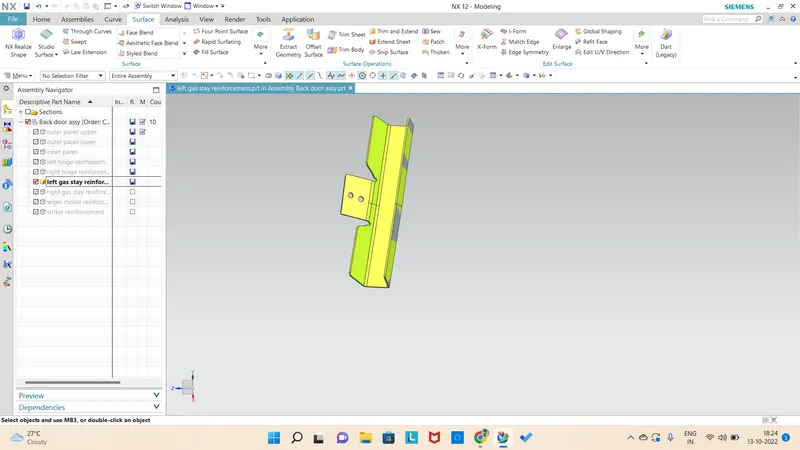
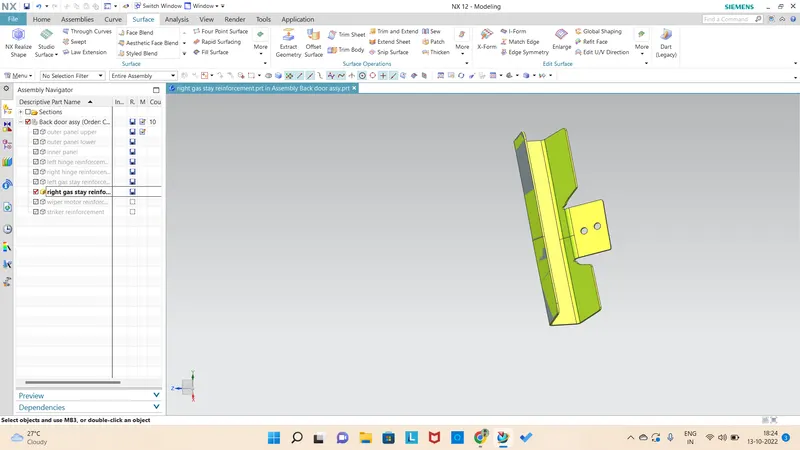
5. GAS STAY REINFORCEMENTS
Reinforcements are provided to provide support and add extra material to the sheet metal part to increase its strength near component installation regions and minimize the impact of collisions. We have considered following reinforcements during our design. The reinforcements maybe manufactured by stamping.The thickness provided for reinforcements is 1.5mm
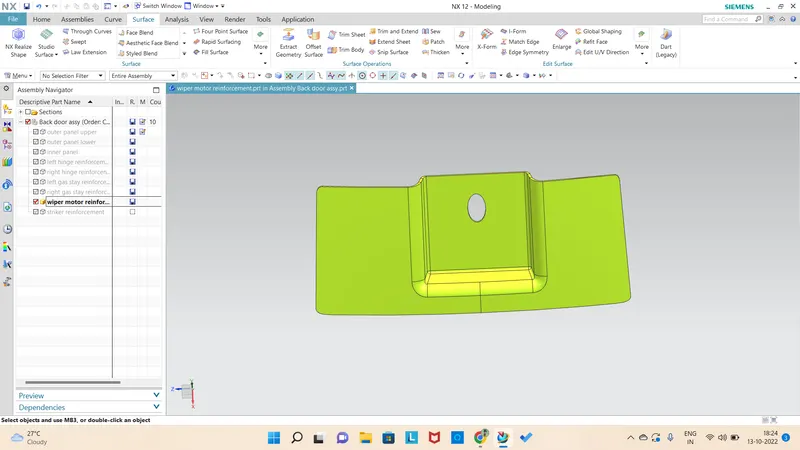
6. WIPER MOTOR REINFORCEMENT
Reinforcements are provided to provide support and add extra material to the sheet metal part to increase its strength near component installation regions and minimize the impact of collisions. We have considered following reinforcements during our design. The reinforcements maybe manufactured by stamping.The thickness provided for reinforcements is 1.5mm
7. STRIKER REINFORCEMENT
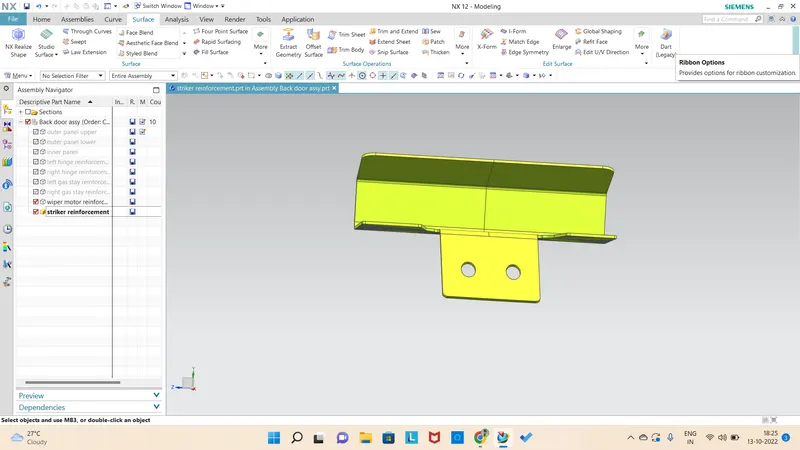
Reinforcements are provided to provide support and add extra material to the sheet metal part to increase its strength near component installation regions and minimize the impact of collisions. We have considered following reinforcements during our design. The reinforcements maybe manufactured by stamping.The thickness provided for reinforcements is 1.5mm
TOOLING DIRECTION :
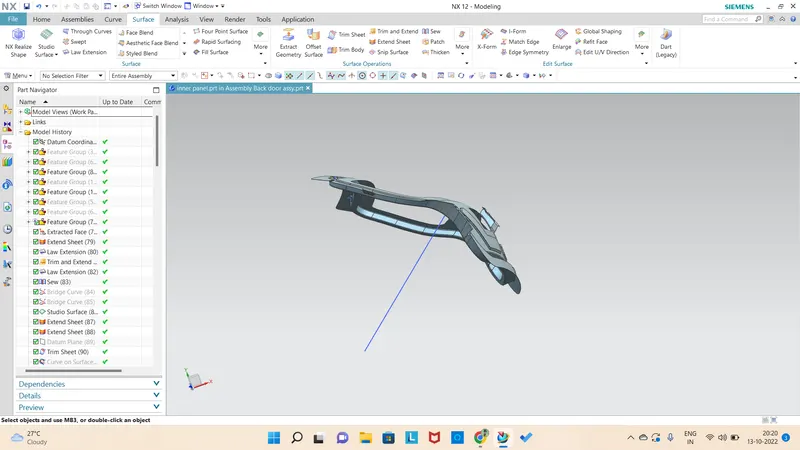
1.Before starting to design the inner panel of the back door the tooling direction for Deep Drawing purpose should be created.
2.Then the styling surface needs to be checked and analyzed since it might have irregularities, hence it must be fixed first.
3.Then the back door was designed using the top-down approach.
DRAFT ANALYSIS :
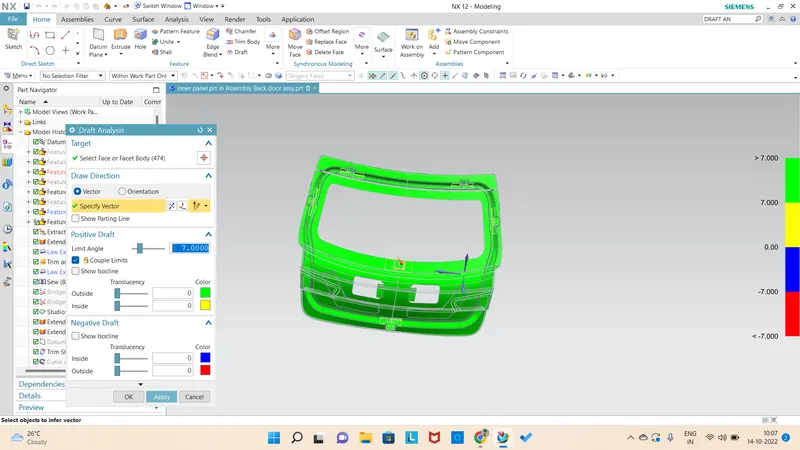
In order to make sure the drawing of inner panel body is proper; we do draft analysis. We need to define the drawing direction and select the inner panel body.
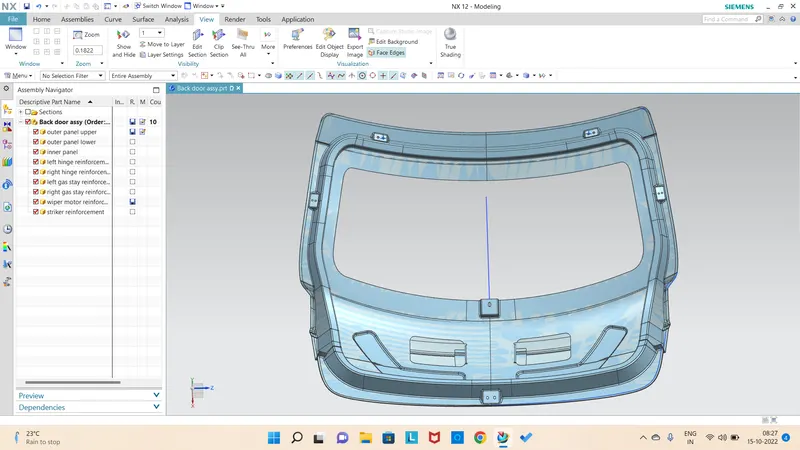
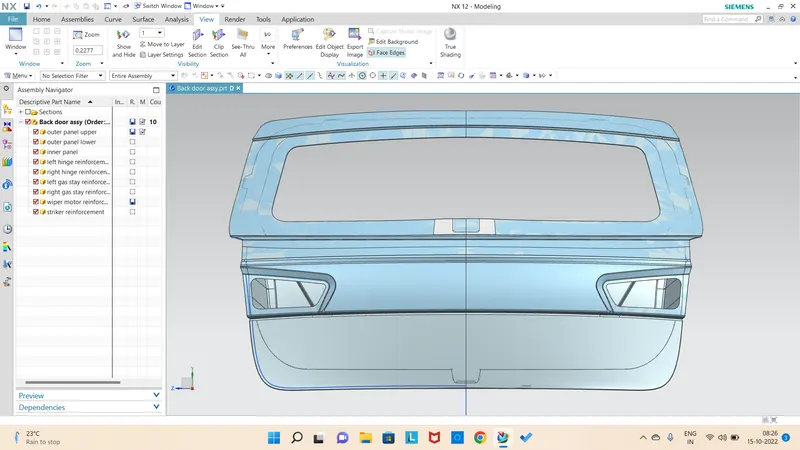
BACK DOOR DESIGN PICS :
CONCLUSION:
The back door design has completed by using appropriate design methodologies and the necessary reinforcements and embosses from the given styling surface.