Design of backdoor
BACKDOOR DESIGN USING NX CAD
OBJECTIVE
To design a car backdoor using the provided styling surface and appropriate design methodologies and provide the necessary reinforcements and embosses.
INTRODUCTION
A backdoor in an automobile is an essential part, which provides the opening and closing of the trunk in a car. It is a swinging commodity like hood and side doors and the opening and closing of the backdoor is about the hinge axis of the hinges mounted on the car body. The gas stay is most commonly used in cars in order to hold the backdoor in the open position so that it does not hit the person loading /unloading the trunk. The position of the gas stay is relative to the position of hinge mounting. The backdoor also has latch and striker mounts, wiper motor mounts, and also space for mounting the tail lamp. Reinforcements must be provided at the places where mountings are located in order to add more strength.
The rear visibility criteria must also be satisfied while designing the backdoor. The material usually used for backdoor is steel considering the budget of the car and premium cars opt for aluminum.
PARTS OF THE BACKDOOR
- Outer panel upper
- Outer panel lower
- Inner panel
- Reinforcements( Hinge, gas stay, wiper motor, and latch and striker)
OUTER PANEL
The outer panel has two parts namely the upper panel and the lower panel. The outer panel is the styling surface that adds aesthetic value to the car. The outer panels have provisions for mounting the tail lamp and the rear windshield.
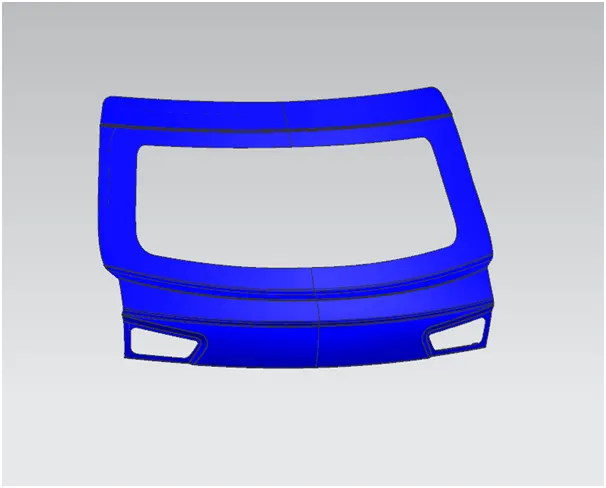
Image of the outer panel upper
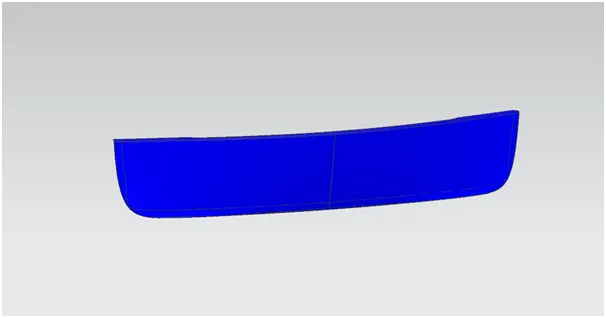
Image of the outer panel lower
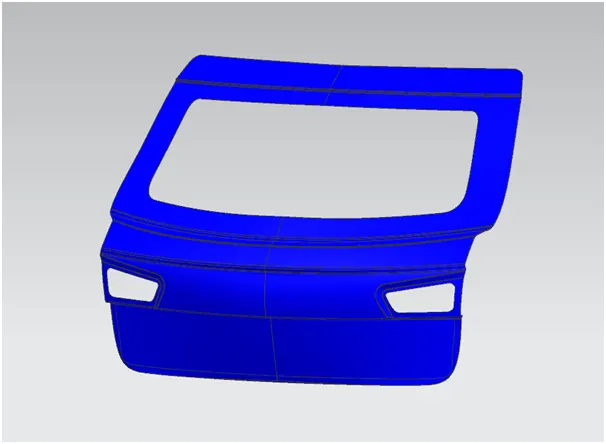
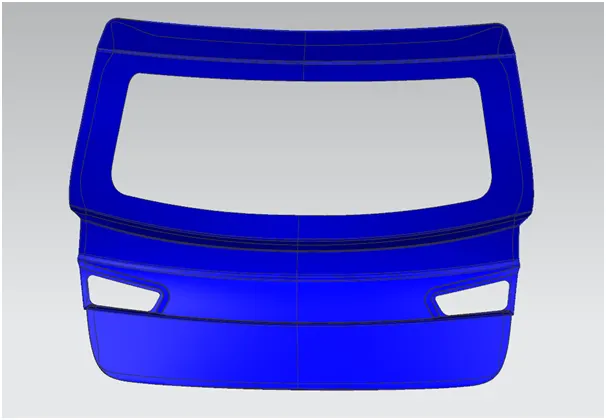
The upper and the lower panel assembled together.
INNER PANEL
The inner panel provides strength to the backdoor. It also houses embosses for mounting hinges, gas stay, latch and striker and wiper motor. The reinforcements are spot weld with the inner panel at the locations where the embosses are present to compensate for the loss in strength.
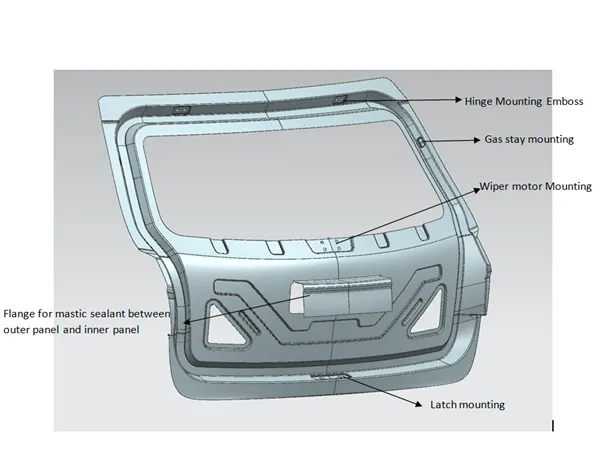
Image of the inner panel with required mountings
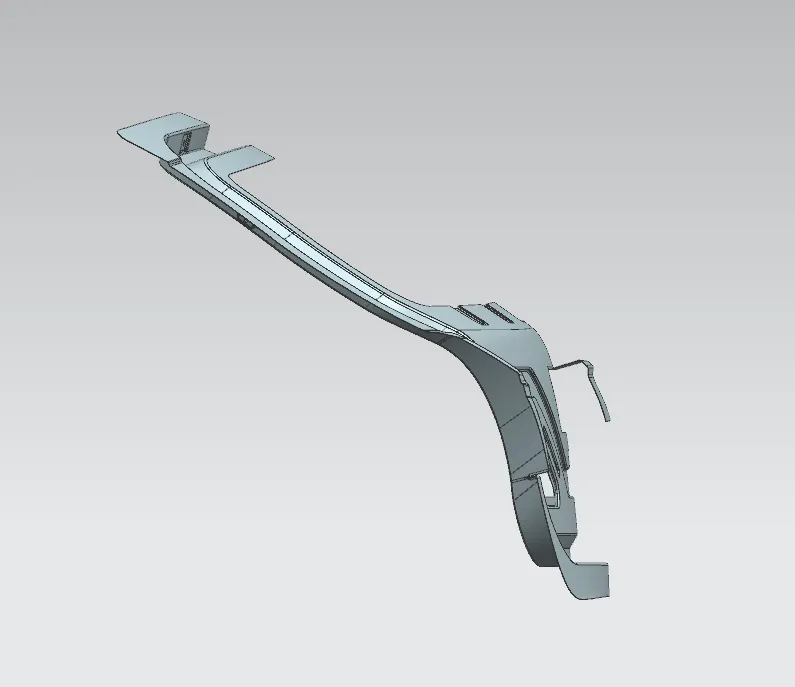
Side view of the inner panel
The flange is provided for the mastic sealant between the outer panel and the inner panel in order to reduce the rattling noise due to vibration.
REINFORCEMENTS
Reinforcements are provided in the regions where we need to compensate for the loss of strength.
Hinge Reinforcement
The hinges help in opening and closing the backdoor and embosses are provided to mount the hinges in the backdoor inner panel, the hinge reinforcement is added in this region to add more strength that has been lost due to the addition of the embosses.
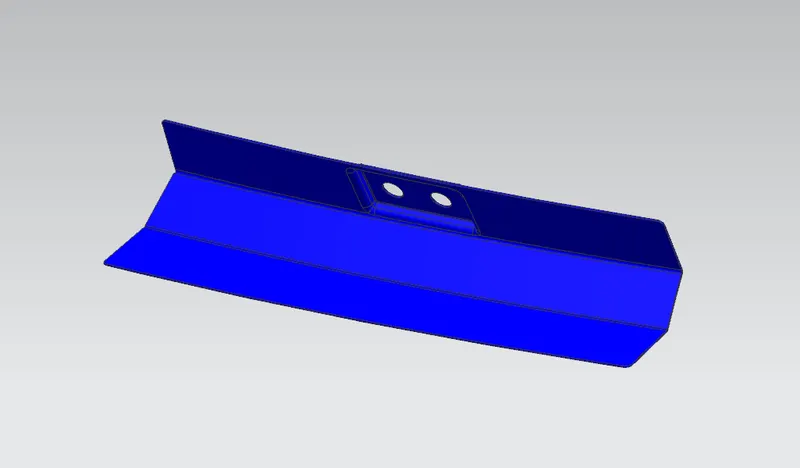
Gas stay Reinforcement
Gas stay are used to hold the position of the backdoor in the open condition. Reinforcements are added to compensate for the loss of strength due to the gas stay mounts in the inner panel.
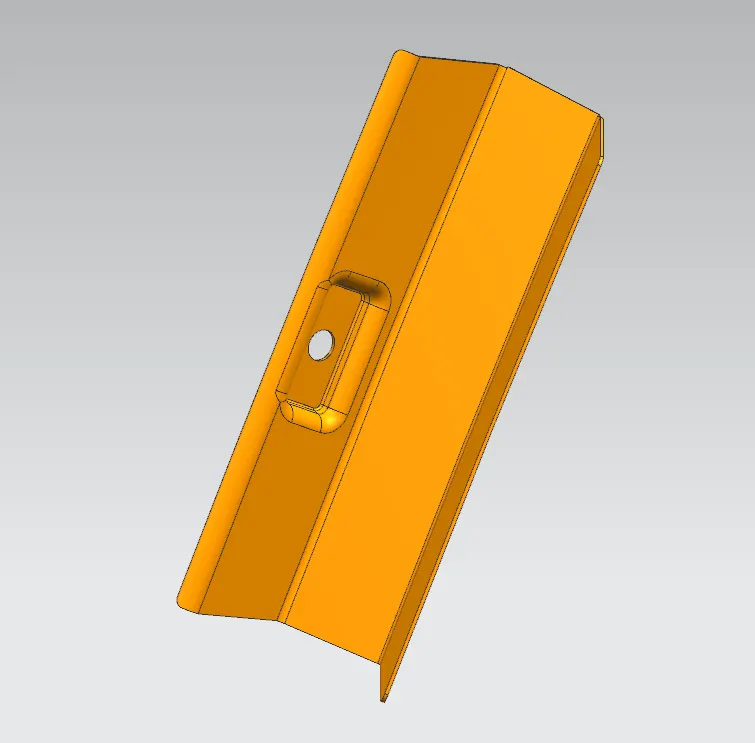
Wiper motor Reinforcement
The Wiper motor Reinforcement is provided in order to compensate for the strength of the inner panel which is lost due to the addition of the wiper motor setup.
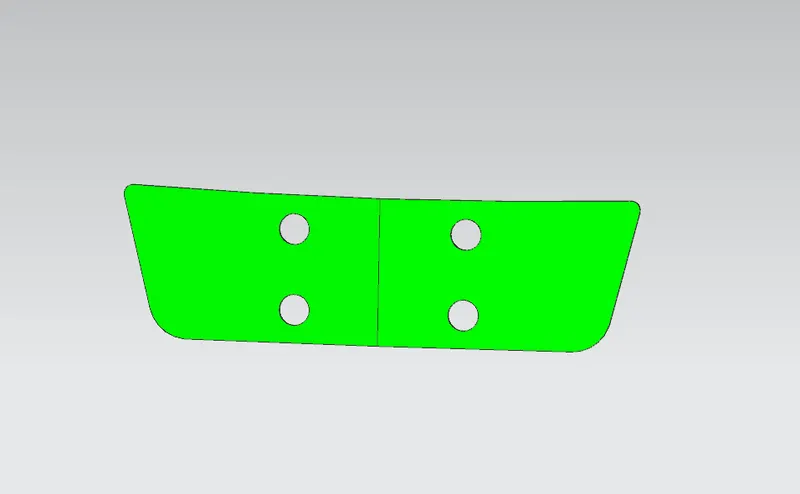
Latch and Striker Reinforcement
The latch and the striker help in locking the backdoor. More stress is developed due to the closing of the backdoor. So, reinforcements are added in order to compensate for the high stress acting.
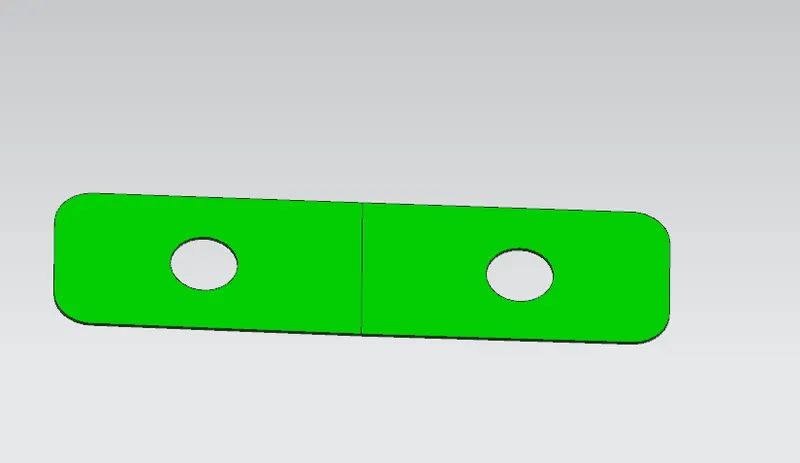
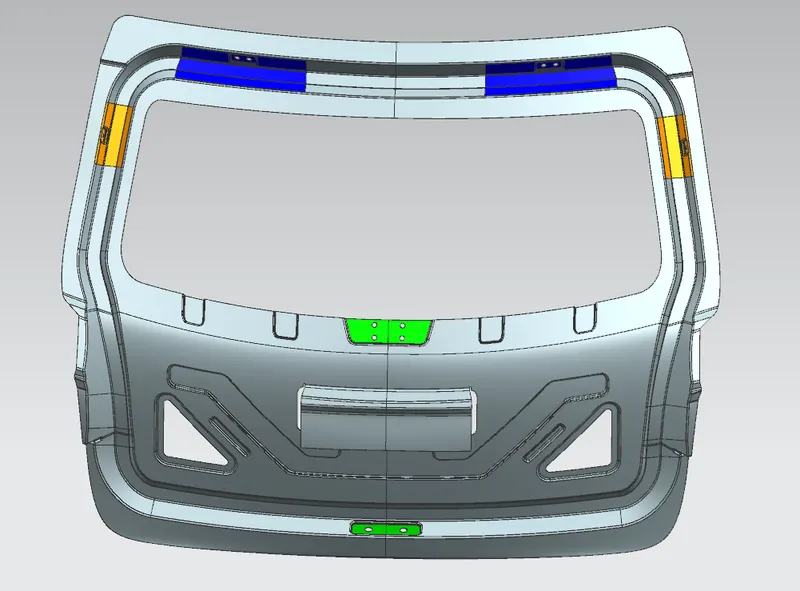
Position of all the reinforcements in the inner panel.
HEMMING
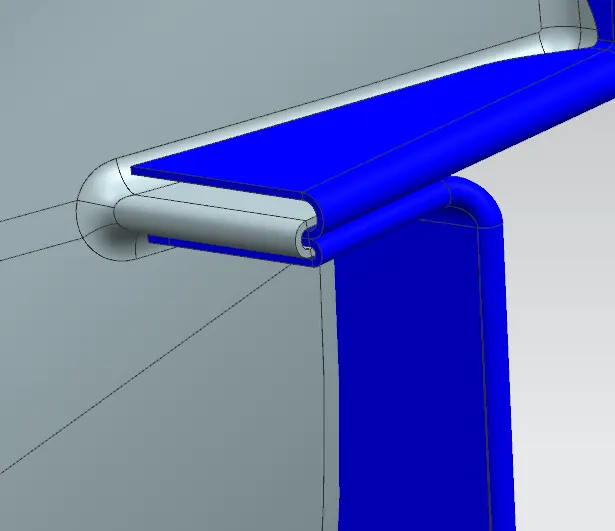
Hemming is folding of the edges of the sheet metal to create round and safe edges. In this case, hemming is used to wrap the outer panel of the backdoor with the inner panel of the backdoor to hold them together.
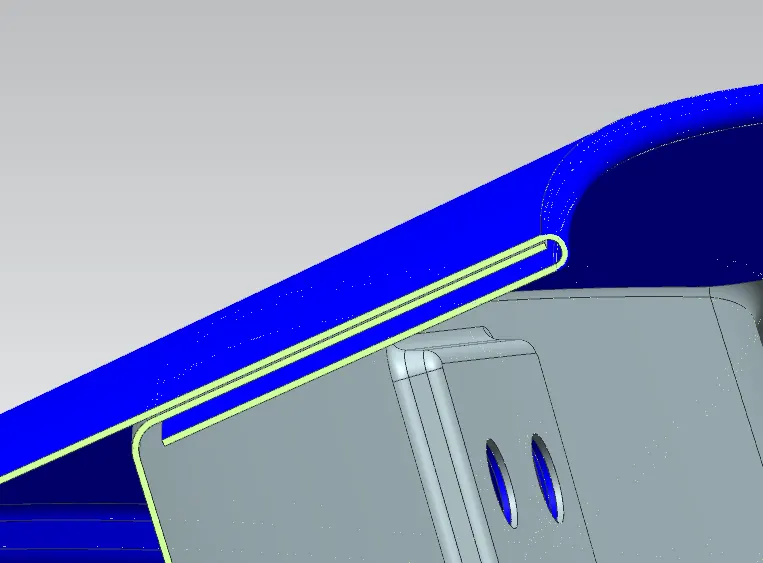
CORNER RELIEF
Corner relief is provided in the backdoor outer panel to have a smooth roll over during the hemming process.
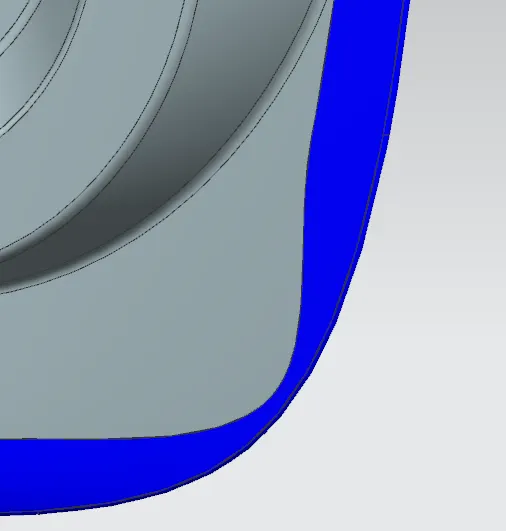
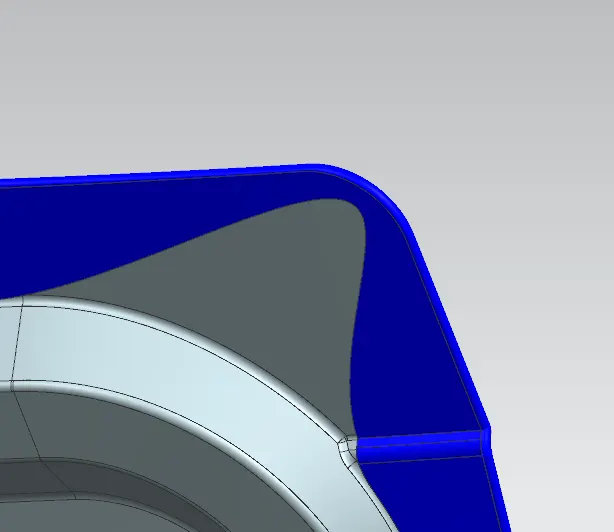
Image of Fully assembled Backdoor
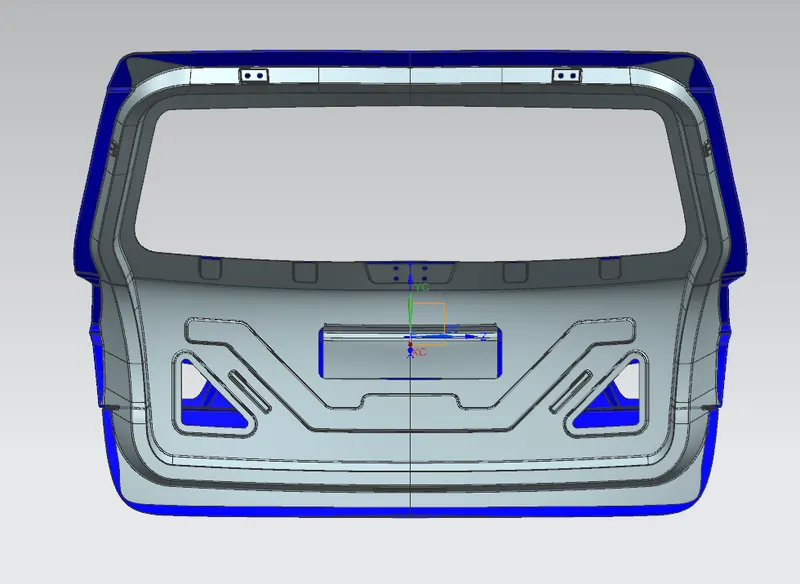
Backside View
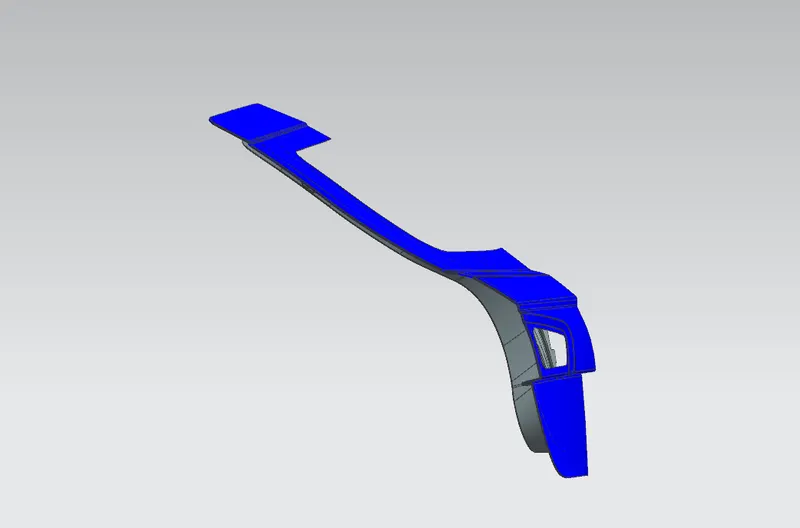
Side view
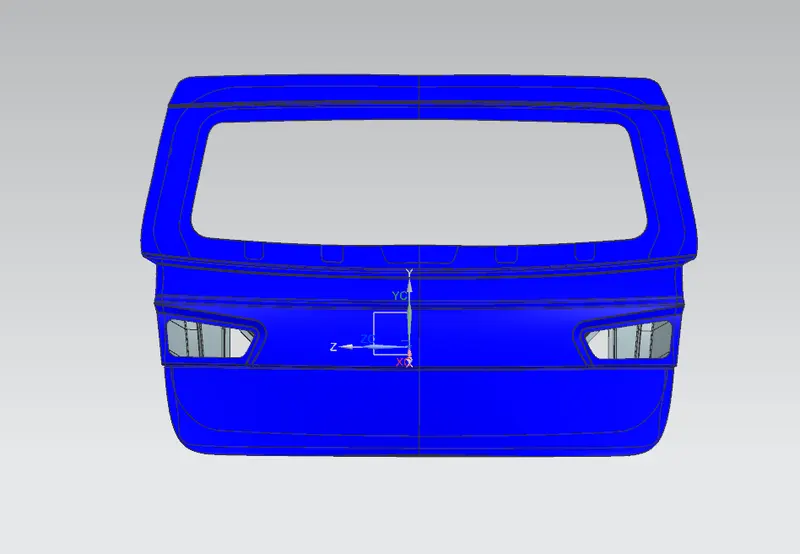
Front View
CONCLUSION
The backdoor was designed from the given styling surface and necessary embosses and reinforcements were added.