Design of backdoor
DESIGN OF BACK DOOR
BACK DOOR
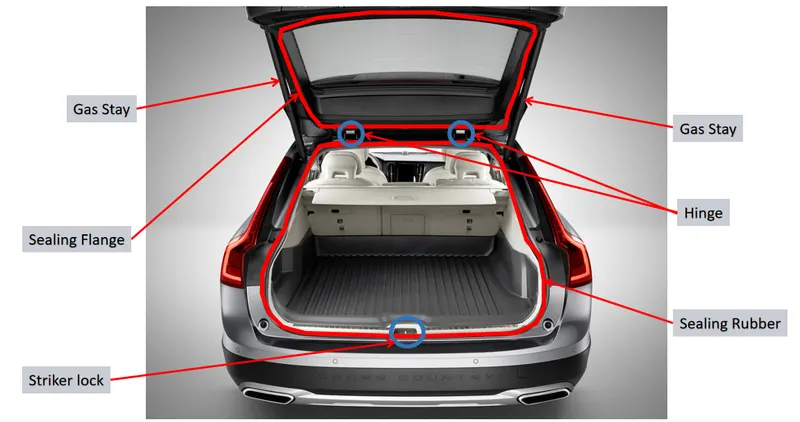
- A car door is a type of door opening, typically hinged on its front edge, but sometimes attached by other mechanisms such as tracks, for entering and exiting a vehicle. Doors most often integrate side windows for visibility from inside the car and can be locked to secure the vehicle.
ASSEMBLIES AND COMPONENTS
1.Inner pannel
2.outer panel upper
3.outer panel lower
4.Hinges
5.Latch and stricker
6.Gas stay
7.Wiper motor
8.Hinge reinforcements
9.Latch and stricker reinforcements
10.Gas stay reinforcements
11.Wiper motor reinforcements
INNER PANEL
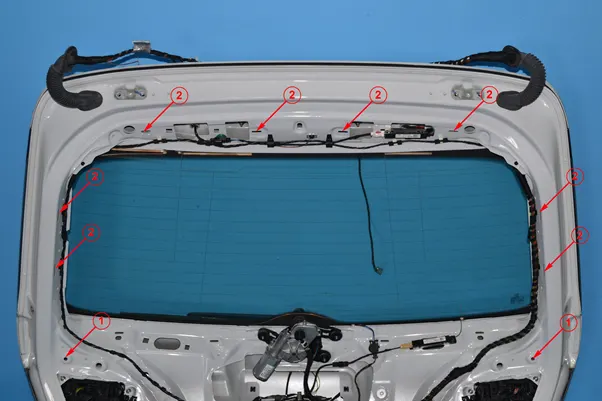
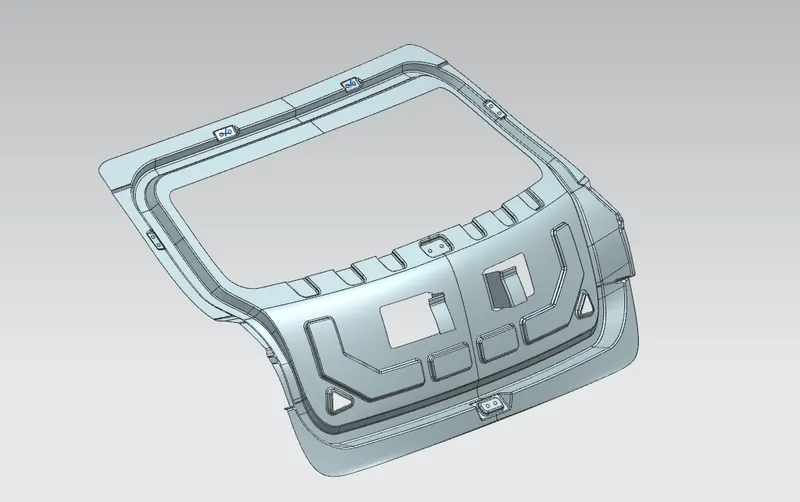
- The inner panel, as the name suggests, is the inner part of the door. It is where most of the reinforcements and components are mounted. It is manufactured either by casting (aluminum) or sheet metal stamping (steel)
OUTER PANEL
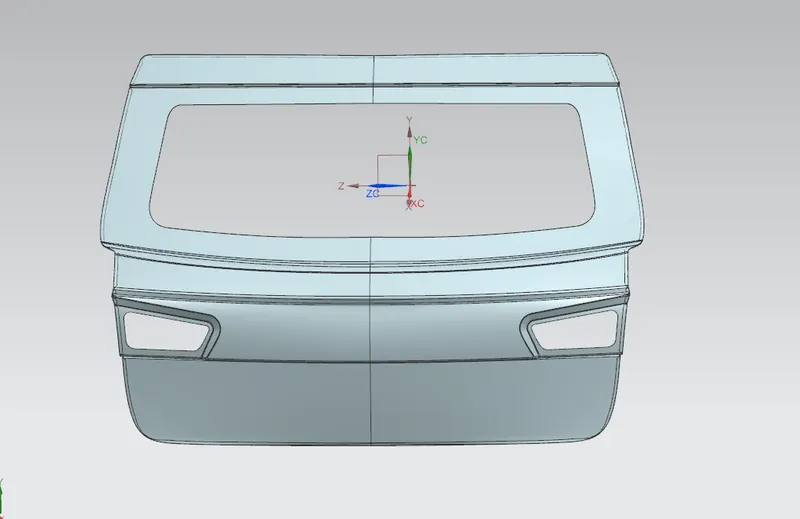
- As the name suggests, it is the outer part of the rear door and is mostly responsible for aesthetics of the vehicle. Outer and inner panels are connected by mastic sealants in center and by hemming process at edges. The outer door handle and in some cases, the number plate may also be installed on the outer panel of the back door. We have considered a 2-part outer panel for our design, outer upper panel and outer lower panel prospectively. Outer panel is manufacture by stamping sheet metal
REINFORCEMENTS
- Reinforcements are provided to provide support and add extra material to the sheet metal part to increase its strength near component installation regions and minimize the impact of collisions. We have considered following reinforcements during our design. The reinforcements maybe manufactured by stamping
- As the backdoor was hanging comodity the are area of the hinges need further strength so reinforcements are added
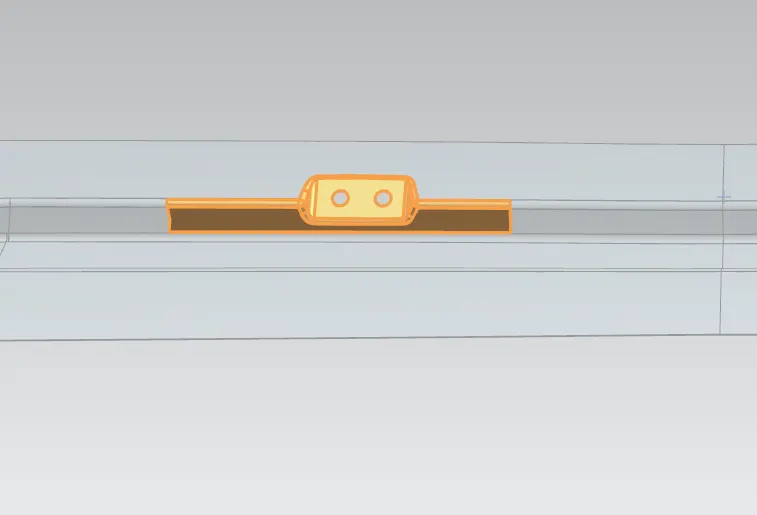
HINGE REINFORCEMENTS
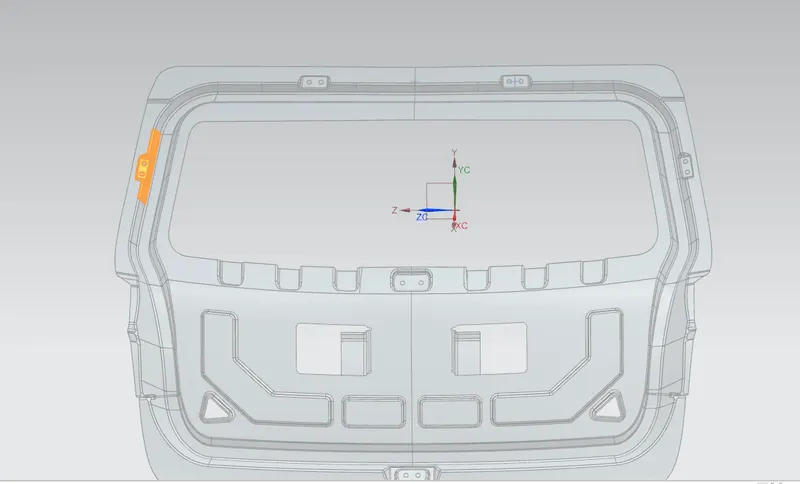
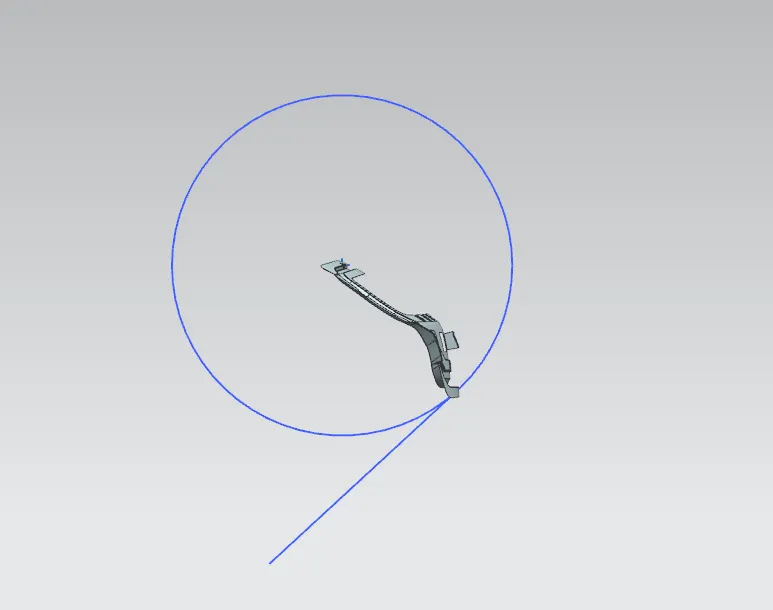
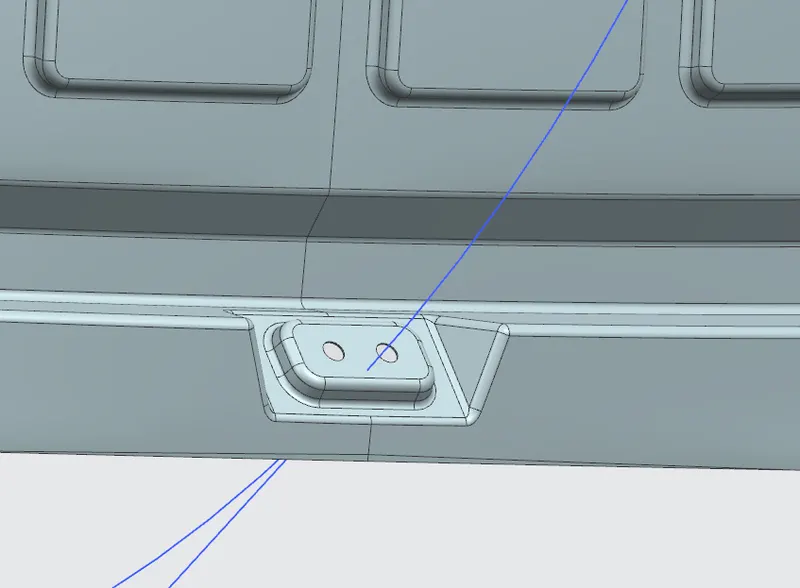
GAS STAY REINFORCEMNTS
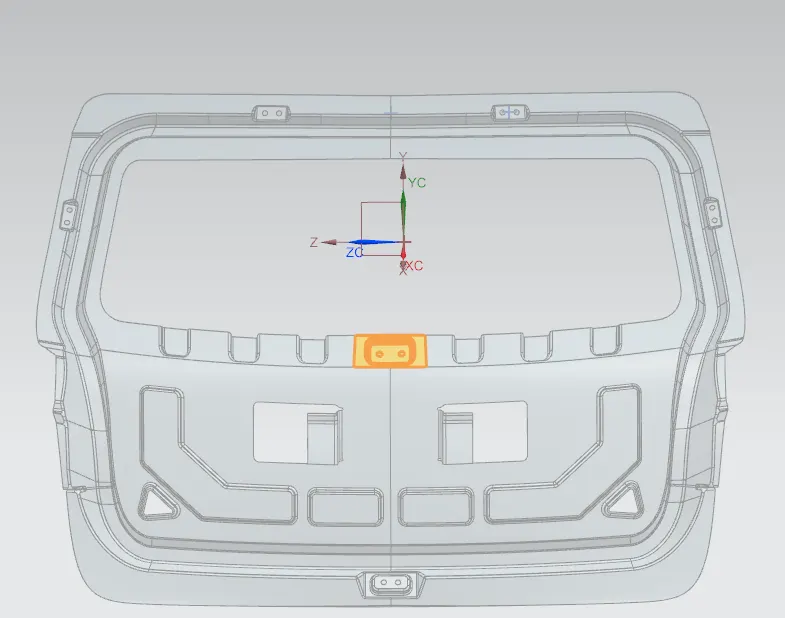
Wiper motor reinforcements
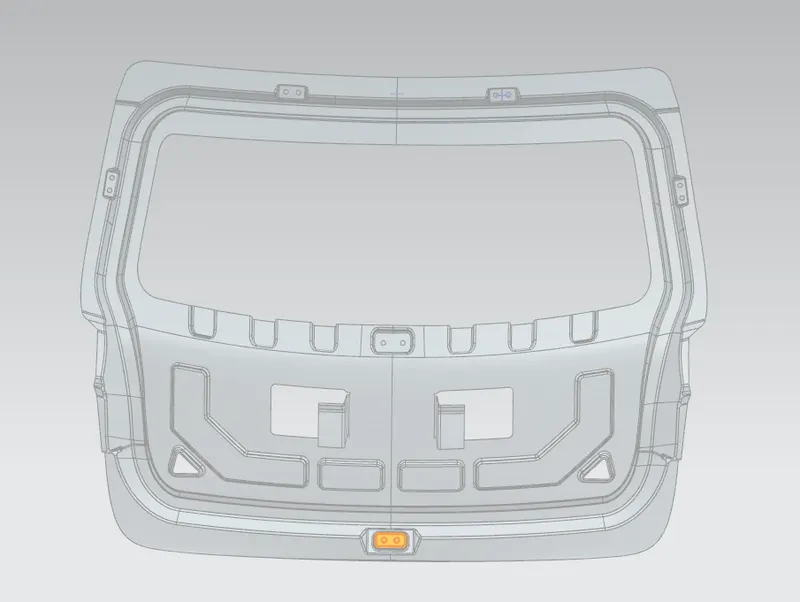
Latch and stricker reinforcements
GAS STAY
- Gas stay is basically a gas spring that relies on elastic deformation of a compressed gas which is enclosed in a cylinder. It is used to reduce required effort while opening the back door. Although all the cars don’t come with gas stays, it may be required in case of a heavy back door.
WIPER AND WIPER MOTOR MOUNTING
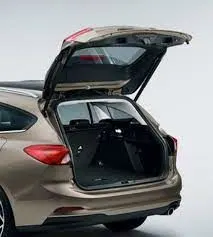
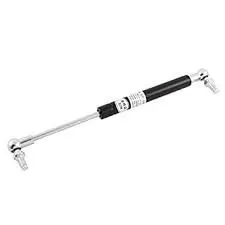
- As the name suggests, wiper is used to wipe off the dust and water from the rear windscreen of the vehicle.
HINGES
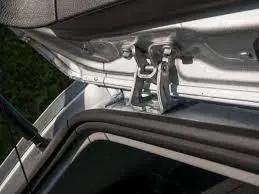
- Hinges connect the door with the vehicle body and allow the door to rotate around a fixed axis for opening and closing movement. Generally, hinges are a 2-part assembly, where one part is bolted to door and other is bolted to vehicle body.
MANUFACTURING PROCESS
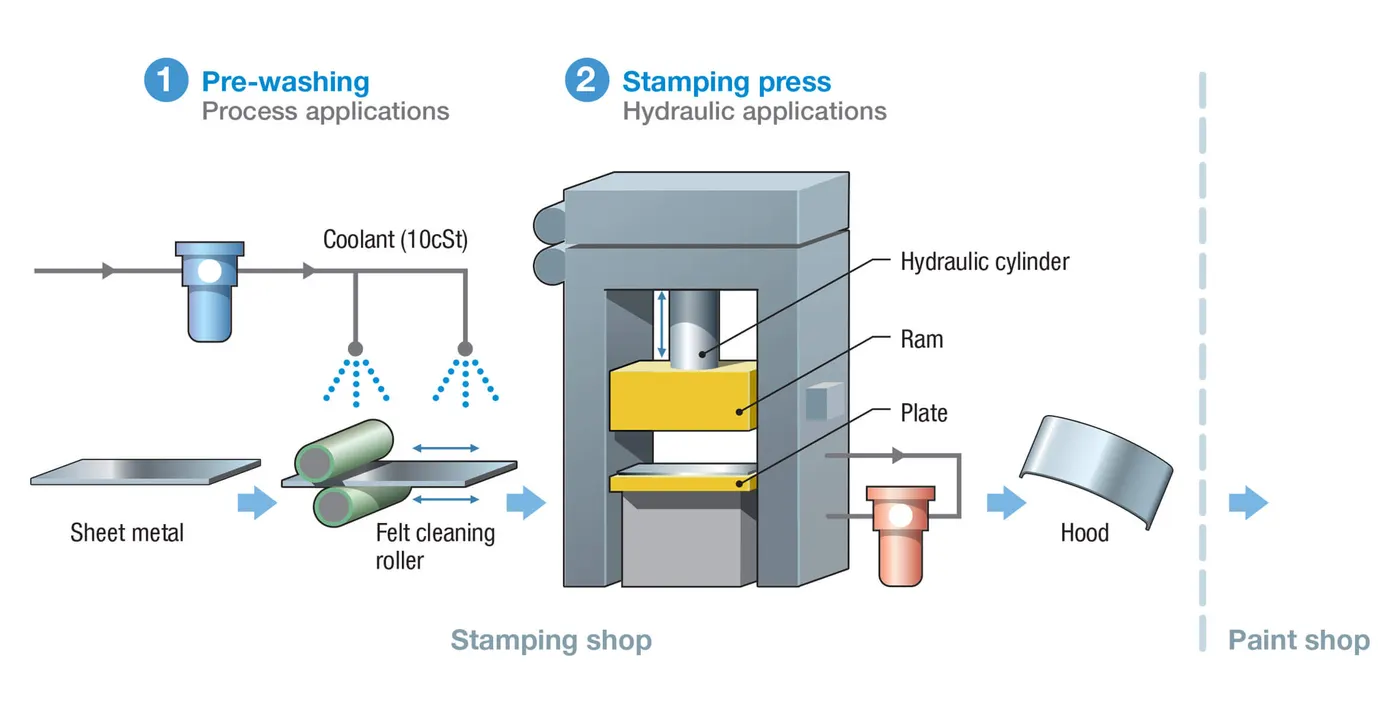
- mostly BIW components are manufacturer by steel material as they can be easily modified
and manufactured. the tools to produce steel can be used for different processes so industries prefer steel as they can available as sheet metal. - the shape of the sheet metal can be changed by mostly stamping process and die forging process
- the drafting angel for stamping process must be always maintained above 7 degree to maintain the tool for to produce more jobs
HEMMING
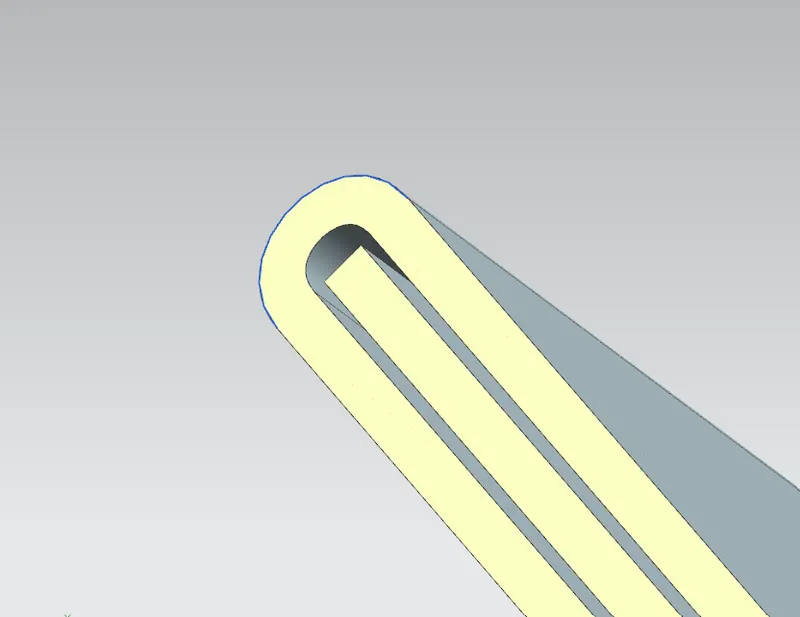
- Hemming is a sheet metal forming process in Automotive body panels and automotive parts such as deck-lids, trunk-lids, doors, hoods and tailgates are formed by hemming process. In this process, usually a sheet is bent with the help of inner sheet in three different stages.
- the distance between outer panel and inner panel must be always maintained 0.2mm to leave a gap for hemming glue
HEMMING GLUE
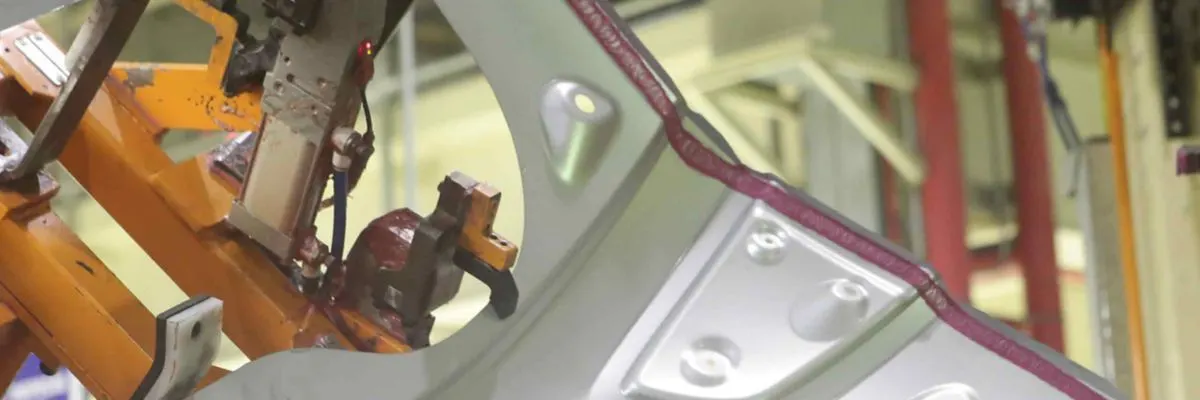
- It is a substance which is used to prevent the surface of the outer panel and inner pannel to avoid wearing and vibrations between components
MASTIC SEALENTS
- Mastic is commonly used on construction projects as an adhesive and sealant. It is a popular choice where one surface needs to be adhered to another in a durable bond, or where the area needs to be protected.
- mastics are used for not to affect the asthetic of the car from welding process for joining the pannels
BEND RELIEF
- Bend relief is one of those small details in a bent part that’s easily overlooked. In parts where it’s required, leaving it out can at best cause unwanted tearing, or at worst make your part nearly impossible to physically make (at least the way it’s drawn).
DRAFT ANALYSIS
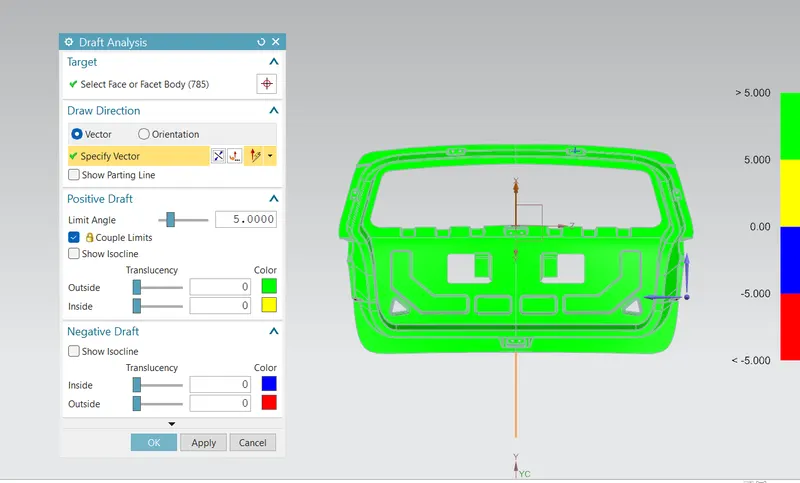
- The Draft Analysis allows the user to easily analyze a part for proper draft angle. A Draft Angle describes the amount of taper for molded or cast parts perpendicular to the parting line.