Design of backdoor
BACK DOOR DESIGN
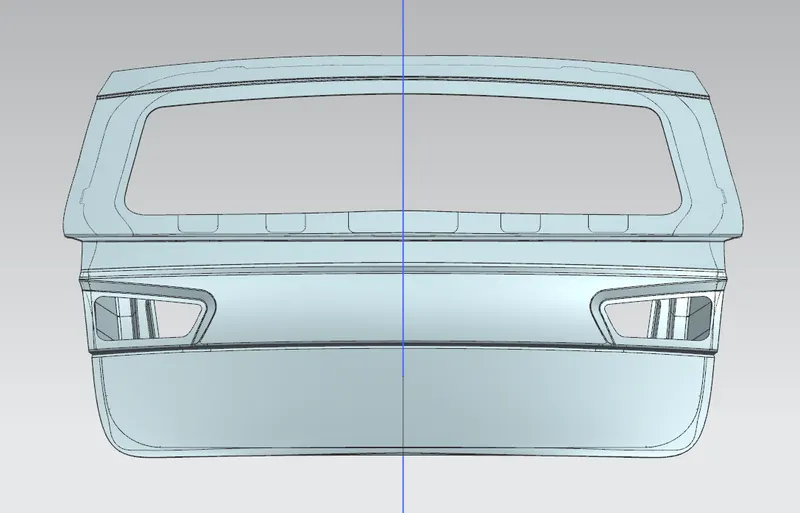
Pictures of completed Design;
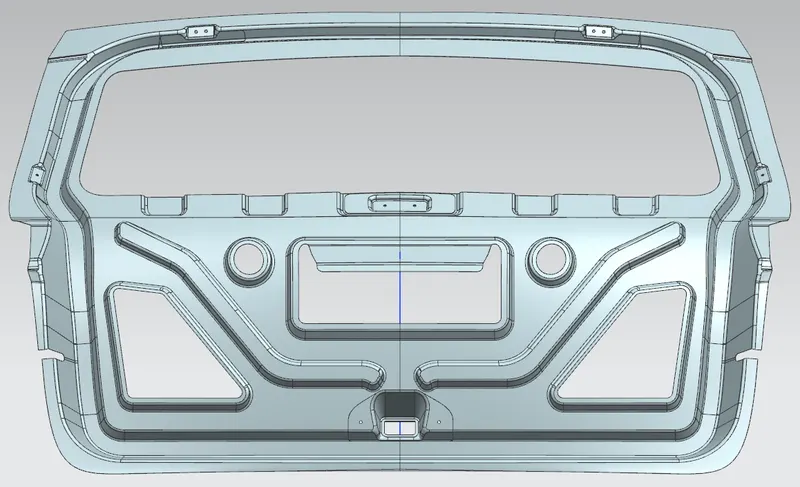
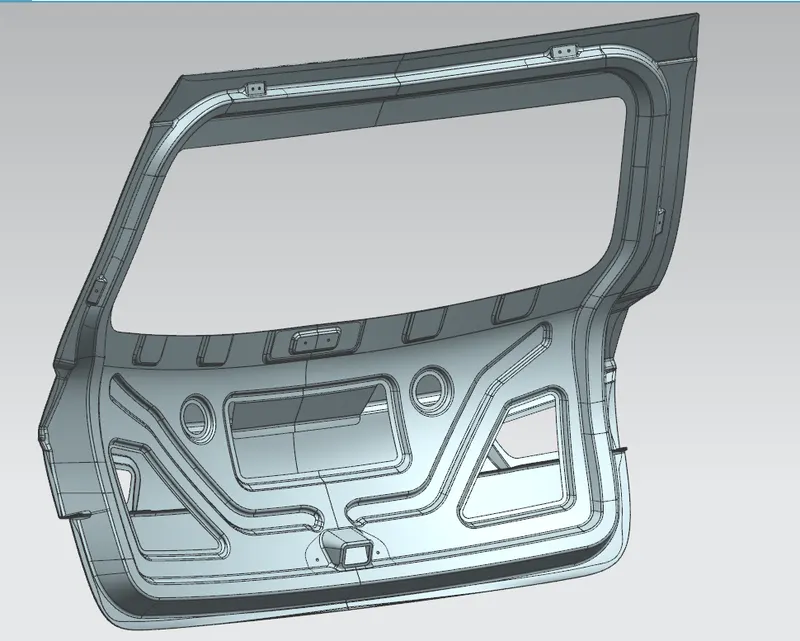
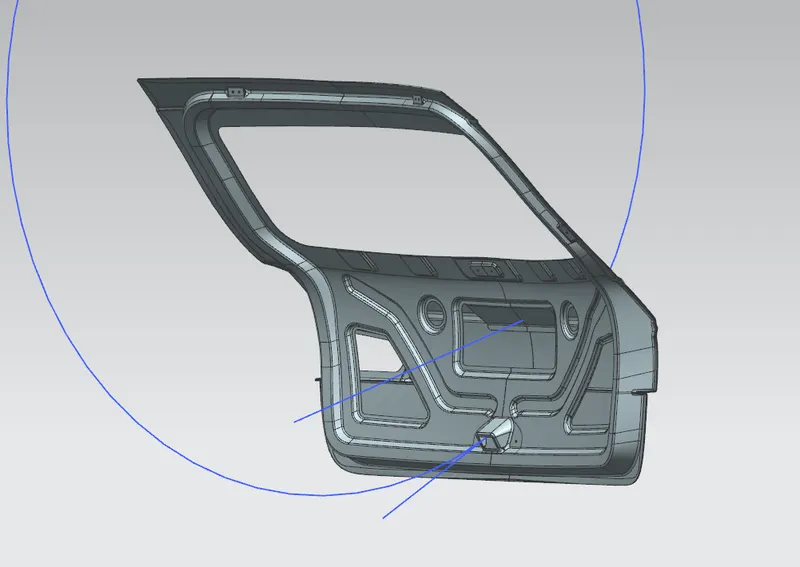
Inner Panel
with Reinforcements;
without reinforcement
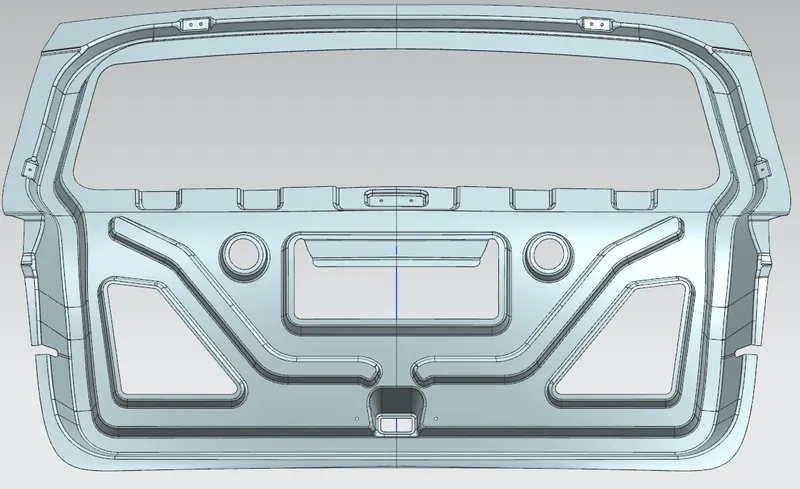
- V-emboss is provided on the inner panel to divert the collision forces to the body and to reduce injuries to the passengers inside the vehicle.
- embosses are made as projecting outside so, when a collision happens the inner panel first contact with the emboss face and diverts the forces to outward or prevents the forces getting inside the car.
- Sealing flange is the first part we created here, which is the part allows the entire tail gate sit on the body.
- Sealing flange allows the tail gate to keep tail gate to stay air tight or perfect closing condition. We provide a rubber sealing on this part for a perfect fit.
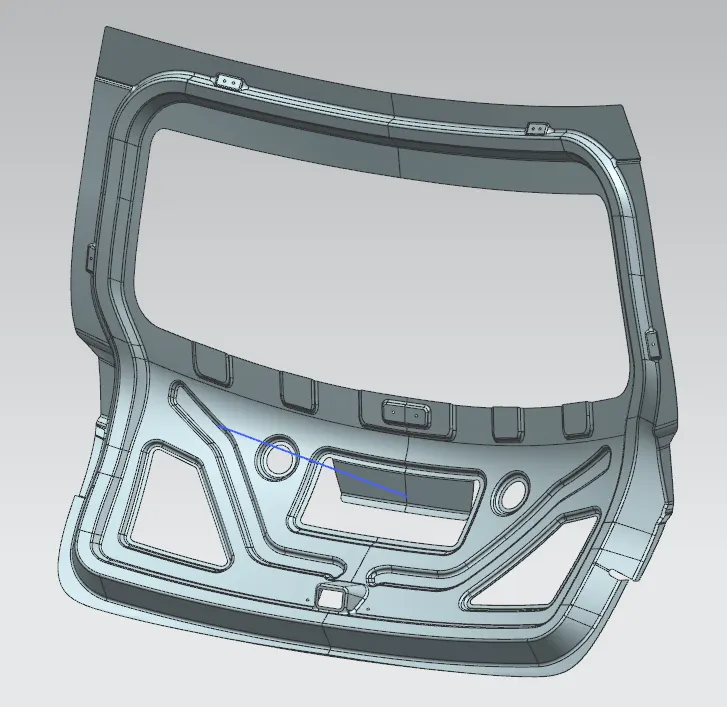
Reinforcements;
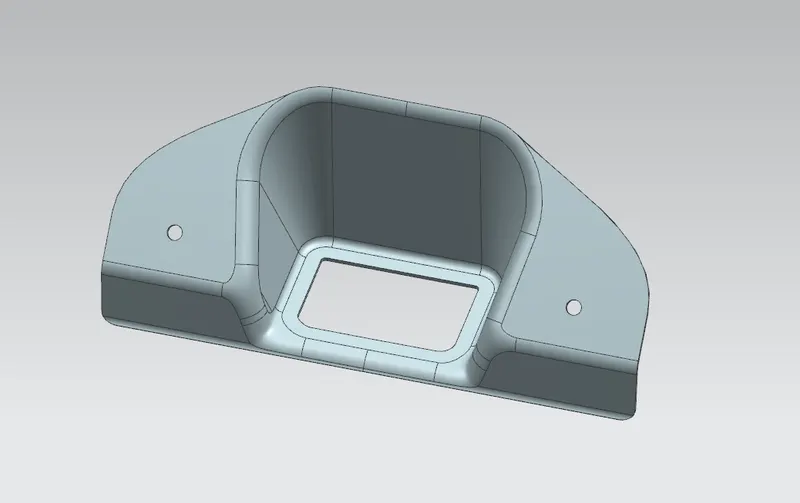
Latch and striker
Hinge
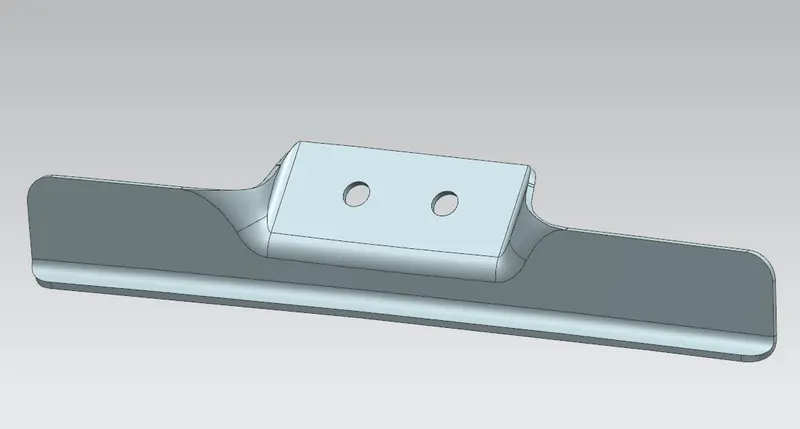
Gas stay
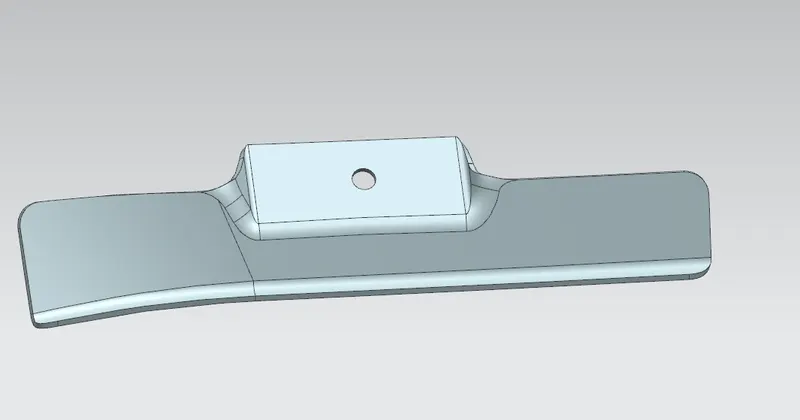
viper motor
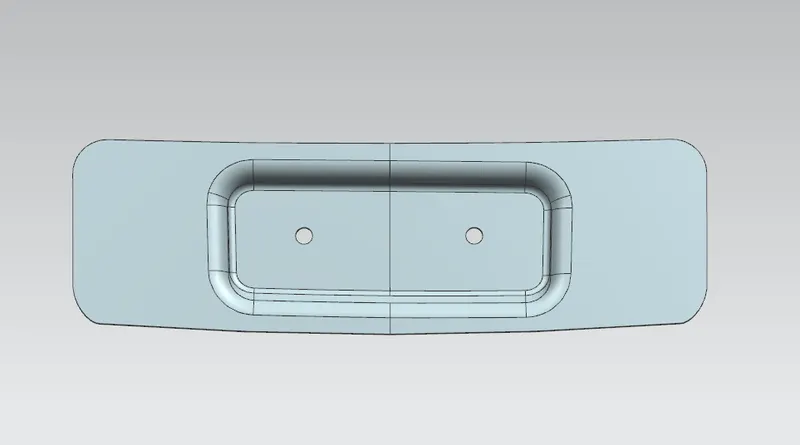
Fully assembled
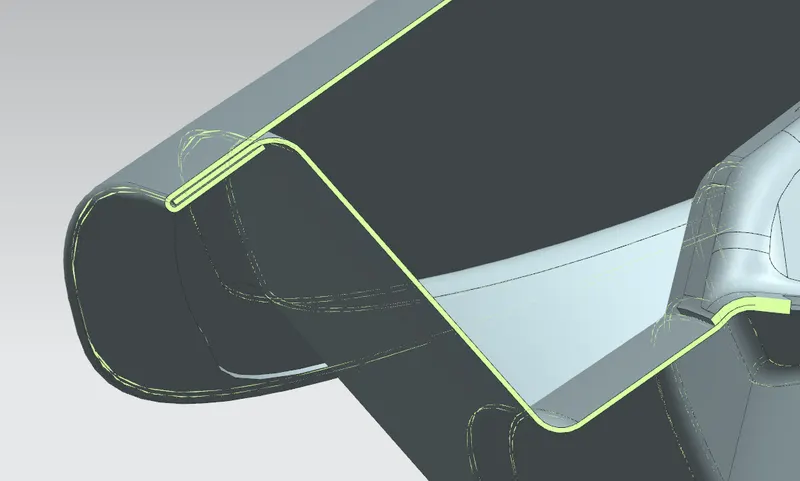
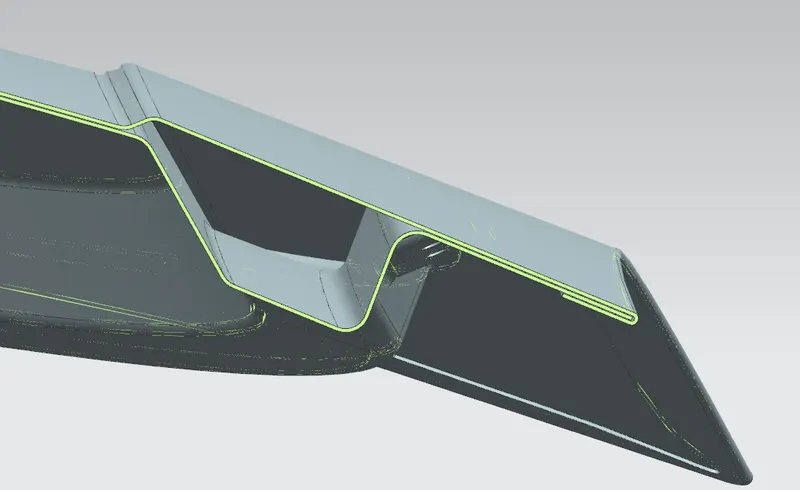
Sectional view of Hemming;
Corner Reliefs
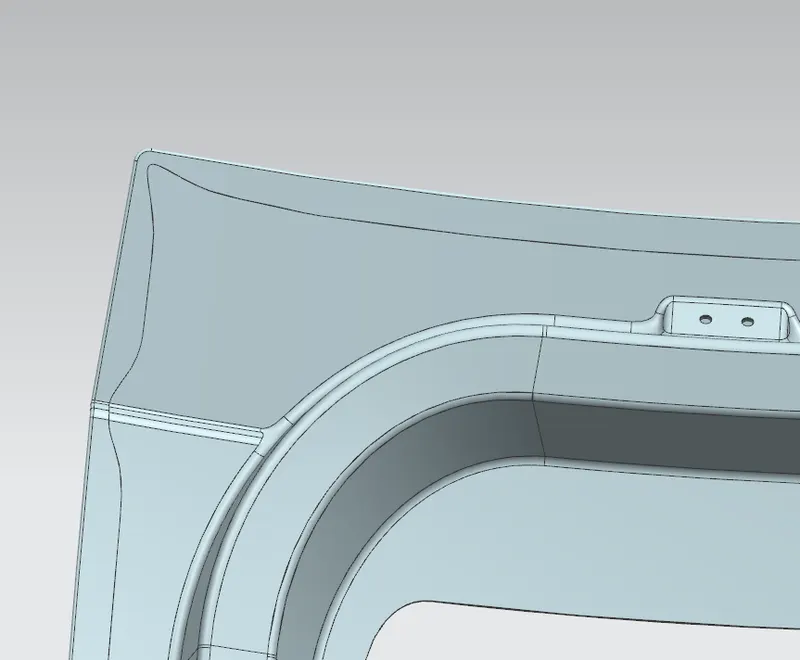
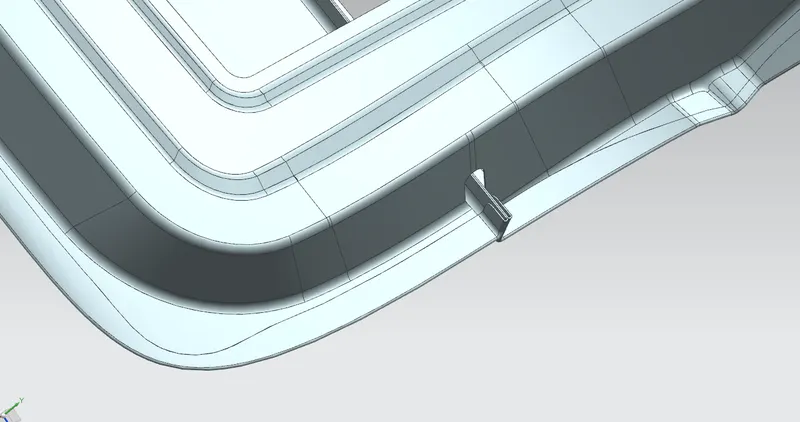
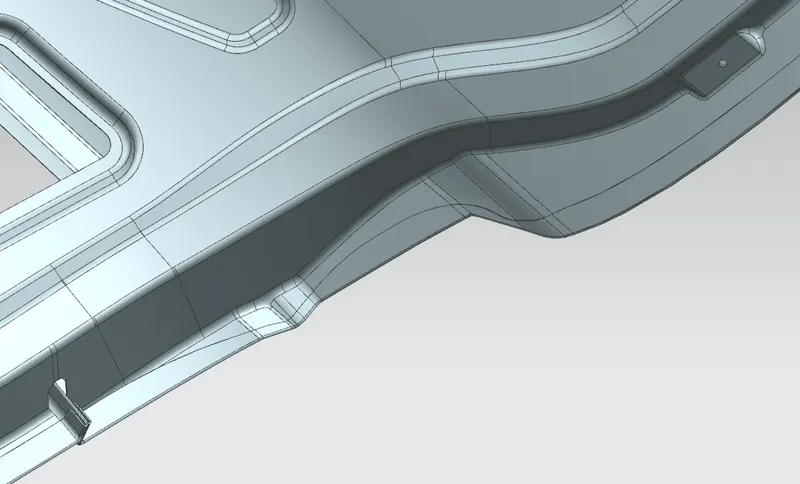
Thickness of Reinforcement = 1.2mm
Thickness of Outer panel and inner panel = 0.75mm
Positioning and Direction of Latch and Striker
Positioning and Direction of latch and striker emboss is made by drawing trajectory of the back door with respect to the hinge axis.
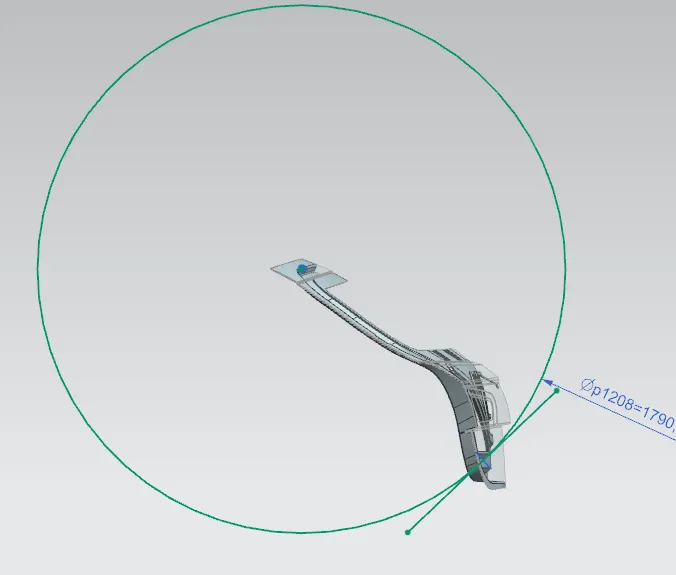
- After drawing the trajectory of the back door, created a tangent line on the path.
- After finshing the sketch made a plane perpedicular to the tangent line at the tangent point.
- Then created a sketch on the new datum plane, Drawn a line in vertical direction as in the figure below.
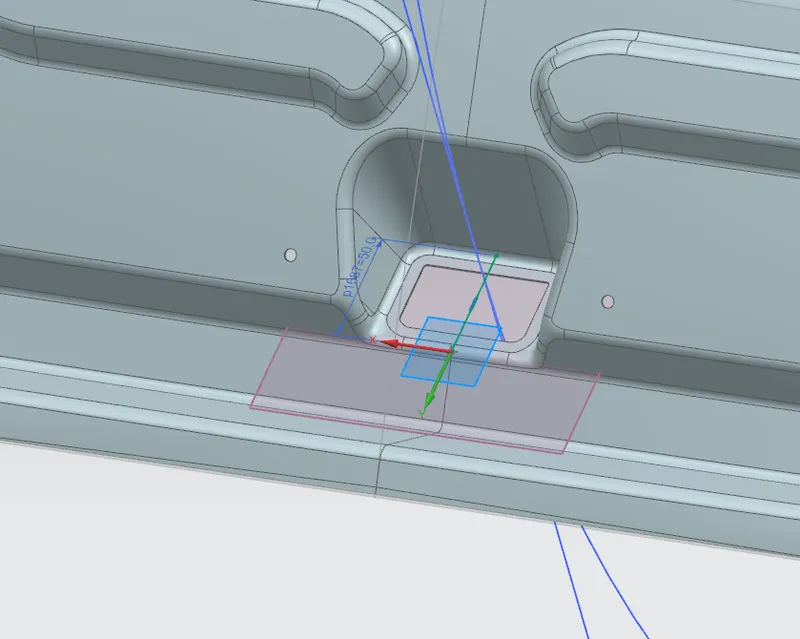
- with law extension created a surface with that line, and trimmed the corner edges. This will be our end cap face of the latch and striker emboss.
- With the edges of the surface as the curve made law extension, vector direction as tooling direction with an angle about 20 degree.
- Then provided blends on every edges.
Hemming
- Hemming for the outer panel is created for joining the inner panel and the outer.
- about 15mm hemming flange width is provided, at every corner and bends relaxation is provided.
- 0.2mm of clearance gap is provide between the inner and outer panel at the hemming region.
- about 5mm of clearrance is provided at the mastic regions.
Reinforcements
- Here 6 Reinforcements are used in the back door for providing extra strength to the particular regions.
- The six reinforcements are,
- Right and Left Hinge Reinforcements, for providing more strength at the hinge mounting region
- Right and Left gas stay Reinforcements, for providing extra strength ar the gas stay mounting region
- Viper motor reinforcement, provides more strength at the viper motor fitting region.
- Latch and striker Reinfrocement, provide more strenth at the latch and striker mounting part.
Draft Analys
Inner Panel;
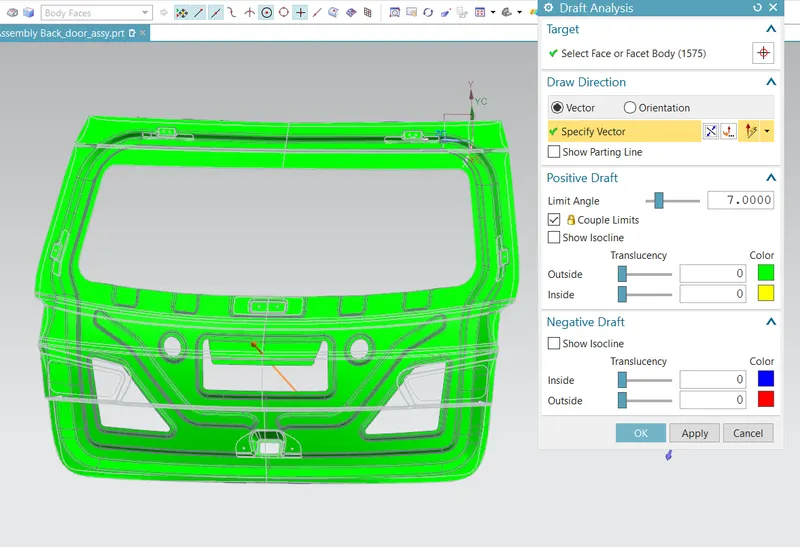
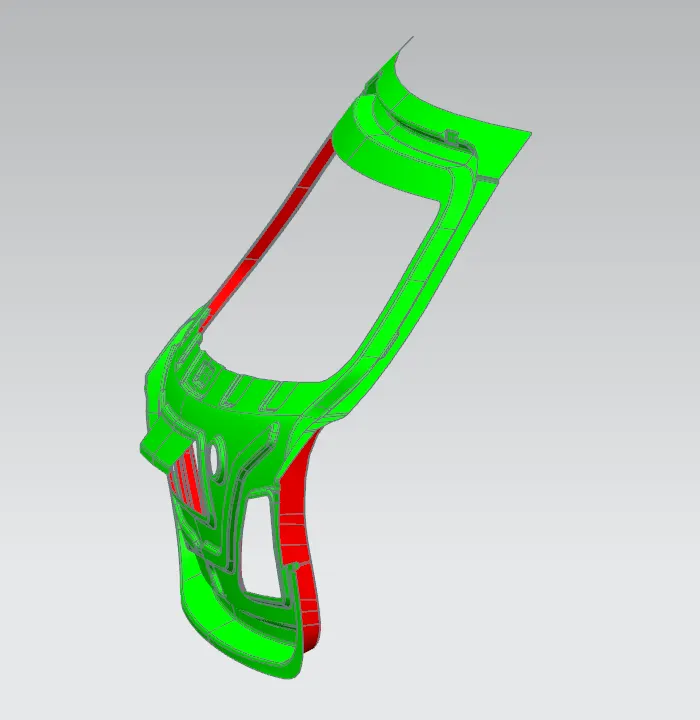
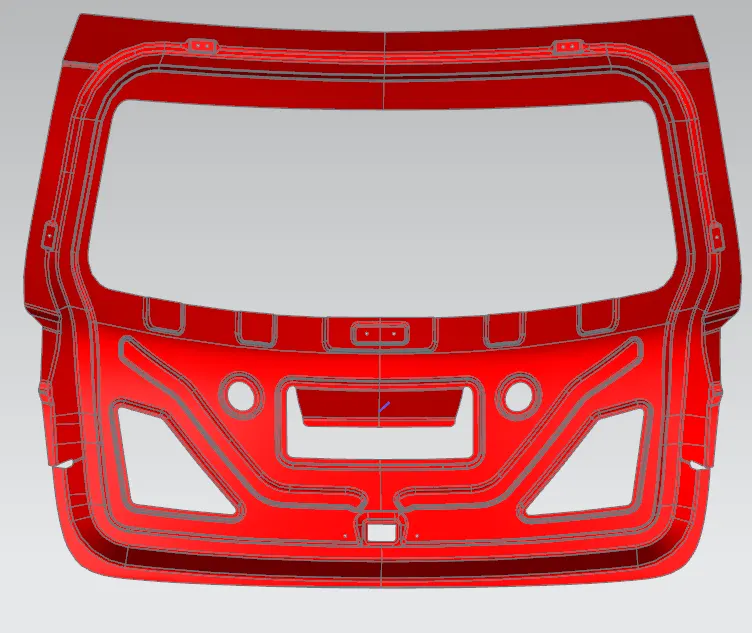
- Minimum draft angle for steel sheet is 7 degree.
- Here we can see one side of the whole body as green which means draft angle is greater than 7 degree, so it is good to manufacture.
Some of the sheet metal Operations here we use for the manufacturing procesess are;
1. Hemming: It is used to join the sheet metal by bending it to 180 degree, here we used for joining inner and outer panel
2. Punching: It is a cutting process, a piece of sheet metal is removed from the working part by apply enough shear force.
3. Embossing: It is a stamping process for producing raised or sunken design or relief in sheet metal.
4. Lancing: Lancing is the process here we used to create the centre support for giving mastic to reducing the NVH
5. Trimmimg: It is the finishing opertion done after stamping. Trimming is the removal of excess sheet metal after the stamping.
6. Stamping: It is the process of turning the sheet metal into desired shape or useful component. It is done by applying tremendous force on the sheet metal using stamping tool or die and press.
The above given are the some of the examples of operations done to manufacture these parts many other operations are also used. like bending, slotting, Notching and blanking etc..