Design of backdoor
Aim:
To design the BackDoor of the car using the given styling Surface.
Body of Content:
BackDoor:
The trunk or boot of a car is the vehicle's main storage or cargo compartment, often a hatch at the rear of the vehicle. It is also called a tailgate or Back door. In Indian English the storage area is known as a dickey , and in South-East Asia as a compartment.
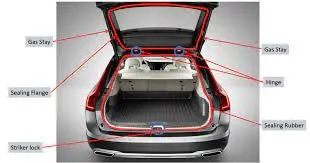
Types of Back Door:
1. Top Mounted
This type of back doors is used in a station wagon, pickup trunk and some of the spot utility vehicles. Today's modern cars use top mounted tailgating system which are both powered and also gas stay supported. These top mounted tailgates provide greater rear visibility compared to side mounted or backdoor which have center pillars in it.
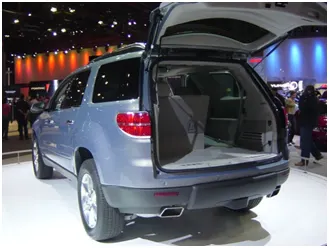
2. Side Mounted Door:
As the name signifies the side mounted doors are the one which is used in the van type MPVs, SUVs, pickup truck vehicles. These side mounted doors or barn doors are a lot easier compare to top mounted doors. These doors are generally smaller in size and can be easily accessed. These doors are more convenient for the goods handlers for long pipe and lengthy components where one door is kept open. These door also save accidental head impacts. It is a lot easier to load and unload items in the side mounted doors
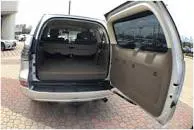
3. Bottom Mounted Door:
This bottom type type backdoor system are used in the car type such as car, pickup truck and some luxuary SUVs. These are the most convenient type of back door in which the bottom split is used as a support or even as a table for the tour going people.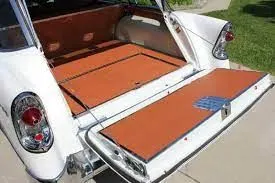
Assembly of Back Doors:
1. Outer body:
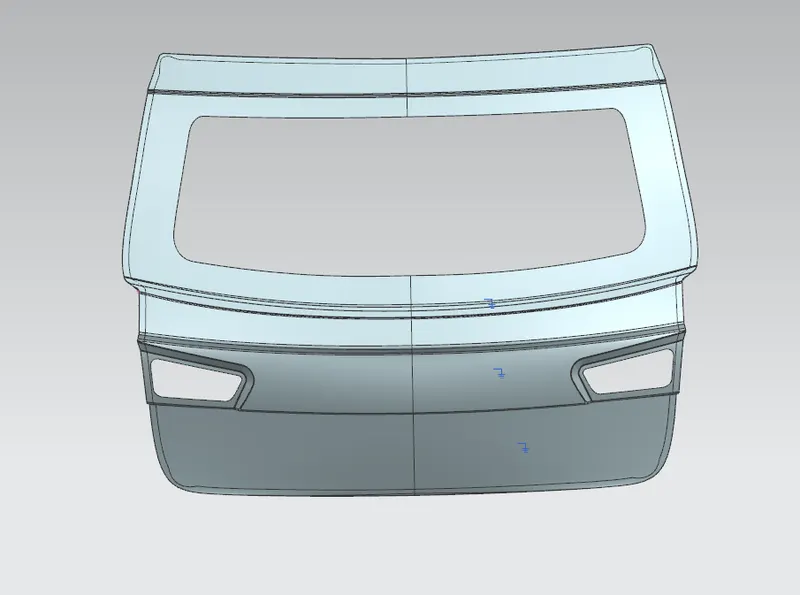
The Outer panel of the back door is similar to other BIW components where it is the aesthetic part of a vehicle. The coating provided is of multi stage which has the property of scratch resistance, rush prevention and smooth and attractive finishes. The Outer panel also has the provisions for the tail lamp, rear fog lamp and also has the provision for lisence plate mountings. Most of the hatch back cars have the provision for wiper motor.
2. Inner Panel:
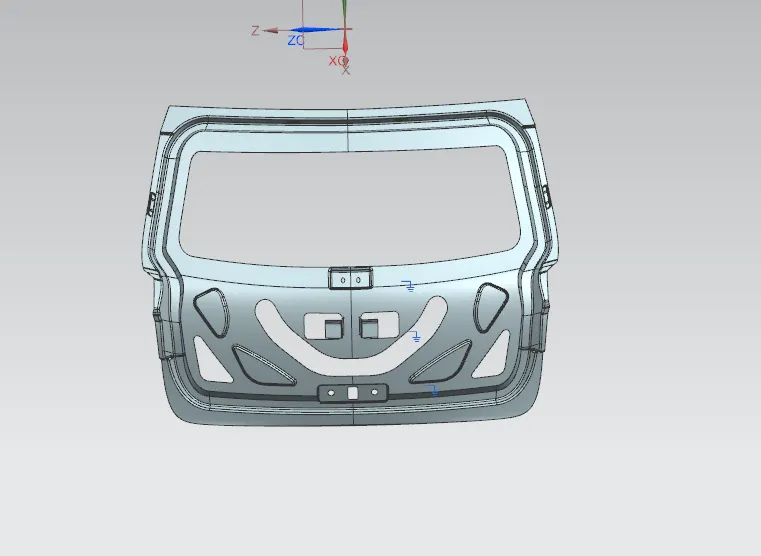
The inner Panel is a component which is used for strengthening the door and it is one of the most important components on which all accessories are mounted like hinges, glass guide channel, mounted trim, latch etc.., The possible method is the integration method. In the integration method, the part is stamped out of a single blank. This reduces the number of tools needed the assembly cost and eliminates any fit ability problem.
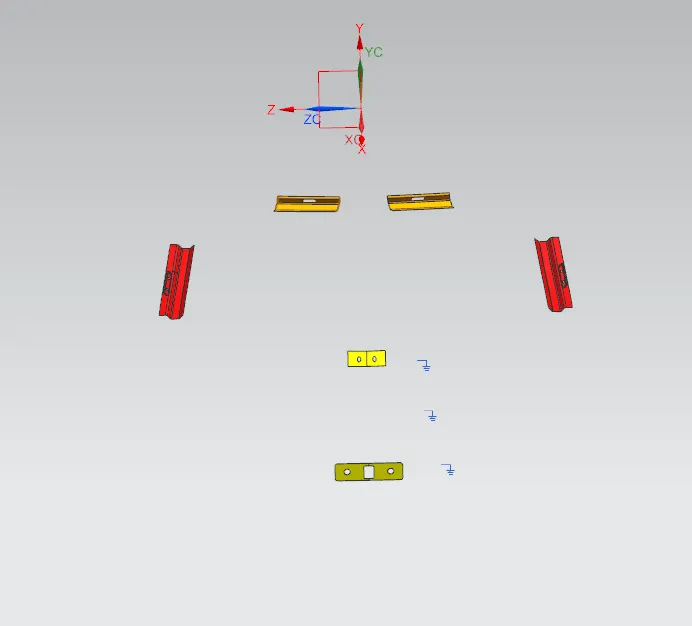
Reinforcements:
Reinforcement are used to strengthen the component. and makes the component more stable.
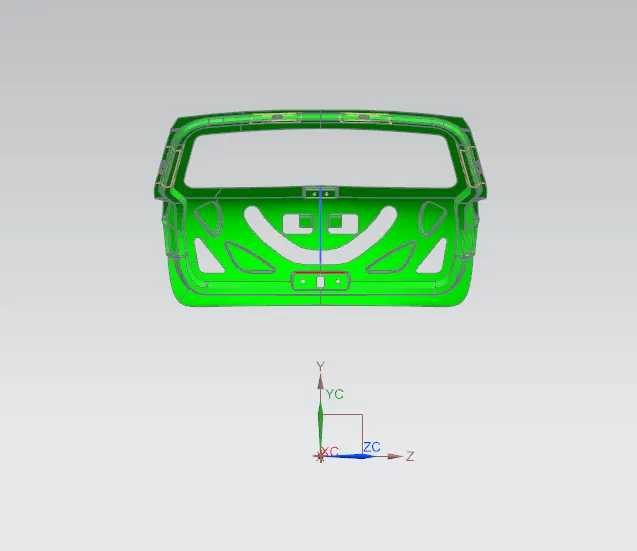
Draft Analysis:
Hemming:
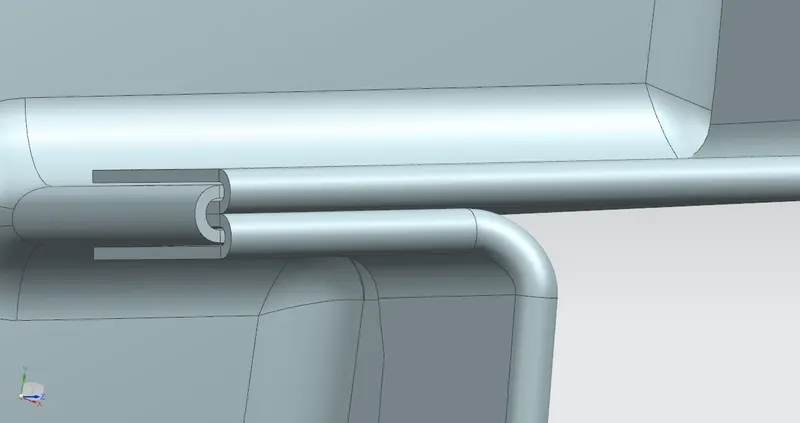
Hemming is a sheet metal forming process in which sheets are joined by bending it usually to 180°. Automotive body panels and automotive parts such as deck-lids, trunk-lids, doors, hoods and tailgates are formed by hemming process. This paper present a systematic review of sheet metal hemming process based on materials used in hemming process, analytical models, experimental and computational investigations made in the domain of sheet metal hemming process. Various grades of high strength sheets, aluminium alloys, recycle-friendly aluminium alloys, magnesium alloys, light weight alloys are used as workpiece materials in hemming process. Analytical models are also presented by few researchers for development in hemming process. New experimental set-up and novel experimental strategies of hemming process are devised and also adopted by researchers in past. Classical hemming, roller hemming, robot assisted roller hemming, laser assisted roller hemming and hemming with electromagnetic forming processes are the experimental different approaches utilized for performing sheet metal hemming operations. In FEM simulation of hemming process, three dimensional solid elements, shell elements and their combination are mostly employed by researchers in meshing of sheet metal blanks in hemming process. FEM simulation found to be an efficient tool for prediction of defects in hemming process and for optimization of process parameters as well. Besides, FEM simulation new computational approaches such as meta-model strategy are also applied for efficient design of hemming process.
Conclusion:
Zip file is attached