Design of backdoor
Theory:
Car Back door or Tail gate is the rear closing door of the car which will be used for the Luggage storage compartment access. It is also a swinging commodity of the car like Hood and Side doors. The materials can be used for the Back door is Aluminium or Steel. In most of the premium branded cars like Benz, Audi, Porsche, etc. uses Aluminium material for this back door. In this project we designed by considering the steel material as it is most commonly used in all companies cars.
Design considerations:
Thickness and manufacturing requirements:
- Thickness of Roof panel: 0.75mm
- Reinforcement Thickness = 1.5mm
- Minimum draft angle to be maintained 7 degree
- Minimum filet radius should be more than the 3mm+thicknes, i.e., above 3.75mm
- No sharp corners inside the component.
Functional requirements:
- Provide adequate clearance between Outer panels and Inner panel for the mastic inclusion.
- Rear visibility criteria regulations.
- Rear crash requirements and Regulations
- Joining techniques like Hemming and spot welding.
- Latch and striker placement with respect to the opening and closing trajectory of Door.
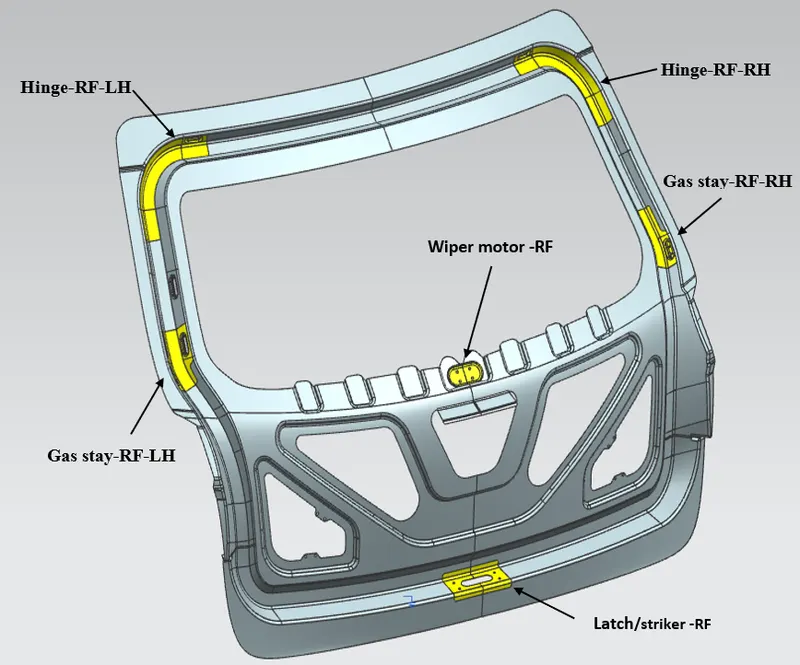
- Reinforcements for Hinge, Gas stay mountings and Wiper Mountings to strengthen locally for the backdoor inner panel.
Procedure:
First developed the Inner panel of the Backdoor by taking the offset surfaces from the given styling, then developed the outer panels then created the reinforcements.
BACK DOOR ASSEMBLY:
The back door assembly of a car has the following components,
- Outer panel
- Inner panel
- Embosses
- Reinforcements
- Latch & striker & Hinge Positions
- Hemming and relief of outer panel with inner panel
Backdoor Outer Panel :-
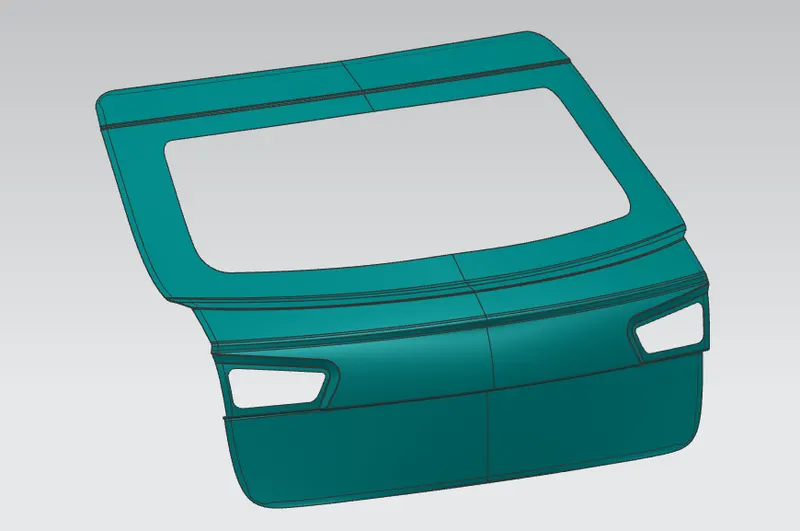
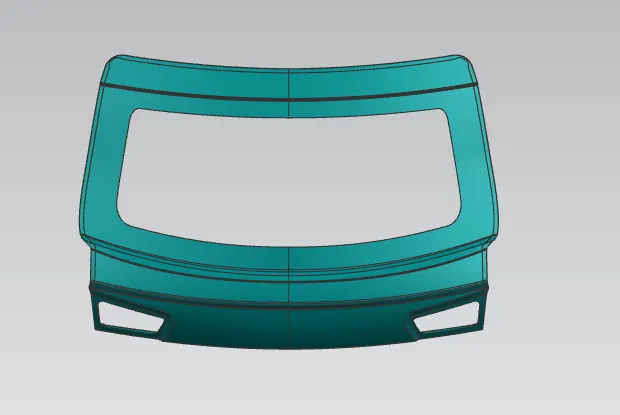
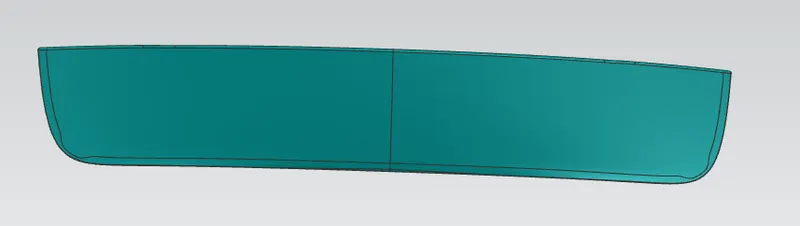
The outer panel of the back door is similar to other BIW components where it is the aesthetic part of a vehicle. The coating provided is of multi-stage which has the property of scratch resistance, rust prevention and smooth and attractive finishes. The outer panel also has the provisions for the tail lamp, rear fog lamp and also has the provision for licence plate mountings. Most of the. hatchback cars have the provision for wiper motor.
Fig-1.1
- Upper Outer Panel -Fig-1.2
- lower Outer Panel- Fig1.3
Backdoor Inner :-
The inner door panel is a component which is used for strengthening the door assembly and it is one of the most important components on which all accessories are mounted like hinges, glass guide channel, moulded trim,
Fig.2.1
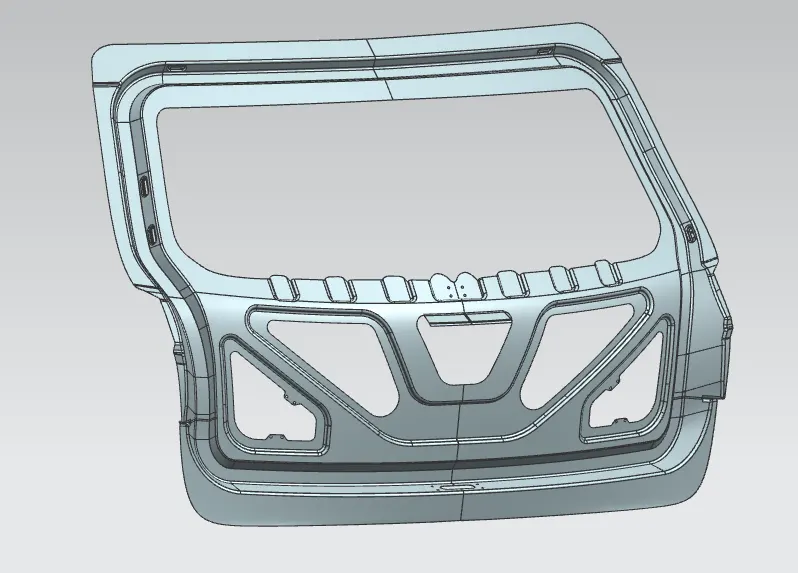
latch etc. The possible method is the integration method. In the integration method, the part is stamped out of a single blank. This reduces the number of tools needed; the assembly cost and eliminates any fit ability problem.
Fig.2.2
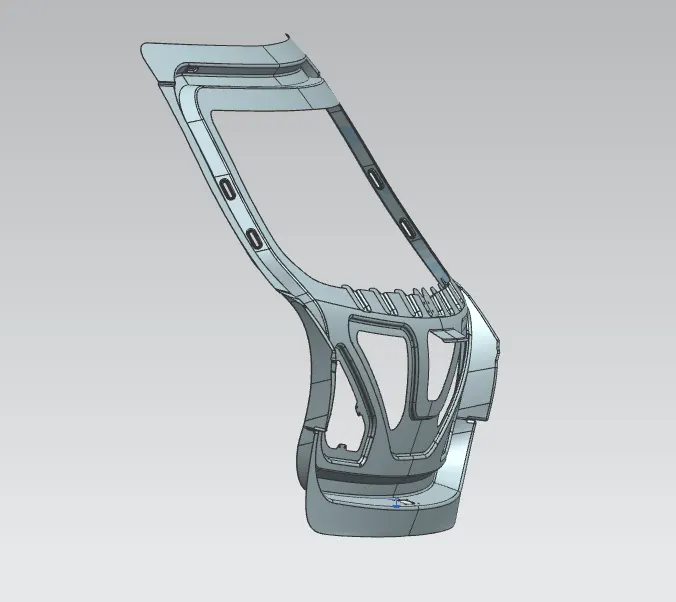
The inner panel was designed by offsetting the given class A surface as per the given master section. The inner panel consists of Emboses and Mastics.
Embosses – The implemet of embosses are very important on the inner
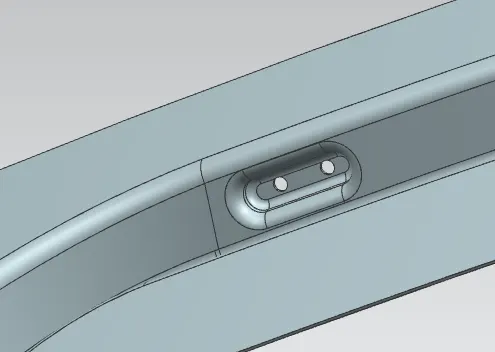
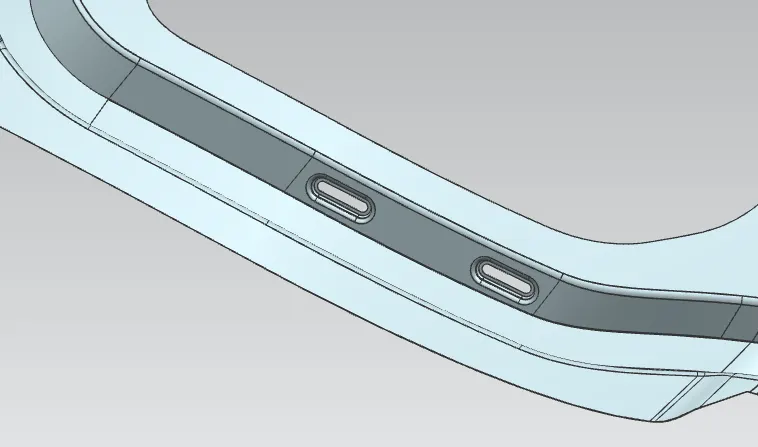
hood since it plays a important role in saving human life during a crash from the back. The embosses are designed in Y & V direction so that during the crash the forces disspiates outwards as shown in Fig.3.1. This will reduce the impact on the passengers in the back.
- Hinge Emboss Fig.3.1
- Gas stay Emboss Fig.3.2
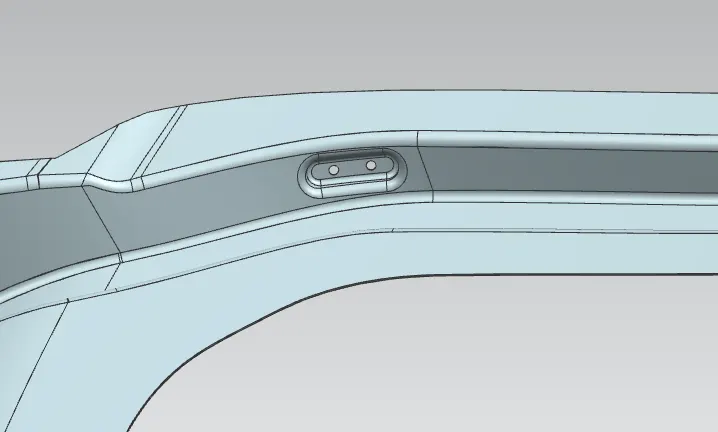
Fig.3.3
REINFORCEMENTS:
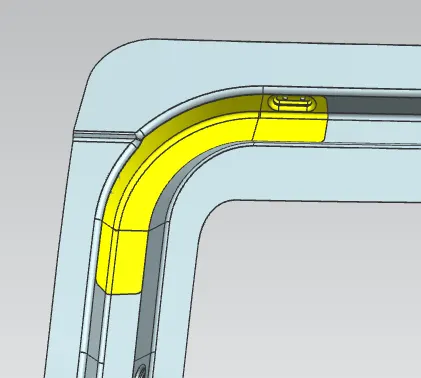
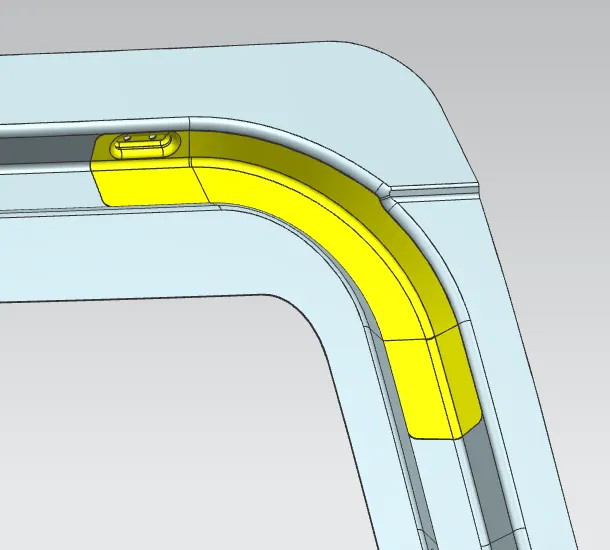
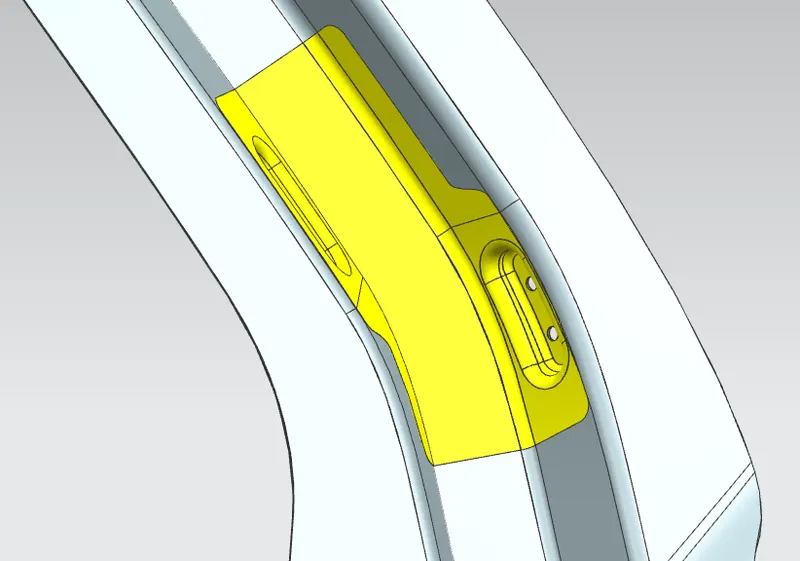
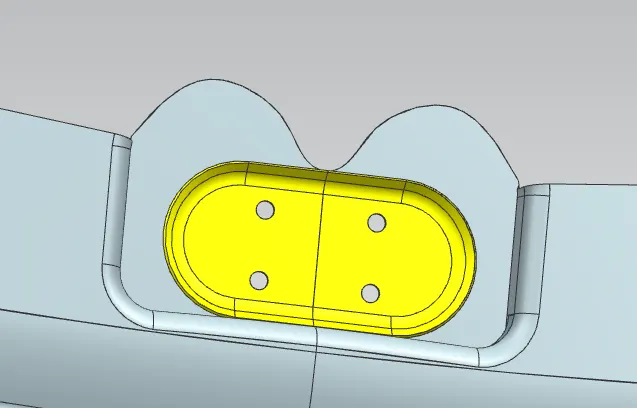
Reinforcements basically strenghts or increases the mechanical properties of the material. The hinge reinforcements are provided so as to increases the strength during bolting.
The different types of reinforcements used here are
- Hinge reinforcement
- Gas stay reinforcement
- Wiper motor reinforcement
- Latch/striker reinforcement
Fig-4.1
Hinge reinforcement :-
- Hinge-RF-LH
- Hinge-RF-RH
Gas stay reinforcement-LH
- Gas stay-RF-LH
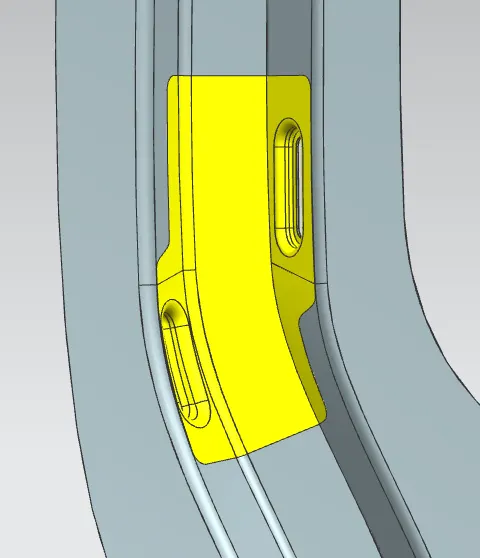
- Gas stay-RF-RH
- Wiper motor reinforcement
- Latch/striker reinforcement
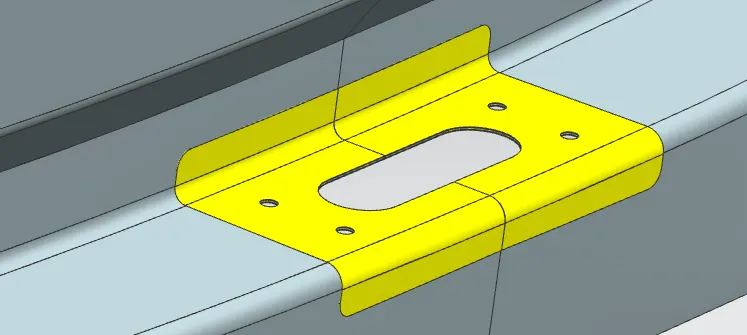
Latch & striker & Hinge Positions
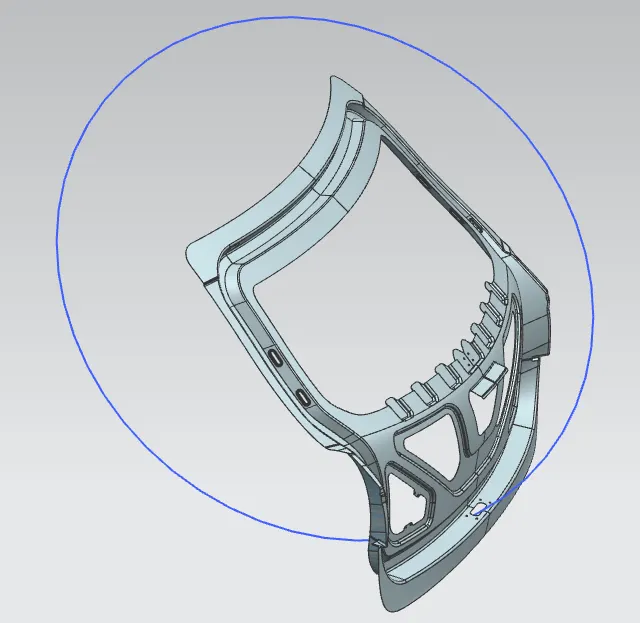
For the proper opening & closing of the backdoor, the striker should be perpendicular to the trajectory of the backdoor. Firstly the hinge is positioned and an axis is drawn as shown in the fig.5.1. The Trajectory is derived from the hinge axis and the centre distance from the striker. It is denoted as a circle as shown in fig.5.1
Fig-5.1
HEMMING AND RELIEF:
The Hemming is a process where the outer panel is joined with the inner panel of the backdoor by adding extra material on the outer panel and made to wrap around the inner panel as shown in the Fig.2.4. This wrapping is done by running the ball rollers throughout the ends of the outer sheet.
Fig.6.1
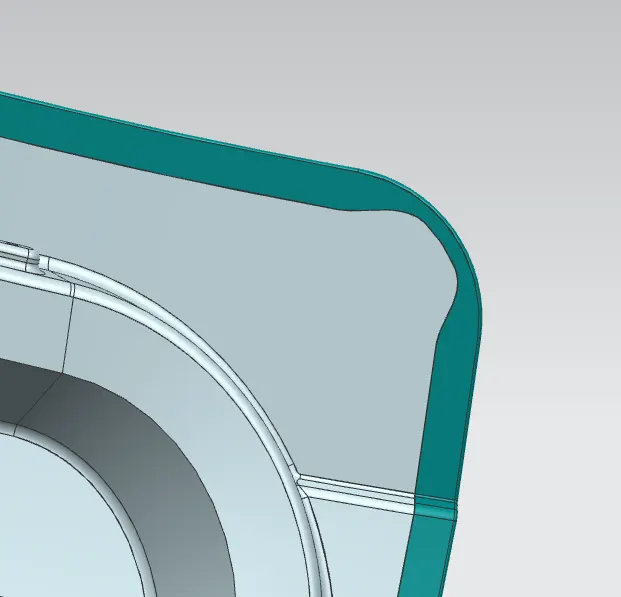
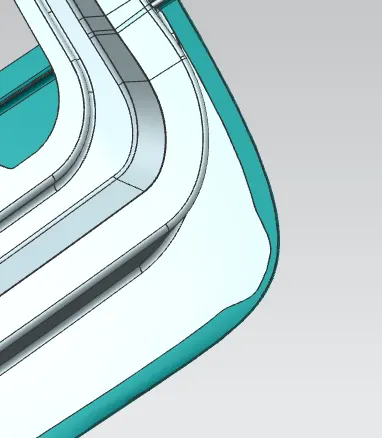
Relief is done to decrease the stress concentration along the corners and also to decrease the clumping of metal along the corners, this is done by trimming the corner by a minimum radius for the rollers to pass along smoothly.
Fig.7.1
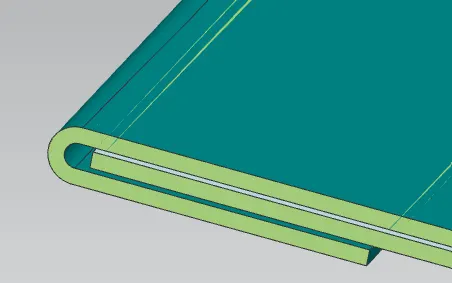
The Hemming is done to avoid spot welds. After Hemming, sealents are provided to achieve the water tightness.
Draft Analysis:
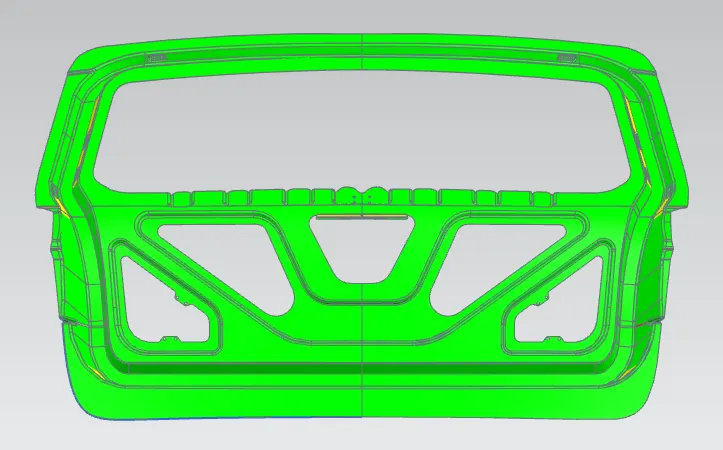
Draft analysis lets you check parts and/or molds, to make sure they will separate. Hopefully avoiding "locking" the part in the mold (or mold). It will also detect undercuts and surfaces with no draft.
Fig-8.1
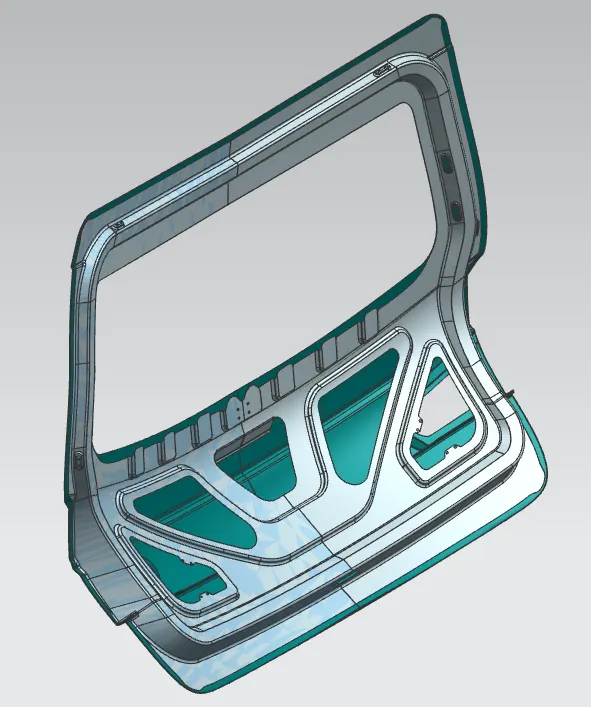
FINAL MODEL IMAGE:
Fig.9.1
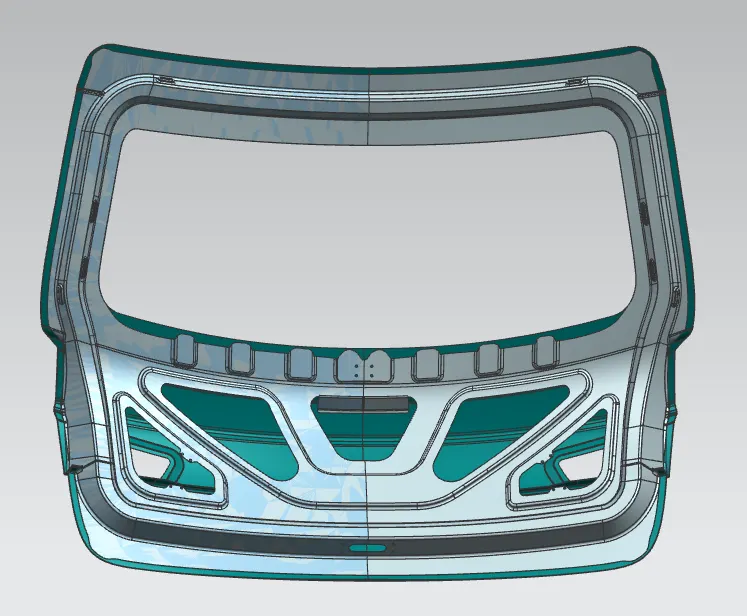
Fig.9.2
CONCLUSION:
Thus, the car back door was designed taking into account all the design parameters. In this challenge i learned to design the Inner panel, the Outer panel, Wiper Motor reinforcement, Hinge reinforcement, Gas Gtay reinforcements, Latch and Striker reinforcement and its position.