Design of backdoor
OBJECTIVE:
- Designing the backdoor by given input surface.
- Designing with consideration of given outer panel and followed with creating embosses, Mounting brackets, and necessary reinforcements.
- Backdoor design should involve the design of the inner panel and the hem with the outer panel.
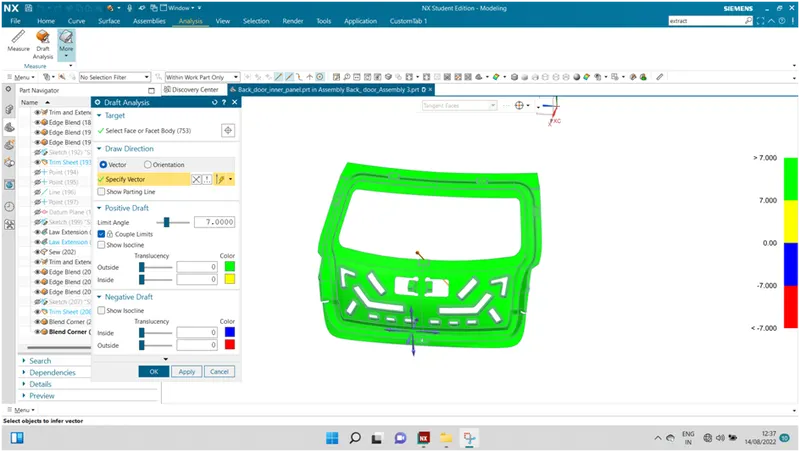
- Performing the draft analysis.
INTRODUCTION:
- Back door is an automobile sheet metal component.
- It covers the rear part of the vehicle and rear visibility.
- Backdoor is the hinged door at the rear part of the vehicle and can be moved up or down. It also accesses the boot space or trunk.
- The car follows FMVSS regulations for rear visibility criteria.
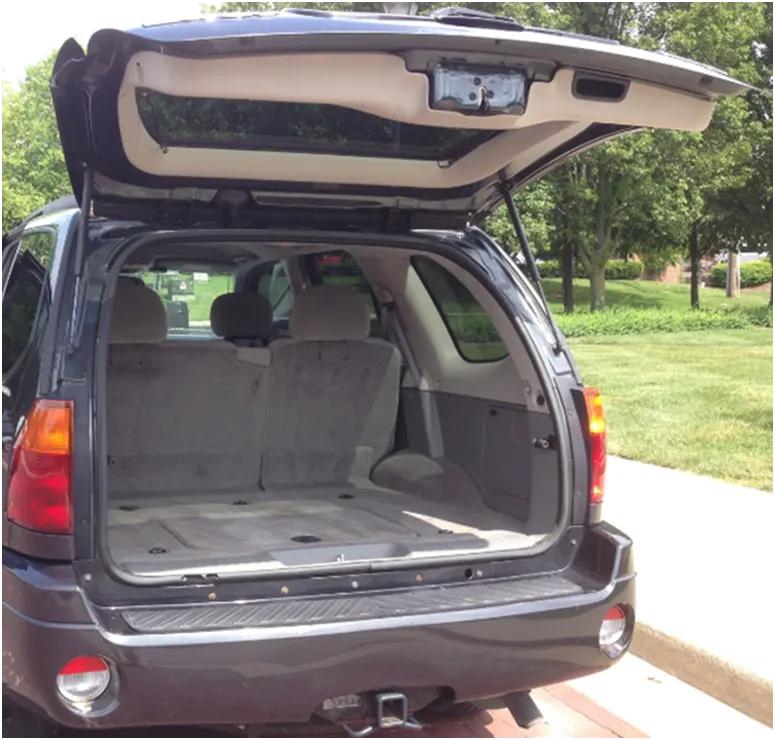
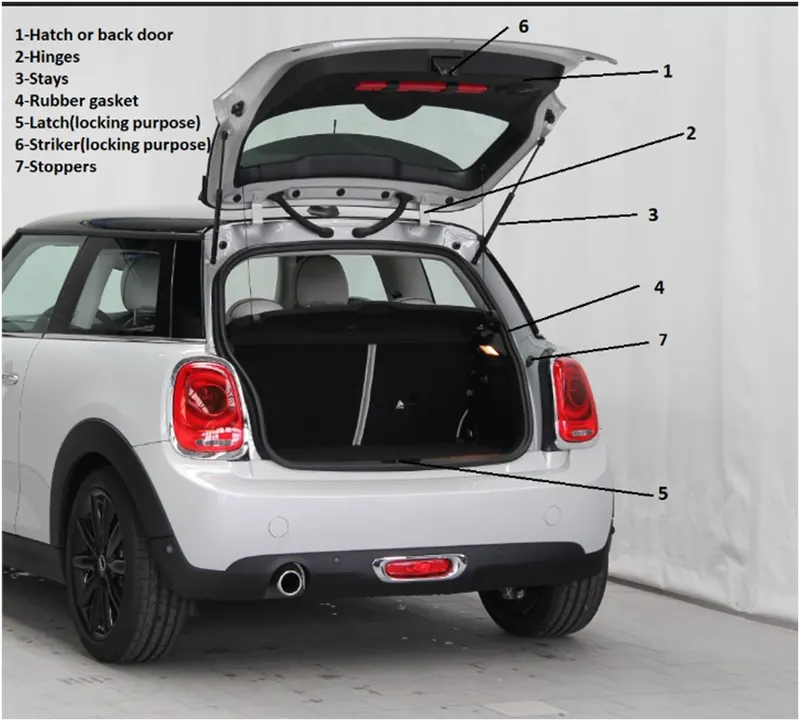
THE BACK DOOR CONSISTS OF
- Outer panel
- Inner panel
- Hinge mounting bracket
- Latch reinforcement.
- Wiper motor mounting
- Gas stay mountings and reinforcements
OUTER PANEL:
- The outer panel act as the covering layer for the inner panel.
- It also prevents the entry of dust particles, and chips into the inner panel.
- It provides the aesthetic look of the car.
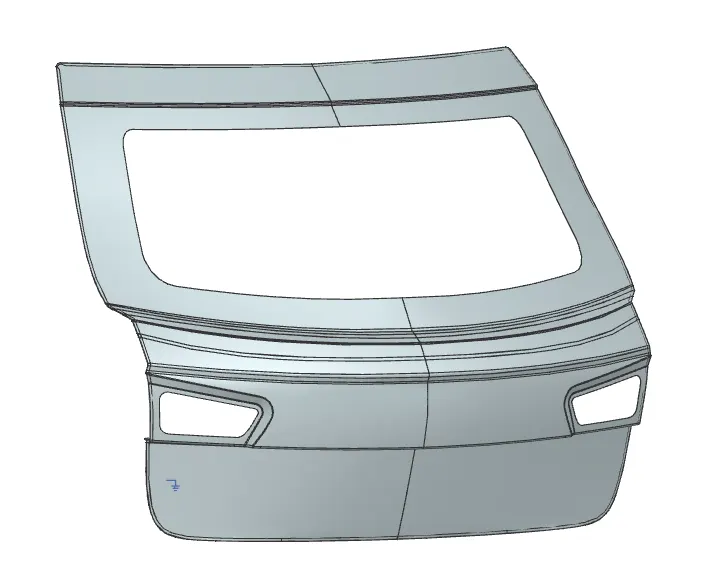
INNER PANEL:
- Design the inner panel with effective design methodologies for more reliability and prevent damage during crashes.
- Inner panel is the heavier part.
DESIGNING METHODOLOGIES OF INNER PANEL
- DEEP DRAWING
- EMBOSSING
- LANCING
DEEP DRAWING:
- It is a sheet forming operation, in which the sheet is placed over the die opening and is pushed by punch into the opening. The sheet is held flat on the die surface by using a blank holder.
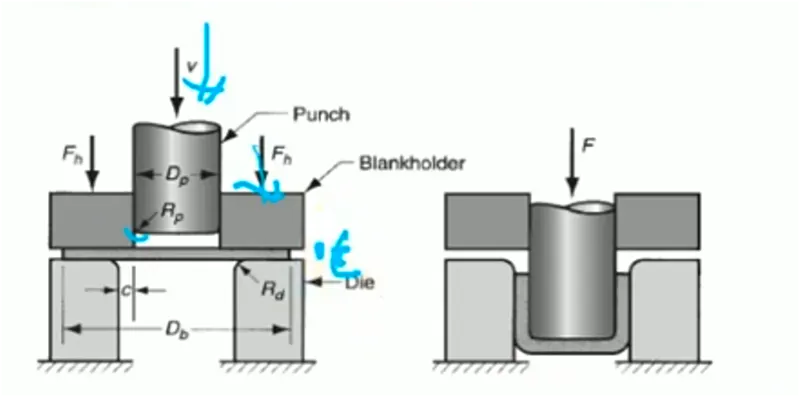
C-Clearance
Db-Blank diameter
Dp-Punch diameter
Rd- Die corner radius
Rp- Punch corner radius
F-Drawing force
Fh-Holding force
- The clearance ‘C’ is defined as equal to 10% more than the sheet thickness ‘t’. If the clearance between the die and punch is less than the sheet thickness, then ironing occurs.
EMBOSSING:
- Embossing comes under the deep drawing process.
- It is internally created on the inner panel and imparts a design on a surface so that it stands out.
- To create a raised surface, two dies come in contact with the surface of sheet metal under high pressure.
- The raised area is known as the embossed surface.
FUNCTION (OR) SIGNIFICANCE:
- Embosses are given to make the inner panel stiffer and have good endurance while crashing.
- The embosses allow the force to flow and get dissipated outside.
PURPOSE:
- The purpose of the inner panel is designed to dissipate the stress in an outward direction by using the design methodologies.
LANCING:
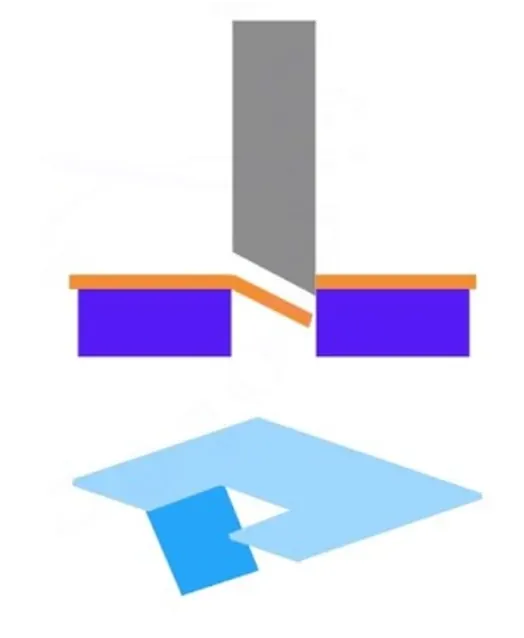
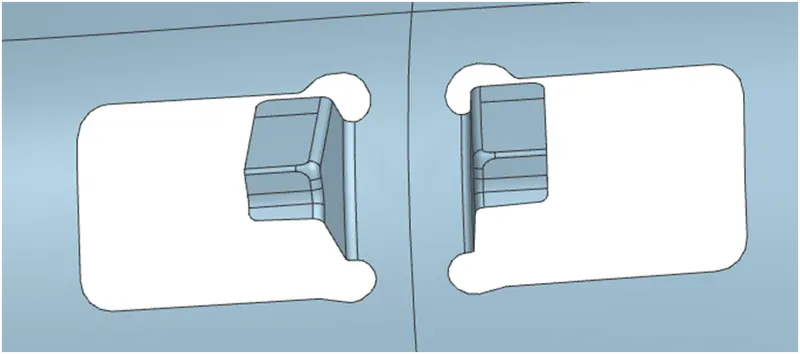
- It is a process of creating a partial cut in the sheet. So that no material is removed. The material is left attached to bend and form a shape.
PURPOSE:
- The inner panel has been designed with a lancing operation.
- Through lancing operation, the bent flanges support or prop up to the outer panel. Due to avoiding the vibration while dynamics state and bring the strength to the back door.
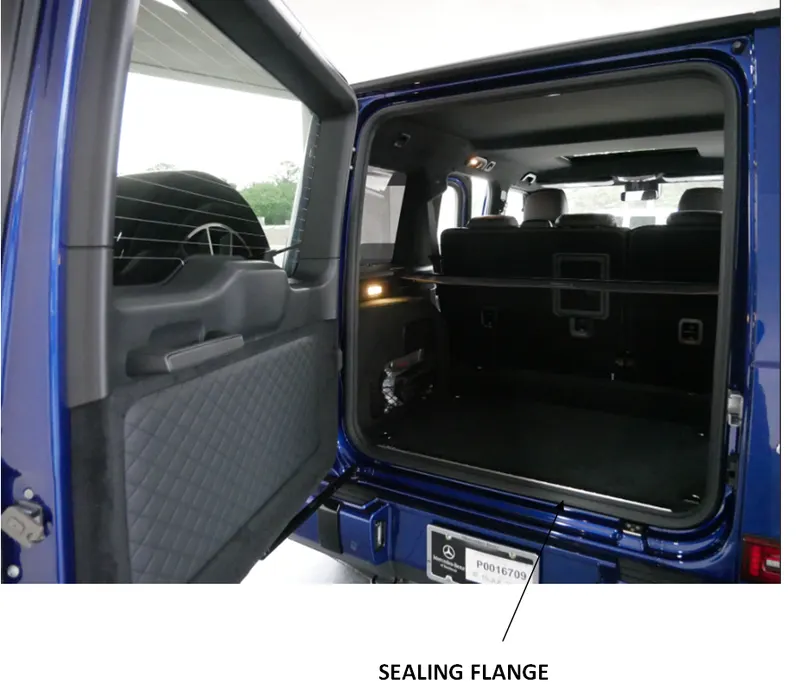
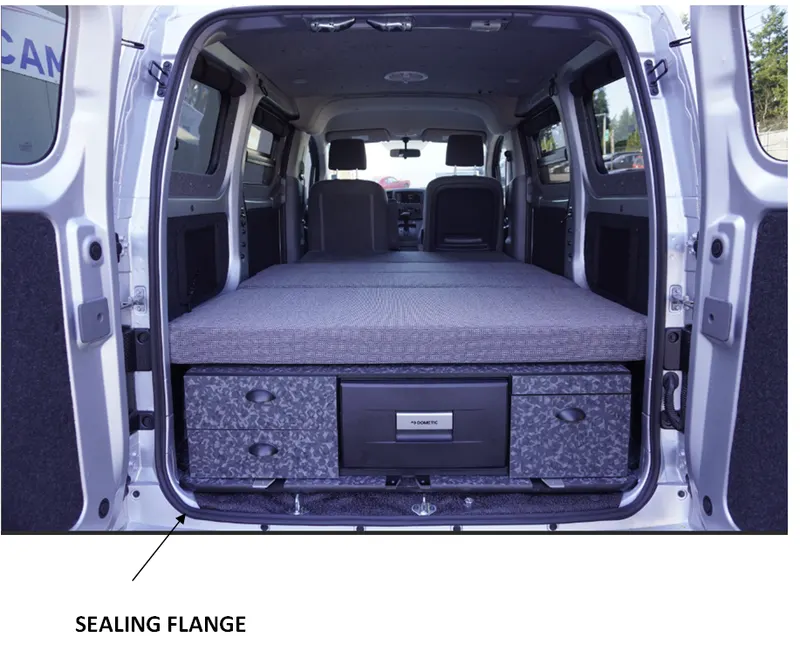
SEALING FLANGE:
- Sealing flange is designed with the inner panel.
- It plays a role in increasing door closing effort and isolating the passenger compartment from water and wind noise.
- It also resists vibration during dynamic conditions.
Sealing flange
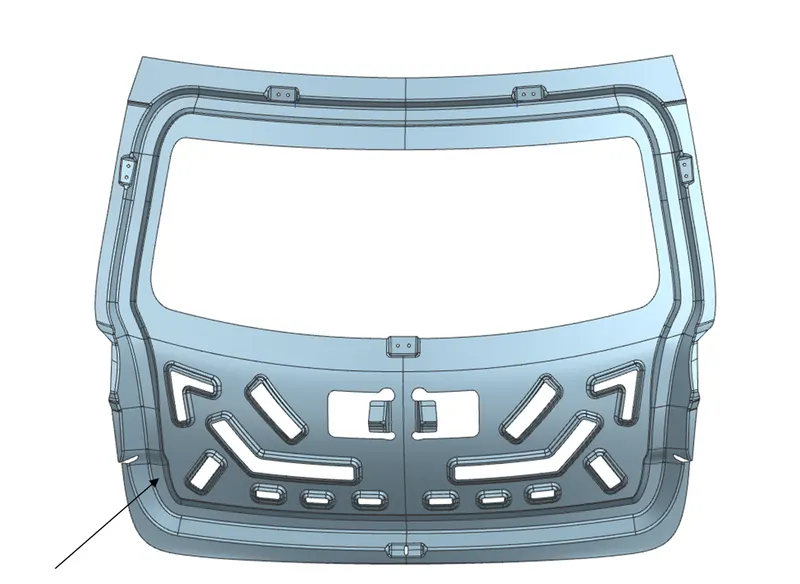
Sealing flange
HINGE MOUNTINGS:
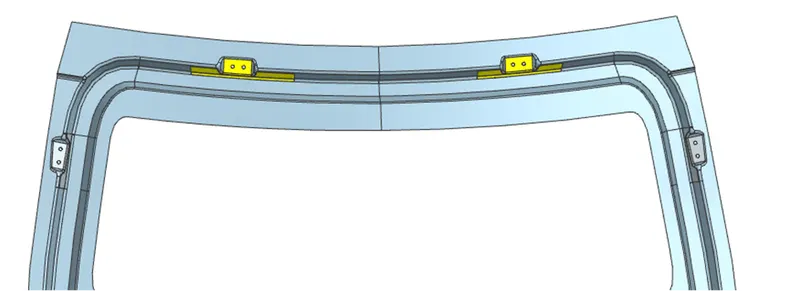
- The door hinges for automobiles are used to hold the door in a predefined axis during closing and opening the operation.
- The hinge mounting brackets are designed to keep the hinges.

HINGE REINFORCEMENTS:
LATCH MOUNTINGS:
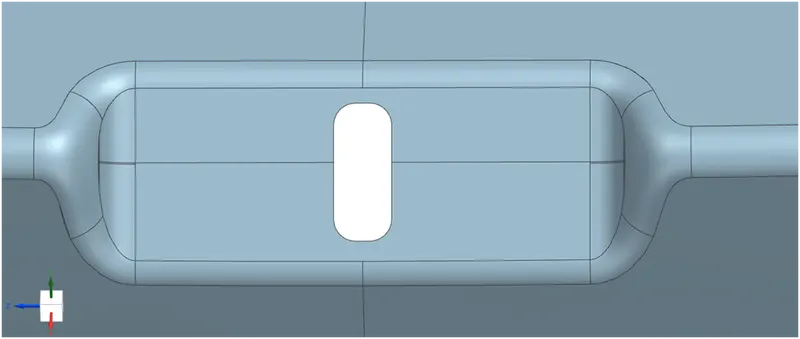
- It is located inside the back door assembly and engages with the door striker.
- The main use of a latch is to prevent unauthorized entry to the vehicle.
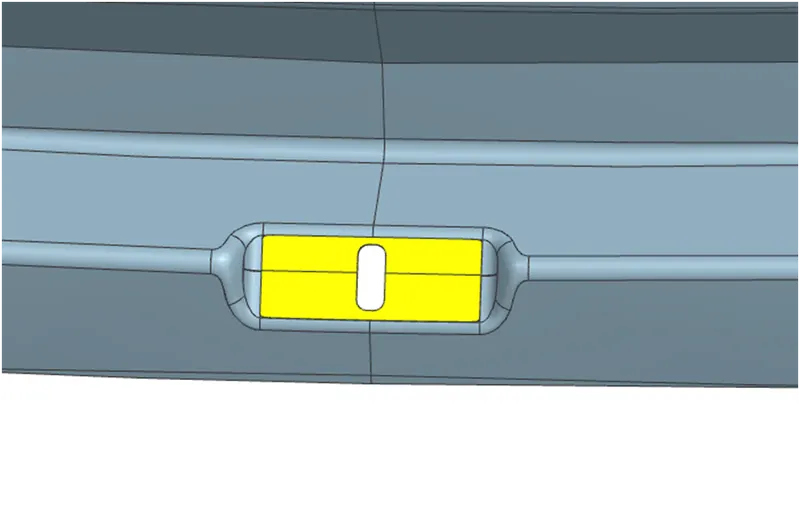
- A latch unit comprising a latch plate and the plate containing the slotted hole at the center to engage with the striker.
LATCH REINFORCEMENTS:
WIPER MOTOR MOUNTINGS:
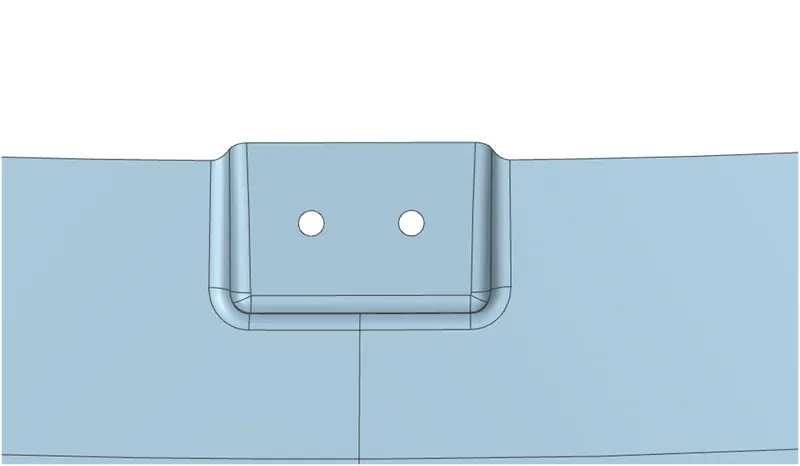
- It is usually mounted under the windshield base.
- Windshield wipers are powered by a small electric motor.
- The motor activates linkage that moves the wiper arms back and forth.
- Windshield wipers have been designed and made to clear the water from the windshield.
WIPER MOTOR REINFORCEMENTS:
GAS STAY MOUNTINGS:
- A gas stay is referred to as a gas spring that operates due to the force exerted by the compressed gas.
- It will be mounted to the existing holes of gas stay mountings.
- It takes minimal effort to lift the back door.

GAS STAY REINFORCEMENTS:

REINFORCEMENTS:
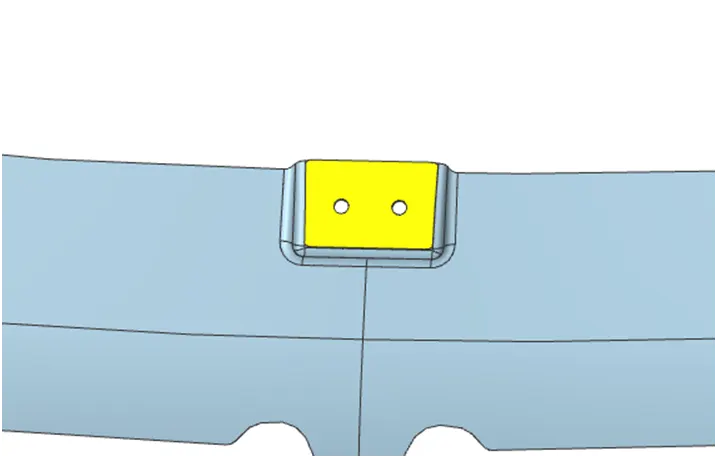
- Reinforcements are extra thickness added to the mounting brackets to compensate for the strength.
- For the maximum form of stability and durability absorption elements need structural reinforcements.
- The main purpose of reinforcements leads to avoid the breakage of material at sudden impact.
LATCH AND TRAJECTORY:
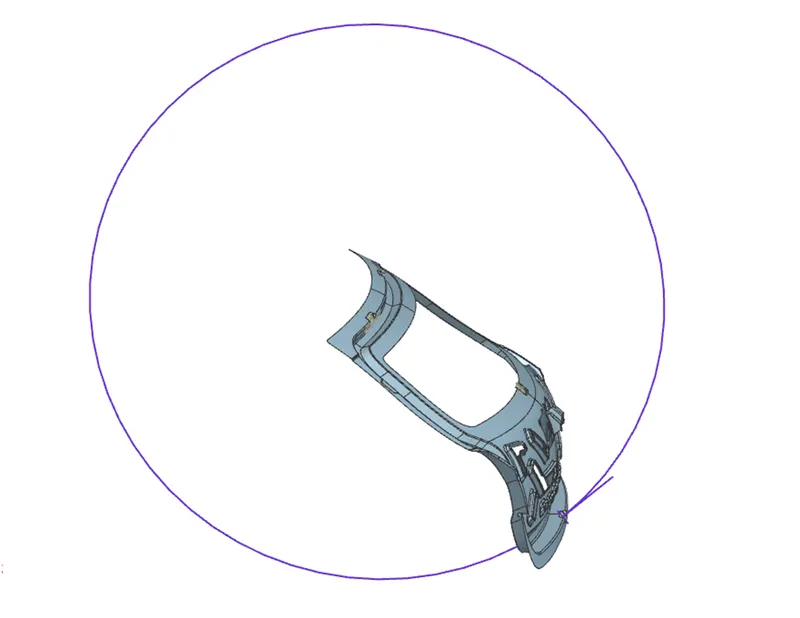
- The door is opened and closed along the trajectory path without any obstacles.
- Hinge axis is taken as a center to draw the circle at the middle of the backdoor and is placed perpendicular to the circle.
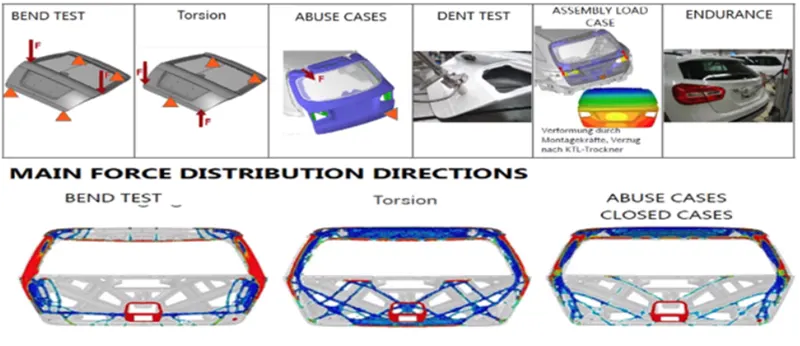
LOAD CASE ANALYSIS:
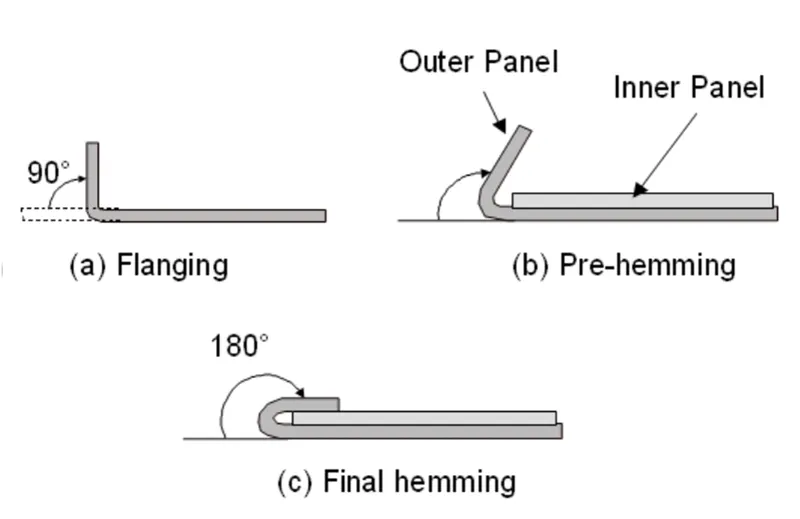
HEMMING PROCESS:
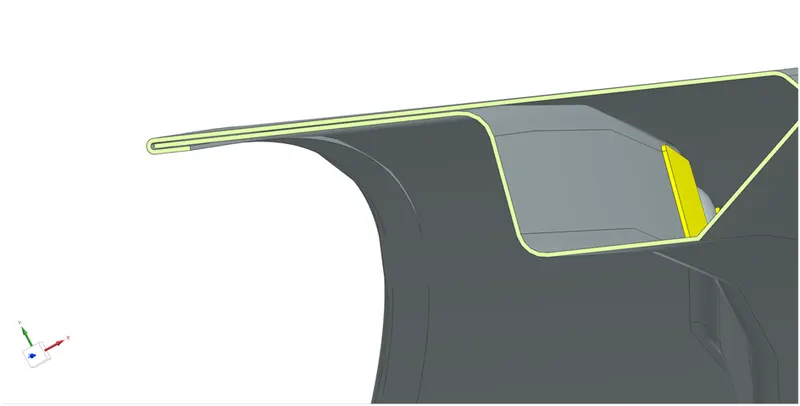
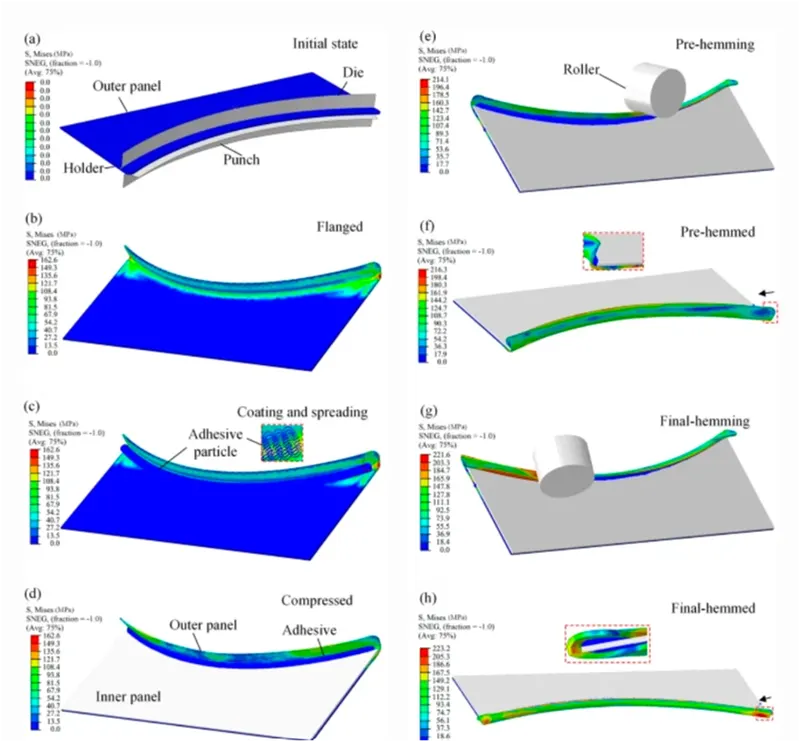
- Hemming is the process of joining the two surfaces using a set of rollers and bending the parent part over the sub part.
- Hemming adhesives are widely used to improve strength, part stiffness, crash performance, and corrosion resistance.
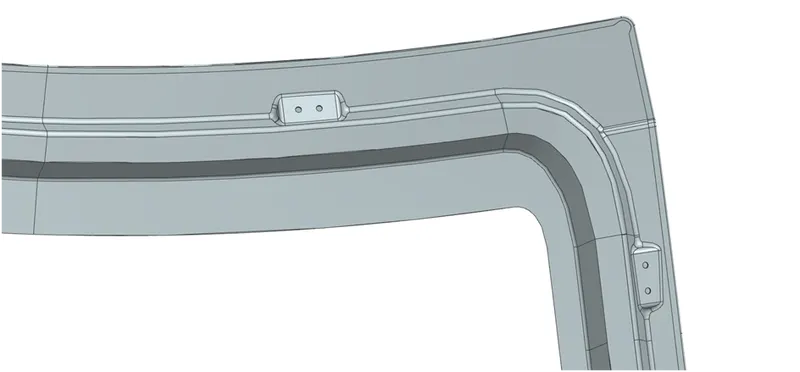
- Corner relief is given on the outer panel to reduce the stress concentration.
DRAFT ANALYSIS:
- Draft analysis is done to see whether the metal is drawn with a particular design without any tear in the metal of disfiguration.
- The performing of draft analysis to reveal the part occupied by a variety of colors ( Green, Yellow, Blue, Red).
- Green is good to go because the greenish region of the product can be able to manufacture.
- It is done with 7 degrees positive of allowance.