Design of backdoor
Design of Back door
Introduction
One of the closure products in BIW sheet metal design is the backdoor/tailgate. The area at the back of an automobile that provides access to the trunk is known as the back door. The Wiper Motor, Gas Stay, Tail Lamp, Latch and Striker reinforcements and additional weights are also supported by the back door. The cost and performance determine the material used in door production of the automobile. Steel and aluminum will be employed mostly in automobiles, while Steel, whose production is simple and inexpensive since it adheres to use of stamps in Molds.
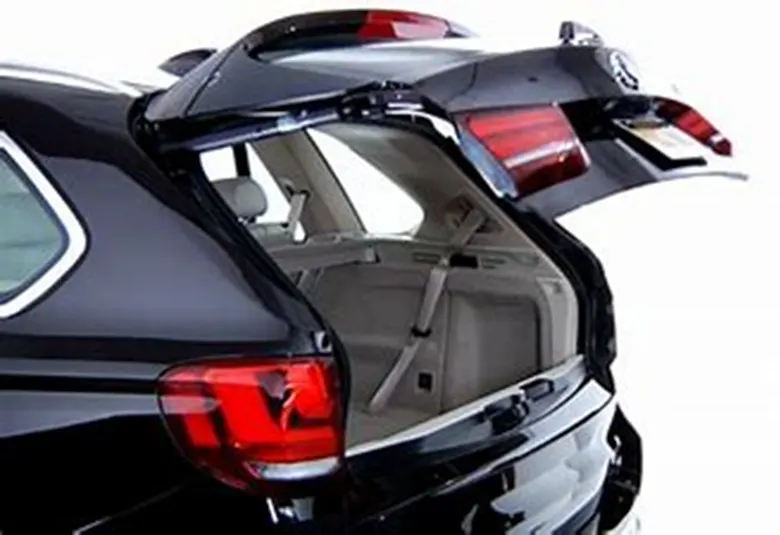
Components of back door –
- Backdoor Outer Panel (Upper)
- Backdoor Outer Panel (Lower)
- Backdoor Inner Panel
- Hinge Reinforcements (LH & RH)
- Gas-Stay Reinforcements (LH & RH)
- Latch and Striker Reinforcement
Design Considerations –
- Inner Panel Embosses
- Hinge and Gas Stay position
- Latch and Stryker position
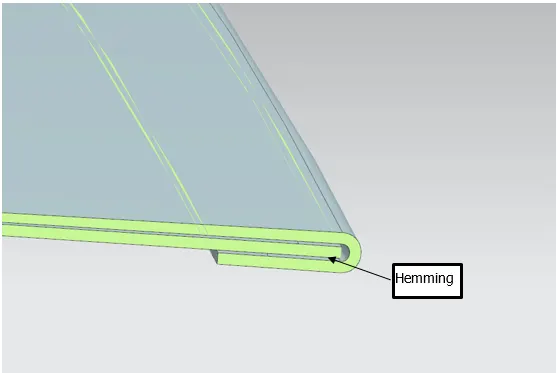
- Hemming
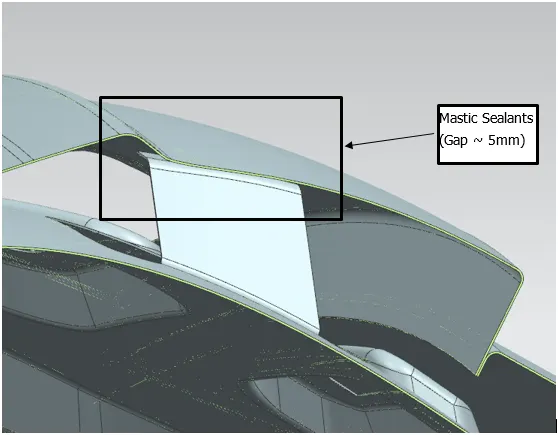
- Mastic Sealants
- Thickness of sheet metal parts
Backdoor Outer Panel -
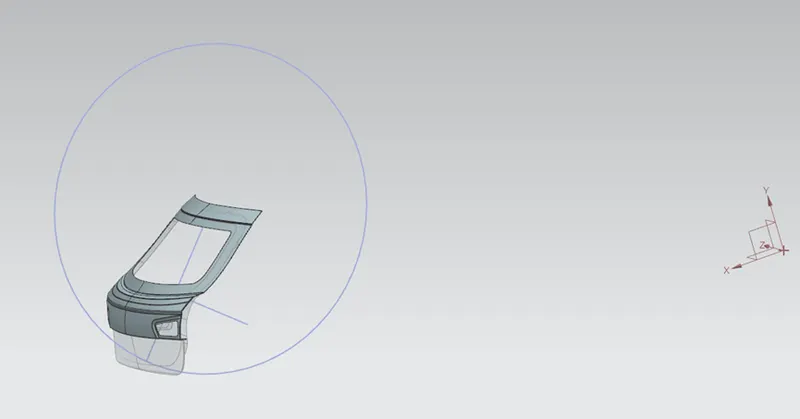
Upper
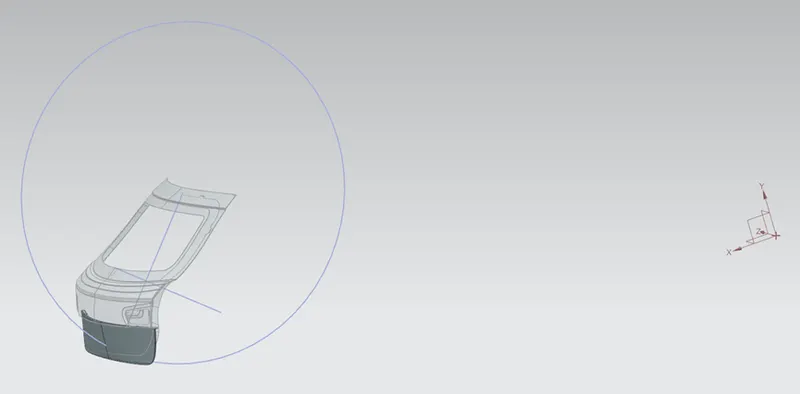 Lower
Lower
It is the exterior of the back door, as the name would imply, and is mostly for car's appearance. The connection between the outer and inner panels is made at the margins and in the center by mastic sealants. The outer panel of the back door may also be provided with the outer door handle and, in certain situations, the license plate. For our design, we have thought about an exterior upper panel and an outer lower panel in two halves. Metal sheet is stamped to create the outer panel. The outside panel's thickness is 0.75 mm.
Backdoor Inner Panel -
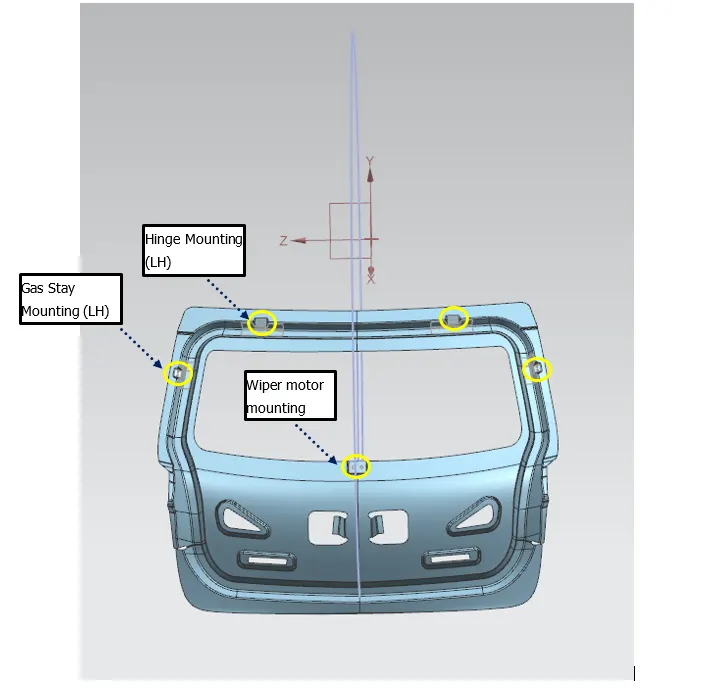
The inner panel is, as its name implies, the portion of the door that is within. Most of the reinforcements and parts are mounted there. It is produced either through sheet metal stamping or casting (aluminum). The inner panel is kept 0.75 mm thick.
Reinforcements -
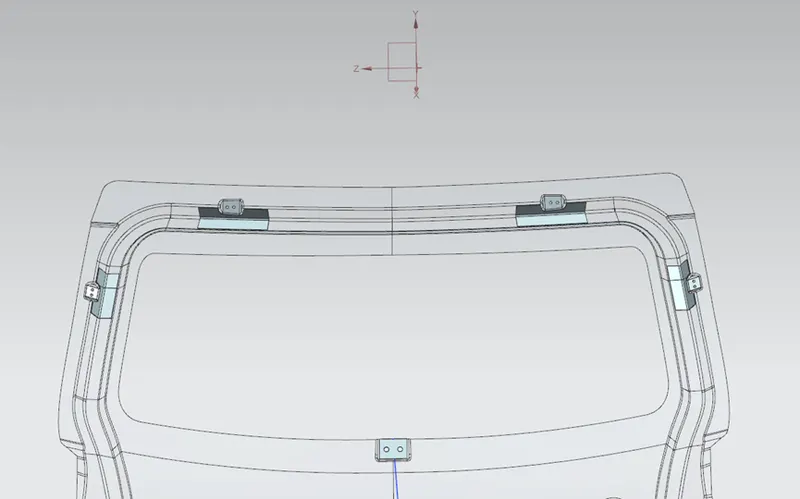
The sheet metal portion is given reinforcements to offer support and add more material, increasing its strength close to component installation zones and reducing the effects of collisions. During the design process, we took the following reinforcements into account. The reinforcements could be produced through stamping. All reinforcements' thickness is 1.5 mm.
Final Assembly –
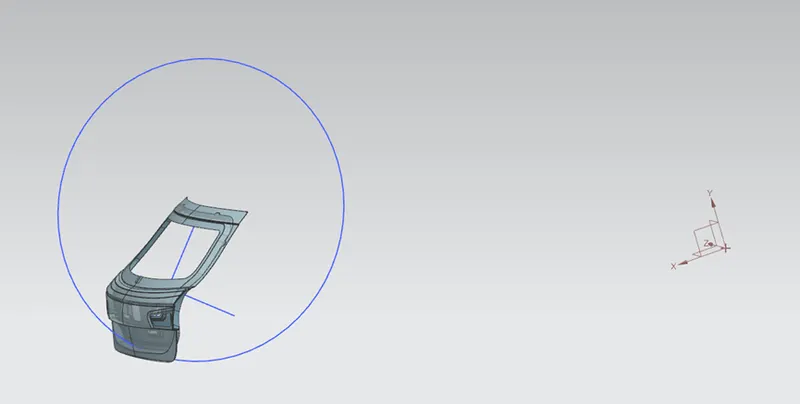
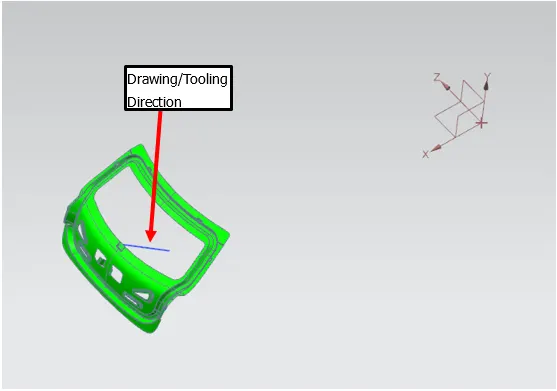
Draft Analysis –
We do a draft analysis to ensure the inner panel body design is accurate. We must choose the inner panel body and specify the drawing direction. We use a 7-degree restriction angle. The draft analysis's findings are as follows,