Design of backdoor
Design of backdoor
Objective
A detailed report for the Back door design by explaining the design methodologies and about the components developed in the design.
Introduction
A Backdoor of an automobile is the rear unit of that automobile. Back doors are one of the type doors of the vehicle which are located next to the passenger seat which provides access to the luggage compartment. In most of the cars, these back doors are operated with the help of gas stay which in turn reduces the effort required to lift open the door. Some luxury cars have powered backdoor which in turn is driven by an electric motor. This kind of system is also called a powered trunk lid system. Hatchback or station wagons are sold as 3 door or 5 door models. In this case, the rear hatch is classified as door this is because it enters the passenger compartment. The naming is mainly used in Europe countries. In case of safety, the back door designed should meet the safety requirement for the rear collision.
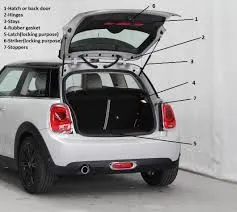
Types of the back door
- Top-Mounted :
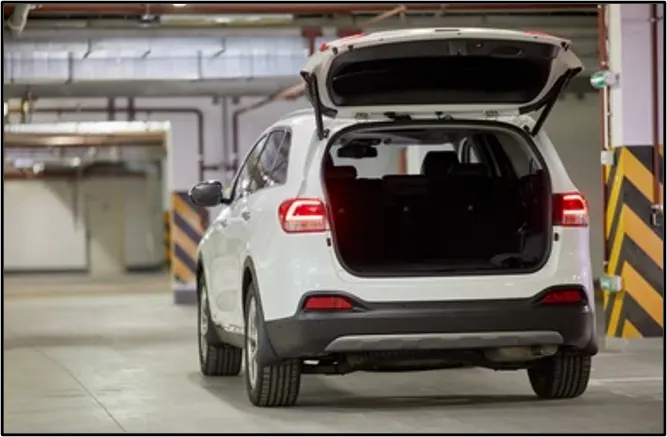
This type of back doors is used in a station wagon, pickup truck and some of the sport utility vehicles. Today’s modern cars use top-mounted tailgating systems which are both powered and also gas stay supported. These top mounted tailgates provide greater rear visibility compared to side-mounted or bar doors which have canter pillars in it.
- Side Mounted Doors :
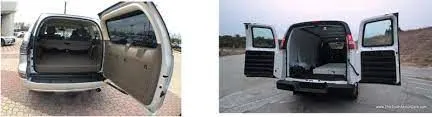
As the name signifies side-mounted doors are the one which is used in the van type MPVs, SUVs, pickup truck vehicles. These side-mounted doors or barn doors are a lot easier compared to top-mounted doors. These doors are generally smaller in size and can be easily accessed. These doors are more convenient for the goods handlers for long pipe and lengthy components where one door is kept open. These doors also save accidental head impacts. It is a lot easier to load and unload items in the side-mounted doors.
- Bottom / split type :
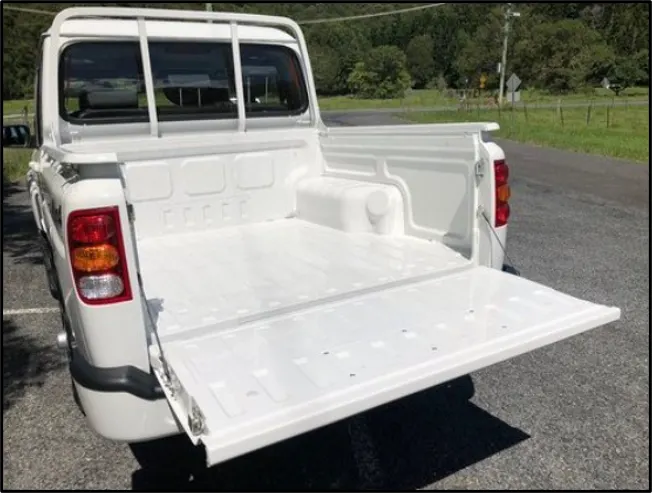
This bottom type or split type backdoor system are used in the car type such as estate type car, pickup trucks and some luxury SUVs.These are the most convenient type of back door in which the bottom split is used as a support or even as a table for the tour going people.
Types of mechanisms for Rear Door.
- Gas stays type:
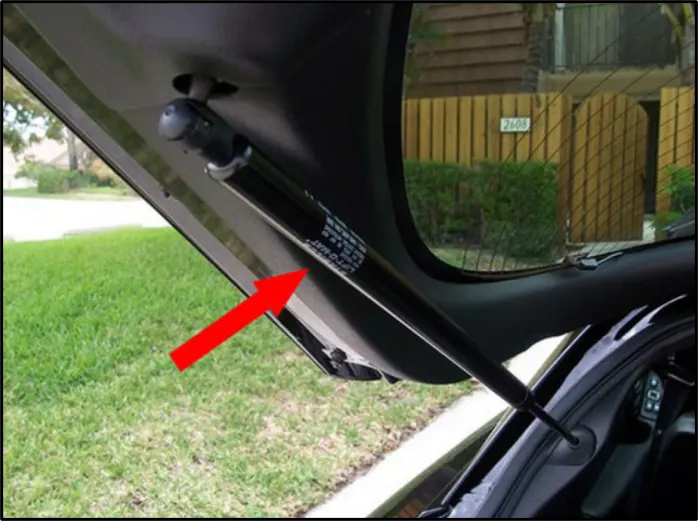
Gas stay types backdoor/liftgate/tailgate is an ideal and most commonly used tailgate mechanism from lower segment car to luxury car segment. The ideal components of tailgate consist of a hinge, door, gas stay and some rubber beadings for sealing of door.
- Powered lift system:
Power trunk lid system is another sophisticated way of trunk/liftgate opening mechanism which is to automatically open and close of the trunk/liftgate and release of the latch by the touch of a button. The following image shows the component as used in the powered trunk/back door lift system. Powered trunk lift system consists of a power latch, anti-pinch switch, PTG ass’y, PTG main switch. When the switch is pressed in the compartment or outside the power latch releases the latch and the entire backdoor is opened. The anti-pinch switch is located in order to avoid accidental hand insertion during the operation of the door.

DESIGNING ASPECTS
- Software Used:
Simens Nx Cad
- Design Criterion For Backdoor :
- Visibility Criteria
- Latch and Stricker Position
- Hing Position
- Gas Stay Position
- Space Avalibility
- Drain Holes
- Hemming and Relief area
- INPUT
Class A Surface:-
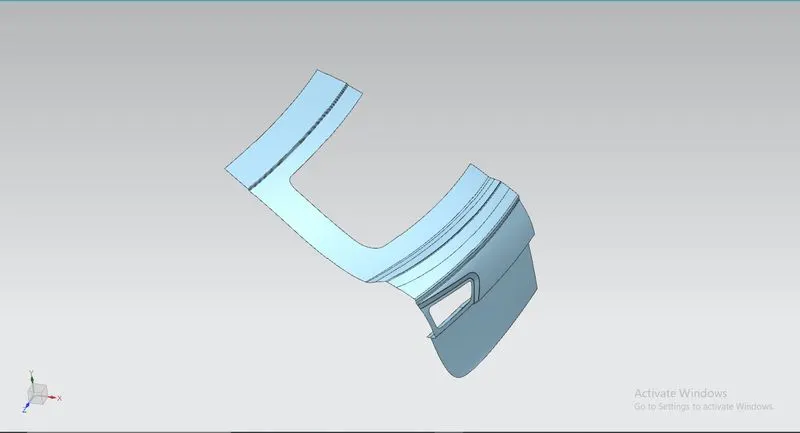
In Automotive Industry There Will Be a Dedicated Team Who Will Perform The Aesthetic Designing Of Various Components Including The Whole Vehicle. They Will Create Various Concept Sketches After Ideation. After That, They Will also create a Class A Surface Of The Product. This Class A Surface Is Then Passed over To The NPD CAD Team. They Will Initially Inspect The Class A Surface In Order To Check If The Design Is Manufacturable Or If It Is Following The Engineering Principles.
When the design Engineers get this ClassA surface they have to cross check for any disjoined surface , and if so it should be rectified as it shouldnt create any future tooling or designing operations.
- COMPONENTS PRESENT AND DESIGNED :
- Backdoor Outer Panel
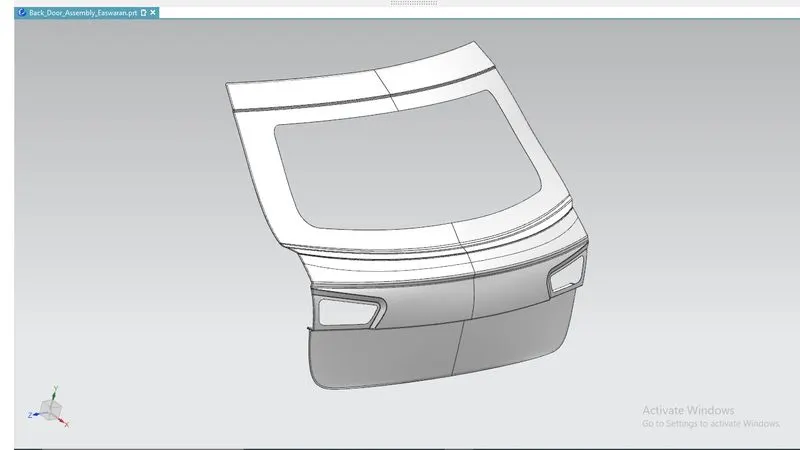
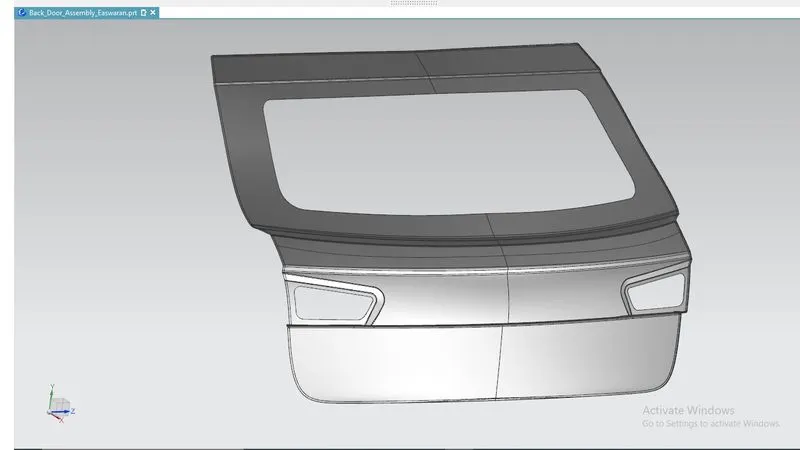
The Backdoor Outer panel consists of two sections; The upper section and the lower section.
The Outer Panel is the part which aesthetically gives a sense of attraction to people and is similar to every sheetmetal.The coating provided is of multi-stage which has the property of scratch resistance, rust prevention and smooth and attractive finishes. The outer panel also has the provisions for the tail lamp, rear fog lamp and also has the provision for licence plate mountings. Most of the hatchback cars have the provision for wiper motor.
- Backdoor Inner Panel :
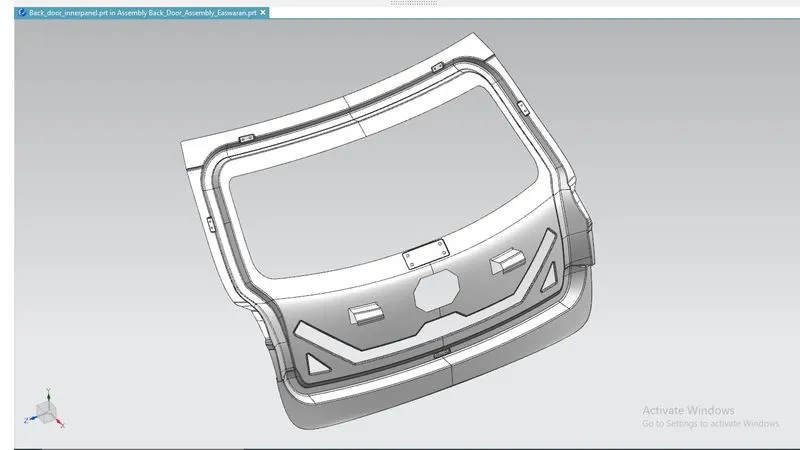
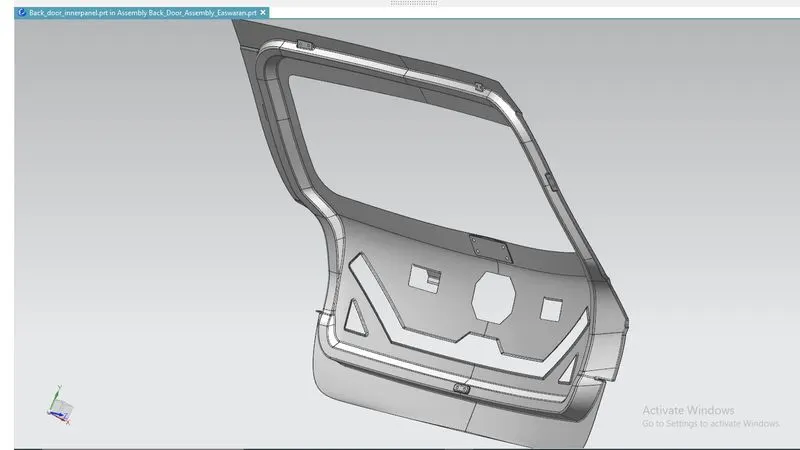
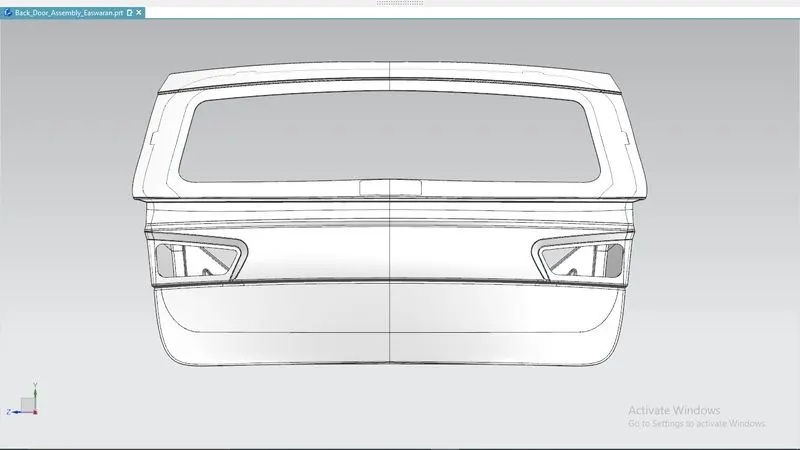
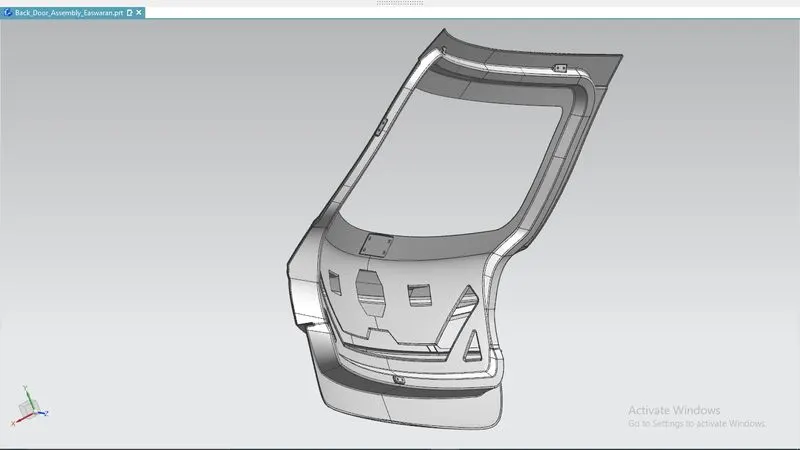
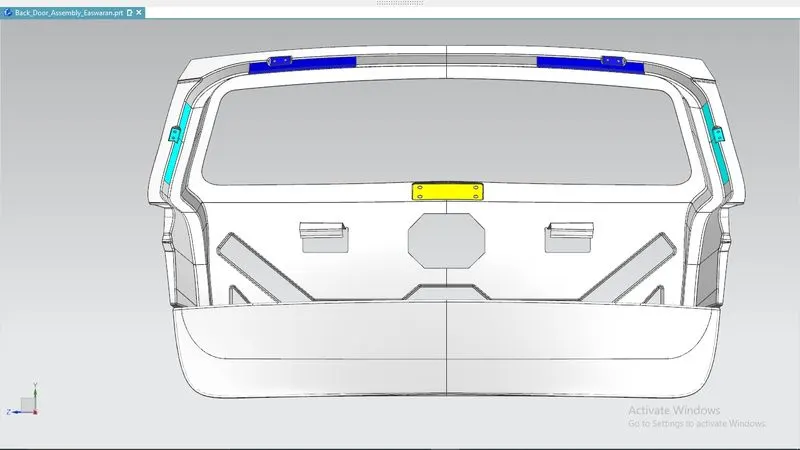
The inner door panel is a component which is used for strengthening the door assembly and it is one of the most important component.It is the core part of the design in which we design the embosses for mounting of different components such as wiper motor mounting, latch & striker mounting, hinge mounting.The embosses are also provided on the inner panel for the proper transfer or dissipation of any impact forces towards hinges rather than the steering or inner body components of automotive.
- REINFORCEMENTS
- Hinge Reinforcements:
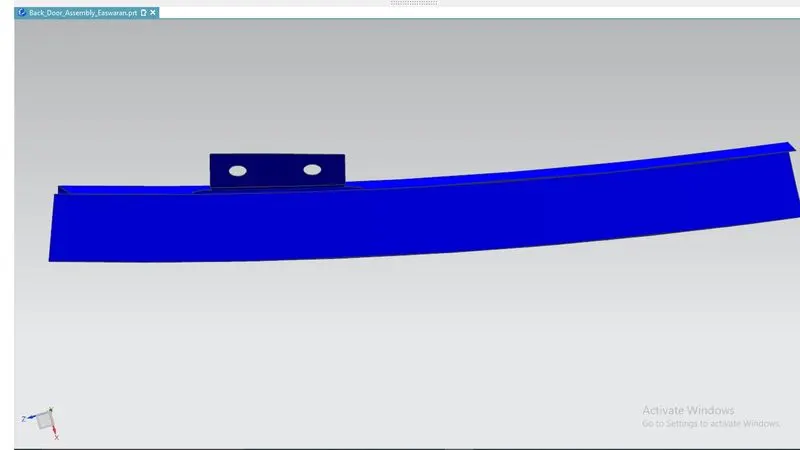
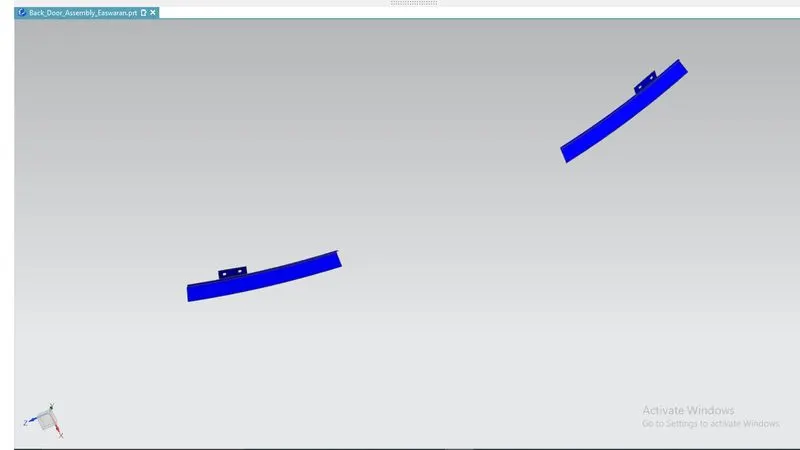
The reinforcement should be provided at the hinges beacause it carries most of the weight of the backdoor.
Hinge Reinforcements are given both of the Left hand side and Right hand side.
- Gas Stay Reinforcements:
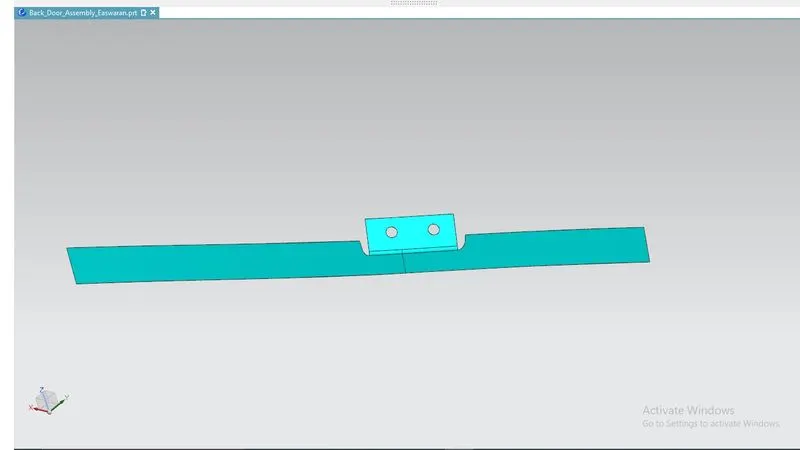
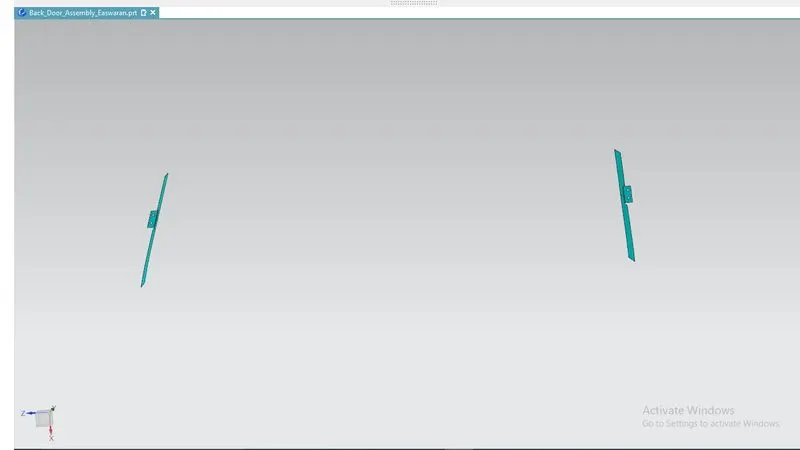
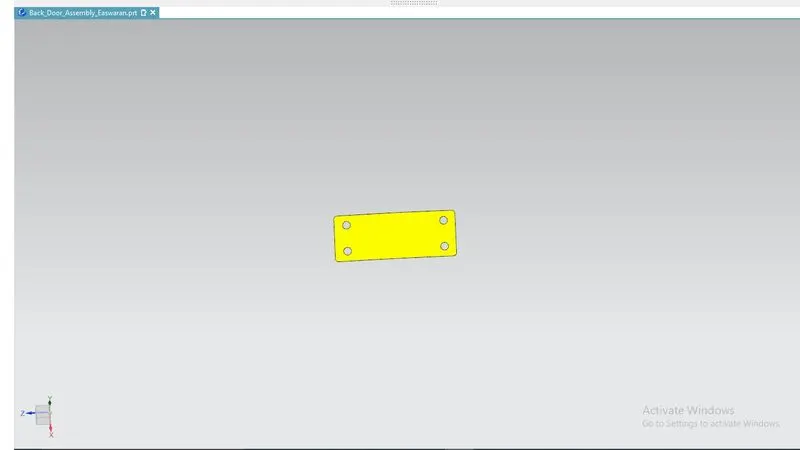
- Wiper Motor Reinforcements:
- Latch and Striker Reinforcements:
- MANUFACTURING PROCESS CARRIED OUT
- Drawing Operation
(a) It is a forming process by pushing a punch against a flat sheet and forcing it into a die to take the required shape. Or in other words drawing is the operation of producing thin walled, hollow shaped parts from sheet metal. Both the die and the punch have shape of the part to be manufactured . Classifications of drawing operations could be cupping, redrawing and deep drawing. Components like cups, shells, household utensils etc. can be made by drawing.
(b) In the drawing operation soft material are used since the material is required to undergo large permanent deformation to acquire the intended shapes in the presses. Drawing operations could be for cup making or deep drawing.
(c) For making cup shapes on the press first a circular blank of proper size is taken. The die is usually open from the bottom side and has an ejector system placed below a pad for the removal of the component after pressing it into shape. The pressure pad ensures smooth flow of the blank over the die/punch.
(d) The ratio of the diameter of the blank (D) and that of the cup (d) is called draw ratio (Did). If draw ratio is greater than about 1.8 then the cup cannot be drawn in one draw. Such items may require redrawing in several steps.
(e) In drawing operations lubricants are extensively used.
- Bending
It is a forming operation performed on a press to bend a sheet metal or a strip through required angle.
Salient features of bending are:
(a) It requires a press and tooling to do the bending operation.
(b) The sheet metal strip is permanently deformed to the required shape.
(c) When the sheet metal is pressed for bending in the die the outer portion is stretched while inner sides (towards the punch) are compressed.
(d) The radius of the corner should not be small i.e., the angle at the bent should not be too sharp—otherwise material can crack at the bend.
(e) After removal of the bent component from the press there is usually spring back up to about 4 degrees depending on the material hardness. Hard material have greater tendency to spring back while softer materials have less tendency to recover shape.
- Blanking
(a) Blanking is an operation of cutting an object of given shape from sheet metal strip. It may or may not be necessary to perform further operations on the blank. Piece detached from the metal strip is called blank. Examples are discs, washers.
(b) Blanking operations are extensively used in sheet metal working to make components like washers, discs etc. If needed other operations may be combined with the blanking operation. Blanking is usually the first operation in sheet metal.
(c) A blanking operation to make disc from a steel strip would require-
(i) A press
(ii) A punch and die with clearance at the lower side so that the disc can fall down freely.
(iii) The material for blanking operation is usually hard.
- Piercing
It is a distinct process of making a hole in sheet metals.
It is characterized by:
(a) The punch is sharp and pointed tool which is able to penetrate or pierce through the sheet metal.
(b) There is no scrap from the hole.
(c) The hole has rough flanges around the hole.
- Notching:
Notching is removing small quantity of material from the edges of a sheet metal part. Notching may be done to avoid overlapping of material after bending at the seams. Proper notching would give the sheet metal joints a better fit.
- Stamping:
The process of turning sheets of metal into a useful part or component is called sheet metal stamping. The metal is fed into a press, where the stamping tool, also known as a die, creates the desired shape. The die is pressed into or through the metal with tremendous force.
- Hemming Operation
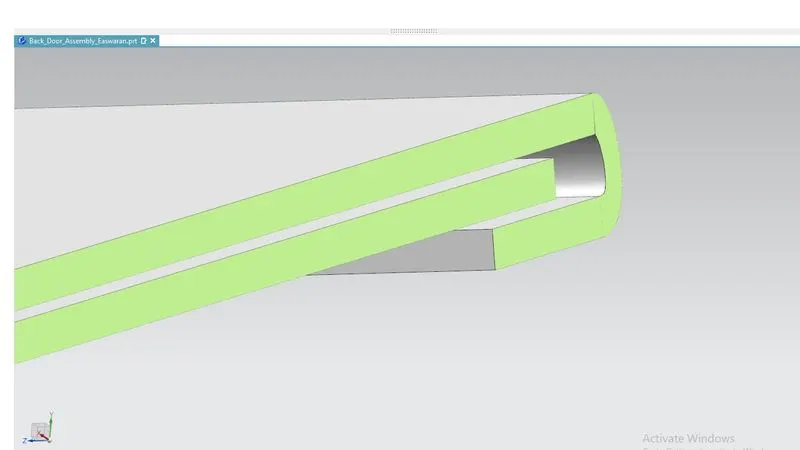
Hemming is a sheet metal forming process in which sheets are joined by bending it to 180°. Automotive body panels and automotive parts such as deck-lids, trunk-lids, doors, hoods and tailgates are formed by hemming process. In this process, usually a sheet is bent with the help of inner sheet in three different stages.
- DRAFT ANALYSIS:
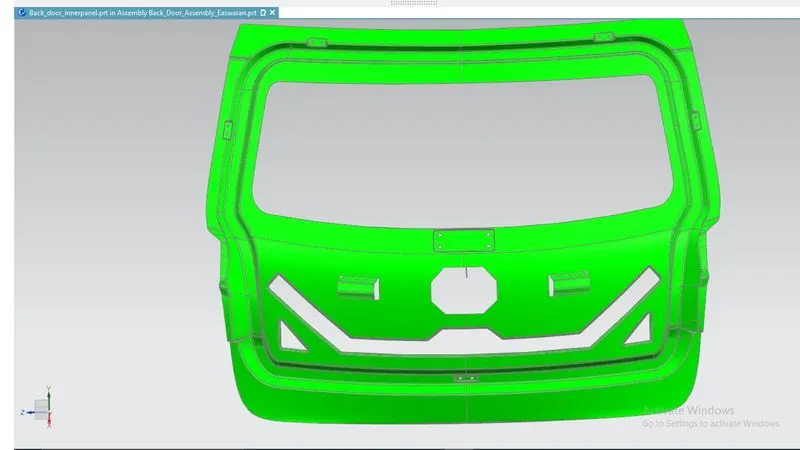
Every part like sheet metal parts which are generated from a Press Tool or some forming tools, may be the plastic parts which generally come out from the plastic moulds and maybe the casting parts, all such kind of parts required some drafted face on the surfaces which are parallel to the tooling direction. If we don't provide drafts on the surface then it will stick to the mould surface and whenever the mould is in motion they will destroy the surfaces or also reduced the finishing of surfaces.
Draft is used for providing angles or tapers on product features such as walls, ribs, posts, and bosses that lie parallel to the direction of release from the mold eases part ejection. Draught angles are designed in such a way that they will assist depart rejection. By doing so we have a reduced cycle time and improved productivity. Draft value for a particular part is mostly decided by the material used for making it. Generally for the plastic materials draught value you are very from 0.25 degree to 2 degree.
- OUTPUT
CONCLUSION
The design of Backdoor is thus concluded with full Undestanding and Knowledge.