Design of backdoor
Design of Car Backdoor
Aim
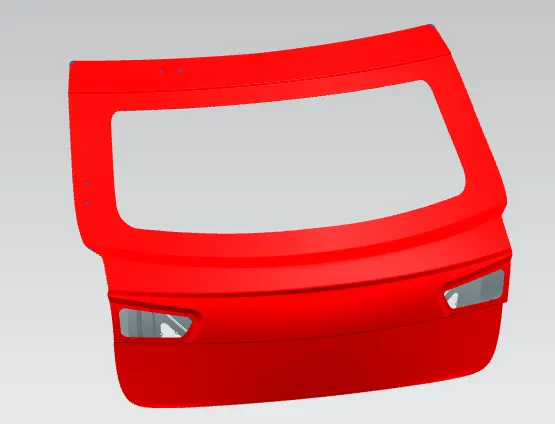
To design a Backdoor of a car from the given styling surface and following the design standards.
Introduction
Backdoor of a car generally give access to the vechicle's main storage area (or) cargo compartment by opening and closing which is co-ordinated by latch,sticker, gas stay. Position of this parts plays a major role in opening and closing of the rear car door. It is also known as tailgate.

Components of a Backdoor assembly
- Backdoor outerpanel
- backdoor innerpanel
- Hinge reinforcement
- Latch & stiker reinforcement
- Gas stay reinforcement
- Wiper motor reinforcement
Design Approach
While designing the backdoor, look for the following considersation:-
- Material selection
- Visibility criteria
- Force dissipation
- Hinge,Latch & sticker, Gas stay postion
- Methods for joining inner & outer panel
Material selection
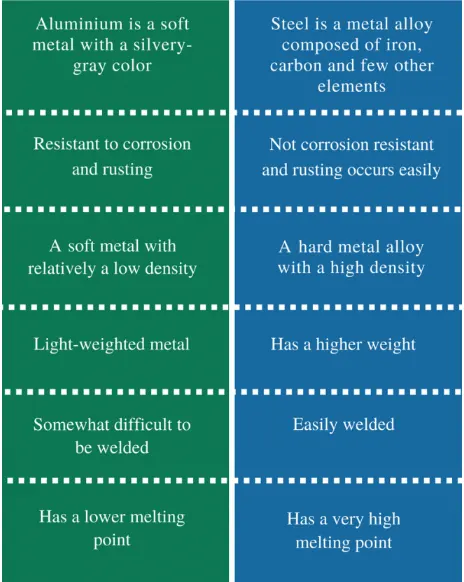
Material plays a vital role in designing any of the component.Generally backdoor of the car is made from either steel or aluminum. Steel is cheap and weigh higher then the aluminum while the aluminum is costiler and lighter in weight than the steel. If we look into the tool feasibility, steel sheet stamping requires more tools than the aluminum casting tool.And also draft angle for stamping parts requires 7 degrees while casting parts requires only 3 degress, it gives some extra boot space. Looking all into consideration, we have to choose whether we go with steel or aluminum.
Normally, budget car uses steel as a material while costiler car uses aluminum. For now we are designing for the budget car, so we select steel sheet metal as a material.
Force dissipation
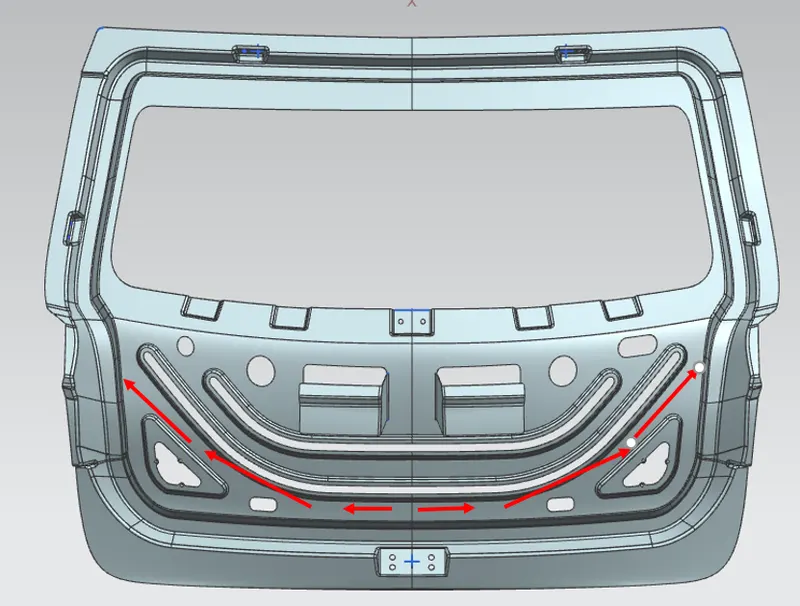
Backdoor of the car has to be designed in such a way that whenever the backdoor subjected to accident, it sholudn't transfer the force to passenger's cabin. Inorder to dissipated the force outside the car, 'V' or 'Y' embosses are created on the backdoor inner panel.
Positioning of Hinge,Latch and stiker, Gas stay
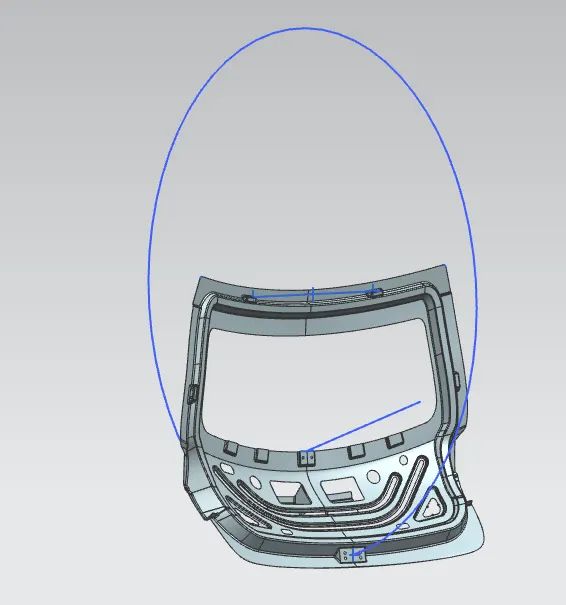
To position the latch and striker effectively, we position the hinge tentatively and draw the hinge axis. Now, using the hinge axis as the center we draw a big circle to the position where we need the latch to be placed. Then, we draw a tangent line to the circle at that point and place the latch in that region.
Methods of joining inner & outer panel of a backdoor
Methods of joining inner & outer panel of a backdoor:-
- Hemming process
- Mastics seelant
Hemming process
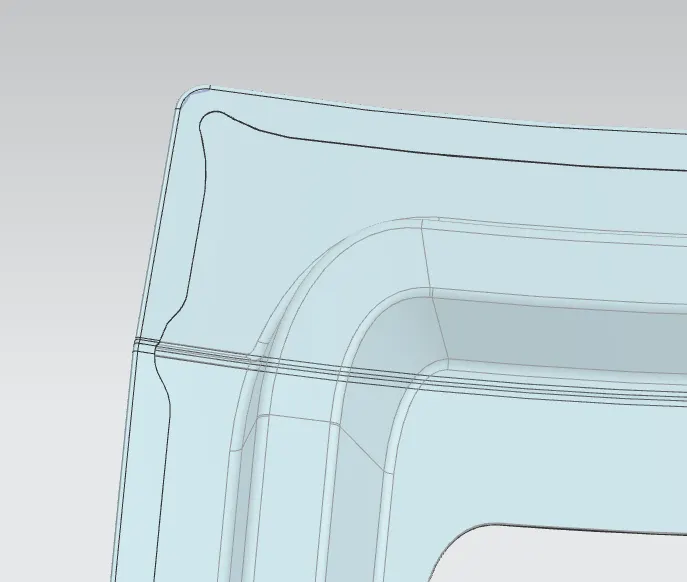
Hemming is a forming operation in which the edges of the sheet are folded or folded over another part in order to achieve a tight fit. Normally hemming operations are used to connect parts together, to improve the appearance of a part and to reinforce part edges.
In car part production, hemming is used in assembly as a secondary operation after deep drawing, trimming and flanging operations to join two sheet metal parts (outer and inner) together.
Typical parts for this type of assembly are hoods, doors, trunk lids and fenders.
There are various types of hemming operations:
- Conventional die hemming
- Roll hemming
Conventional die hemming
Conventional die hemming is suitable for mass production. In die hemming, the flange is folded over the entire length with a hemming tool. Normally the actual hemming is a result of a forming operation in which the flange is formed with a hemming tool after the drawing and trimming operations have been completed. The formed flange is then hemmed in several process steps. These steps include, for example, the pre-hemming and final hemming depending on the respective opening angle of the flange. Production plants for conventional die hemming are very expensive, but the cycle times are very low.
Roll hemming
Roll hemming is carried out incrementally with a hemming roller. An industrial robot guides the hemming roller and forms the flange. Roll hemming operation can also be divided into several pre-hemming and final hemming process steps. Roll hemming is very flexible to use and tool costs are significantly lower as compared to those of conventional die hemming. However, the cycle times are much higher since the hemming is realized using a hemming roller which follows a defined path
Mastic seelant
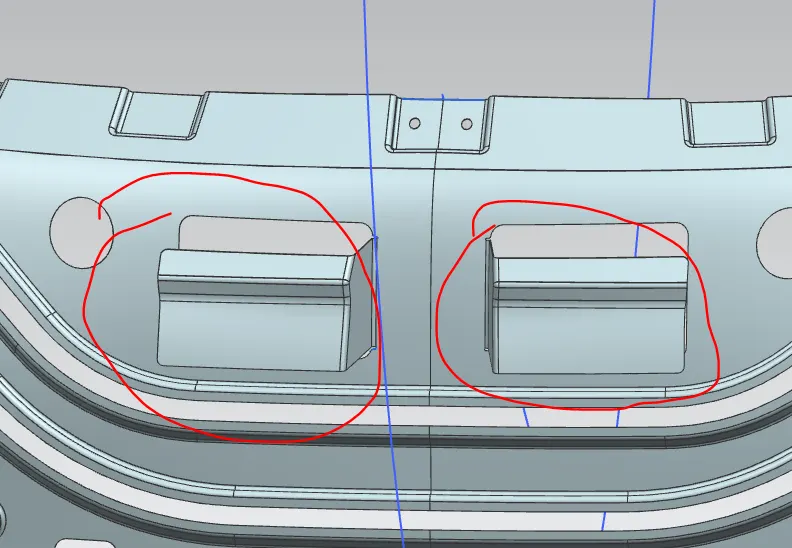
The Mastic sealant or the Mastic point is an elastic compound that behaves like a rubber. In backdoor of a car, Hemming process is sufficient but inorder to give more strength mastic seelant is act as additional joining.
Design procedure
From the given stylish surface ,backdoor assembly has to be developed.Check for the quality of surface intially before staring design,if there is any patches needs to be corrected,contact styling team to correct it or get approval from them to rework.
Since we have only the styling surface, we need to follow top-down approach here.
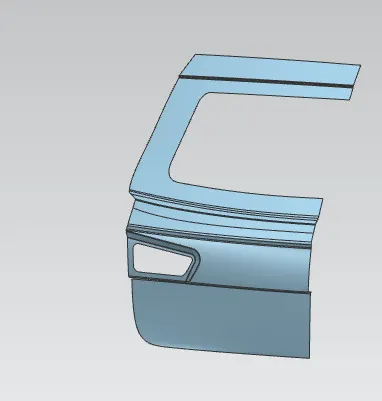
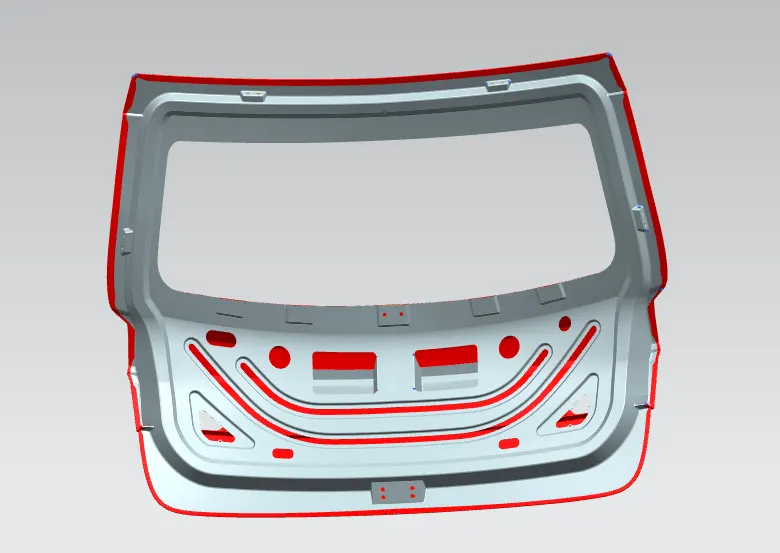
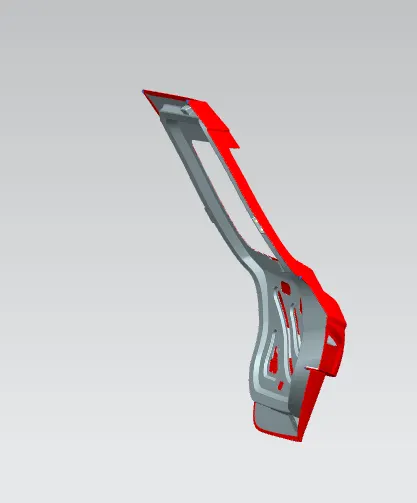
From the styling surface, we need to develop the inner panel. First step is determining the tooling direction from the draft angles ar given. The most important part of inner panel is sealing flange which decides how the backdoor will be mounted at rear side of the car.It also seals the rear side of the car and prevents the entry of dust and water from entering inside of the car. Width of the flange should be atleast 25mm.
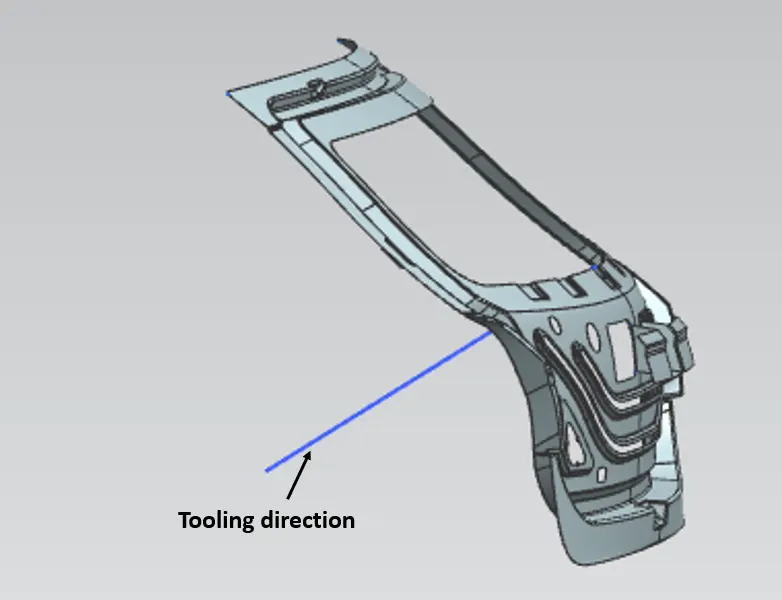
Embosses are provided in the inner panel to strengthening and also to dissipate the forces incase of rear collision to outside of the car. Embosses also provided to accommodate Hinges, Gas stay, Latch & wiper motor. Cutouts are basically act as access holes for wiper motor and latch and stiker motor. Holes and slots are provided for tooling feasibility also. Some holes provided for weight reduction and to maintain the CG.
Embosses are provided on the windsheild area flange where plastic parts are fitted.
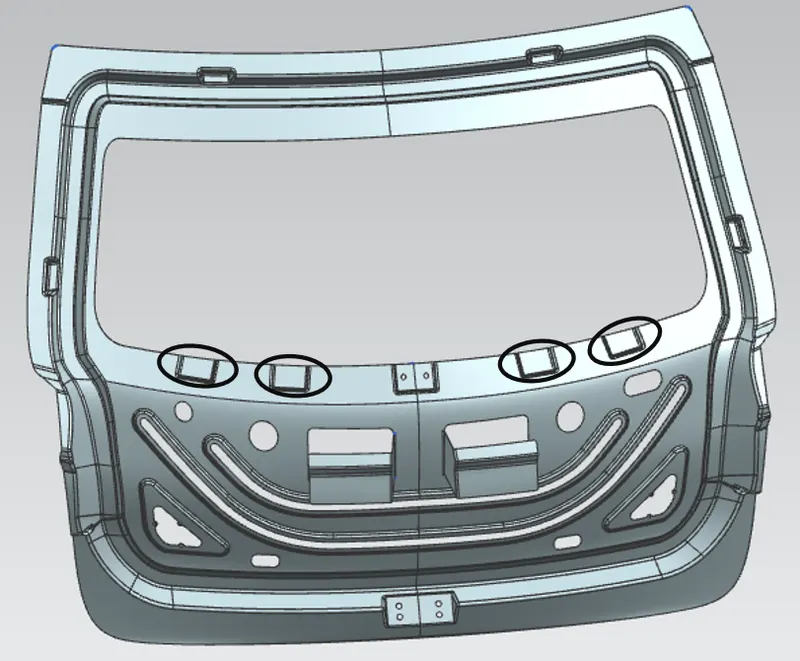
Draft anaylsis
Draft anaylsis is done to ensure the modeled design has required draft angle along the tooling direction. Draft angle for the sheet metal part is 7 degrees.
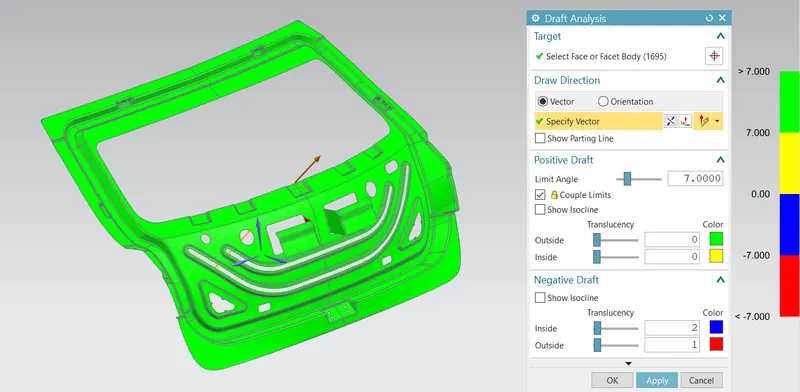
These undercut are seen during the draft anaylsis, since this area is formed by seperate tooling, it is ok.
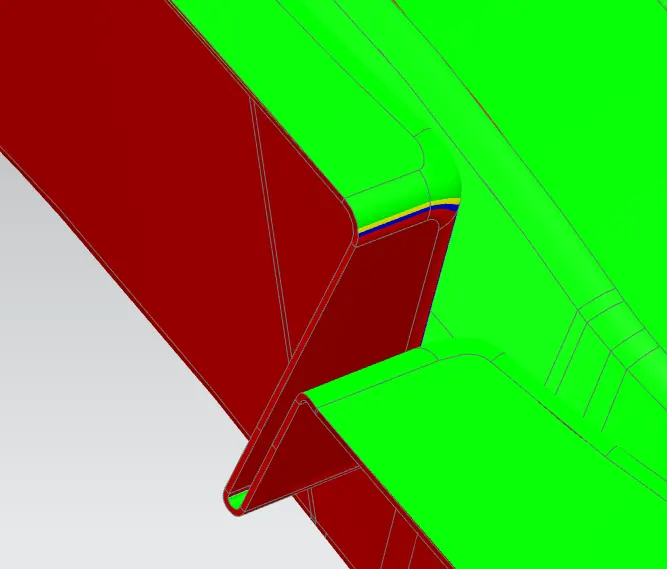
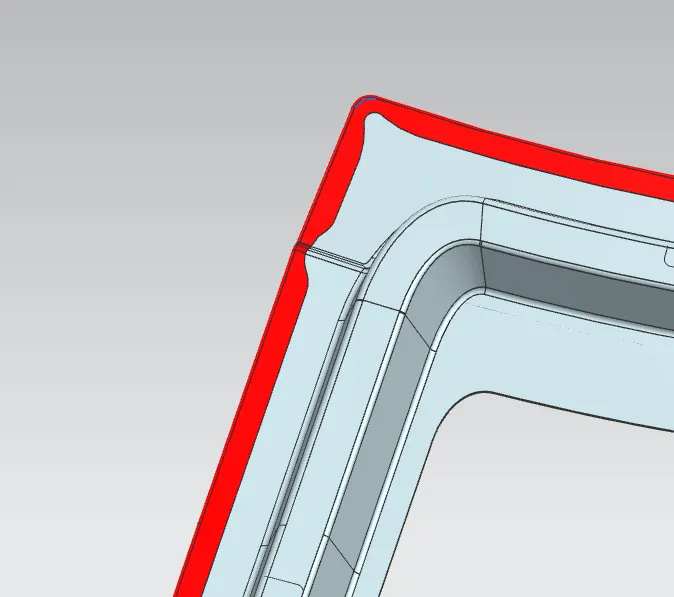
Hemming on outerpanel
Hemming is a forming operation in which the edges of the sheet are folded or folded over another part in order to achieve a tight fit. Normally hemming operations are used to connect parts together, to improve the appearance of a part and to reinforce part edges.
Normally relaxation provided at corners and bends inorder to avoid tearing of sheet.
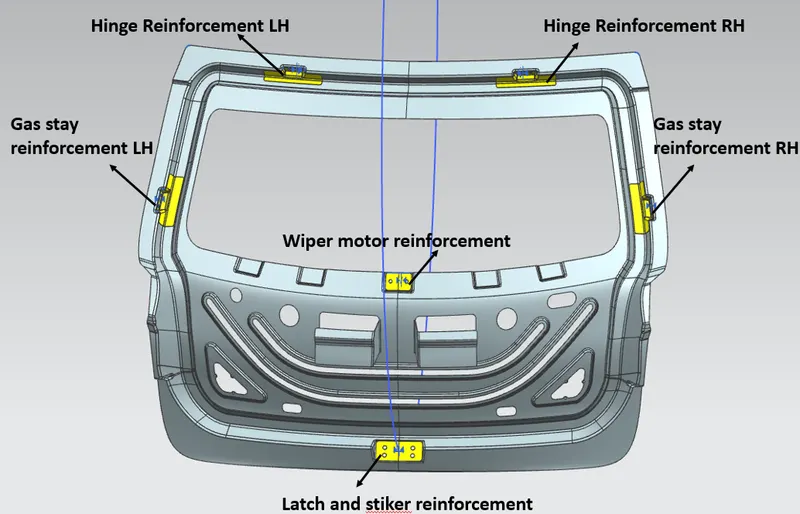
Reinforcements
Reinforcements are generally added to strengthen the parts. If we directly place the hinge and other parts over the inner panel, damages will occur.So inorder to tackle that reinforcements are nedded.
Conclusion
Thus the backdoor of the car is designed using given styling surface following the design guidelines.