Design of backdoor
BACK DOOR DESIGN
OBJECTIVE:
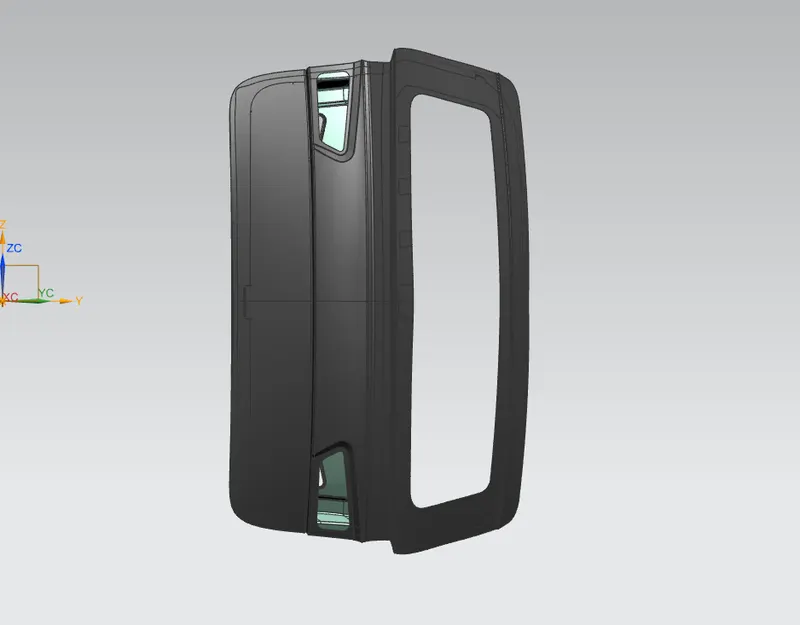
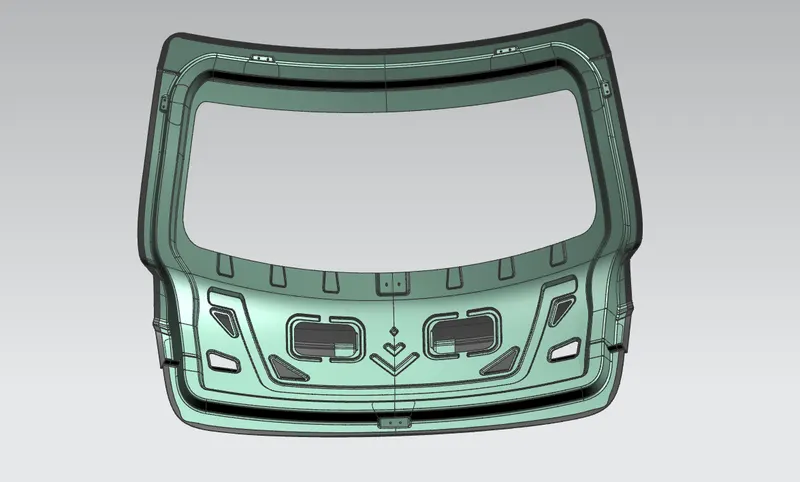
To design a BIW of the Back Door from the given Class-A Surfacing. Inner Panel is designed and assembled with Hinge Reinforcements, Gas Stay Reinforcements, Wiper Motor Reinforcements, and Latch Reinforcements.
INTRODUCTION:
A vehicle backdoor is otherwise called a Tailgate Rear door Hatchback or Trunk. The Backdoor is one of the doors of the vehicle which is arranged near the front seat and offers induction to the luggage compartment. In numerous vehicles, these backdoors are worked with the help of gas stay which in this way decreases the effort expected to lift the door. Some lavish vehicles have a powered backdoor which consequently is driven by a powered spindle automatically got to by remote control. This kind of system is moreover called a powered trunk top structure hatchback or station trucks are sold as 3 doors or 5 doors models. For the present circumstance, the rear brood has designated a door, this is because it enters the explorer compartment. The naming is prevalently used in European countries. By virtue of safety, the backdoor design should meet the prosperity essential of the rear accident.
In this project, I have designed a back door for a hatchback car where it is hinged at roof level. Similar to the hood and side doors, the backdoor is a swinging/closure commodity in a car. It consists of an outer and inner panel. It is a very critical component because of the passenger safety requirements. The Backdoor has to be designed by keeping in mind the space required for the luggage compartment as well as to accommodate the Latch and Striker motor and Wiper motor without compromising the strength of the component. Usually, Aluminum or Steel is used to manufacture the backdoor. While the Aluminum backdoor is lighter in weight and has a lesser number of components (since the part is "cast", it has a varying thickness and therefore doesn't require reinforcements). Steel backdoor is "deep drawn" with uniform thickness, added reinforcements, and therefore is heavier. But the production n cost of the latter is lesser and therefore a Steel backdoor is priced lower.
COMPONENTS OF THE BACKDOOR:
- Outer panel upper
- Outer panel Lower
- Inner panel
- Latch and Striker Reinforcement
- Hinge Reinforcement
- Gas stays Reinforcement
- Wiper motor reinforcement
DESIGN CONSIDERATION FOR BACKDOOR :
- Rear Visibility.
- Support structures like hinges and gas stay.
- Mounts for wiper motor, tail lamps, and other wiring loops.
- Fit and clearances.
- Boot space
- Rear crash regulations and requirements.
- Sealing and its functions.
- Joining techniques like hemming, spot welding, Mastic Sealent, etc
COMPONENTS:-
- Outer Panel and Inner Panel:
The Outer Panel is the styling surface of the circuitous access. It is the wellspring of the design of various bits of the optional entry, generally the Inner Panel. It goes probably as the outer cover and deals with the vibe of the vehicle. Its thickness is the extent of 0.65-0.75 millimetres
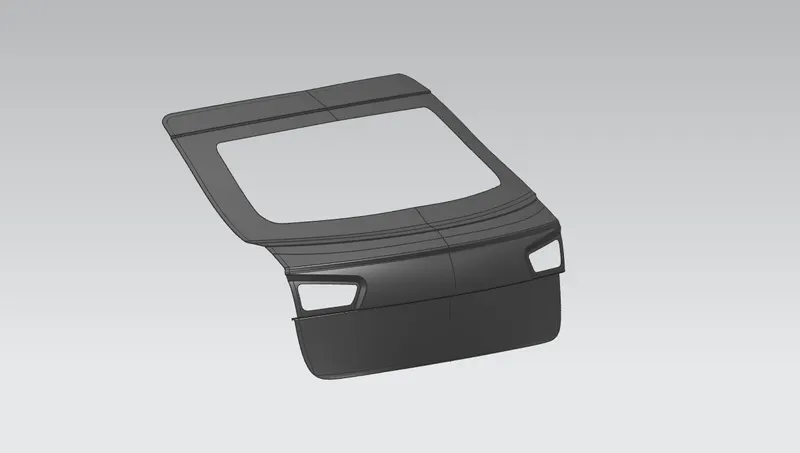
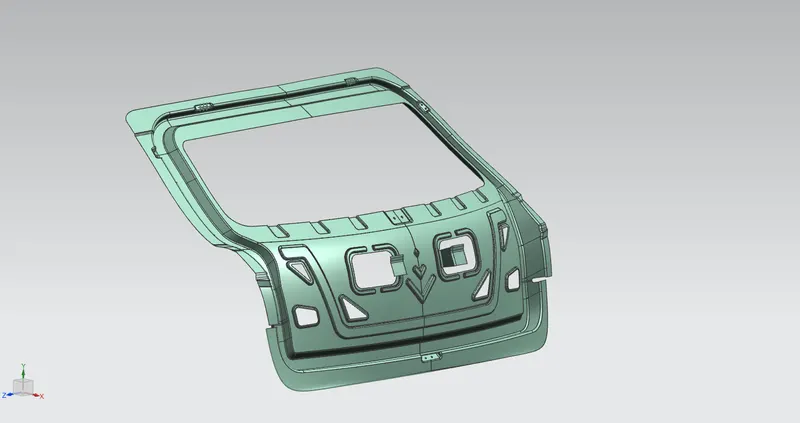
The Inner Panel provides fortitude to the optional entry. They are 0.65-0.75 millimetres (mm) thick. It is the Inner Panel where reinforcements and embosses are provided to legitimise its ability. There are various circumstances where the Inner panel is presented to stress as a result of successive opening and pulverizing. These stress and distress factors are reimbursed by features like embosses and reinforcements. The internal panel obliges the Latch and Striker actuator, Wiper motor actuator, Trims mounting, Hinge and Gas Stay embosses, VEmboss, Latch, etc and likewise, the key examples are provided. Various reinforcements are in like manner spot welded to the inner panel.
- Hemming:
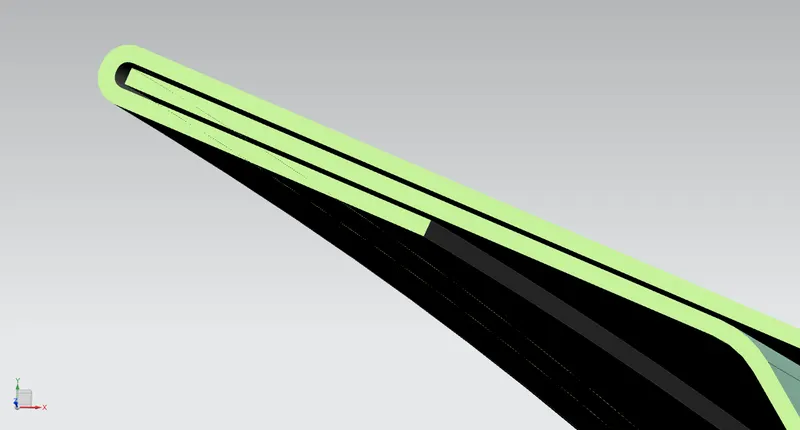
Hemming is a metalworking cycle in which a sheet metal edge is turned over onto itself. The outer and inner panels are solidified using Hemming activity as we achieve for other end and swing portions. There is a 0.2 mm opening between the two panels and a 1-2 mm room at the edge of the inward panel. This space is provided for the sealant to overflow out and spread fittingly between the panels after the Hemming association to achieve water cosiness. Hemming is preferred over Spot Welding given its dominating classy wrapping up. Hemming relaxations/reliefs are provided at the corners and end locales to avoid bias issues rising out of the moving collaboration. The portion of the inside and outer panel along the Wind Shield glass is joined using Brazing. Brazing is likewise used to enter the upper and lower outer panels on the off chance that they are delivered autonomously.
- Mastic Sealant:
To improve NVH (Noise, Vibration, and Harshness) i.e to diminish these levels, Mastic Sealants are used. They similarly improve strength. They are made of hard Rubber and are introduced as paste along these lines joining the inside and outer panels with a thickness of 5mm. Mastic Sealants are preferred over Spot Welding to join the internal and outer panel due to the way that the last diminishes the vibe of the vehicle, especially on the outer panel which is the styling surface.
- Reinforcements and Emboss:
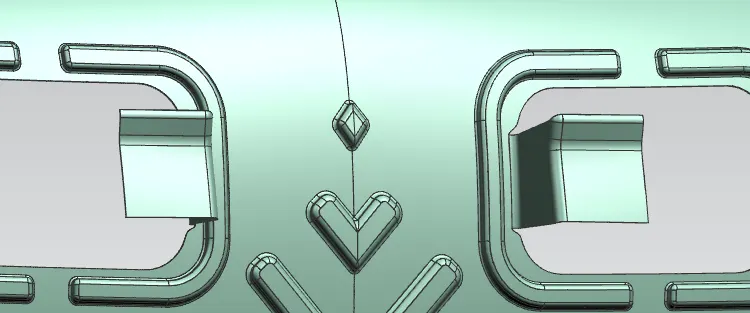
Reinforcements and embosses are added or designed to compensate for the insufficiency of fortitude in a region or district due to the load acting there. The optional entry's caseload goes about as Hinge, Gas Stay, and Latch and Striker. These stack cases are resolved with the help of various tests and multiplications.
- Gas Stay Reinforcements:
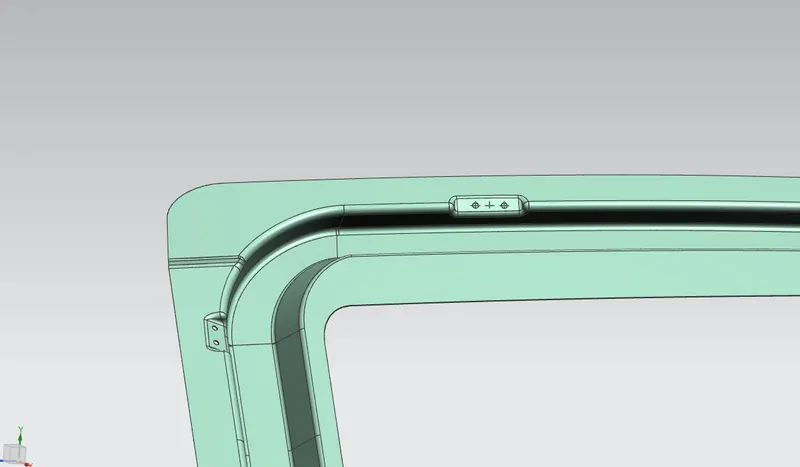
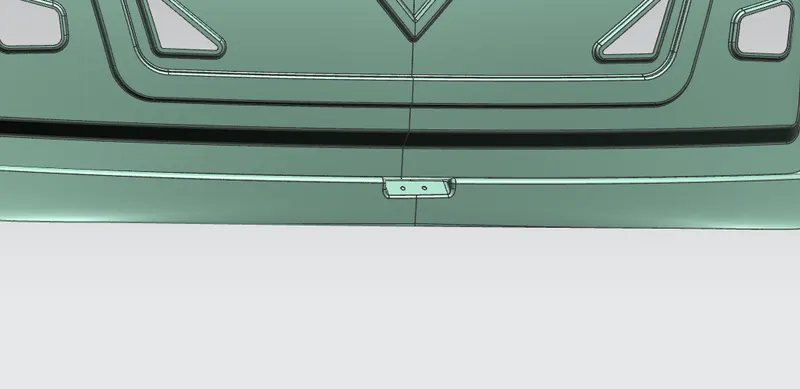
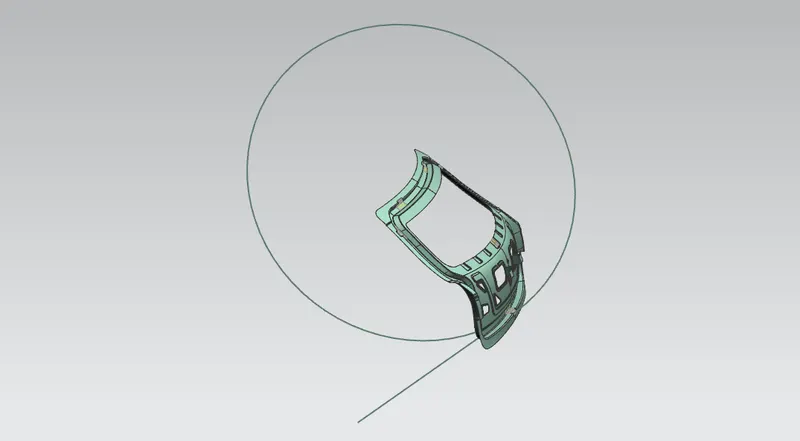
Gas Stay is a device used for supporting aberrant access in its vacant position. Gas stay requires no work and is secured into a help position normally as the aberrant access opens. On completion of the Gas, Stay is fixed on the backdoor and the furthest edge on the Body Side or the Back entrance fixed district. Embossing is provided at the Gas Stay mounting district to compensate for the utilitarian openings punched. Various diversion tests like the Bend test, Torsion test, and Abuse test performed in the subsequent section, as shown above, reveals that there is a very delicate zone developed at the Gas stay region. To compensate for that, support is remembered for that area.
- Hinge Reinforcements:
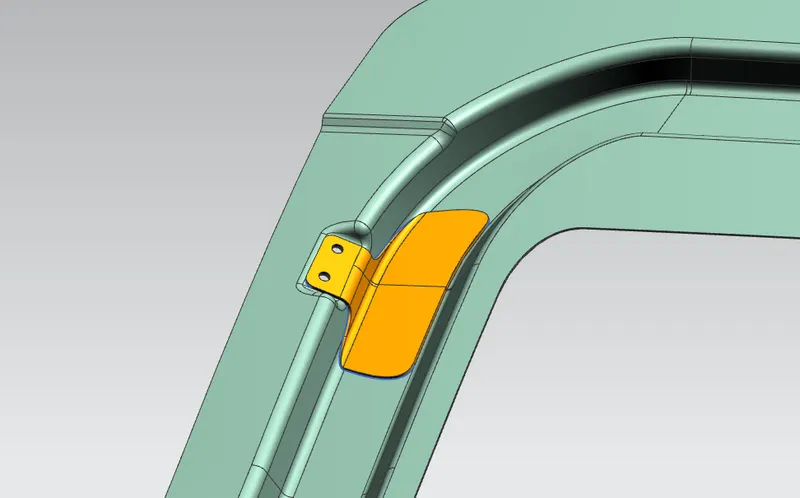
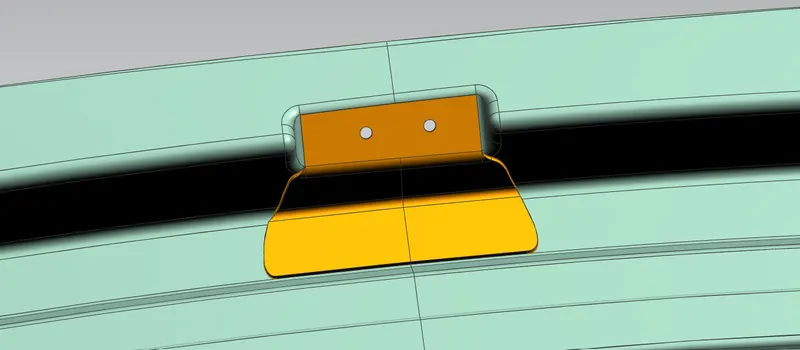
Hinges engage the opening and closing of the optional section. On completion, the hinge is fixed on the backdoor and the far edge of the Roof, on the different sides. Hinges can be put outside or inside the backdoor. Like Gas Stay, Hinge reinforcements are remembered for this space to compensate for the feeble zone developed in light of the stack acting while simultaneously opening and closing the backdoor. Latch and Striker Reinforcements: The Latch and Striker outline the locking arrangement of the backdoor with the vehicle. Due to the typical opening, closing, and over pounding of the backdoor, there is stress developed in the Latch and Striker locale. Further, during a back sway, this district will be an essential asset. To compensate for the equivalent, reinforcements are remembered for this district.
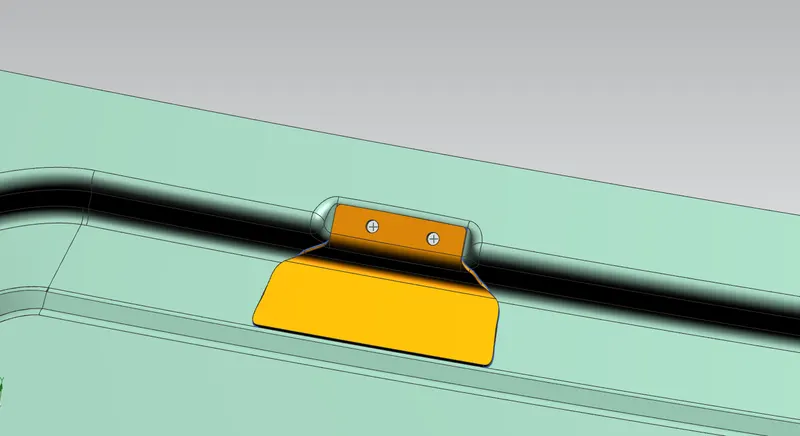
- Wiper Motor Reinforcements:
Wiper motor reinforcement is created to mount the wiper motor assembly
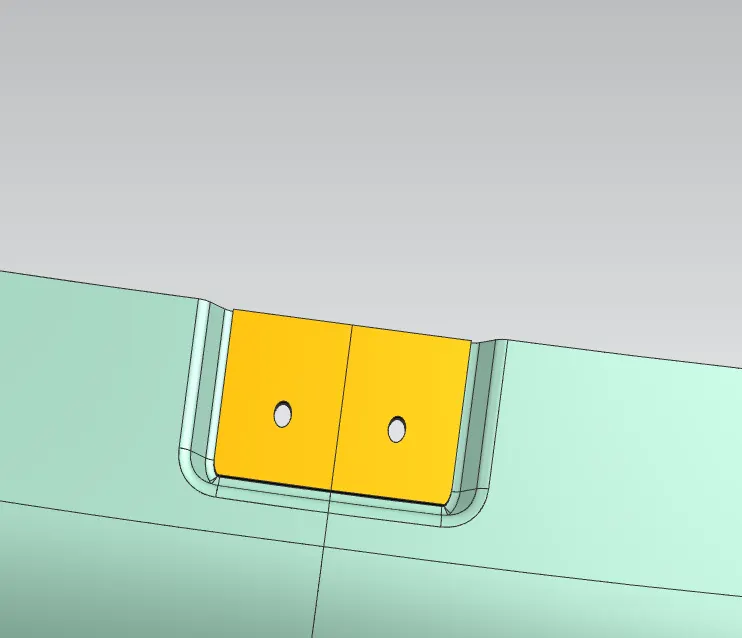
STRIKER REINFORCEMENT
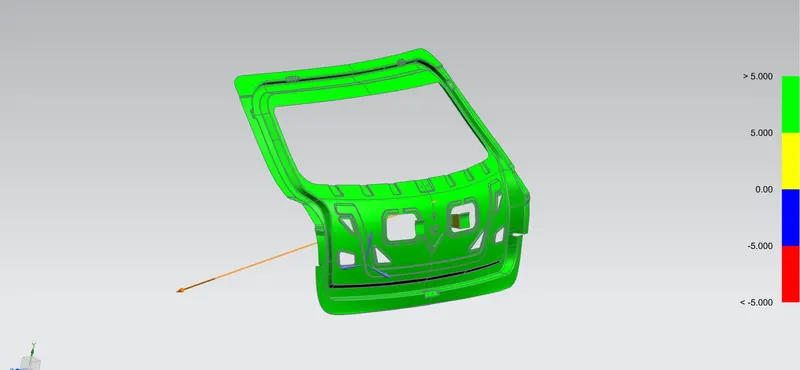
DRAFT ANALYSIS OF VARIOUS COMPONENTS:
- INNER PANEL
2. OUTER PANEL (LOWER)
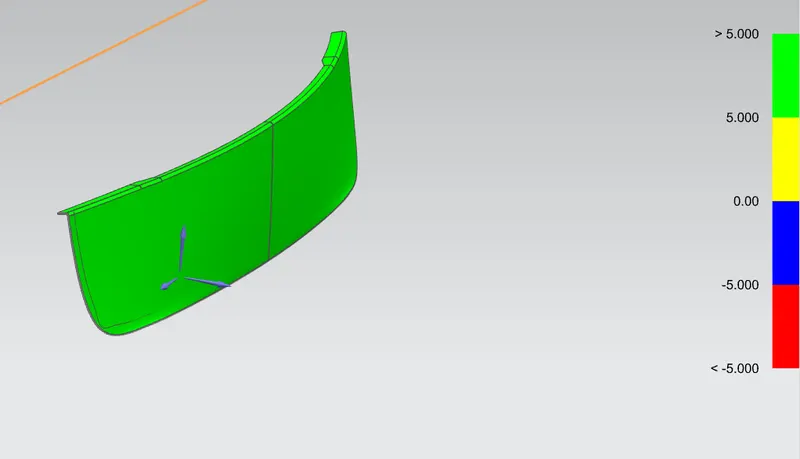
3. OUTER PANEL (UPPER)
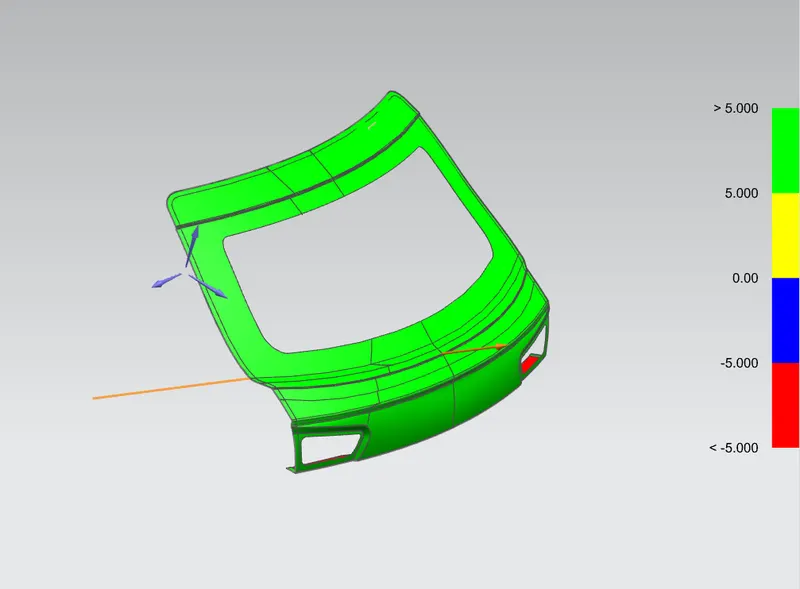
FRONT VIEW
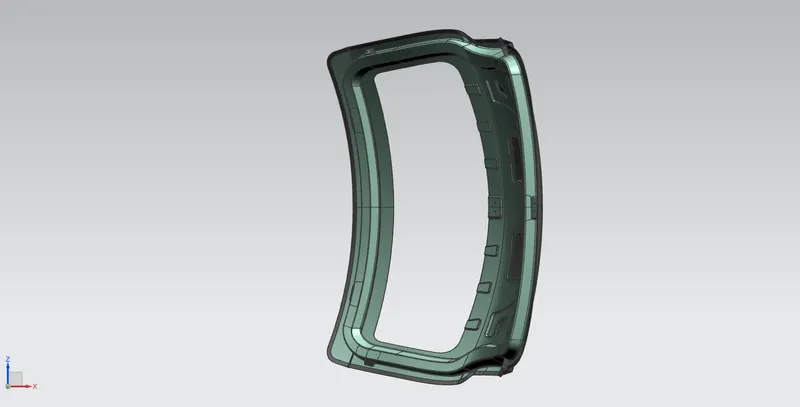
TOP VIEW
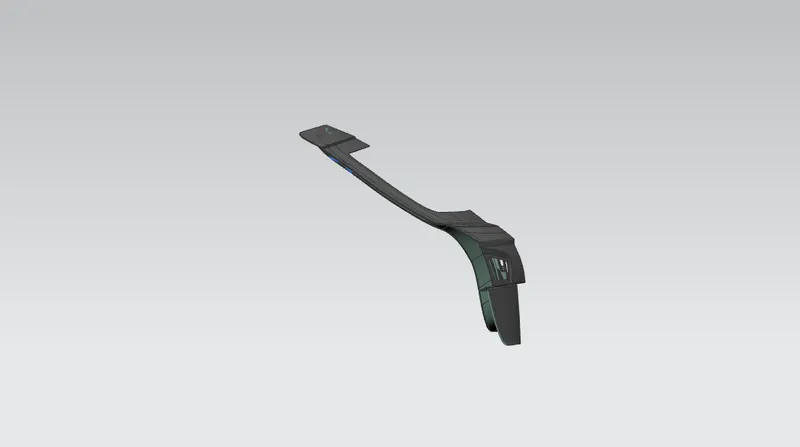
SIDE VIEW
CONCLUSION:
Finally, the whole back door design was completed considering all relevant engineering concepts. and also the parts are passed in the draft analysis.