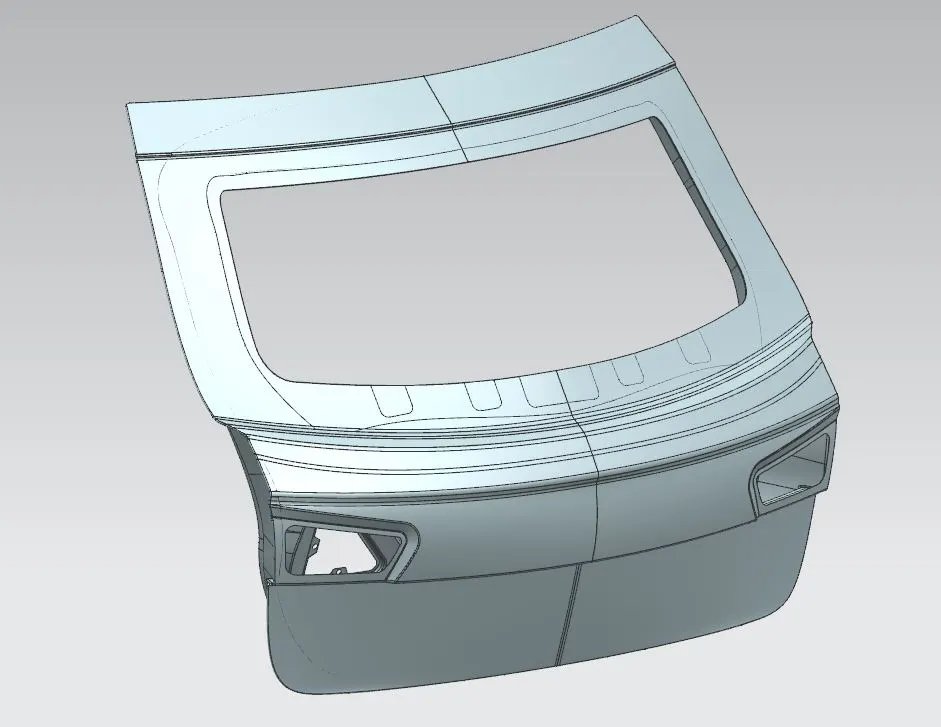
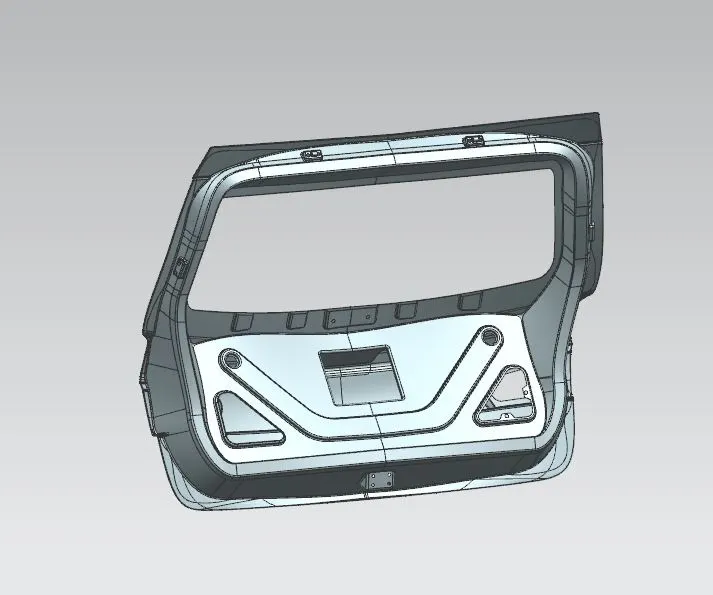
Design of backdoor
Back Door Or Tailgate
The BAck door is also called as Tailgate is the 5th door of the car in 4 door vehicle, it is the rearmost part of the car, which gives access to the trunk
the Backdoor Assembly has a different part like inner panel, and outer panel upper and lower and reinforcements and latch, wiper motor, etc
Design consideration for backdoor design
1.Rear visibility
2.Boot space
3.Gas stay or power spindle
4.Latch position
5.Reinforcements
Gas stay or power spindle
There are two ways to keep the back door at opening condition
1.Gas stay
2.Power spindle
Budget Car comes with Gas stay option it's manually operated
in high-end luxury cars have a powered spindle to keep the back door at the open and close it's operated by a button or remote control
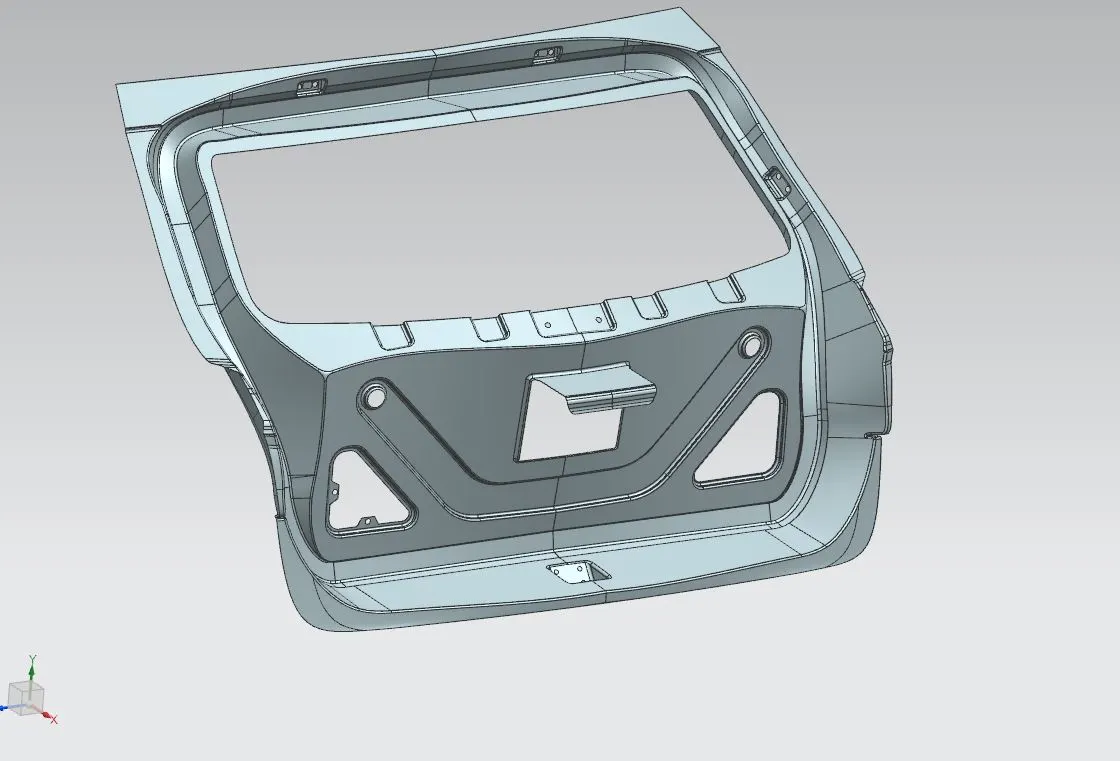
Back door Inner Panel
Backdoor Outer Panel Upper
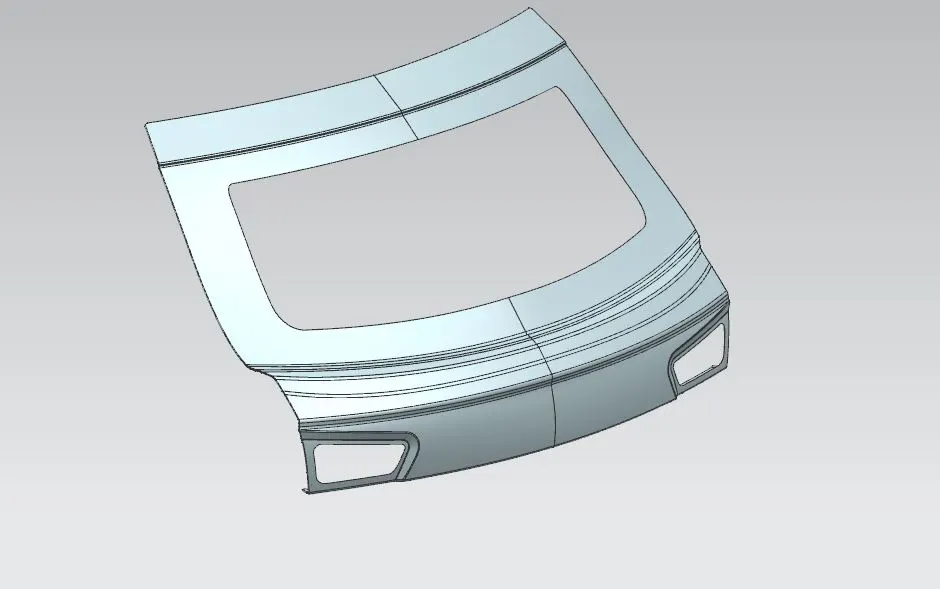
Backdoor Outer Panel Lower
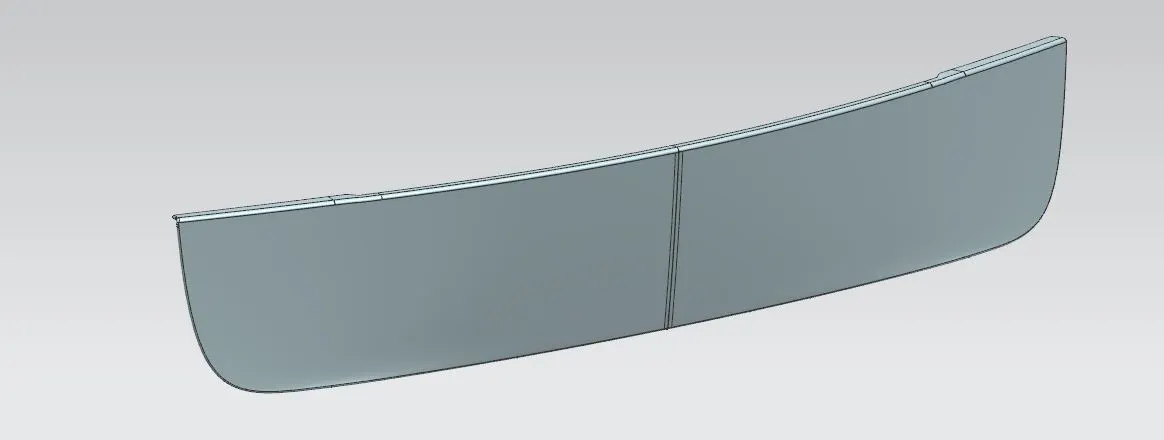
Reinforcements
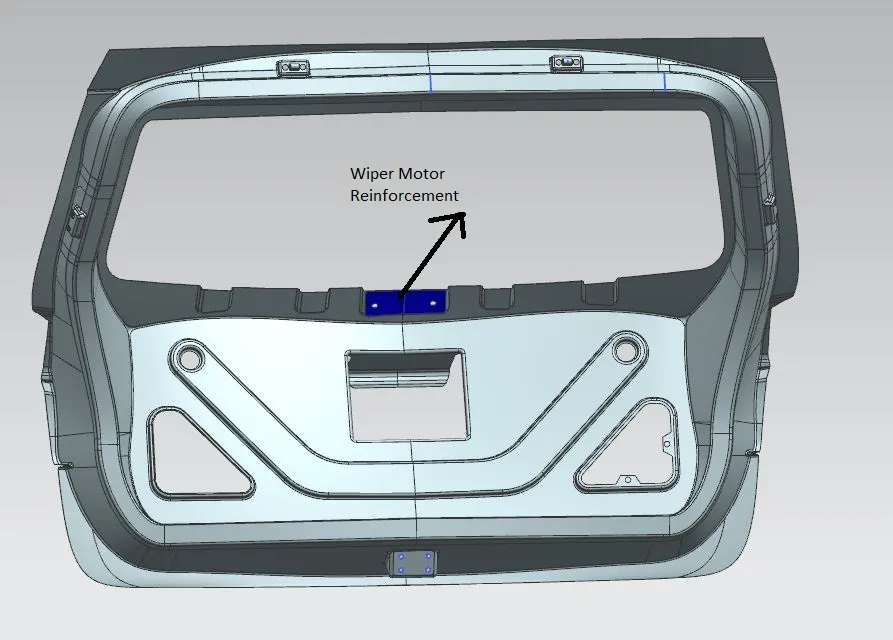
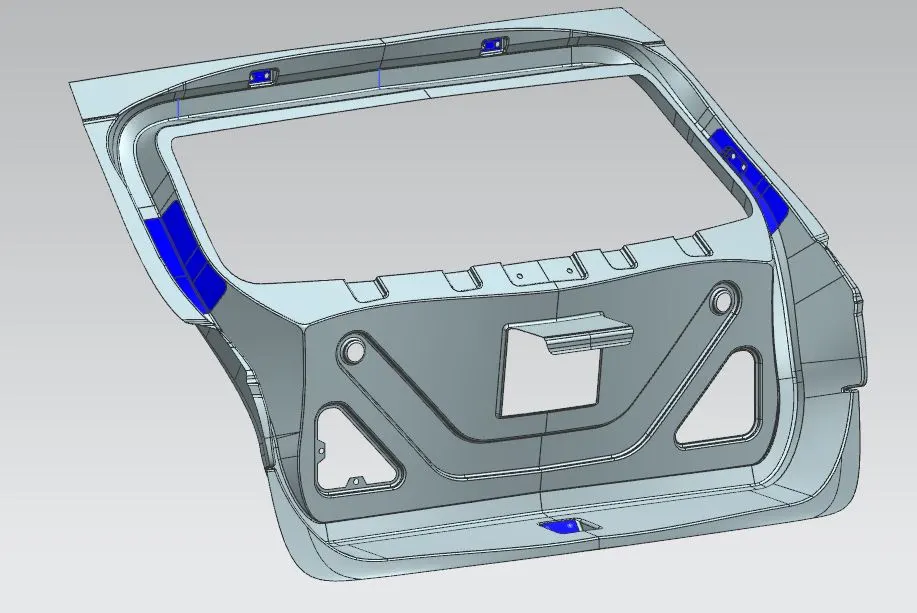
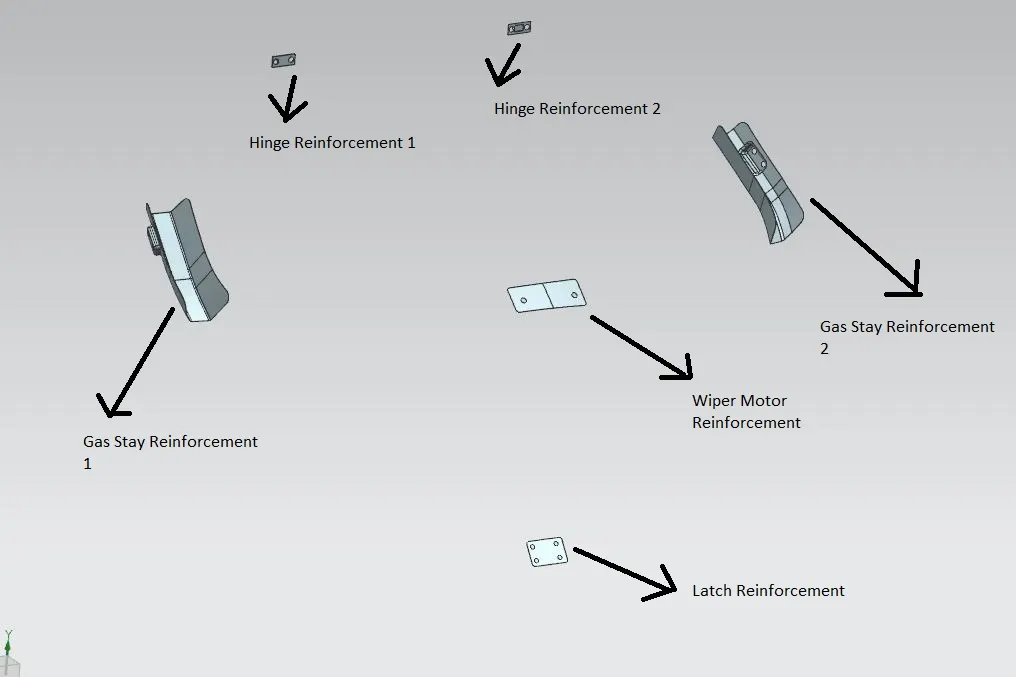
when the latch and hinge and Wiper motor are placed, the strength of the Inner panel Dropped, so we have to add the reinforcements to add strength. The latch and hinge reinforcement are 1 to 1.5mm thickness respectively.
Latch Position
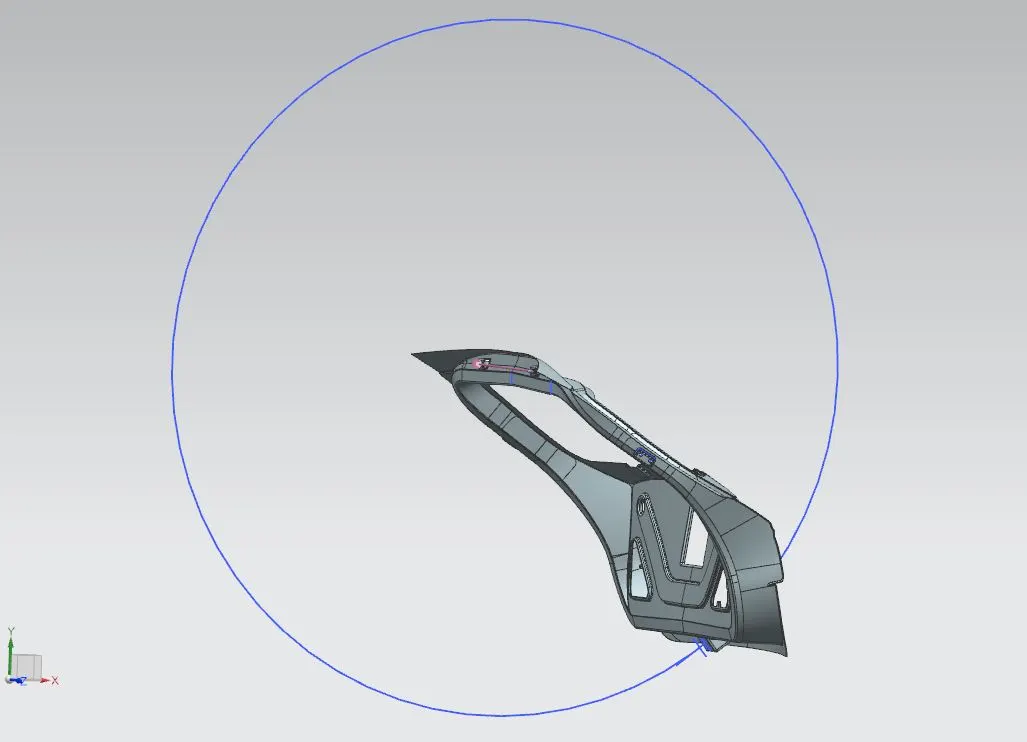
when we place latch and striker mechanisms it must be perpendicular to the trajectory circle so that we can close the Panel properly
after placing the hinge assembly we draw a center axis between two hinges and takes the midpoint of the hinge axis to draw a big trajectory circle and place the latch perpendicular to that trajectory
Manufacturing Process
We used Deep draw manufacturing process for making an inner panel of the back door for that we have to give proper draft angle ie 7deg and minimum 3mm plus thickness radius
So that the part can be a deep draw,
once we finished the design before sending to the CAE Team We have to validate for proper draft angle by using drafting analysis
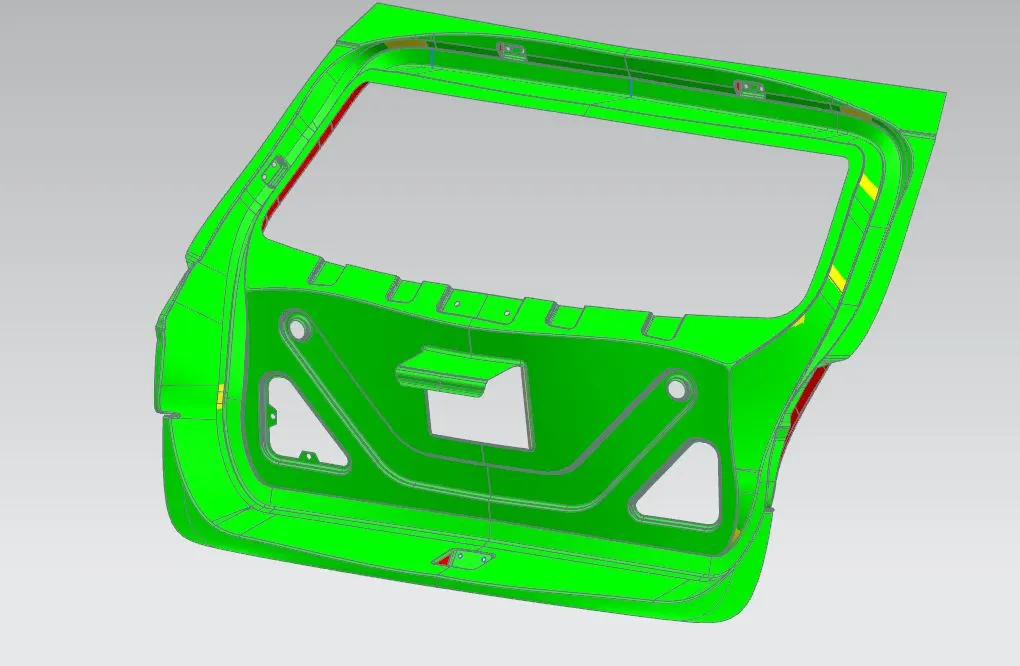
From the above study, the part can be manufacturable and this part has positive drafts
Deep Drawing Process
The deep drawing process is a forming process that occurs under a combination of tensile and compressive conditions. A flat sheet metal blank is formed into a hollow body open on one side or a hollow body is formed into a hollow body with a smaller cross-section.
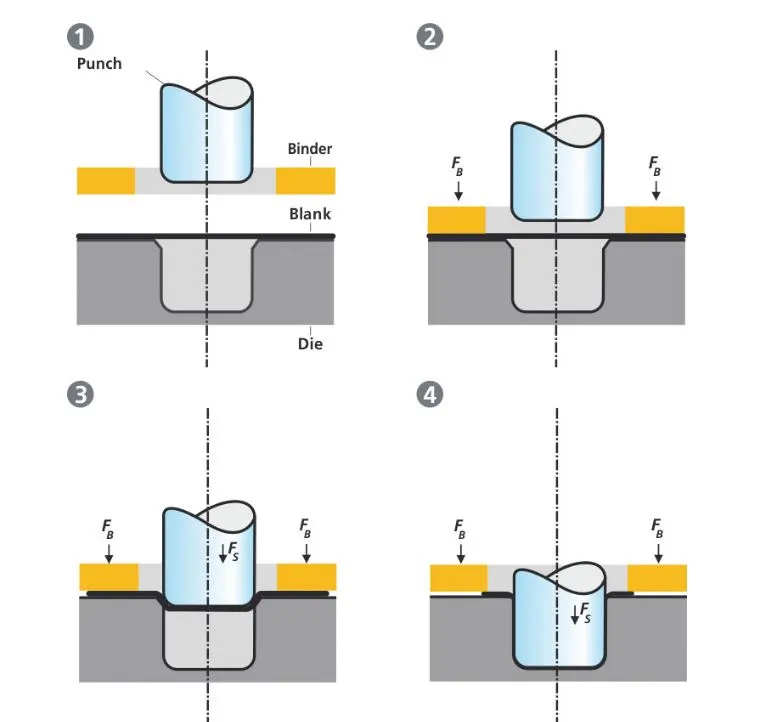
We have to give a proper draft angle to release the tool from die min 5degree draft must be given
Load Cases
once we sent the design to the CAE team they will not only test for the production feasibility they also test some load cases
1.Bend test
2.Dent Test
3.Torsion Test
4.Endurance test
5.Abuse Cases
From the Above Study, We have to conclude whether our designed part is Correct or not
Load Distribution
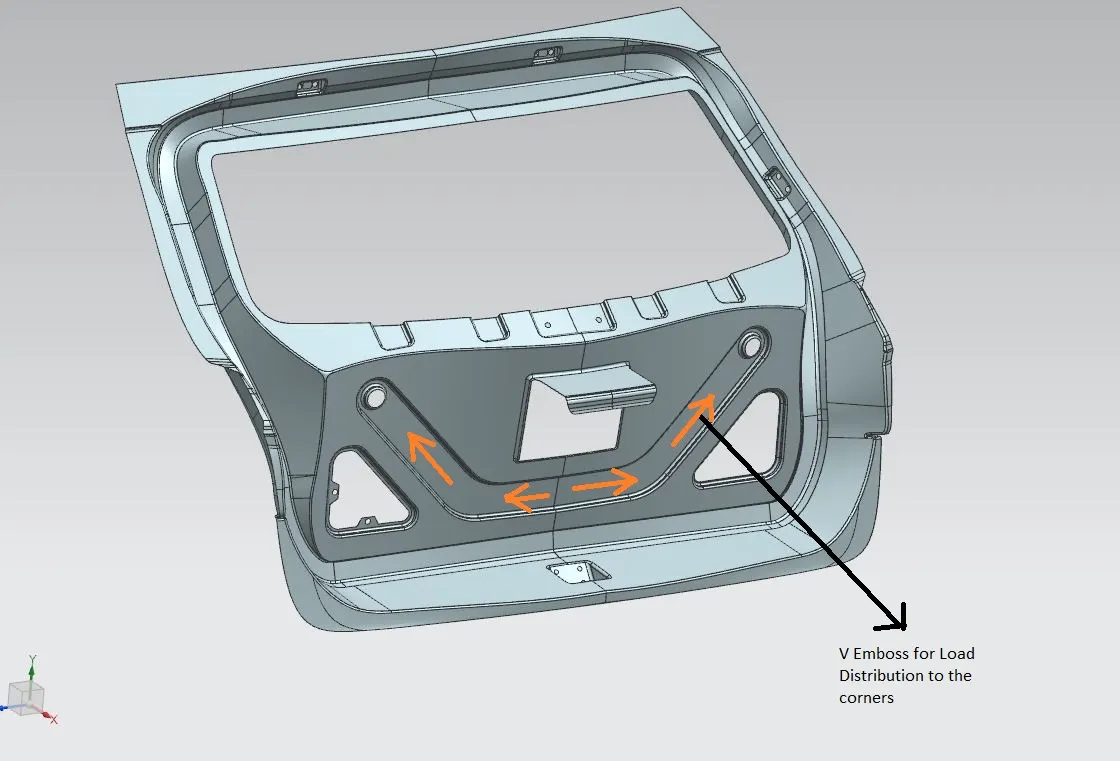
Why we have to make a v or y emboss in the inner panel is for the load distribution when the door in Abuse case or collision case the load distributed by the way of Emboss Design so we have to direct the load energy to the corners not for the passenger cabin so we make an emboss in V or Y type so that the load distribution to the corners
Emboss
Embossing is a metal forming process for producing raised or sunken designs or relief in sheet material by means of matched male and female roller dies, theoretically with no change in metal thickness, or bypassing sheet or a strip of metal between rolls of the desired pattern.
The metal sheet is drawn through the male and female roller dies producing a pattern or design on the metal sheet. Depending on the roller dies used, different patterns can be produced on the metal sheet.
Joining Process
There Are two joining process used in the backdoor
1.Bracing
2.Mastic seal
Mastic Sealant
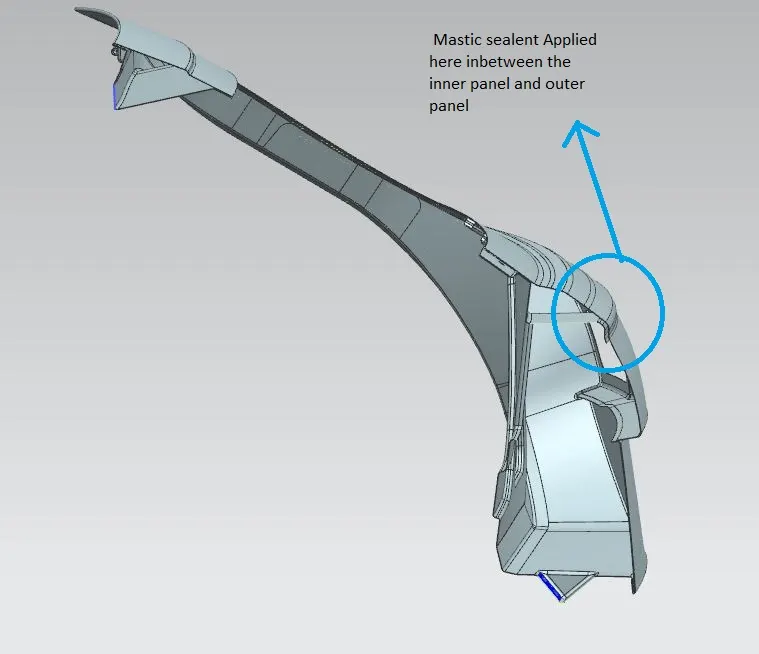
Mastic sealant is 5mm thick and 80mm dia hard rubber part used to place between outer Panel and inner panel to reduce the NVH, when the car is in running condition there is a chance for wobbling because of that clearance between the outer panel and inner panel so we place mastic sealant between panels to reduce NVH
Hemming
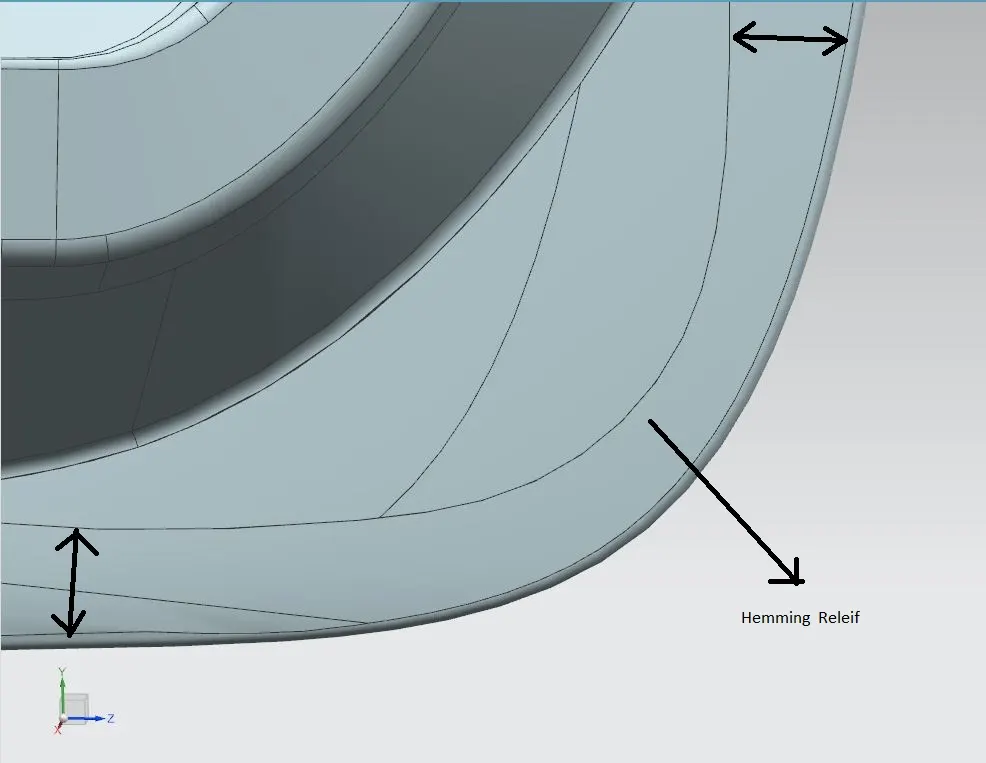
Hemming is a metalworking process in which a Sheet metal edge is rolled over onto itself. Hemming is the process in which the edge is rolled flush to itself.
It is used to joining the inner hood and outer hood
the hood is a visible styling part so we cant use another joining method like spot welding so we can use hemming for joining
clearance of the hemming is 0.2mm on both sides
Corner Relief
Relief helps to control sheet metal material behavior and to prevent unwanted deformation during Bending operations
Difference between Aluminium and Steel
When we used aluminum material the inner panel of the back door cant be dep drawing because of the structure so basically cast the inner panel
the purpose of using aluminum is having less density so the final weight of the products very less
When we used to casted the part we can vary the thickness so that I can avoid the reinforcement completely
In Stee part, we use Deep draw manufacturing process for the inner panel so we have to add reinforcements o avoid the loss in the strength of the inner panel due to the addition of hinges and gas stay
Aluminium Steel
1.Parts Are Casted Parts Are Stamped
2.Reinforcements can be neglected Reinforcements are necessary
3.Local Thickness can be vary Has only uniform thickness
4.Lighter in weight and less number of components Heavier in weight and more number of components
5.Cost is High Cost is Les
Weight Calculation
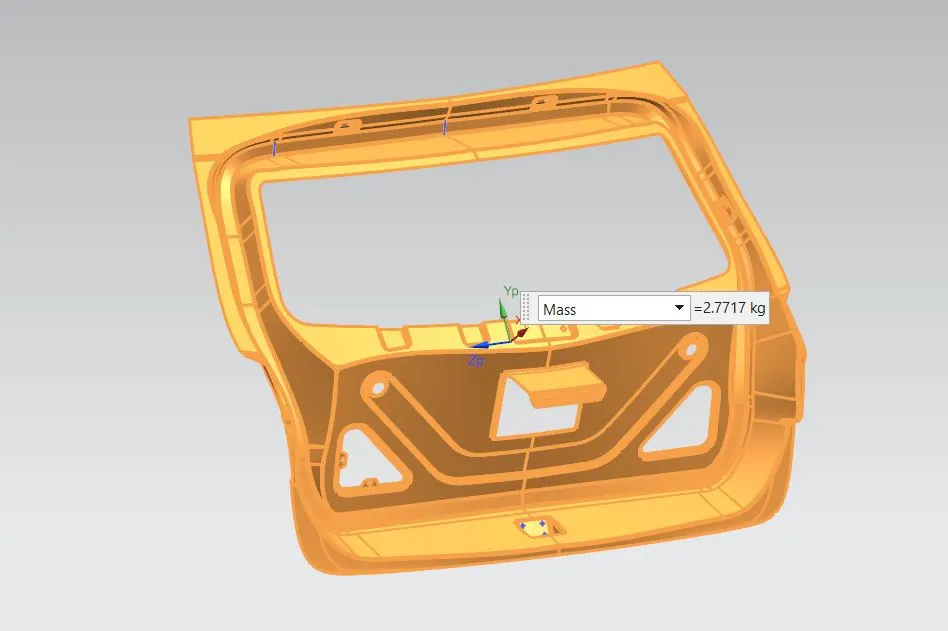
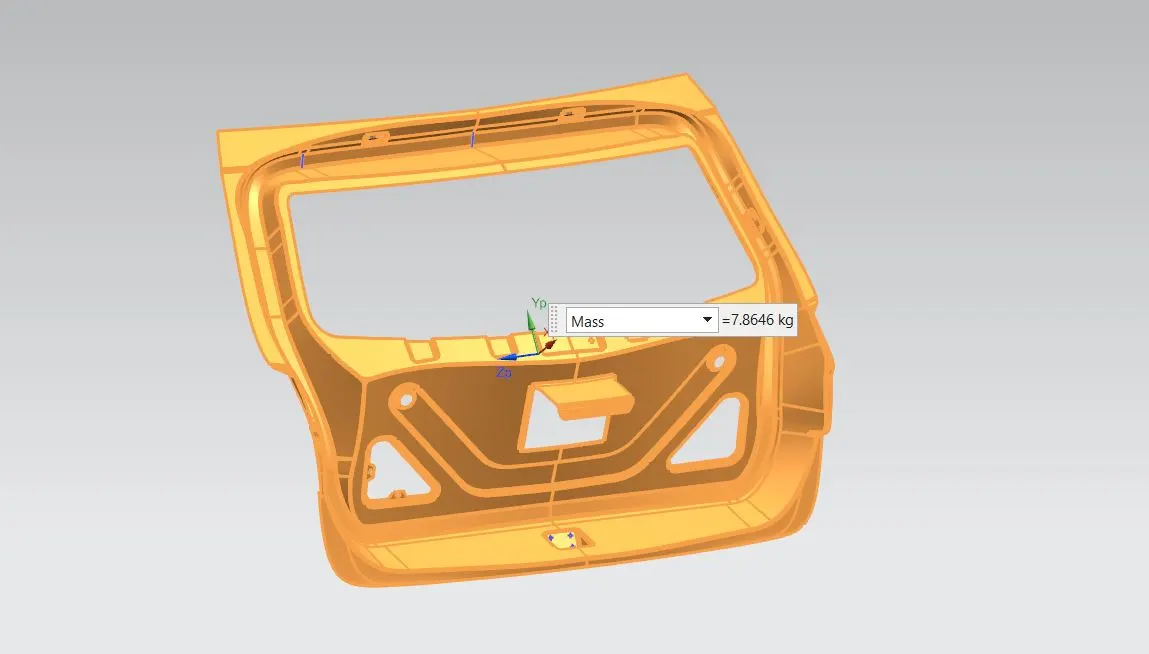
small comparison between the aluminum and steel we assign the different material and calculate the weight of the part, from the below picture we can clearly see the weight difference between the aluminum and steel
Aluminium
Steel
Aluminium-2.7717kg
Steel-7.8646 kg
Backdoor Assembly