Design of backdoor
BACKDOOR DESIGN
AIM: to design a sheet metal panel of backdoor from the provided skin data taking all the design rule into considering.
Abstract: A back door of a car also known as tail gate is a commodity which normaly serves the purpose to covering the car from the rear end. there are more function that come with it which has to be consider while making design of the same like rear visiblity criteria and boot space. this part is usually designed keeping the master section of the rear roof rail because of the sealant flanges and also varius other component.
OBJECTIVE:
- From the given styling surface develop a back door using approptiate design methadology.
- The obejective of this project is to design BIW back door of a car with an inner panel, Outer panel and reinforcement for the Hinges, Gas stay, wiper Motor and latch by the following engineering standard.
- the inner panel must be subjected to draft analysis for varifying whether it satisfied the Deep drowing requirement for the tooling direction in the design.
SOFTWARE USED:
Siemens NX CAD (UNIGRAPHICS)
INTRODUCTON:
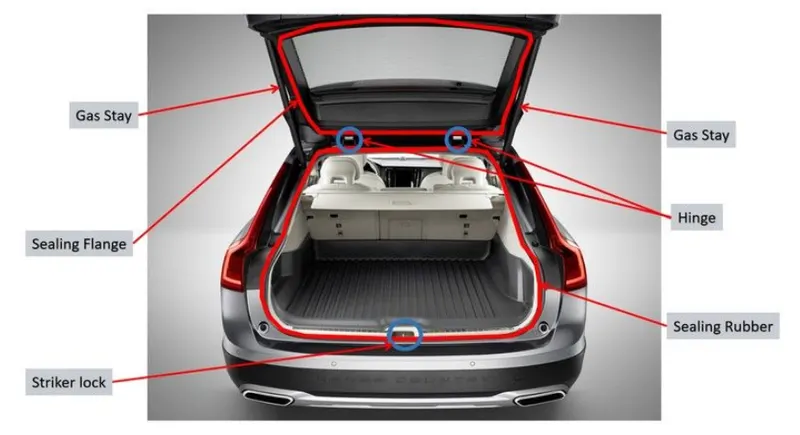
The backdoor of car is the rearmost part of the vehicle which gives acces to the trunk space of the vehicle. The rear door also support the reinforcement and added weights of the wiper motor, Gas Stay, tail lamp and latch and striker.
the backdoor/tailgate is one of the closure commodities in BIW sheet metal design. The backdoor has a lot of component inside and is designed to incorporate them easily. it effect the rear visiblity and luggage area.
The material used for the door manufacture depend on the budget and performance of the vehicle. mostly aluminium amd steel are used where as low budget vehicle use steel which make the manufacturing process easy and cost-efficient since it follow the stamping of moulds.
MAJOR PART AND REINFORCEMENT:
The backdoor consist of the following basic component.
- backdoor outer panel (Upper)
- backdoor outer panel (Lower)
- backdoor inner panel
- hinge reinforcement (LH & RH)
- gas Stay Reinforcment (LH & RH)
- latch and striker Reinforcement
- wiper motor reinforcement
TAILGATE/BACKDOOR:
Tailgate is a door at the back of a truck or car, that is hinged at the bottom so that it open downwards.
DESIGN INTENT
The intent of the project is to design a body in the white back door of the vehicle considering the engineering standard and manufacturing requirement which satisfies the deep drawing process.
DESIGN CONSIDERING OF A BACKDOOR:
- Functional requirement of Hinge and gas stay
- Rear visibility criteria
- luggage volume
- crash analysis
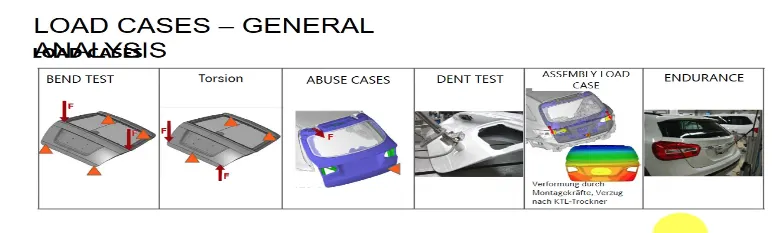
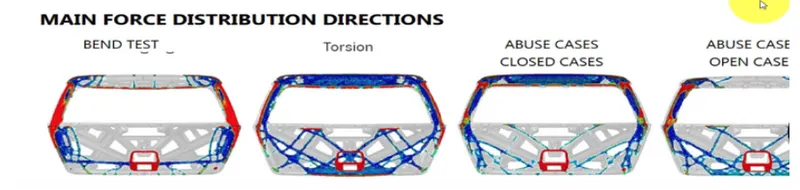
- bend test, Dent test, torsion test, and Endurance test
- rear Crash regulation
- gap and flushness requirements
EMBOSSES
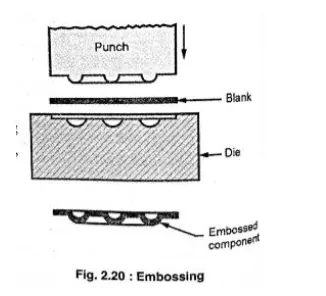
Emboss is the metal forming process for producing raised or sunken designs or relief in sheet material by means of matched male and female roller dies, theoretically with no change in metal thickness or by-passing sheet or a strip of metal between rolls of the desired pattern.
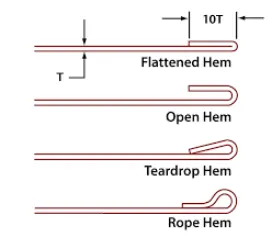
HEMMING
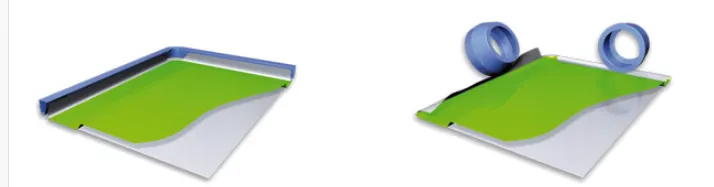
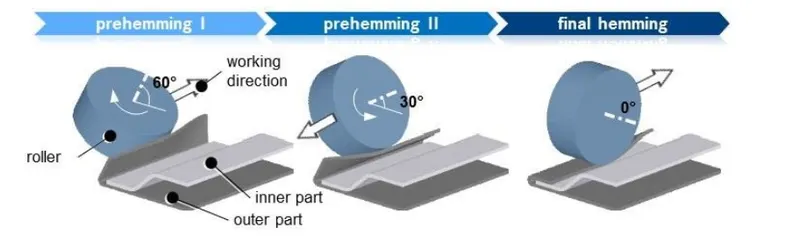
Hemming is the forming operation in which the edge of the sheet is folded or folded over another part.
IT HAS TWO TYPES
1. CONVENTIONAL DIE HEMMING: In this, the flanges are folder over the entire length with the hemming tool.
2. ROLL HEMMING: In this, the hemming roller is guided by an industrial robot to form the flanges.
BLANKING:
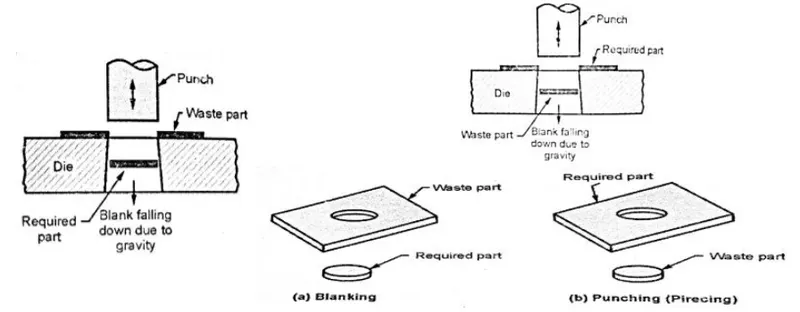
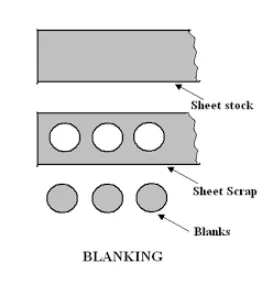
Blanking is a cutting operation of a flat metal sheet and the article punches out is known as blank. Blank is required as a product and another part as a waste.
PUNCHING:
It is similar to the blanking in this the hole is the required product and the material punched out the hole and is considered as a waste.
Parts Of Backdoor Assembly
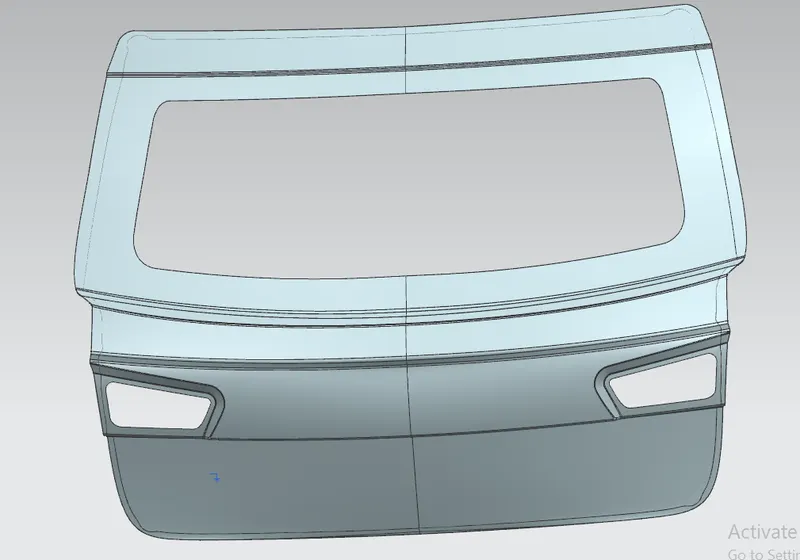
Back Door Outer Panel :-
It is the metal covering of a back door. Generally Structural steels are used as a material for back door outer panel but now Aluminium alloys are also used because of its light weight. IN most cases the Tail Lamps and License no. plate is attached to the outer panel itself.
Back Door Inner Panel:-
It is the most important part of hood assembly. It is situated between the hood outer panel and the boot space. Basically It is like a shadow of Backdoor outer panel but before it attached to the backdoor outer panel or applied to the location lots of operations are done on it to bring some definite changes in order to get the desired effect. In most of the cases its material is same as that of backdoor outer panel such as Structural steel, Aluminium, Carbon Fibre etc. The distance between back door inner Panel and outer panel is not uniform throughout its length. The hemming reason have very small distance almost 0.2mm for oozing out the sealant. The distance is relatively very large at some portions where tail lamps or wiper motor is to be mounted. Apart from the hemming inner and outer panel are attached by mastic sealants which along with joining them increases the the strength locally and holds them together.
We can remove/trim some material from the inner panel for the weight reduction purpose. Inner Panel also have a sealing flange which runs through the side of inner panel over which a sealant or rubber material is attached. At opening position of tail gate it has its normal volume but when the tail gate is closed it squeezed. It is used to prevent water from entering the boot space where the luggage and other goods might be affected by water. It is completely sealed once it gets closed.
To avoid the severe consequences of a collision from back side with backdoor of a car on inner panel there are embosses which are also referred as Y embosses so that the force of collision can be dissipated away from the backdoor. Emboss is a raised design or mark on the surface of Inner Panel. On the inner panel we add more embosses to enable the stiffness of the car. Whenever a collision happens force willl go straight to the the bot space or sitting compartment So to reduce the force Embosses are employed. Embosses dissipates that force outside the car the design and shape of embosses are such that the direction of force changes to away from the center Apart from this embosses also increase the moment of inertia of inner panel which in turns increases the strength as well.
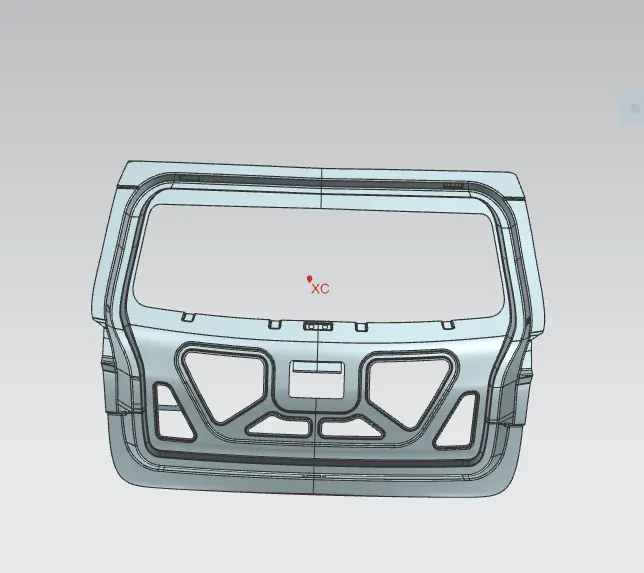
One such consideration is while trimming the sheet for any purpose other than weight reduction embossed surface around the trim portion are suggested if we punch a functional hole on a flat surface there are chances that the flat surface might tear off so to avoid that condition embosses are used which avoid this tearing situation. A functional hole is such where there will be other commodity attached to it for some definite operation/function such as holes in hinge emboss.
Reinforcements:-
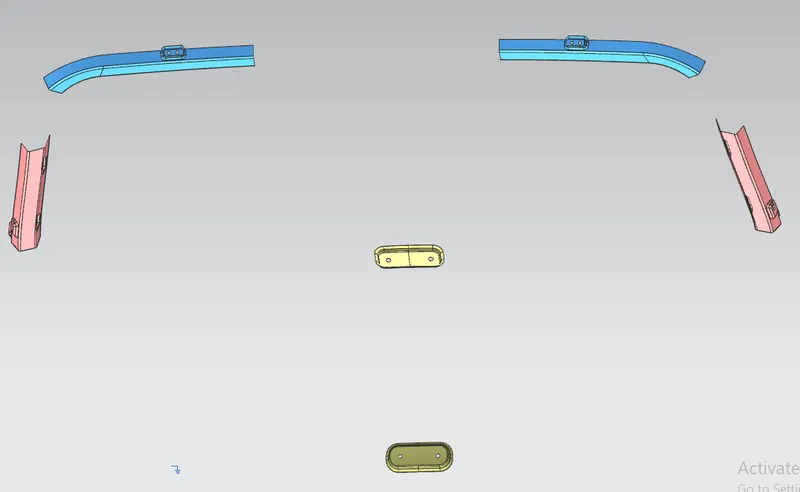
Whenever we add any part or weight over another component the component loses strength so to compensate for that lost strength we employ the reinforcements. Reinforcements thickness is generally more than the thickness of the inner or outer panel. In case of Aluminium backdoor we do not need separate reinforcements because aluminium can be casted and at the zones where there will be an additional community attached to it the thickness of backdoor panel is increased to accomodate for the desired strength. In case of steel there are separate reinforcements for many parts which are as follows:-
- Latch or Striker Reinforcement:- Firstly it needs to be determined that among latch and striker which part is going to be mounted on the tail gate of a car and according to that emboss is created on the tail gate and over that emboss reinforcement is placed to provide the strength. Its thickness can be 0.75-1.5mm
- Wiper Motor Reinforcement:- For the rear windshield wiper is a necessity which is actuated by the motor which is mounted on the tail gate inner panel. So first an emboss is made after that reinforcement is attached to it.
- Gas Stay Reinforcements:- For opening the tail gate and keeping it still in that position gas stays used on both sides. One side of gas stay is attached to the inner panel and to give that region of inner panel an extra strength we provide a reinforcement over the gas stay embosses
- Hinge Reinforcement:- Similar to hood tail gate of a car is opened and closed in a similar fashion and it is made possible by the hinges. Hinges are mounted over the hinge emboss which are supported by the hinge reinforcement.
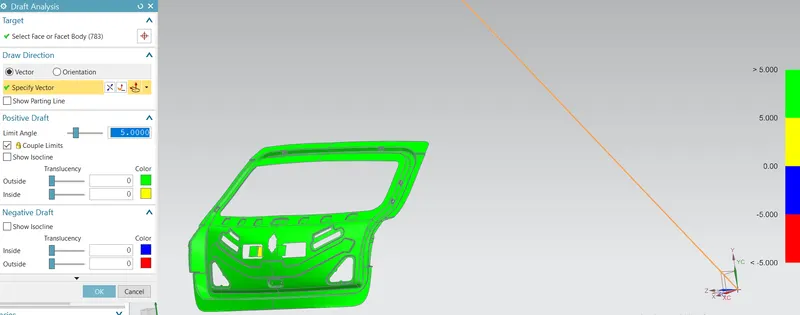
Draft Angle:- We get a draft angle from the production team and all the components designed or modified in the BIW component should have a positive draft so that the punching tool can come out easily after operation.
The Draft Analysis command enables us to detect if the part we drafted will be easily removed. This type of analysis is performed based on color ranges identifying zones on the analyzed element where the deviation from the draft direction at any point, corresponds to specified values.
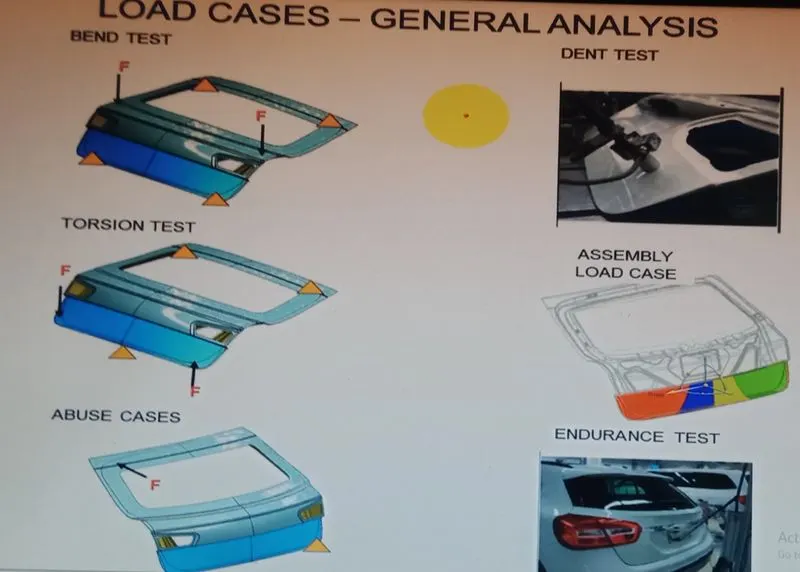
There are some tests done to ensure the strength of the tail gate which are
- Bend Test
- Torsion test
- Abuse Test
- Dent Test
- Assembly Load Case
- Endurance Test
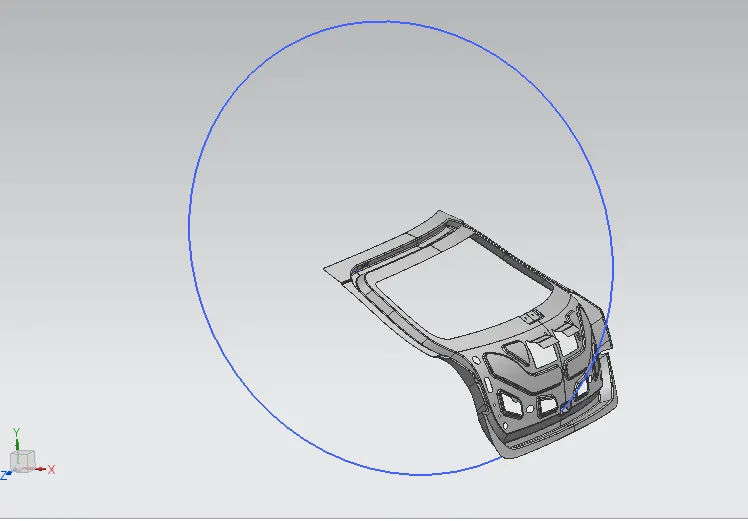
STRIKER POSITION:
the position of the hinge should be perpendicular to the latch when the latch and striker meet. The circle is drawn from the center of the hinge axis to find the path of the striker.
HEMMING:
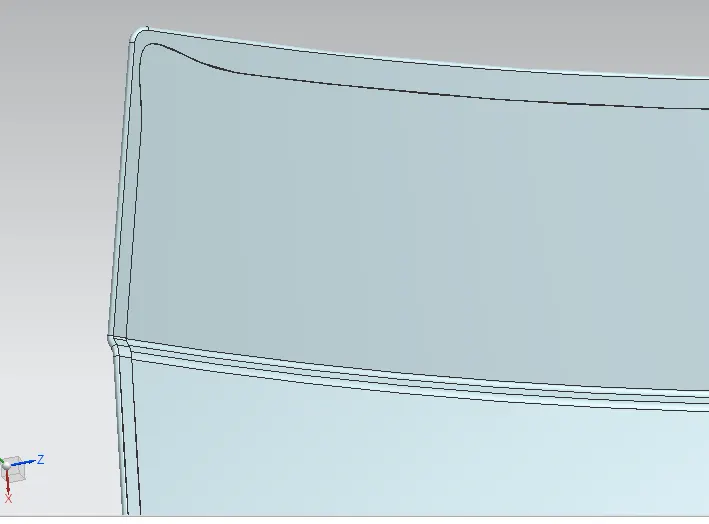
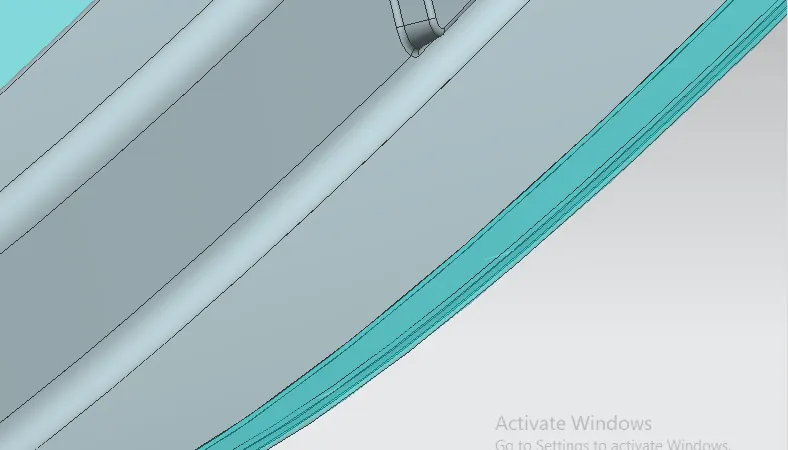
Hemming and seaming are two similar metalworking processes in which a sheet metal edge is rolled over onto itself. hemming is the process in which the edge is rolled flush to itself.
- the outer panel was designed as two separate parts named as outer panel upper and lower.
- After designing the outer panel the hemming was created by offsetting the surface with the help of face blend and swept surface.
- The two separate outer panels will be joined using blanking.
CORNER RELIEF
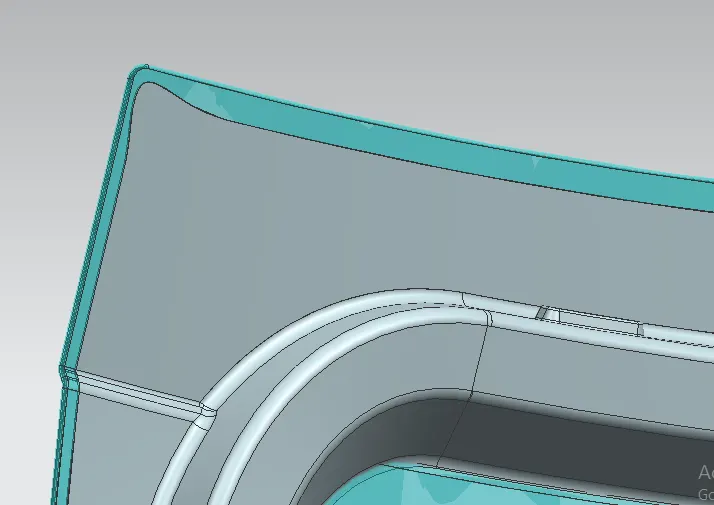
During the hemming process when giving the corner relief it controls the sheet metal material behavior and prevents unwanted deformation during operations and also helps to reduce the number of passes in hemming.
DESIGNING THE REINFORCEMENTS
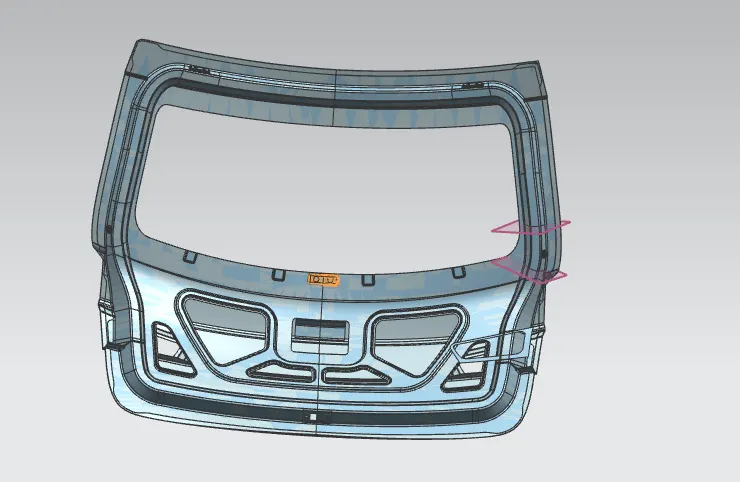
The thickness of all reinforcement is 1 mm.
- hinge reinforcement
- gas stay reinforcement
- wiper motor reinforcement
- latch reinforcement
HINGE REINFORCEMENT
Hinge enables the opening and closing of the backdoor. one end is fixed on the back door and other end to the roof. hinges can be placed outside or inside the backdoor.
The hinge reinforcement are added to compensate for the weak region due to acting load over it.
GAS STAY REINFORCEMENT:
Gas stay is a devise for supporting the back door in its open position. Gas stay requires no manpower and is engaged into support position automatically as the backdoor opens. one end is fixed with the backdoor and other end is fixed with the bosy side or on the back door stationary area.
Embossing is provided at the gas stay mounting area to compensate weakness and improve strength.
WIPER MOTOR REINFORCEMENT:
Wiper motor reinforcement is crated to mount wiper motor assembly.
LATCH AND STRIKER REINFORCEMNT;
The latch and striker form the locking mechanism of the backdoor with the car. due to regular opening, closing and over slamming of the backdoor, there is stress developed in the latch and striker.
Embossing is provided at the latch and striker mounting area to compensate weakness and improve strength.
Conclusion:
the following back door design is designed using suitable commands under design regulations.