Design of backdoor
OBJECTIVE:
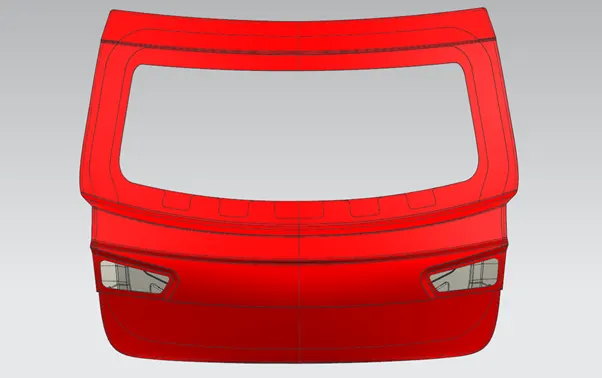
To create a backdoor of a car using the backdoor skin provided with the given requirements in NX CAD software.
BACKDOOR:
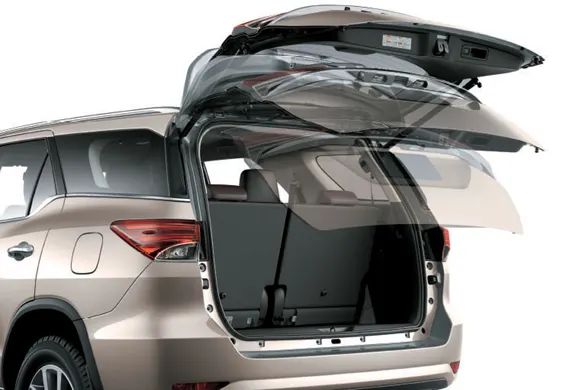
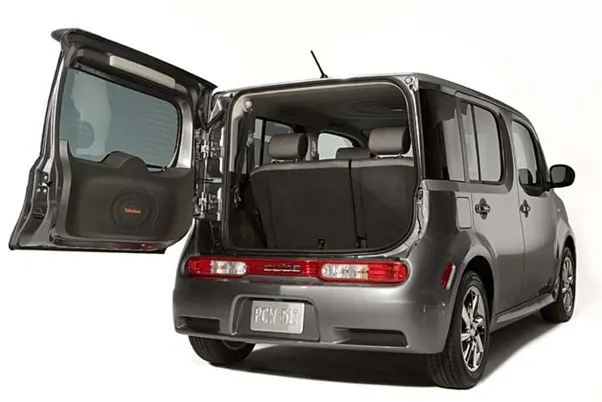
Backdoor covers the rear side of the car. The backdoor design varies for different cars like hatchback, sedan, etc. Also, the opening of backdoor also varies from car to car like opening upward or sideward. The backdoor is connected with the roof panel and body of the car using hinges and gas stay. The backdoor consists of rear windshield, wipers, indicators, stop lamps. In some cases, the number plate, parking sensors and cameras are provided on the bottom portion of backdoor and in other cases these are provided on the rear bumper. The thickness of the backdoor plays a major role in the rear crash of the car and in boot space. So we must design in such a way to pass crash test and also to provide more boot space.
TYPE OF MATERIAL:
Generally, two types of materials are used for making the backdoor in the market. One is aluminium and the other is steel. Aluminium is lighter in weight compared to steel. We can give variable thickness to aluminium while steel has uniform thickness. Due to this, reinforcements are not required while using aluminium. Also, aluminium has a lesser drafting angle of 3-5 degrees, whereas in steel, the drafting angle is 7 degrees. But steel is less expensive than aluminium. So, steel is used in most of the cars while aluminum is used in expensive cars only.
BACKDOOR PARTS:
- Outer Panel
- Inner Panel
- Hinge Reinforcement
- Gas Stay Reinforcement
- Wiper Reinforcement
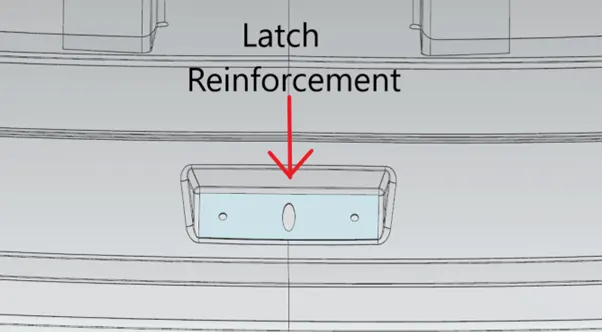
- Latch Reinforcement
OUTER PANEL:
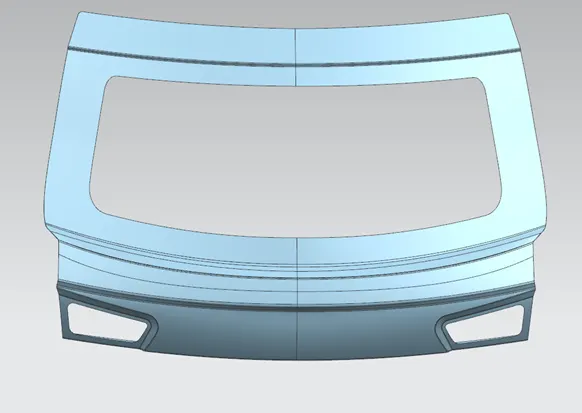
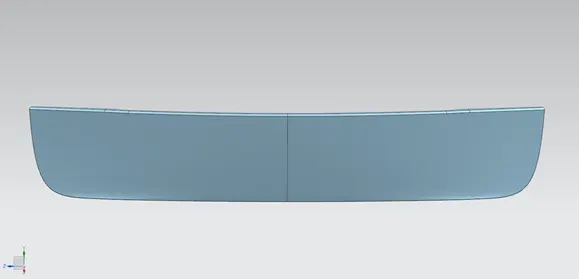
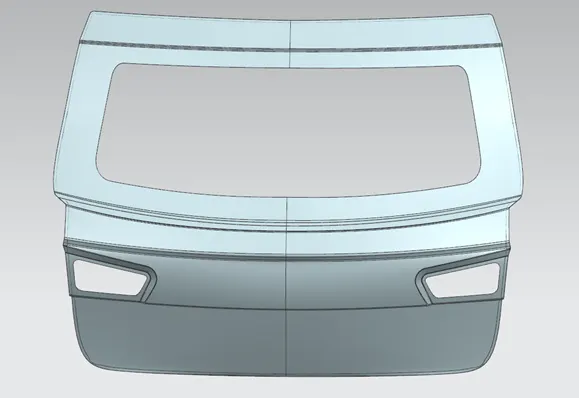
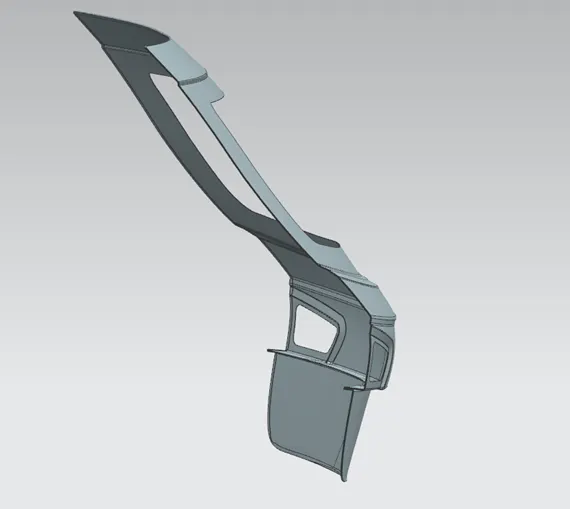
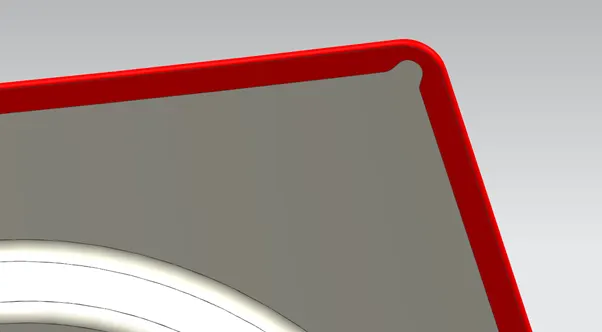
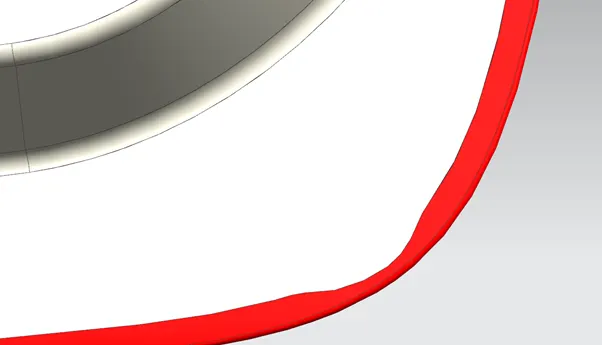
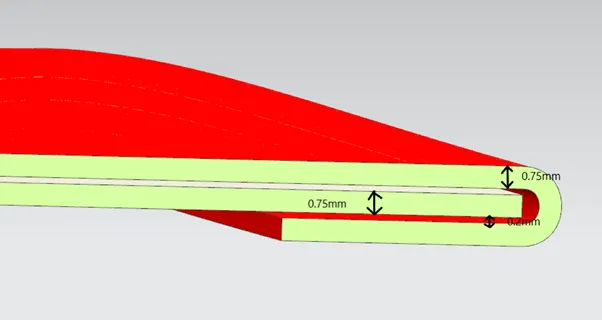
The skin of the backdoor is provided initially. Some changes are done to make the surface smooth. By using this surface, the outer panel is made by splitting into two different parts as outer panel upper and outer panel lower. The upper and lower parts are joined together by brazing operation. The outer panel and inner panel are joined together by hemming around the corners and applying mastic sealants in the middle. Finally the outer panel is thickened to 0.75mm.
INNER PANEL:
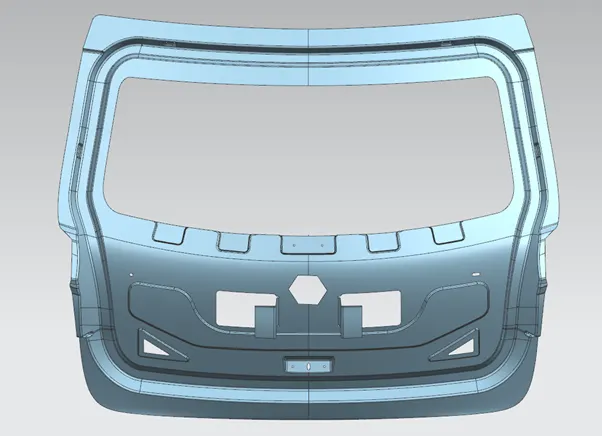
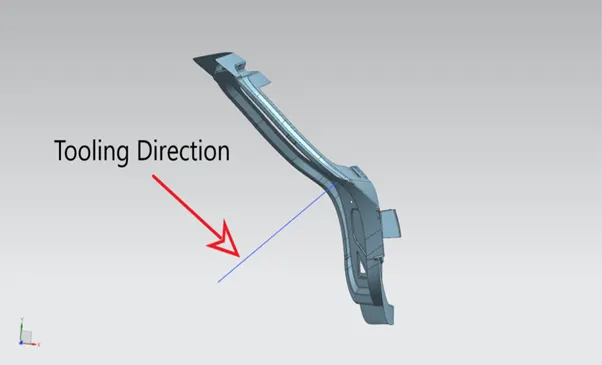
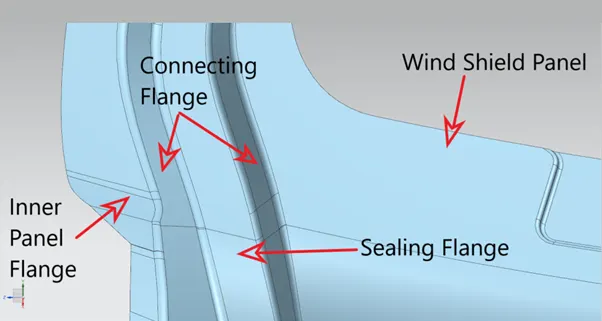
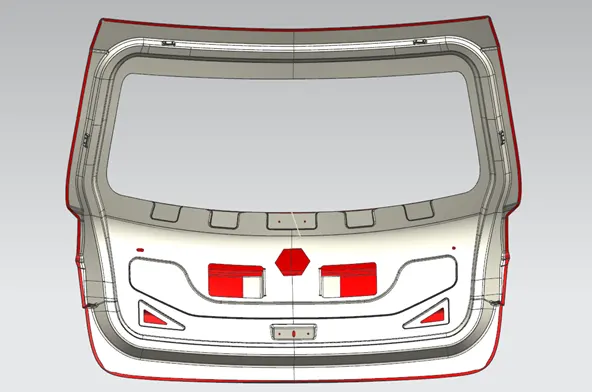
The surfaces from the outer panel are extracted and tooling direction is created. The inner panel consists of inner panel flange, connecting flange, sealing flange and windshield panel. The hemming part is connected to the inner panel flange, while the mastic sealant is applied between the windshield panel and outer panel. The connecting flange connects the sealing flange with inner panel flange and windshield panel. Mountings for hinges, gas stay and wiper motor are provided. Latch emboss is created in such a way that it is perpendicular to the trajectory of backdoor. A special Y or V shaped emboss should be provided in order to improve the strength of the door during rear crash. Finally the inner panel is thickened to 0.75mm.
DRAFT ANALYSIS:
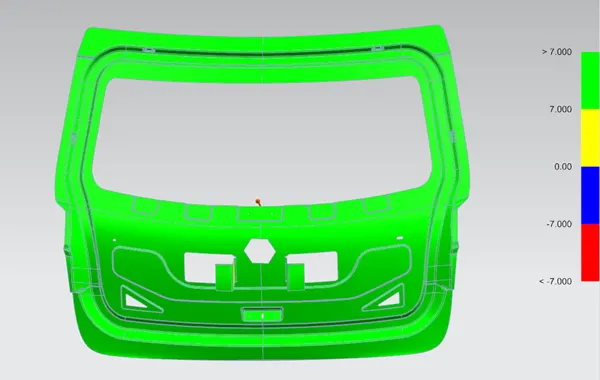
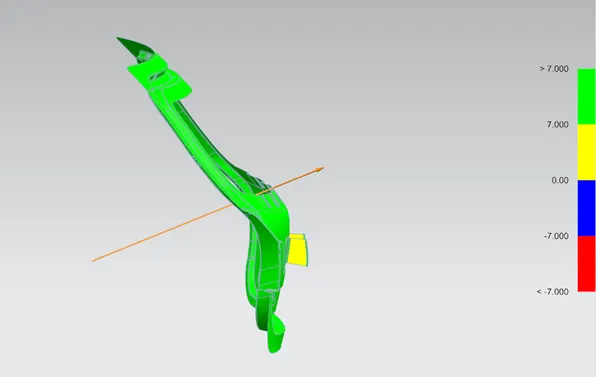
Draft analysis is done to check whether the part can be made with respect to the tooling direction. The positive draft is highlighted in green and yellow, while the negative draft is highlighted in blue and red. Though aluminium has less draft angle compared to steel, I have chosen steel since it is less expensive.
REINFORCEMENTS:
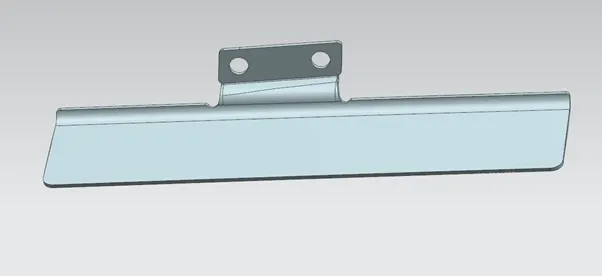
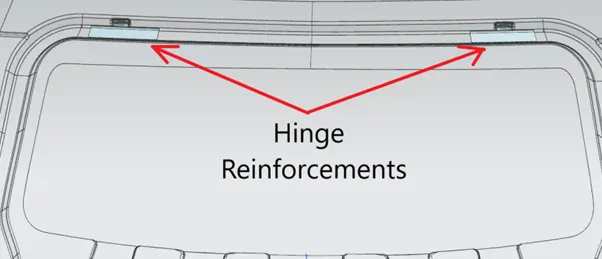
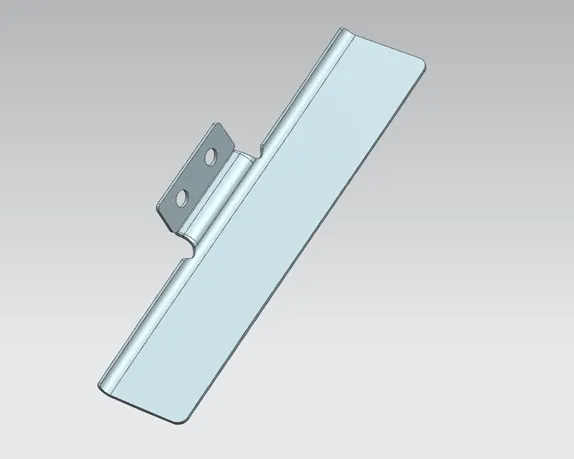
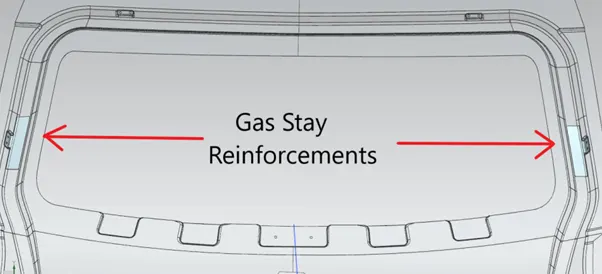
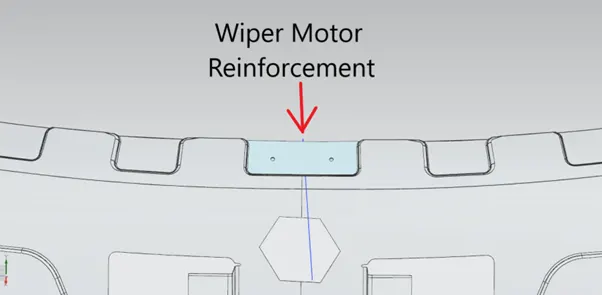
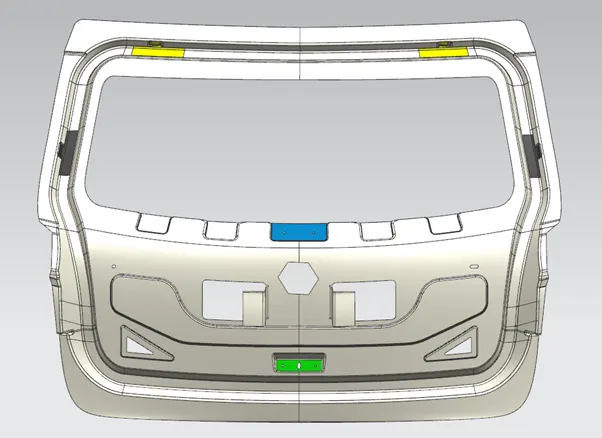
Reinforcements are provided for hinges, gas stay, wiper motor and latch for improving the strength of the inner panel in local regions. These are created by using WAVE geometry linker tool and removing the unwanted surfaces. Then finally these parts are thickened to 1mm.
BACKDOOR ASSEMBLY:
Finally, all the parts are thickened and assembled to make the backdoor of a car.
CONCLUSION:
Thus the backdoor of a car is created using the given files and requirements in NX CAD software.