Design of backdoor
BACK DOOR DESIGN
AIM:
To design an automobile backdoor/tailgate with essential reinforcements and according to engineering standards'
DESIGN INTENTION:
To design/develop a car's tailgate with various considerations such as rear visibility criteria,sealing flange,luggage space,access holes,Y/V emboss,latch and striker trajectory and draft analysis.
DEFINITION OF BACKDOOR:
A backdoor is a commodity which is present at the back of an automobile which is swung open with the help of hinges to load and unload luggage.
There are different types of backdoors such as,
- Top mounted
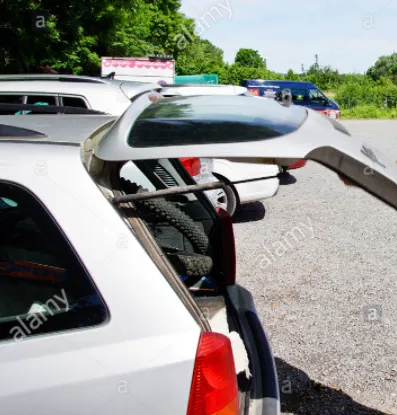
- Bottom mounted
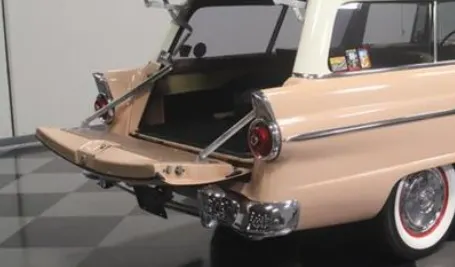
- Side Mounted
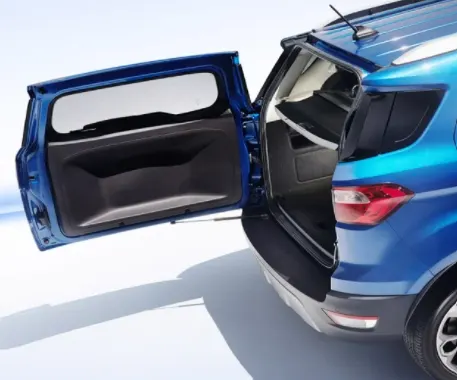
Here in this design it is a top mounted backdoor.
There are two types of mechanisms used to actuate the backdoor:
Gas Stay:
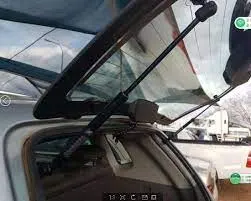
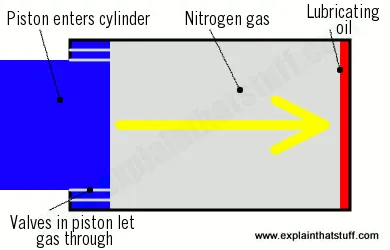
It works on pneumatics as when a little force is given by a person it automatically lifts up. Its principle is that the inner gas compressed by applying force on piston, gas stores energy, and oil provides smooth flow with damping. While we stop force application to piston road, compressed gas expands and move back the piston again. This compressed gas acts like spring.
Power Spindle:

It is more or like gas stay but here it works automatically as we dont have to exert any kind of force to the back door. Either a button is integrated near the driver's cabin or it can be actuated by a remote.
ASSEMBLY OF A BACKDOOR:
A car backdoor is itself an assembly of various components such as:
Outer Panel(Upper&Lower):
This is the styling/A surface we receive from the styling team where we can't do any changes/avoid deteriorating it's aesthetic appearance.This is considered as a reference from where we design our inner panel.In some cases Outer panel can be of a single part or even more than two parts.In most of the cases if the outer panel is of two split parts,the lower part will carry the license/number plate and if it is a single part then the number plate resides in the bumper region.
Inner panel:
The one which is depicted in black is the inner panel
The inner panel is the one which acts as a reinforcement for the outer panel.Various cutouts and embosses are given for various reasons which will be discussed further in the report.
Reinforcements:
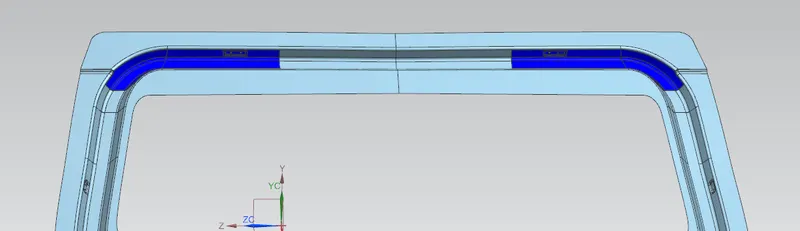
Reinforcements are provided because the inner panel loses some of its material while creating mounting regions for hinge,gas stay etc., .In order to gain the strength where the inner panel locally loses strength reinforcements are designed.
Reinforcements are as follows,
- Hinge Reinforcements(LH&RH)
- Gas Stay Reinforcements(LH&RH)
- Wiper Motor Reinforcements
- Latch & Striker Reinforcement
MATERIAL SELECTION:
When it comes to automotive sheetmetal,materials used are steel,aluminum,carbon fibre etc.,Each has its own pros and cons
Most automotive sectors are now shifting to aluminum because it gives a reduced weight in BIW and when the weight decreases the performance of the car increases but a single aluminum casted part is pretty costlier than all of the steel parts put together as an assembly of a backdoor[Outer Panel(Upper,lower)],Inner Panel etc.,
Aluminum can have a lesser radius than steel,its local thickness can be varied,the deep drawing angle can be less than 5 degrees and its weight is much lesser than steel but eventually its price outweighs all of its features.
When it comes to strength then steel is the best bet and its much cheaper than aluminum.
Manufacturing Process:
Mostly BIW sheetmetal components are deep drawn/stamped.
Deep Drawing: It is a process which is used in sheet metal forming. It is widely used in automotive sector for manufacturing car parts.
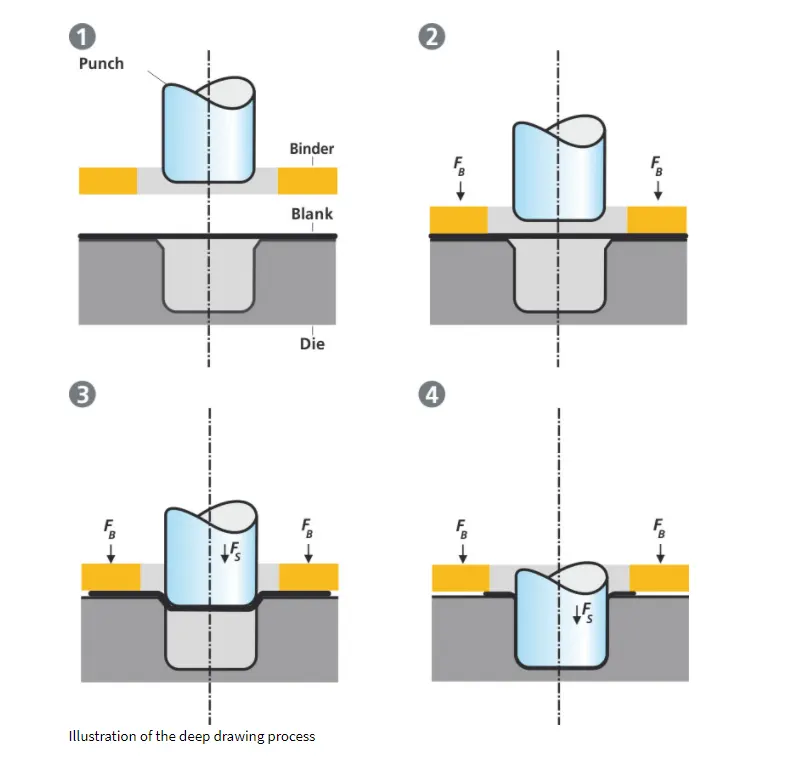
Whereas parts that are to be deep drawn are given a positive draft angle in order to achieve a smooth returning of the tool from the die.
Mastic:
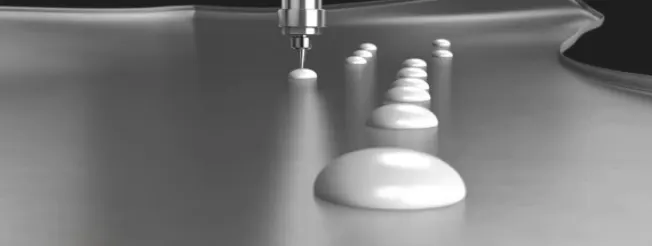
Mastic or mastic sealants which is applied between the backdoor inner and outer panel to glue both surface . In order to the mastic to be effective the maximum gap between the outer and inner panel must be 5-8 mm. Mastic has a influence for around 80-85 mm to absorb the vibration where it results in a less Noise vibration and harshness (NVH).
Hemming:
Hemming is a process which is used to connect the backdoor outer and inner panel together. It is an operation in which the edges of the outer panel are folded over the backdoor inner panel to achieve a tight fit.There are two types of hemming namely conventional die hemming and roll hemming.
Here roll hemming is carried out where the hemming roller is guided by an industrial robot to form a flange.
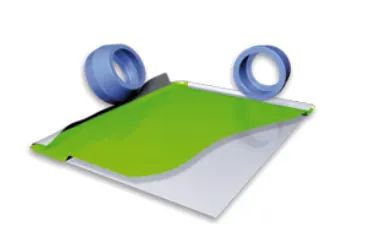
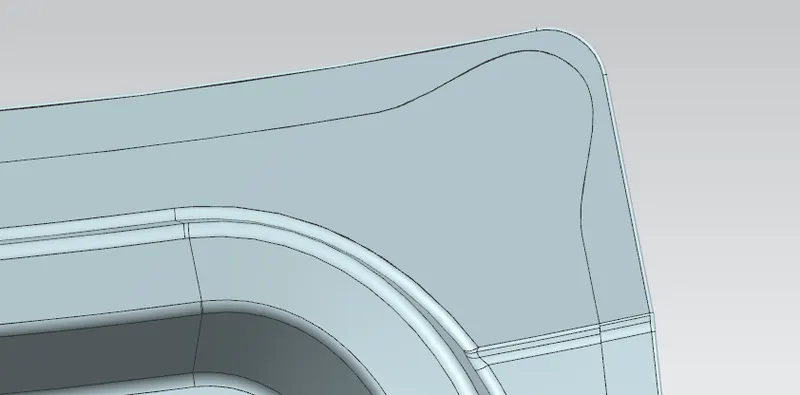
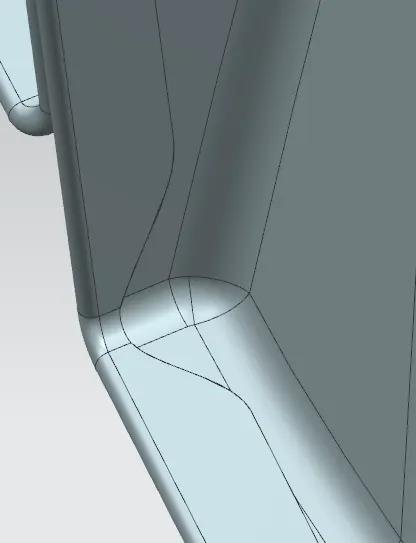
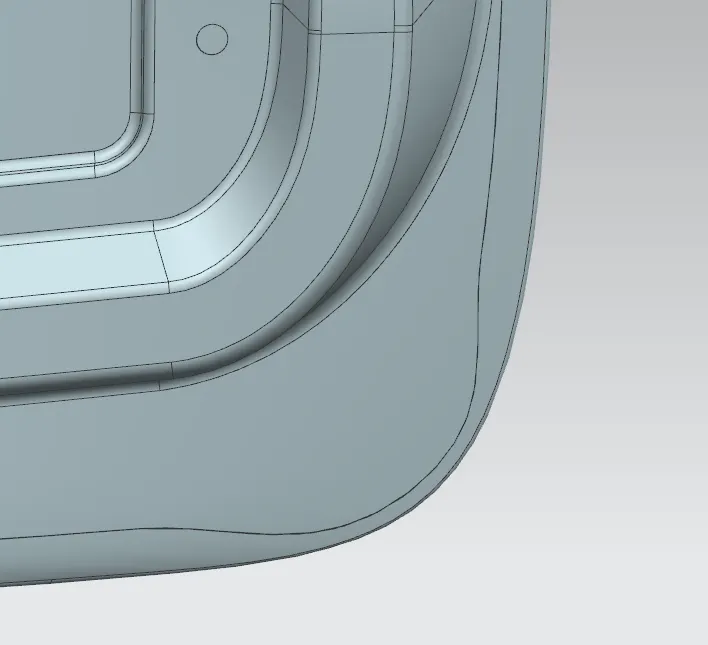
Corner relief :Rollers do not roll over the corner as the part will not spring back to its original shape . Here corner relief is given to the outer panel in a way where the roller will not completely roll over the corners.
ANALYSIS OF A BACKDOOR:
Various tests will be carried out on a backdoor in order to validate the design.Such as:
- Bend Test
- Torsion Test
- Endurance Test
- Dent Test
- Abuse Cases
- Assembly Load Cases
INPUT PROVIDED:
A styling surface is given in order to design a required inner panel
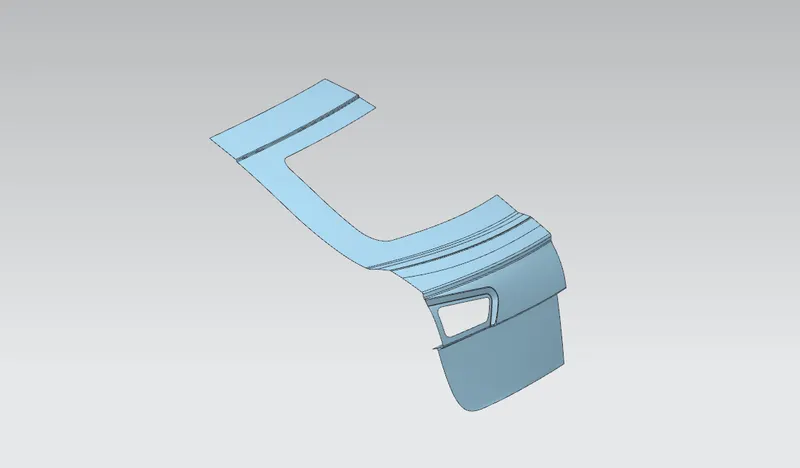
Check for the input surface if the surface is not good then in order to that the styling surface needs to be repaired .
DESIGN REQUIREMENTS:
- Sharp corners are prohibited
- Mounting areas should be flat
- Outer and inner panel thickness should be 0.75 mm
- Reinforcent thickness should be 1.5 mm
- Y/V Embosses should be created in a manner to diverge the force created when collision
- Place the Latch and striker mounting region with the trajectory angle procured by the help of tentative hinge axis.
DESIGN APPROACH OF INNER PANEL:
When it comes to back door inner panel the first approach is to design a sealing flange. Sealing flange is the region where the car backdoor rests. Sealing flange inputs are taken from the body side and roof designers. Here approximately a sealing flange is created according to the outer panel.
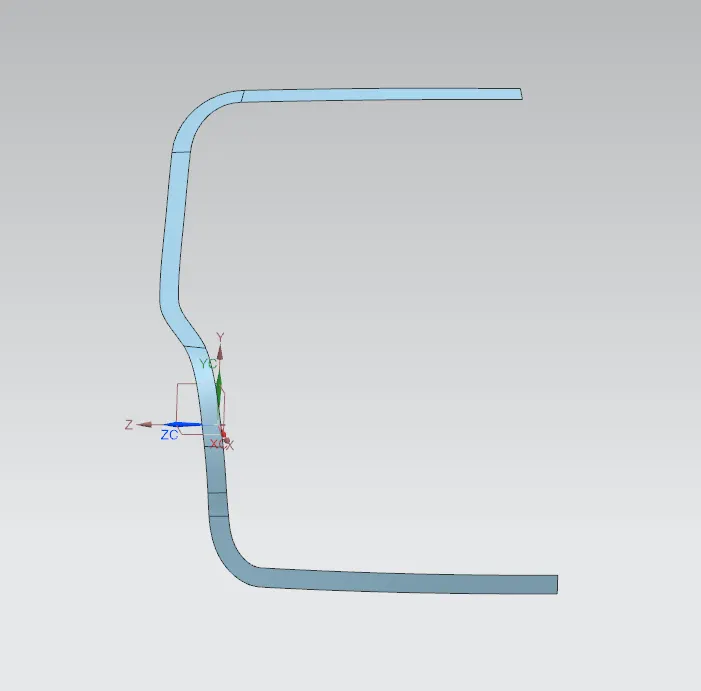
Windshield Area:
And then going further the sealing flange is attached to the inner panel and a windshield area is designed in appropriate to the outer panel.
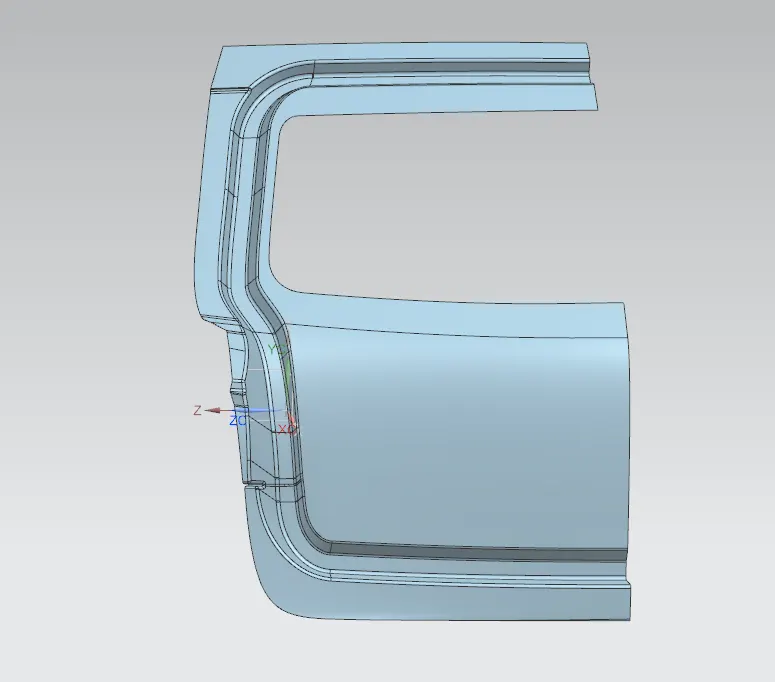
Mastic Area:
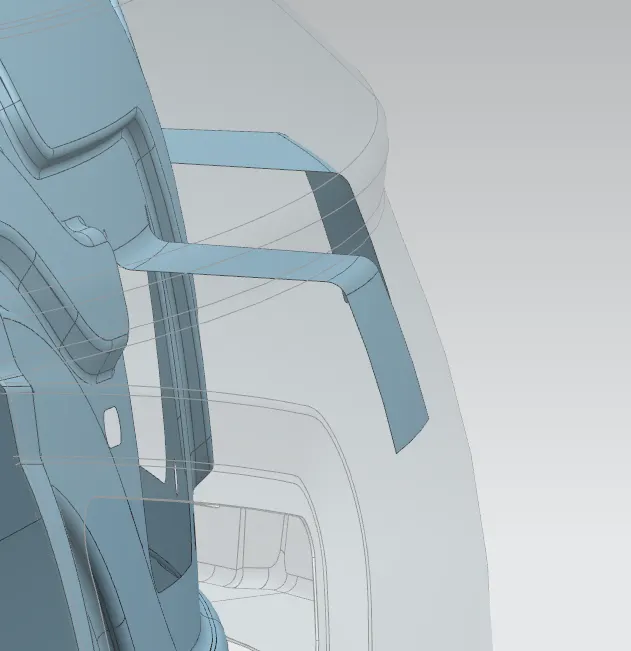
The corners of the back door are hemmed but in the middle spot welds can't be done whereas it will affect the car aesthetically and here is where the mastics are introduced .These flanges are created in order to apply mastic sealants which sticks the inner panel with the outer panel and also plays a vital role in improving the NVH.
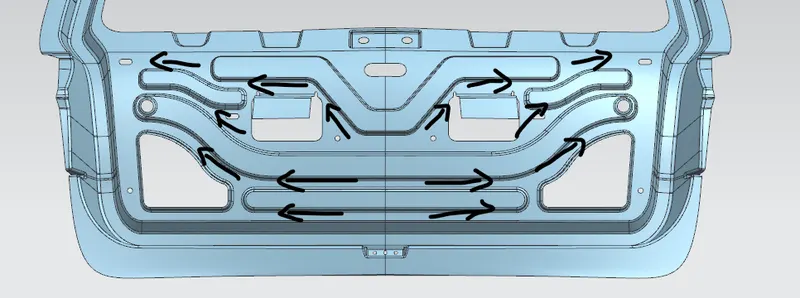
Y/V Embosses:
As discussed earlier about the various tests that's gonna take place in order to validate the design.When simulating,in most of the cases the force tends to go in a V/Y Direction and that is the reason why V/Y Embosses are created on the inner panel.
Access Cutouts:
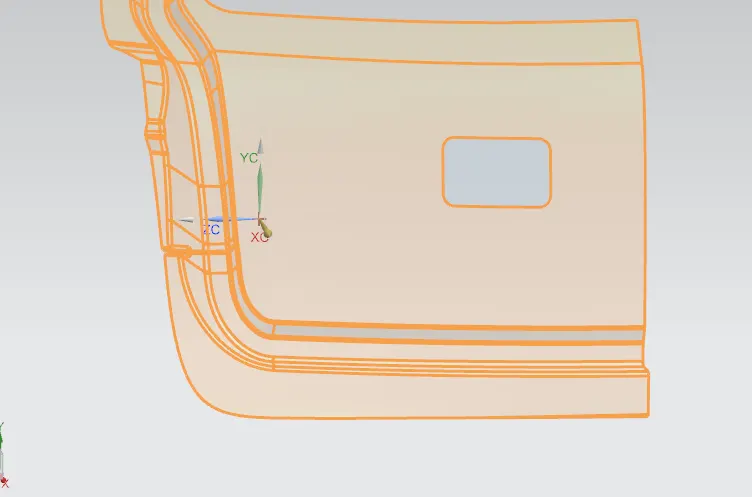
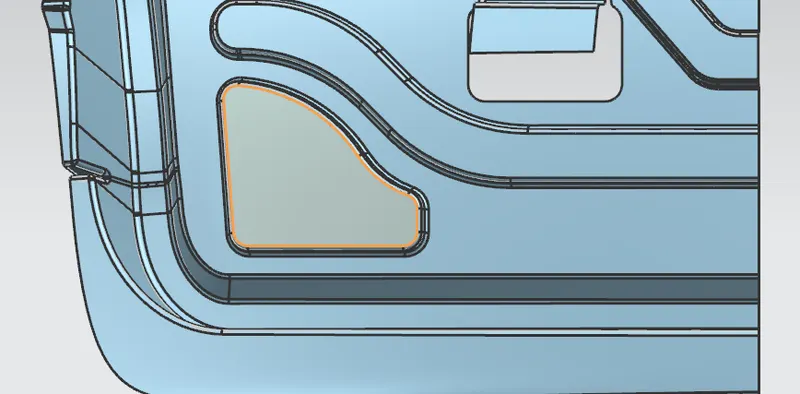
When mounting wiper motor,latch&striker actuator the car back door will be assembled as a single commodity with outer panel,inner panel and all the required reinforcements.To access the mounting of a wiper motor and latch&striker actautor these cutouts are given.
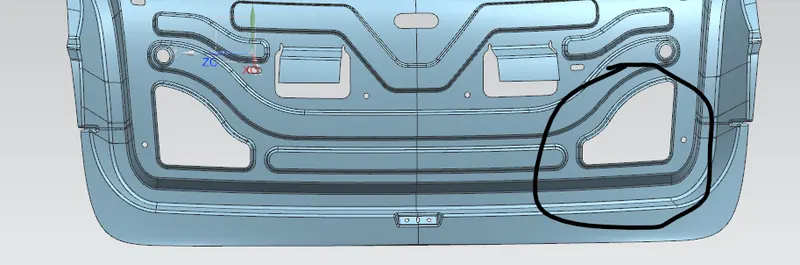
This hole is made to compensate the CG of the back door. Cutouts on one side and leaving the other side plain will affect the backdoor Center of Gravity.
Mounting of Trim Parts:
The interior trim parts will sit on this particular region.

Mounting regions for Hinge,Gas Stay,Latch&Striker and Wiper Motor:
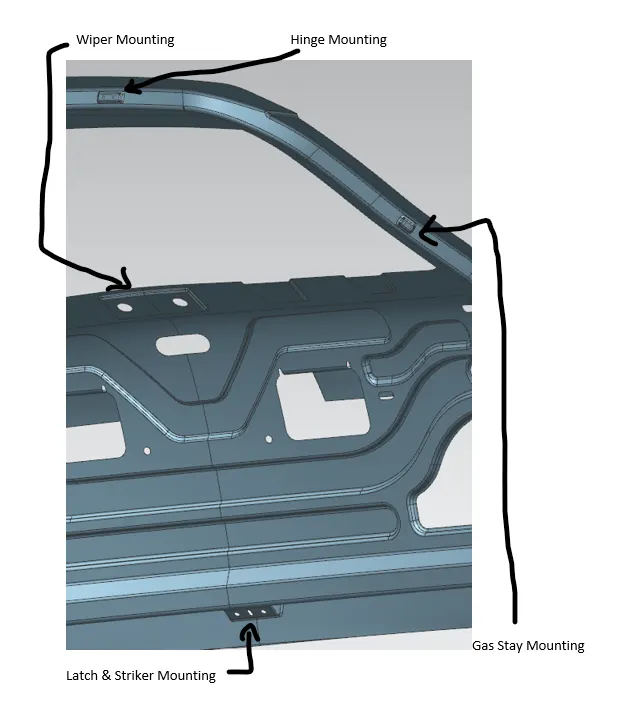
Mounting regions must be flat in order to mount something at ease.
Latch & Striker trajectory:
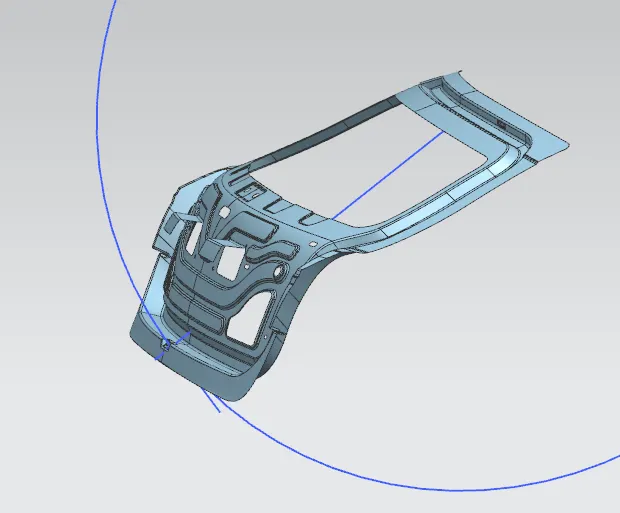
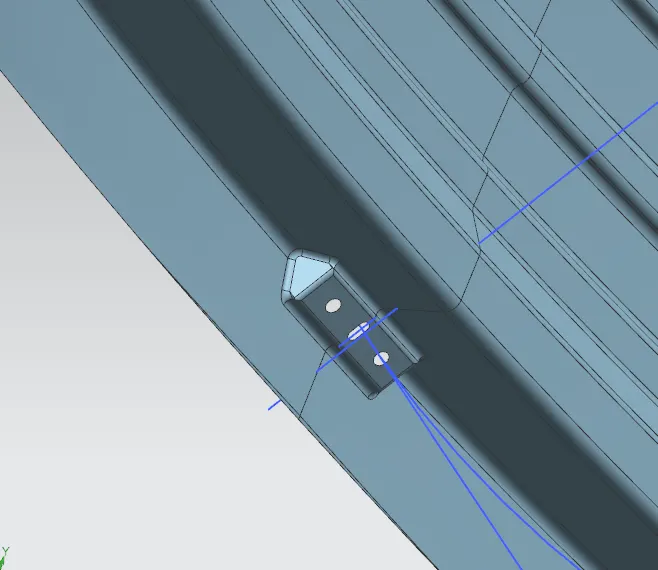
Latch & Striker emboss is created in acccordance with the latch and striker trajectory procured with the tentative hinge axis.This trajectory is what decides the path of the back door.
Reinforcements:
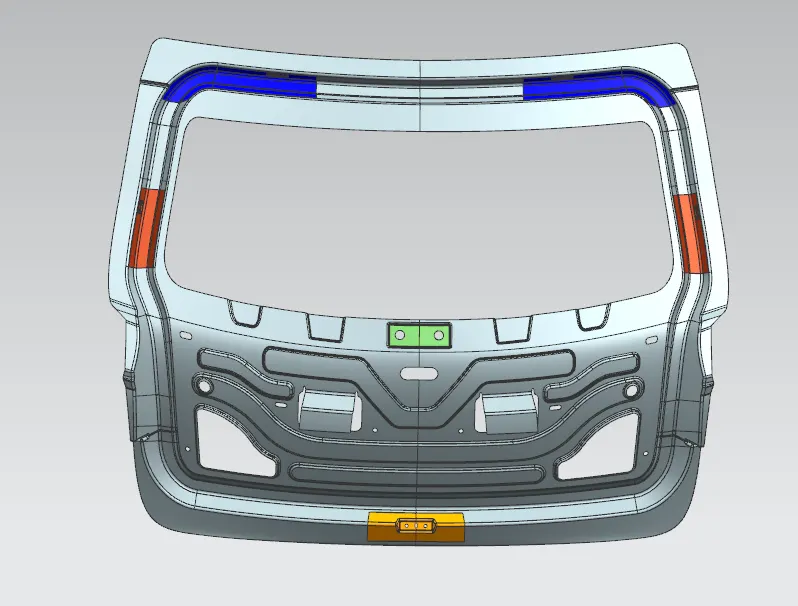
Reinforcements are designed to gain the strength back where the inner panel locally lost some material.Thickness of the reinforcements are 1.5mm.
Hinge Reinforcements(LH&RH):
Gas Stay Reinforcements(LH&RH):
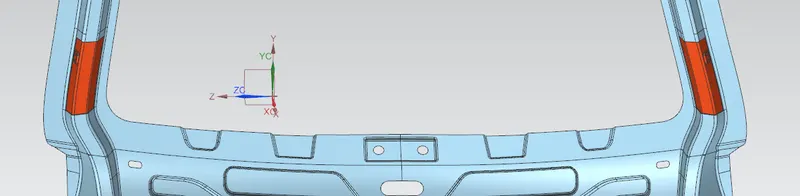
Wiper Motor Reinforcement:
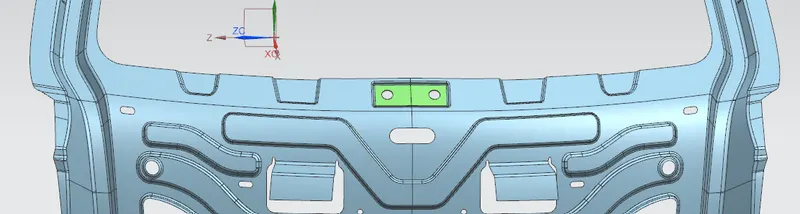
Latch & Striker Reinforcement:
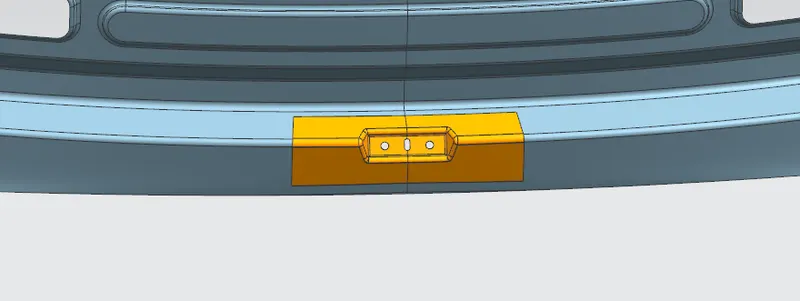
Hemming:
As a final procedure the the outer panel is hemmed with the inner panel.
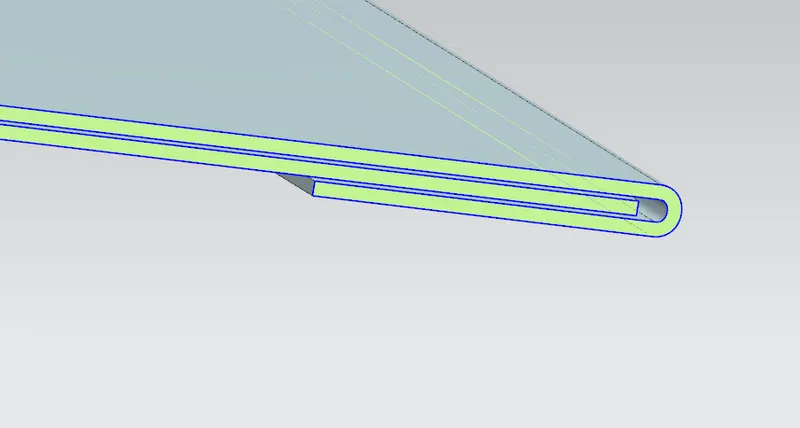
A certain amount of gap is given between the outer panel and the inner panel after hemming where a sealant will be applied to seep out through the gap.
Corner relief:
DRAFT ANALYSIS:
A tooling direction is defined once when we start designing the backdoor.As aforementioned most of the automotive sheetmetal components are stamped.In order to that the commodity must have a positive opening for the tool to comeout after it stamps the sheetmetal.
Draft angle for Steel:5-7 degree
Draft angle for Aluminum:3 degree
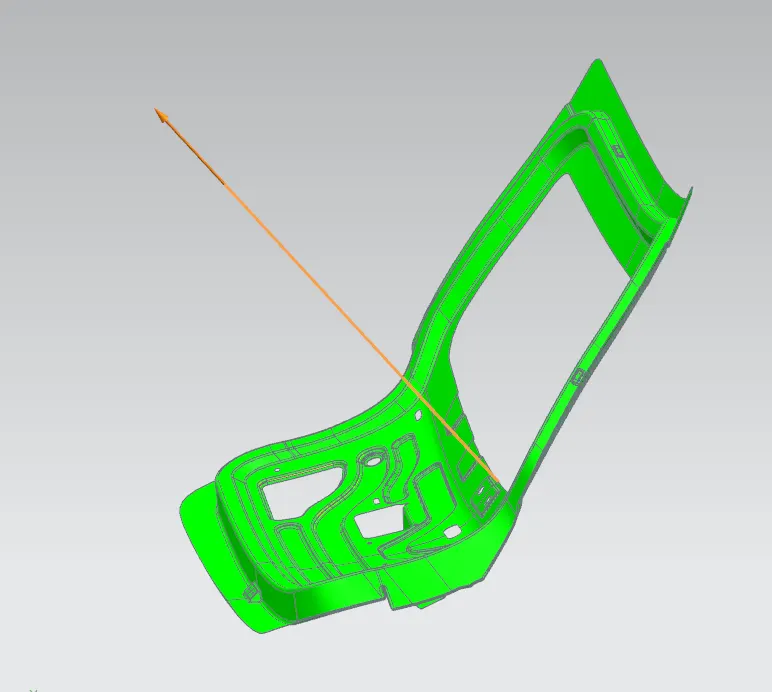
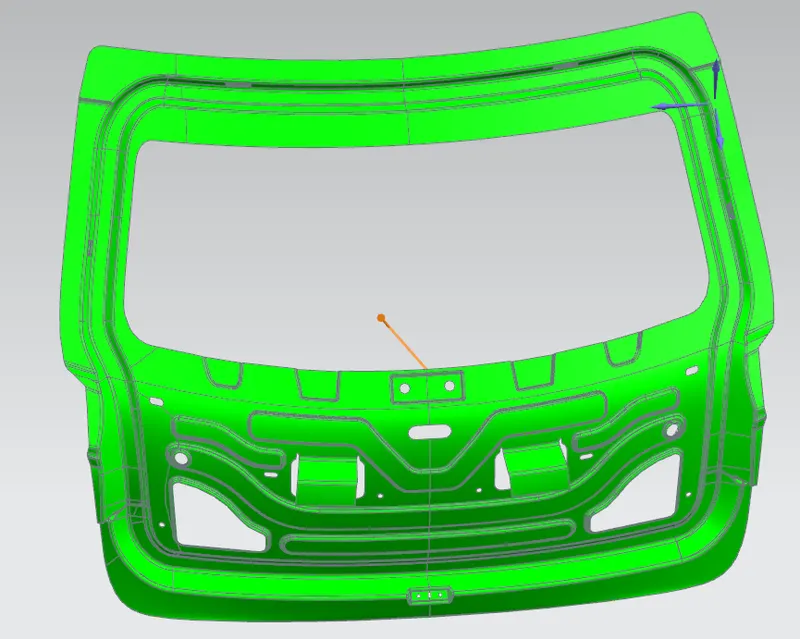
Here the commodity is depicted as green to show that it has a positive draft angle(more than 5 degree)
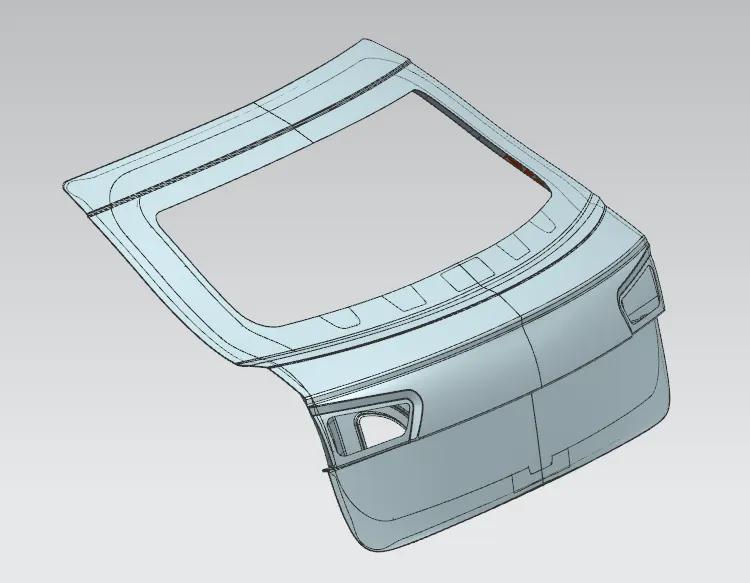
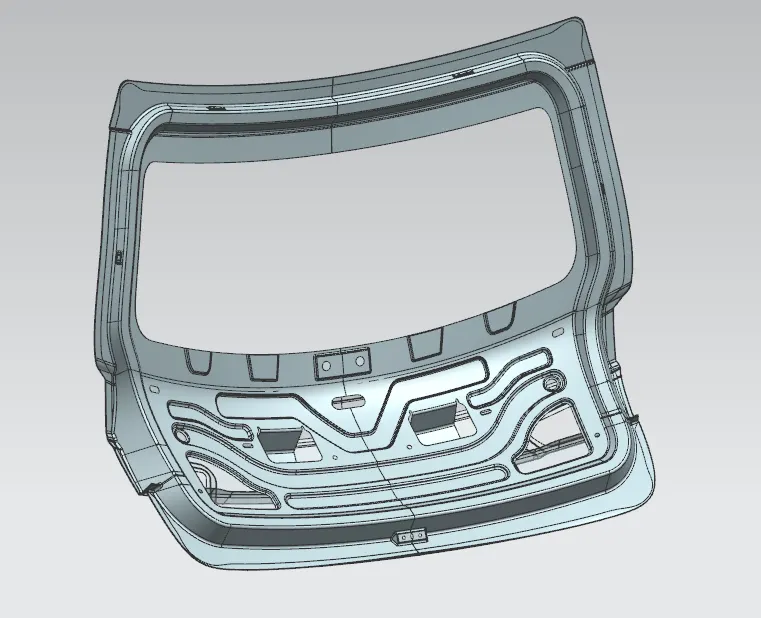
VIEWS OF A BACKDOOR ASSEMBLY:
CONCLUSION:
To conclude,a backdoor assembly is created with the outer panel,inner panel and all essential reinforcements.
Software used: NX Cad