Design of backdoor
AIM:
To Design the outer upper and lower panels. inner panel with necessary reinforcements by the following MAster section with the design parameter for the given class A surface.
INTRODUCTION:
A door is a hinged part that is used for entry and exit from the vehicles. Back doors are one of the type doors of the vehicle which are located next to the passenger seat and provide access to the luggage compartment. In most of the cars, these back doors are operated with the help of gas stay which in turn reduces the effort required to lift open the door. Some luxury cars have a powered backdoor which in turn is driven by an electric motor. This kind of system is also called a powered trunk lid system. Hatchback or station wagons are sold as 3-door or 5-door models. In this case, the rear hatch is classified as a door this is because it enters the passenger compartment. The naming is mainly used in European countries. In case of safety, the back door design should meet the safety requirement for the rear collision.
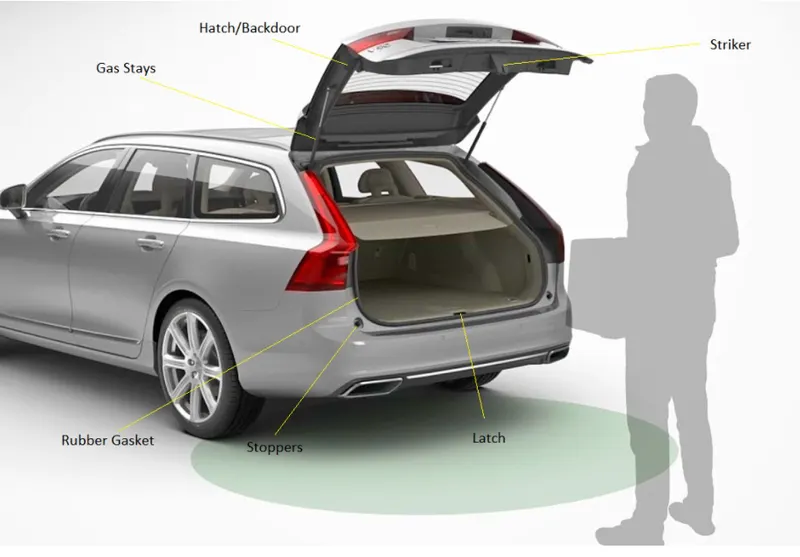
TYPES OF BACK DOOR:
Top-Mounted:
This type of back door is used in a station wagon, pickup truck, and some of the sport utility vehicles. Today's modern cars use top-mounted tailgating systems which are both powered and also gas stay supported. These top-mounted tailgates provide greater rear visibility compared to side-mounted or bar doors which have center pillars in them.

Side Mounted Doors:
As the name signifies side-mounted doors are the ones which are used in the van type MPVs, SUVs, and pickup truck vehicles. These side-mounted doors or barn doors are a lot easier compared to top-mounted doors. These doors are generally smaller in size and can easily accessed.
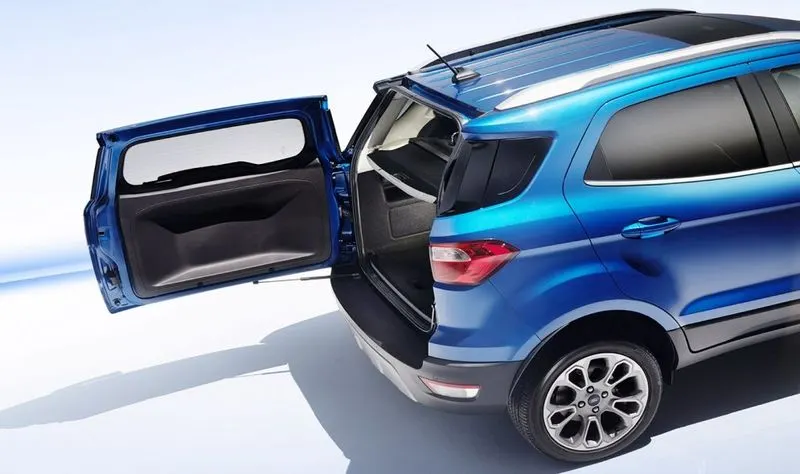
Components of Back Door:
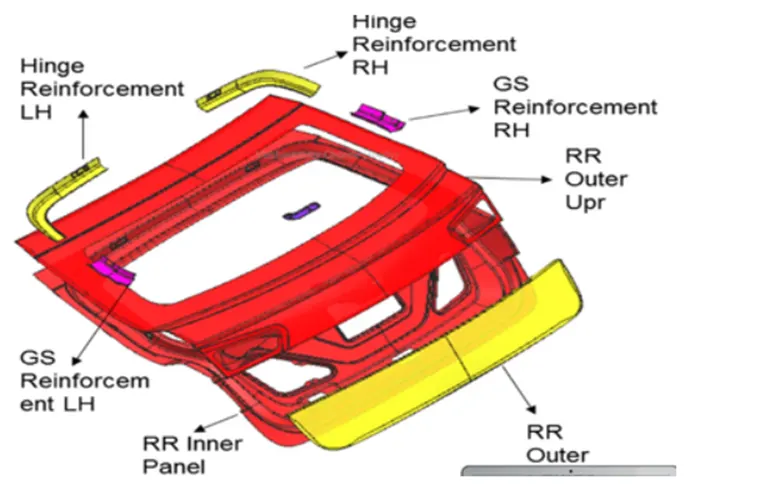
- Inner Panel
- Outer Panel Upper/ Lower
- Hinge Reinforcement LH/RH
- Gas Stay Reinforcement LH/RH
- Wiper Motor Reinforcement
- Latch Reinforcement
- Plastic Trim
Design Intent:
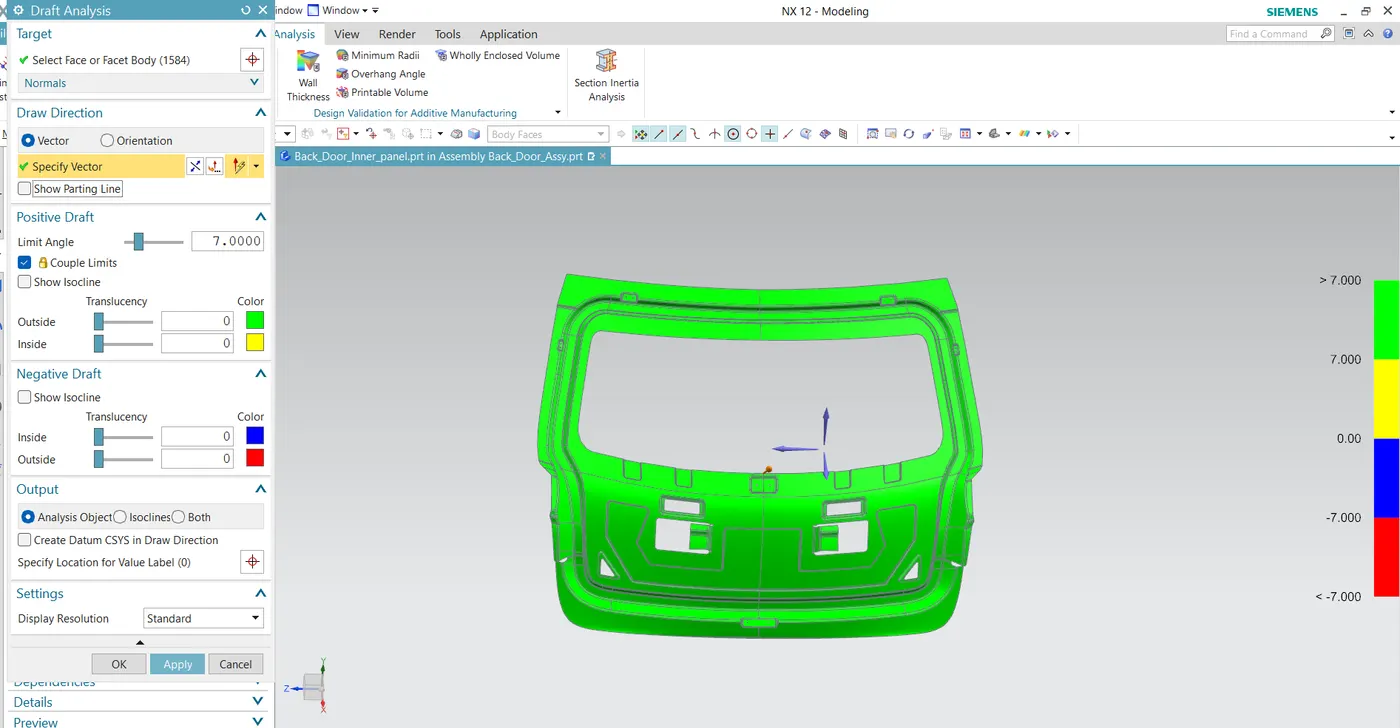
The intent of this project is to design the BIW back door of the vehicle by following the engineering standards and manufacturing requirements which satisfies the deep drawing process.
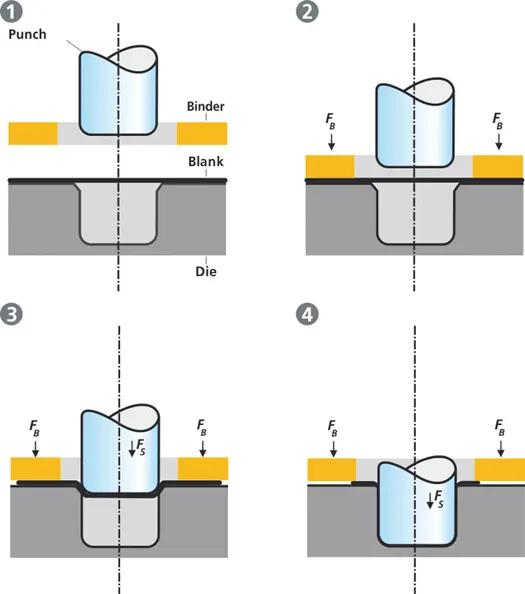
Deep Drawing is one of the most widely used processes in sheet metal forming. Apart from its use in many other sectors, it is applied in the automotive industry for the manufacturing of car body parts. The deep drawing process is a forming process that occurs under a combination of tensile and compressive conditions. A flat sheet metal blank is formed into a hollow body open on one side or a hollow body is formed into a hollow body open on one side or a hollow body is formed into a hollow body with a smaller cross-section
Design Considerations In Back Door Design:
The following are the Design considerations taken while designing the Back Door. They are:
- Visibility Criteria
- Force Dissipation
- Latch and Stricker Positions
- Hinge Positions
- Gas Stay Position
- Material Selection
- Space Availability
- Hemming and Relief Area
All these design considerations go hand in hand with each other because these positions are dependent on each other and if a position gets altered all the positions have to be altered for effective opening and closing of the backdoor. The Latch and Sticker, Hinge Position, and Gas Stay Positions have to be maintained in a proper way so that they play a major role in the opening and closing as well as the rear visibility criteria in the car.
Material Selection:
The material selection plays a major role in determining the overall weight of the back door. The materials generally used are steel and Aluminium. The Density of Steel is higher than Aluminium thus it results in adding more weight to the door. Basically, the material is used based on the budget of the car, because the cost of steel is less compared to Aluminium. If Aluminium is used instead of steel there is no need for reinforcement on the several parts of the back door which causes the reduction in weight of the back door. One major drawback of aluminum is that it is costlier as compared to steel. Hence, based on the budget of the car aluminum is used. In higher-end models like Benz, Audi, Porsche, and, BMW we can find aluminum instead of steel which reduces the weight of the car and increases the performance of the car/automobile.
Another factor to make a note is using cast aluminum instead of deep-drawn steel components and adding reinforcement to it is that the space of luggage commodity gets increased by a certain amount because the draft angle for cast aluminum is much lesser (3 degrees) than the deep drawn steel inner panel (7-9 degree). Thus it reduces the space between the inner and outer panel resulting in much larger cabin space than the deep-drawn steel inner panel. Thus the material selection is one of the design considerations taken. Since it reduces the space between the inner and the puter panel the rear visibility of the car is also improved giving more space for the mirror to view.
Hence in this design, the material chosen is stee since it is designed for a medium-budget car and hence high cost could not be afforded to design the back door.
Force Dissipation:
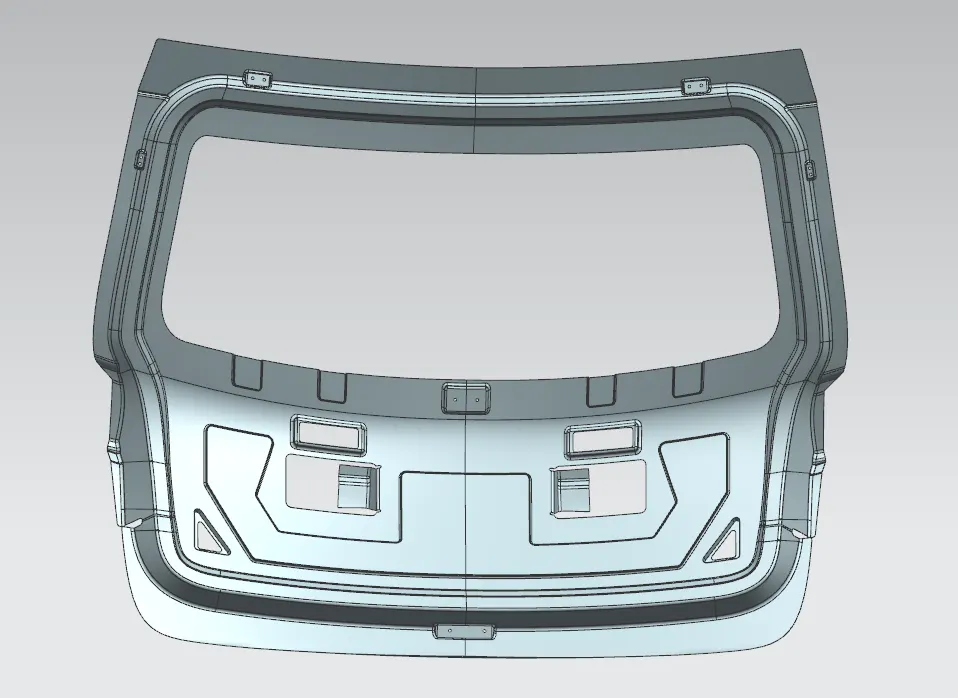
The major criterion in designing the back door or any BIW part is the force dissipation during an impact or a collision. Hence studies are being done in order to dissipate the force on the sides and avoid it reaching the inner cabin of the car so that possible damage of impact inside the car is reduced. Hence in order to do that the V or Y embossed is crested on the inner panel so that the force gets transmitted onto the sides instead of reaching it on the cabin. This is one of the main criteria in back door design.
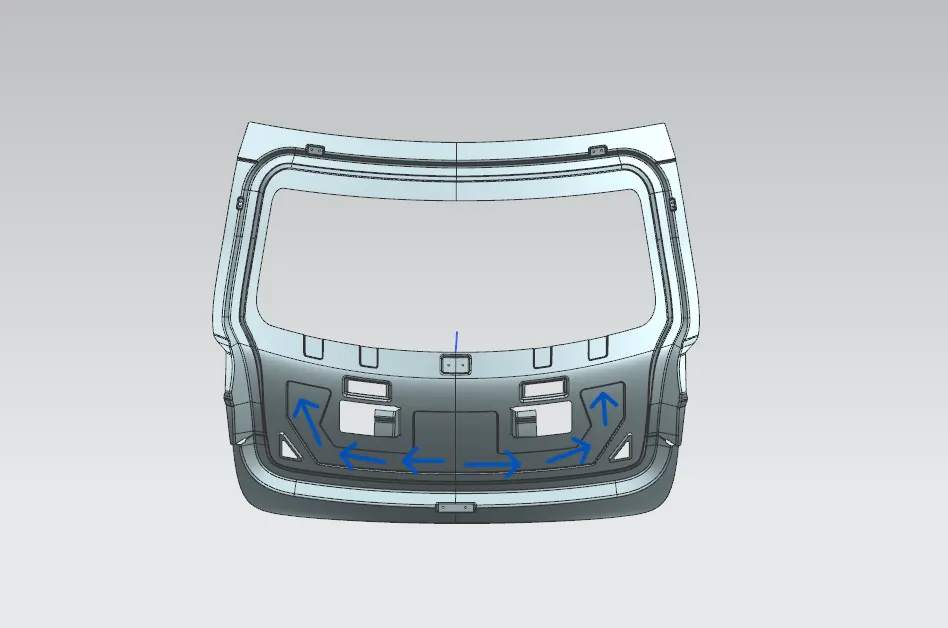
Thus from the above image, it is clear that the forces are dissipated on the sides instead of reaching inside. This is the reason to have Y or V embosses on the panel to increase the stiffness and to dissipate forces onto the sides.
Latch and Striker Positions:
The Latch and Striker positions play a major role in determining the opening and closing of the back door. Hence the opening and closing of the had to be smooth and order to ensure that the center point of the latch and sticker has to be at the same point and the trajectory has to be tangent to the open close circle that is drawn. This is shown in the below image. Only if the center points and the tangent line are perfect the opening and closing of the back door are smooth and clear. Or else the Hinge positions, Gas stay positions, and Latch and Striker positions have to be altered to meet the change.
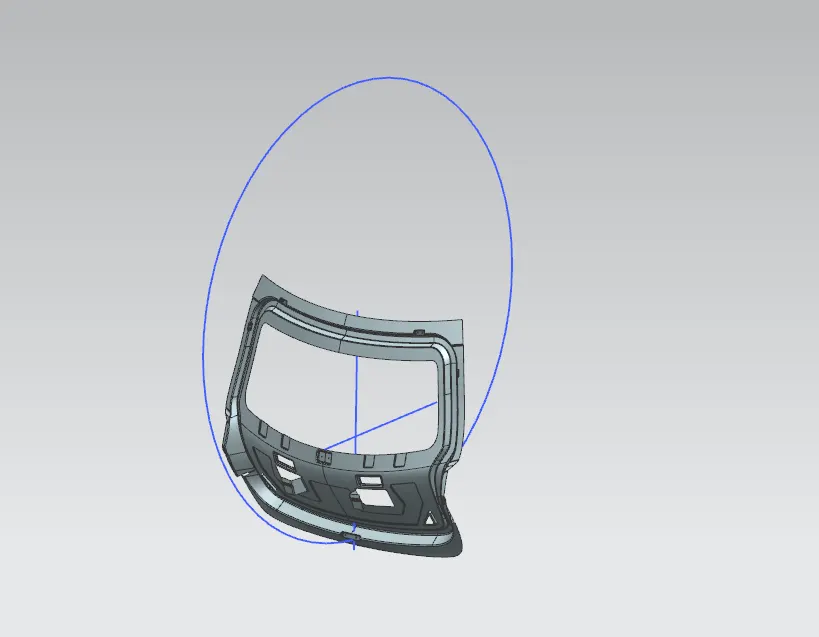
Here the hinge center and the striker centers are in line with each other and the trajectory of the movement is clearly obtained.
Hemming and Relief Areas:
Hemming and Seaming are two similar metalworking processes in which sheet metal edge is rolled onto itself. Hemming is the process in which the edge is rolled flush to itself, while a seam joins the edge of two materials.
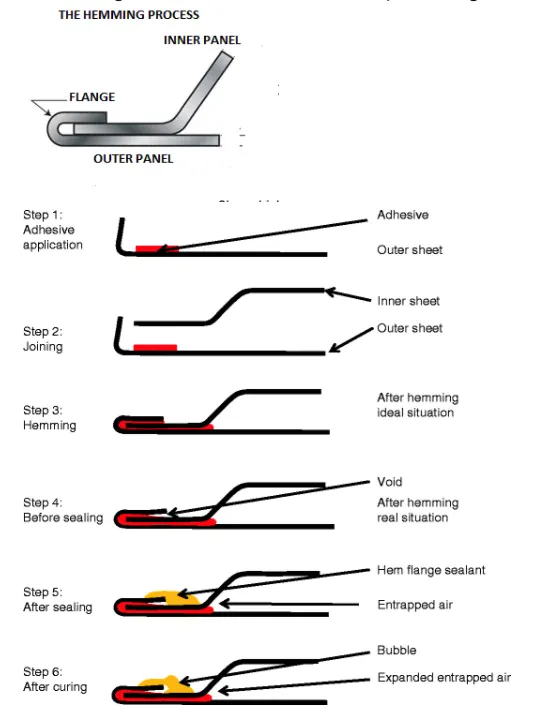
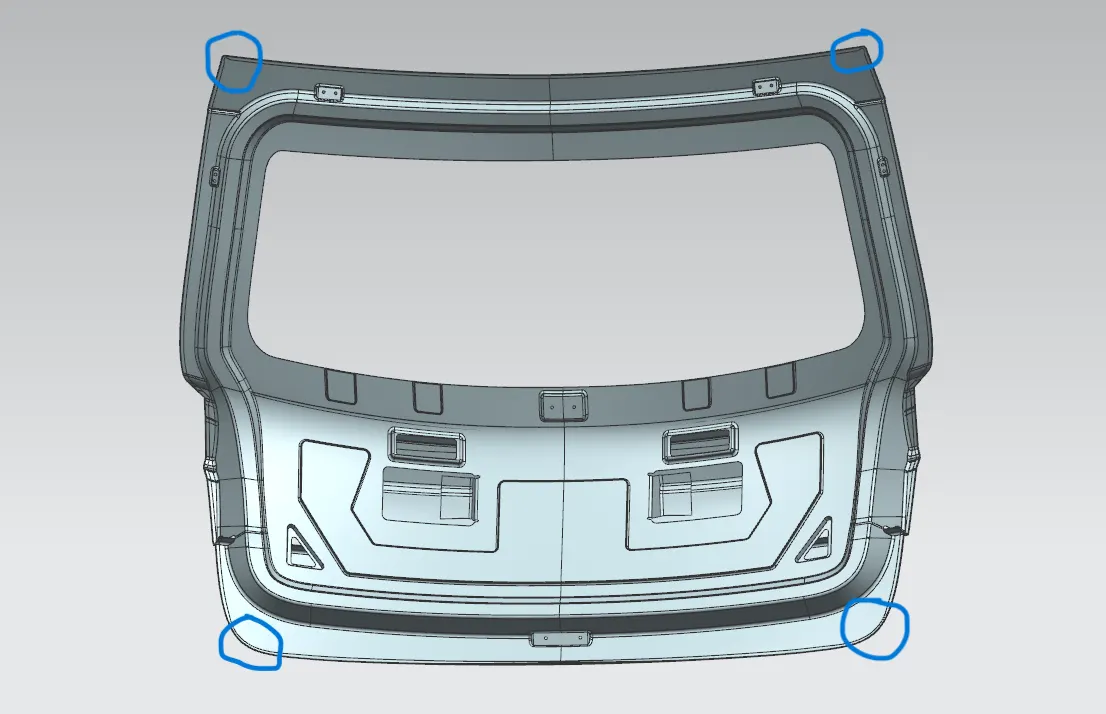
The Hemming is done on the outer and the inner panels with a clearance of 0.2mm on either side. Since at corners, the hemming is difficult to perform, clearance has been given at the ends of panels so that it would the hemming operation can be performed. Here is the image of the hemming relief at the corners.
Parts of the Back Door Assembly :
1) Outer Panel:
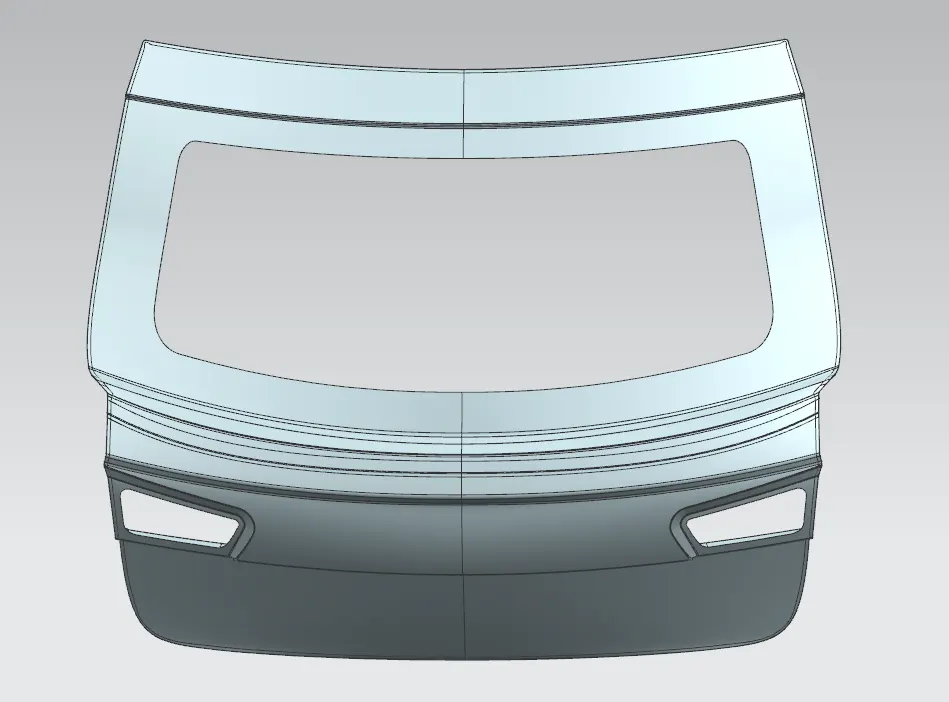
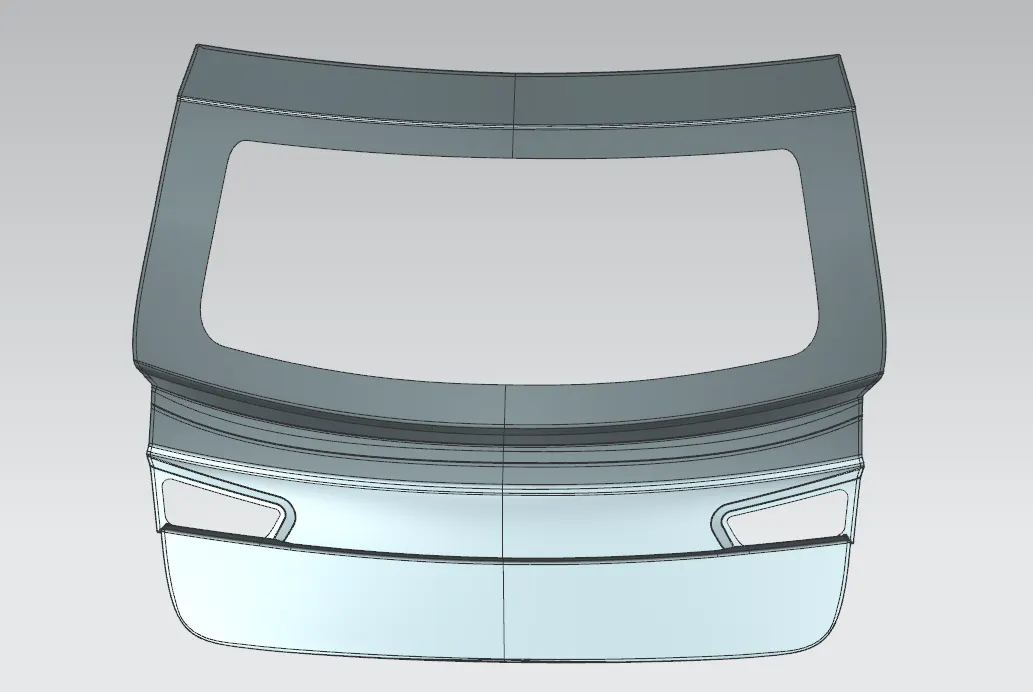
2) Inner Panel:
Reinforcements:
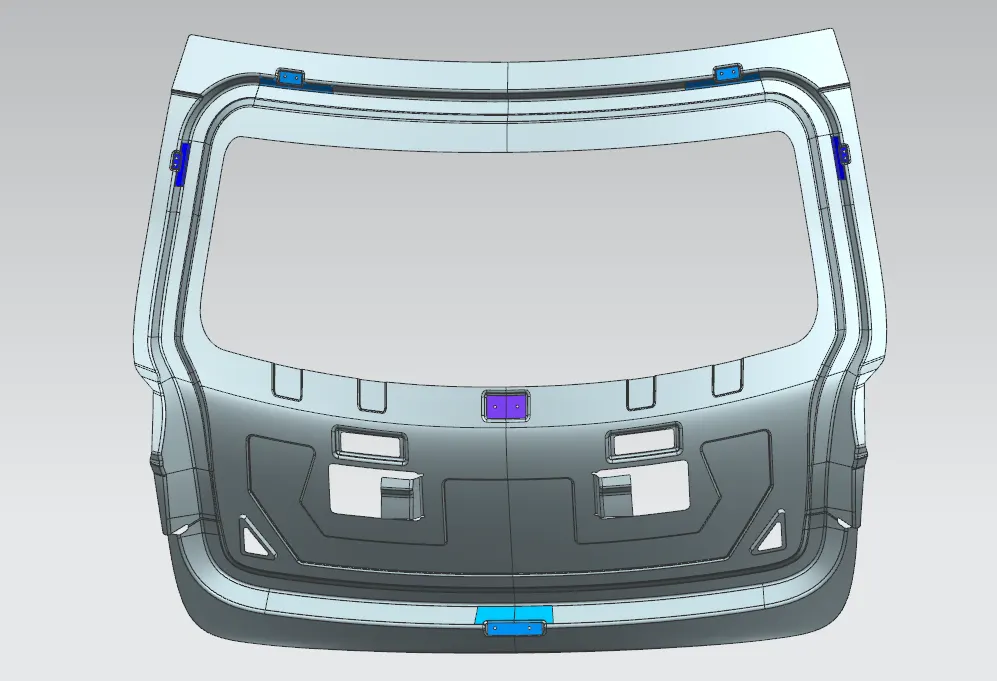
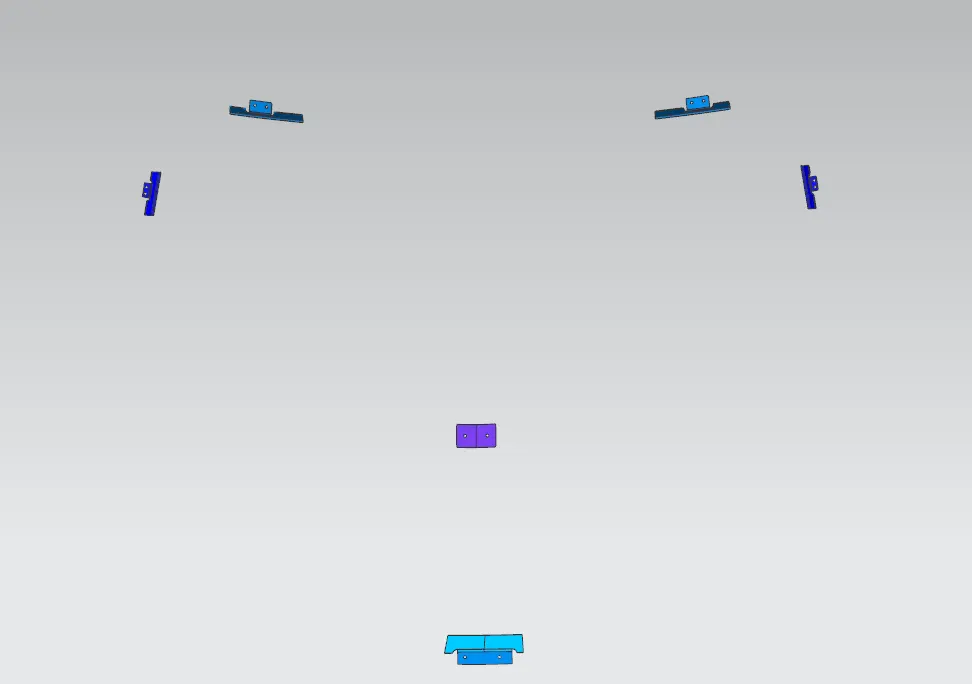
Reinforcement is generally used to increase the strength of the mountings so that there are no unnecessary dents or noise at the time of motion. This not only adds strength to the part but also increases the overall stiffness of the part so that the part is completely stable.
The reinforcement used are:-
1) Latch and Striker Reinforcement
2) Wiper Motor Reinforcement
3) Hinge Reinfrocement
4) Gas Stay Reinforcement
The following Image shows the reinforcement that is used on different areas of the inner panel. They are usually spot-welded on the inner panel.
Mastic Sealants:
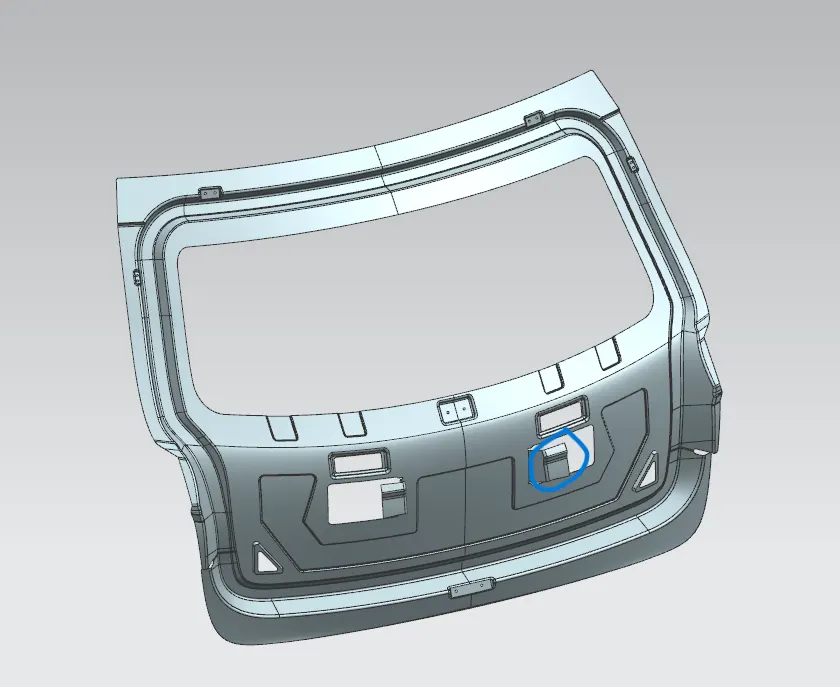
The mastic points are defined on the back door's inner panel where the back door can easily deform. They help the backdoor outer panel to come back to its original shape after it gets deformed.
The gap between the inner panel and the outer panel over the embossed is filled with mastic sealants at curtained specified places, this helps to reduce vibrations and overall NVH(Noise, Vibration, and Harness)
Then, the sheet will bend with the help of another die to make the flanges in an "L" shape.
Draft Analysis:
Back Door Assembly:
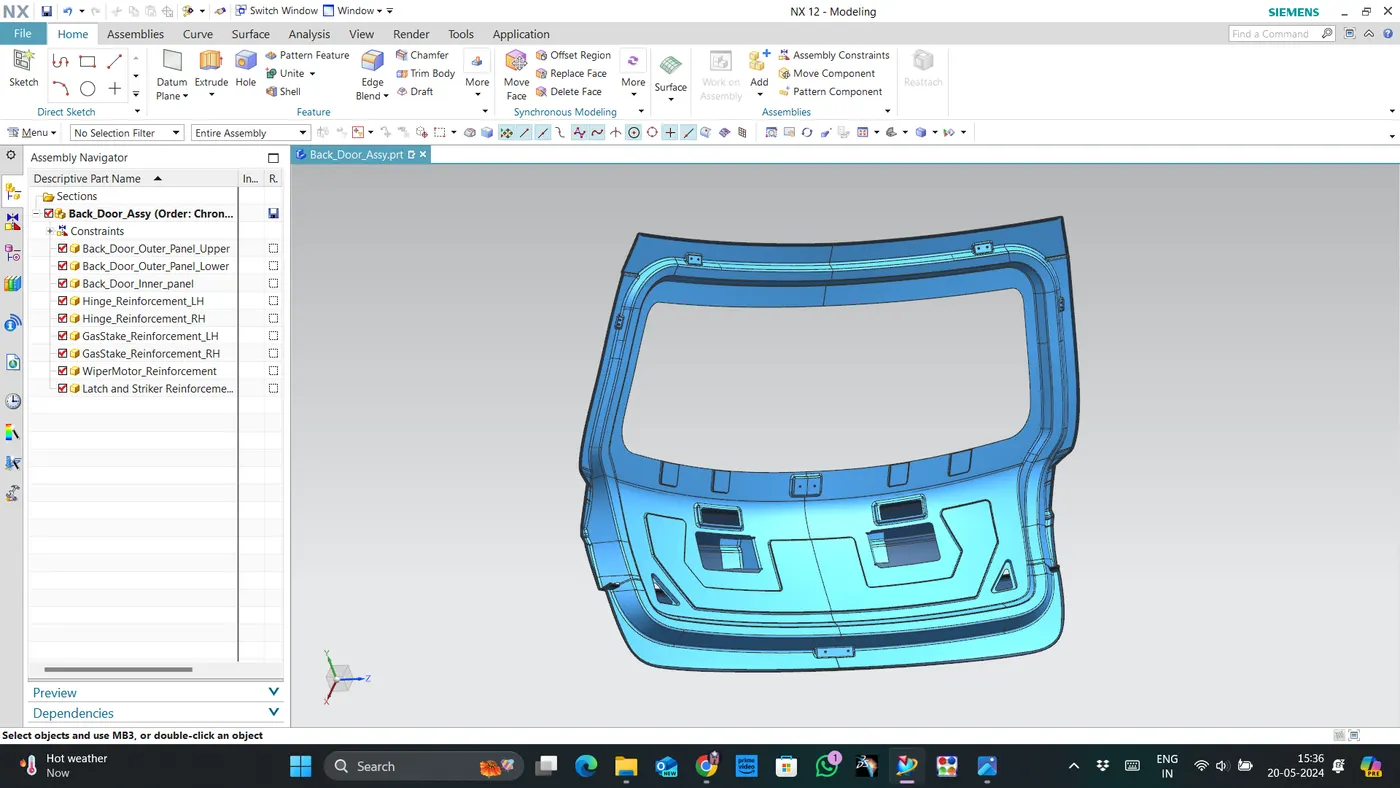
Conclusion:
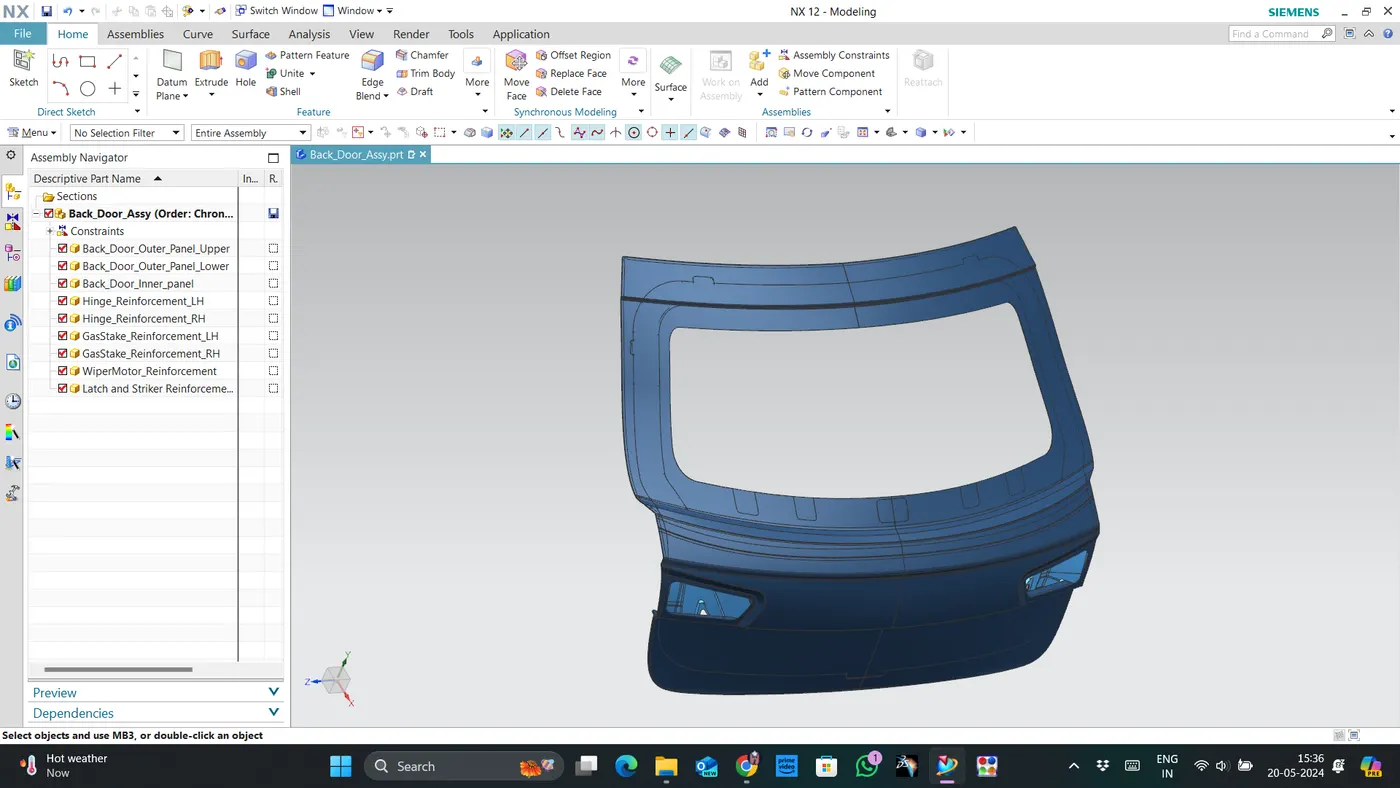
Thus the back door was designed and developed from the given styling surface with essential reinforcements and emboss. To satisfy the manufacturing requirements draft analysis was also done on the inner panel.
The file is more than 20MB so can't upload here. So, uploaded on the google drive and copied the link below.
https://drive.google.com/file/d/1fP06C1olk1y8UZryLrmWNfVODe-k2HJL/view?usp=sharing