Design of backdoor
Back Door Design
Objective
- To design the back door using the styling provided by applying appropriate design methodologies.
- To provide the necessary reinforcements and embosses
- To consider the DFA and DFM criteria.
Introduction
Back Door
- A Car’s Back door is typically a hinged door which covers/closes the trunk of the car and also provides access to the luggage compartment which is also referred as Boot space. The back door can be opened manually or with powered gas stay. It is also called as Hatchback which means “the rear door of the car”. In case of SUV or pickup trucks it is called as “Tailgate”.
- In some SUV’s we can see that a spare tire is fixed on the back door. The car’s registration number plate is also mounted on the back door or on the rear bumper.
Types of Back door based on the Hinge mounting/ opening position
Top Mounted hinge Door

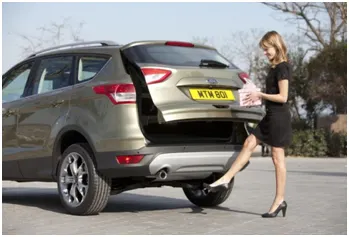
Automatic opening with sensors
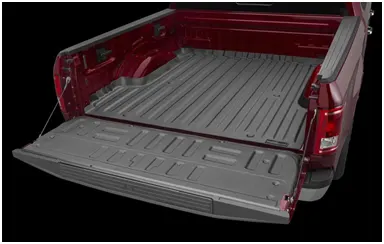
Bottom Mounted Hinge door
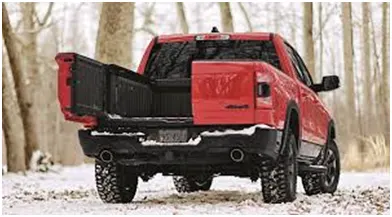
Double Hinged door
Back Door Components and it’s Description
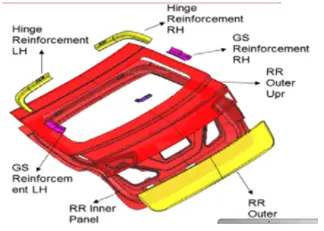
Sealing Flange
This flange supports the rubber trim which prevents the water entry into the cabin.
Connecting Flange
This flange connects the inner panel to the sealing flange.
Reinforcements
The reinforcements are provided at the Gas stay mount, hinge mount, Wiper Motor mount, door handle mount to increase the strength locally.
Mastics Flange
The mastic Flange is created to join the inner panel and outer panel which increases the strength of the part.
Design Parameters
- Material Selection
- Rear Visibility
- Rear Crash Regulations
- Load cases
- Manufacturing Processes
- Gaps and Flushness
Material Selection
Steel and Aluminum are the most commonly used materials for the Automobile BIW. Nowadays carbon fiber is used in super cars/ high end cars for reducing weight without decreasing the strength of the components.
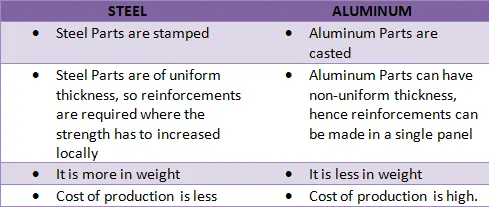
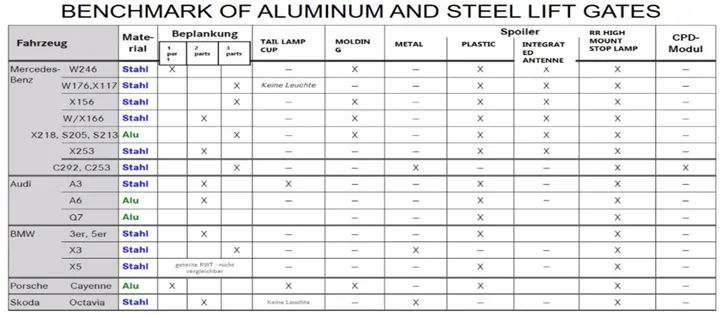
After seeing the benchmarking results we can see that using Aluminum for the back door of the car reduces weight but also increases the cost of production. Hence aluminum is used mostly in high end cars. Nowadays reinforced carbon fiber is used to further reduce the weight and also increase the strength of the components. It is more costly than Aluminum and used mostly in supercars.
Load Cases
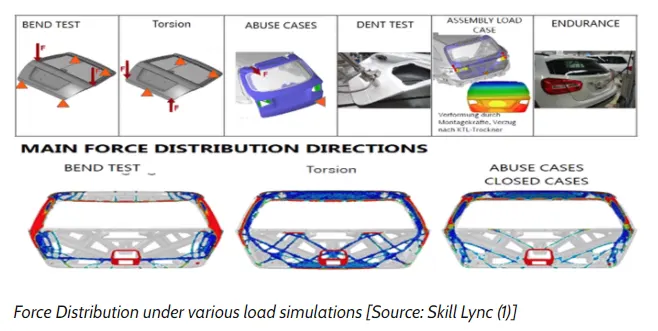
It is very important to understand the types of loads acting on part to provide necessary features or reinforcements at the required places for efficient and safe operation of the part. There are many types of load acting on the back door when the door is opened or closed. Many type of tests are conducted simulating the functioning of the back door. Based on the result obtained the reinforcements and mounting positions can be determined.
Manufacturing processes
Deep drawing
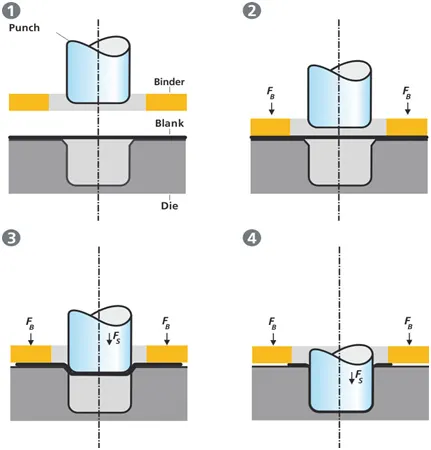
Deep drawing is a sheet metal forming process in which a sheet metal blank is radially drawn into a forming die by the mechanical action of a punch. A flat sheet metal blank is formed into a hollow body open on one side or a hollow body is formed into a hollow body with a smaller cross-section. It is thus a shape transformation process with material retention. The process is considered "deep" drawing when the depth of the drawn part exceeds its diameter. This is achieved by redrawing the part through series of dies.
Sheet Metal Embossing
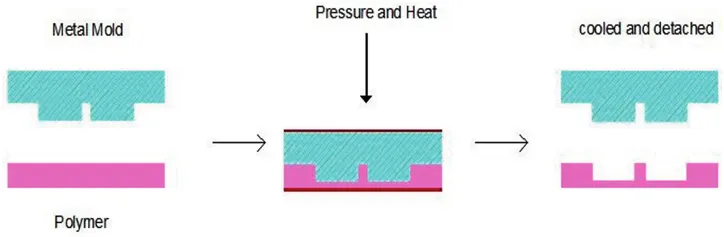
It is a stamping process for producing raised or sunken design in sheet metal. It is done by stamping through male and female dies or passing a sheet of metal through the rollers to get the desired pattern. It is accomplished with combination of heat and pressure.
Materials commonly used in the metal embossing process include:
- Aluminum, Brass, Cold rolled steel, Copper. Galvanized steel.
Blanking and Piercing
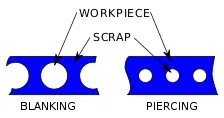
Blanking and piercing are shearing processes in which a punch and die are used to produce parts from sheet. Blanking produces the outside features of the component, while piercing produces internal holes or shapes. The web is created after multiple components have been produced and is considered scrap material. The "slugs" produced by piercing internal features are also considered scrap.
Punching
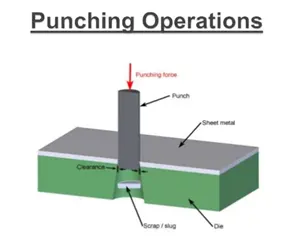
Sheet metal punching is a cutting process in which material is removed from a piece of sheet metal by applying shear force. CNC Punching can be used to produce holes and cutouts of various shapes and sizes.
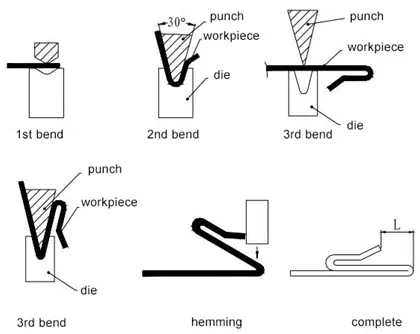
Hemming
Hemming is a sheet metal working process in which a sheet metal edge is rolled over into itself, while a seam joins the edge of two materials. Hems are used to reinforce an edge, hide burrs and rough edges and also improve appearance. In automotives like car the inner and outer panels/closure are put together. The flange of the outer panel is bent over the inner panel.
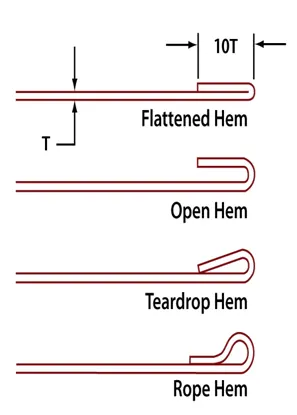
Types of hemming
Press hemming
Press hemming used hydraulic stamping presses. It can be used to produce more than one part in the same line, but they are restricted to flat panels and are costly
Table top hemming
Table top hemming is used for medium to high production volumes, with very short cycle times. It gives good quality but one panel at a time with relatively high cost
Robot/Roller hemming
Robot hemming is used for low production volumes. The industrial robot is integrated with roller hemming head to provide a flexible method for forming closures in progressive steps of bending. It is low in cost, simple and quite in operation
Rear Crash Regulations
Whip lash
Whiplash is a rapid and excessive distortion of the spine during rear crash. It is the most often occurring low speed rear end collisions. It is hard to diagnose and treat the injury and the fatality is rare. In order to prevent whiplash the best in practice seat and head restraint design is used which provides the protection to the occupants.
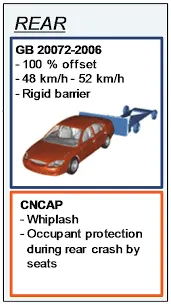
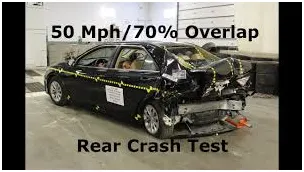
Rear Crash Test
The rear test reproduces the effect that an impact would have on the rear part of the vehicle, at a moderate speed. A mobile barrier crashes against the vehicle under study at a speed of between 15 and 16 kmph, affecting 40% of its rear right part, with the vehicle turned 10% anticlockwise from its longitudinal axis.
Rear crash prevention rating
IIHS provides rating for vehicles for rear crash prevention based on technologies that help drivers to avoid colliding with other vehicles or fixed objects when traveling in reverse. The technologies include parking sensors, rear automatic braking and rear cross-traffic alert.
Design methodology
Back Door Design Input
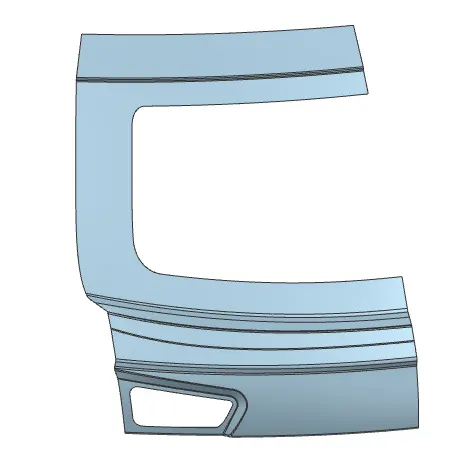
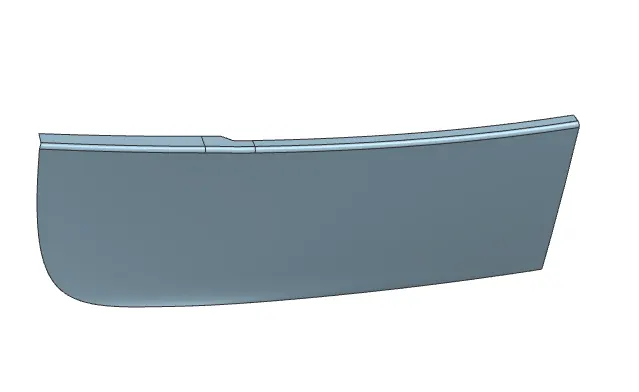
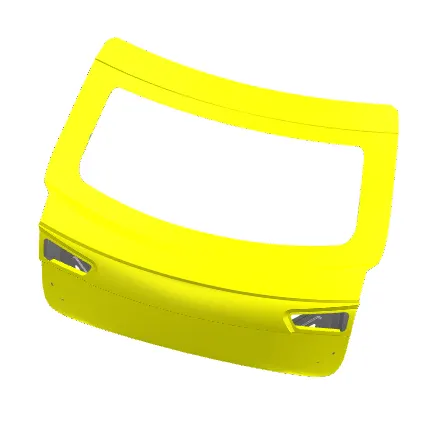
The outer skin of the Back door provided by the styling team and if there is any minor irregularities in the skin data it can be rectified and the design of inner panels and reinforcements can be done. The input from the styling team comes in form of upper and lower panels and the necessary flanges are created to join them by spot welding or brazing.
Back Door Outer Panel
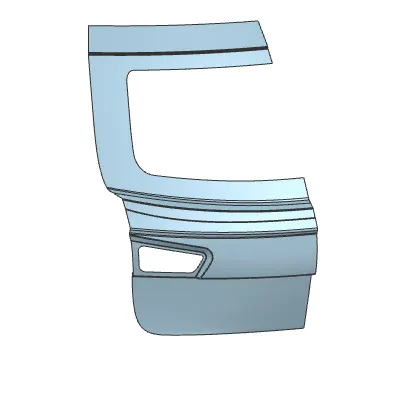
Back Door Outer Panel upper half
Back Door Upper Panel lower half
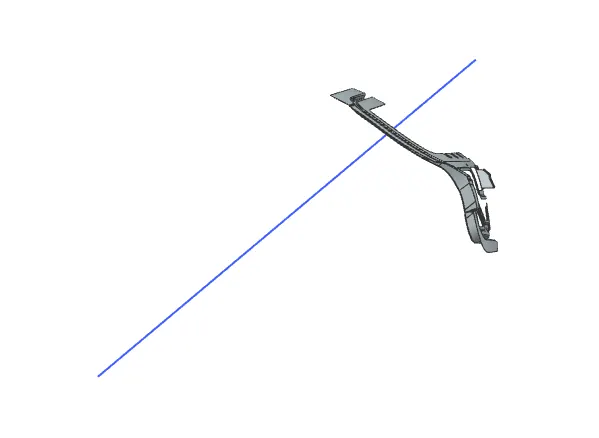
Tooling Direction
The back door inner panels are manufactured using the deep drawing processes hence a tooling direction must be followed for producing parts without warpage or shrinking.
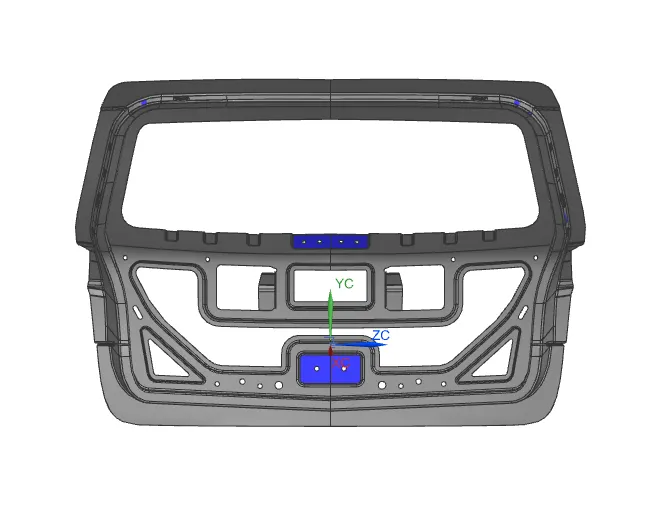
Inner Panel
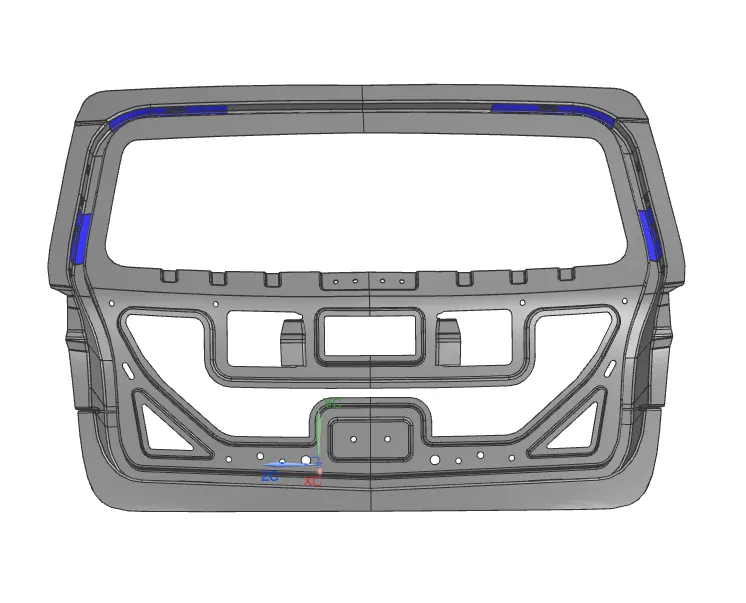
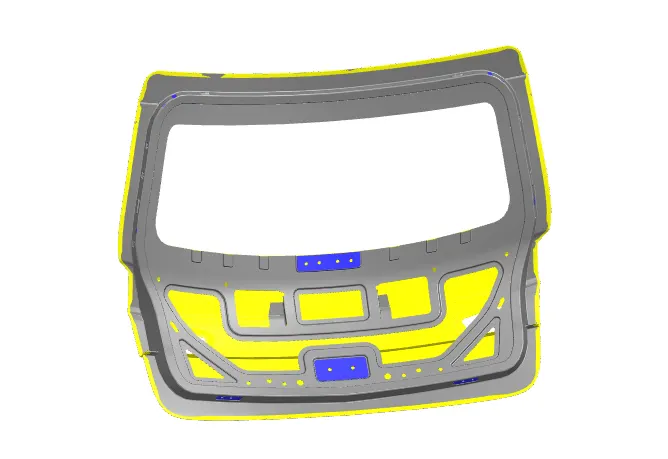
The back door inner panel is used to reinforce the outer panel and add structural rigidity to the back door. Embosses are provided in the inner panel to add strength and also provide safety during the impact during rear crash . The cut out can be made for safety during head impact and also to reduce the weight of the inner panel. The embosses must be made considering its drawability and dissipation and absorption of force during impact.
Mastics and Embosses
The mastic flange is provided to join the inner and outer panel. It is an rubberized sealant used to join the panels. It has an influence of 80mm diameter i.e it provides strength to the panels. For effective application 5mm gap is maintained between the flanges.
The embosses improve the strength of the panel and help in absorption of forces during the crash.
Reinforcements
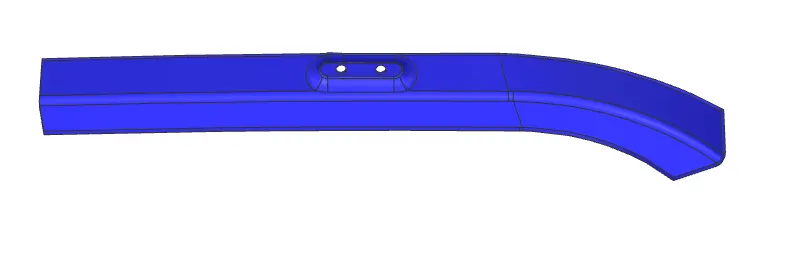
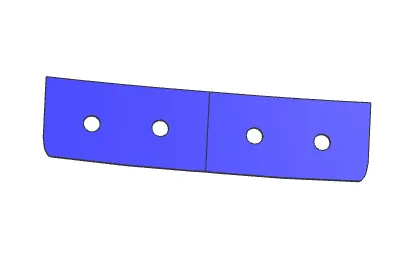
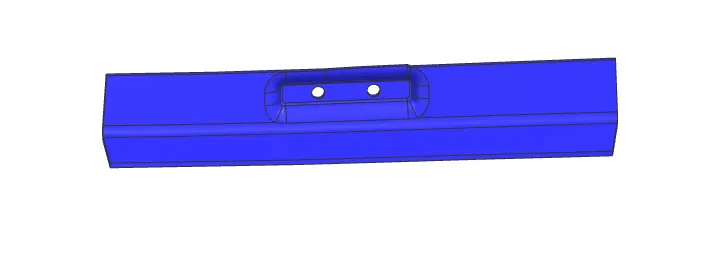
The reinforcements are provided at some critical areas to increase the strength locally in areas where material is removed for mounting brackets/hinges. Normally the reinforcements are made with thicker materials. in this case reinforcements is made of 1.5mm
Hinge Reinforcement
Wiper Motor Reinforcement
Gas stay Reinforcement
Door Handle Reinforcement
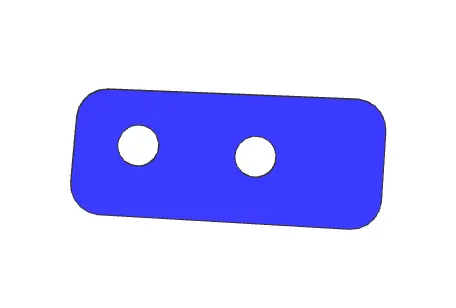
Latch Reinforcement
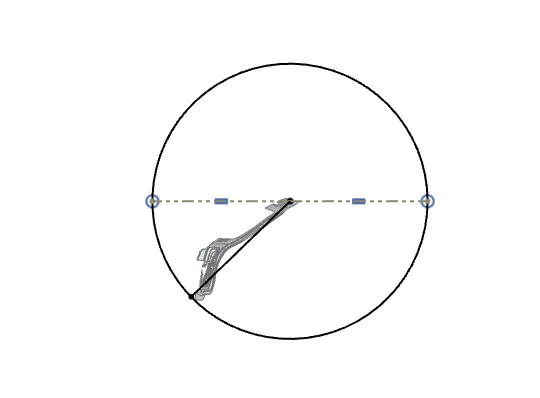
Latch Trajectory
It is the trajectory by which the back door opens, it is represented by drawing a circle from the hinge axis and to the striker. For proper opening and closing of door the striker axis should be perpendicular to the door trajectory.
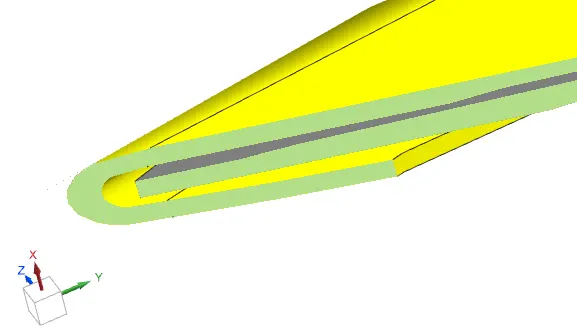
Hemming
The outer panel is one of the major styling surfaces, so the traditional fastening or joining techniques like welding or nuts and bolts cannot be used. As they could reduce the cosmetic looks, hence hemming is used for joining the outer panel to the inner panel.
Draft Analysis
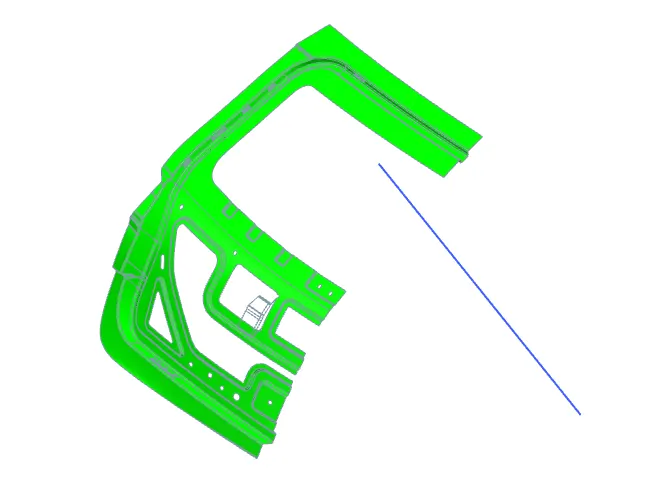
To ensure the drawability of the parts the draft analysis is done and the green color indicated that the part is drawable and the red or blue shows the parts with negative draft.
Assembly Images
Conclusion
Thus the back door was designed with NX-Cad following and the required design parameters and Nx-tools were learned.