Design of backdoor
Aim:
To design the outer upper and lower panel , inner panel with the necessary reinforcements by following the master section with the design parameter for the given class A surface.
Introduction:
A door is a hinged part which is used for entry and exit of the vehicles .Back doors are one of the types doors of the vehicle which are located next to the passengers seat which provides access to the luggage compartment . In most of the cars these back doors are operated with the help of gas stay which in turn reduces the effort required to lift open the door. Some luxury cars have powered back door which is driven by electric door .This kindof system is also called a powered backdoor trunk lid system.Hatch back or station wagons are sold as 3 door or 5 door models .In this case the rear hatch is classified as door this is because it enters the passenger compartment . The naming is mainly used in Europe countries . In case of safety the back door designed should meet the safety requiremnt for the rear collision.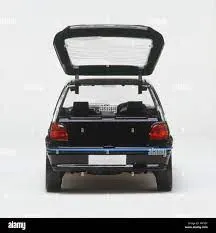
Types of back door :
Top - mounted:
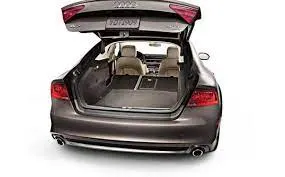
This type of back doors is used in a station wagon pickup truck and some of the sport utility vehicles. Todays ,modern cars use top - muonted tail gating systems which are both powered and aslo gas stay supported . These top mounted tailgates provide greater rear visibility compared to side mounted or bar doors which have canter pillars in it.
Side Mounted Doors:
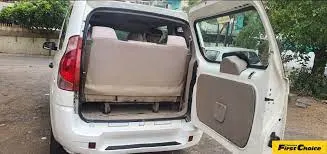
As the name signifies side mounted doors are the one which is used in the van type MPV's SUV's pickup truck vehicle . These side mounted doors or barn doors are a lot easier compared to top mounted doors. These doors are generally smaller in size and can be easily accessed.
Types of mechanism for rear doors:
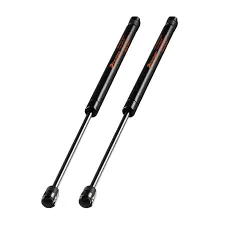
Gas stays :
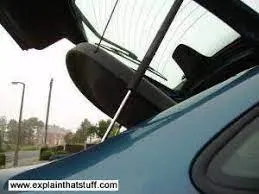
Gas stay types back door / lift gate / tail gate is an ideal and most commonly used tail gate mechanism from lower segment car to luxury car segment .The ideal components of tail gate consists of a hinge door , gas stay , and some rubber beadings for sealing door.
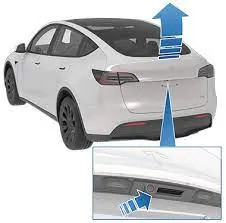
Power lift system :
Power trunk lid system is another sophisticated way of trunk / lift gate opening mechanism which is to automatically open and close of the trunk gate adn release of the latch by the touch of a button.
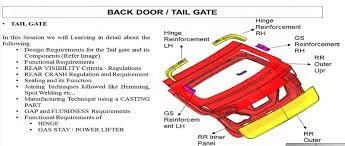
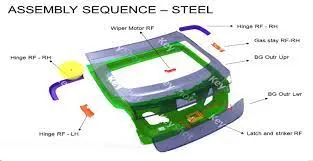
Components of Back door:
Components to create :
- Outer upper panel
- Outer lower panel
- Inner panel
- Gas Stay Reinforcement LH and RH
- Hinge Reinforcement LH and RH
- Striker
- Wiper Reinforcement
Design Intent:
The intent of this projecg is design the BIW back door of the vehicle by following the engineering standards and manufacturing requirements which satisfies the deep drawingprocess.
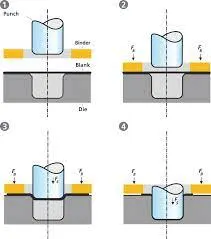
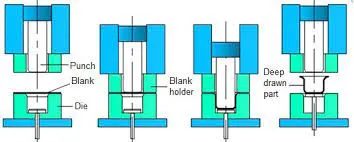
Deep Drawing:
It is one of the most widely used process insheet metal forming .A part from it is use many other sections .It is applied in the automotive industry for the manufacturing of car body parts. The deep drawing process is a forming process which occurs under a combination of tensile and compressive conditions .A flat sheet metal blank is formed into a hollow body open on one side or a hollow body is formed into a hollow body with a smaller cross section.
Deep drawings processes are divided into three types:
- Deep Drawing with tools.
- Deep Drawing with Active means
- Deep Drawing with Active energy
In the automotive industry deep drawing is usually carried out using rigid tools.
Design considerations:
- Rear visibility for safety and functionality .
- Support structures like hinges and Gas stay /Power lifter.
- Rear crash regulations .
- Boot space.
- Mounts for wiper motor and lights.
- Strength criteria
- Drat analysis.
Procedure:
Checking the Class -A surface:
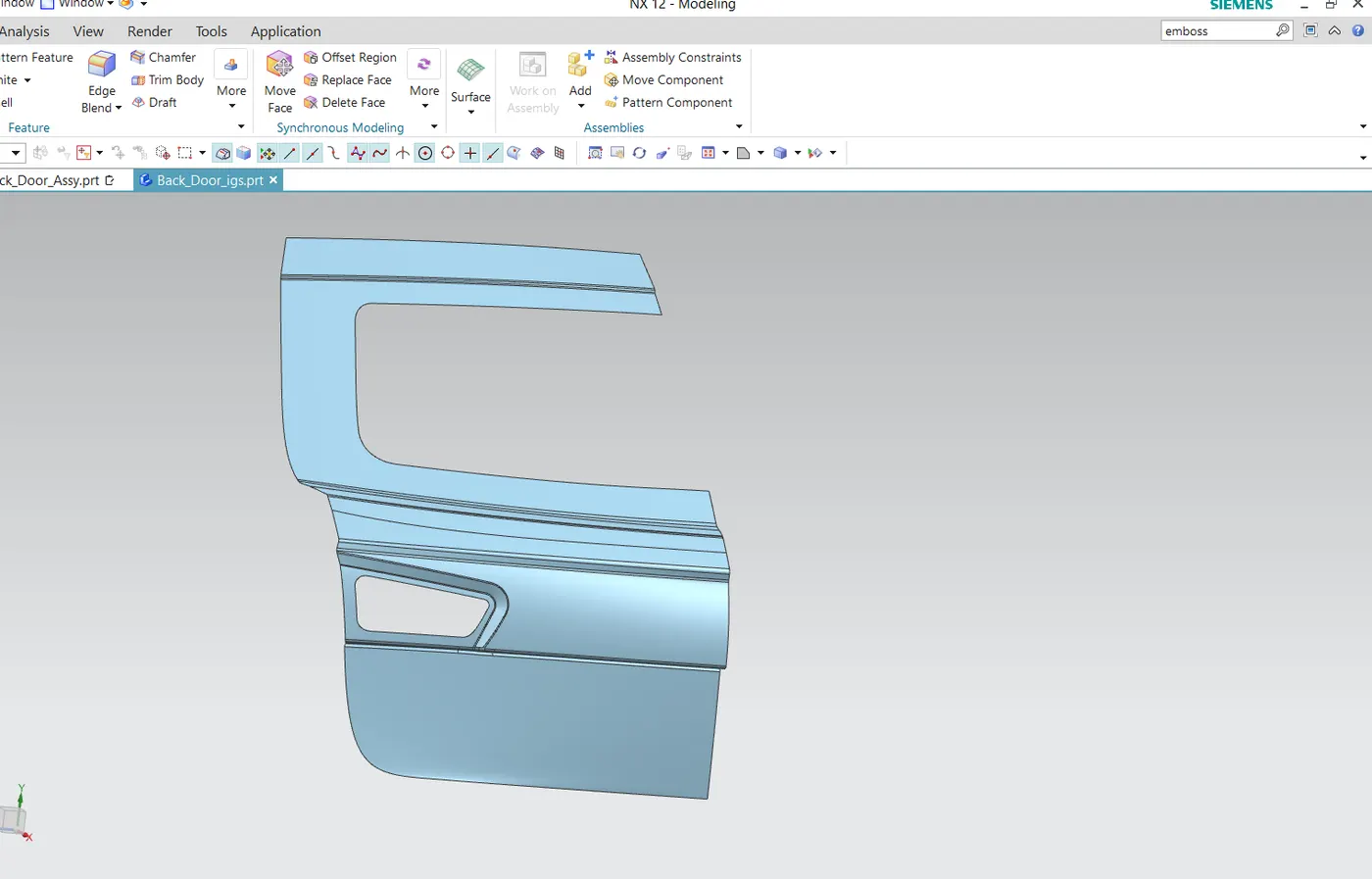
- once we get a Igs or part file add into the NX cad check the Class -A if their any disjoints on the surface through sew command if their is any repair the surface.
- Try joining the upper surface of the car if the surface sews together we get the outer surface and the surface didnt join then we need to create the surface by using studio surface tool.
- Create the fillet area tail lamp areas as those areas will be vulnerable and are unable to join together.
Tooling direction:
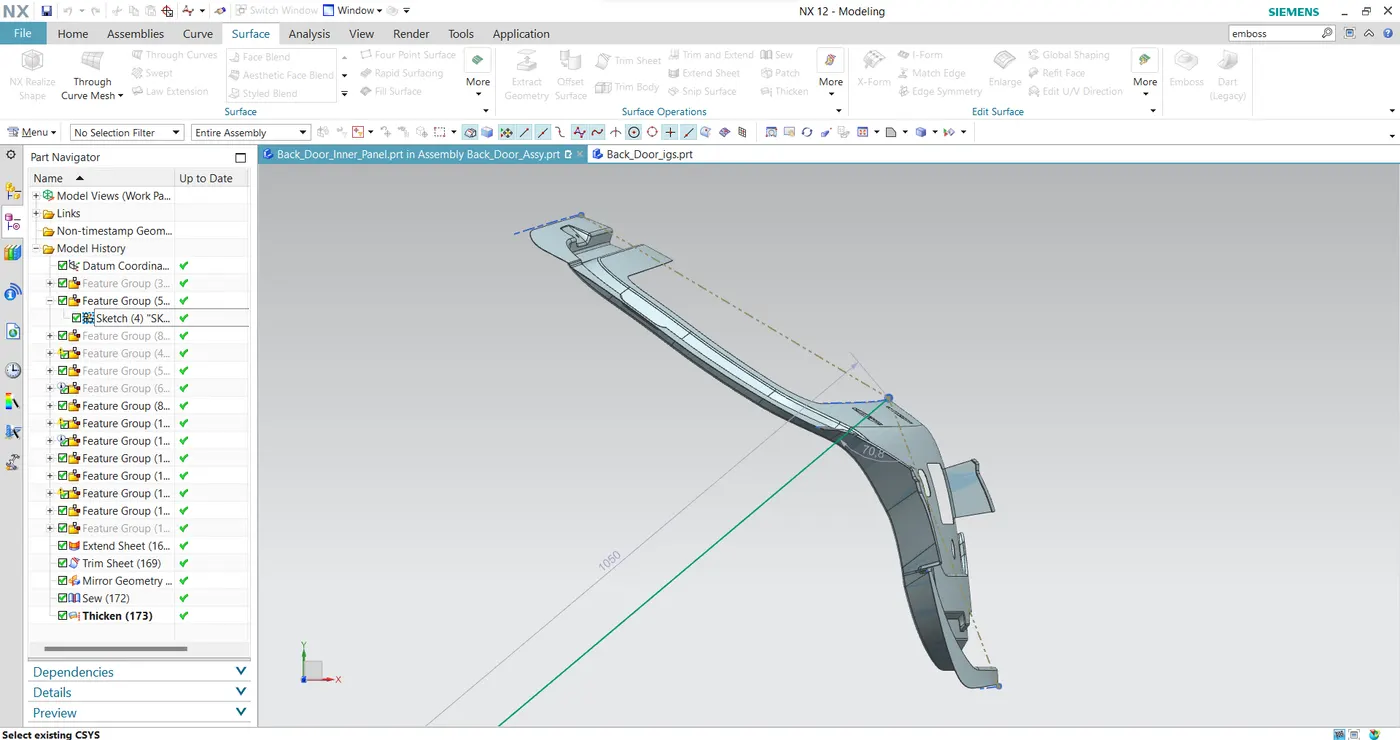
- Draw a line from left and right extrimities almost parallel to the path of the surface along the unsymmetrical axis.
- Using the Derived lines tool create a bisecting line as shown below
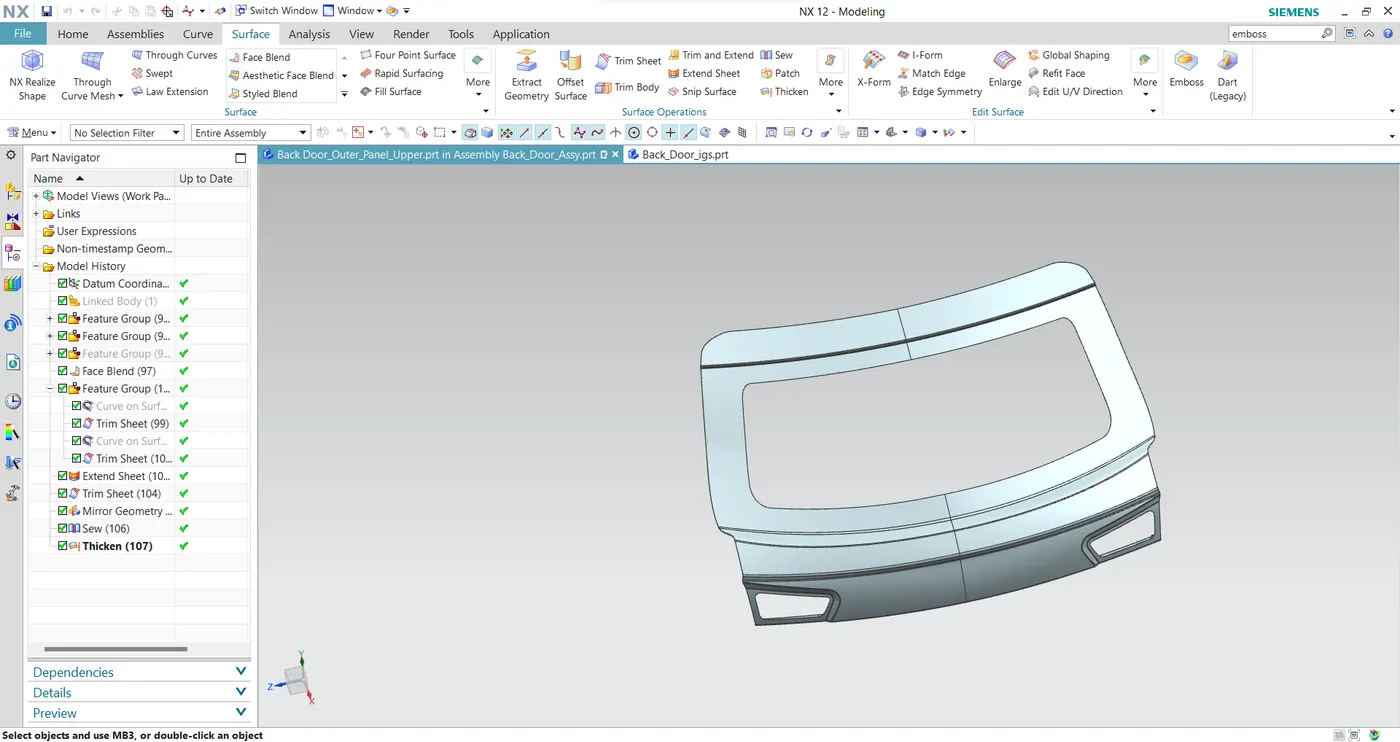
Upper panel-Upper:
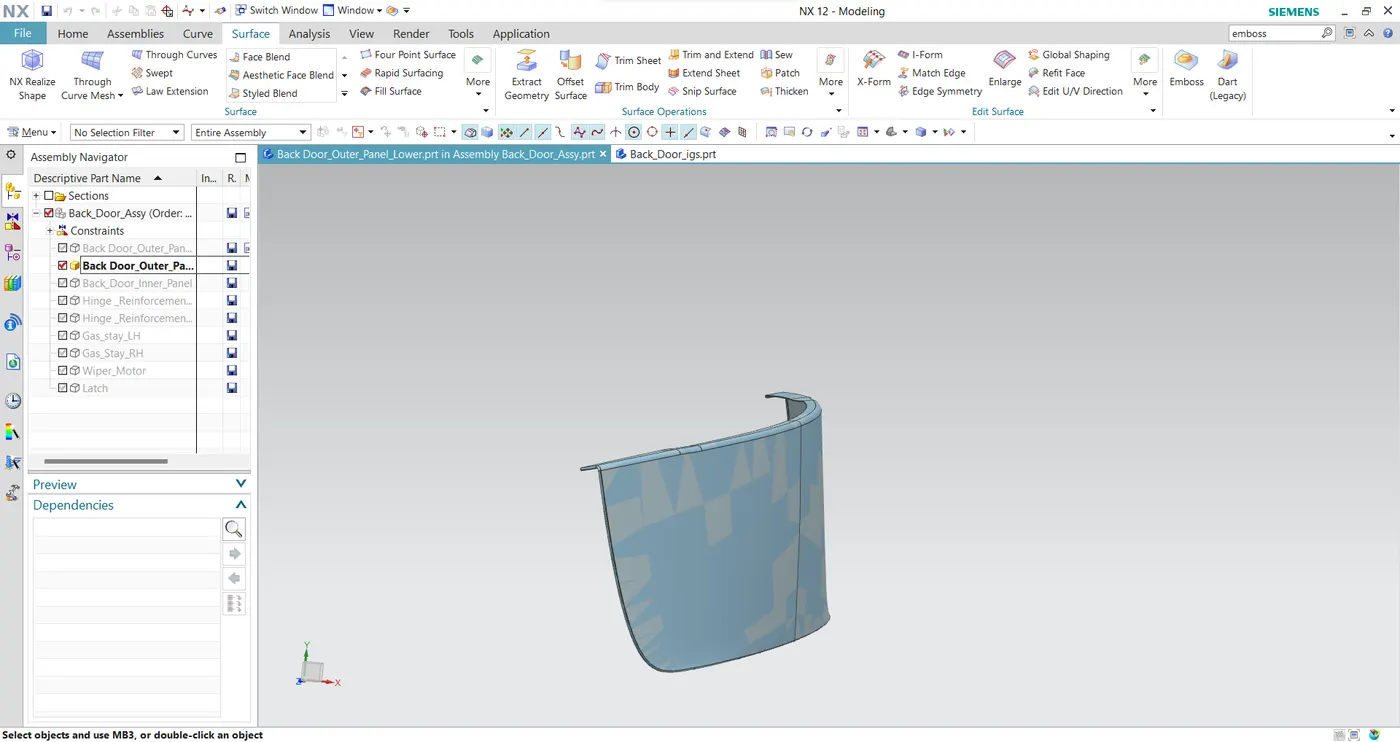
Upper Panel-lower:
INNER PANEL:
- First offset the surface to a distance of 1.7mm which will give the inner panel surface position .
- Now the sealing flange for the inner panel has to be created.
- The sealing flange created by cutting from the surface .
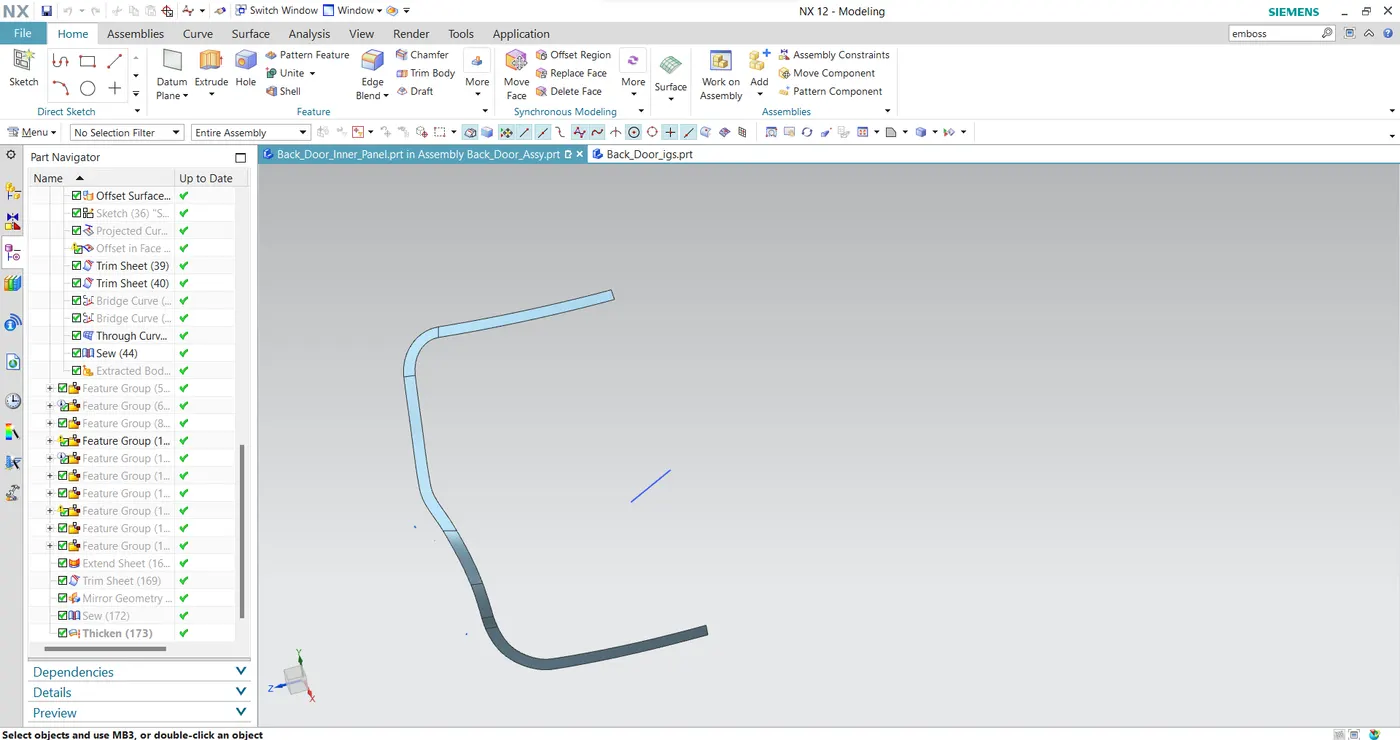
- In between the tangent tensioning can be adjusted by modifying the surface using the bridge curve tool.
- This flange has to bein adepth of 30mm from the surface.
- Now connected the flange with the surface using law extension w.r.t tooling axis and proper drat given,
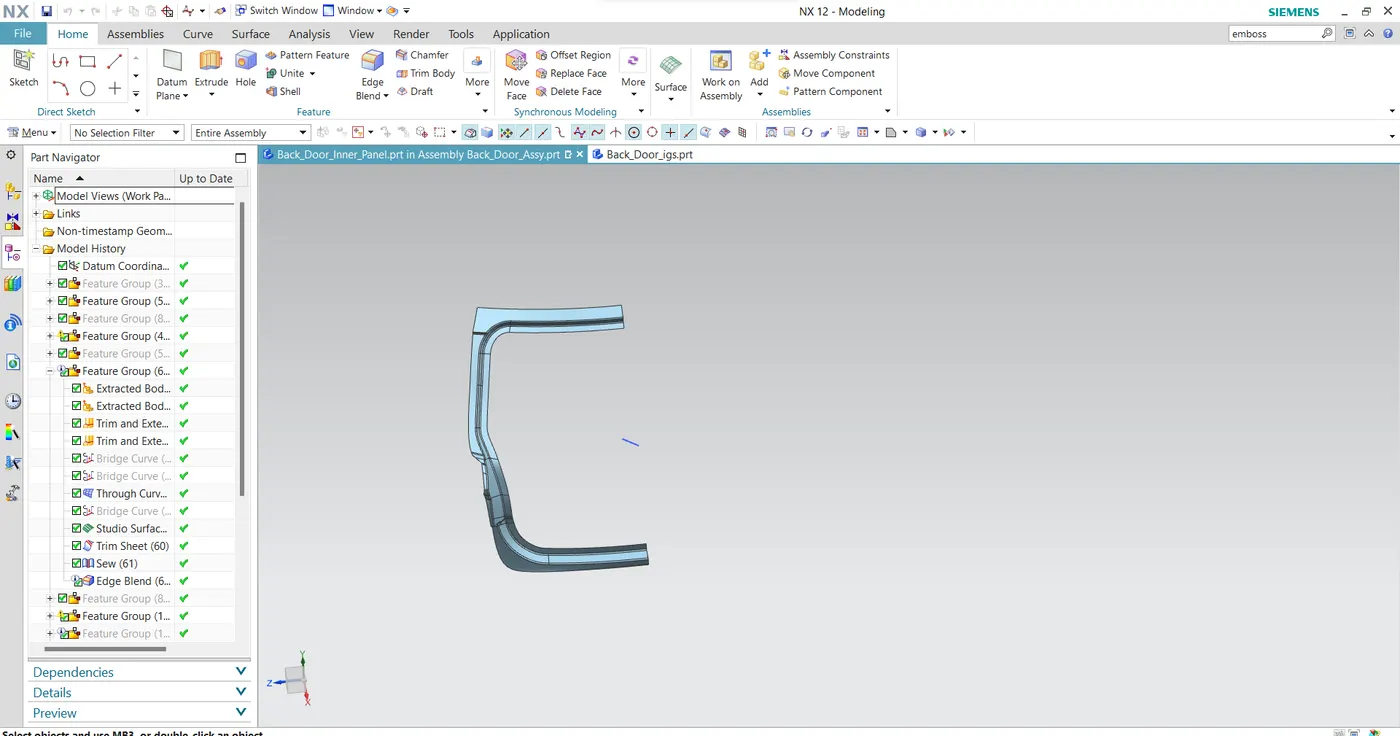
- Fillets has to be applied at each steps and check whether the surface is getting thickened or not.
- connecting the lower side of the surface by creating a surface and sew it all together.
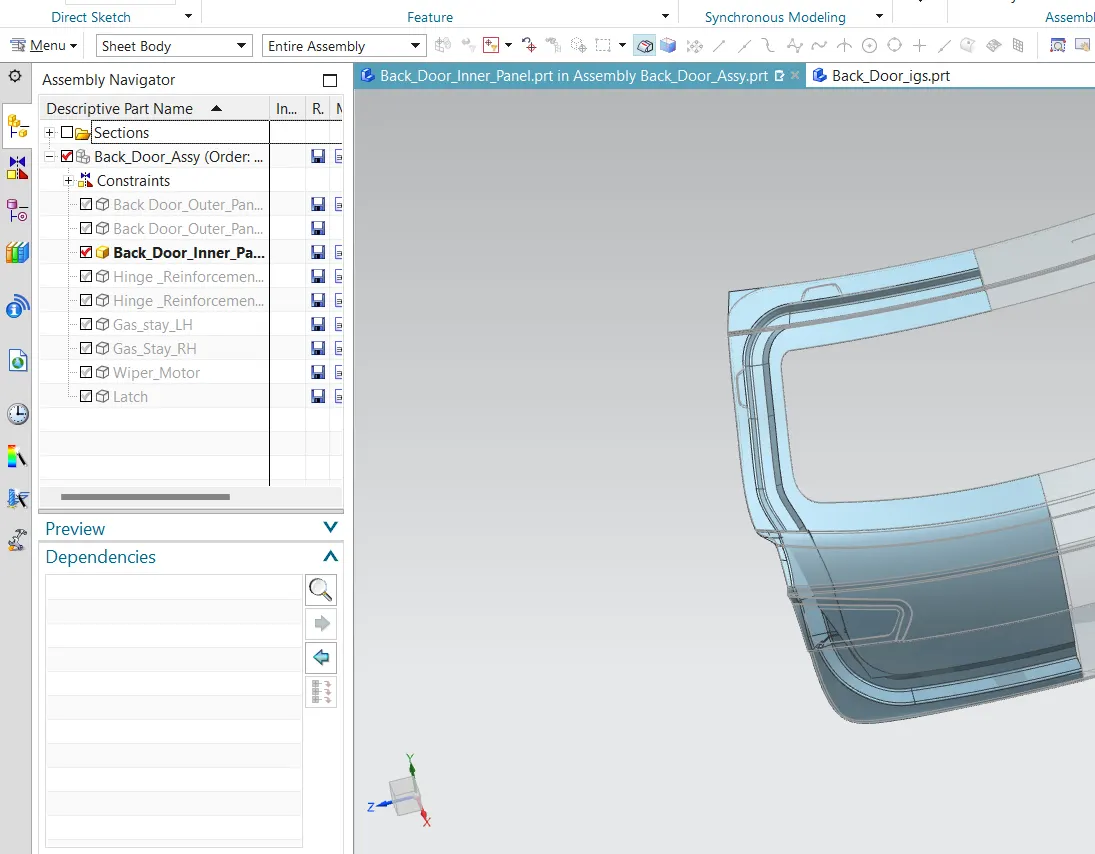
- A mastic sealant is used on the surface to connect the inner and outer panel with a gap of 5mm.
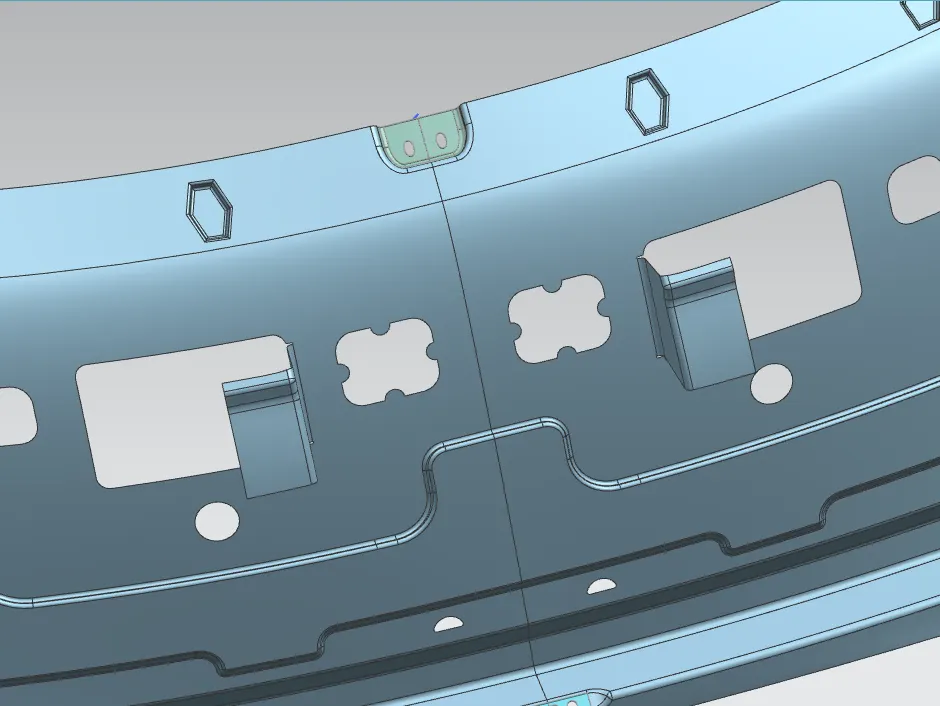
- So offset the surface 5mm downwards and create a plate from the inner panel .
- Give proper embosses and cut-outs in the surface of the inner panel .
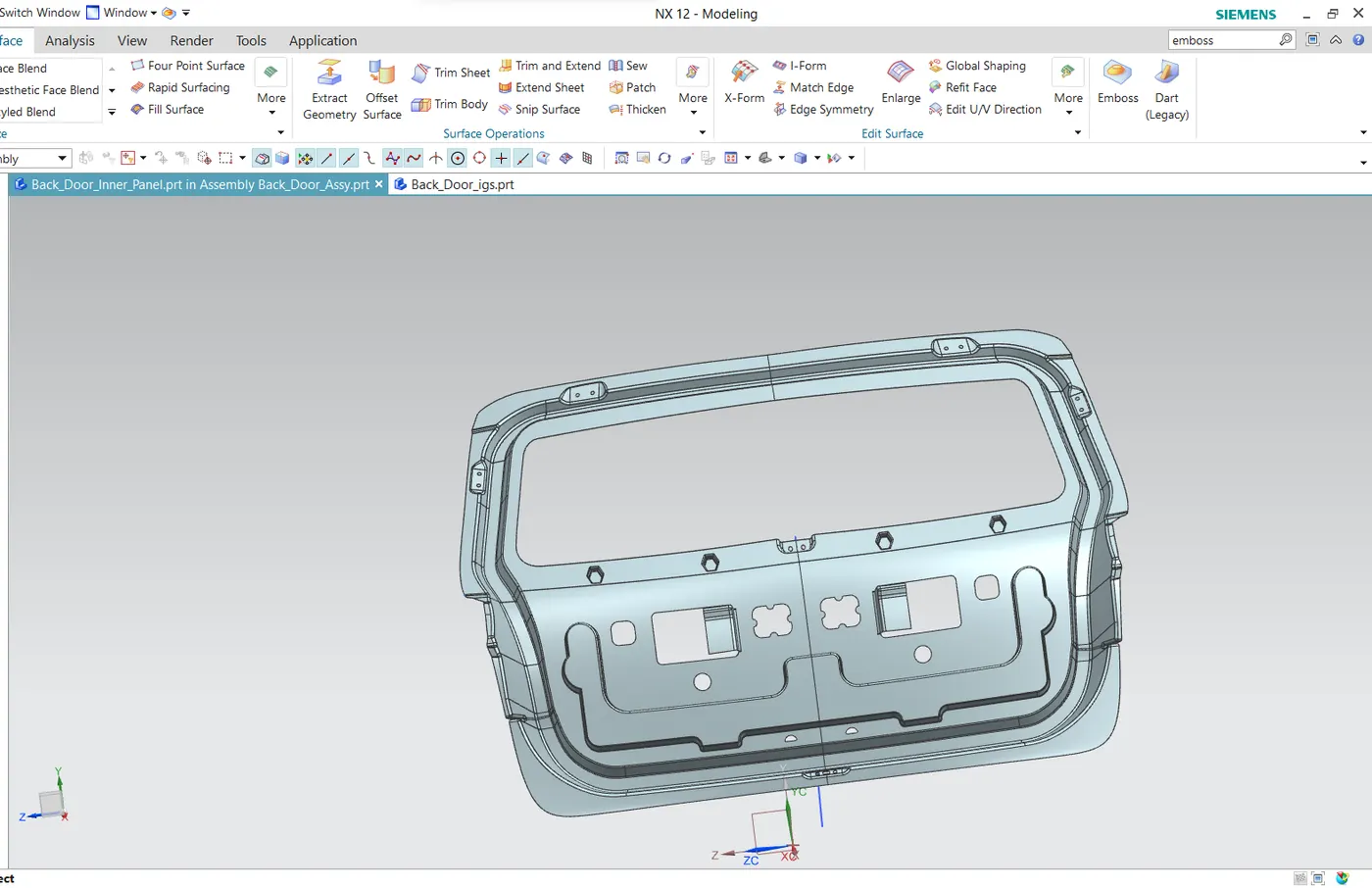
- Now embosses has to be create for the hinges ,Gas stay , latch & striker as well as the wiper motor mountings.
Latch Reinforcement:
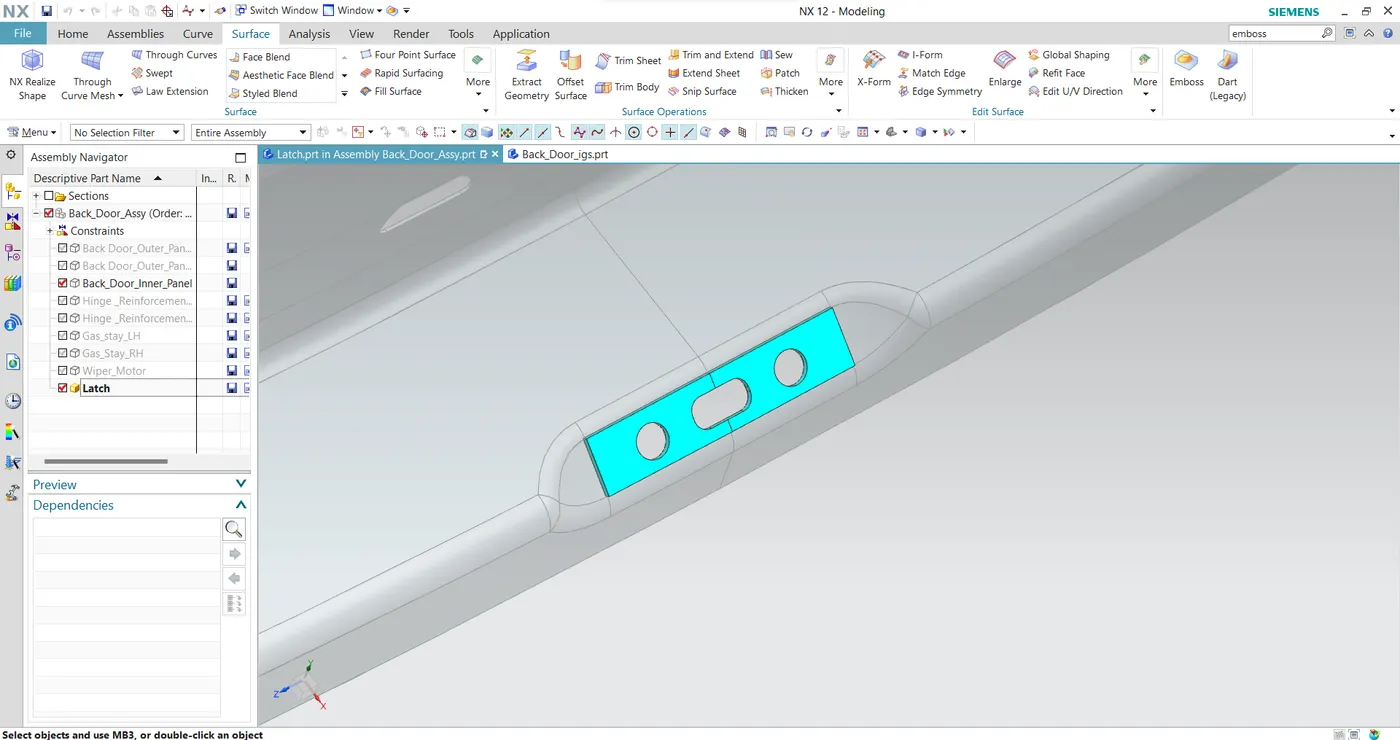
- The above latch embosse can be created witt the help of drawing trajectory for opening /closing w.r.t hinge axis.
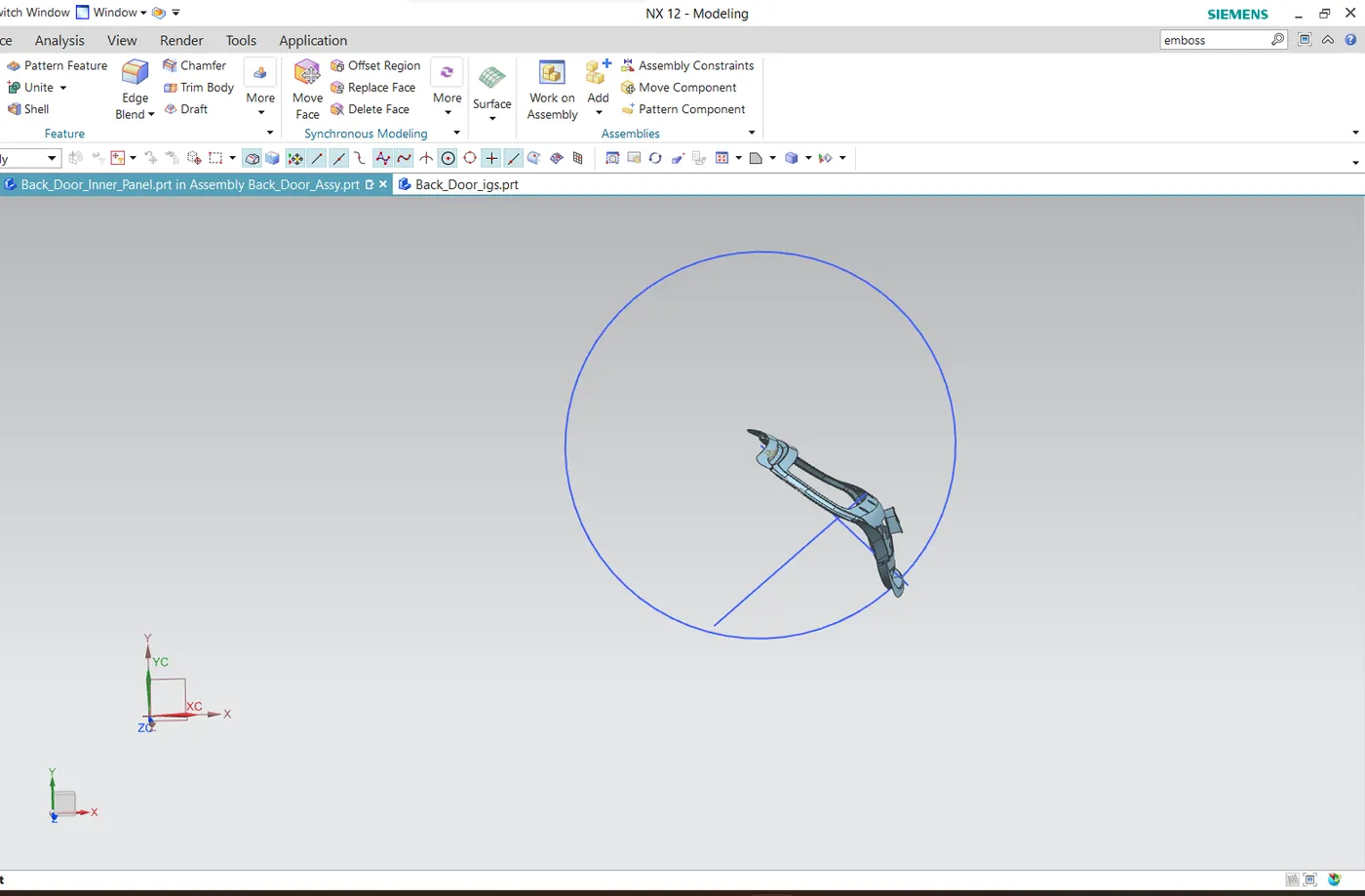
Creating Reinforcements:
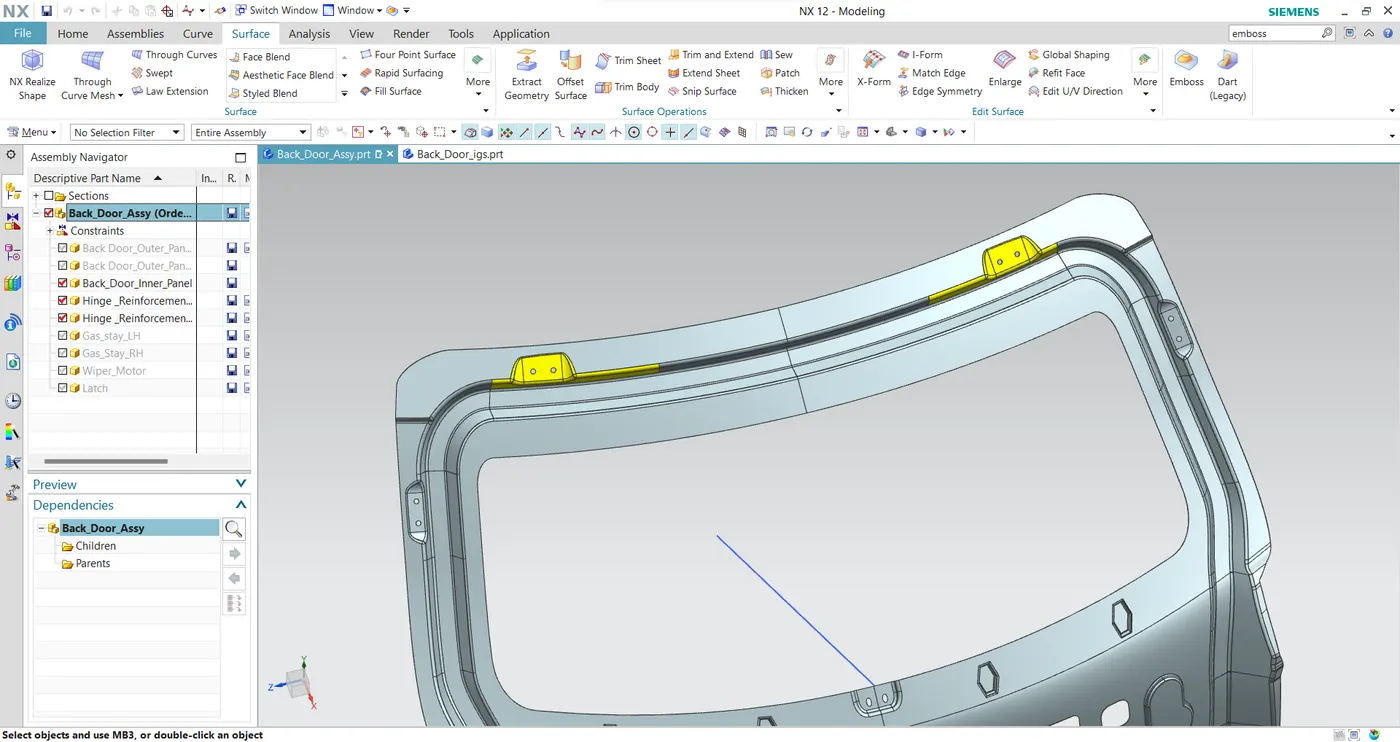
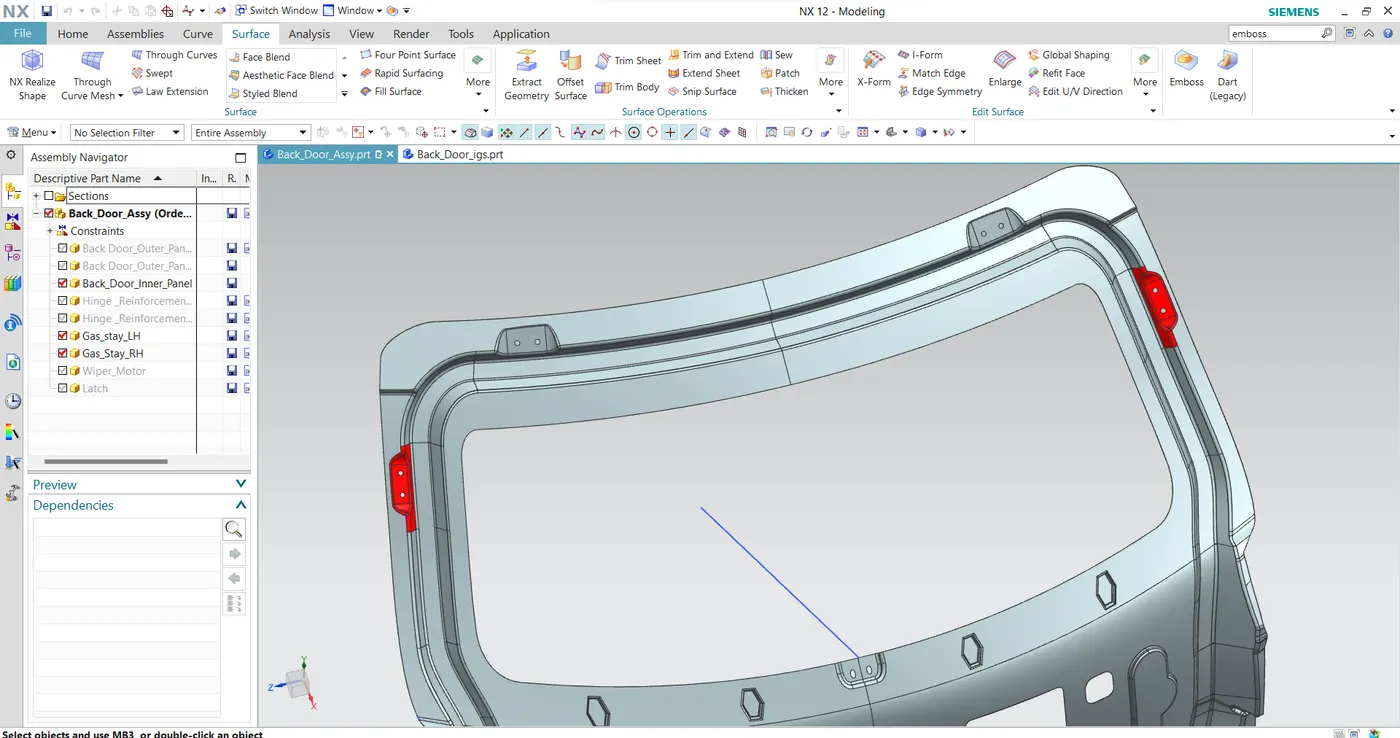
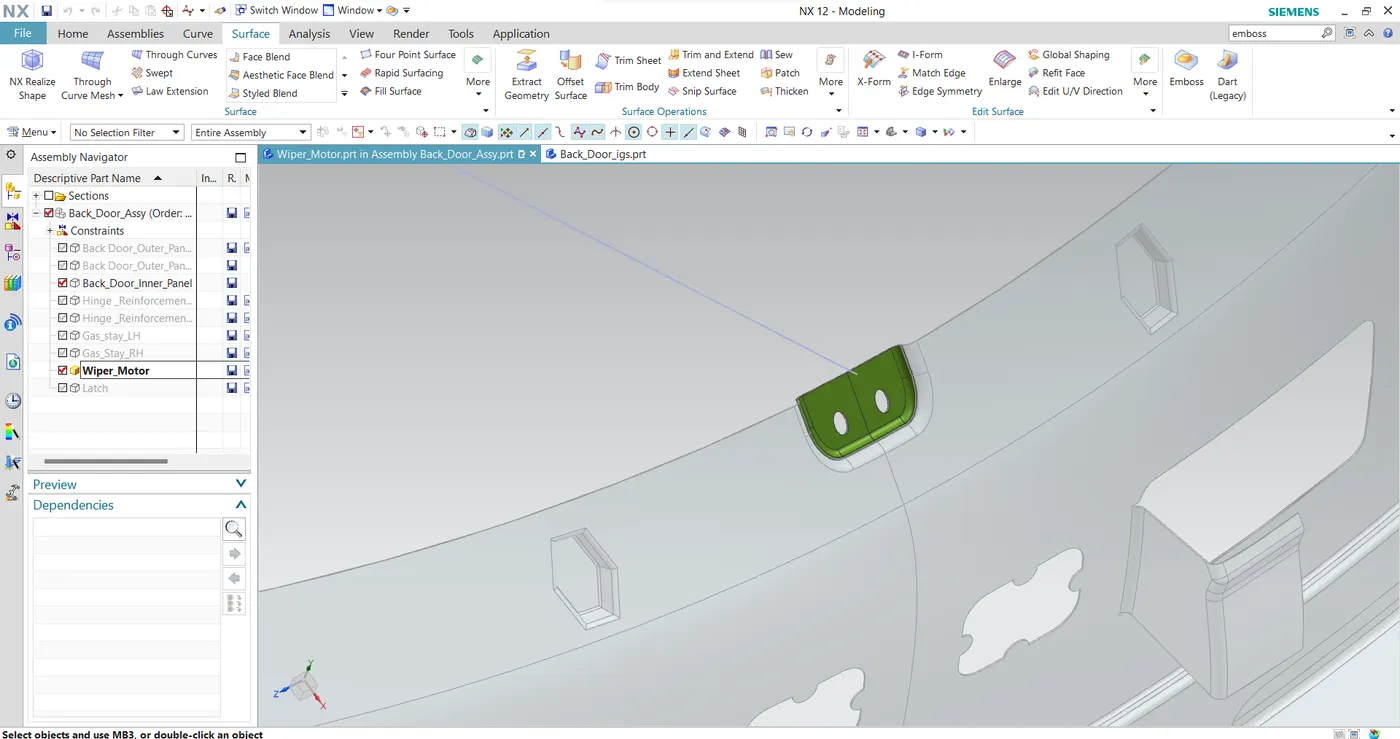
- The reinforcements can be directly offseted from the inner panel surface using the wave geometry linker and trim it.
- All reinforcements are shown below.
- Reinforcements are thicken the 1.5mm .
Hinge RH & Lh Reinforcements:
Gas Stay Reinforcements:
Wiper motor Reinforcements:
Outer Panel creation Upper:
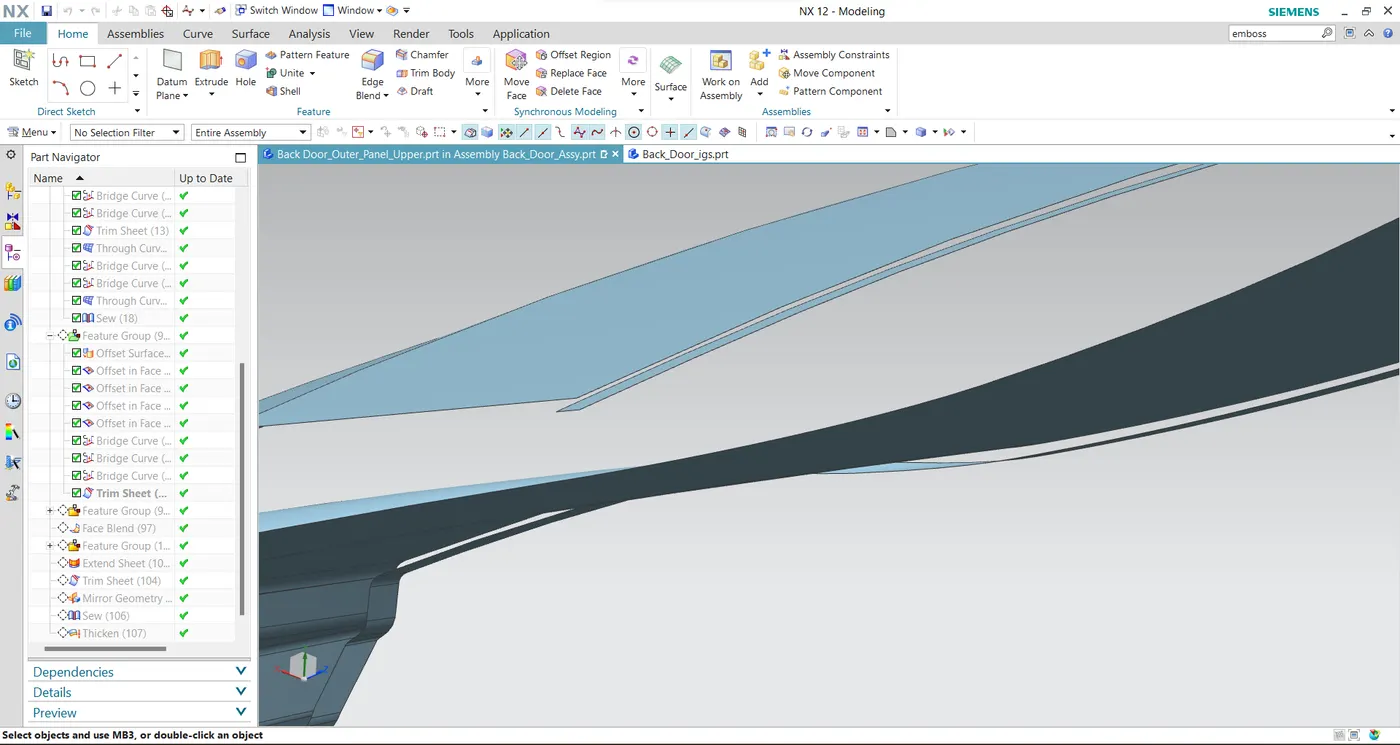
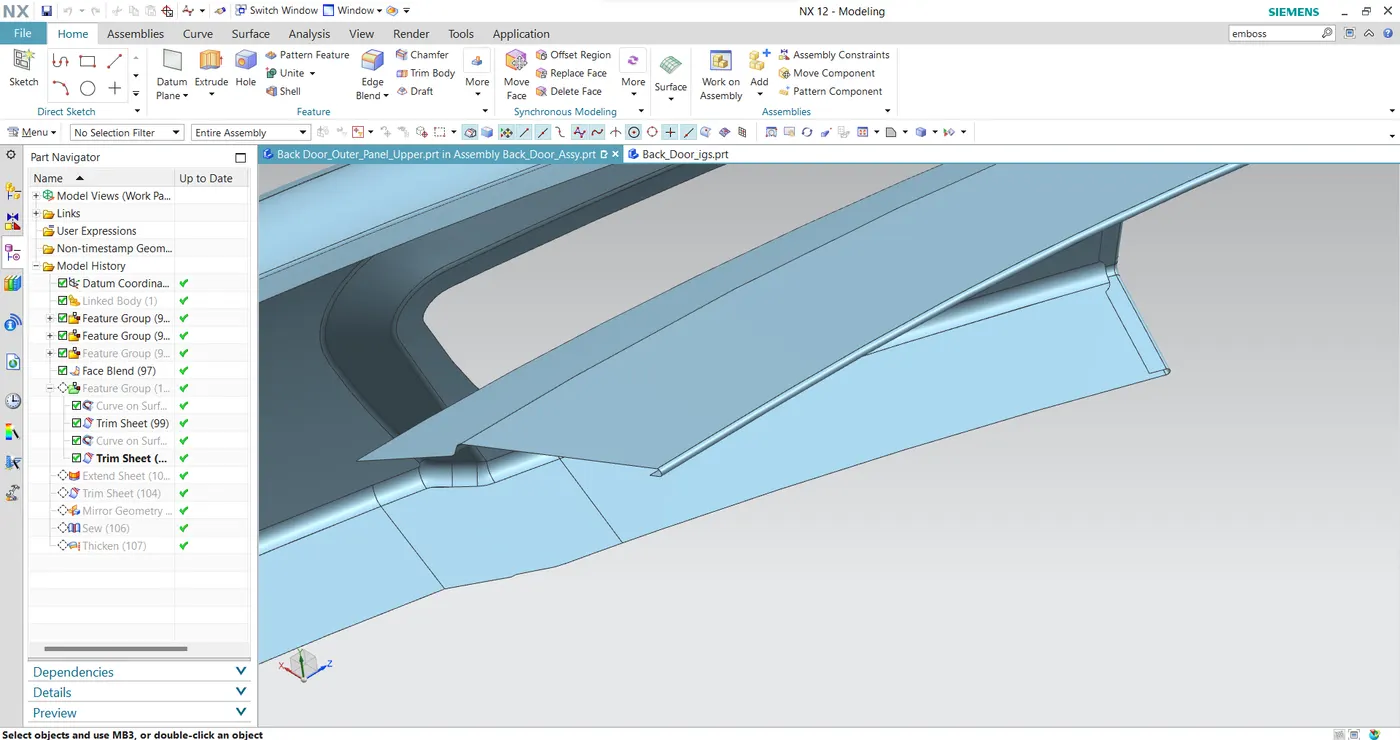
- Offset the surface to a distance of 2.65mm so we get 0.2mm of clearence can be given in between the surfaces after the hemming .
- Offset curve in face tool is used in the offset surface of 6mm and then trim it.
- Use law extension on the trimmed offset surface with 5mm value and angle of 97degree.
- Apply the three face blend on the uppersurface , offset and law extension surfaces.
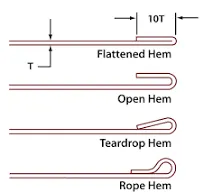
Hemming:Hemming is a forming operation in which the edges of the sheet are folded or folded over another part in order to achieve a tight fit. Normally hemming operations are used to connect parts together, to improve the appearance of a part and to reinforce part edges
In car part production, hemming is used in assembly as a secondary operation after deep drawing, trimming and flanging operations to join two sheet metal parts (outer and inner) together. Typical parts for this type of assembly are hoods, doors, trunk lids and fenders.
There are various types of hemming operations:
- 1)Conventional die hemming
- 2)Roll hemming
Conventional Die Hemming:
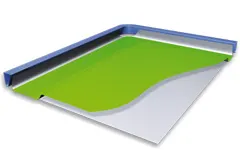
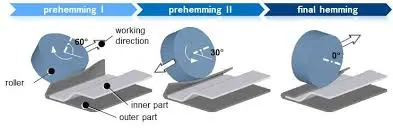
- Conventional die hemming is suitable for mass production. In die hemming, the flange is folded over the entire length with a hemming tool. Normally the actual hemming is a result of a forming operation in which the flange is formed with a hemming tool after the drawing and trimming operations have been completed. The formed flange is then hemmed in several process steps. These steps include, for example, the pre-hemming and final hemming depending on the respective opening angle of the flange. Production plants for conventional die hemming are very expensive, but the cycle times are very low.
Roll hemming:
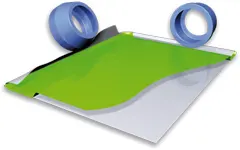
Roll hemming is carried out incrementally with a hemming roller. An industrial robot guides the hemming roller and forms the flange. Roll hemming operation can also be divided into several pre-hemming and final hemming process steps. Roll hemming is very flexible to use and tool costs are significantly lower as compared to those of conventional die hemming. However, the cycle times are much higher since the hemming is realized using a hemming roller which follows a defined path.
Open Hemming:
In an open hem, the returning flange is folded over the sheet metal but there remains an air pocket between the two. The bend angle in this hem type is also 180 degrees.
Tear Drop Hemming:
In a teardrop hem, the returning flange is bent beyond 180 degrees. The resulting shape resembles a teardrop.
It is perfect for materials that do not have the required ductility to provide closed hems. Teardrop hems are used for fragile materials such as aluminium.
Flat or Closed Hemming:
In a flat or closed hem, the part of the edge that bends sits completely flush over the rest of the metal sheet. The angle between the returning flange and the sheet metal is 180 degrees. The inside radius is zero and thus, there is no gap between the returning flange and the metal sheet.
Closed hems require a lot more power and tonnage from the presses than open or teardrop hems and it is also not advised for metal sheets that are over 2-3mm in thickness since the sheets are likely to fracture.
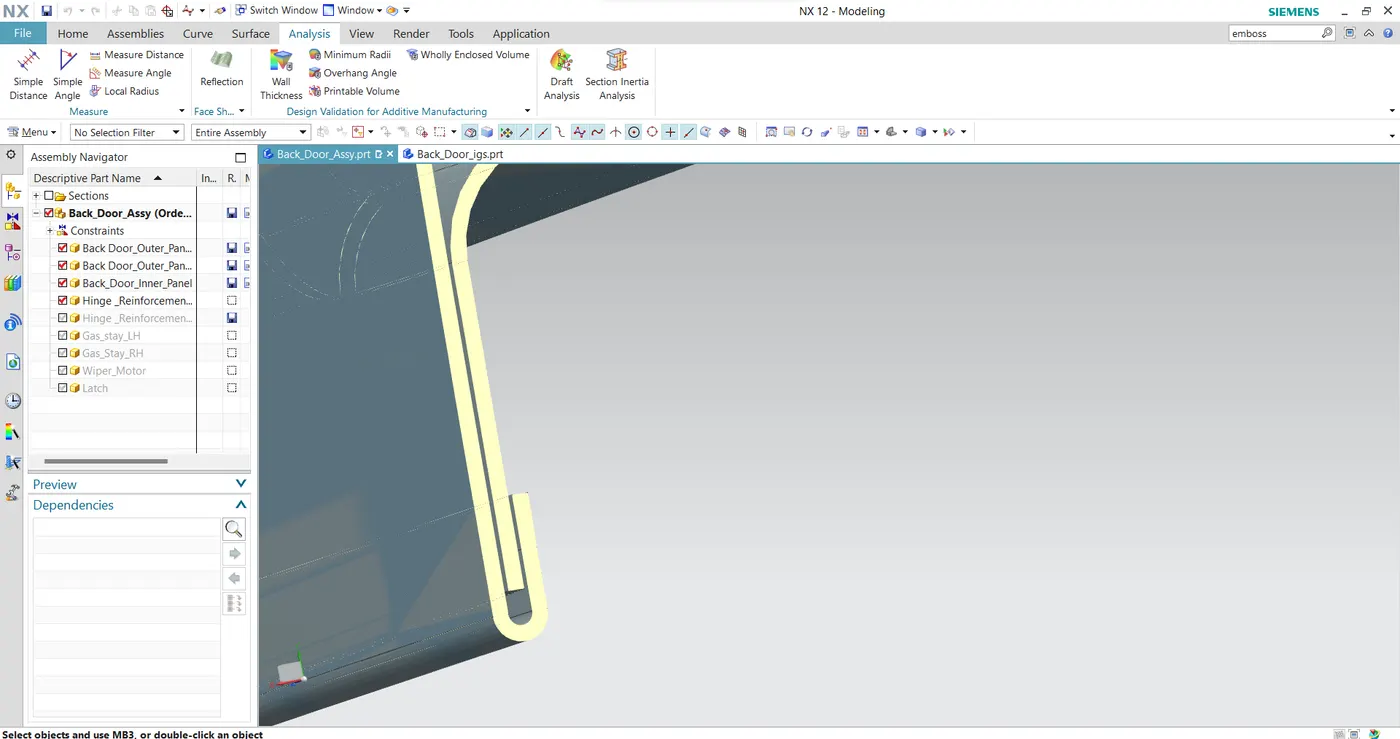
- Create the hemming using through Three Face Blend, curve mesh or swept tool inthe surface panel .Surface must have tangent continuity.
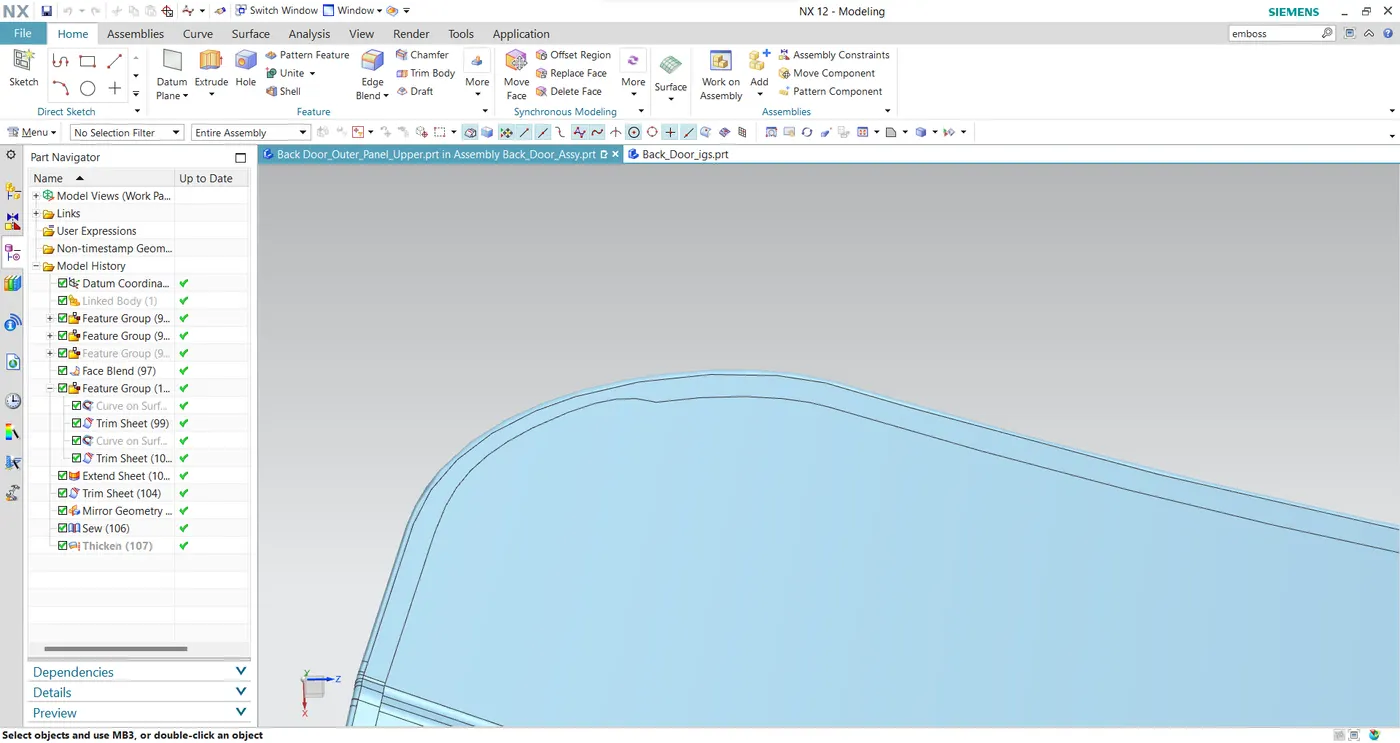
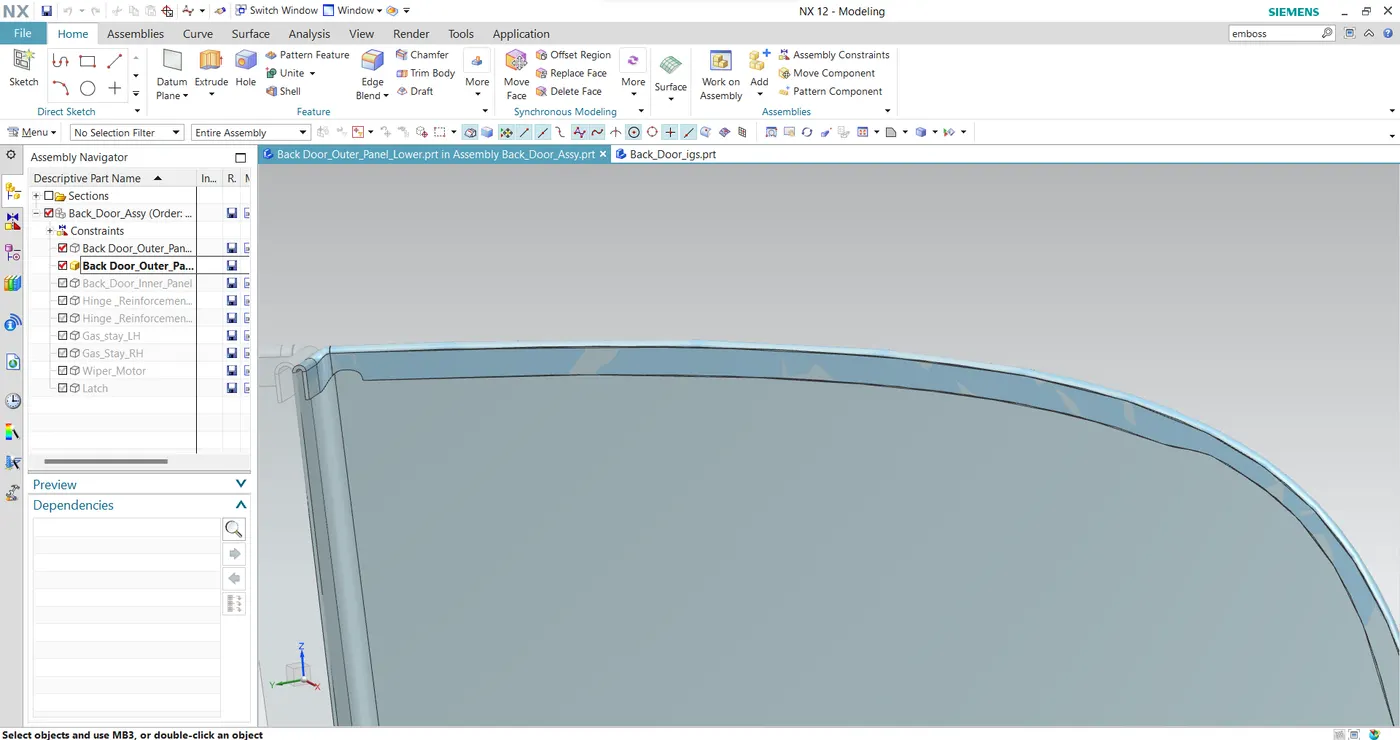
- Reliefs has to be given in the corner areas for the easy manufacturability using the tool of curve on surface.
Upper creation of Lower panel:
- Offset the surface to a distance of 2.65mm so we get 0.2mm of clearence can be given in between the surfaces after the hemming .
- Offset curve in face tool is used in the offset surface of 6mm and then trim it.
- Use law extension on the trimmed offset surface with 5mm value and angle of 97degree.
- Apply the three face blend on the uppersurface , offset and law extension surfaces.
Relief upper-upper panel:
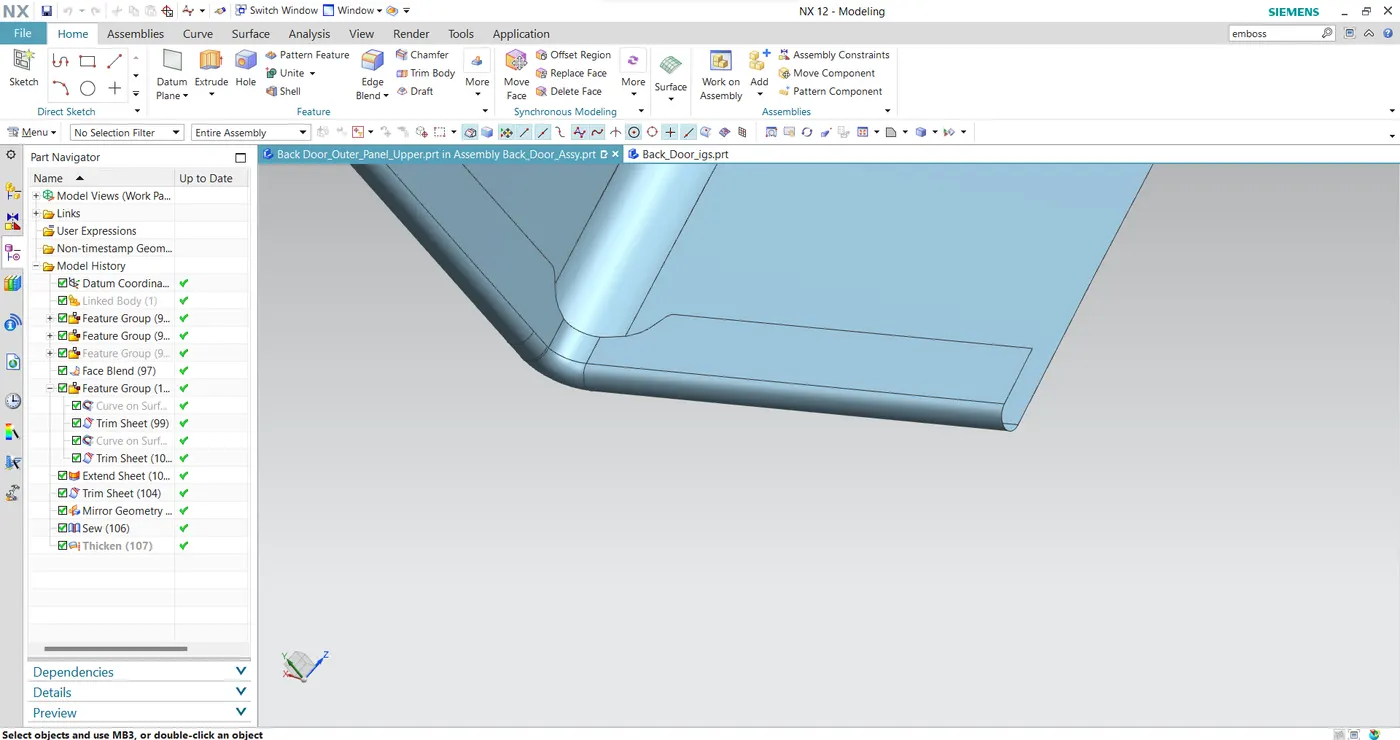
Relief upper-lower panel:
Draft Analysis:
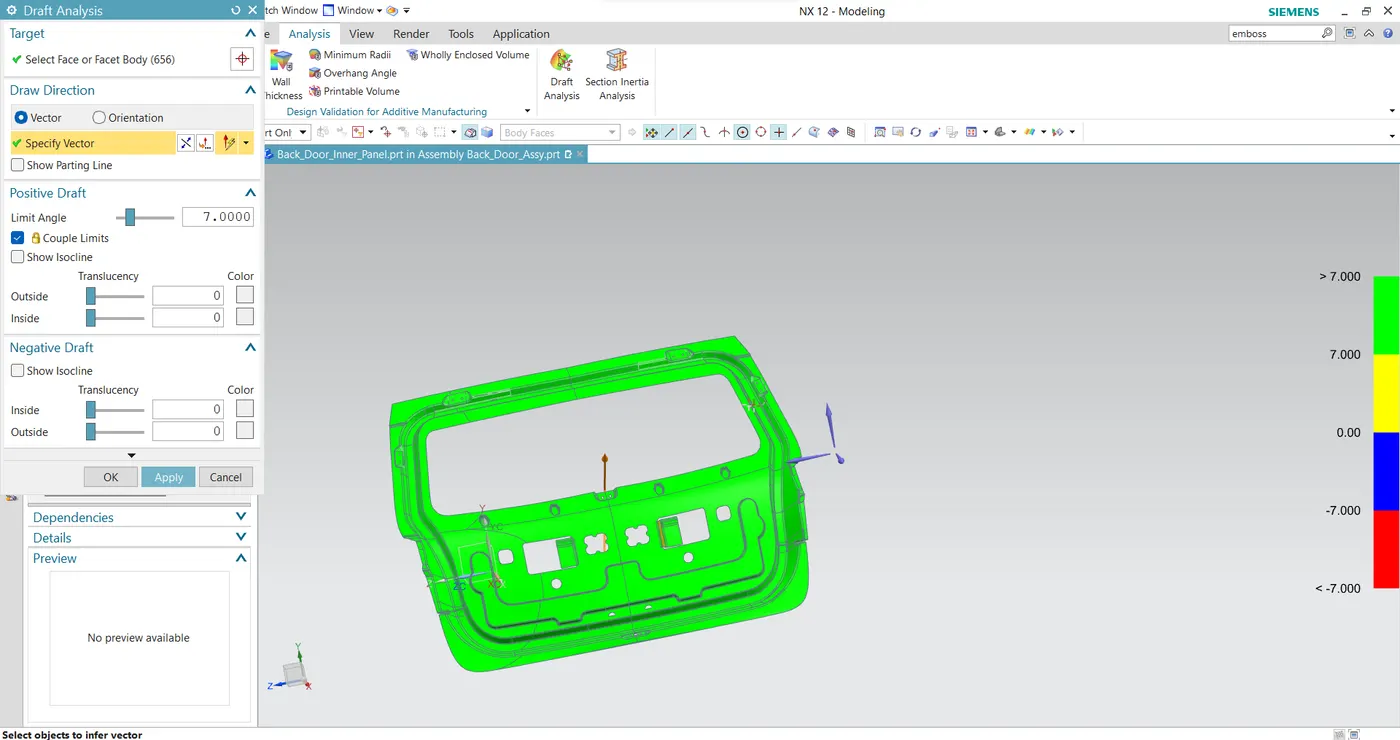
Using Draft analysis tool select the body with body faces given draft angle as 7degree minimum and vector as tooling direction .
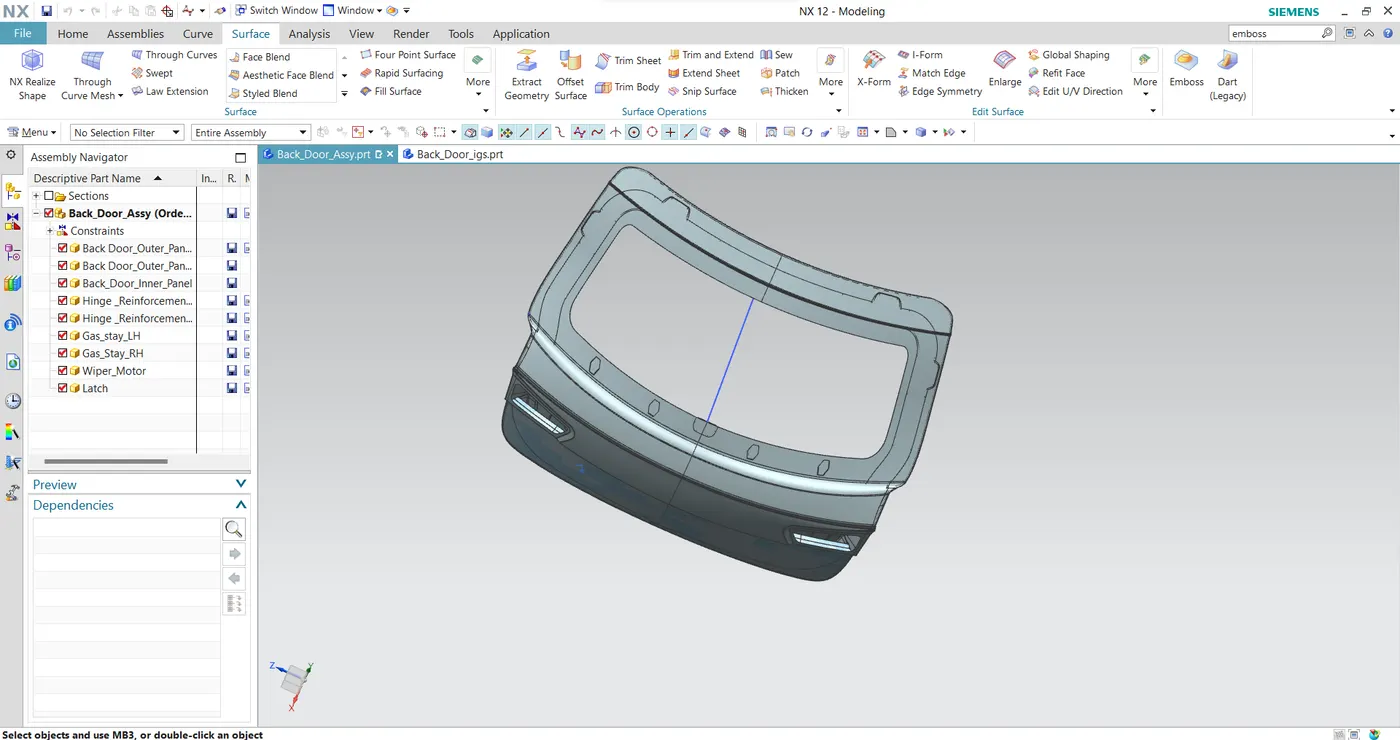
Conclusion:
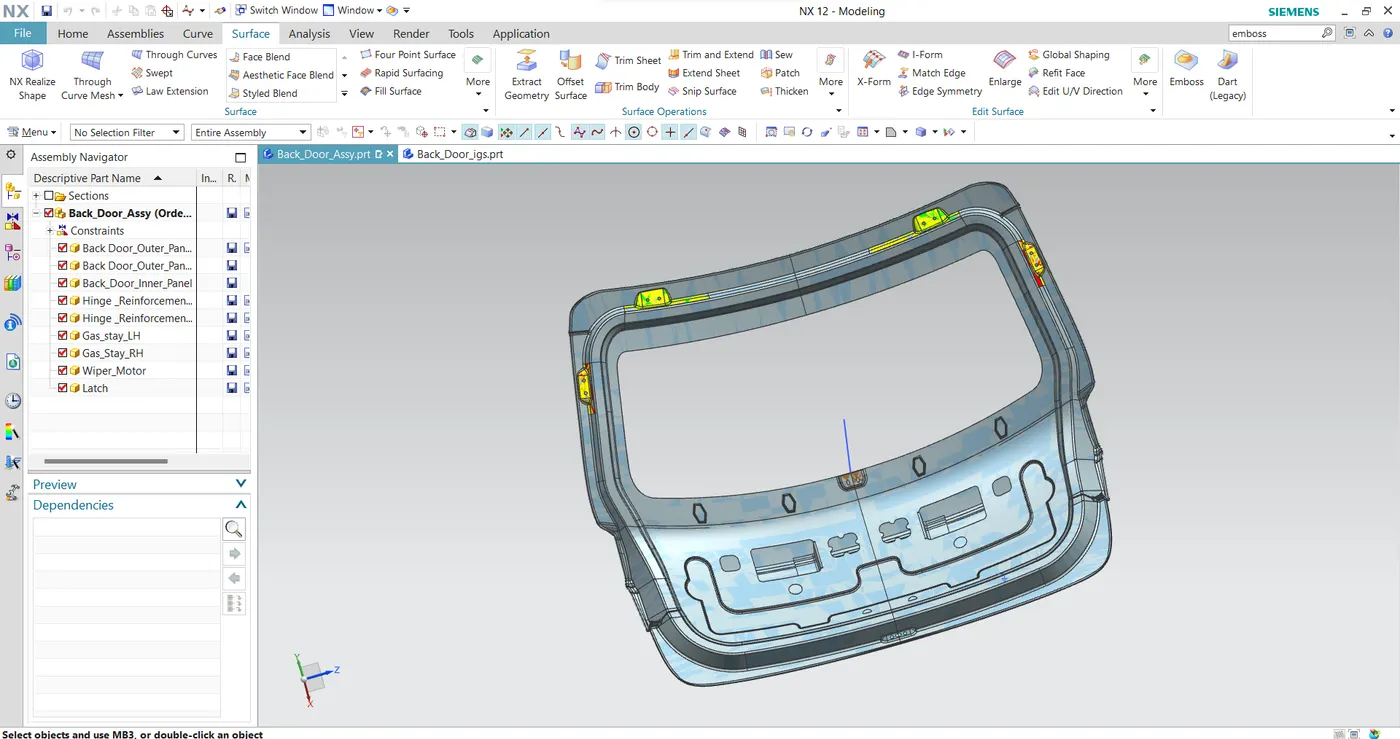
Thus the design of Back door was designed and developed from the given styling surfaces with essential reinforcements and emboss to satisfy the manufacturing requirements draft analysis also done on the inner panel.
Note:
File size was more than 20Mb after converting the zip file also than contact our mentor they gave a suggestion to upload a google drive link .So i was attached a link to this report.
https://drive.google.com/file/d/1VwGdbEXXZEh27Y3S_yix1nrJe-6DHbki/view?usp=sharing