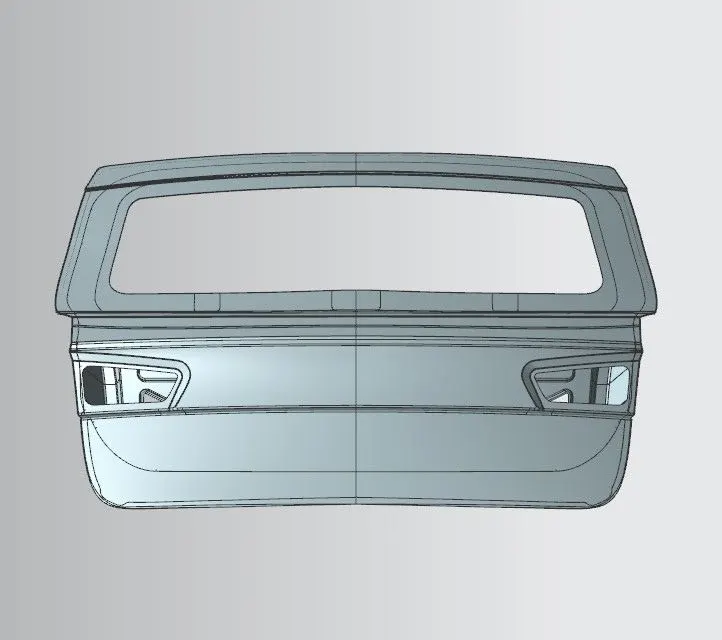
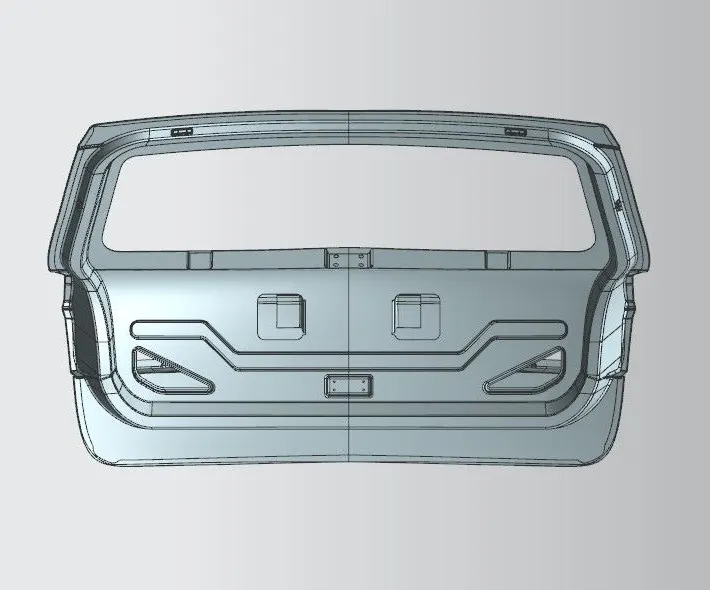
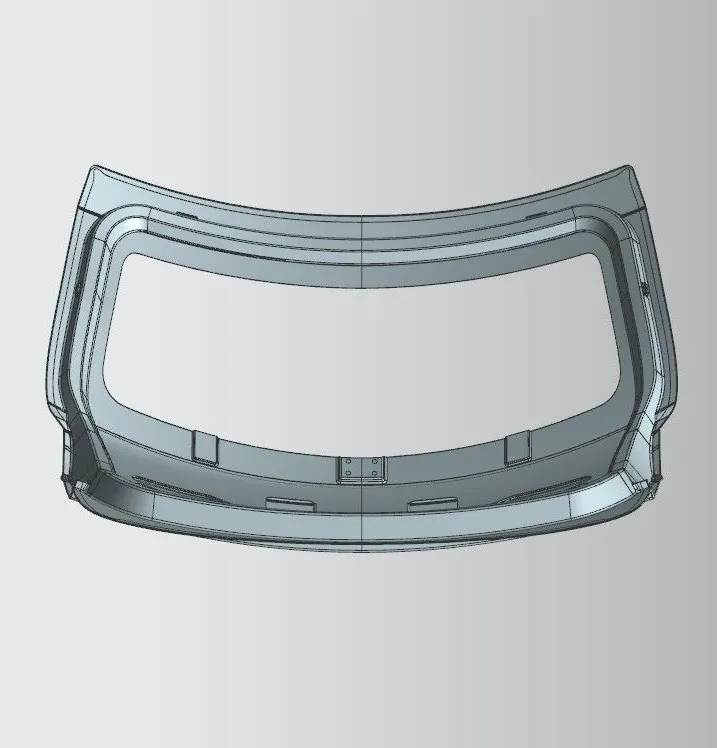
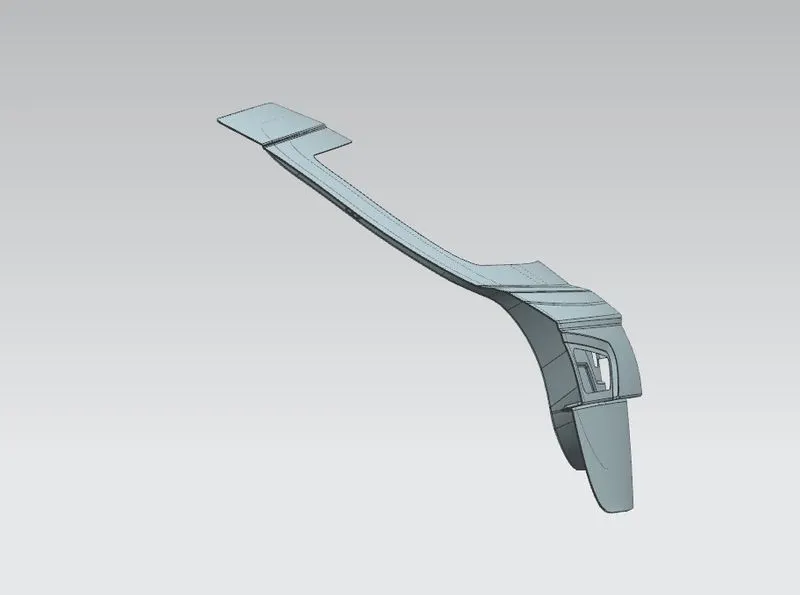
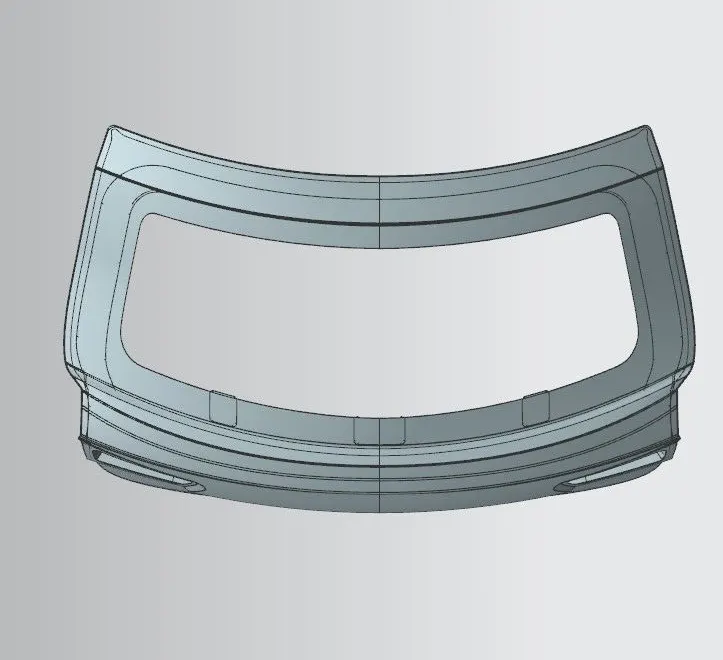
Design of backdoor
Designing Of Car Back Door
A tailgate or Back door, is a hinged board or door at the rear of a vehicle that can be moved up or down during loading and unloading. Also called as tailboard, it is commonly found in pickup trucks or hatchback vehicles
Design considerations for sheet metal to make manufacturing success
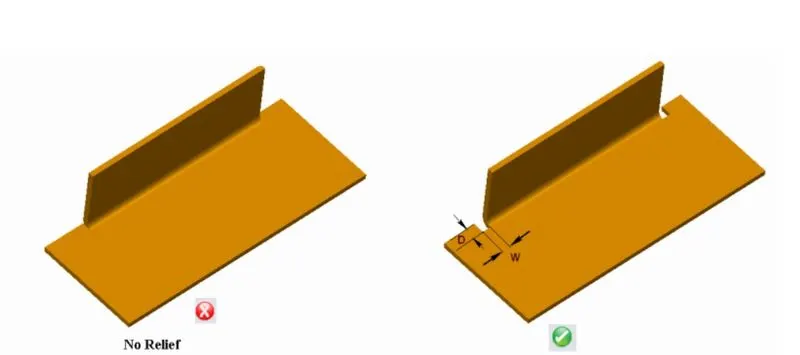
Bend Relief Parameters: When a bend is made close to an edge, the sheet metal may tear unless bend relief is given. Bend relief helps in controlling the sheet metal material behaviour and prevents unwanted deformation when a bend does not extend the entire length of a part.It is recommended to use rectangular relief. The minimum depth (D) of a bend relief should be equal to the material thickness plus the radius of a bend. The minimum width (W) of a bend relief should be equal to 1.5times the material thickness
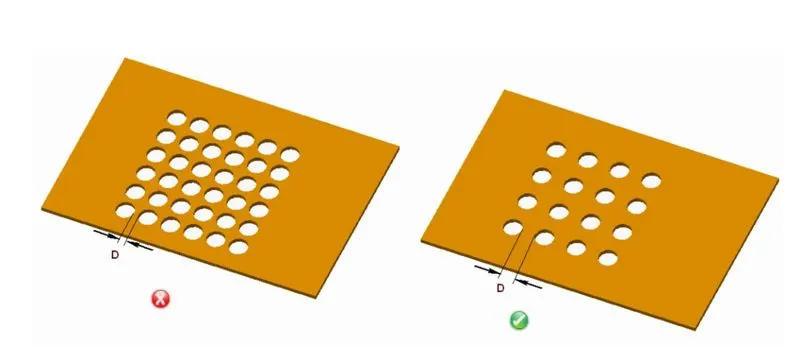
Spacing between holes: It is recommended that minimum distance between the holes in a sheet metal should be equal to 1.2 times the material thickness.
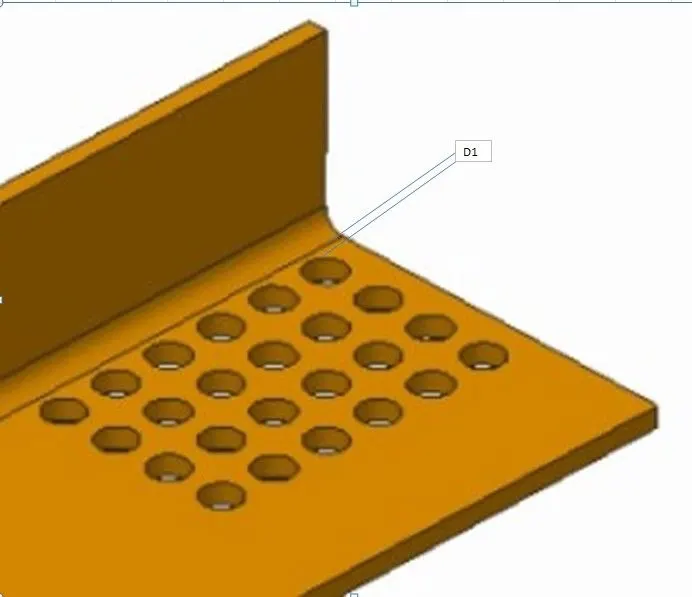
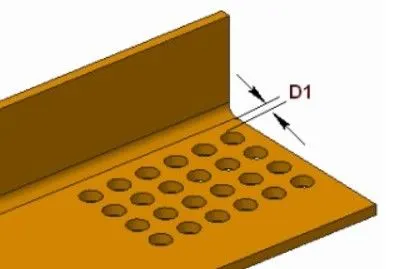
Hole to bend distance: When a bend is made too close to the hole, the hole may become deformed. So, it is recommended that the minimum distance from the edge of a circular hole to a bend should be 3 times the material thickness.
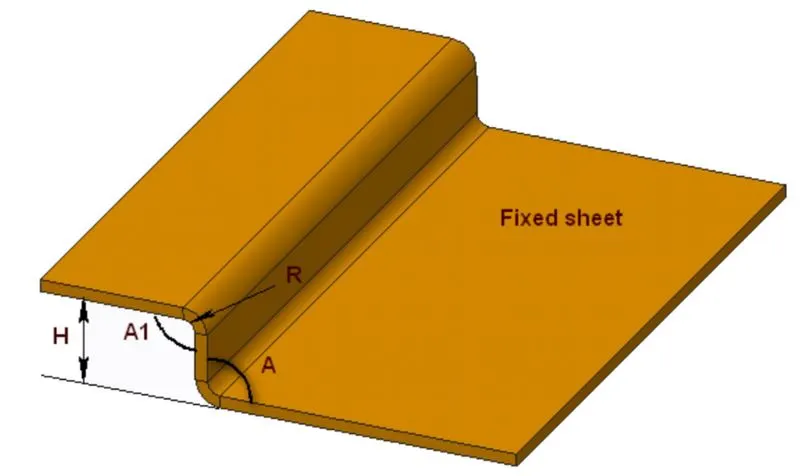
Offset Bend Parameters: An offset bend, also called as joggle is made up of two very short bends formed simultaneously. It is used to joggle other sheet metal surface or overlap of a sheet. So, it is recommended that the bend angles (A1) should be obtuse angles or right angles and the maximum height (H) of an offset bend should be five times of the material thickness.
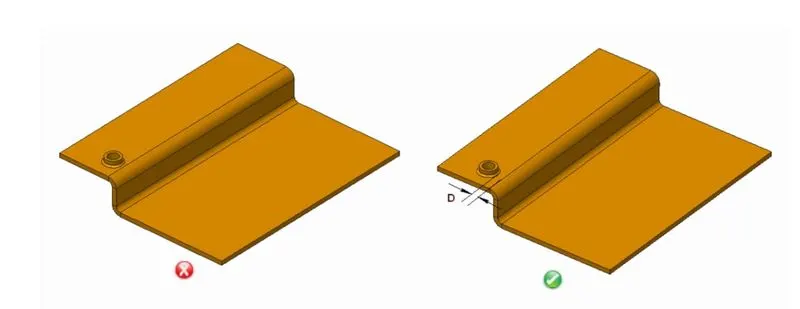
Distance between offset bends and extruded hole: The minimum recommended distance from the bend’s inside surface to the major diameter of extrusion should be equal to 2.5 times the material thickness.
Tools and features used in designing of back door.
- Law of extension: Law of Extension creates flanges or extensions when a particular direction is important or when it is necessary to reference the existing face.
- Embossing: Emboss command use to create an embossing by modify a body with faces made by projecting a section along a vector, with options for end cap location and shape.
- Trim Sheet: Trim sheetcommand use to trim off a portion of a sheet body using curves, faces, or datum planes.
- Bridge curve: The bridge curvesare perpendicular to the surface edge at the intersection point
- Face Blend: Face Blendis primarily used to blend between faces of separate bodies. It can also be used to blend between faces of a single body.
- Swept: Swept command is used to create a body by sweeping a section along one or more guides using various options the shape along the guide.
- Through curve mesh: Through Curve Mesh command is used to create a body through a mesh of sections in one direction, and guides in another direction, where the shape fits through the mesh of curves. This command uses sets of primary curves and sets of cross curves to create a bi-cubic surface. Each set of curves must be contiguous.
Design considerations
- Embosses are provided to increase the strength and minimum draft angle is provided to satisfy drawing process.
- Ribs are provided at required areas to add extra support and to avoid spring back.
- Minimum 5mm flat surface is maintained around mounting holes.
- Every sharp corner is provided with radius (filleted) to avoid the stress accumulation.
Various processes involved in car back door manufacturing are:
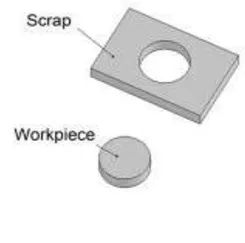
- Blanking: It is a metal fabrication process, in which a metal work piece is removed from the primary metal strip or sheet when it is punched. The material that is removed is used as new metal work piece or blank.
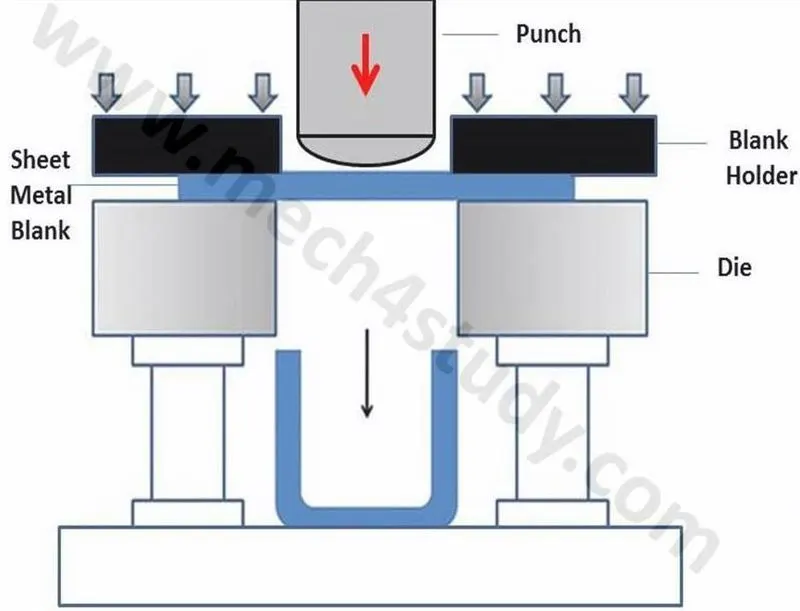
- Drawing: Deep drawingis a sheet metal forming process in which a sheet metal blank is radially drawn into a forming die by the mechanical action of a punch. It is thus a shape transformation process with material retention. The process is considered "deep" drawing when the depth of the drawn part exceeds its diameter.
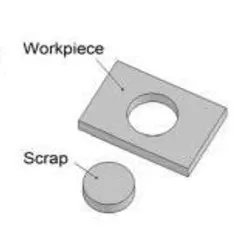
- Piercing: It is a shearing process, here raw material pierced with a machining tool, resulting in the creation of hole.
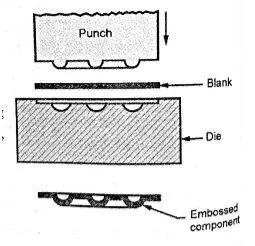
- Embossing: It is a stamping process for producing raised or sunken designs or relief in sheet metal.
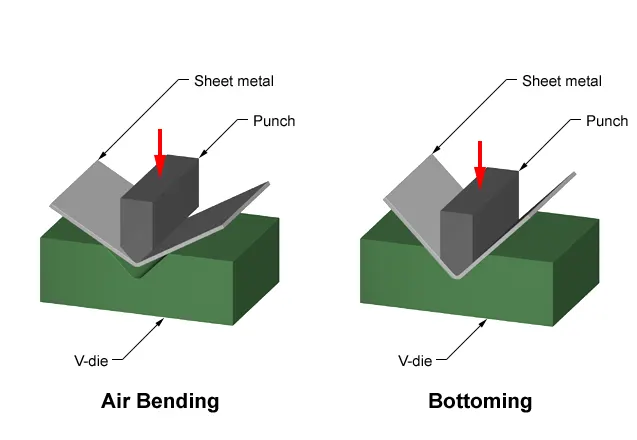
- Bending: Bendingis a manufacturing process that produces a V-shape, U-shape, or channel shape along a straight axis in sheet metal.
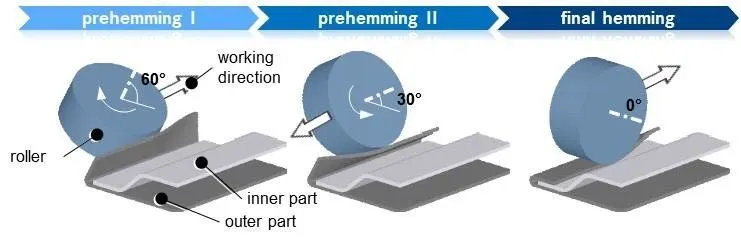
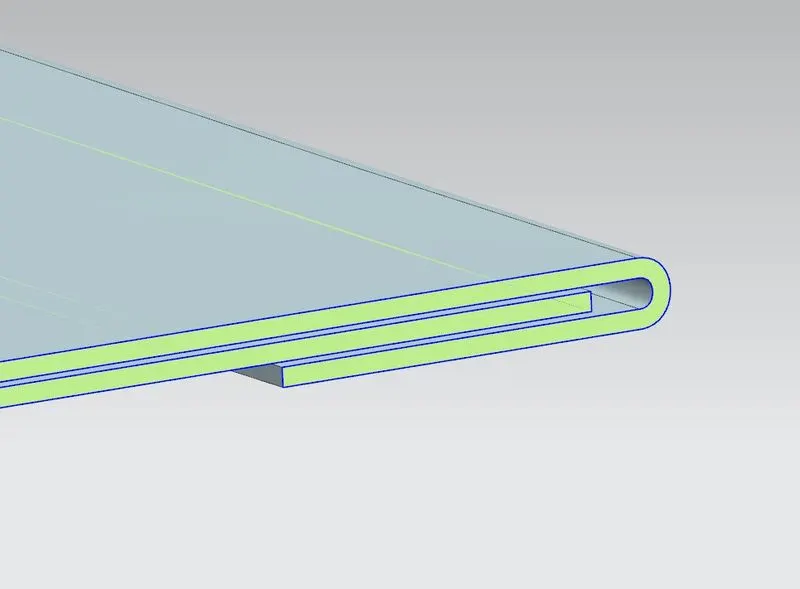
- Hemming: It is the process in which the edge is rolled onto itself. Hems are commonly used to reinforce an edge, hide burrs or rough edges and improve appearance.
Parts Required for Car Back Door Assembly
- Back Door Outer Panel
- Back Door Inner Panel
- Hinge
- Striker
- Reinforcements
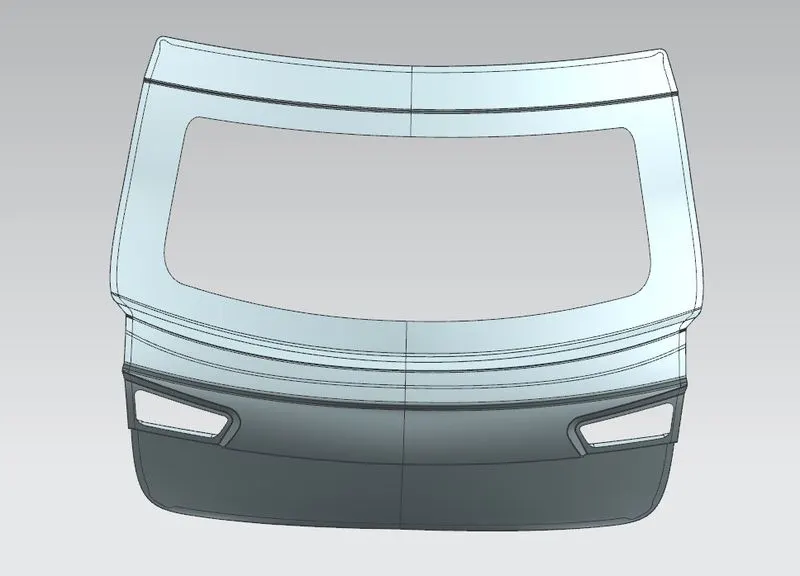
Back Door Outer Panel: Back Door outer panel is the styling surface also called as cover of inner panel, it gives luxurious look to the Back Door.
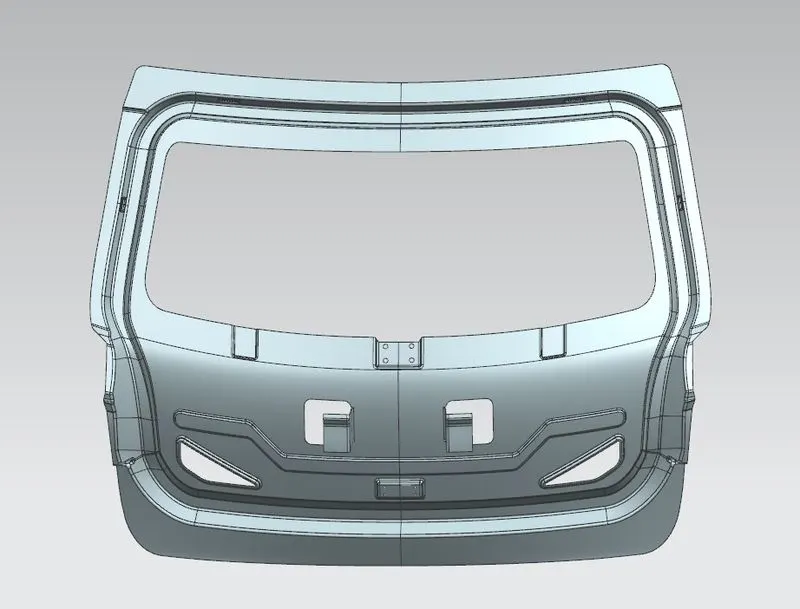
Back Door Inner Panel: Back Door inner panel is reinforcement for hood outer panel and it provides strength to the Back Door.
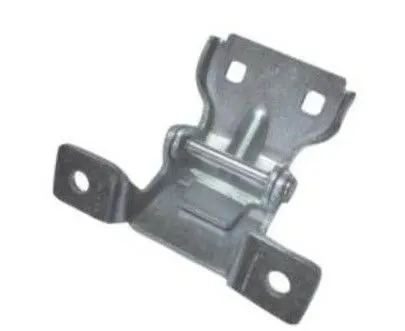
Hinge Assembly: Hinge assembly provides Back Door opening and closing mechanism.
Striker: Striker provides locking and unlocking mechanism for the Back Door assembly.
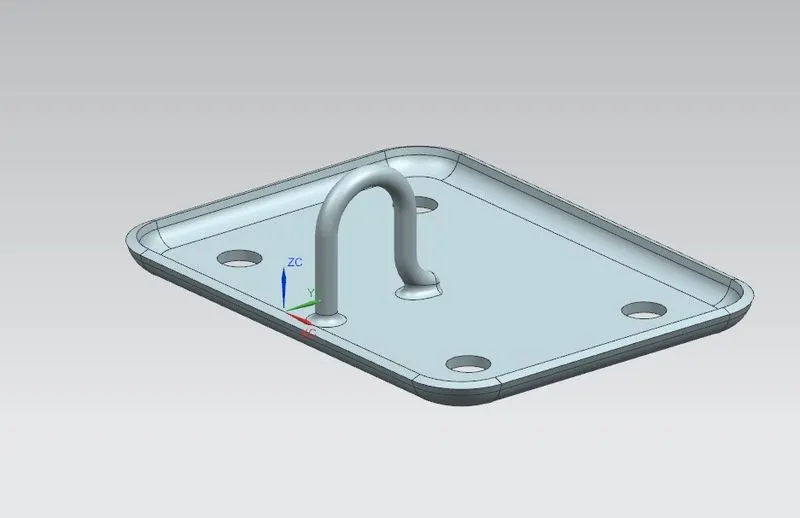
Design Methodology for Back door inner panel.
- Master Section
- Embossing and cuts
- Mastic Sealant Application
- Positioning of Latch and Hinge
- Hemming
- Draft Analysis
Master Section: It is a 2D representation of profile showing inner and outer panels. This includes details about how inner and outer panels are held together, and the required dimensions to design the inner panel
Embossing: Embossing is raised projection created on the inner panel to transfer the load from striker region to hinges in the event of any collision.
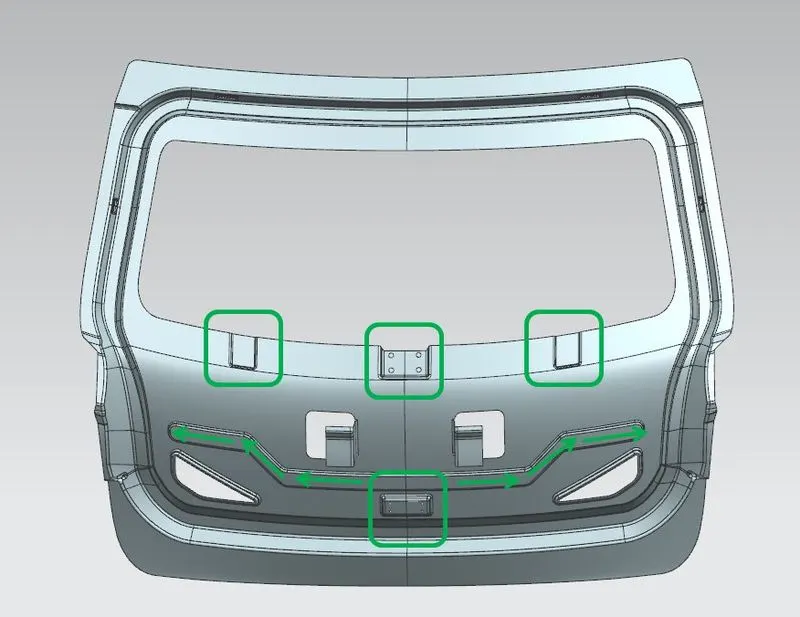
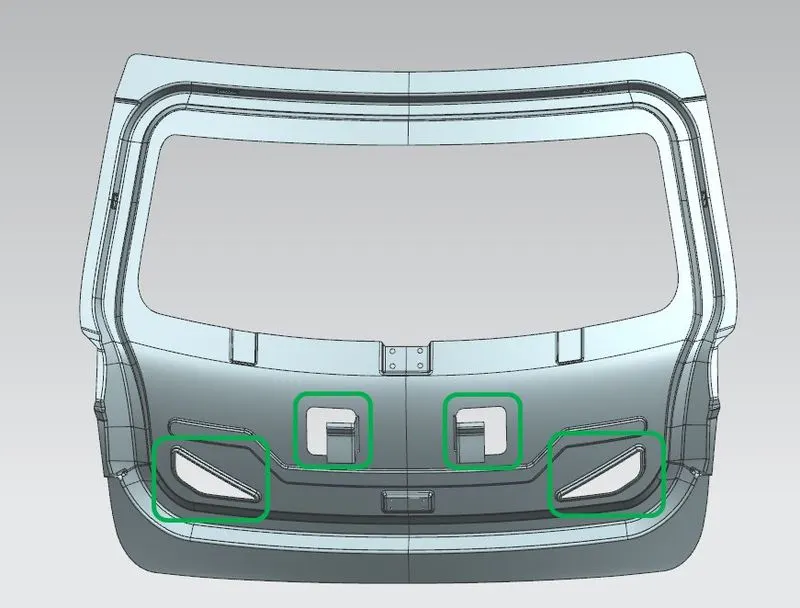
Cuts: The cuts provided over the inner panel allow sufficient deformation of the outer panel without any restriction caused during an impact.
Mastic Sealant Application: These sealants glues the inner panel with outer panel, a single mastic point has an 80mm diameter of influence. After subjecting these sealants to heat, it solidifies to form a strong bond between the inner and outer panel, these sealants avoid fluttering of the outer panel during high speed and minimises the NVH.
v 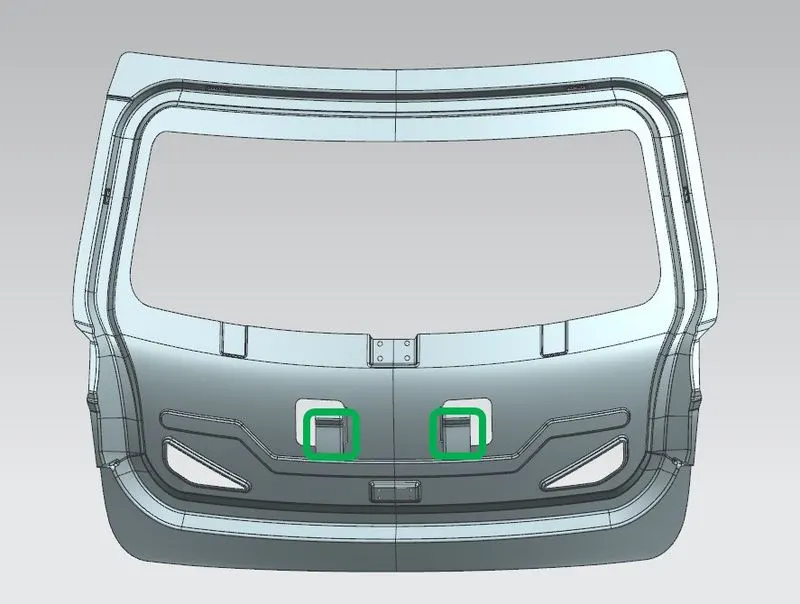
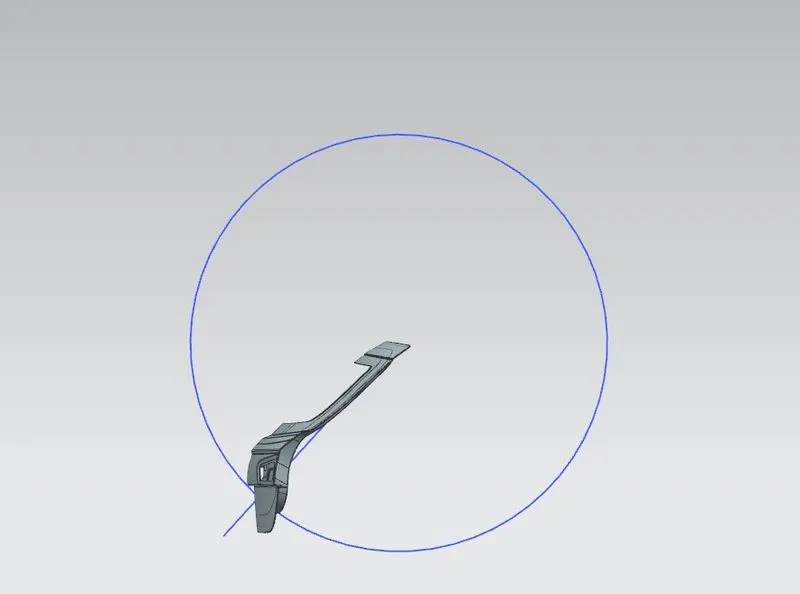
Positioning of latch and hinge: The back door opening and closing mechanism depends on the positioning of the hinge and latch, the latch location is decided by tracing the circular path (trajectory) with the hinge axis as the centre and the latch is located perpendicular to the trajectory.
Hemming: Hemming is a metalworking process in which a sheet metal edge is rolled over itself; this process ensures both inner and outer panels are interlocked together.
Draft Analysis: Draft Analysis allows to verify whether the product will be easily removed from the mould, or if need to correct the draft to facilitate mould release.
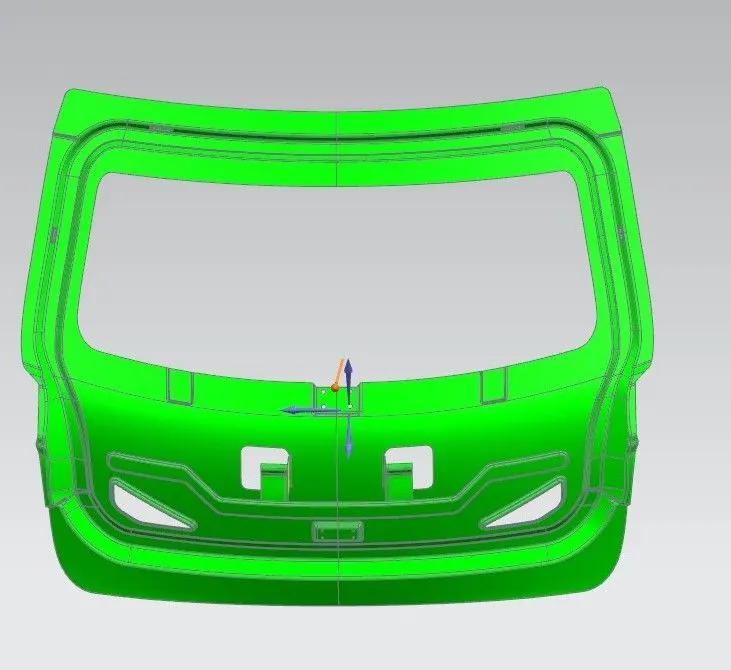
Final Assembly Of Back Door