Design of backdoor
Back Door Assembly:
Please note that I have attached the google drive link of my design as my file was larger than size specified in the challenge. Please find the link below.
https://drive.google.com/file/d/1oafQgOEc9FqXlG1-SQJuiBoKjjTyucxD/view?usp=share_link
Contents:
- Introduction
- Back door Inner panel
- Hinge reinforcements
- Gas stay reinforcements
- Back door outer panel
- Draft Analysis
Introduction:
Back door is an integral part of the car where in we collaborate with the body side outer designers, fender designers and roof designers to decide on the section of the back door. We have to take into account, the luggage space, the back end crash strength, windshield, hinge, gas stay, latch & striker and wiper motor positioning.
Industries are moving away from Steel and are now using Aluminium to create the back door. Because of the following advantages Aluminium provides
- Lower weight
- thickness can be varied
- no reinforcements are required
However, the cost of aluminium is one of the important factors where it is bery high compared to steel.
There are also many tests that are conducted by the automotive inidustry to make sure they are of the highest quality. Below are some of the tests done on the back door.
- Bend test
- Tortion test
- Abuse test
- Dent test
- Endurance test
Back door Inner panel:
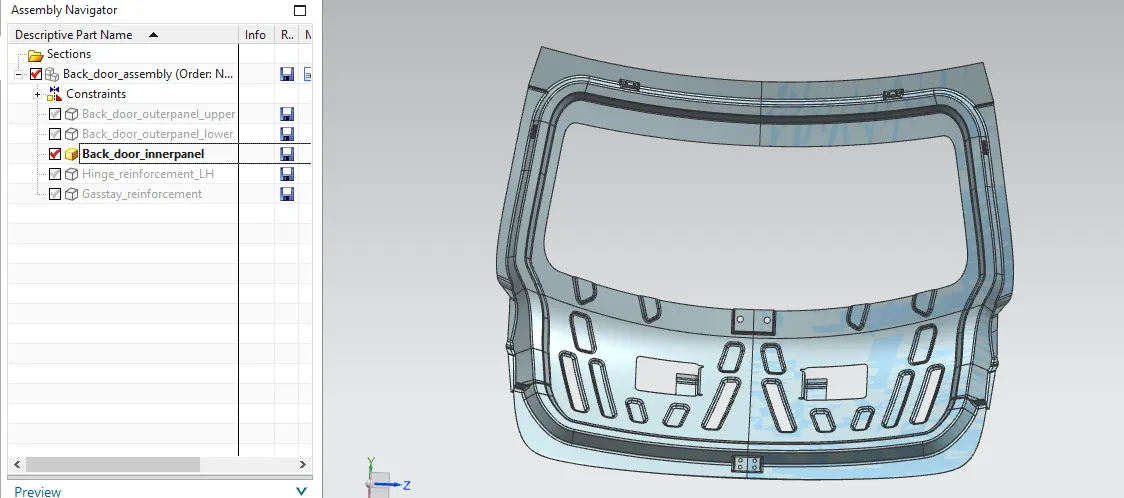
It consists of the sealing flange, connecting flange, inner panel flange and windshield area. The sealing flange has to be a smoother surface and are created using through curve mesh. All the hinge, gas stay and latch and striker points are created on the connecting flange. The mounting points are to be flat surface to pass the draft analysis. Embosses are created to add strength to the inner panel in Y shape so that the forces are dissipated in away direction from the passingers inside the car. Sometimes cutouts are also provided on the emboss to decrease the weight of the back door. Inner panels are thickened in the upward direction.
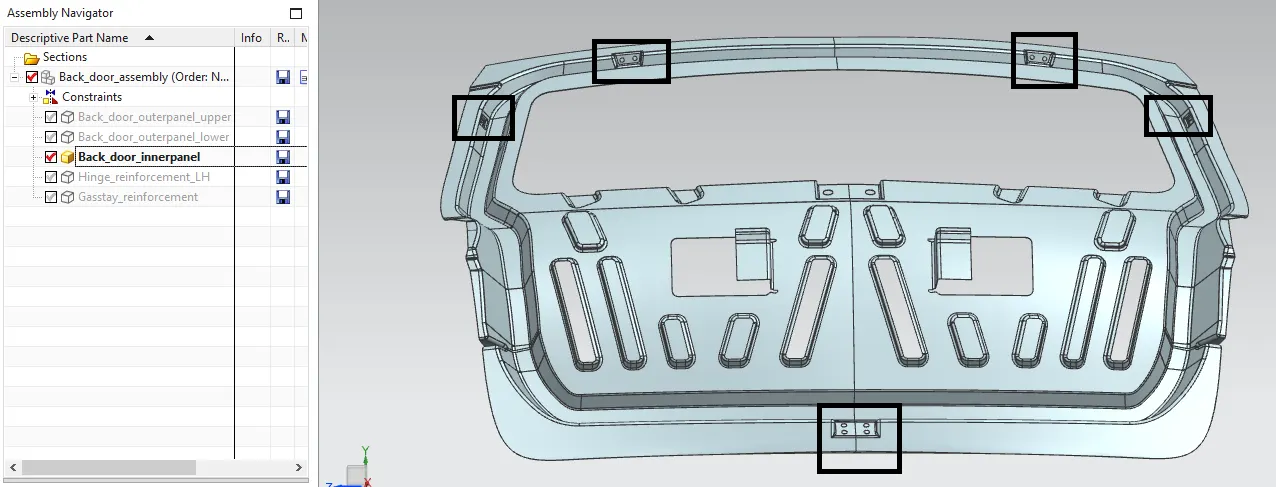
Marked are the points provided for Hinge, gas stay and latch & striker.
The latch and striker mounting is provided by taking a hinge axis point and creating a circle. The perpendicular intersection point is taken to create the latch & striker mounting position. he surface created should be flat surface for the latch to sit on the mounting.
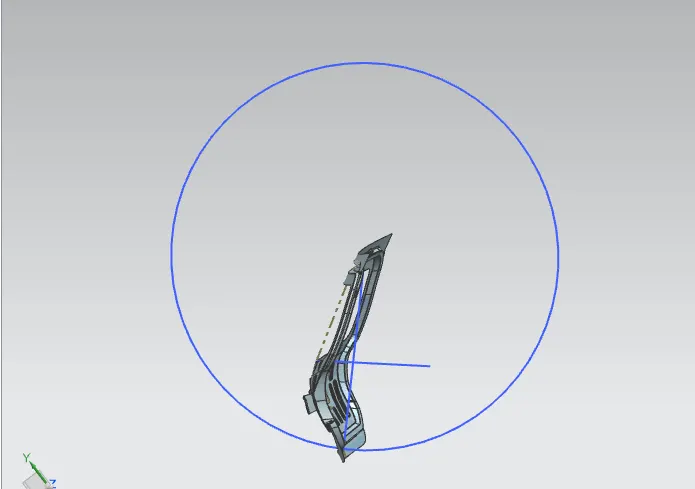
As mounting is also provided for wiper motor at the center of the back door inner panel.
Hinge reinforcements:
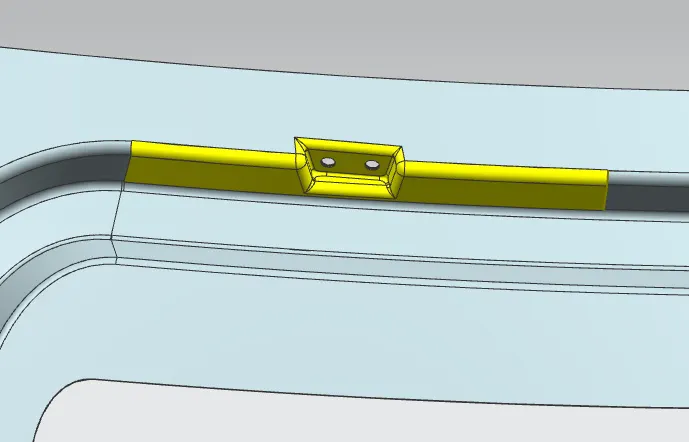
A hinge reinforcement is provided to add strength along that area of hinge mounting. There should be no gap between the reinforcement and connecting flange and the reinforcement should perfectly sit on the mounting.
Gas stay reinforcement:
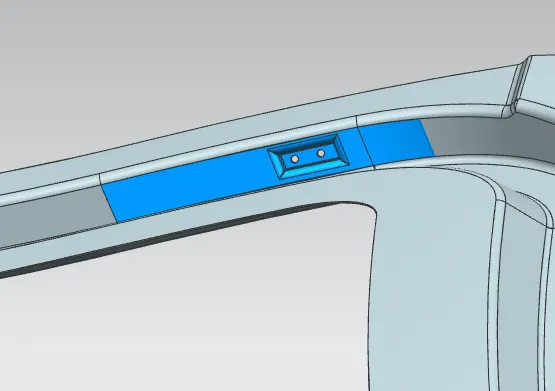
A gas stay reiniforcement is provided to add strength to the gas stay mounting area. There should be no gap between the reinforcement and connecting flange and the reinforcement should perfectly sit on the mounting. The mounting is created on the connecting flange.
Back door outer panel:
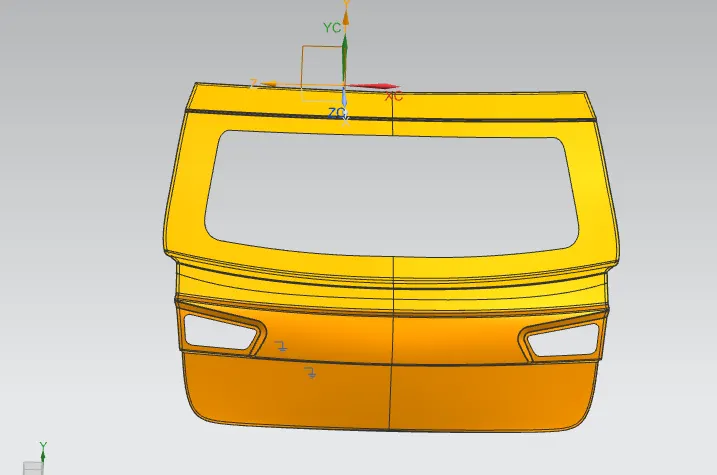
Back door outer panel is divided into 2 parts. The upper and lower panel. They are thickened in the lower direction for a value of 0.75mm. Also they are connected to the inner panel through a process called hemming. Hemming reliels are provided at the corners where the stress concentration are at the highest.
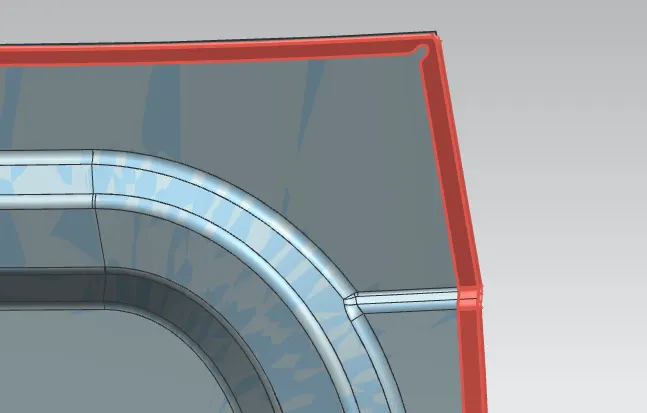
Hemming relief is provided at the corner portion to avoid stress concentration.
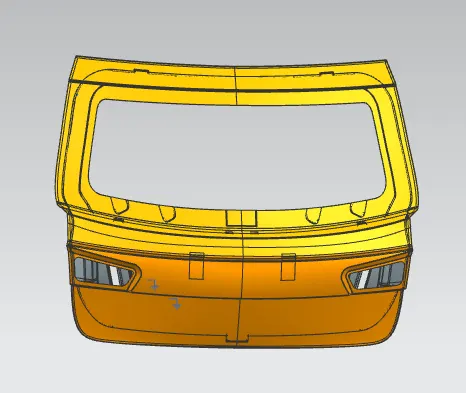
Draft Analysis:
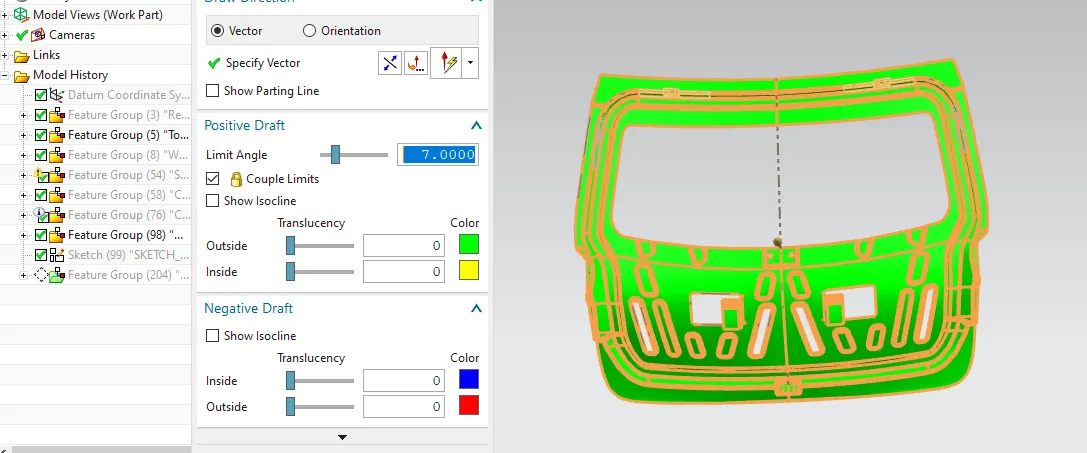
A draft analysis is done to analyse the part producability. We create the draft analysis using the tooling direction and find the areas where the colour is yellow, blue and red and repair those areas.