Design of backdoor
Aim: The aim of this project is to create a sheet metal backdoor for a car, utilizing suitable design techniques and incorporating the provided skin data, all while adhering to design guidelines.
Objectives:
-
Backdoor Design: Develop a well-structured design for the car's backdoor, implementing design principles and techniques.
-
Embosses and Reinforcements: Integrate embosses and reinforcements into the inner panel of the backdoor to enhance its structural strength and durability.
-
Side Relief in Outer Panel: Incorporate side relief features into the outer panel to provide additional strength and to ensure proper fit and functionality.
Backdoor:
The backdoor of a car is the rear-hinged component that covers the trunk or luggage area. Its design takes into account important factors like ensuring good visibility from the rear and optimizing storage space.
This part is usually designed to fit with the rear roof structure, ensuring a secure fit and sealing. It's also in contact with the car's side body.
The backdoor serves several functions, including hosting rear lights and brake lights, often called the "third brake light." It also holds the rear windshield in place and can sometimes carry a spare tire. Additionally, the car's license plate may be attached to it. Overall, the backdoor provides a sleek and enclosed look for the vehicle.
Design Considerations:
- Rear Visibility
- Support Structures like Hinge reinforcements
- Rear Crash regulations
- Boot Space
- Strength criteria
- Draft Analysis
Procedure:
-
Surface Inspection: Begin by examining the skin data for any surface irregularities. If irregularities are detected, use tools like the bridge curve, through curve mesh, and sewing to repair them.
-
Sealing Flange Creation: Typically, a master sketch guides the design of the panel with precise dimensions. However, in cases where a master sketch is absent, the panel is designed based on assumptions. Create a sealing flange following this design approach.
Tooling Direction:
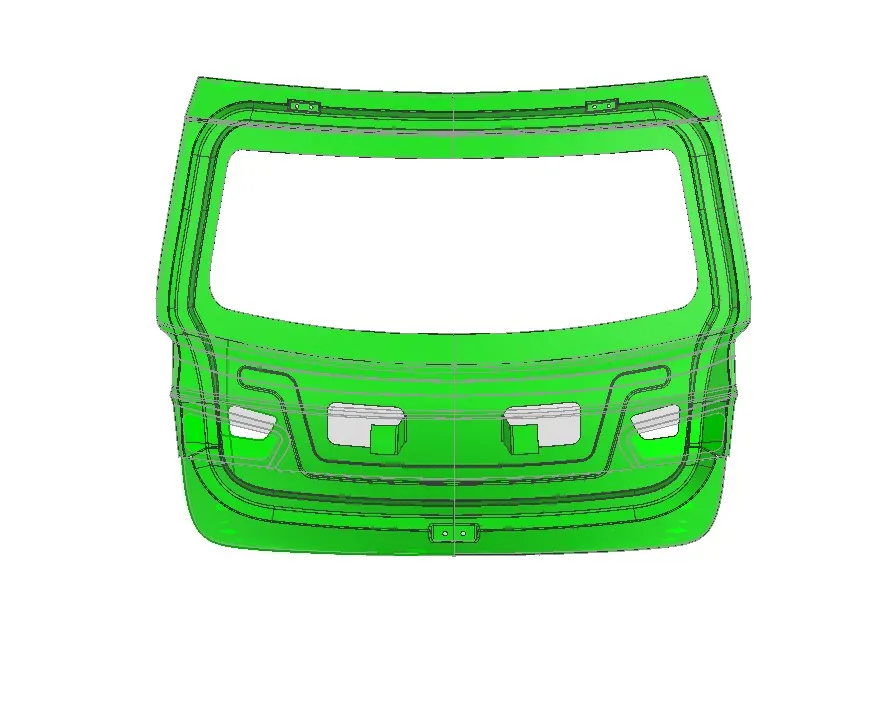
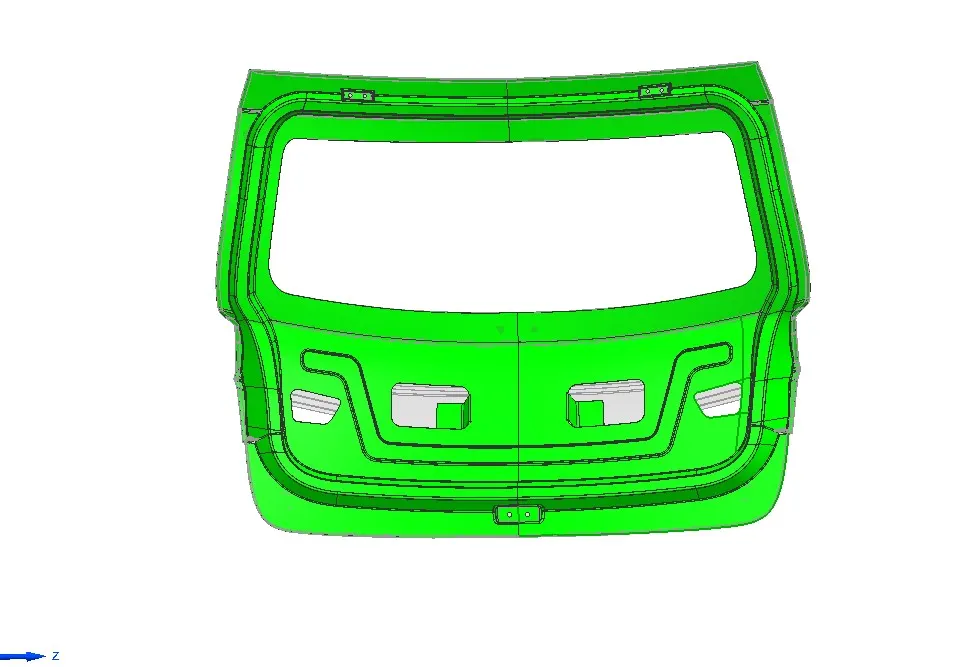
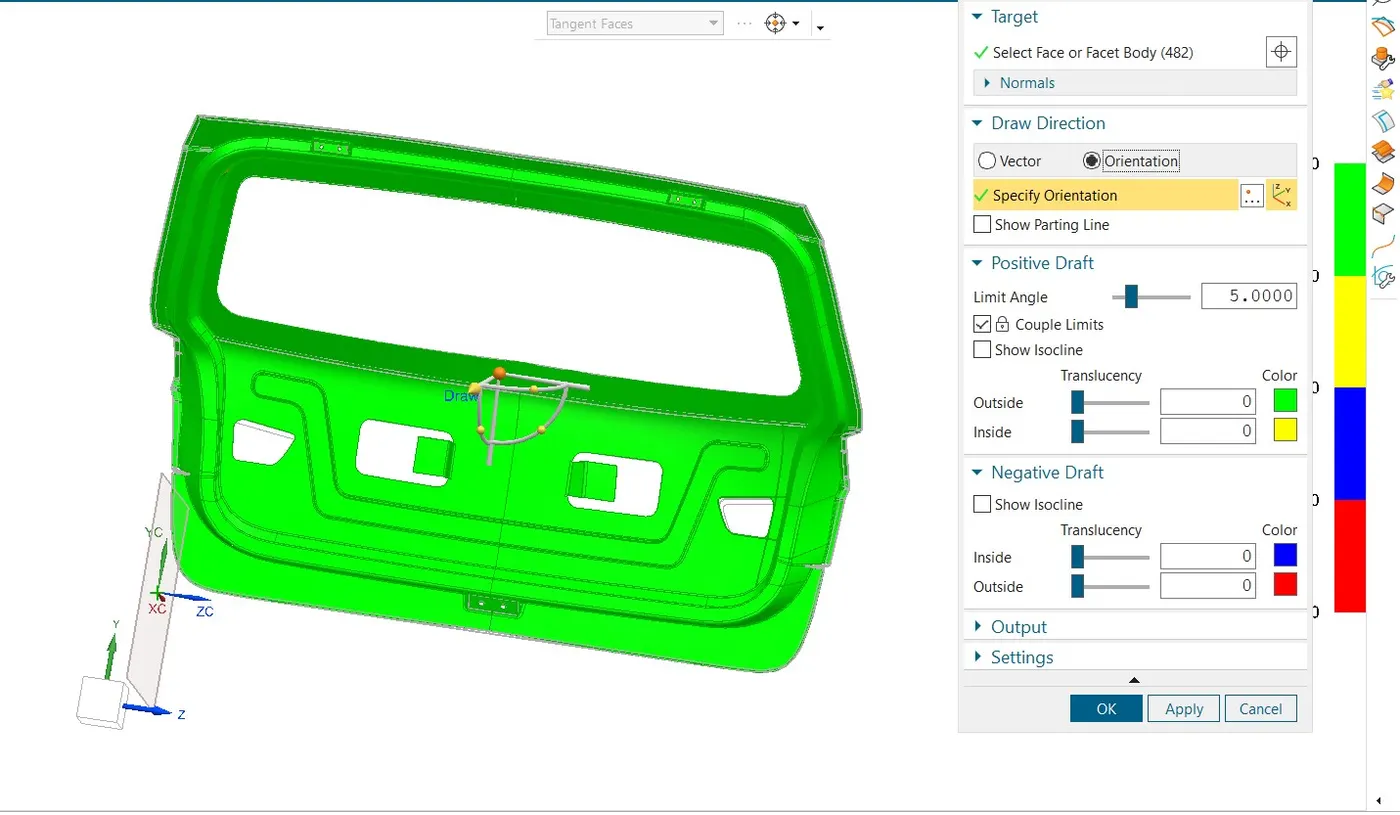
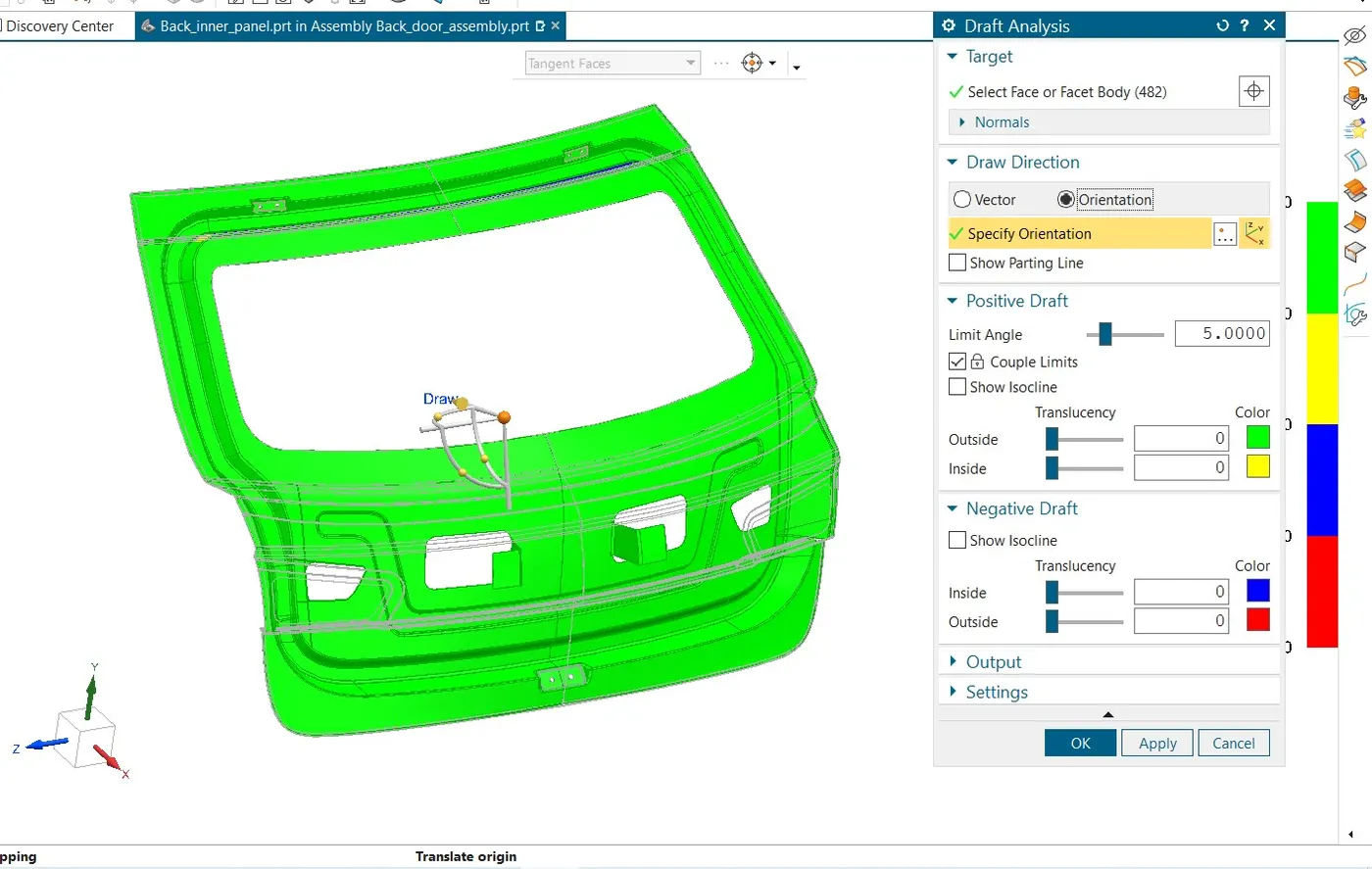
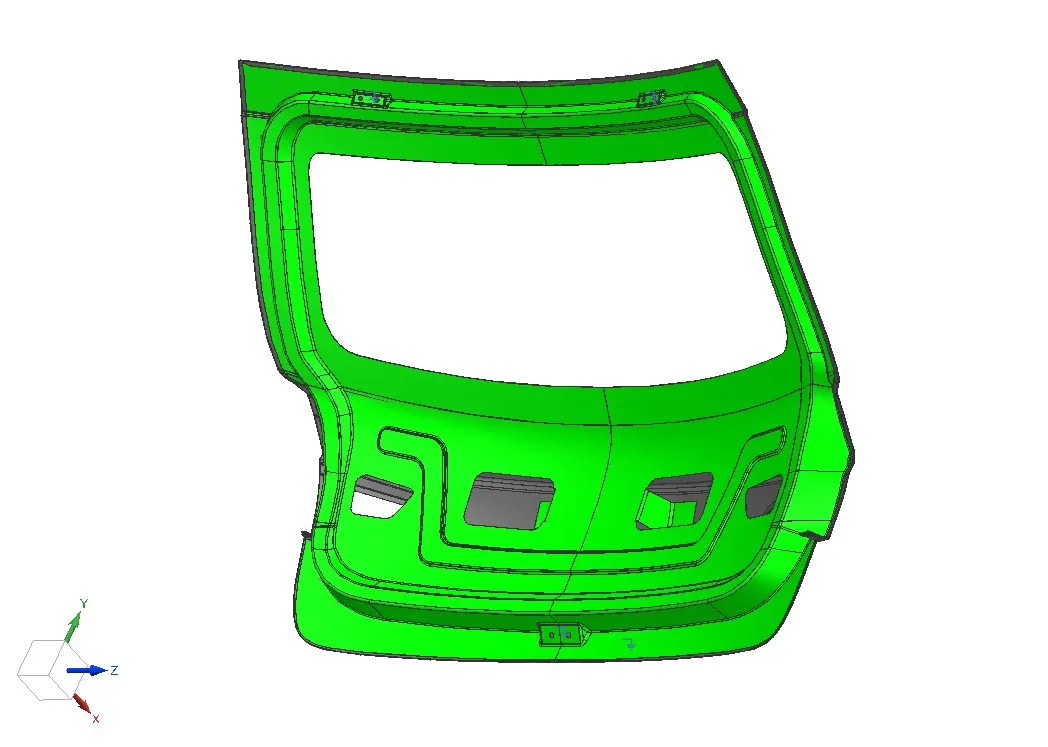
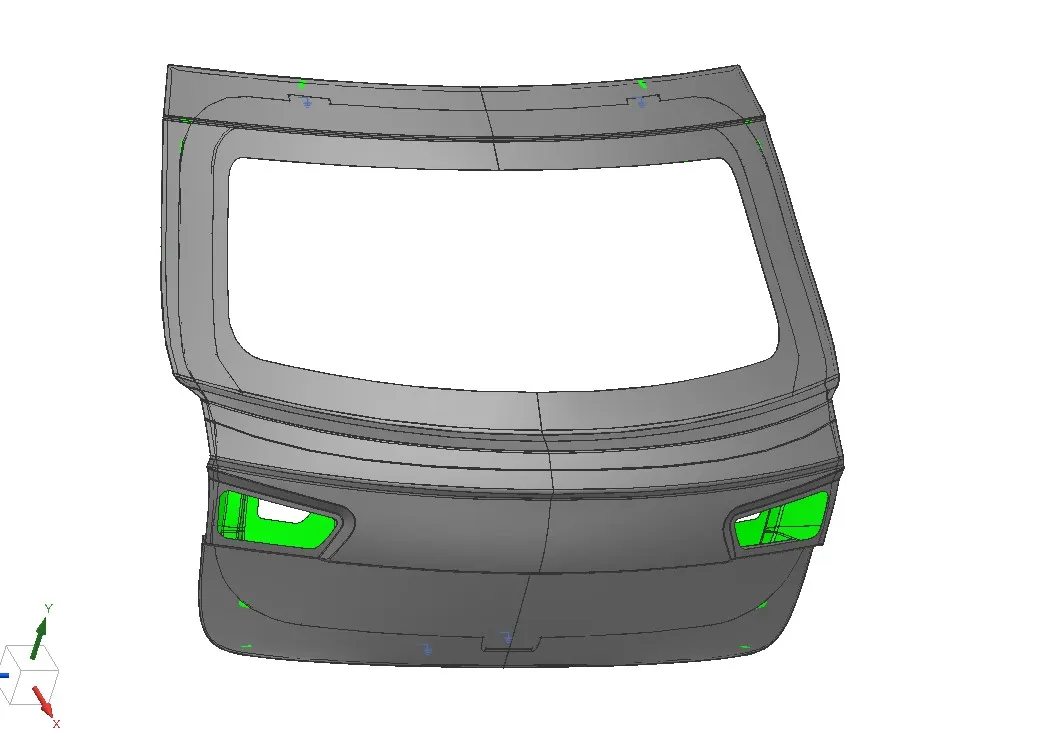
In the manufacturing process of the back door, we utilize a method known as deep drawing. This process involves the use of two essential tools: the core and the die. The core moves along a single, straight path during deep drawing, and the angle at which it inclines is referred to as the tooling direction.
The tooling direction, or axis, is established as a reference point for our manufacturing team. It guides them in producing the part accurately, ensuring that it aligns with the intended design and specifications. This alignment is crucial for the successful fabrication of the back door.
PS - Unable to upload file due to 20mb upload limit. Uploaded complete files to https://drive.google.com/drive/folders/1F5K46A_gIfT6tsHaNyn6X9MPv-SG9eWK?usp=drive_link