Design of backdoor
Back Door Design:
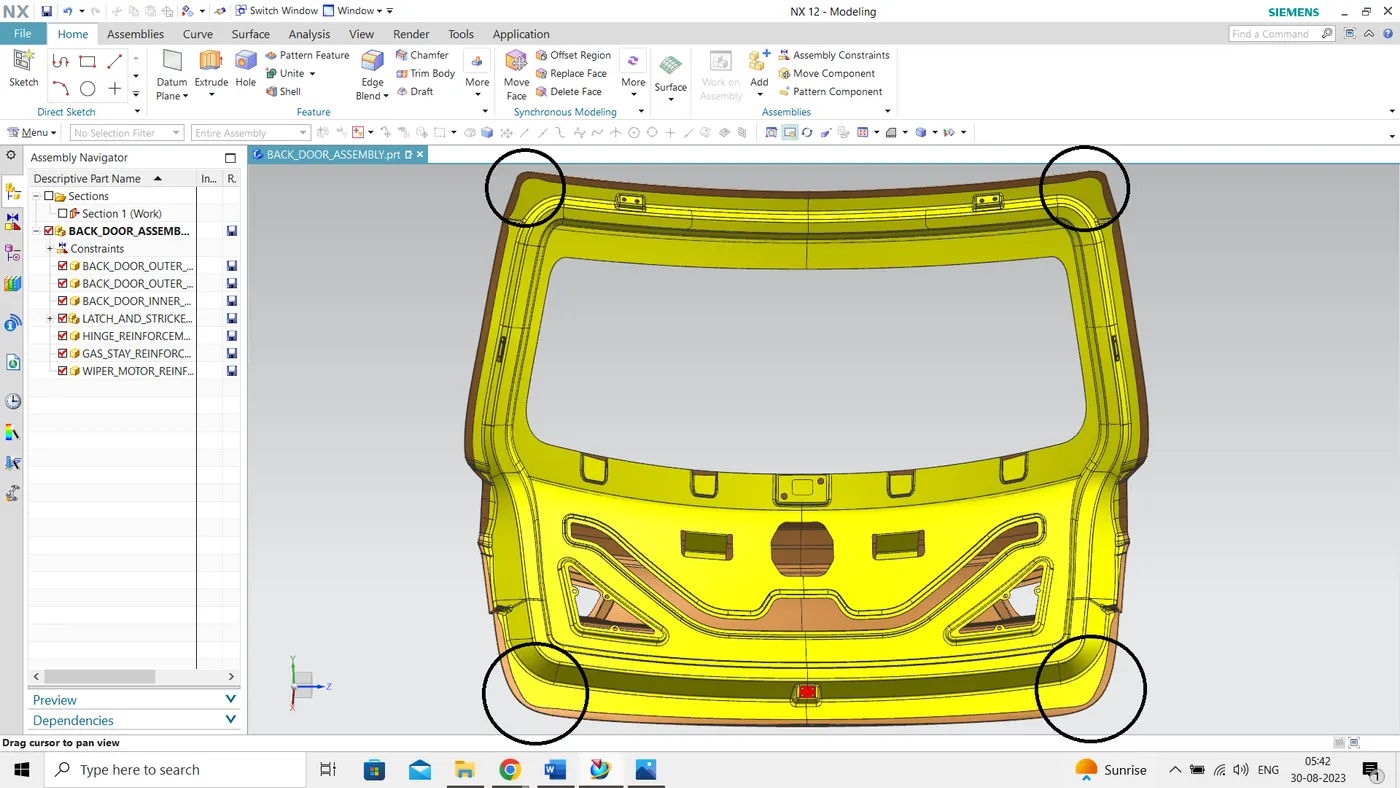
- The back door of a car, commonly referred to as the "rear door" or "tailgate".
- the back door of a car plays a pivotal role in passenger access, cargo handling, emergency situations, structural integrity, aerodynamics, safety, and the overall design and functionality of the vehicle.
- Its design and functionality are carefully considered to ensure optimal performance, comfort, and safety for both drivers and passengers.
Components of back door are:
- Inner panel
- Outer panel
- Mountings & Reinforcement:
- Hinge & Gas stay reinforcement
- Wiper motor reinforcement
- Latch & stricker reinforcement
Design Methodology:
Creation of tooling axis: The deep drawing technique will be utilized to produce the rear door. This process involves the use of specialized tools known as the core and the die. The core component moves along a linear path, and the angle at which it moves is referred to as the tooling direction. This tooling direction or axis is established in such a way that the production team can use it as a reference to manufacture the part with precision.
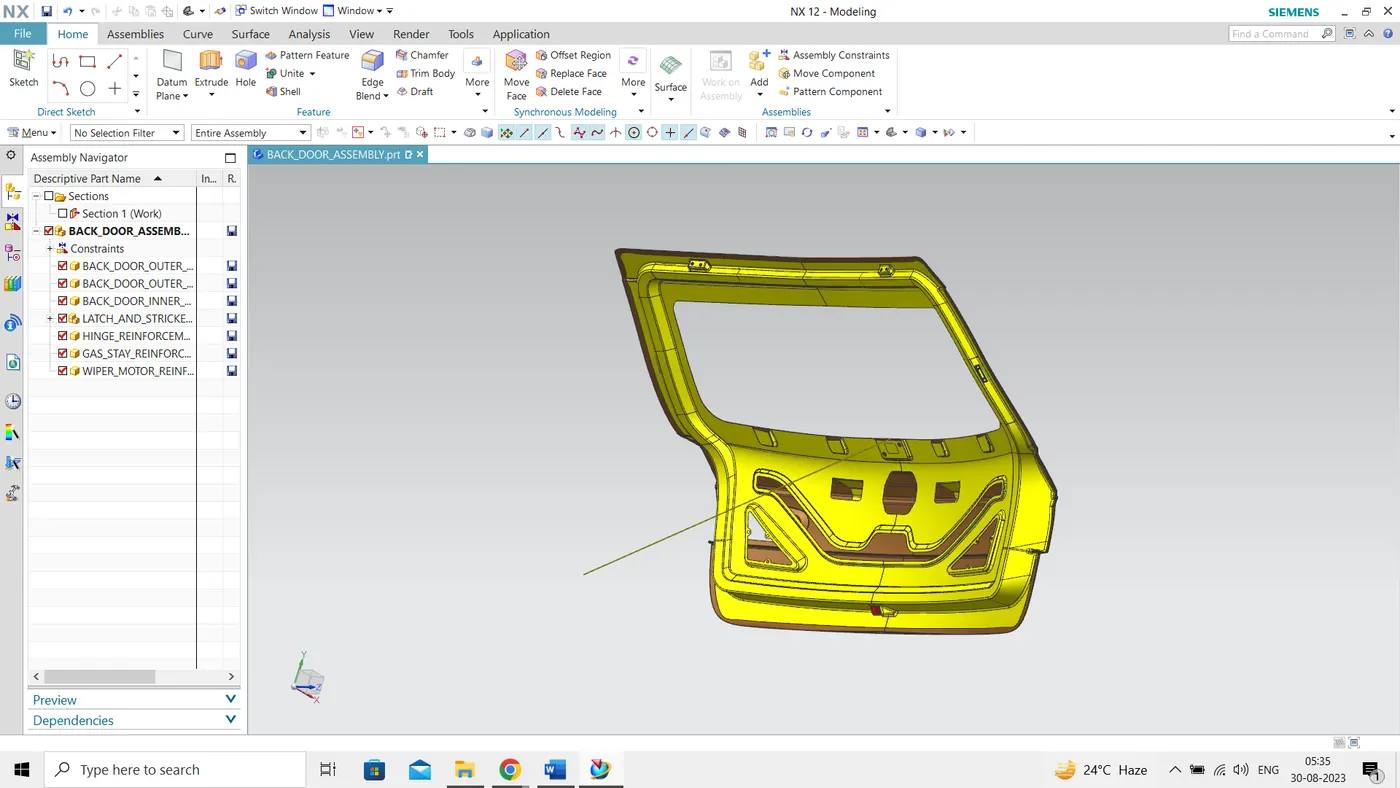
Mastic Region: Mastic points are designated on the inner panel of the rear door at areas prone to deformation. These points assist in restoring the original shape of the outer panel of the back door if it becomes deformed. Mastic sealants are pliable substances with properties similar to rubber.
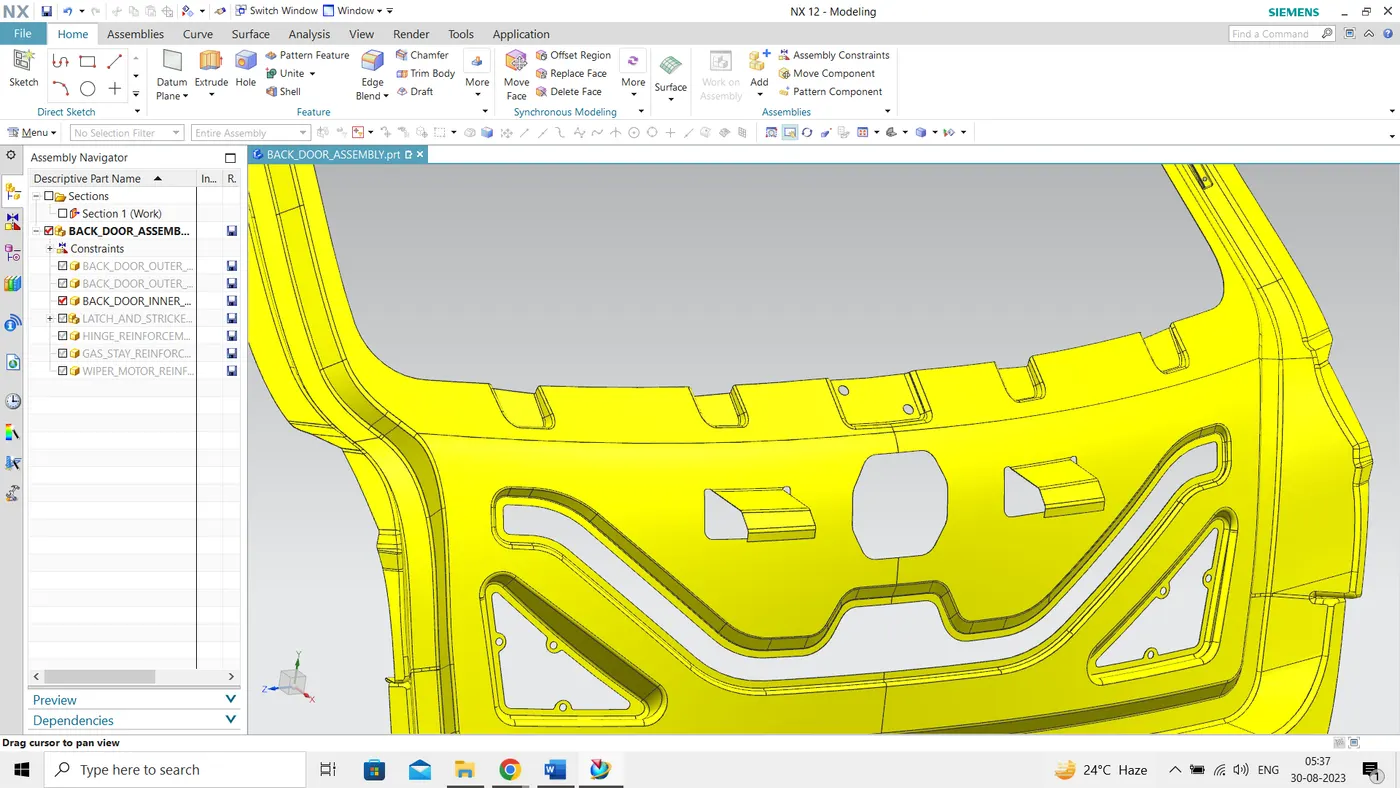
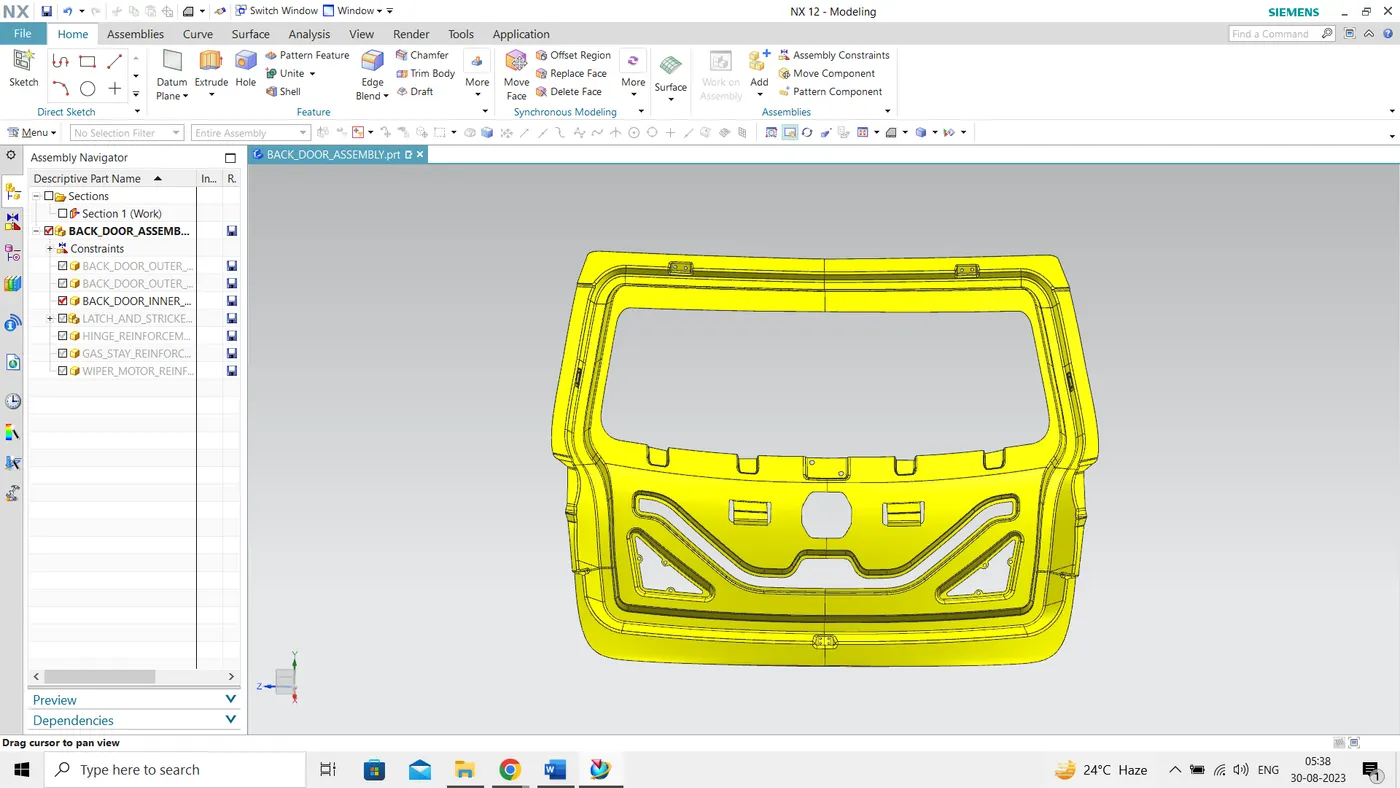
Inner Panel: The inner panel is a component which is used for strengthen the door assembly and it is one of the most important components on which all accessories are mounted like hinges, glass guide channel, molded trim, latch etc.,
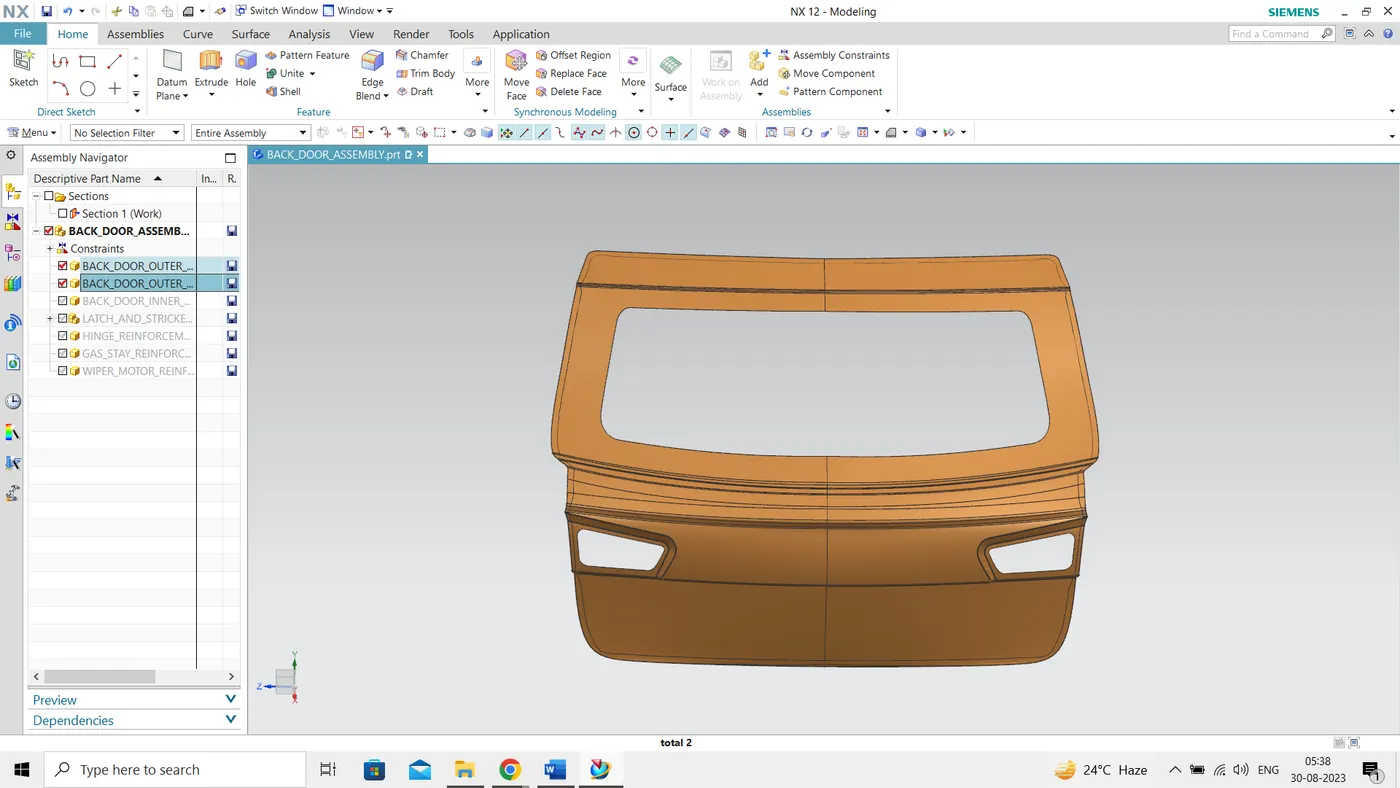
Outer Panel: The outer panel has the Lamp, rear fog lamp and also has the provision for tail, license plate mountings. Most of the hatchback cars have the provision for wiper motor.
Embosses & Reinforcement: With a V cross section, embosses are created. The embossed are used to increase the strength of the backdoor.
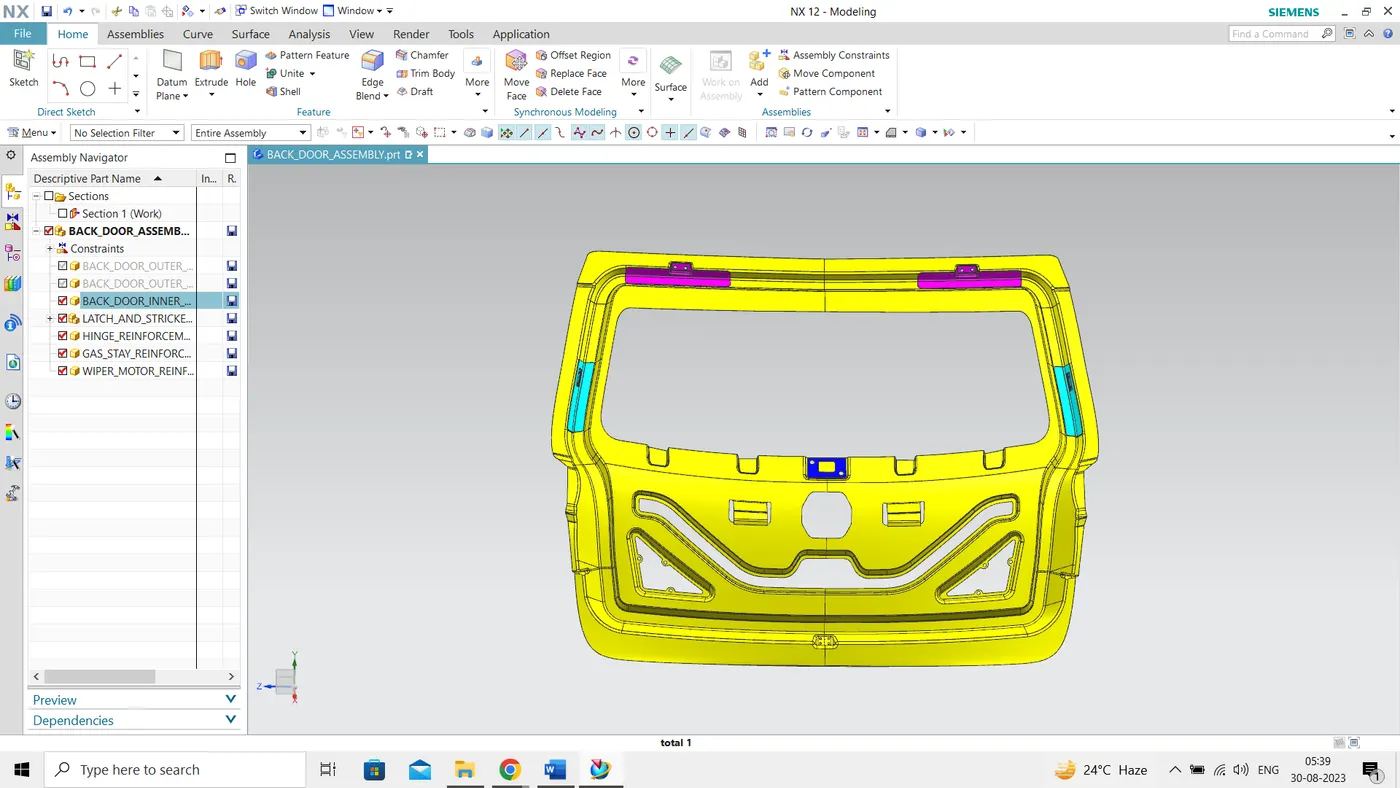
i. Hinge Reinforcement:
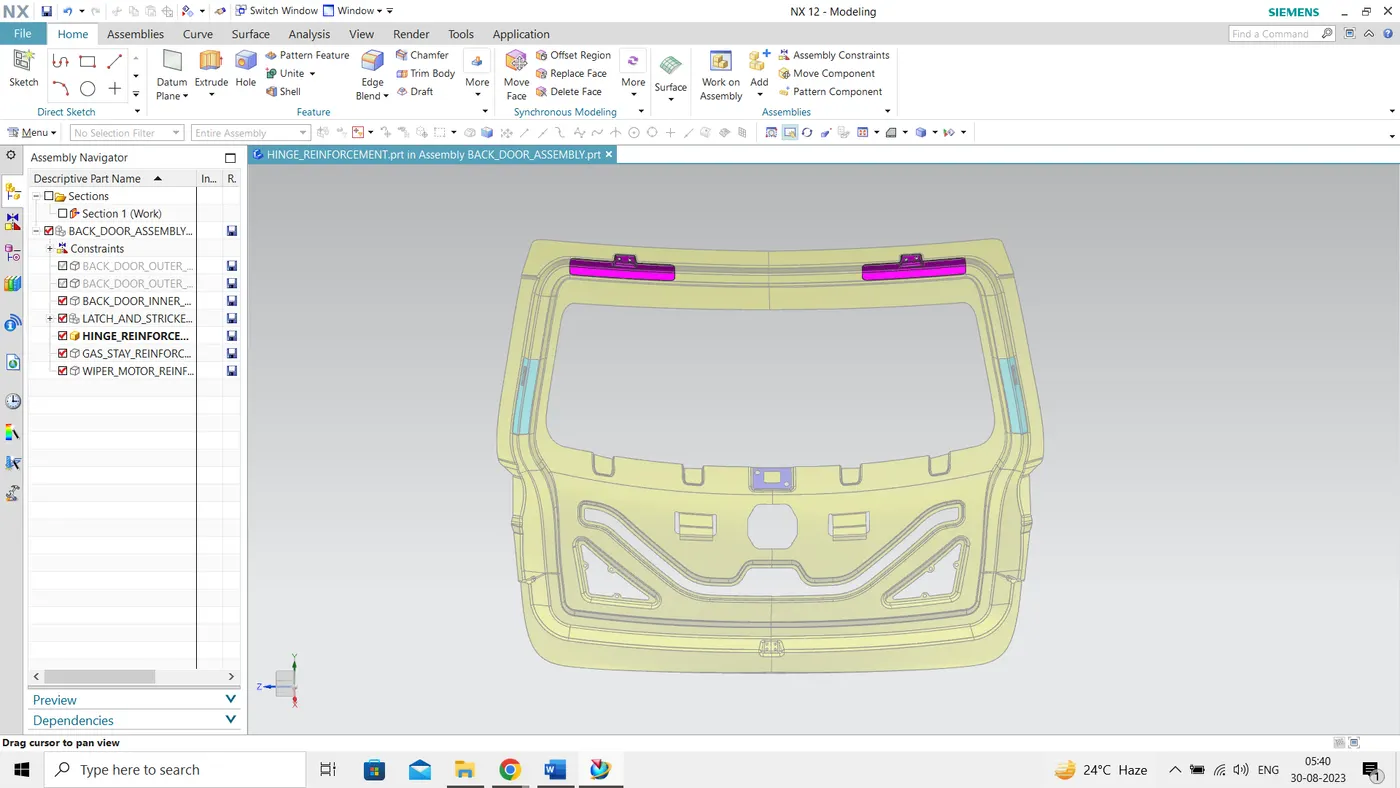
ii. Gas Stay Reinforcement:
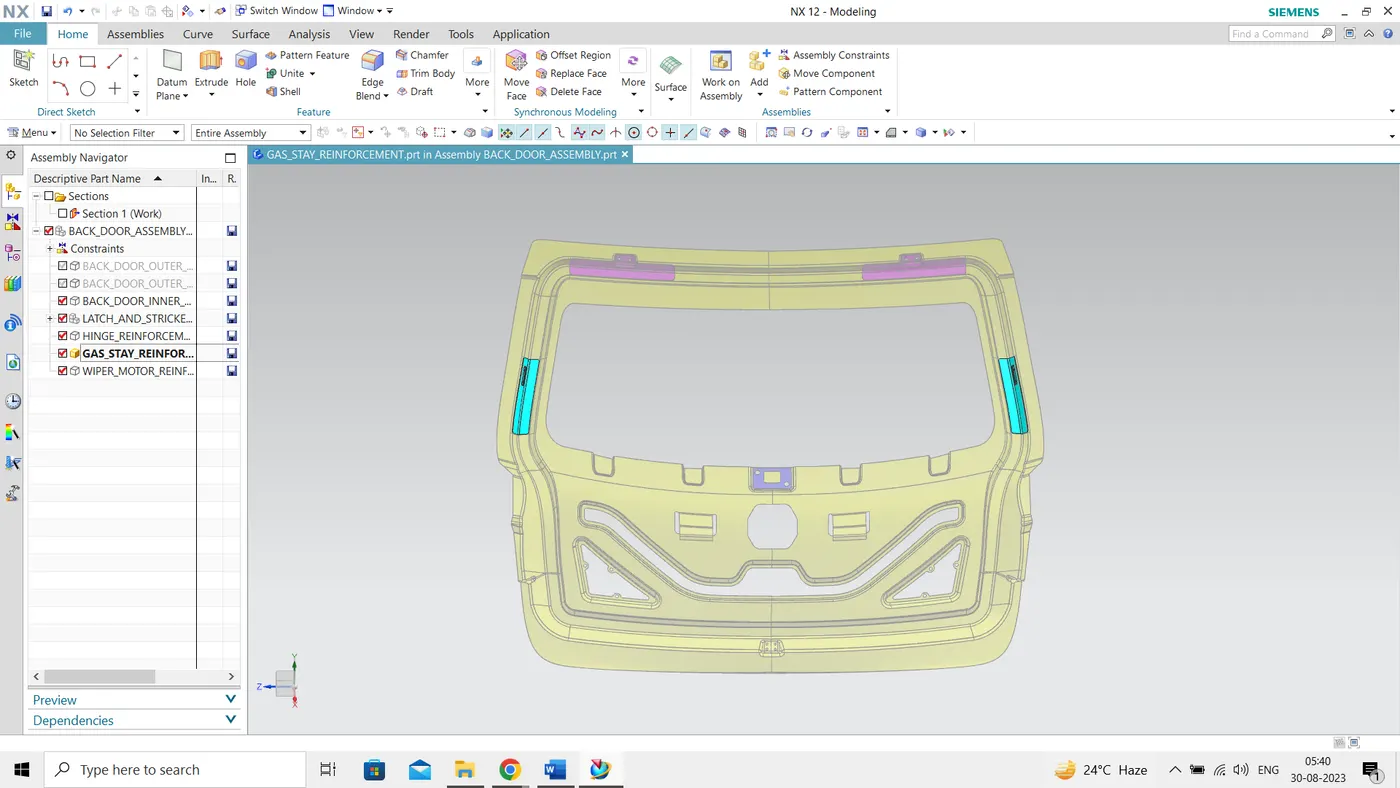
iii. Wiper Motor Reinforcement:
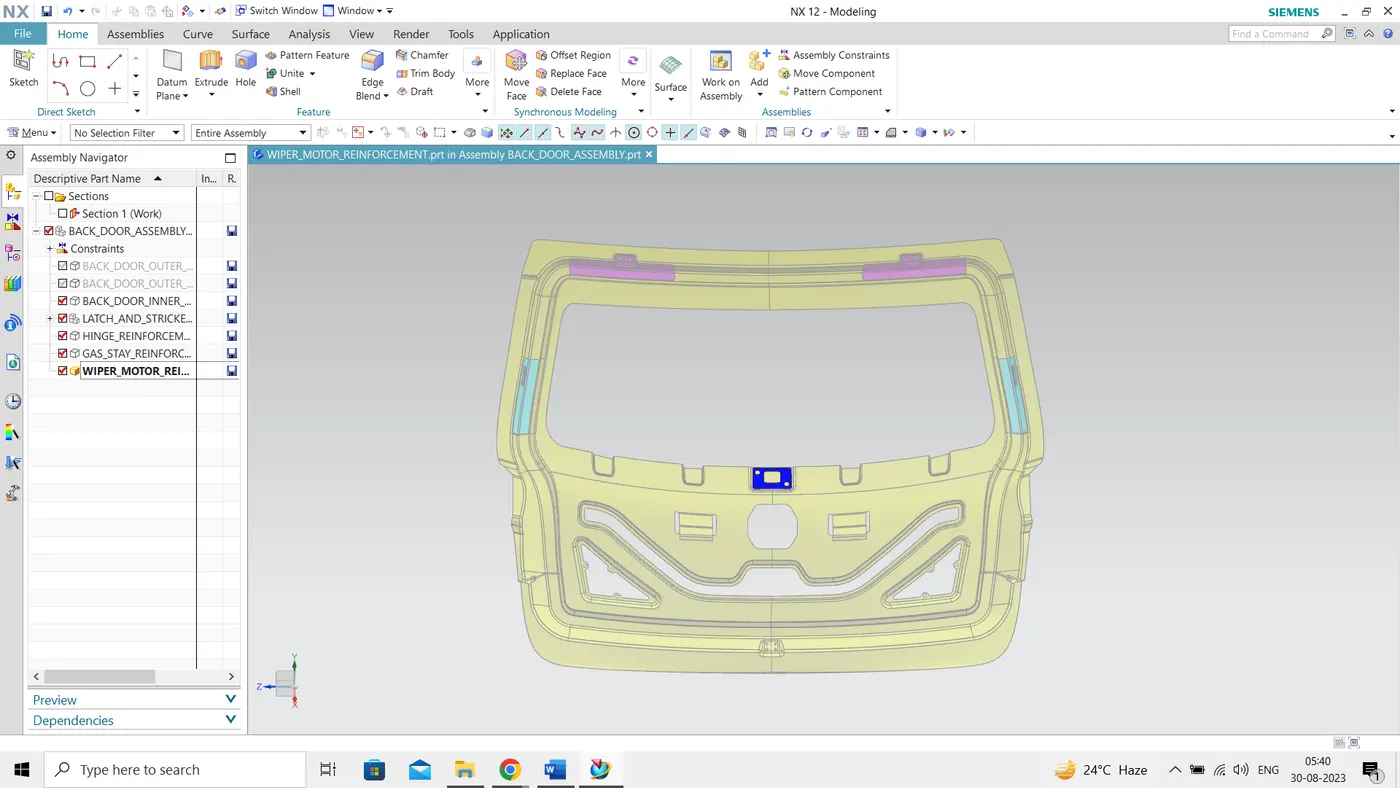
iv. Latch and striker Reinforcement:
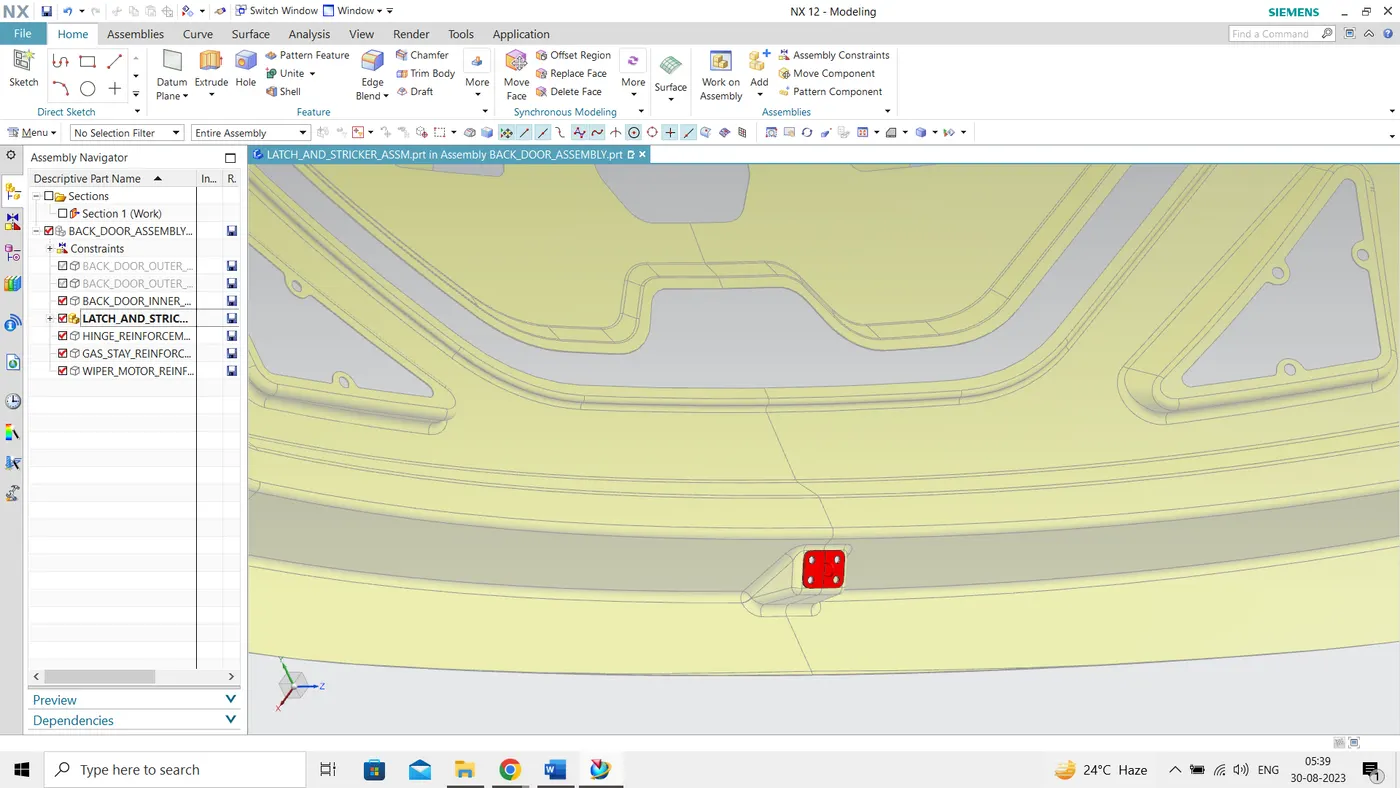
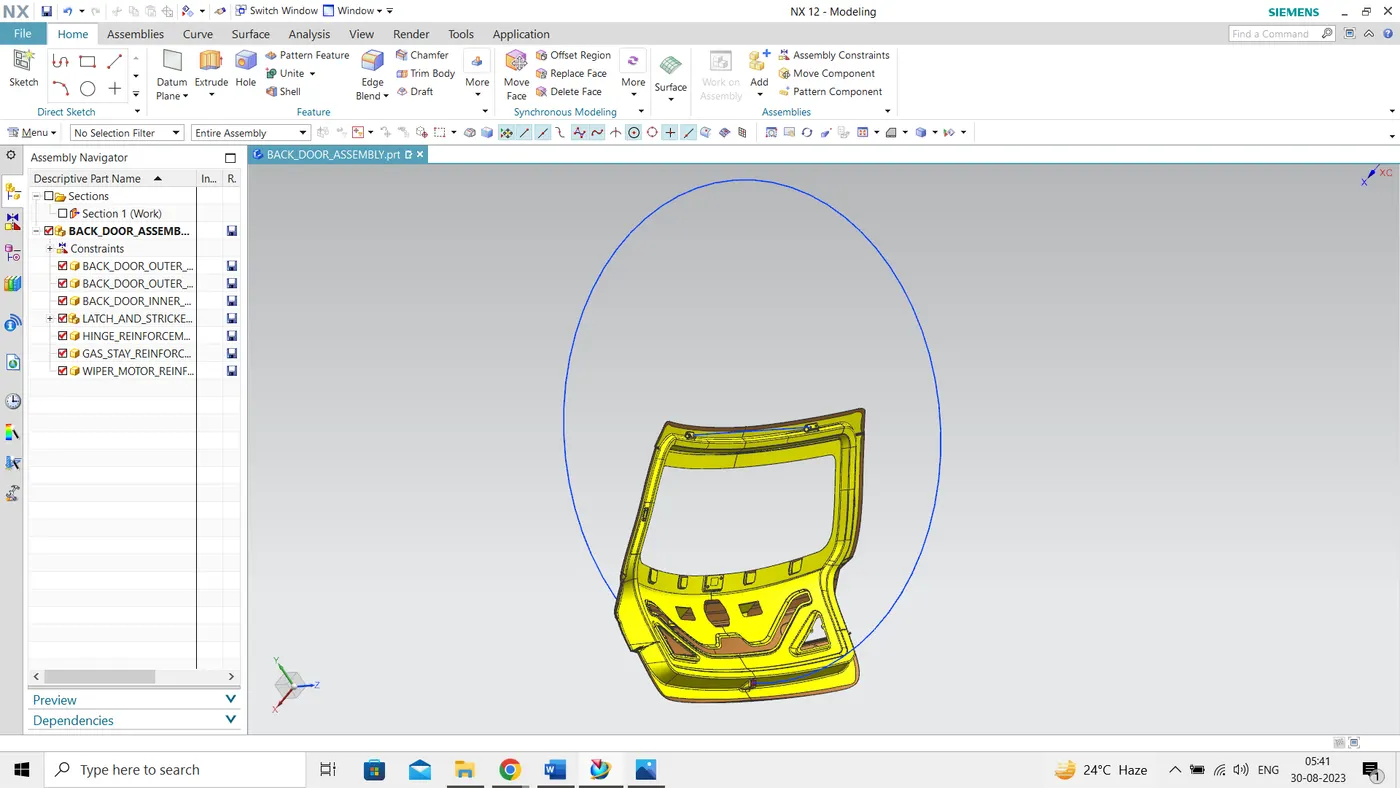
Latch and striker trajectory:
In order to establish the path for opening and closing, the hinge and latch are placed according to the axis and trajectory of the hinge. The circle that is marked must be at a right angle to the latch striker to meet this requirement.
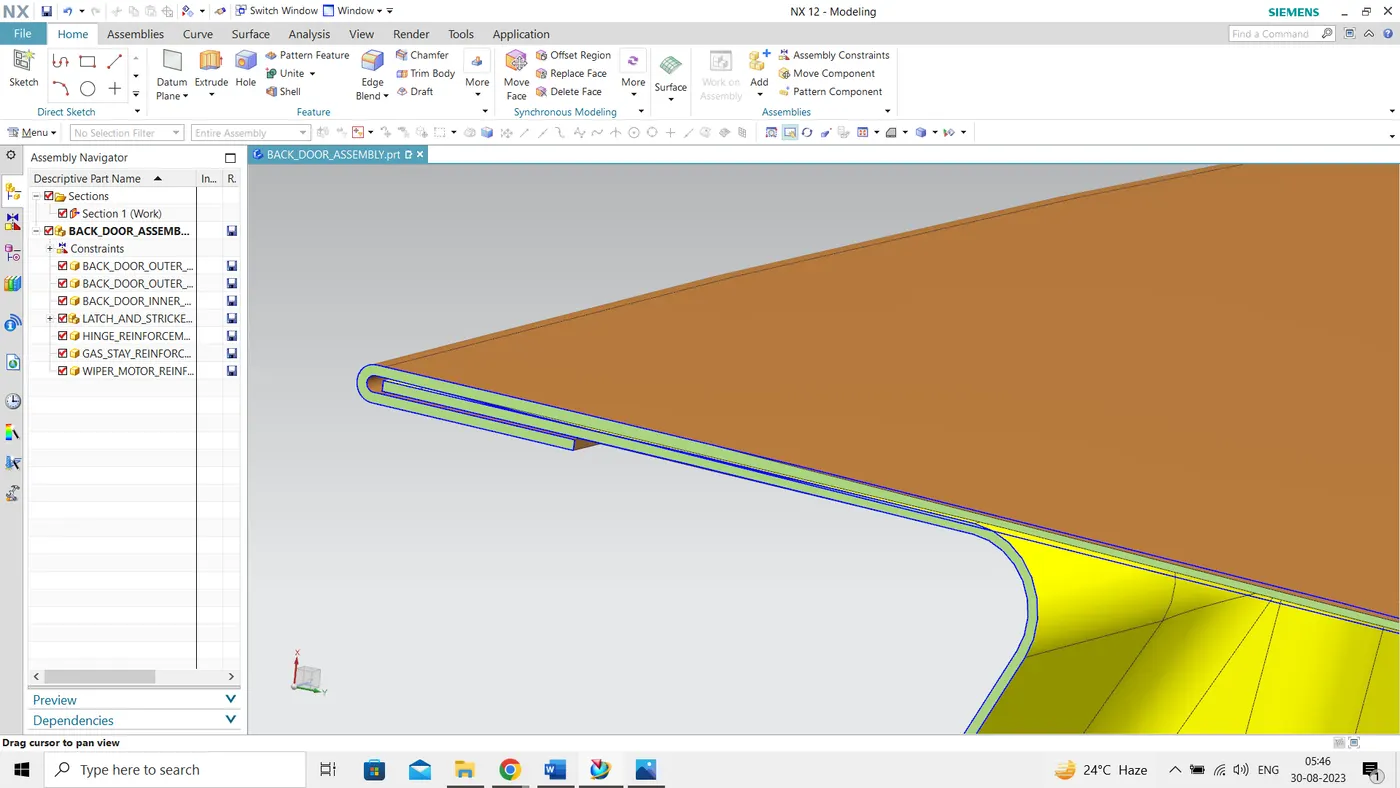
Hemming Operation:
Hemming is a method for creating mechanical joints, employed to connect inner and outer closure panels, commonly found in areas like vehicle doors, hoods, bonnets, and lift gates. To enhance the panels' ability to withstand impacts, the space between the hemmed panels is filled with a potent adhesive.
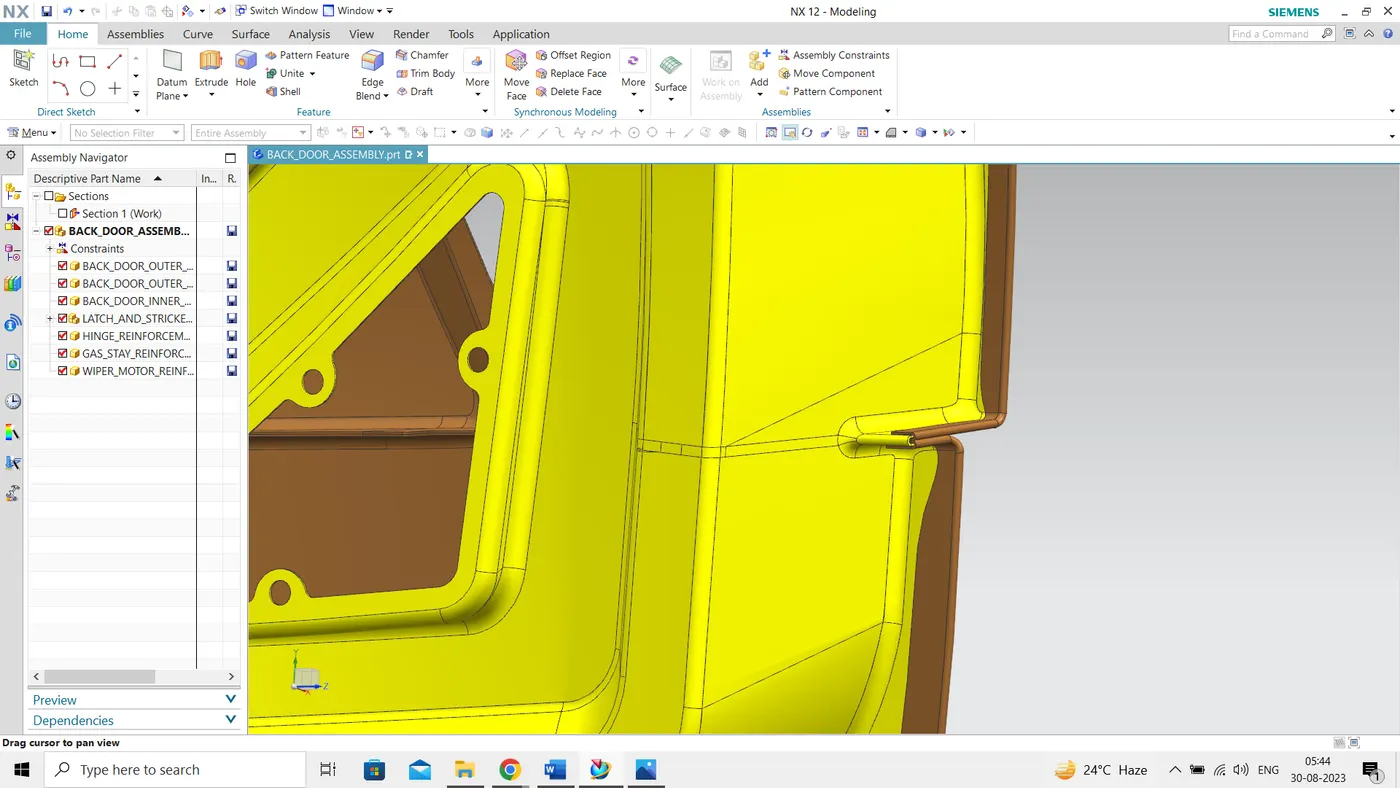
Hemming Corner Relief: Hemming relief refers to the notches that are incorporated into the hemmed corner of the panel assembly. These notches serve the purpose of preventing certain issues that can arise during the hemming process.
Draft Analysis:
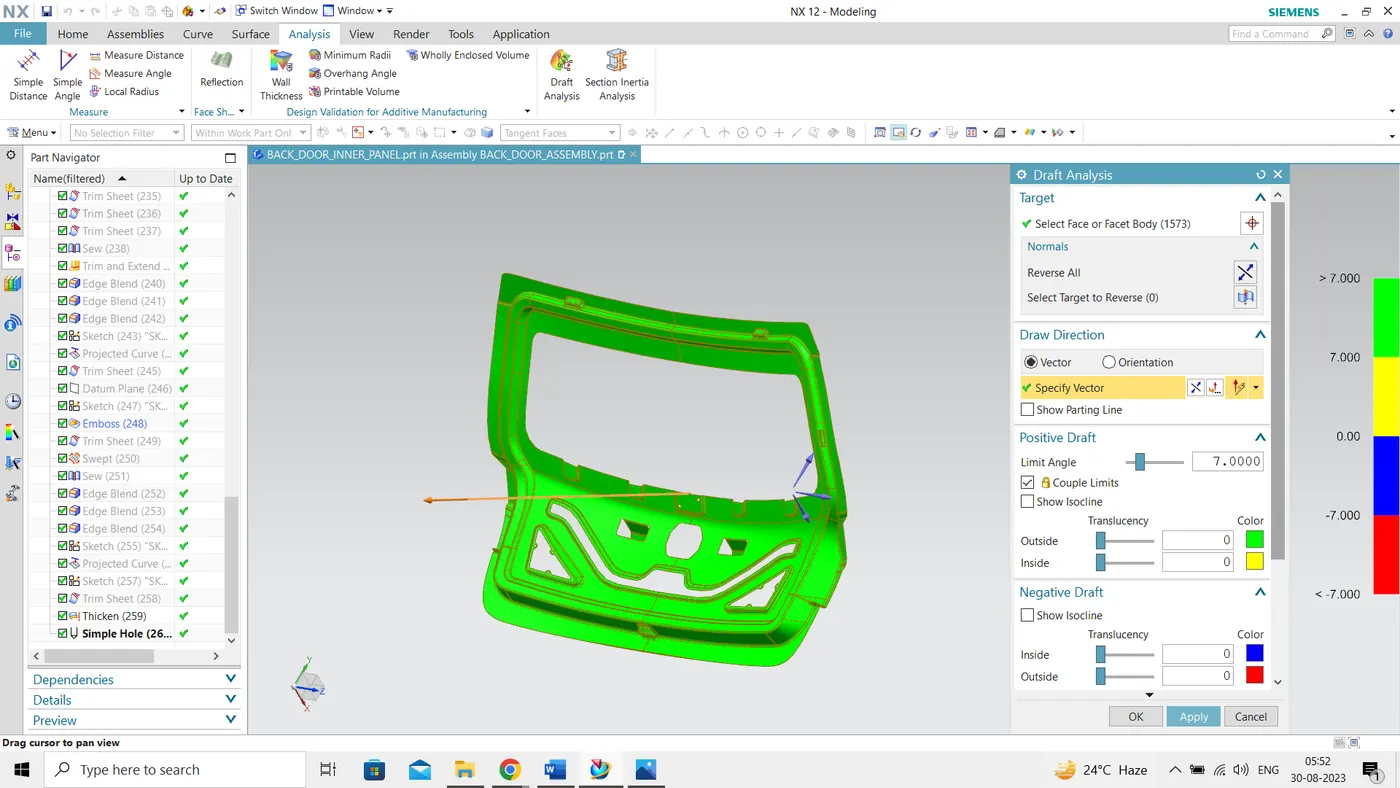
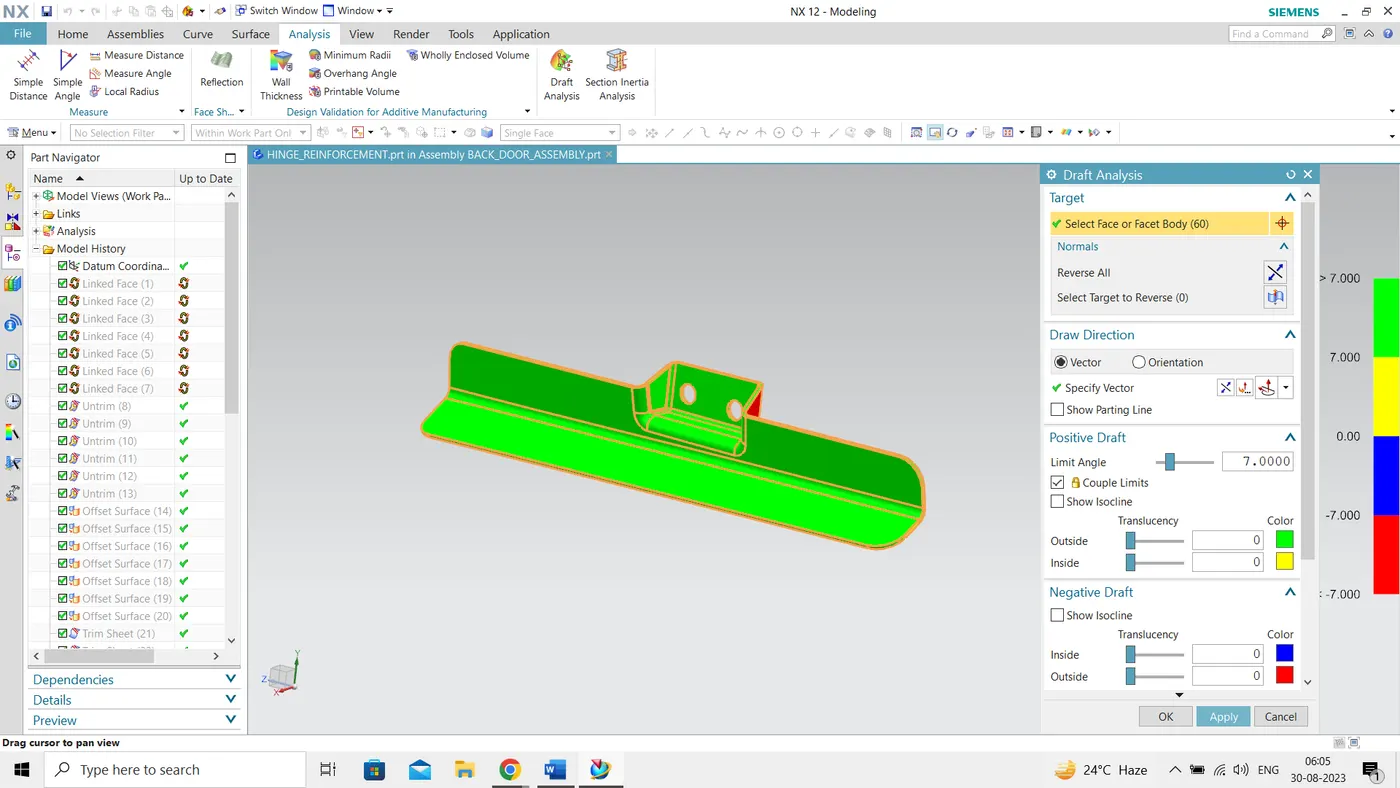
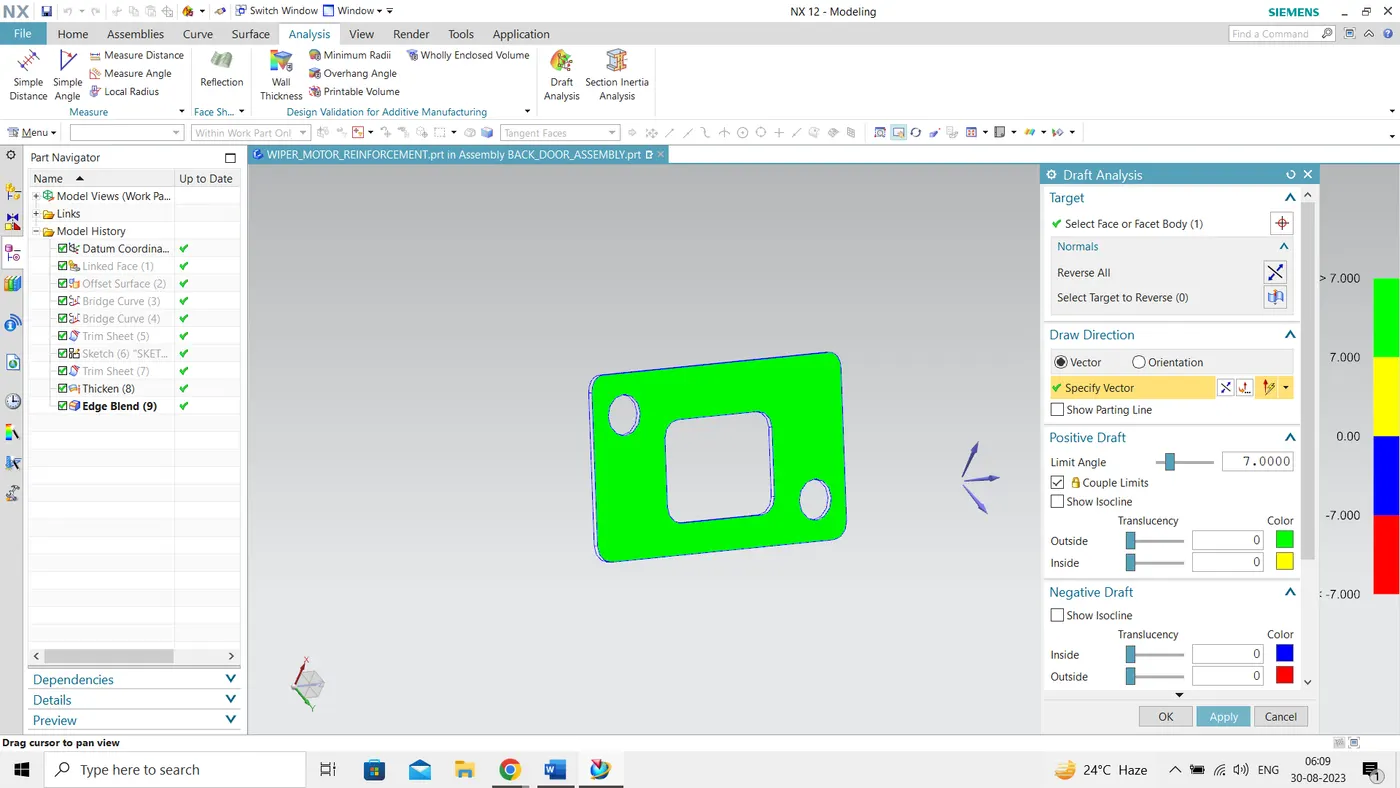
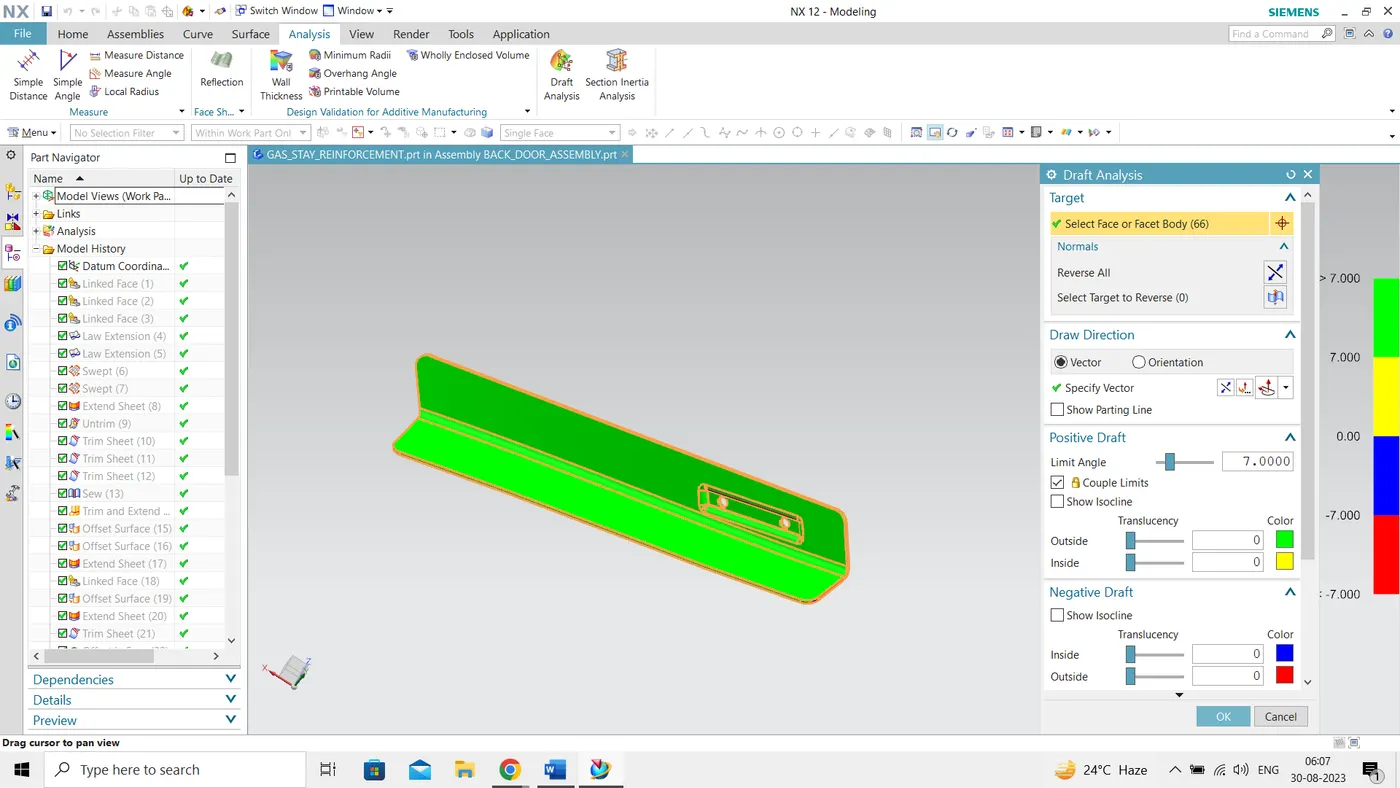
Minimum draft angle of 7 degree is considered for analysis, along the tooling direction it has positive draft angle and passed in analysis. The draft analysis results of inner panel and reinforcement are as follows:
Back Door Assembly:
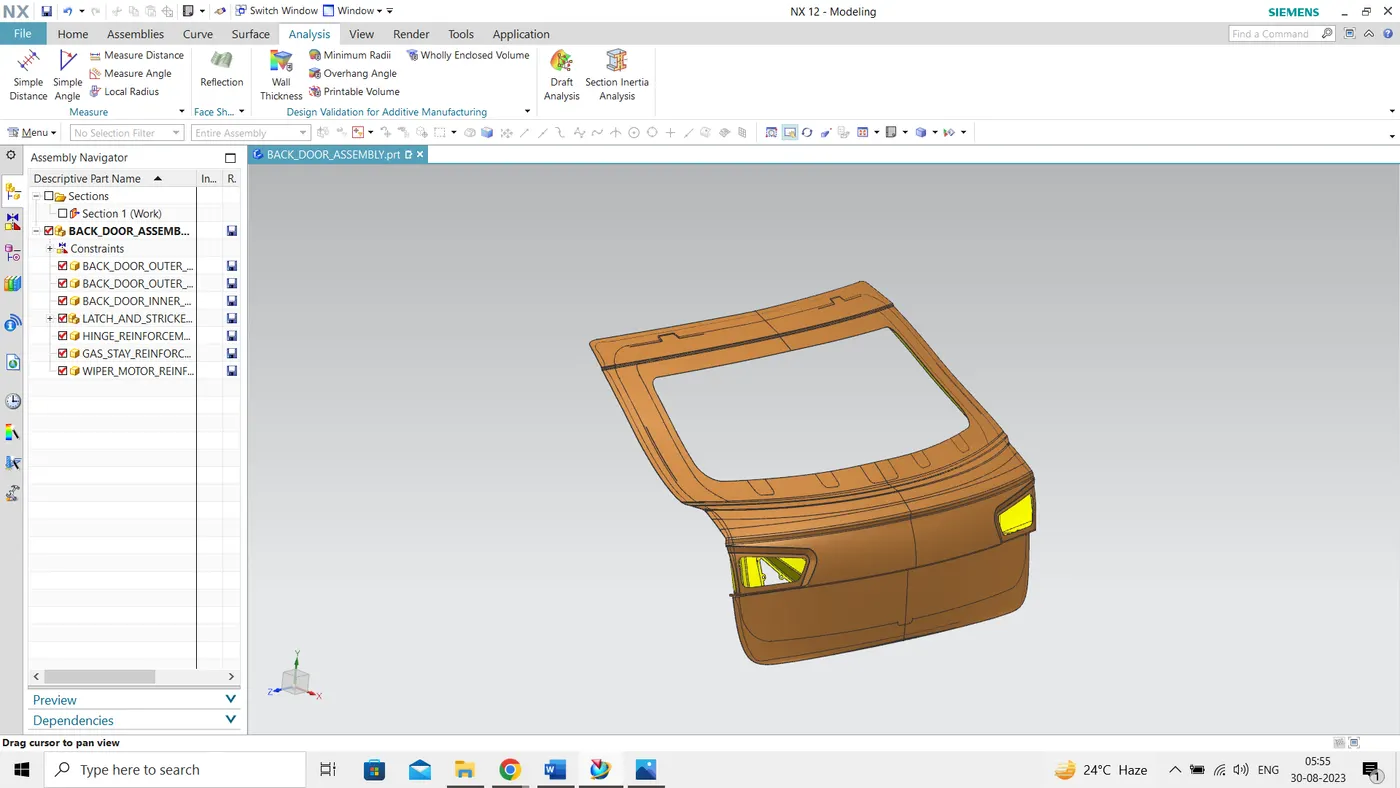
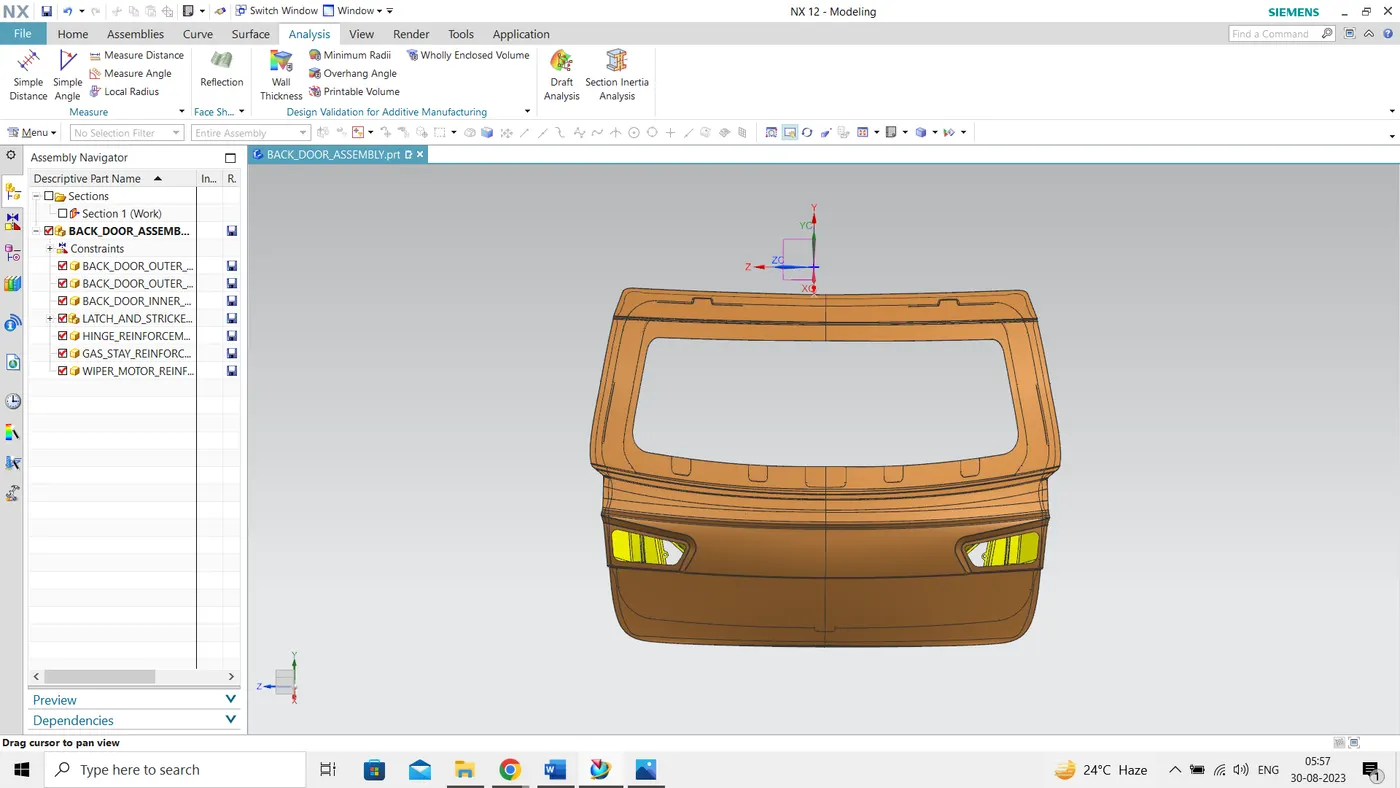
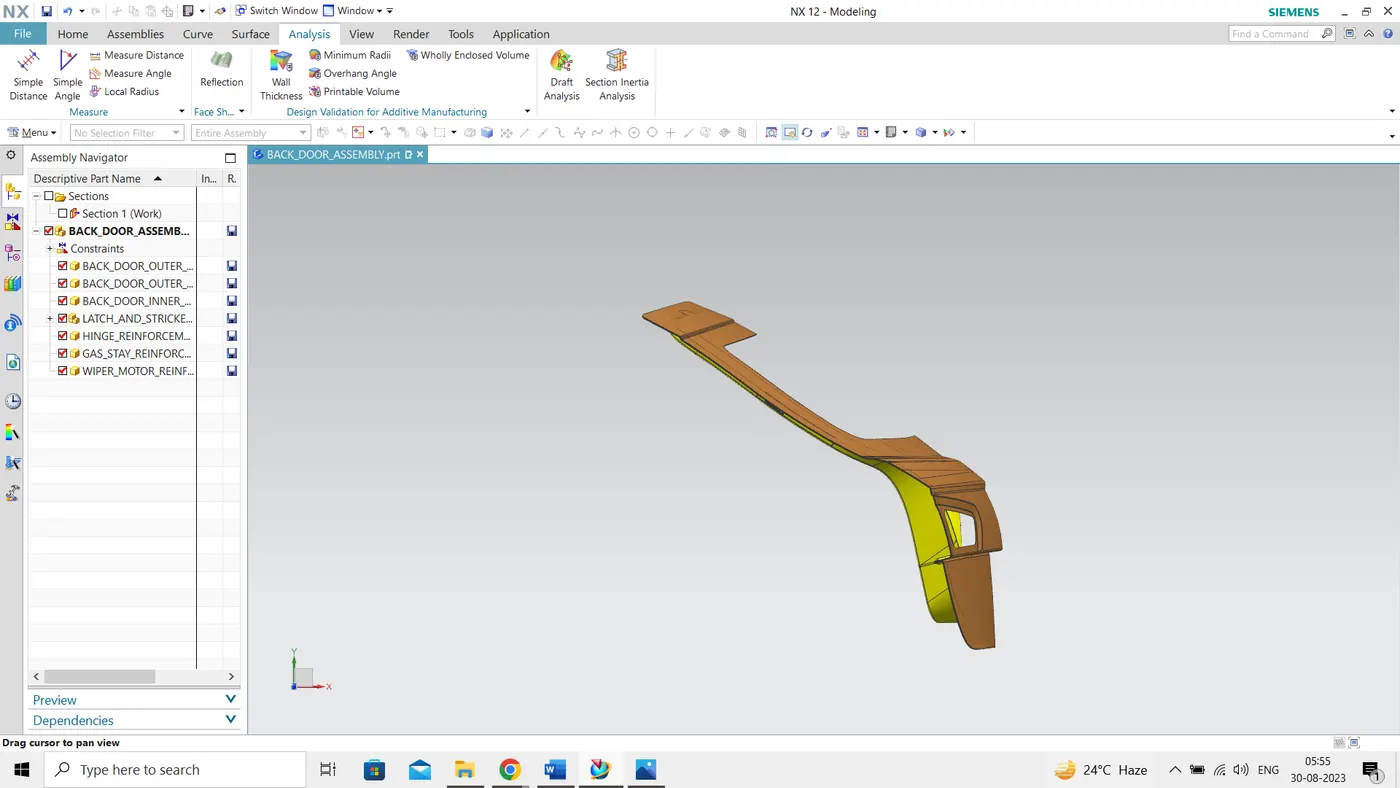
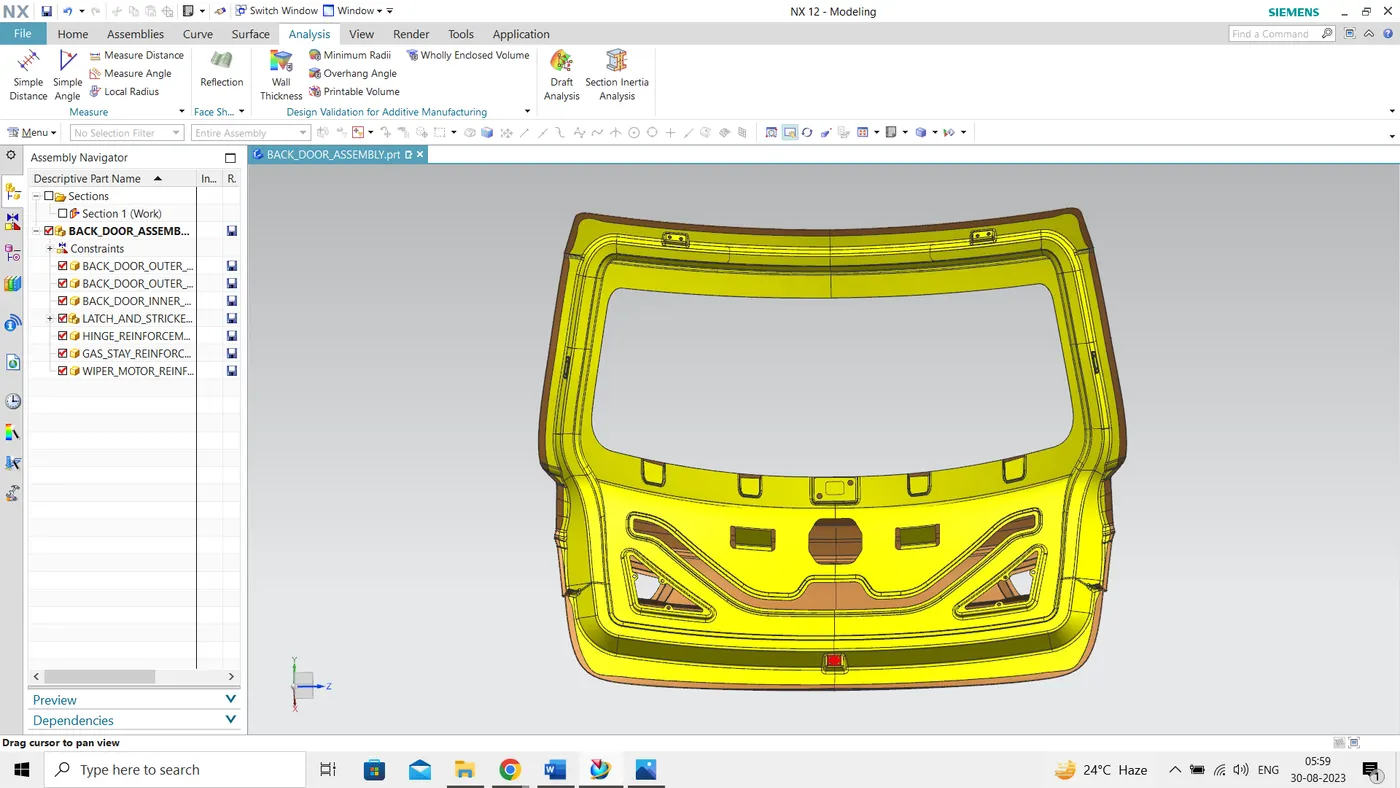
Thus the back door was designed and developed from the given styling surfaces with essential reinforcements and emboss. Draft analysis were performed and submitting the assembly and part files below (Attaching all files as a zip file expect "BACK_DOOR_INNER_PANEL" because the file size is exceeding 20mb unable to attach as single zip file therefore created another zip file and submitted separately)
Thank you.