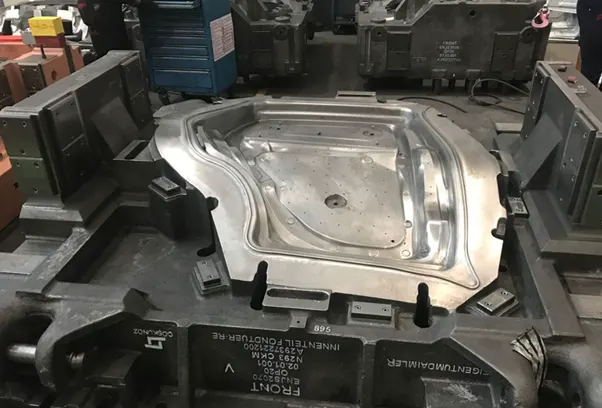
Design of backdoor
Backdoor Design
Objective : To design a backdoor from the given styling surface and add the necessary emboss and reinforcement where needed.
Introduction : A backdoor is a closure commodity. It provides access to the luggage compartment and just like the hood it is a swinging commodity which is supported with gas stay and hinges. The backdoor is designed taking into consideration the space for luggage area, rear visibility criteria, rear crash regulations and thickness of the door is made according to the space required for the wiper motor and headlight.In this project , it is considered that the inner panel is made of steel and the designs are made accordingly.

Backdoor assembly:
It consists of the following parts :
- Outer Panel.
- Inner Panel.
- Hinge Reinforcement.
- Latch Reinforcement.
- Gas stay Reinforcement.
- Wiper motor Reinforcement.
OUTER PANEL : It is the outer visible part of the backdoor which is joined to the inner panel through the hemming process. It is divided into two parts: the outer upper panel and outer lower panel.These two are joined by welding them together.
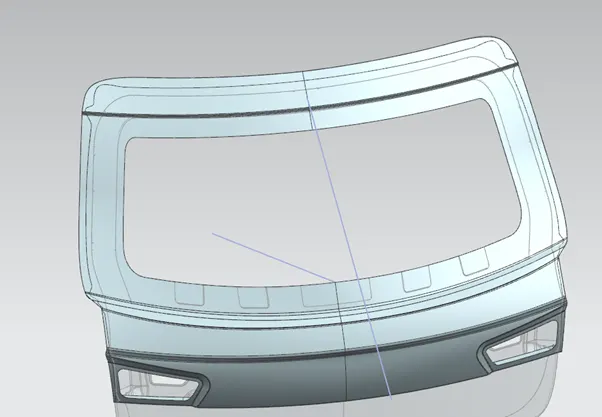
Outer upper panel
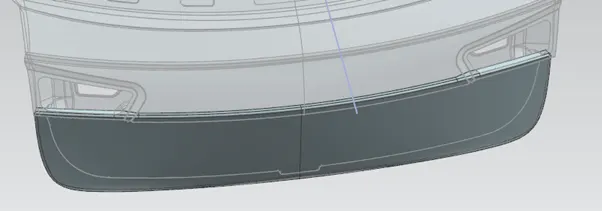
Outer lower panel
INNER PANEL :
This is the inner component of the backdoor which provides strength to the styling surface and contains the necessary reinforcement for latch and striker or the wiper. It creates space for the wiper motor and the headlight.
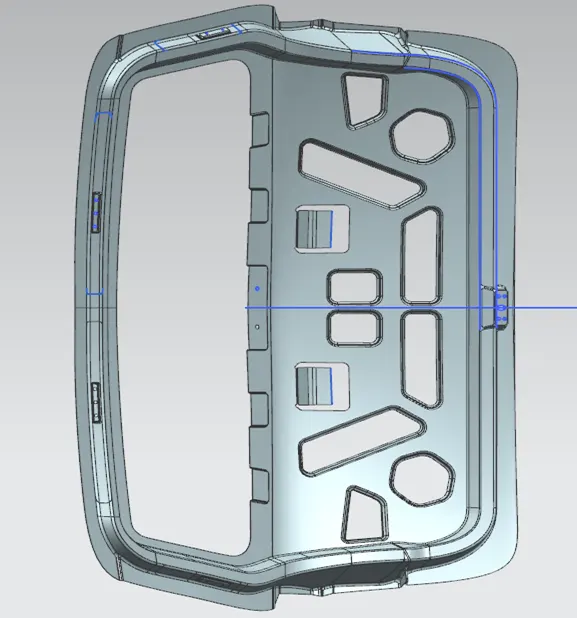
REINFORCEMENTS :- These are created to add strength in the regions where the emboss for hinges, gas stay,and wiper motor is made. These have thickness of 1.5mm while the outer and the inner panel has a thickness of 0.75mm.
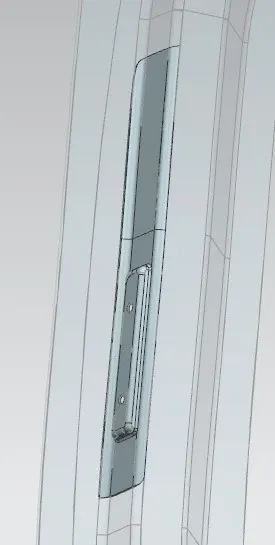
Gas stay reinforcement.
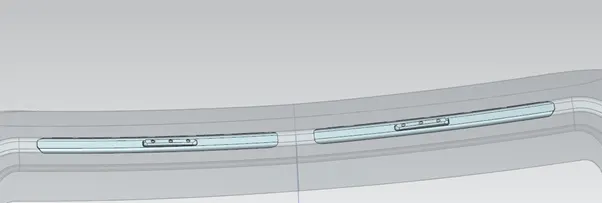
Hinge reinforcement
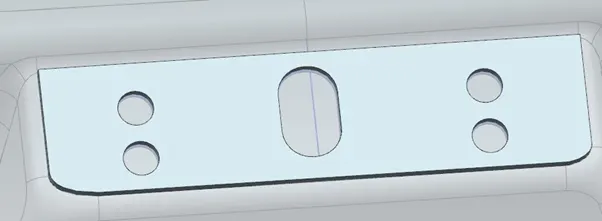
Striker reinforcement.
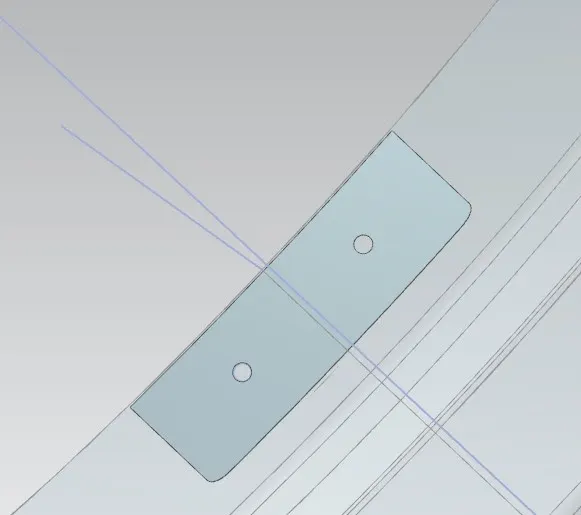
Wiper motor reinforcement
Design Intent :
- To increase the luggage area.
- To reduce the weight.
- To reduce the cost.
- To increase strength.
- To accomodate space for the wiper motor and headlight.
- To increase the rear visibility.
Design consideration :
|
Aluminium |
Steel |
|
Consideration of reinforcement design is neglected. |
Reinforcements are made separately. |
|
Budget is taken into consideration as it increases the cost. |
It reduces the cost. |
|
Since it is casted, a positive draft of 3 deg can be considered. |
It is deep drawn, so a positive draft of 7deg needs to be considered. |
|
Variation in local thickness can be considered. |
The thickness should be uniform. |
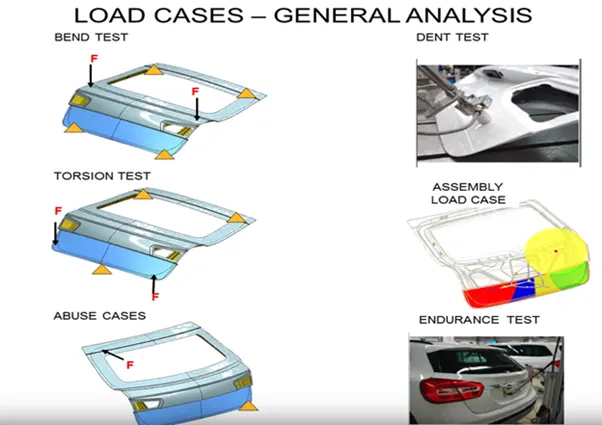
Design of gas stay or power spindle is done by considering the different load test and reinforcement position. These load tests are:
- Bend test.
- Torsion test.
- Dent test.
- Endurance test.
- Assembly load case
Inner Panel
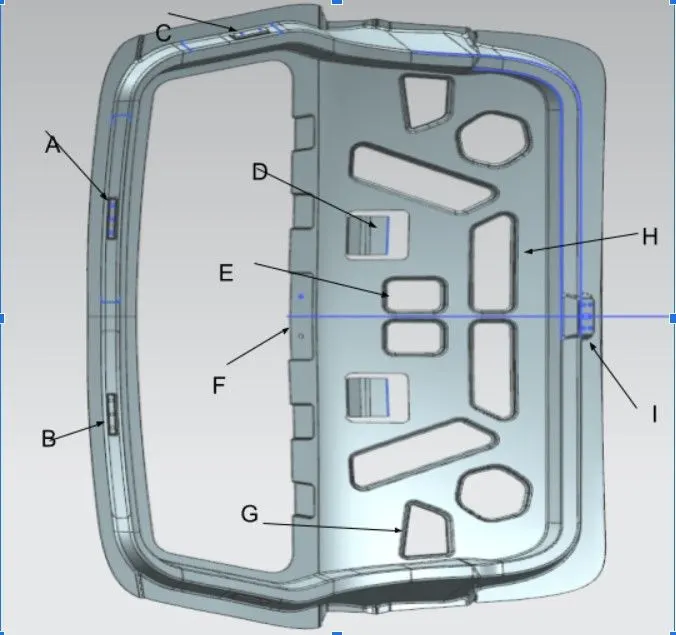
A/B- It is the hinge emboss region, where hinges are supported and to increase the strength in that region reinforcements are added at this part.
C- It is the emboss added to support gas stay and here the reinforcements are added to strengthen the area.
D- These cutouts are made to add mastic sealants. These sealants help to reduce NVH issues.
E- The cutout is made to position the wiper motor.
F- It is the wiper motor reinforcement area.
G- This is done to position the headlight and the latch and striker.
H- This ‘Y’ emboss is made to dissipate the force outside the passengers cabin and then a cutout is made to reduce the weight.This also improves the strength.
I- It is the latch and striker reinforcement region.
The cutouts are made symmetrically on the both sides to improve the Centre of gravity of the backdoor, these cutouts also reduce the weight.
Latch and striker region - In order to decide the position of the latch , the latch is placed tentatively, keeping both the hinges at the same axis, then a centre hinge axis point is located. Concept from the previous vehicle is taken and the latch is positioned, then the centre point of the latch and the midpoint of the axis hinges is taken as the radius and a circle is drawn. This circle is the trajectory of the backdoor opening and closing and the latch should be placed perpendicular to the trajectory in that region locally.
Here
‘O’ is the axis of the rotation of the latch.
‘D’ is the direction latch.
‘P’ is the path.
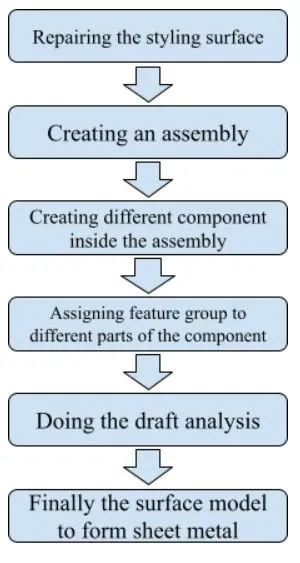
Design Methodology:
Manufacturing processes
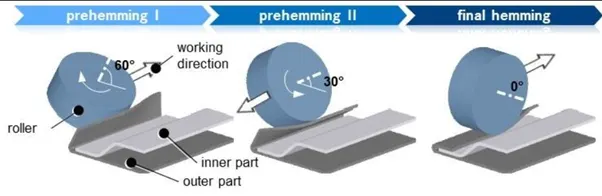
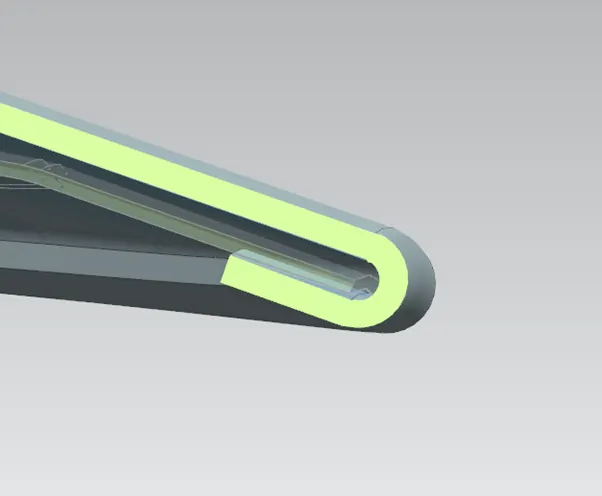
Hemming : It is a process in which rollers roll at the edge of the sheet metal of the outer surface enveloping the inner surface. Several rolling passes are done to get the desired shape. This is done to avoid spot welding for joining the inner panel and outer panel which can affect the styling of the outer surface.
Deep Drawing : Deep drawing is a sheet metal forming process in which a sheet metal blank is radially drawn into a forming die by the mechanical action of a punch. It is thus a shape transformation process with material retention. The process is considered "deep" drawing when the depth of the drawn part exceeds its diameter.