Design of backdoor
Tail Gate Design
Challenge:
Use the provided styling surface to come up with a back door design, use appropriate design methodologies, and provide the necessary reinforcements and embosses

Back Door or Tailgate:
Back door or tail gate is a rear door of an automobile to load or unload cargos with the help of hinges, gas stay and latch and striker.
Design of a tailgate:
A tailgate should be designed by considering few important factors like hinge placement section, wiper motor region, windscreen area, mastic connection, rear lamp mountings, gas stay mountings, parcel tray hook (optional), striker mounting, mastic sealant gap and electrical connection hole. By considering all the above important factors a proper tail gate can be designed.
Components of a tailgate:
1. Outer panel:
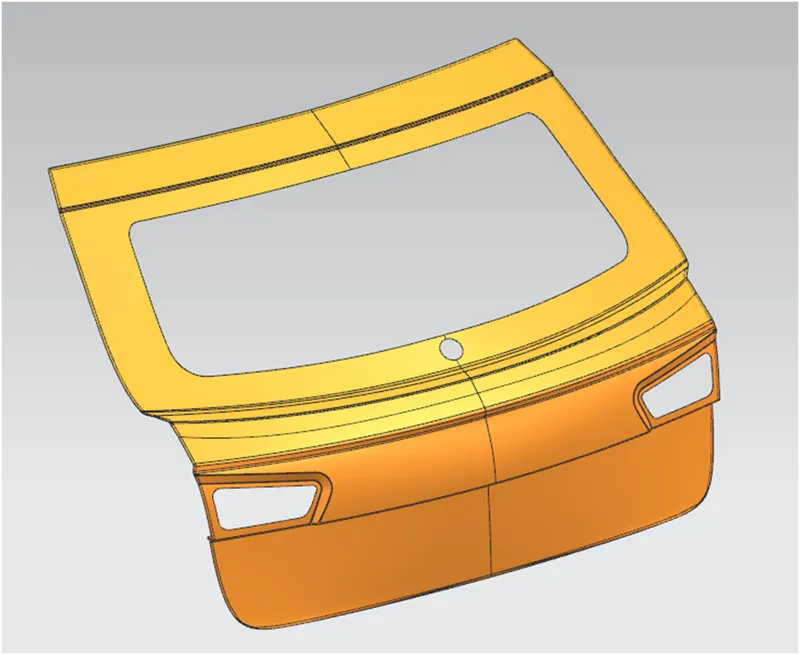
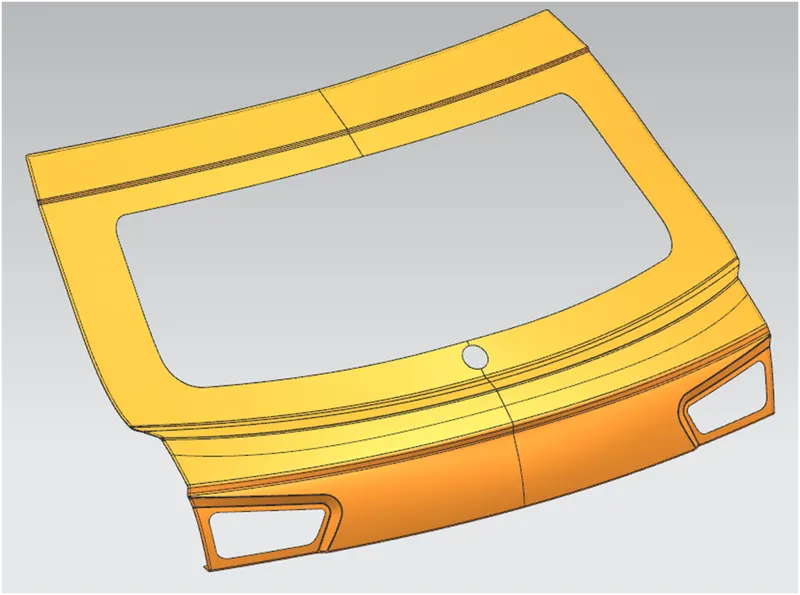
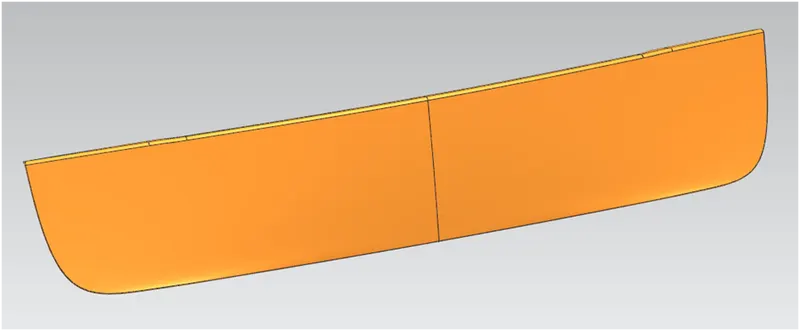
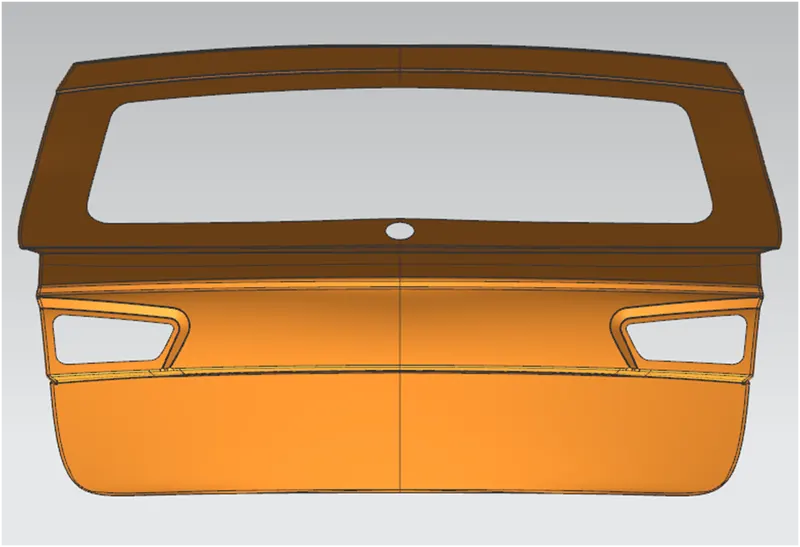
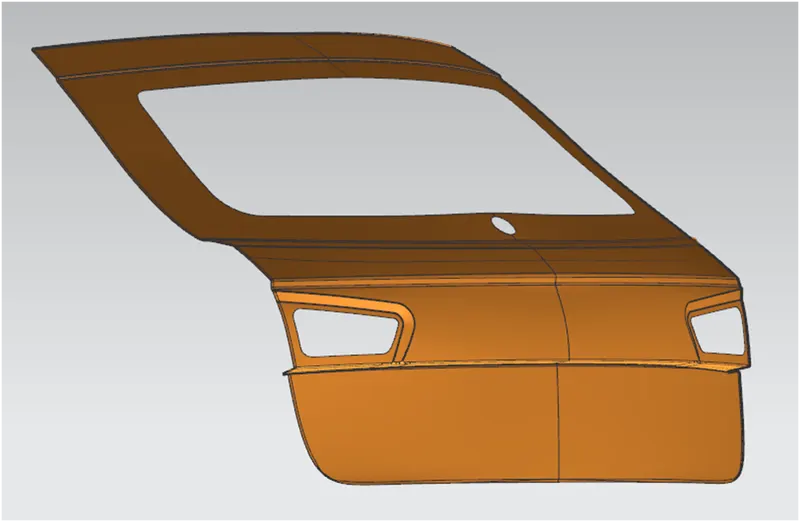
It is the exterior portion of a tailgate which gives aesthetic look of a car from rear view. It should also possess the mandatory fixings like rear wiper, rear lamps, etc., for its main function. From the provided skin data, it has two outer panels: 1. Upper outer panel and 2. Lower outer panel.
2. Inner Panel:
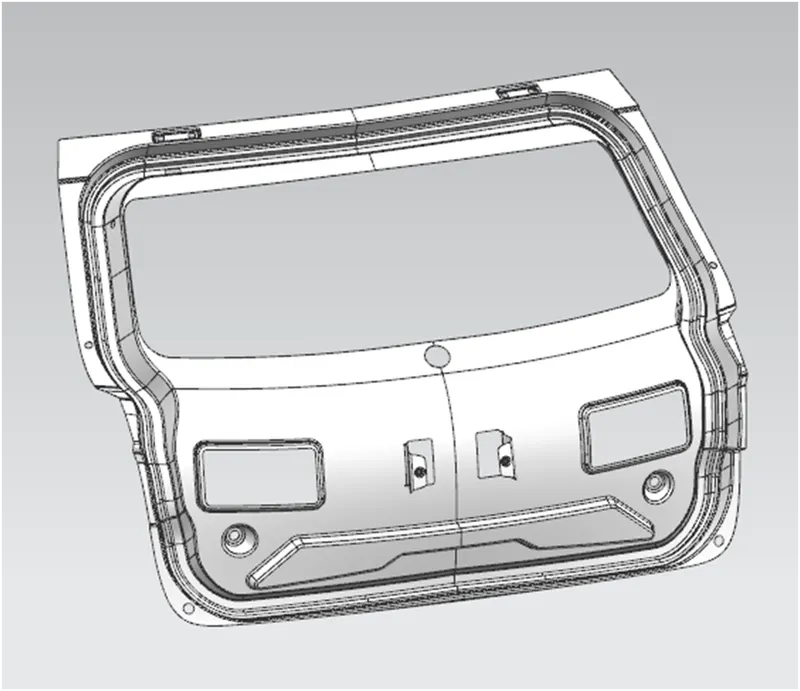
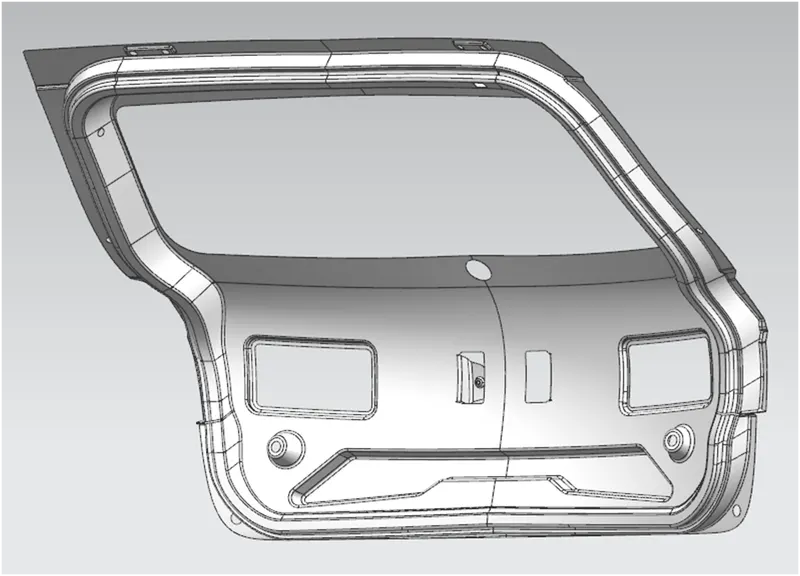
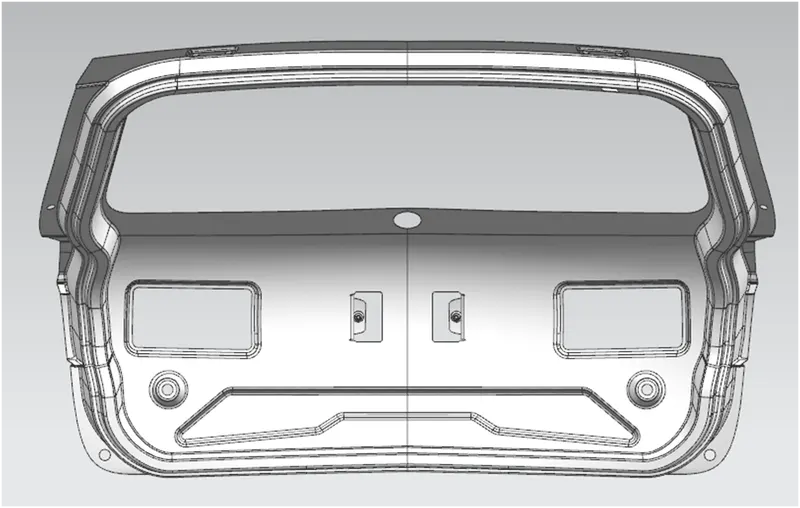
Inner Panel is the important portion of the tail gate which provides support and stability to the tail gate. The inner panel should be designed in such a way that should satisfy all the important factors of a tail gate design.
3. Reinforcements:
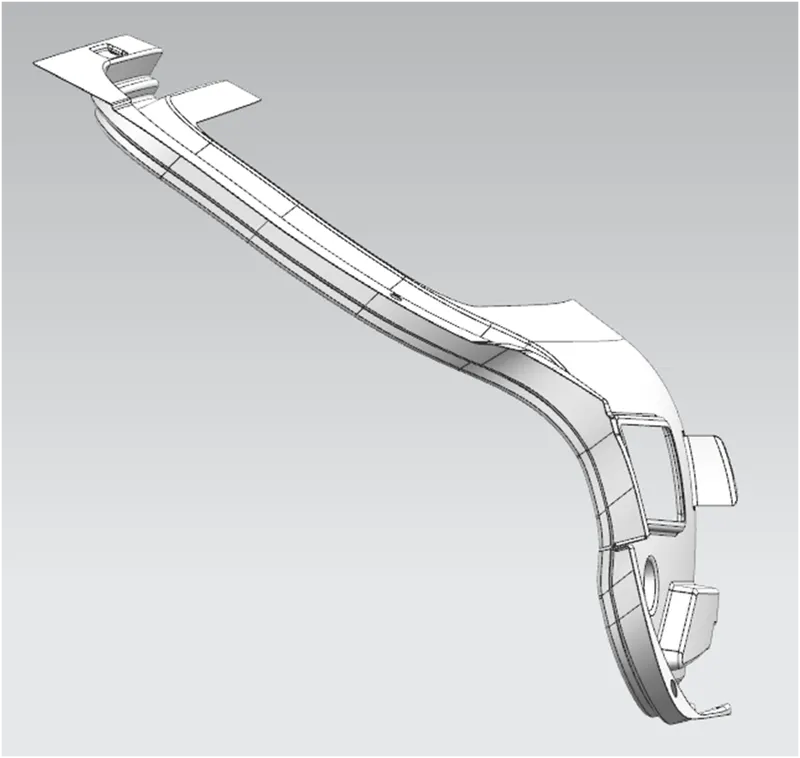
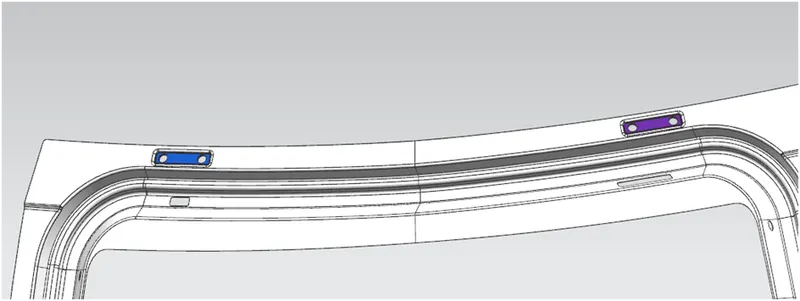
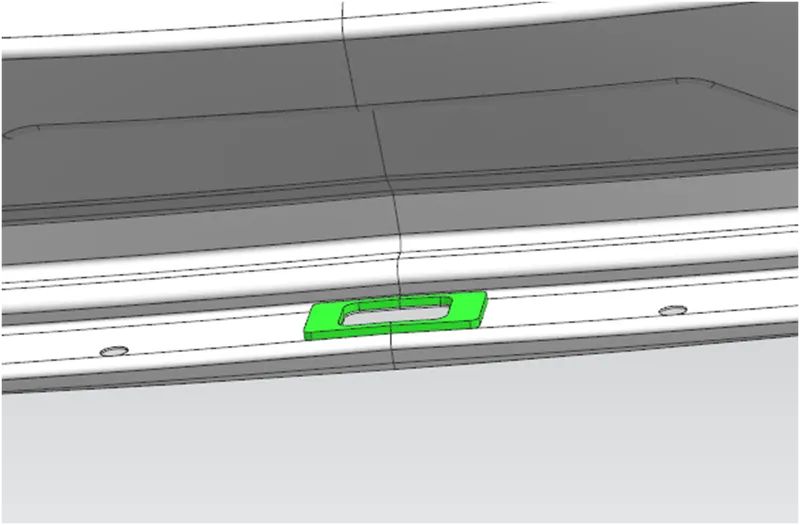
There are some important reinforcements to be made to provide additional support for the mountings. Those reinforcements are Hinge reinforcements and striker reinforcement.
Procedure for designing tailgate and its components:
The tailgate can be designed by using provided skin for outer panel and inner panel.
a. Inner panel:
By using the input skin data, inner panel can be designed by providing proper tooling axis. Tooling axis helps to design inner panel for the drawing process for the sealing flange. After creating the sealing flange, connecting flange can be created by using steps for additional strength to the inner panel. Emboss to be created to provide strength to the inner panel. Holes to be provided for rear lamp mountings, wiper motor mountings, striker mountings, parcel tray mounting, hinge mountings, gas stay mountings, bush mountings, sensor mountings, electrical wire connection mountings, etc,. Cut-out with flange to be provided for mastic connection with outer panel. Inner panel can be designed in such a way that it should be of single part for both upper and lower outer panel.
b. Outer panel:
The design of an outer panel is based on the inner panel design and it should be designed with proper hemming details to hold the inner panel.
c. Reinforcements:
Reinforcements can be designed after creating a location for hinges and striker holes. By using those locations, reinforcements can be designed for the mountings of hinges and strikers.
Draft Analysis:
Draft analysis is a method to determine the product is having positive draft while moulding or drawing. If the product is having negative draft angle, tool cannot be removed from die and conversely if the product is having positive draft angle, tool can be removed from die easily without any damages or tear in the part. Draft analysis to be performed to check whether the part is having positive draft or negative draft, so designers can give alternate solution for the part to achieve positive draft.
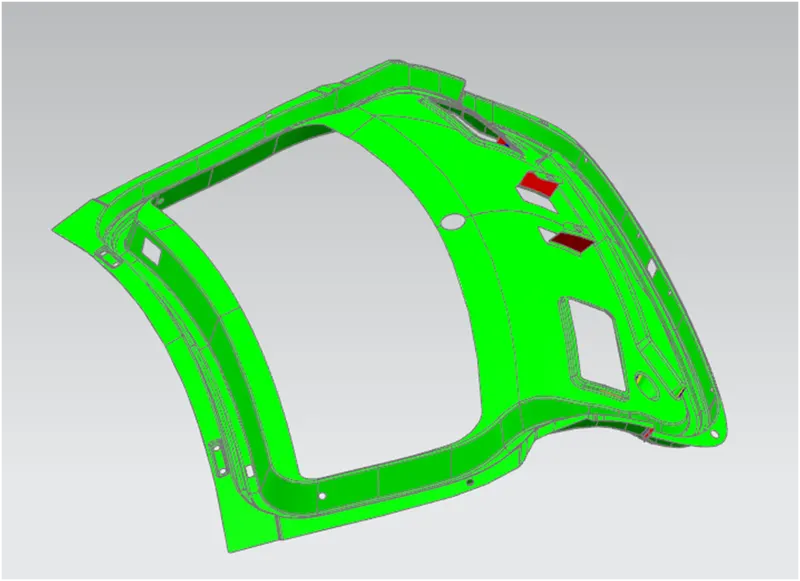
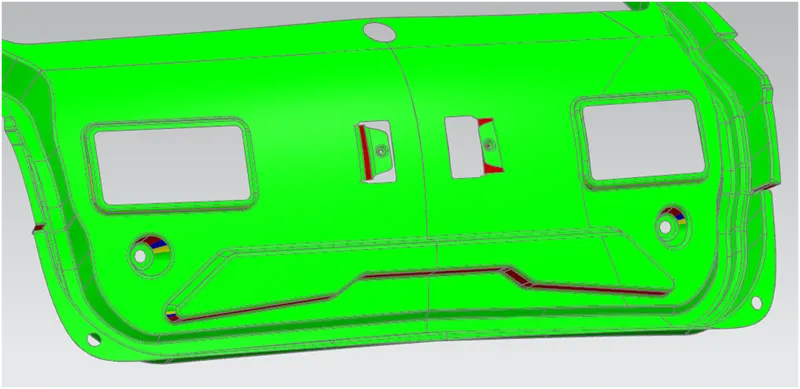
For the provided skin data, draft analysis has been performed and all the parts in it is having positive draft, so the parts can be easily manufactured for emboss and cut-outs. Images for all the parts with draft analysis are attached for clear view about draft analysis.
Draft analysis for below components:
Inner Panel:
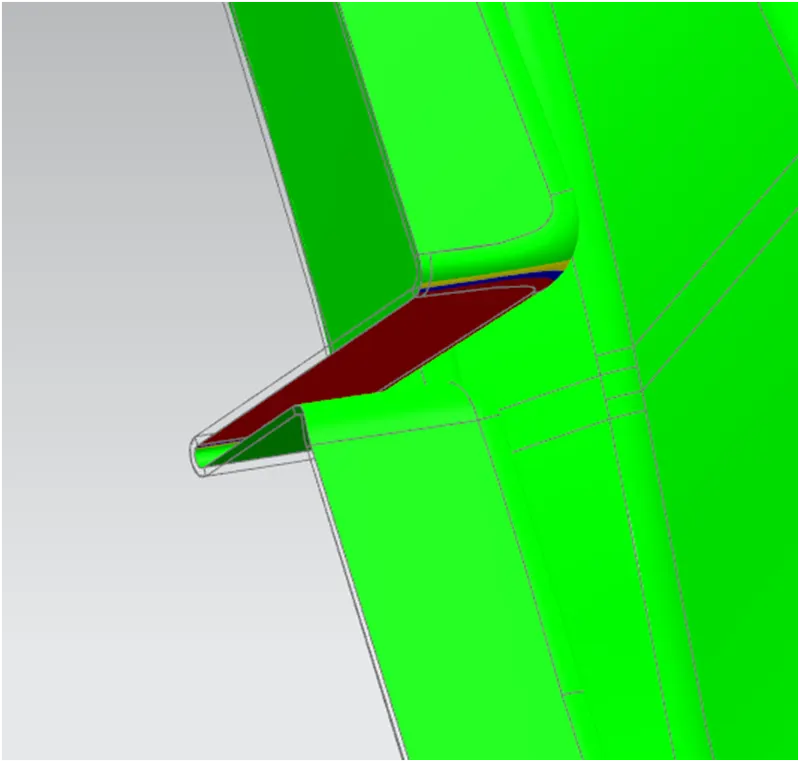
For Inner panel, it shows some faces with positive draft angle and some faces with negative draft angle. For those places where it is showing negative draft angle are manufactured by sheet metal bending method using separate tooling direction. For example, mastic connection flange, sheet metal to be cut and bend perpendicular to the face of the lower outer panel to provide support while having a rear crash. For circular emboss, rear lamp emboss and lower emboss it is created perpendicular with face of the lower outer panel for strengthening. The joining portion of the upper and lower outer panel area to be bended for inner panel using separate method. So these negative drafts can be omitted.
Conclusion:
Tail gate has been designed by considering all the factors and draft analysis also performed and had a positive draft.