Design of backdoor
BACKDOOR
AIM :- Design of the Outer upper pannel and lower panel, inner panel, and the necessary reinforcements by following the design parameters for the given styling surface.
INTRODUCTION :-
The trunk or backdoor of a car is the vehicle's main storage or cargo compartment, often a hatch at the rear of the vehicle. It is also called a tailgate.
The trunk or luggage compartment is most often at the rear of the vehicle. Early designs had an exterior rack on the rear of the vehicle to attach luggage trunk. Later designs integrated the storage area into the vehicle's body, and eventually became more streamlined. The main storage compartment is normally provided at the end of the vehicle opposite to which the engine is located.
A backdoor is usually made up of 1 inner panel and 2 or 3 outer panels joined together by hemming and spot welding wherever necessary.The material used for backdoor varies as per the price range of the vehicle.Most of the low cost vehicle use steel as it is cheaper and use parts are stamped using moulds.These parts are usually of uniform thickness and reinforcement are added to improve local strength where needed.
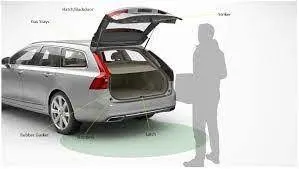
Types of doors based on working position -
- Top Mounted Door
- Side mounted Door
- Bottom Door
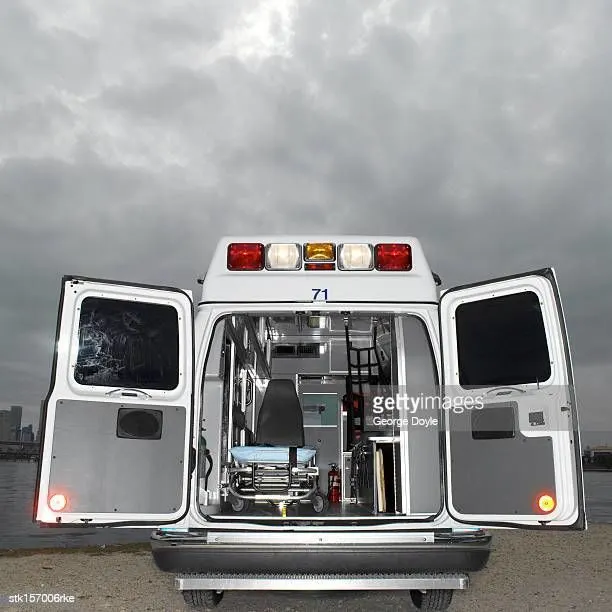
Gap and Flushness :- As vehicles are assembled, the fit-up of various parts is inspected by measuring the width of the gap between two adjacent panels and the alignment of the two surfaces, also called flushness. Mechanical devices struggle to measure gap and flush features on such complex surfaces.
There are two types by which backdoor is generally operated -
1. Electrically Operated
2. Gas Stay Powered
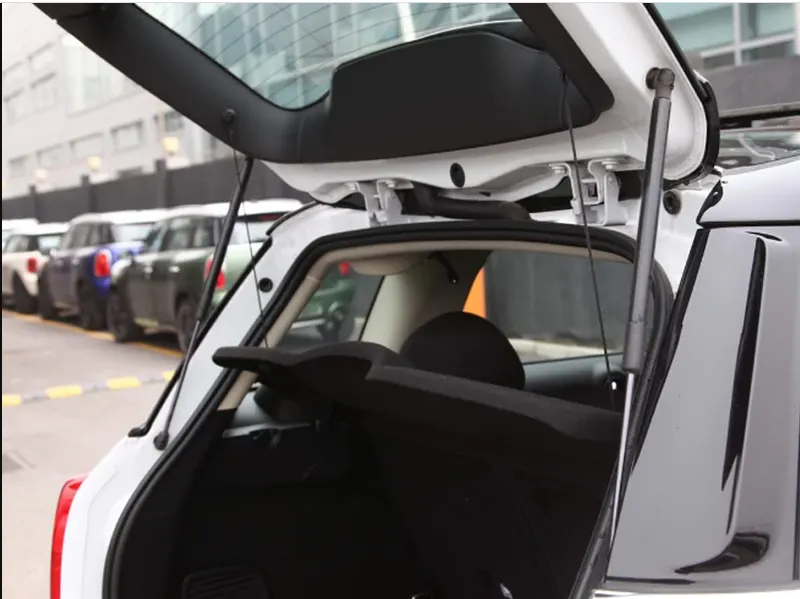
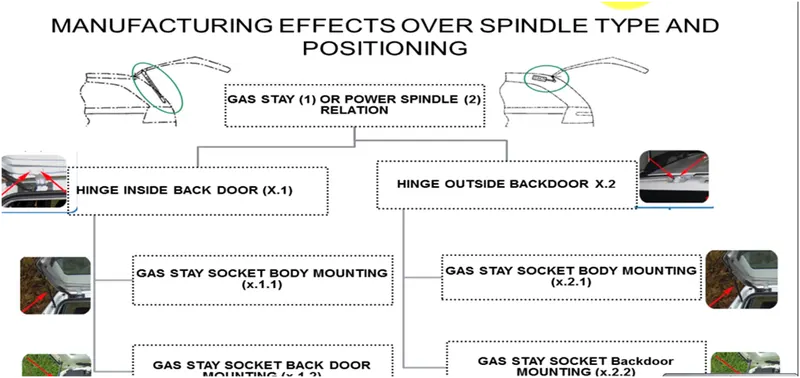
GAS STAY TYPE
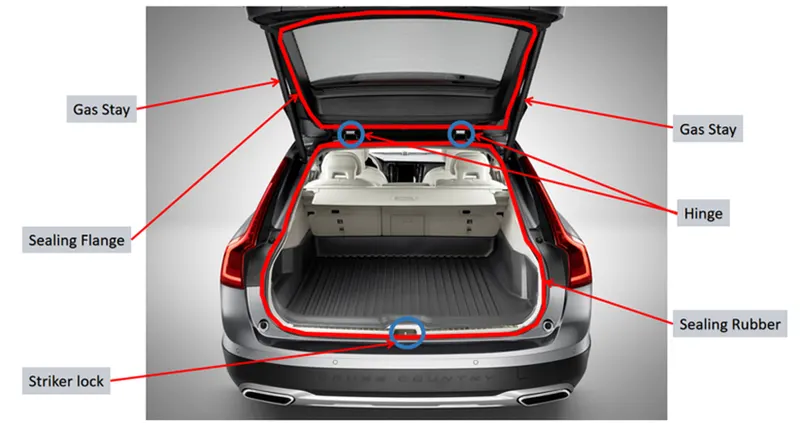
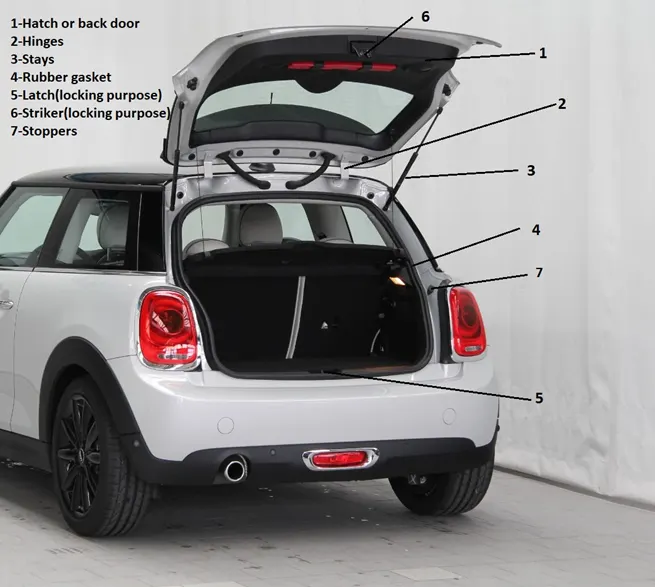
Gas stay types backdoor/liftgate/ta ilgate is an ideal and most commonly used tailgate mechanism from lowersegment car to luxury car segment. The ideal components of tailgate consist of a hinge,door,gas stay and some rubber beadings for sealing of door.
POWERED LIFT SYSTEM
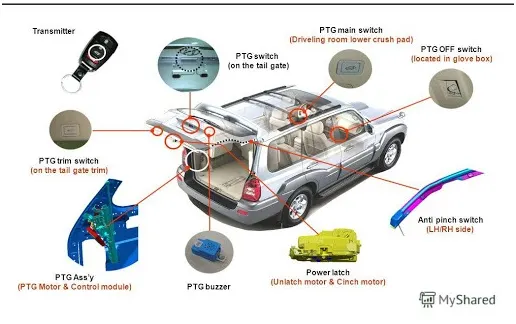
Power trunk lid system is another sophisticated way of trunk/liftgate opening mechanism which is to automatically open and close of the trunk/liftgate and release of the latch by the touch of a button. The following image shows the component as used in the powered trunk/back door lift system.
Powered trunk lift system consists of a power latch,anti-pinch switch,PTG assembly's,PTG main switch.When the switch is pressed in the compartment or outside the power latch releases the latch and the entire backdoor is
opened.The anti-pinch switch is located in order to avoid acc idental hand insertion during the operation of the door.
The Main Parts of the Back Door:
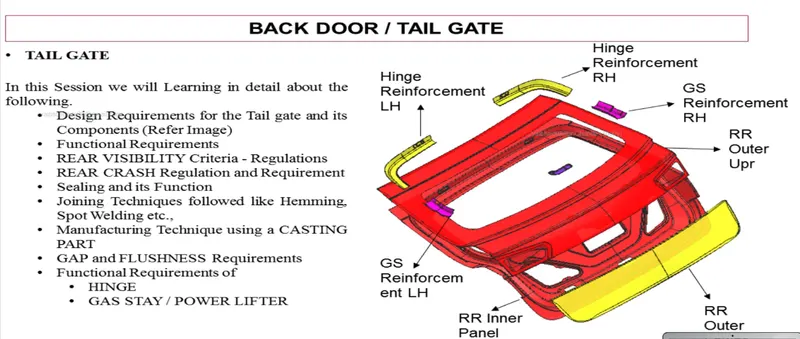
- Outer Upper Panel.
- Outer Lower Panel.
- Inner Panel.
- Gas Stay Reinforcement Left and Right
- Hinge Reinforcement LH and RH.
- Striker Reinforcement.
- Wiper Reinforcement.
Different Sheetmetal processes used for manufacturing the Back Door
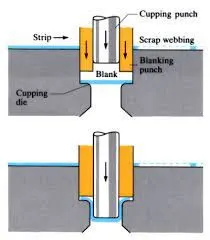
Deep Drawing:
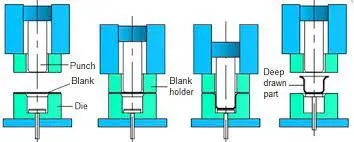
Deep drawing is a sheet metal forming process in which a sheet metal blank is radially drawn into a forming die by the mechanical action of a punch. It is thus a shape transformation process with material retention. The process is considered "deep" drawing when the depth of the drawn part exceeds its diameter. This is achieved by redrawing the part through a series of dies. The metal deep drawing process is an effective method of manufacturing of cups, cans and other similar deep drawing products. The deep drawings having two main categories -
- First- stage drawing: The blank shape of metal is placed on the die and contact with the punch. When the metal specimen is flat piece of sheet metal used in forming and finish the product. Initially the punch moves in downward direction. The outer rim of blank is subjected to pure radial drawing (drawing toward in vertical axes) between die and blank metal. The metal become a bend and sliding over die and also stretched between die and punch. The metal in vicinity of punch head and contact with it bend and slide over radii and stretch over punch head.
2. Redrawing: The components drawn from first stage again it is redrawn convert into more depth to form a cup shape in the die and punch. The second stage of drawing is called as redrawing.
Embossing:
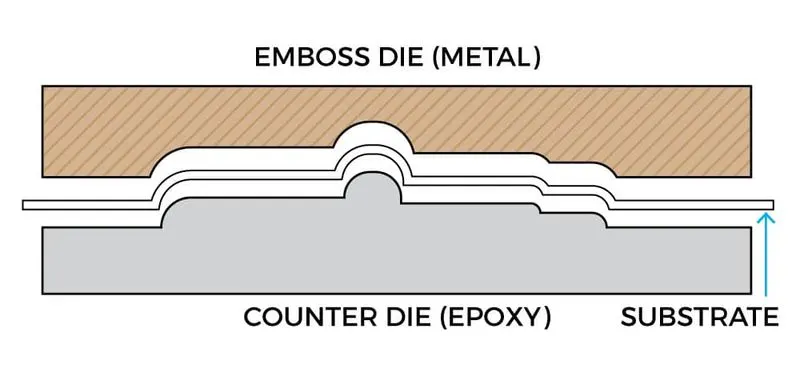
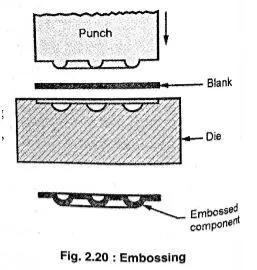
Embossing is a metal forming process for producing raised or sunken designs or relief in sheet materials by means of matched male and female roller dies, theoretically with no change in metal thickness or by-passing sheet or a strip of metal between rolls of the desired pattern. Metal sheet is drawn through the male and female roller dies producing a pattern or design on the metal sheet. Depending on the roller dies used, different patterns can be produced on the metal sheet.
Hemming:
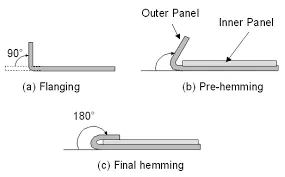
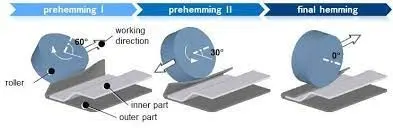
Hemming is a forming operation in which the edges of the sheet are folded or folded over another part in order to achieve a tight fit. Normally hemming operations are used to connect parts together, to improve the appearance of a part and to reinforce part edges.
In car part production, hemming is used in assembly as a secondary operation after deep drawing, trimming and flanging operations to join two sheet metal parts (outer and inner) together. Typical parts for this type of assembly are hoods, doors, trunk lids and fenders.
Hem and Corner Reliefs
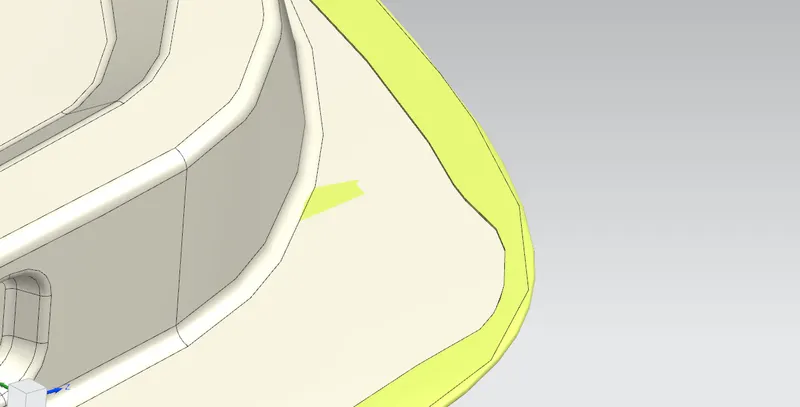
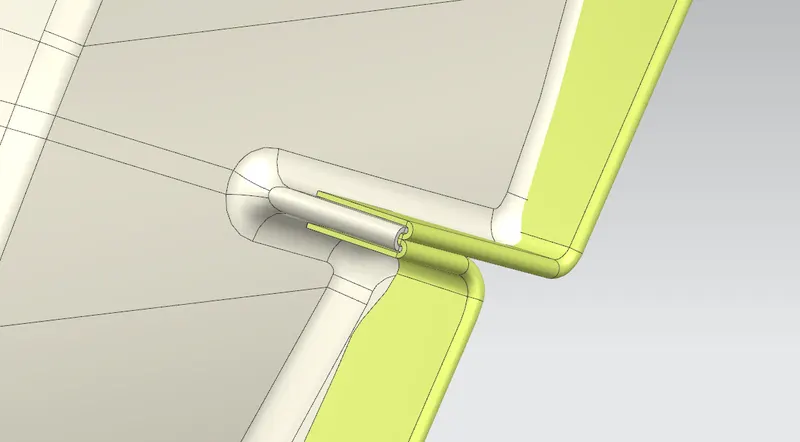
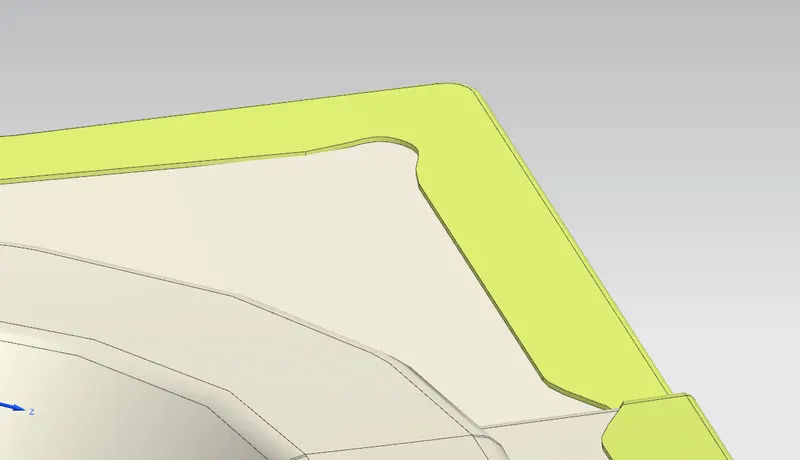
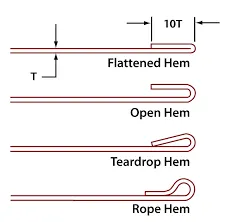
There are various types of hemming operations:
- Conventional die hemming: In conventional die hemming, the flange is folded over the entire length with a hemming tool.
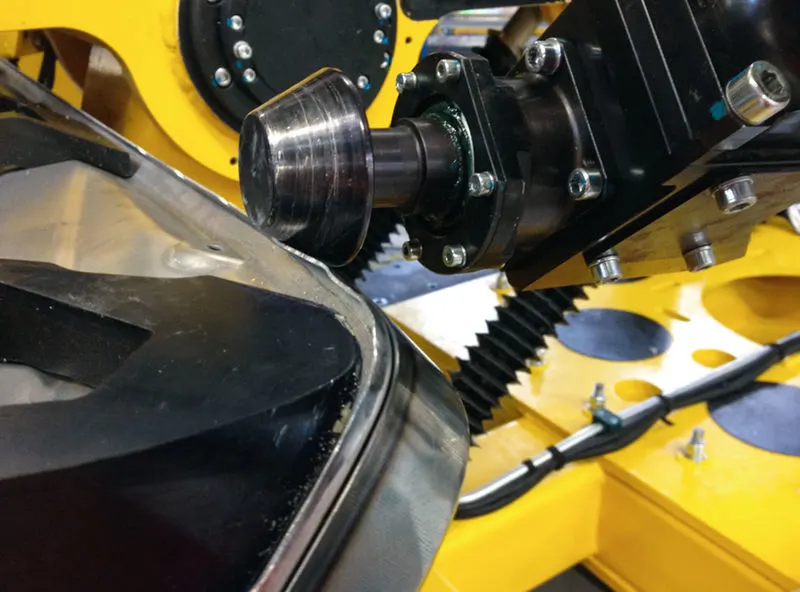
- Roll hemming: In roll hemming, the hemming roller is guided by an industrial robot to form the flange.
-
Open Hem: A Hem has a full round feature and a return flange. In open hem bend angle is equal to 180 degrees.
-
Tear drop Hem: In tear drop hem the bend angle is greater than 180 degrees.
-
Closed Hem: Hems without any inside radius are called as closed hem. Closed hems are not recommended if the hem geometry is to be painted or if the material used is SST or Aluminium.
Blanking
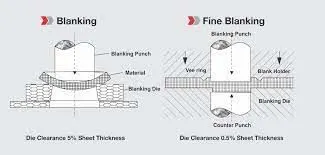
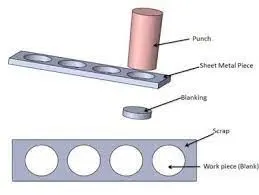
When required, blanking is the first step of the stamping process. Blanking is the process of cutting larger sheet or coils of metal into smaller, more manageable pieces. Blanking is usually performed when a stamped metal piece will be drawn or formed.
Piercing
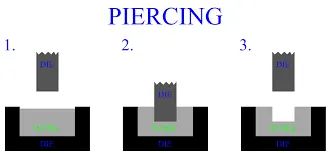
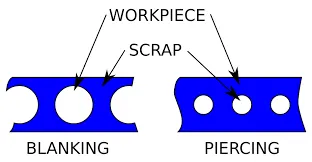
If a part requires slots, holes, or other cutouts, piercing can be employed. Piercing, which can be performed simultaneously with blanking, punches the requisite shapes out of the metal sheet.
Bending
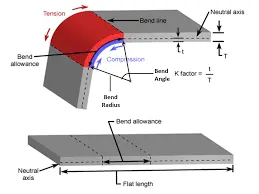
Bending is a fairly self-explanatory process. The part-in-progress is placed on a specially designed die and a ram pushes against the metal, providing the required bend. Bending is performed after drawing, as attempting to punch an already bent piece of metal causes the entire part to deform.
BACK DOOR DESIGN
The design consideration of back door are -
- Visibility Criteria
- Force Dissipation
- Latch and Stricker Positions
- Hinge Position
- Gas Stay Position
- Hemming and Relief Areas
PARTS OF BACKDOOR
- Back door outer panel (upper and lower)
- Back door inner panel
- Hinge reinforcements
- Gas stay reinforcements
- Latch and striker reinforcements
- Wiper motor reinforcements
- Outer Upper and Lower Panel:
The outer upper and lower pannel are the styling surfaces of the back door.
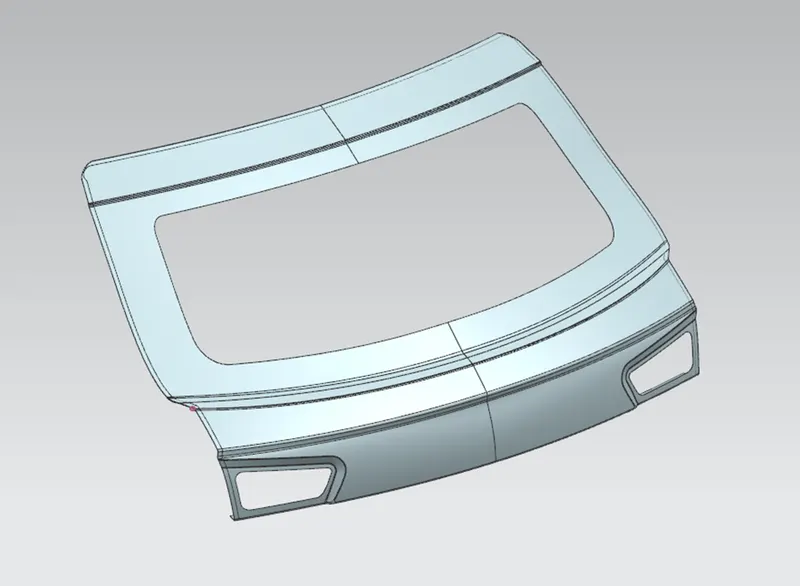
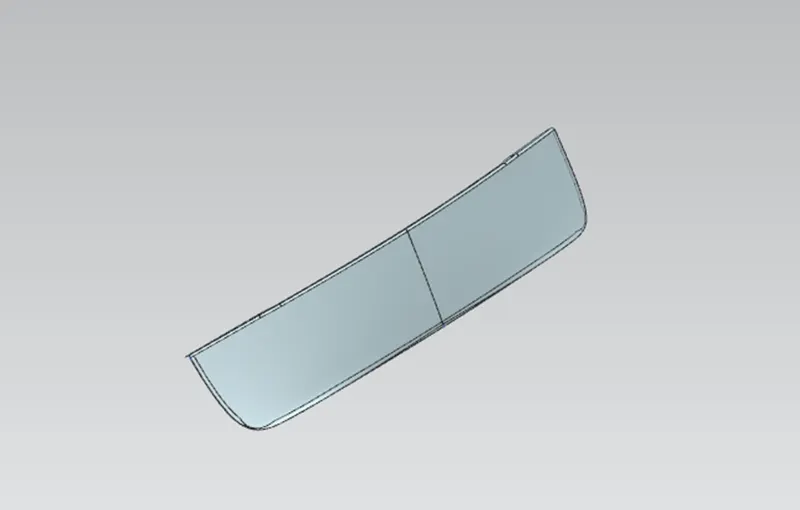
2. Inner Panel
The inner Panel is a component which is used for strengthening the door. It is one of the most important components on which all accessories are mounted like Hinges, Gas Stay, Wiper Moter , Latch and Striker etc. Back door outer panel is designed based on hinge, gas stay, wiper motor position and reinforcement as well as visibility criteria .Suitable tooling direction is created for trouble free manufacturing process. In this design stamping operations created based on this tooling direction. Embosses are provided in this design for force dissipation. In this design appropriate clearance given in mastic areas .The inner panel thickness is 0.75 mm.
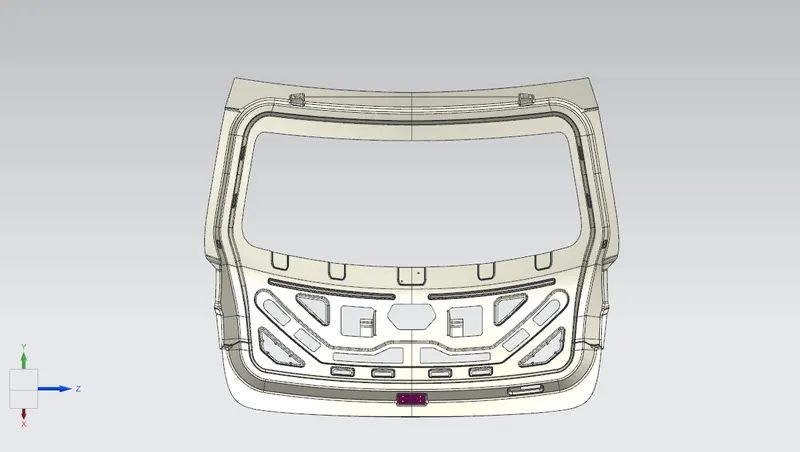
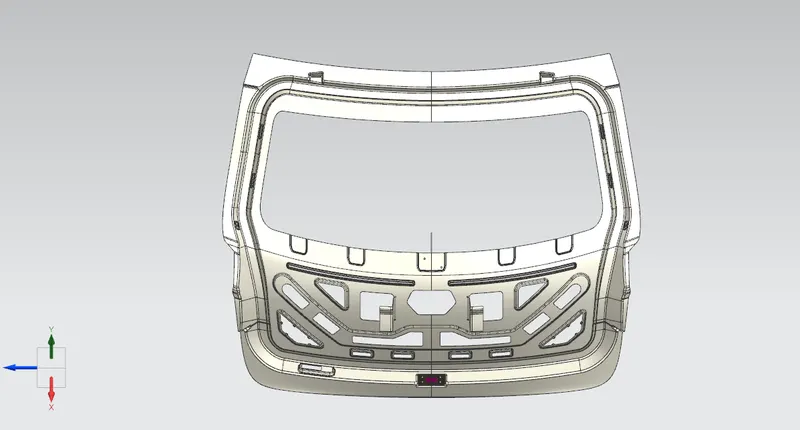
Reinforcements in inner panel
- Hinge reinforcement
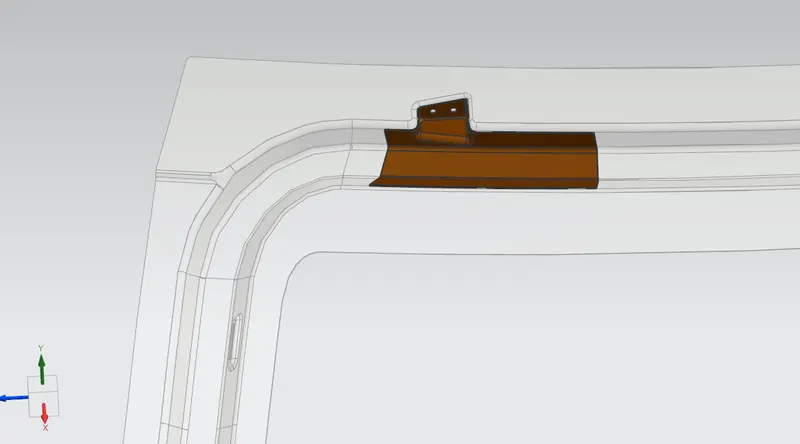
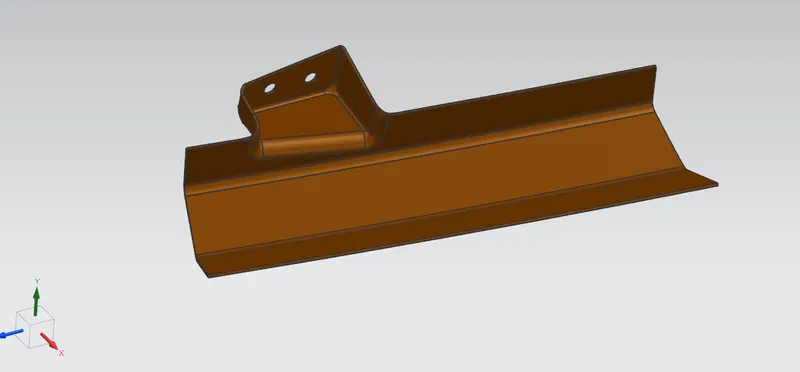
- Gas stay reinforcement
Gas stays support the weight of the back door while they are open. More load act on this region, so suitable reinforcements are provided for better strength. it is spot welded on the inner panel.
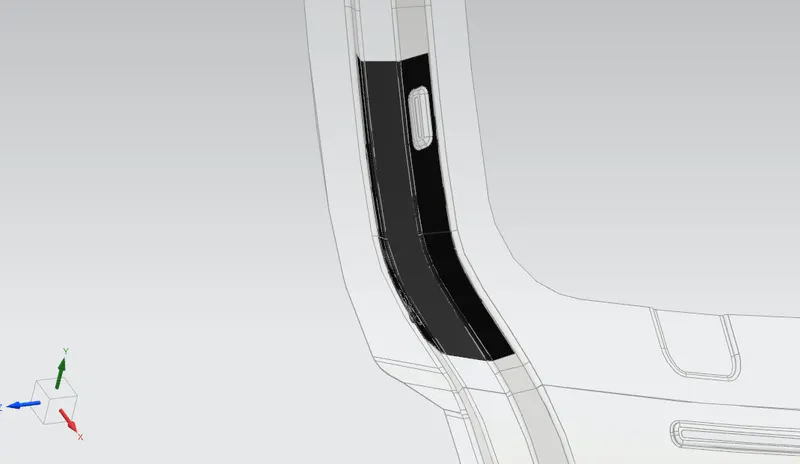
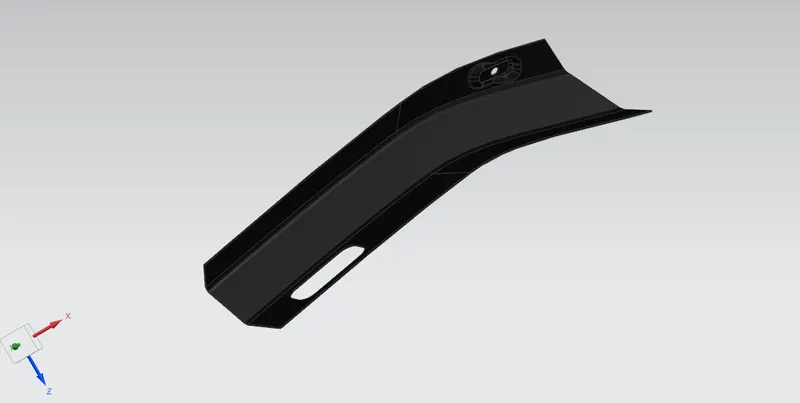
- Wiper Motor Reinforcement
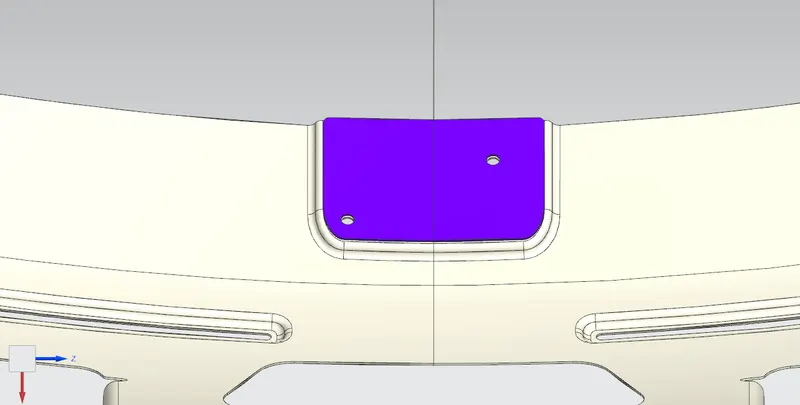
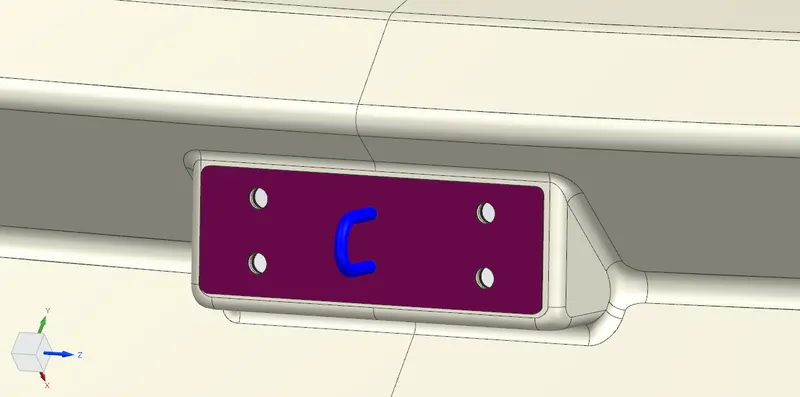
- Latch and striker reinforcement
The striker is designed to create a tight fit between the door and the seal on the cab. The door open and shut several times in a day. So more force acting on this area. The reinforcement given in the latch and striker mounting area to increase the strength. It is spot welded on the inner panel.
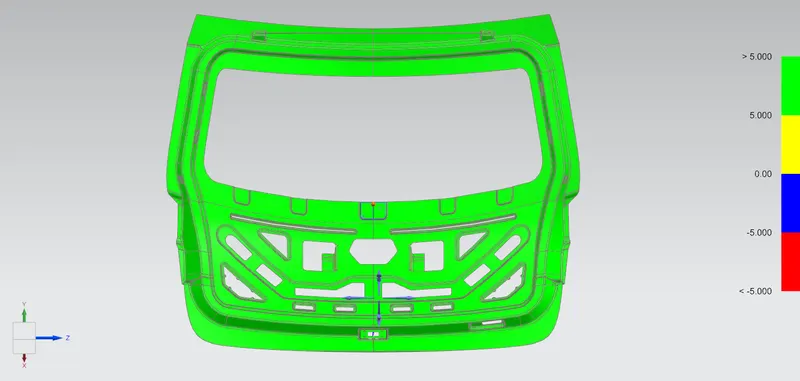
Draft Analysis:
CONCLUSION :-
The back door outer and inner panel were designed with the help of the styling surface along the tooling direction.
Draft analysis was performed on the inner panel and All the reinforcements were designed and placed at appropriate positions.