Design of backdoor
The purpose of this report is to provide an overview of the design considerations and important features related to car backdoor design. The backdoor of a car is a crucial component that serves multiple functions, including providing access to the boot space or luggage area, ensuring back visibility, accommodating lighting elements, and contributing to the overall aesthetic and functionality of the vehicle.
When designing the backdoor, it is typically integrated with the master section of the back roof rail, ensuring proper alignment with the sealant flange and taking into account other relevant considerations due to its connection to the side body of the car.
The back door is equipped with back lights or tail lamps, including a "Third brake light" for braking signals. It also accommodates the back windshield, which is fixed between the inner and outer panel of the door. In certain cases, the back door may provide a mounting location for a spare wheel, and it may also feature a holder for the car's registration number plate. Overall, the back door plays an essential role in providing a cohesive and enclosed design for the car.
The Types of backdoor can vary according to the car and requirements such as:
- Top Mounted door
- Side mounted door
- Bottom Mounted Door
Design Consideration:-
Rear Visibility One of the primary considerations in car backdoor design is maintaining adequate rear visibility for the driver. This involves careful placement and sizing of windows, ensuring optimal mirror positioning, and minimizing blind spots. The rear windshield is an integral part of the backdoor design, and its dimensions and curvature are carefully determined to provide clear visibility while maintaining structural integrity.
Structural Integrity and Safety The backdoor design must prioritize structural integrity to ensure passenger safety. It should be able to withstand impact forces in the event of a collision. Materials selection, reinforcement techniques, and structural elements are essential aspects of the design process. Crashworthiness standards and regulations must be adhered to, ensuring that the backdoor contributes to overall vehicle safety.
Ergonomics and Ease of Use The design of the backdoor should consider ease of use and ergonomic factors. The handle placement, opening mechanism, and weight distribution are crucial to provide a comfortable and convenient user experience. Additionally, considerations such as smooth operation, noise reduction, and resistance to weather conditions (e.g., water ingress prevention) are taken into account.
Functional Integration The backdoor design also incorporates various functional components and integration points. These include mounting locations for back lights, tail lamps, and a "Third brake light" to ensure proper lighting functionality and compliance with regulations. Some backdoors may feature a spare wheel mount or provision for a car registration number plate. The integration of these elements should be seamless and enhance the overall design coherence.
Design Features:-
Materials and Construction :- Selection of appropriate materials is critical for the backdoor's strength, weight, and durability. Common materials include steel, aluminum, and composite materials. The choice of material depends on factors such as cost, weight, safety requirements, and manufacturing capabilities. Construction techniques like stamping, welding, bonding, and sealing are employed to ensure a robust and reliable assembly.
Aesthetics:- The backdoor design significantly contributes to the overall aesthetics of the vehicle. It should harmonize with the car's exterior design, body contours, and proportions. Considerations such as color matching, surface finishes, and design elements like character lines and branding placement are taken into account to create a visually appealing and cohesive design.
Sealant and Weatherproofing:- To prevent water and air leaks, the backdoor design incorporates sealant flanges and weatherproofing measures. These are vital to maintain cabin comfort, prevent corrosion, and ensure longevity of the vehicle. Sealing technologies, such as rubber gaskets and weatherstrips, are used to create a tight seal between the backdoor and the car's body.
Components of Back Door:
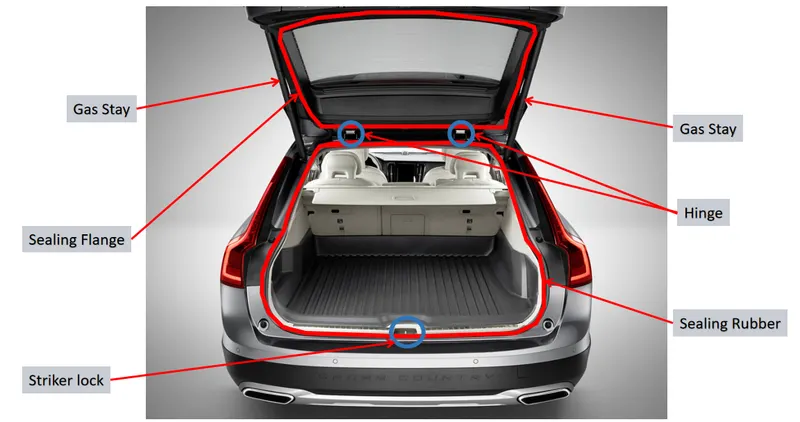
- Inner Panel
- Outer Panel Upper / Lower
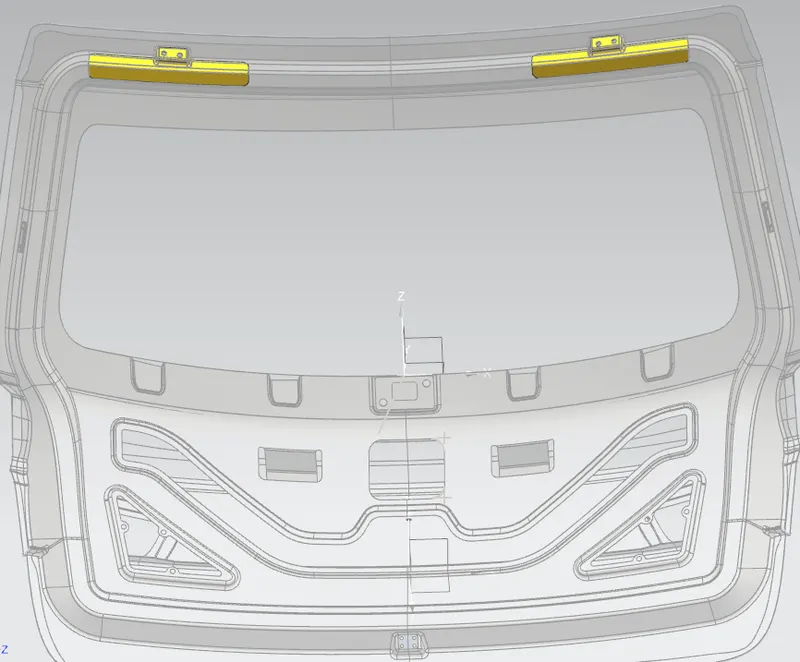
- Hinge Reinforcement LH / RH
- Wiper motor reinforcement
- Latch Reinforcement
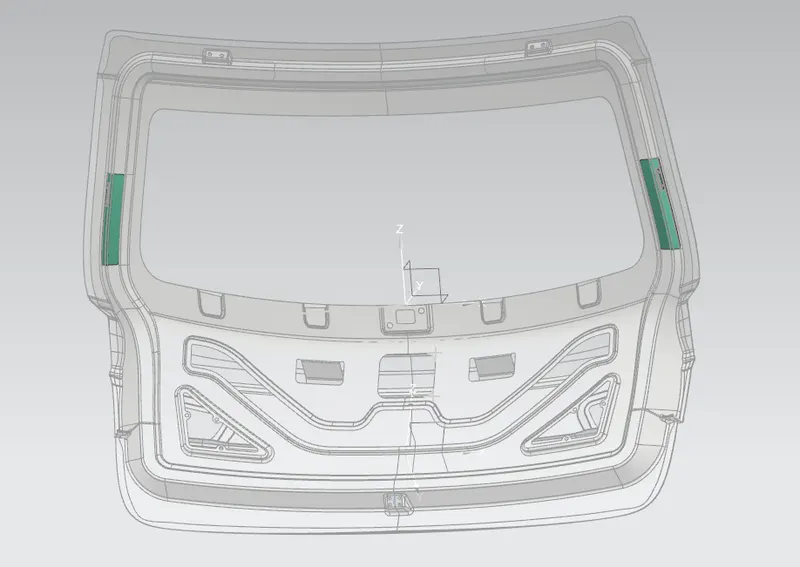
- Gas Stay Reinforcement LH / RH
Manufacturing Process:-
Sheet Metal Forming For backdoors made of steel or aluminum, the manufacturing process often starts with sheet metal forming. Large sheets of the chosen material are cut to size, and then various forming techniques are employed, such as stamping or deep drawing, to shape the metal into the desired backdoor design. Presses and dies are used to apply force and shape the metal sheets accurately.
Joining and Welding Once the basic shape is formed, joining techniques are employed to assemble different components of the backdoor. Welding is a commonly used method for joining metal parts together. Techniques like spot welding, arc welding, or laser welding are applied to ensure strong and durable connections between panels, reinforcement structures, and other components.
Surface Treatment After the backdoor components are joined, surface treatments are applied to enhance their appearance and provide protection against corrosion and weathering. Processes such as cleaning, degreasing, and phosphating are performed to prepare the surface for coatings. Coatings may include primer, base paint, and clear coat, applied using techniques like electrostatic spraying or powder coating.
Component Integration During the manufacturing process, components like back lights, tail lamps, third brake lights, and handle mechanisms are integrated into the backdoor. These components are carefully positioned and securely attached, ensuring proper functionality and alignment with design specifications. Electrical connections are made to ensure the lighting elements function as intended.
Quality Control and Testing Throughout the manufacturing process, quality control measures are implemented to ensure that the backdoors meet the specified standards. Inspections, measurements, and tests are conducted at various stages, including dimensional checks, weld inspections, paint quality checks, and functional testing of integrated components. Any defects or deviations are identified and rectified to maintain high product quality.
Designing Process:-
First, our initial step involves inspecting the skin data for any surface irregularities. If we come across any irregularities, our next course of action is to address them by utilizing a bridge curve and implementing a through curve mesh and stitching technique to rectify the issues. Subsequently, we proceed to create a sealing flange. Ordinarily, when designing a panel, we rely on a master sketch to guide us in determining the appropriate dimensions. However, in this particular scenario, we have designed the panel based on assumptions due to the absence of a master sketch.
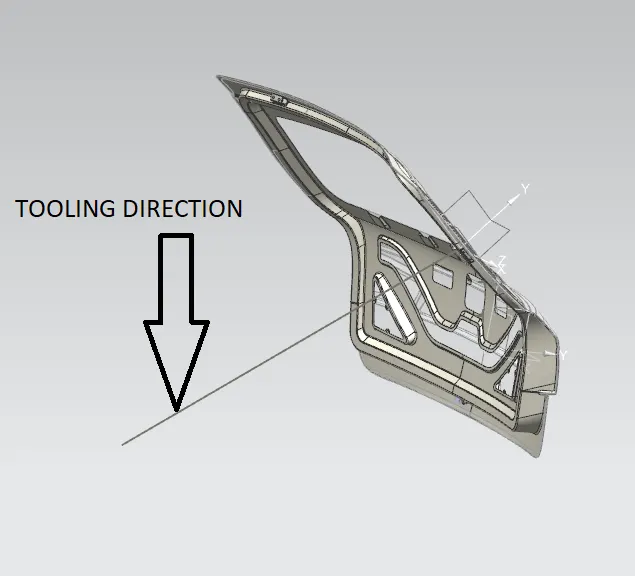
Tooling Direction:-
Tooling direction is crucial in the manufacturing of the back door through the deep drawing process. This process involves the use of a core and die tool. The core part follows a single straight path, and the angle at which it inclines is referred to as the tooling direction. The tooling direction or axis is established to serve as a reference for the manufacturing team, guiding them in producing the part accordingly. This tooling direction is designed using a top-down approach.
Outer Panel:-
The outer panel of the back door serves as the aesthetic component of the vehicle, similar to other BIW (Body in White) parts. It features a multi-stage coating that provides scratch resistance, rust prevention, and a smooth, attractive finish. Additionally, the outer panel is designed with provisions for the tail lamp, rear fog lamp, and license plate mountings. In most hatchback cars, there is also a provision for the wiper motor.
Inner Panel:-
The inner panel plays a critical role in strengthening the door assembly and serves as a mounting point for various accessories such as hinges, glass guide channels, molded trims, and latches. The integration method is a potential approach for manufacturing the inner panel. This method involves stamping the part from a single blank, which reduces the requirement for multiple tools, lowers assembly costs, and eliminates any potential fitting issues.
Embosses & Reinforcement:
With the distinctive cross section, embosses are created. The embossed are used to increase the strength of the backdoor. While designing we should keep in mind that it should not be over strength. So we prefer to design big embosses rather than small embosses. These embosses are used to despite the forces sideways.
Mastic guides:-
Mastic points are strategically placed on the back door inner panel to prevent deformation. These points aid in restoring the original shape of the back door outer panel if it becomes deformed. Mastic sealants, which possess rubber-like properties, are used for this purpose.
To minimize vibrations and enhance overall NVH (Noise, Vibrations, and Harshness) performance, mastic sealants are applied to fill the gap between the inner panel and the outer panel along the embossed areas at specific locations.
Afterwards, another die is employed to bend the sheet and create "L" shaped flanges.
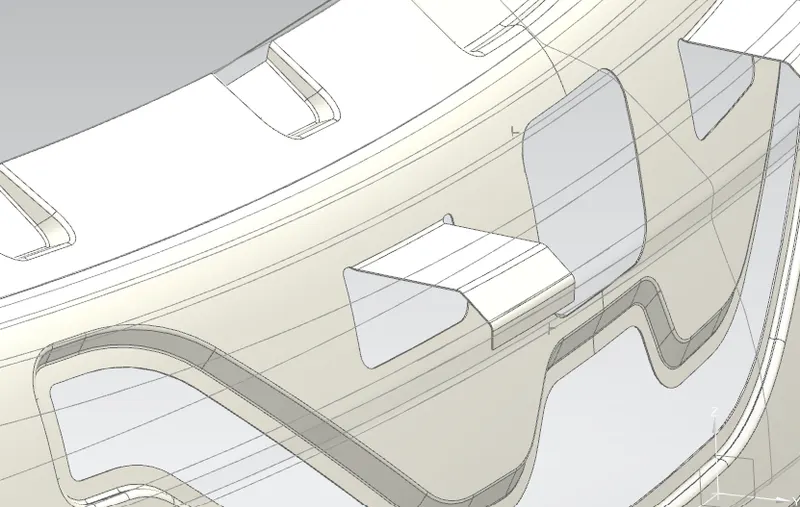
DRAFT ANALYSIS:-
Here we have to consider a minimum of 5 degrees of draft angle and maximum of 7 degrees. According to the tooling axis
INNER PANEL:-
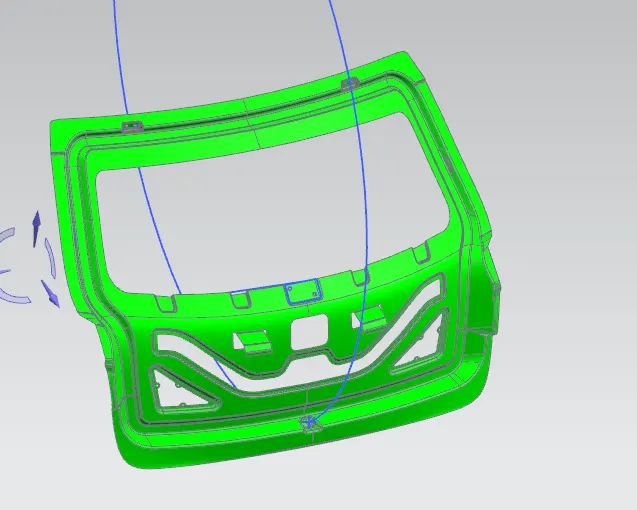
OUTER PANEL:-
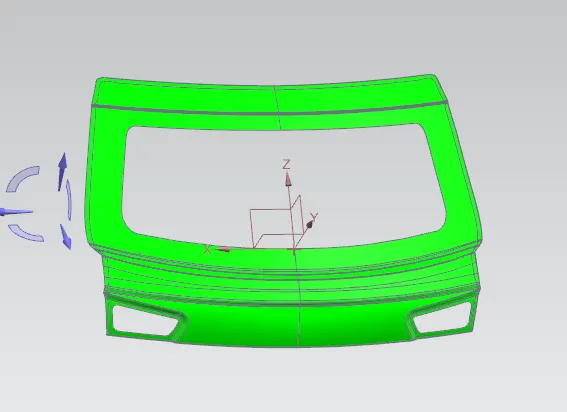
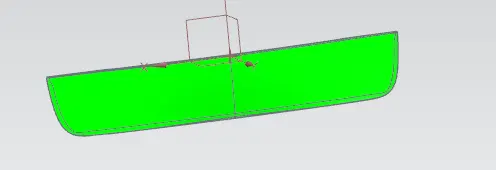
GAS-STAY REINFORCEMENT:-
HINGES REINFORCEMENTS:-
WIPER MOTOR REINFORCEMENT:-
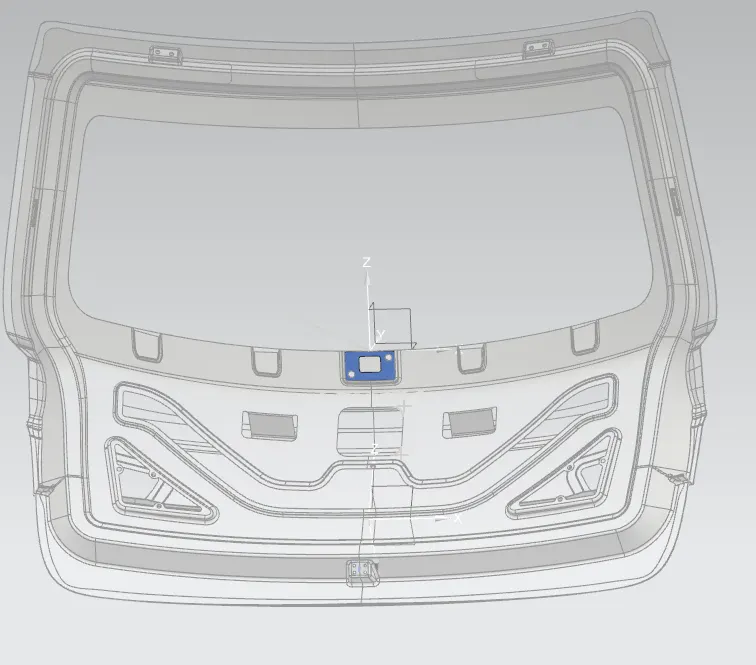
LATCH AND STRIKER:-
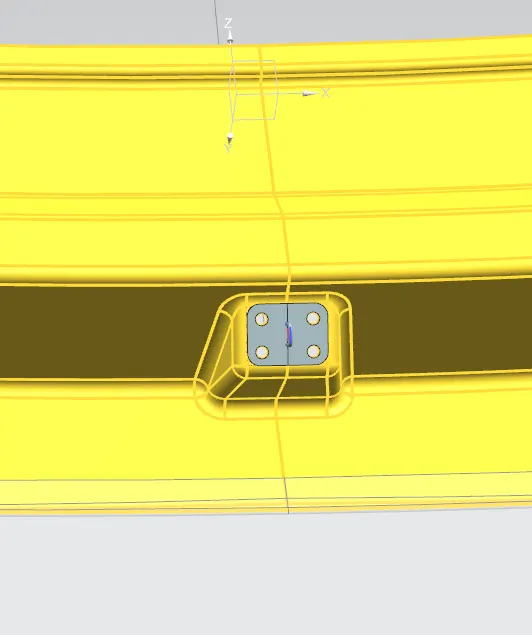
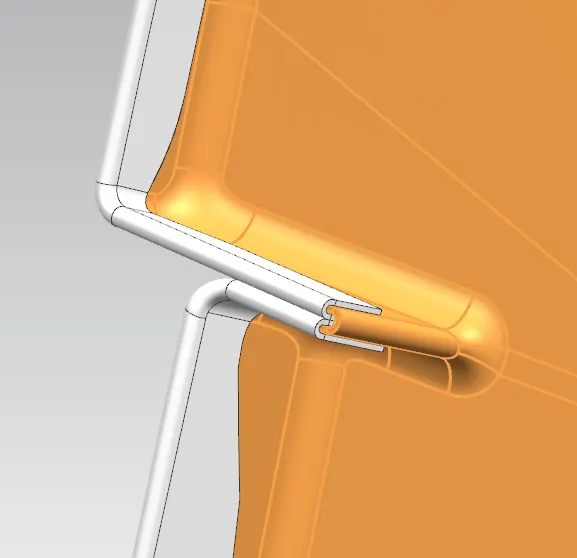
ATTACHMENTS FOR OUTER AND INNER PANEL:-
The assembly of three attachments in the backdoor is accomplished through the hemming process, which involves joining them along the inner panel. Additionally, a hem is provided to both the outer upper and outer inner sections of the backdoor.
Conclusion:-
The back door was meticulously designed and developed using the provided styling surfaces, incorporating necessary reinforcements and embossments. In order to meet the manufacturing requirements, draft analysis was conducted on the inner panel to ensure its feasibility and suitability for production.