Design of backdoor
Aim:
Use the provided styling surface to come up with a back door design, use appropriate design methodologies, and provide the necessary reinforcements and embosses.
Back Door:
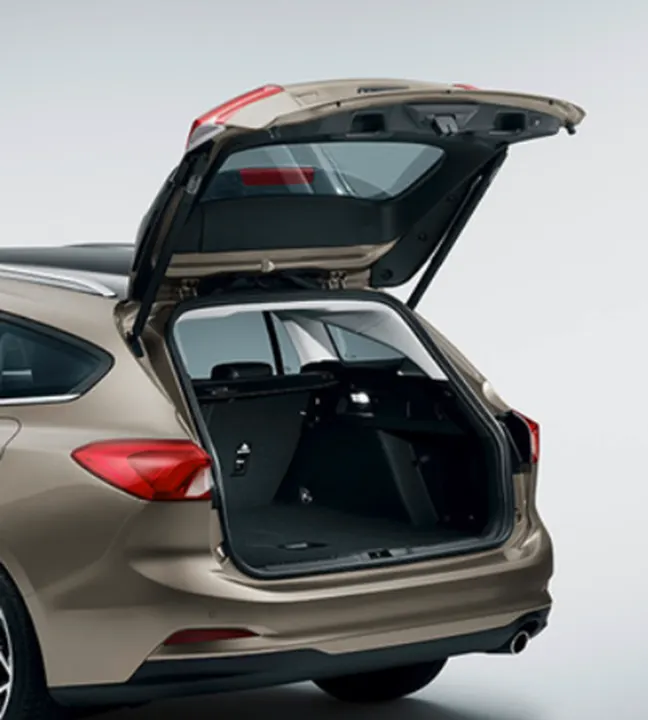
- Back door or tail gate simply refers to the back of the car that can open and close.it covering the rear of the vehicle.
- It provides access to a cargo area (trunk/boot). A tailgate hinged at the roof is a predominant characteristic of hatchbacks, estates/station wagons and lift backs.
- The door or opening of a cargo area may be hinged at the top, side, or bottom.
- In most cars, usually this process will be done manually. One has to get down the car to open and close the tail-gate with the car key.
- Nowadays, automobile manufacturers providing Advanced features like the automated tail-gate.
- An automatic tail-gate in the car will do the process of shutting and opening the tail-gate electronically.
MANUFACTURING PROCESS
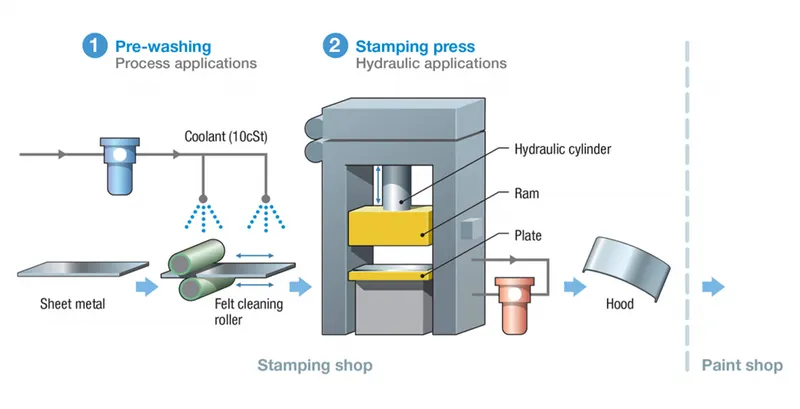
- Conventional tailgate assemblies are made from stamped metal panels welded together to form a tailgate.
- Latches are added on either side of the tailgate to engage a striker on the pickup sides. A handle operates the latches to open and close the tailgate assembly.
- Steel tailgate assemblies provide a durable and secure closure for the pickup bed.
Process:
- Blanking
When required, blanking is the first step of the stamping process. Blanking is the process of cutting larger sheet or coils of metal into smaller, more manageable pieces. Blanking is usually performed when a stamped metal piece will be drawn or formed.
2.Piercing
If a part requires slots, holes, or other cutouts, piercing can be employed. Piercing, which can be performed simultaneously with blanking, punches the requisite shapes out of the metal sheet.
3.Drawing
Drawing is the actual stamping in the metal stamping process. A punch forces a section of metal through a die, providing the primary shape of the part. When the depth of the part is less than the primary opening, it is considered shallow drawing; parts with a depth greater than the opening are deep drawn.
4.Bending
Bending is a fairly self-explanatory process. The part-in-progress is placed on a specially designed die and a ram push against the metal, providing the required bend. Bending is performed after drawing, as attempting to punch an already bent piece of metal causes the entire part to deform.
5.Hemming
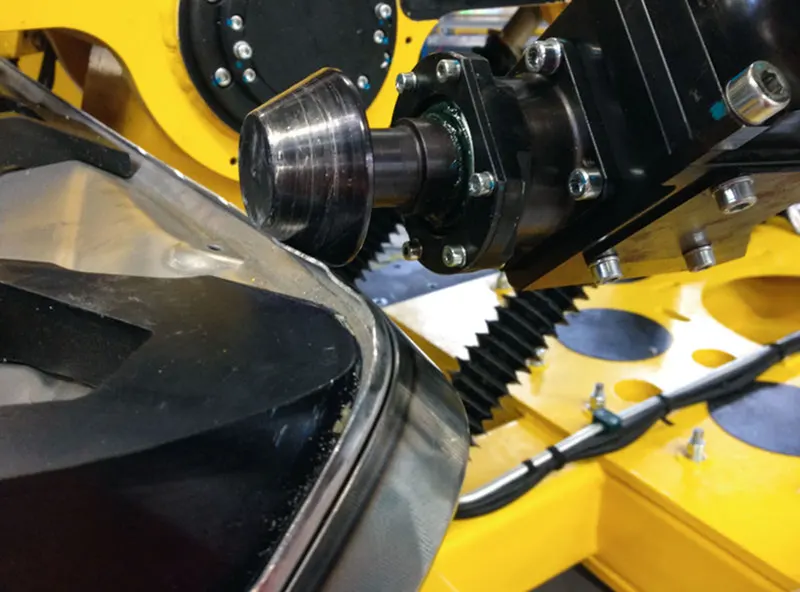
Hemming is a technology used by the automotive industry to join inner and outer closure panels together (hoods, doors, tailgates, etc.). It is the process of bending/folding the flange of the outer panel over the inner one. The accuracy of the operation affects significantly the appearance of the car’s outer surfaces and is therefore a critical factor in the final quality of a finished vehicle.
Design consideration:
- Visibility Criteria
- Force Dissipation
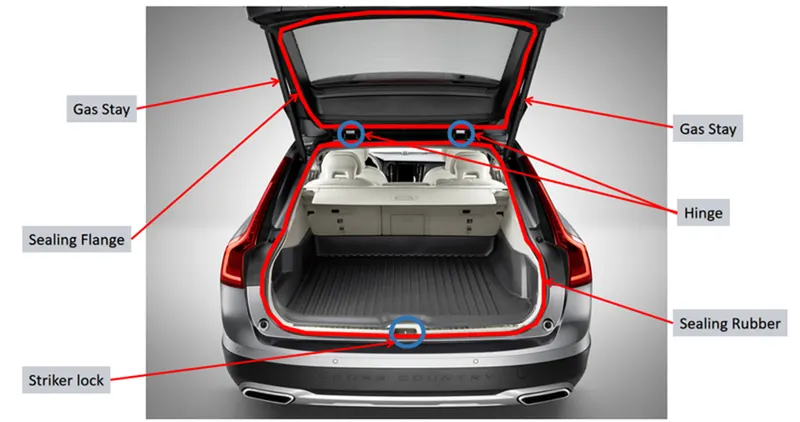
- Latch and Stricker Positions
- Hinge Position
- Gas Stay Position
- Hemming and Relief Areas
MAJOR PARTS IN BACKDOOR
- Back door outer panel (upper and lower)
- Back door inner panel
- Hinge reinforcements
- Gas stays reinforcements
- Latch and striker reinforcements
- Wiper motor reinforcements
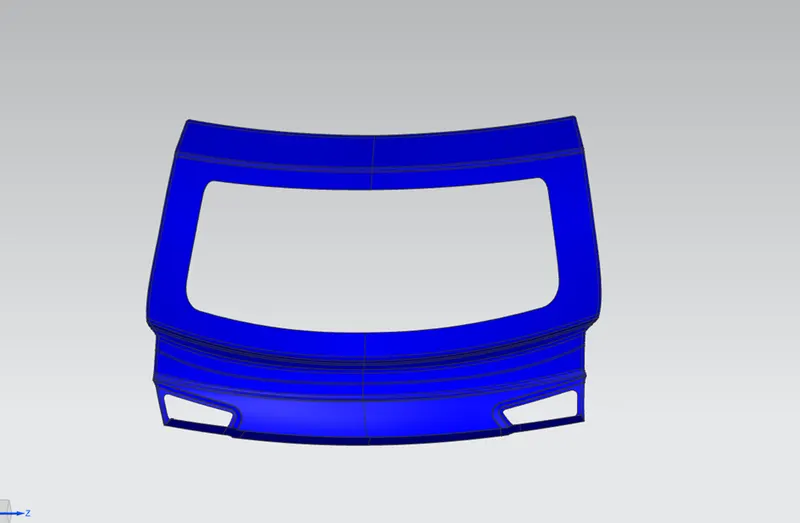
1.a BACK DOOR OUTER PANEL UPPER:
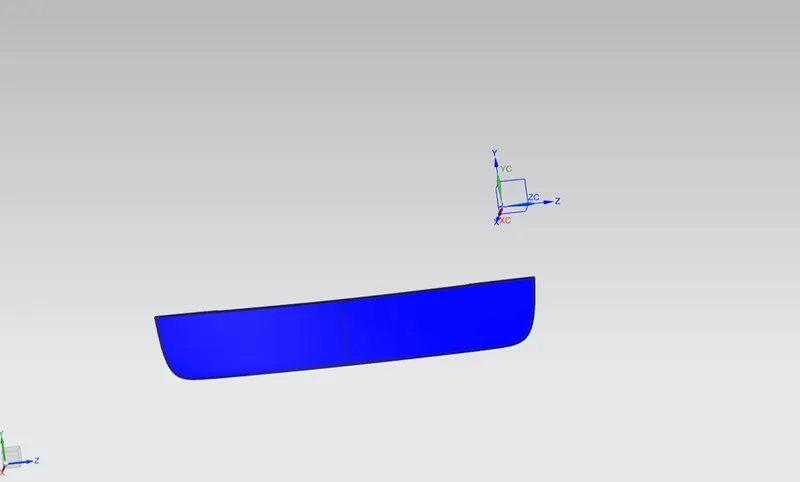
- In this design back door is created as two different parts back door outer panel upper and lower.
- This outer panel designed based on visibility criteria and proper reliefs provided at the corner for hemming operation. The thickness of outer panel is 0.75 mm. It should be thicken downward direction.
1.b BACK DOOR OUTER PANEL LOWER:
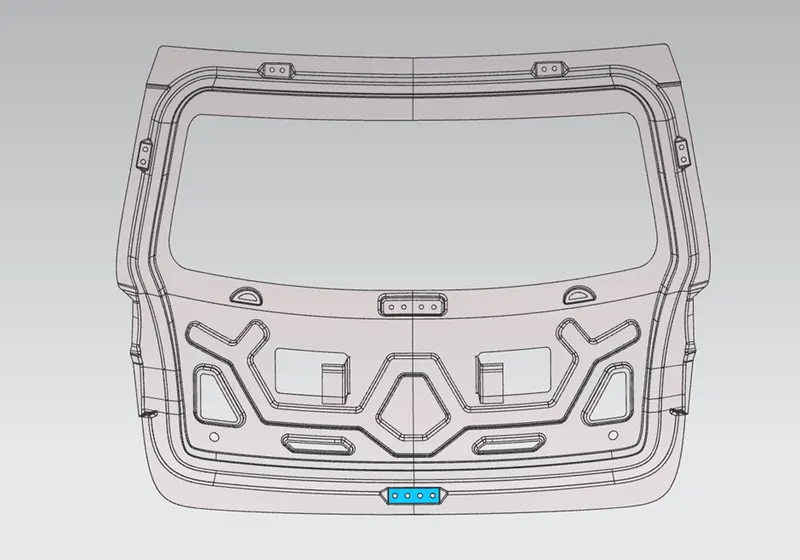
2.BACK DOOR INNER PANEL
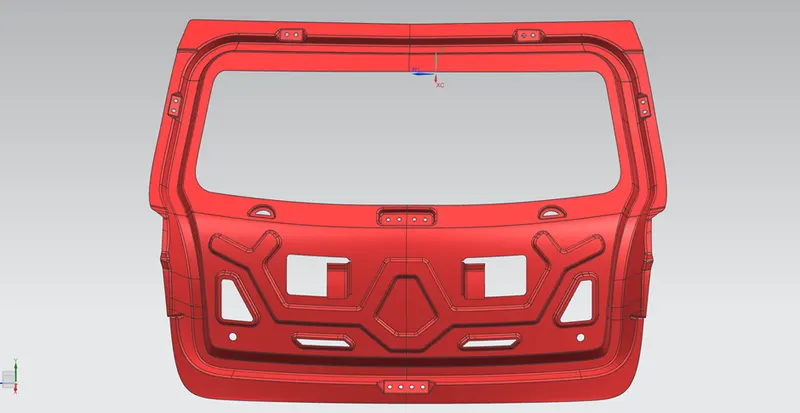
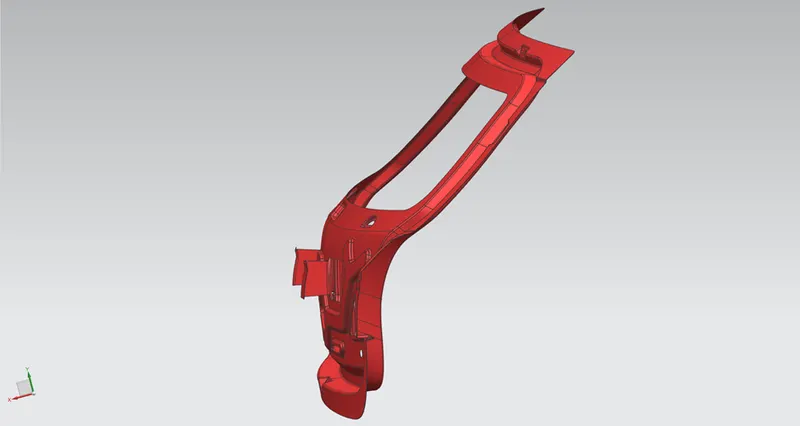
- Back door outer panel designed based on hinge, gas stay, wiper motor position and reinforcement as well as visibility criteria.
- Suitable tooling direction is created for trouble free manufacturing process.
- In this design stamping operations created based on this tooling axis.
- Embosses are provided in this design for force dissipation. In this design appropriate clearance given in mastic areas.
- The inner panel thickness is 0.75 mm.It should be thicken in upward direction.
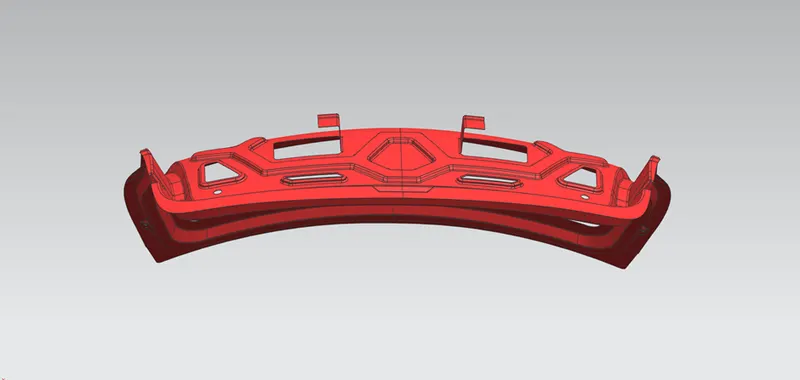
3.Hinge reinforcement
- In this design hinges provided on the top side of the door. Appropriate reinforcement given for hinge mounting areas to improve the strength.
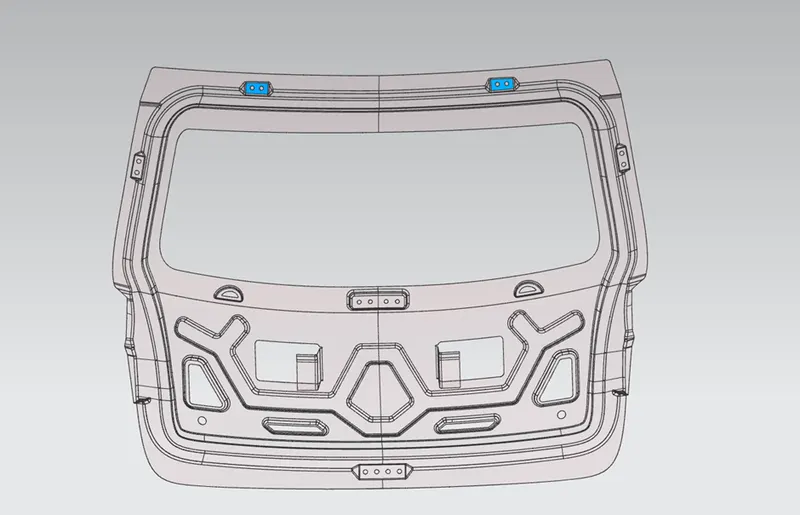
4.Gas stay reinforcement:
- Gas stays support the weight of the back door while they are open.
- More load act on this region, so suitable reinforcement provided for better strength
it is spot welded on the inner panel.
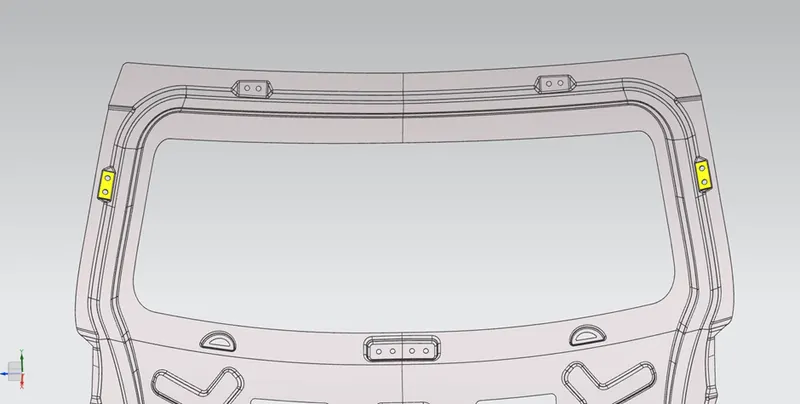
5.Wiper motor reinforcement
Reinforcement provided in this region for fixing the wiper motor.
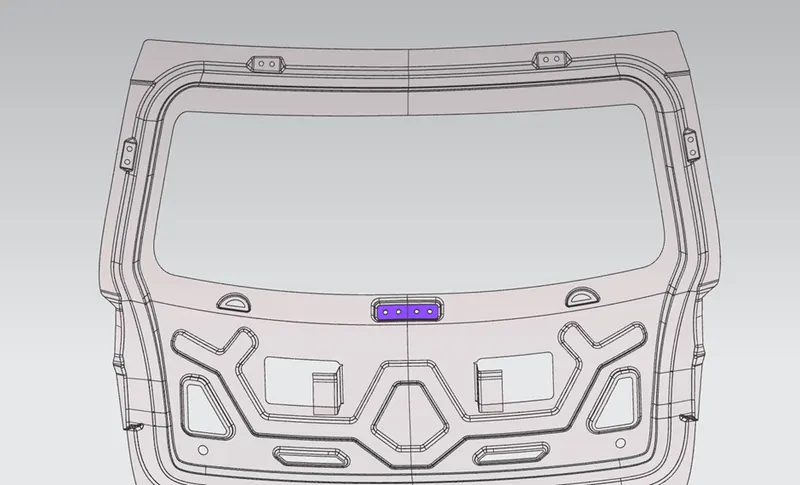
6.Latch and striker reinforcement:
- The striker is designed to create a tight fit between the door and the seal on the cab. The door open and shut several times in a day.
- So, more force acting on this area.
- The reinforcement given in the latch and striker mounting area to increase the strength.it is spot welded on the inner panel.
Trajectory
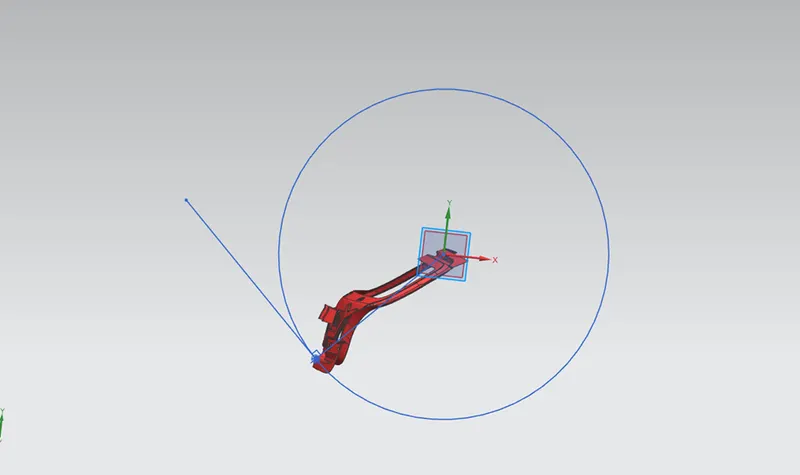
The trajectory is created to position the latch and striker. latch system must be able to catch the striker of the door the while closing. Circle is drawn from the hinge axis. The striker follows this path.
Construction:
- Create a hinge axis. Create a plane in the middle.
- Create the appreciate circle, that should intersect the Latch portion. Create middle point in the inner panel latch position.
- Coincide the point and that circle.
- Create the line to the point from the origin, the line is used for creating latch profile.
- Create a line tangent to the circle from the same junction point.
- By using law extension command. Latch profile is created.
Hemming:
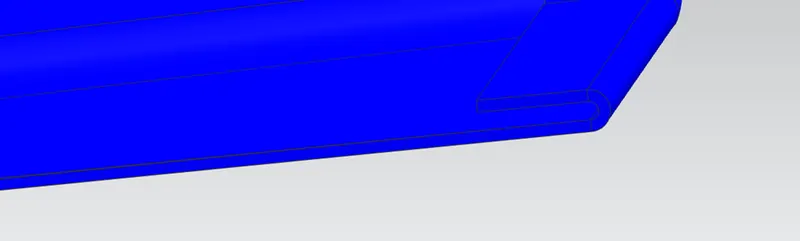
- Hemming is a technology used by the automotive industry to join inner and outer closure panels together (hoods, doors, tailgates, etc.).
- In addition, adhesive bond provides for excellent joining of panels it also reduces NVH vibration.
- Here this design 0.2mm clearance provided for hem glue.
Reliefs:
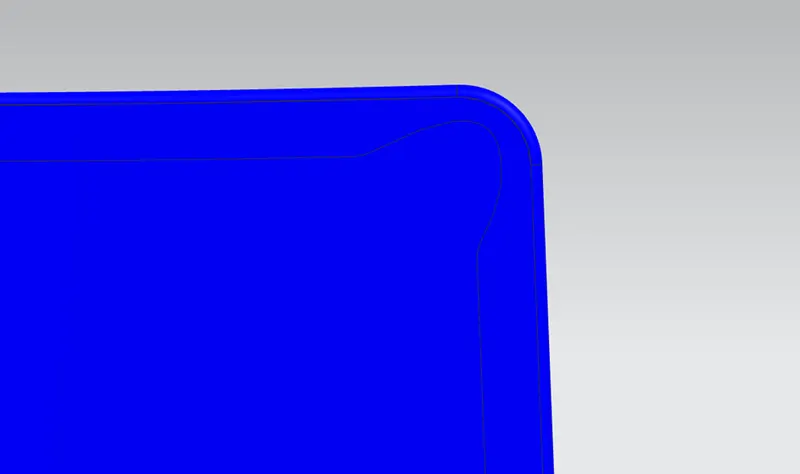
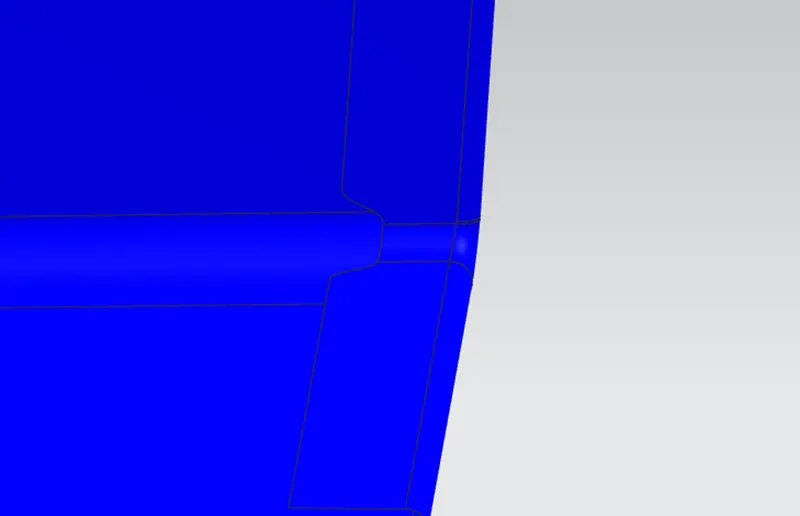
- Proper corner relief provided for trouble-free hemming operation by using curve on surface.
Tooling Direction:
- Tooling direction is a major role in production process.it defines the die’s opening and closing directional axis
Draft Analysis:
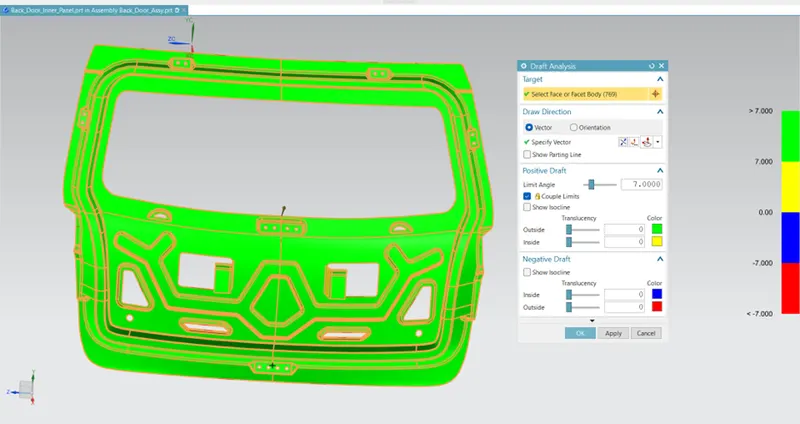
- Draft analysis performed to check the designed part is suitable for stamping operation with respect to the tooling direction.
- We can find out the errors by using this feature. The minimum draft angle is 7.
- The negative draft is denoted by different colour so we can easily find out the unsuitable areas.
Result:
The backdoor is designed based on design considerations. Required reinforcement provided on inner panel. The design is checked by using draft analysis feature.