Design of backdoor
Backdoor Design:
Objective:
- To design the backdoor of a car using the provided styling surface, with proper design guidelines.
- To check draft analysis to ensure the manufacturability of the part.
- To provide proper reinforcements and embosses at required places to improve strength and support of the outcome part.
Backdoor:
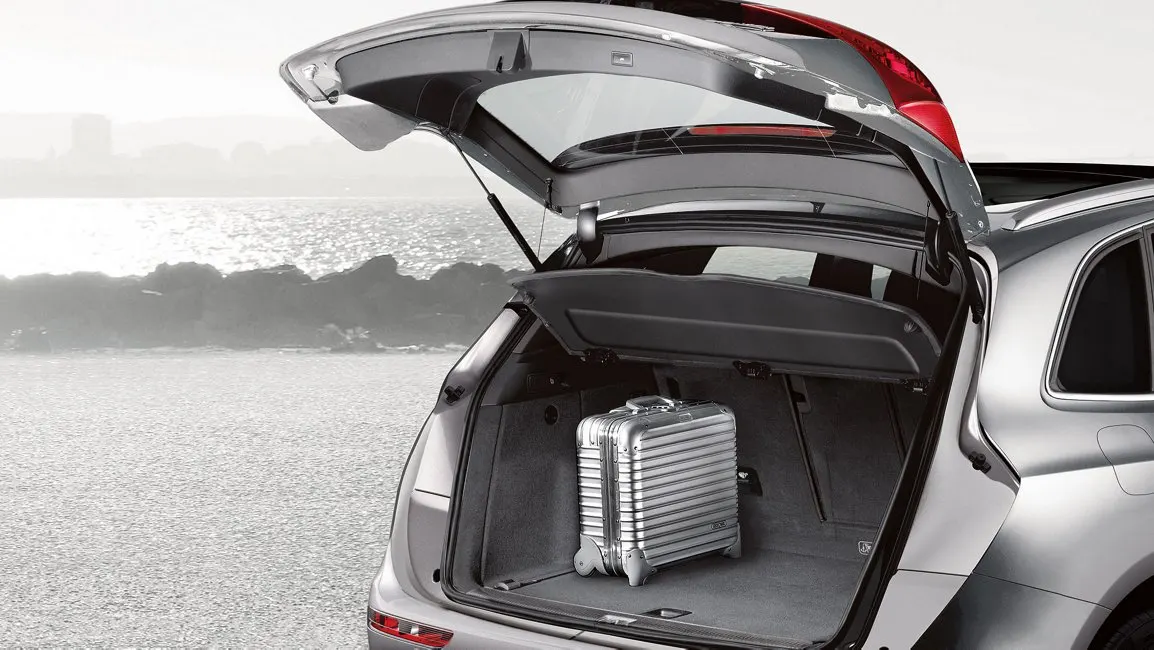
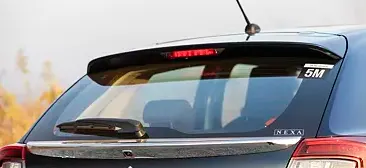
The back door of a car is also known as the tailgate or the rear door. It is a hinged door that opens and closes at the back of the vehicle. The back door of a car can be used for loading and unloading cargo, or for accessing the rear seats if there are any.
Design guidelines for the back door:
There are various important guidelines to consider in order to ensure safety, functionality, and user convenience.
Size and Accessibility:
Back doors should be large enough to provide easy access for passengers and cargo. The size should accommodate the average adult's entry and exit comfortably. The door's opening angle should also be sufficient to allow easy access in tight parking spaces.
Structural Integrity:
Back doors should be structurally robust to ensure passenger safety in the event of a collision. They should be designed to withstand impacts and provide protection to occupants. Reinforced frames and impact-absorbing materials can enhance safety.
Handles and Latches:
Door handles should be ergonomically designed and easily accessible from both the inside and outside the vehicle. Latches should be secure and easy to operate, ensuring that the door remains closed during normal driving conditions but can be opened quickly in case of emergencies.
Durability and Weatherproofing:
Back doors should be designed to withstand the elements, such as rain, dust, and temperature fluctuations. Effective weatherstripping and seals help keep the interior dry and maintain passenger comfort.
Aesthetics:
The design of the back doors should be consistent with the overall styling of the vehicle, maintaining a cohesive and attractive appearance.
The manufacturing process of Back Door:
There are several steps involved in the design of a backdoor. Those steps are as follows,
Material selection:
Based on the design, appropriate materials are chosen for the back door. Common materials include steel, aluminum, or a combination of both. The selection depends on factors such as strength, weight, cost, and manufacturing feasibility.
Sheet metal forming:
The selected material is processed through various forming techniques to shape it into the desired form of the back door. This can involve processes like stamping, pressing, hydroforming, embossing, etc. The sheet metal is manipulated using specialized tools and machinery to achieve the desired contours and dimensions.
- Emboss:
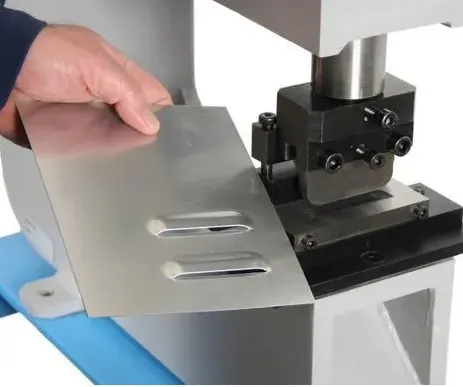
- Sheet metal embossing is a process that creates patterns on metal sheets by pressing them between two rollers. The rollers have matching designs that transfer onto the sheet when they roll over it.
- Embossing can make the sheet metal stronger, more durable, and more attractive.
- Depth of the emboss ranges between 5-7 mm.
- Material Thickness, draft angles, and rounded corners play a major role to provide better output of the embossed features.
- Stamping:
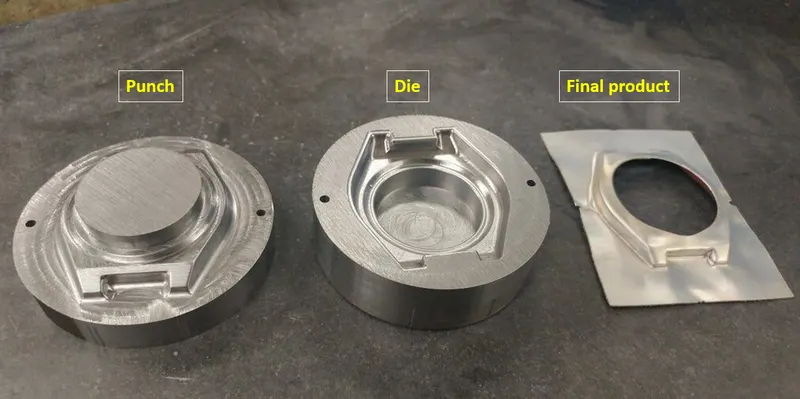
- Sheet metal stamping is a process of shaping thin metal sheets by applying pressure with a die and a punch.
- It's a quick and easy way to make parts for various industries, such as automotive, aerospace, and medical.
- Different shapes and sizes can be made with sheet metal stamping, depending on the design of the die and the type of metal you use.
- Proper bend radii can prevent cracking or tearing of the material, hole, and Cutout from the edge should be at least 2 times the thickness to avoid distortion or tearing.
- Providing a proper draft angle and avoiding sharp corners can provide better results in stamping.
- Cutting and trimming:
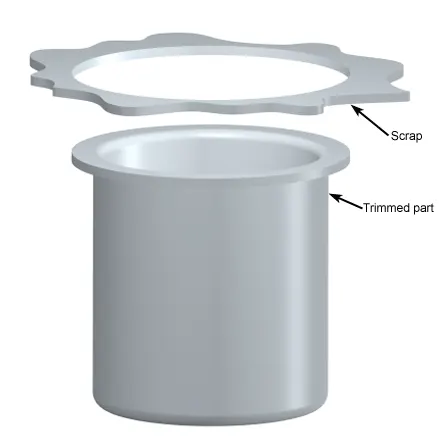
After forming, the back door may undergo cutting and trimming operations to remove excess material and refine the shape. This can be done using methods such as laser cutting, water jet cutting, or mechanical trimming.
These cutting and trimming are post-processing operations as it provides a better finish and look to the end product.
- Joining and assembly:
Different components of the back door, such as the outer panel, inner reinforcement, glass window, hinges, locks, and handles, are assembled together. Joining techniques like welding, adhesive bonding, or mechanical fastening are used to ensure secure connections.
- Surface treatment:
The back door undergoes surface preparation and treatment to enhance its appearance and protect it from corrosion. This can involve processes like cleaning, sanding, primer application, and painting. Advanced techniques such as electrocoating or powder coating may be used for a durable and uniform finish.
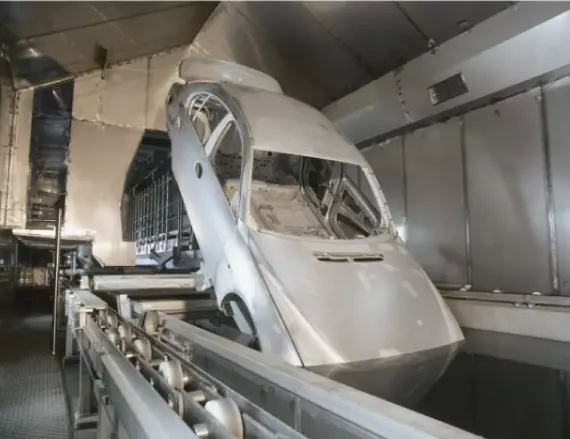
Anti-corrosion treatment of BIW:
Components of Back door:
The design of the backdoor consists of
- Outer panel
- Inner panel
- Reinforcements
- Rubber sealant (Weatherstripping)
- Hinges
- Latch and striker unit
- Glass window, etc.
1. Outer panel:
- It is the styling surface (visible exterior surface) of the back door. It provides the shape, contour, and style of the door. The outer panel is often made of sheet metal and can be stamped or formed into various shapes.
- The material and thickness of the panel, determine its weight, strength, and durability. The material should be resistant to corrosion, impact, and deformation, while the thickness should be optimized to reduce drag and noise.
- The shape and curvature of the panel, influence the airflow around the car and the rear visibility. The shape should be smooth and streamlined, with minimal gaps and protrusions, to minimize turbulence and drag.
- The design of the outer panel from the class A surface involves using the styling surface and removing all the sharp corners and adding the hem features at the exterior ends.
- It is then mirrored and thickened to get the final design
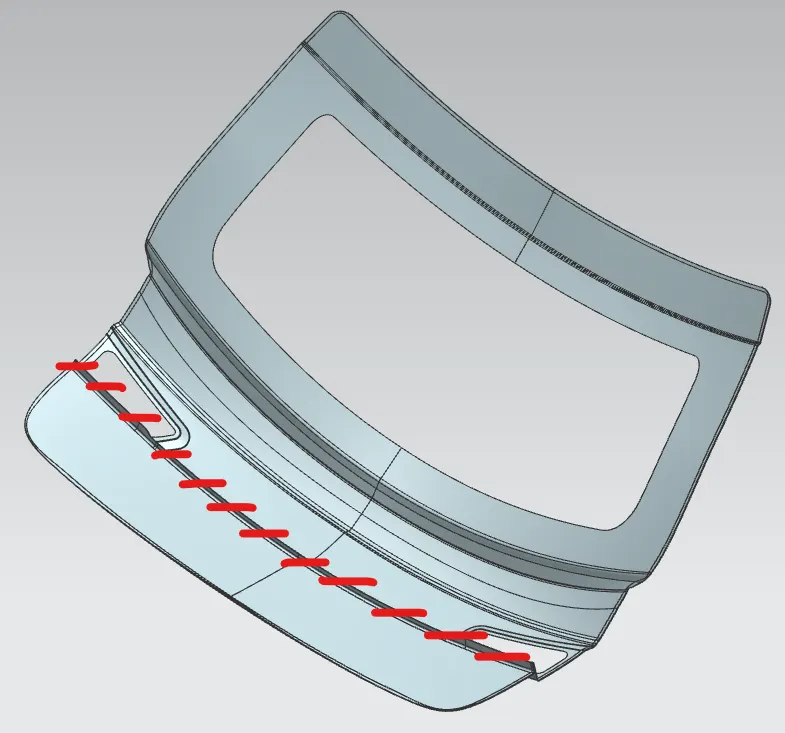
- The outer panel is designed in two segments the top and the bottom part which are spot welded together during assembly.
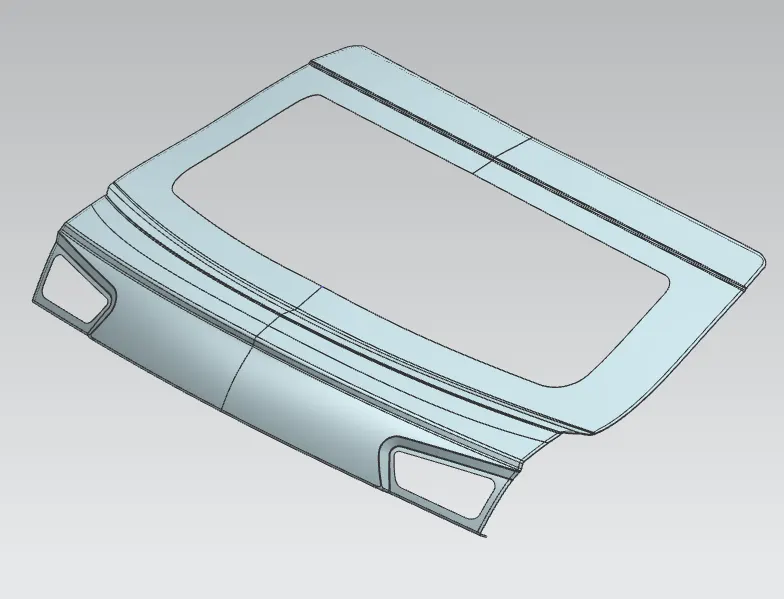
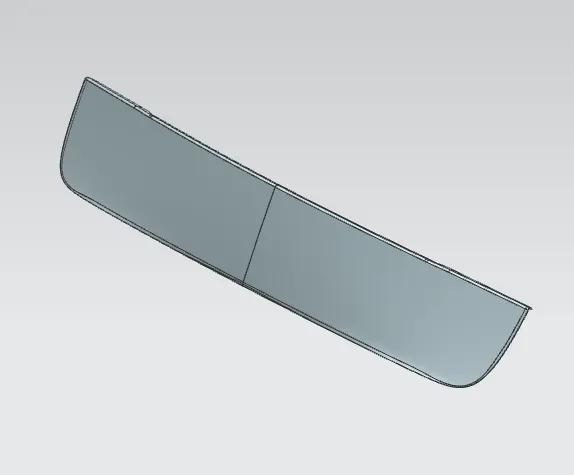
The red spot marked is the spot welded area.
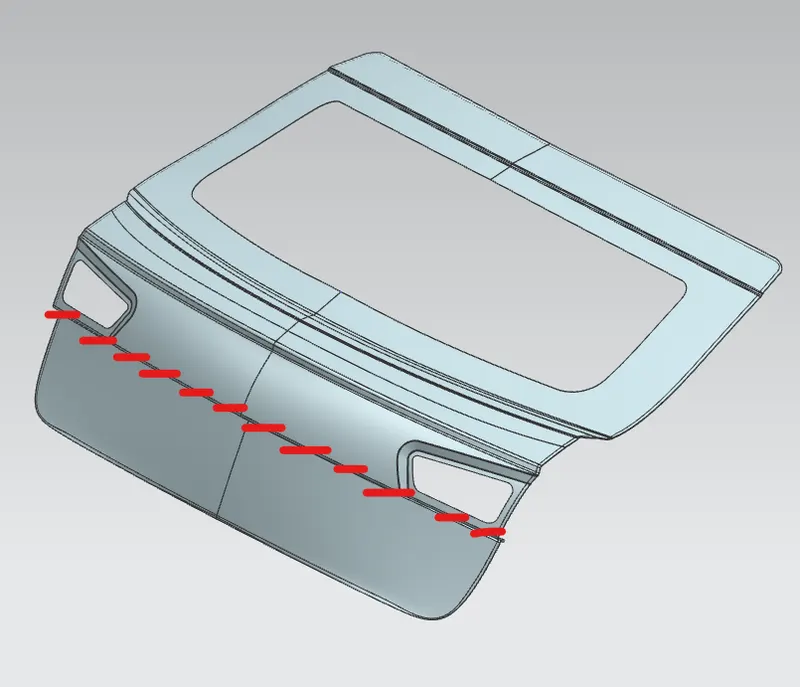
Draft analysis:
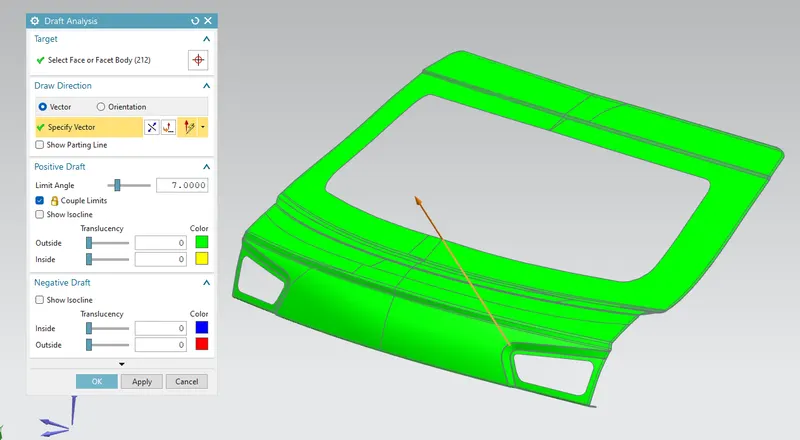
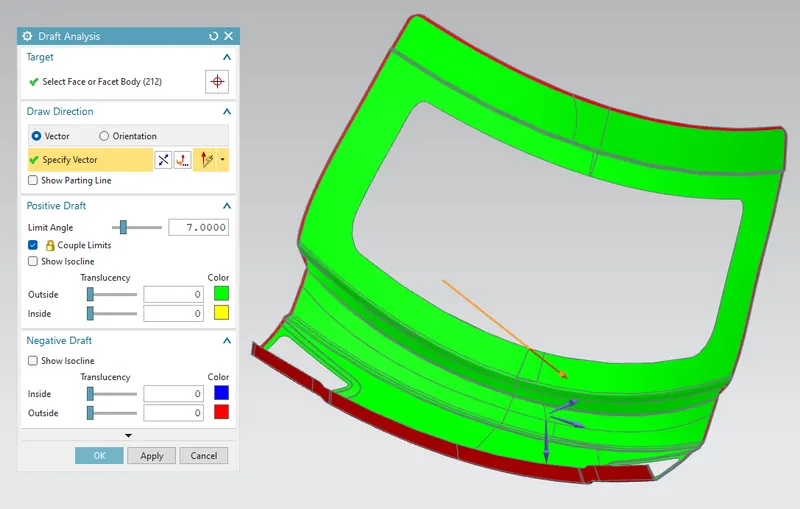
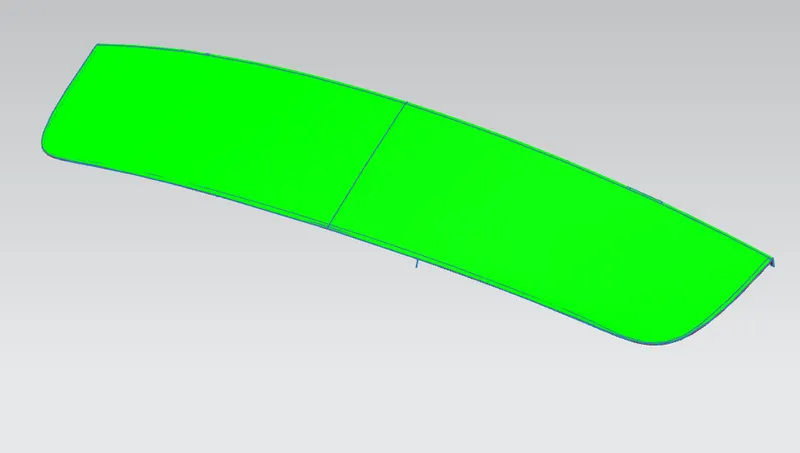
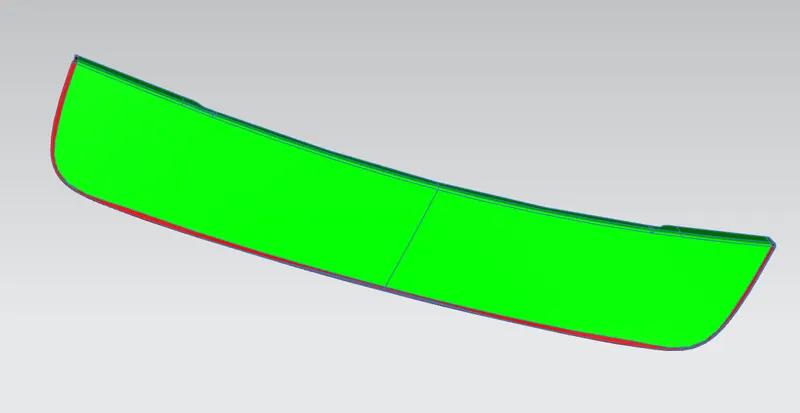
The hem region and the bottom flange doesn't pass the draft analysis. The reasons are as follows
- This is because the hem features are processed post stamping process which is a separate process after stamping.
- The bottom flange needs a side core to be in process to get the desired shape.
2. Inner panel:
- The inner panel of the back door is an important component of the vehicle body that affects the safety, comfort, and aesthetics of the passengers.
- The inner panel should be made of lightweight and durable materials that can withstand impact, corrosion, and wear. The material should also have good acoustic and thermal insulation properties to reduce noise and heat transfer inside the vehicle.
- Ensure compliance with safety standards and crashworthiness requirements. The inner panel should contribute to occupant protection during a collision by providing structural integrity, energy absorption, and proper airbag deployment zones.
- Consider ergonomics and user experience when positioning components such as handles, switches, storage pockets, or armrests. The design should provide comfortable and intuitive access for users, taking into account factors like reach, grip, and ease of operation.
- Create an aesthetically pleasing design that complements the overall interior styling of the vehicle. Consider surface finishes, textures, color schemes, and the integration of decorative elements or trim pieces to provide a visually appealing and cohesive interior appearance.
Features:
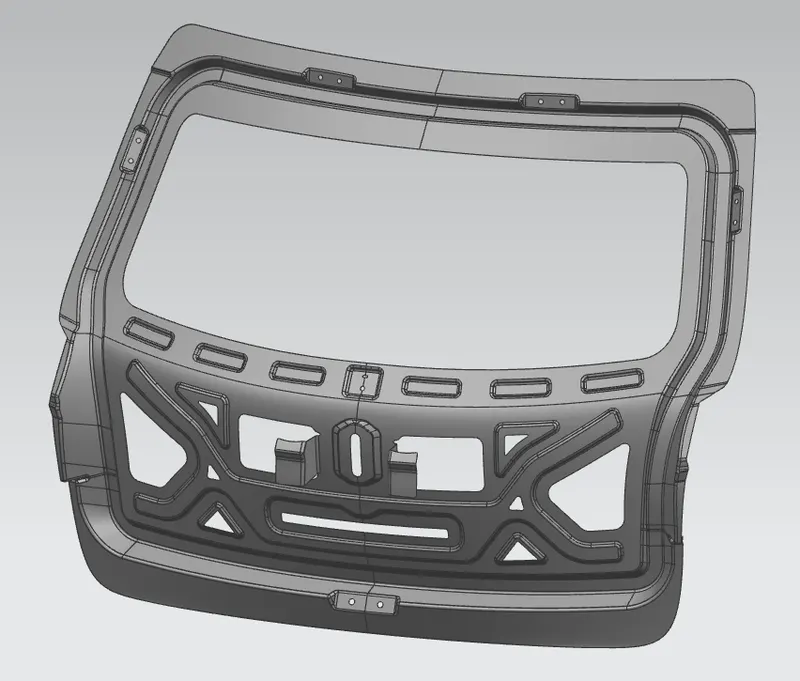
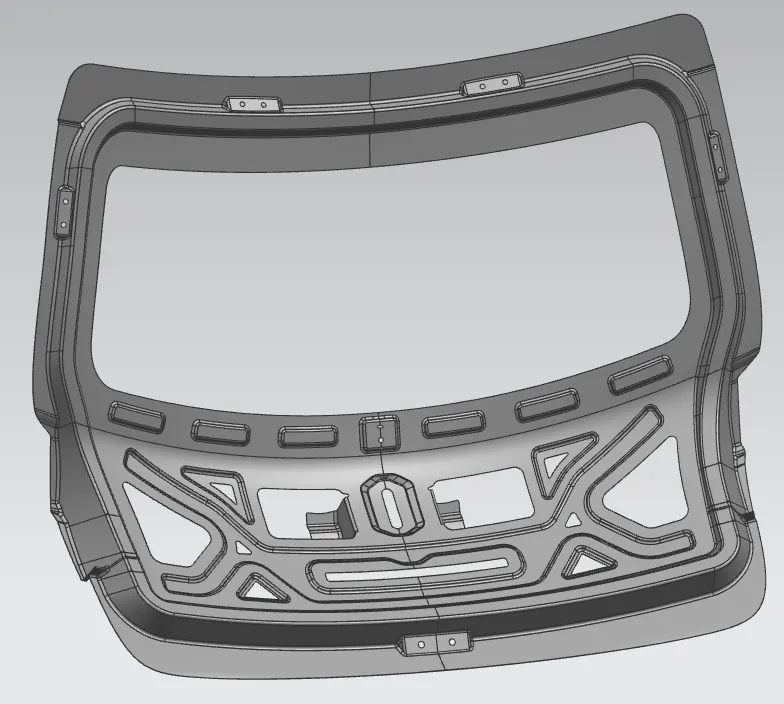
- The sealant flange that joins the back door with a rubber gasket is designed first as the base contact area and the required features are developed based on the design requirements.
- The inner panel must provide mounting feasibility of the rear lamp to the outer panel and the required clearance for assembling the same should be considered while designing.
- The hinge axis and the latch and lock for the door should be aligned and the mounting needs to be positioned in place.
Draft analysis:
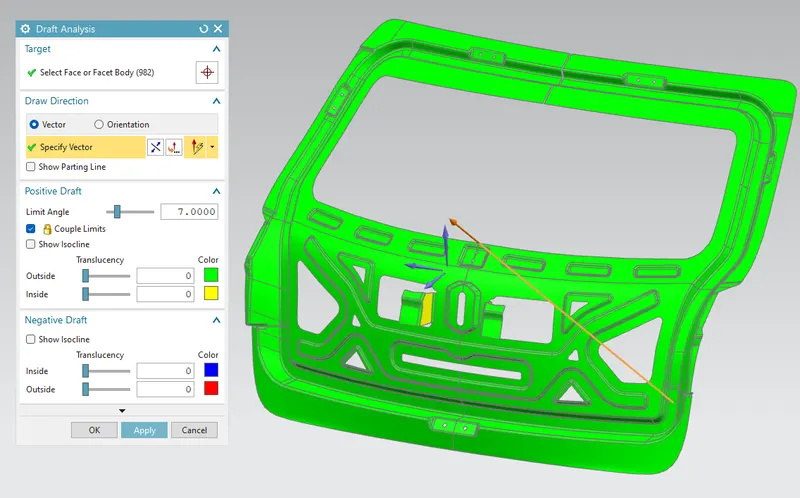
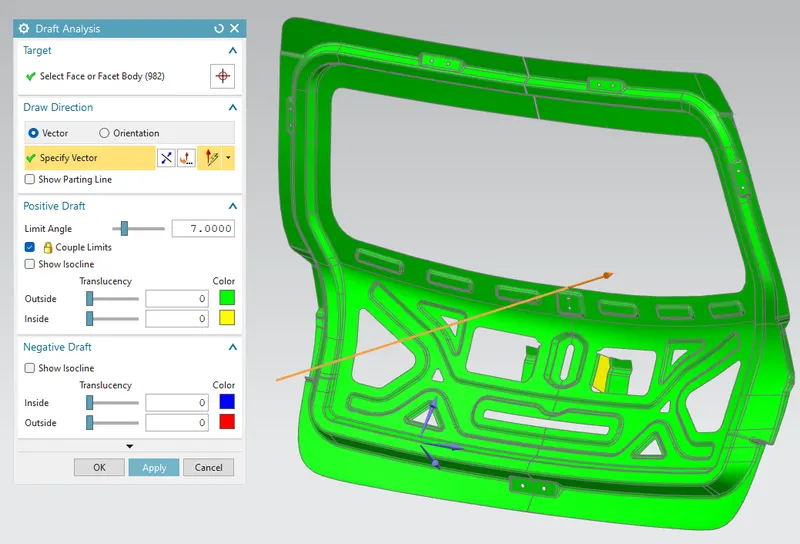
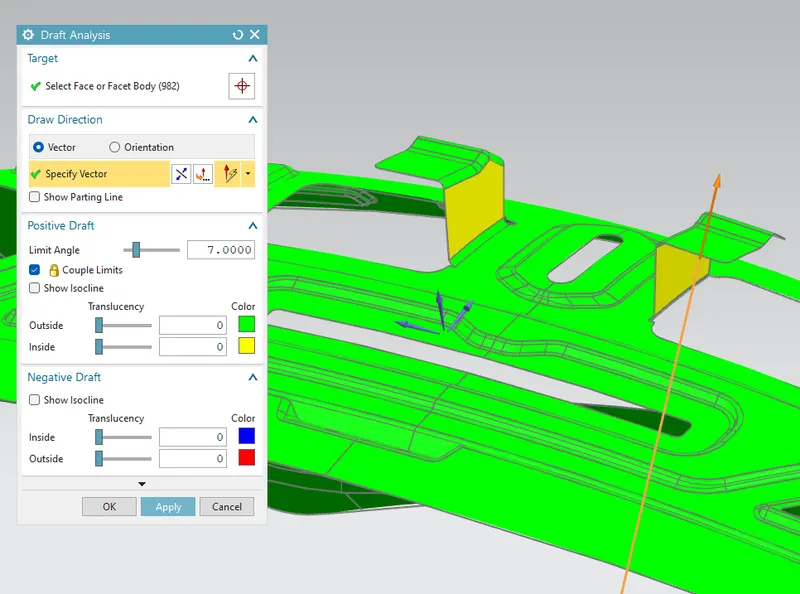
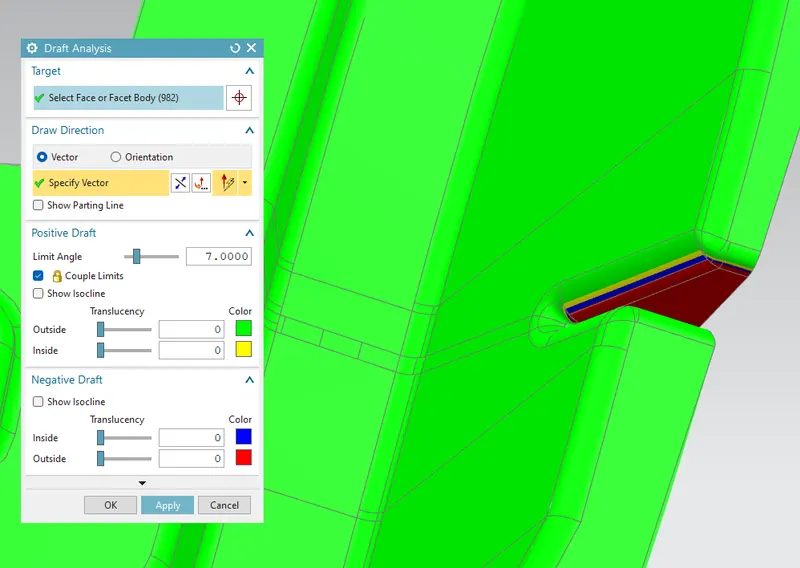
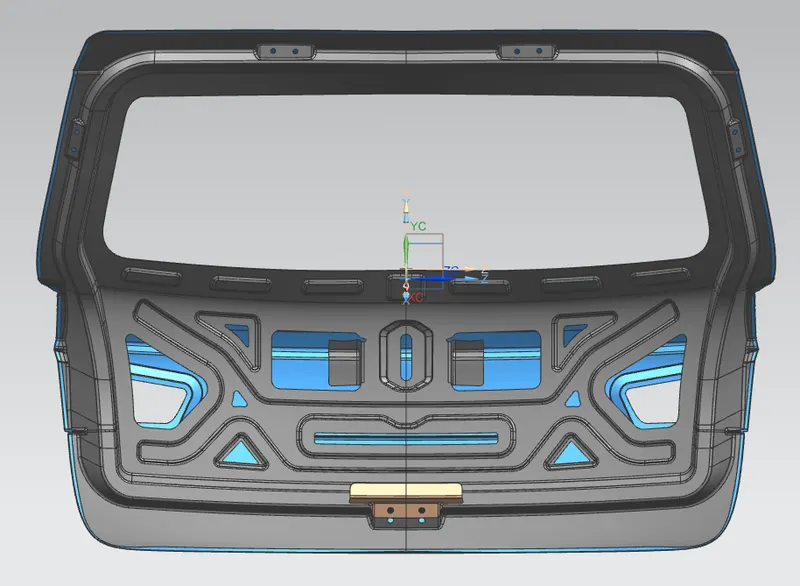
The red and yellow portions highlighted in the inner panel failed during the draft analysis.
- The yellow portion doesn't correspond to the stamping process and is an additional process to provide mastic sealant contact between the outer and inner panels. This enables additional contact regions to improve strength between the outer and inner panels.
- The red area also corresponds to a similar process to provide a contact area for the assembly of the outer panel and inner panel.
3. Reinforcements:
- Reinforcements are metal bars or plates that are attached to the inner side of the backdoor, forming a rigid frame that supports the outer panel.
- Reinforcements in automobile backdoors are designed according to various factors such as functional requirements, aesthetic considerations, manufacturing feasibility, cost efficiency, and safety regulations.
- They are usually integrated with the inner panel during the stamping or forming process, or attached later by welding or bolting.
- Reinforcements can also improve the stiffness and strength of the backdoor, reducing vibrations and noise.
- They are usually attached to the inner panel of the door, where they support the hinges, gas stay, latch, striker, and wiper motor.
- The main purpose of these reinforcements is to improve occupant safety by providing increased protection in the event of a collision or impact.
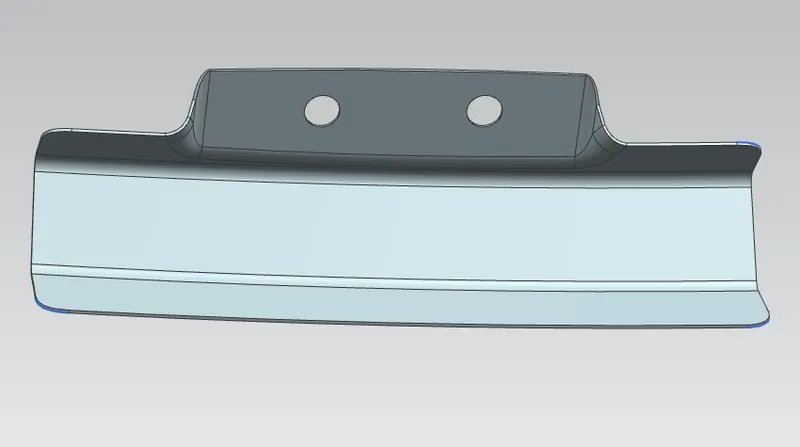
1. Hinge Reinforcement:
- This is a metal plate that is welded or bolted to the inner panel near the top corners of the door.
- It provides a mounting point for the hinges that connect the door to the body of the car.
- Hinge reinforcement also distributes the load of the door evenly and prevents cracking or bending of the inner panel.
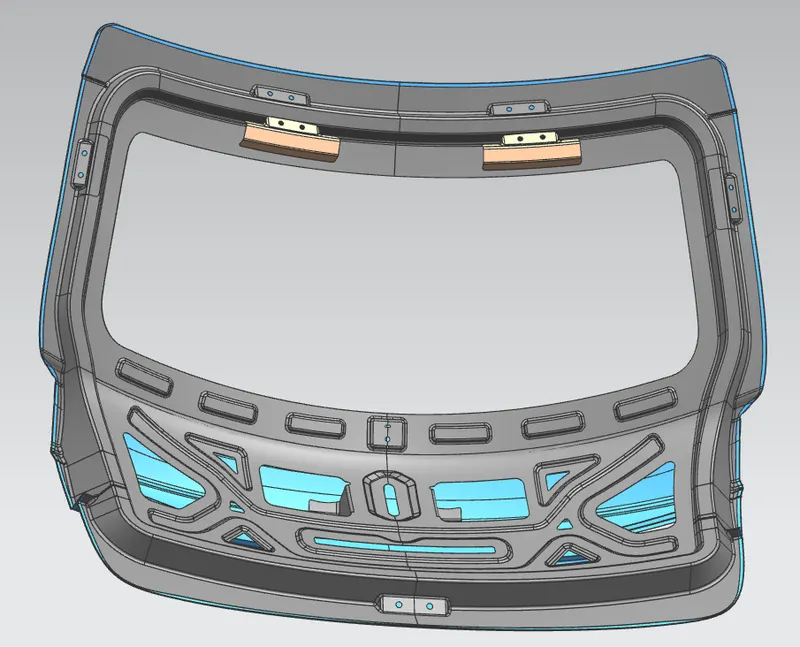
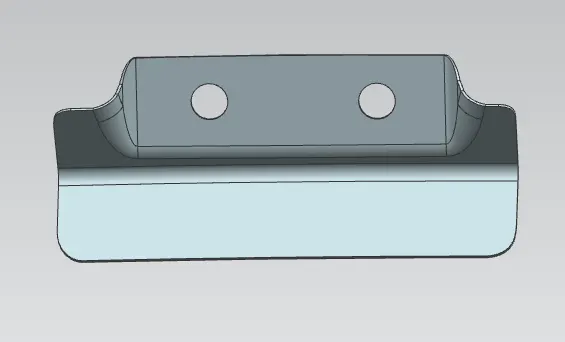
2. Gas stay reinforcement:
- This is a metal bracket that is welded or bolted to the inner panel near the bottom corners of the door.
- It provides a mounting point for the gas stay, which is a device that helps to lift and hold the door open.
- Gas stay reinforcement also absorbs the shock and vibration of the door opening and closing.
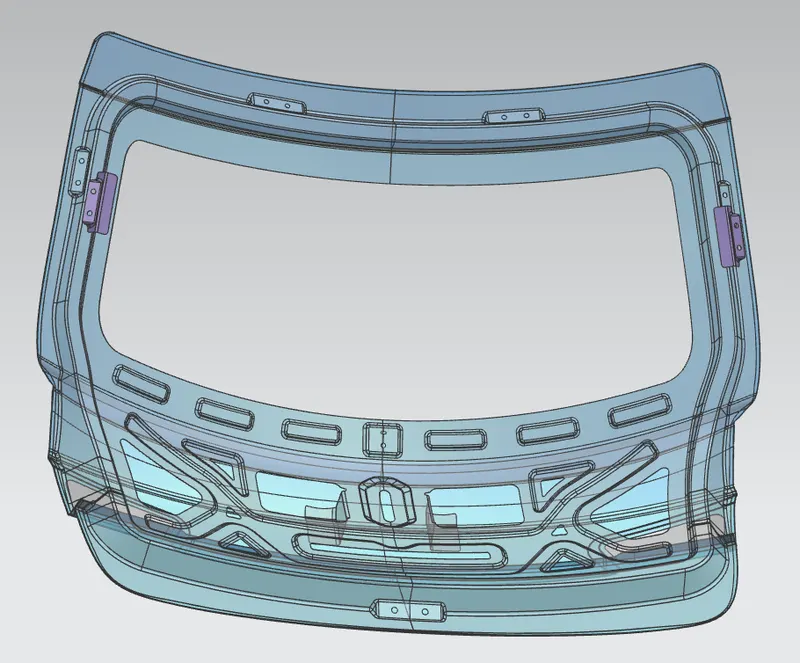
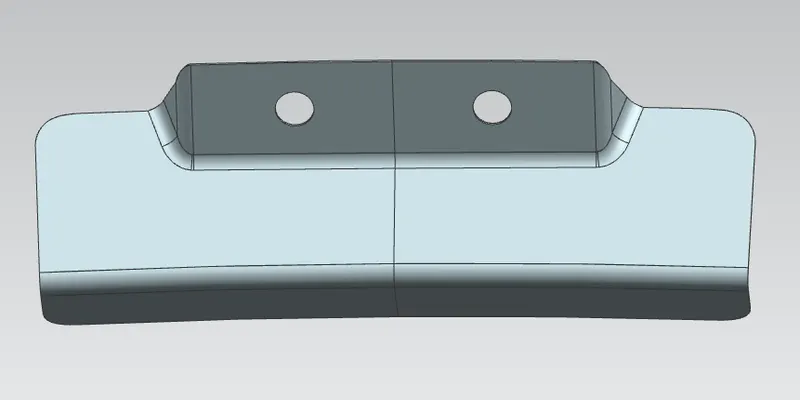
3. Latch and striker reinforcement:
- The hinges and latches that hold the backdoor in place are also reinforced to withstand the forces generated during a collision.
- Reinforced hinges and latches help maintain the door's proper alignment and prevent it from being easily dislodged or separated from the vehicle.
- It provides a mounting point for the latch and striker, which are mechanisms that lock and unlock the door.
- Latch and striker reinforcement also ensure a proper alignment and fit of the door with the body of the car.
4. Rubber sealant:
Rubber sealants in car backdoors play a crucial role in providing weatherproofing and preventing the ingress of water, dust, and noise into the vehicle's interior. These sealants are typically made of rubber or synthetic materials and are strategically placed along the edges of the backdoor, where it meets the body of the car.
Here are a few key functions and benefits of rubber sealants in car backdoors:
-
Weather Protection: Rubber sealants create a tight seal between the backdoor and the car's body, preventing water, rain, snow, and other environmental elements from entering the interior.
-
Noise Reduction: The rubber sealants act as a barrier to minimize the transmission of outside noise into the vehicle cabin. They help reduce wind noise, road noise, and other external sounds, thereby enhancing the comfort and tranquility inside the car.
-
Air and Temperature Control: Rubber sealants contribute to the overall insulation of the car's interior. They help maintain a controlled cabin environment by preventing the leakage of air, drafts, and temperature fluctuations from outside, ensuring efficient heating, ventilation, and air conditioning (HVAC) performance.
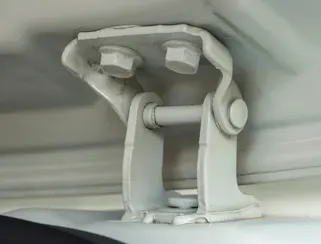
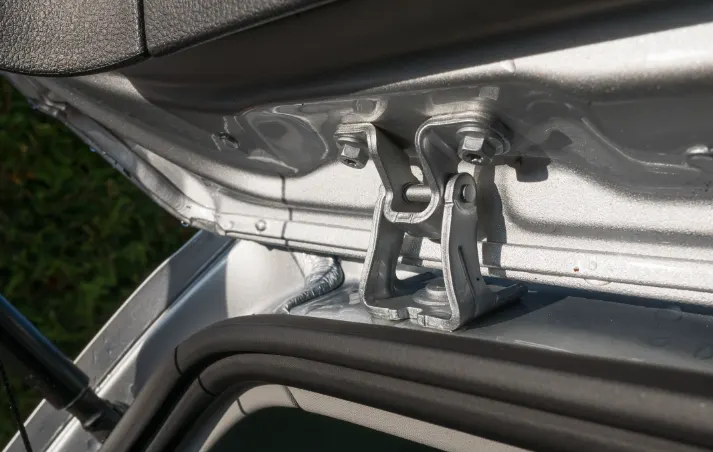
5. Hinges:
Hinges in a car's back door are mechanical components that allow the door to pivot or swing open and closed. They are typically located on the side of the door and are responsible for providing the necessary support and movement for the door's operation.
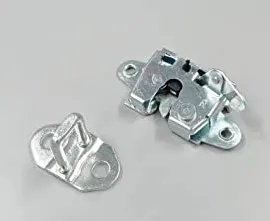
6. Latch and striker unit
The latch and striker unit is an essential component in ensuring the secure closure of car back doors.
Latch: The latch is located on the back door and consists of a metal mechanism with a hook or claw-like structure. When the back door is closed, the latch engages with the striker to keep the door securely shut. The latch is typically spring-loaded, allowing it to retract and release when the door handle is operated from the inside or outside of the vehicle.
Striker: The striker is mounted on the car's body or door frame, precisely aligned with the latch. It is a metal plate or pins that the latch engages with when the door is closed. The striker is designed with a catch or recessed area that allows the latch to securely engage and hold the door closed.
7. Glass window:
- The back door glass window, also known as the rear window or rear windshield, is a transparent panel typically located at the rear of a vehicle.
- The back door glass window provides the driver with a clear view of the area behind the vehicle, improving visibility for safe driving, parking, and maneuvering. It allows the driver to monitor traffic conditions, pedestrians, and obstacles while reversing or changing lanes.
Conclusion:
- The back door is designed from the given styling surface and followed the design guidelines.
- The required reinforcements like the hinge, gas stay and latch, and striker reinforcements are added to improve the stiffness, and embosses are added to the inner panel to improve strength.
- The designed modal has been tested for draft analysis to ensure manufacturability and it has passed the minimum draft angle of 7 degrees.