Design of backdoor
Backdoor/Reardoor
Objective:
- To design the tail gate and reinforcement of tail gate with the reference of Class A surface.
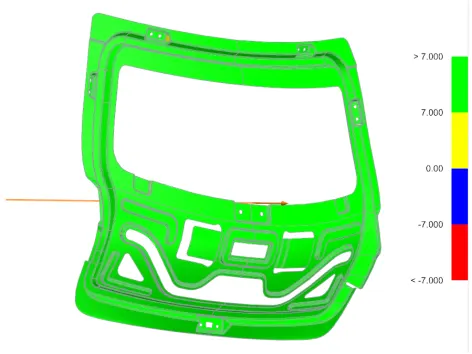
- Draft Analysis
Description:
An automotive door is a component of a vehicle that provides access to the passenger compartment, cargo area, or other areas of the vehicle. Doors are usually located on the sides of the vehicle and are designed to swing open and closed on hinges.
Automotive doors can be operated manually, such as by pulling a handle, or electronically, such as by pressing a button or using a key fob. They can also feature various safety and convenience features, such as automatic locking or unlocking, power windows, and remote key less entry.
Automotive doors can come in many different shapes and sizes, depending on the type of vehicle and its intended use. For example, some cars have traditional four doors, while others have two doors or even a single door. Vans and SUVs often have sliding doors or lift gates to provide access to the cargo area.
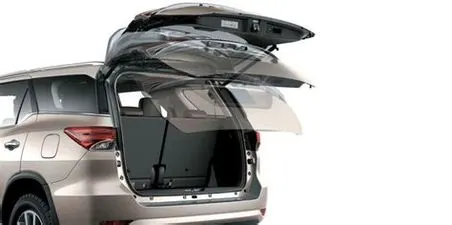
Materials used for Manufacturing of Back Doors:
Steel: Steel is a common material used for back doors due to its strength, durability, and affordability. It can be easily formed into complex shapes and can provide good protection from impact and other forces.
Aluminum: Aluminum is a lightweight material that is often used in high-end vehicles or vehicles that require improved fuel efficiency. It is less dense than steel but still provides good strength and durability.
Fiberglass: Fiberglass is a composite material that is strong, lightweight, and resistant to corrosion. It can be molded into complex shapes and is often used in sports cars and other high-performance vehicles.
Carbon fiber: Carbon fiber is a lightweight, high-strength material that is commonly used in high-performance vehicles. It provides excellent strength and stiffness, but is more expensive than other materials.
Plastic: Plastic is a lightweight and cost-effective material that can be molded into complex shapes. It is often used in lower-end vehicles or in specific components of higher-end vehicles.
Types of back door on different types of Hinge Mounting:
Top-hinged: These back doors are mounted on hinges located at the top of the door frame. They swing open upwards and are typically found on hatchbacks, liftgates, and some SUVs.
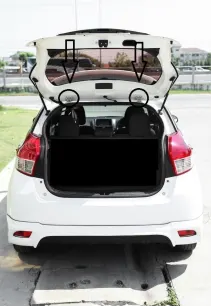
Bottom-hinged: These back doors are mounted on hinges located at the bottom of the door frame. They swing open downwards and are typically found on tailgates and some SUVs.
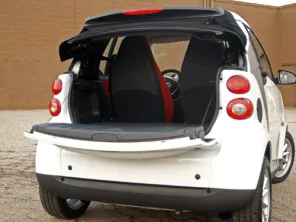
Side-hinged: These back doors are mounted on hinges located on one side of the door frame. They swing open sideways and are typically found on older SUVs, vans, and some pickup trucks.

Factors to be considered for Tail Gate:
Design Requirement:
Size and weight: The tailgate must be appropriately sized and weighted to accommodate the vehicle's intended purpose. For example, a tailgate on a pickup truck must be able to handle the weight of cargo being loaded and unloaded.
Accessibility: The tailgate must be easily accessible and functional, allowing for easy loading and unloading of cargo.
Durability: The tailgate must be constructed of durable materials, such as steel or aluminum, to withstand the wear and tear of regular use and exposure to the elements.
Security: The tailgate should include locking mechanisms or other security features to prevent theft or unauthorized access to the vehicle's contents.
Ease of use: The tailgate should be easy to open and close, with minimal effort required by the user.
Aerodynamics: The design of the tailgate should be optimized for aerodynamics, to minimize drag and improve fuel efficiency.
Style: The tailgate should be designed to complement the overall style and aesthetic of the vehicle, and may include features such as a spoiler or integrated tailgate step.
Functional Requirements:
Ease of operation: The back door should be easy to open and close, with minimal effort required by the user.
Visibility: The back door should provide adequate visibility when closed or open, allowing the driver to see behind the vehicle.
Weather protection: The back door should be designed to protect the vehicle's contents from rain, snow, and other weather conditions.
Noise reduction: The back door should be designed to reduce noise levels inside the vehicle, and prevent outside noise from entering the vehicle.
Accessibility: The back door should be accessible to all passengers, including those with disabilities.
Emergency access: The back door should be designed to provide emergency access to the vehicle's contents or passengers if needed.
Rear Crash Regulation and Requirement:
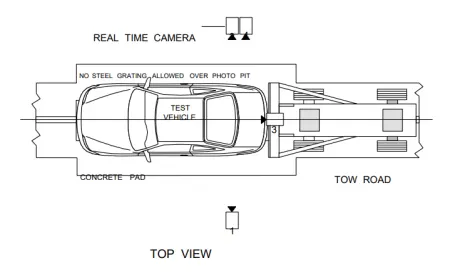
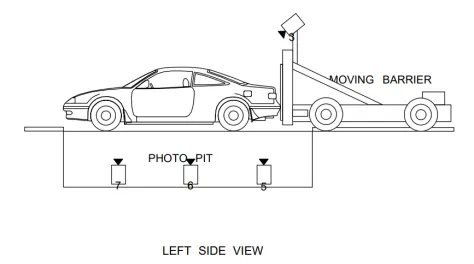
As per National Highway Traffic Safety Administration this test describes the 30 mph rear impact test.
In this test a vehicle is been kept stationary and a moving barrier is been hit the vehicle at 30mph, the impact of this testing will be captured with the inline cameras for further study.
Design Methodology of Back Door:
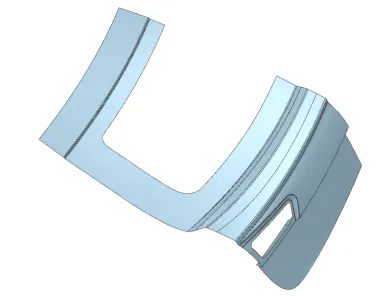
Input: Class A Surface of back Door
Repairing the Class A Surface:
While importing the data from one cad application to another cad application, some data we loose, same happened here.
In order to proceed further we need to repair the class A surface. While repairing the class A surface we need to make sure that the Input should not change.
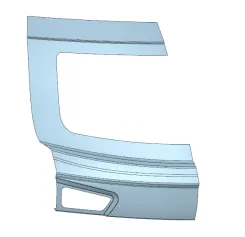
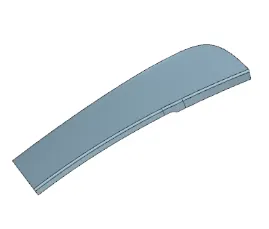
Repaired Class A Surface will be divided into Upper Body and Lower Body
Upper Body
Lower Body
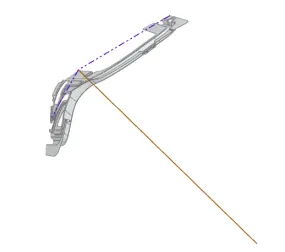
Tooling Axis:
Tooling axis created made by using Bisecting method:
Inner Panel:
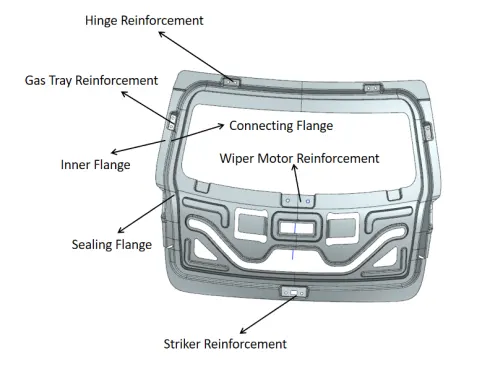
Elements of Inner Panel:
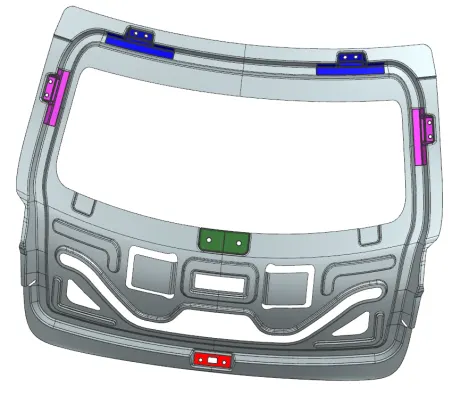
- Hinge Reinforcement
- Gas Tray Reinforcement
- Inner Flange
- Striker Flange
- Connecting Flange
- Wiper Motor Reinforcement
Functional Requirement of Sealing:
Weather Protection: A properly sealed back door prevents rain, snow, and other environmental elements from entering the vehicle's cargo area or passenger compartment.
Noise Reduction: A well-sealed back door can help reduce noise levels inside the vehicle, making for a quieter and more comfortable ride.
Thermal Insulation: A good seal can also help to insulate the vehicle from outside temperatures, improving heating and cooling efficiency and reducing energy consumption.
Dust and Debris Prevention: Sealing the back door can help prevent dust, debris, and other particles from entering the vehicle's cargo area or passenger compartment.
Pest Control: A tight seal can also help prevent pests such as insects and rodents from entering the vehicle.
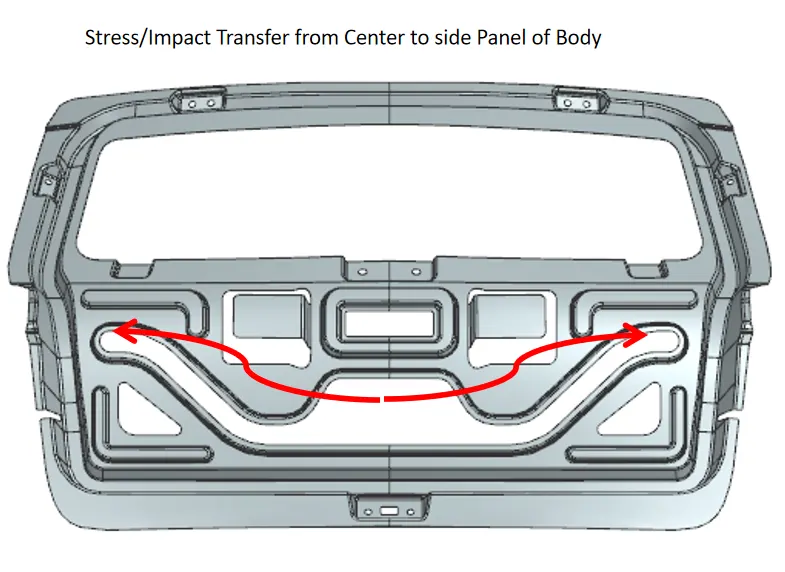
Emboss Design Consideration:
The emboss design on the inner panel should be such a way that it should be able to transfer the stress or Impact from the center of the car to the Side panels.
Assembly Images:
Gas Stay Reinforcement:
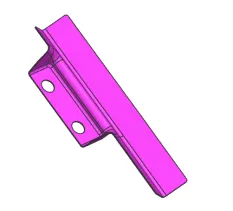
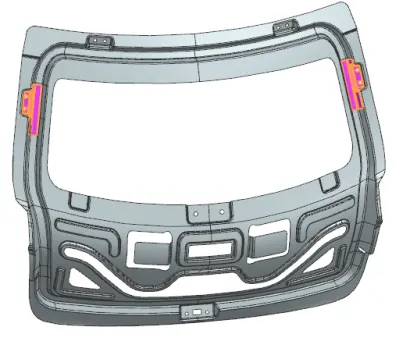
Hinge Reinforcement:
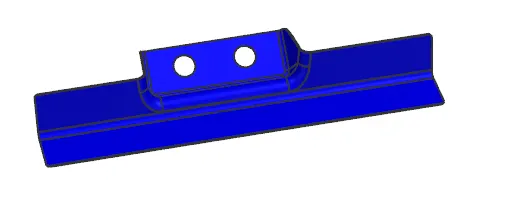
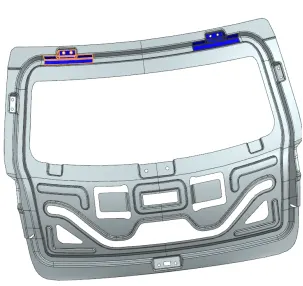
Wiper Motor Reinforcement:
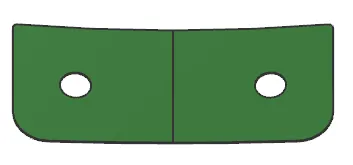
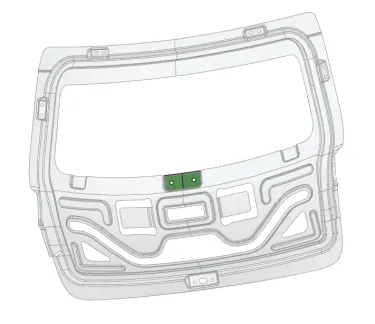
Latch and Striker Reinforcement:

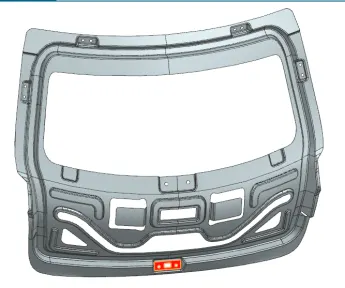
Inner Panel Assembly with Reinforcement
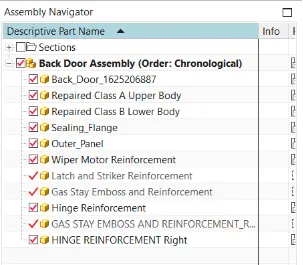
Assembly Tree:
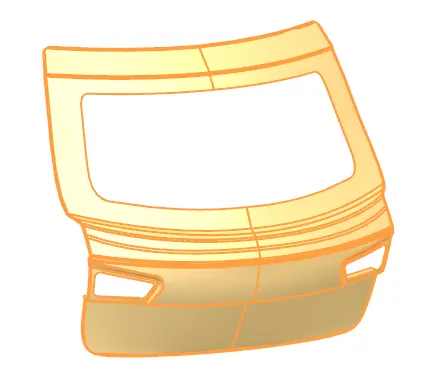
Outer Panel
Hemming and Relief:
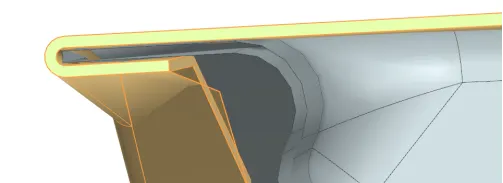
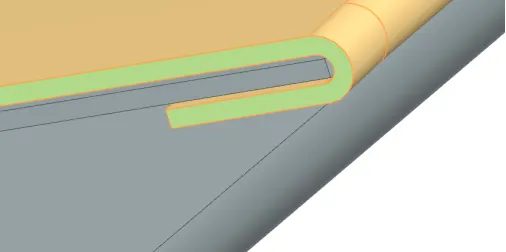
The hemming process is a metalworking technique that involves folding the edge of a sheet metal part back onto itself to create a double layer. This is typically done to improve the strength and durability of the edge or to create a more finished appearance.
The hemming process can be accomplished using a variety of methods, including manual tools or specialized machines. In general, the process involves bending the edge of the sheet metal upwards, forming a "hem," and then folding it back down over the original edge. This creates a double layer that is stronger and more resistant to damage than a single layer.
Bend Relief:
Relief is a metalworking term that refers to the removal of material from a sheet metal part in order to create a recessed area or indentation. This can be done for a variety of reasons, such as to reduce weight, improve the appearance of the part, or to create space for other components to fit into.
The relief process involves cutting or stamping the sheet metal to remove material in a specific area, leaving behind a depression or recessed surface. This can be accomplished using a variety of techniques, including CNC machining, laser cutting, and hydraulic stamping.


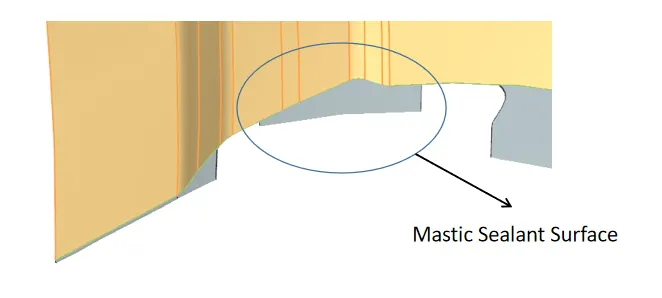
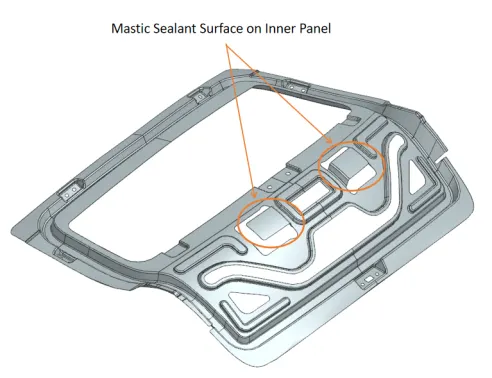
Mastic Sealant:
Draft Analysis
Conclusion:
In this Module we have learned how to design the tailgate for SUV, By analyzing various factors that should be considered when designing a tailgate, such as aerodynamics, material selection, and functionality.