Design of backdoor
CAR BACK DOOR DESIGN
Aim: To design back door of car using given outer class 'A' surface.
What is back door of a car?
A door which is located at the rear side of a car which gives access for the boot space to store luggage, spare wheel etc.
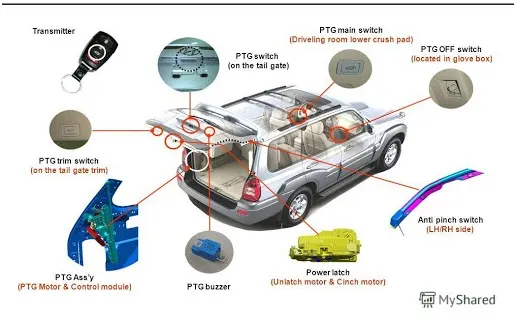
These doors can be operated manually or electric powered. In most of the luxury cars door is electrically operated.
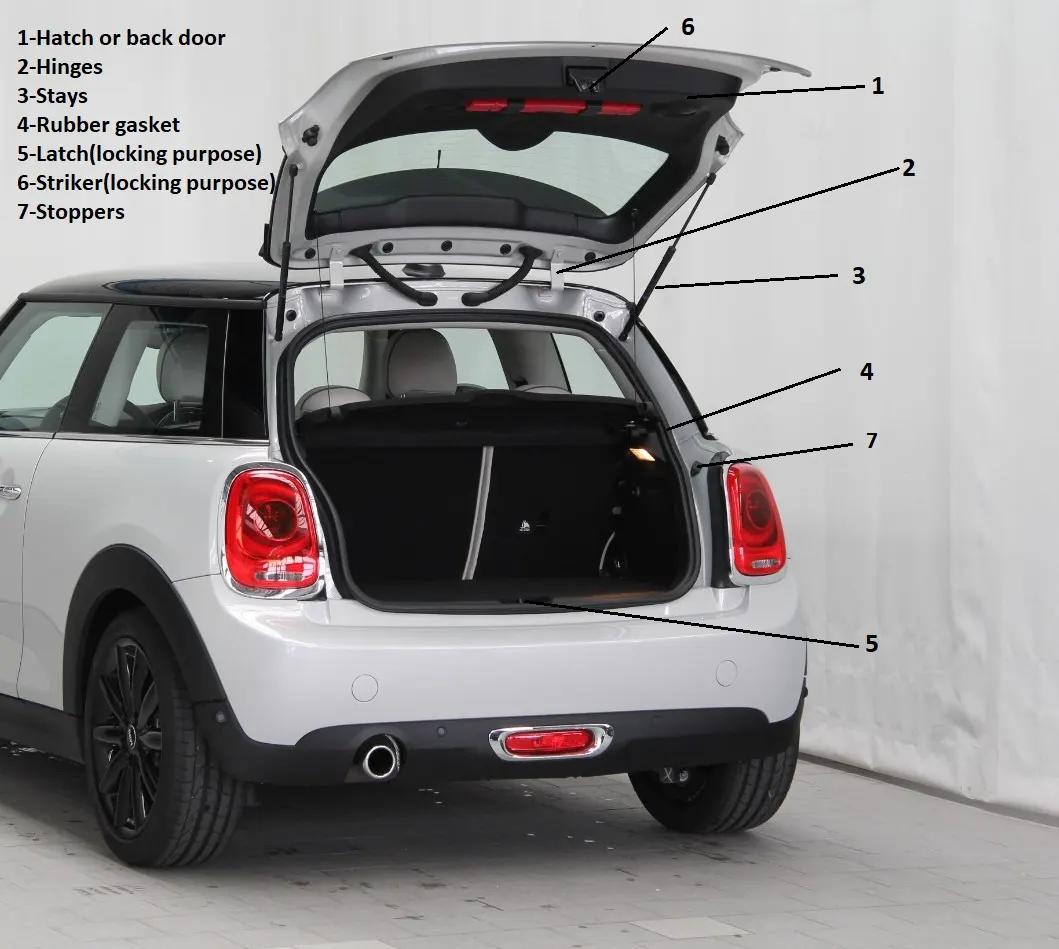
Types of doors based on working position,
- Top Mounted Door
- Side mounted Door
- Bottom Door
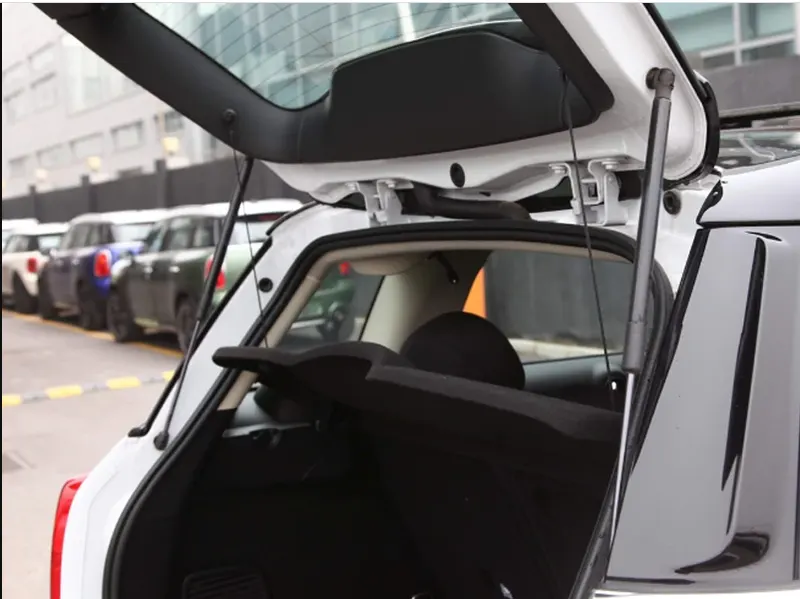
Gas Stay Powered:
Electric Operated:

Design Consideration :
- Visibility Criteria
- Latch and Stricker Position
- Hing Position
- Gas Stay Position
- Space Avalibility
- Drain Holes
- Hemming and Relief area's
Components of Back Door :
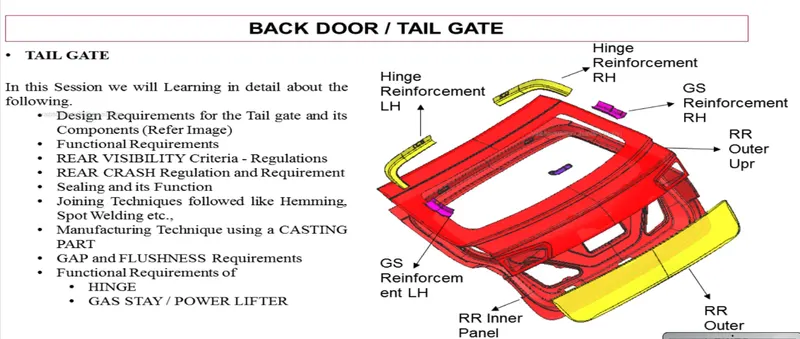
The Components of Back Door as follows,
- Inner Panel
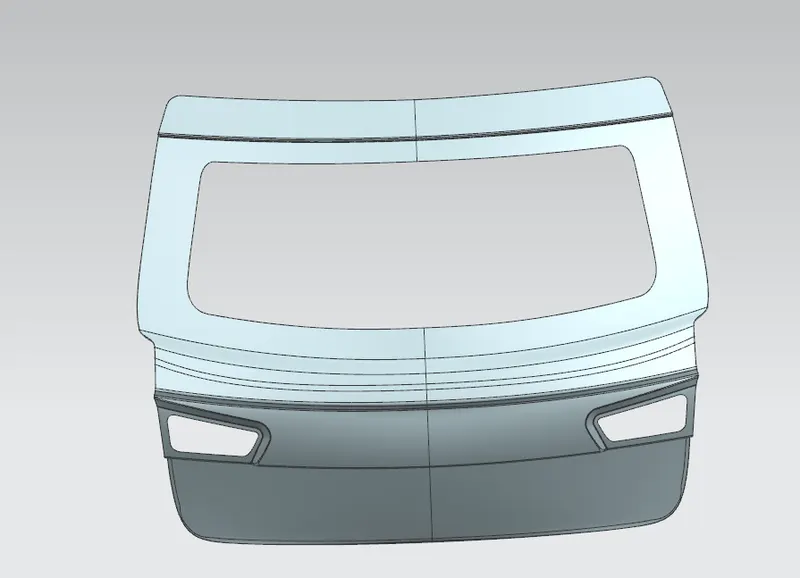
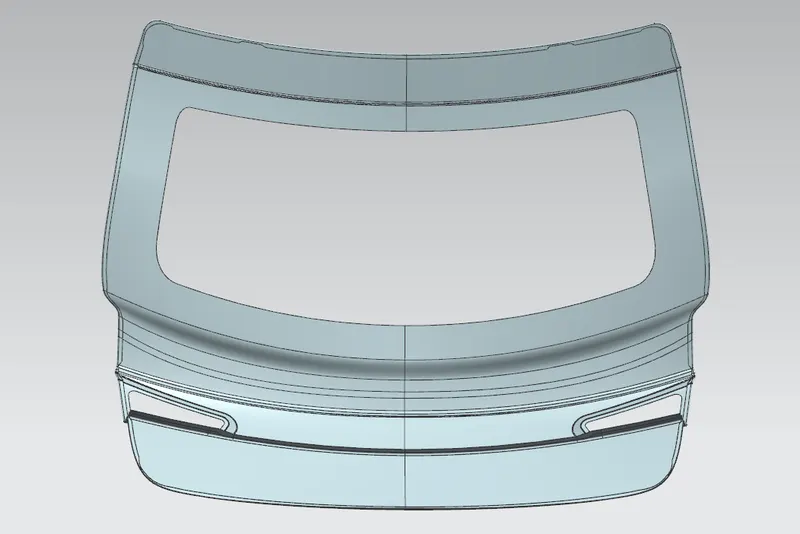
- Outer Panel
- Hing Reinforcement
- Latch and Stricker Reinforcement
- Gas stay Reinforcement
- Wiper motor Reinforcement
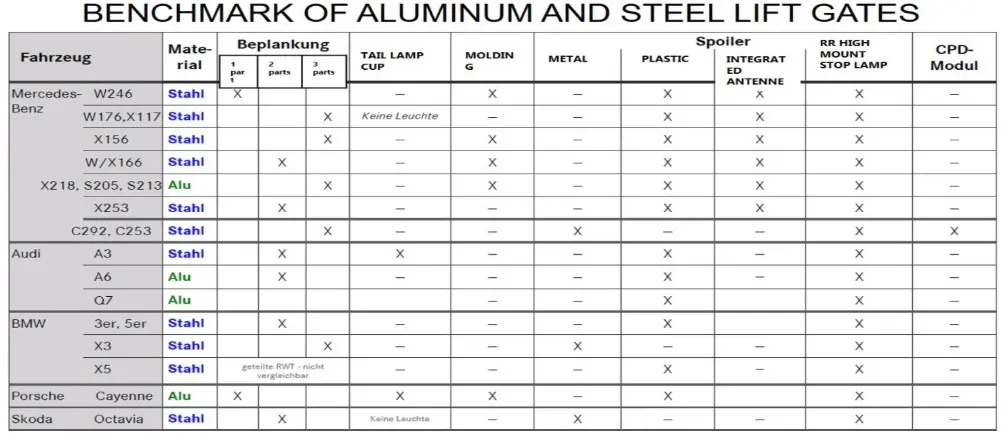
Different Sheetmetal processes used for manufacturing the Back Door
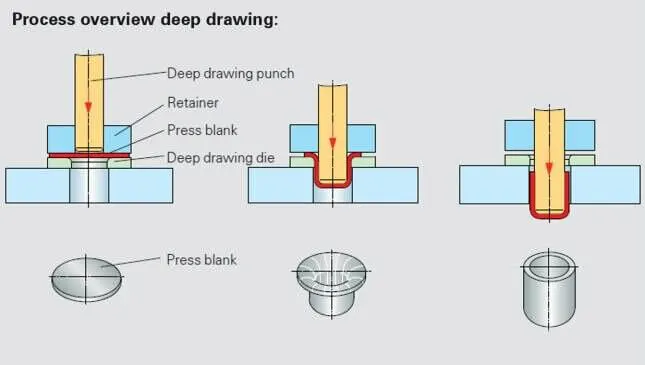
Deep Drawing:
The metal deep drawing process is an effective method of manufacturing of cups, cans and other similar deep drawing products. The deep drawings having two main categories.
- First- stage drawing: The blank shape of metal is placed on the die and contact with the punch. When the metal specimen is flat piece of sheet metal used in forming and finish the product. Initially the punch moves in downward direction. The outer rim of blank is subjected to pure radial drawing (drawing toward in vertical axes) between die and blank metal. The metal become a bend and sliding over die and also stretched between die and punch. The metal in vicinity of punch head and contact with it bend and slide over radii and stretch over punch head.
2. Redrawing: The components drawn from first stage again it is redrawn convert into more depth to form a cup shape in the die and punch. The second stage of drawing is called as redrawing.
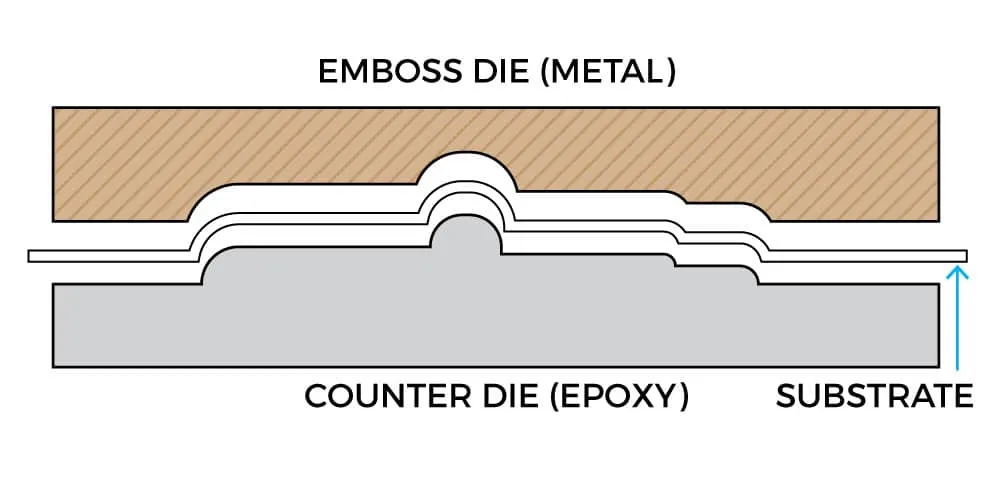
Embossing:
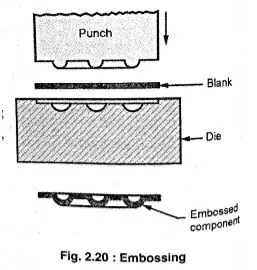
Embossing is a metal forming process for producing raised or sunken designs or relief in sheet materials by means of matched male and female roller dies, theoretically with no change in metal thickness or by-passing sheet or a strip of metal between rolls of the desired pattern. Metal sheet is drawn through the male and female roller dies producing a pattern or design on the metal sheet. Depending on the roller dies used, different patterns can be produced on the metal sheet.
Materials commonly used in the metal embossing process include:
- Aluminum alloys
- Steel alloys
- Zinc
- Copper
- Galvanized steel
- Brass
- Cold rolled steel
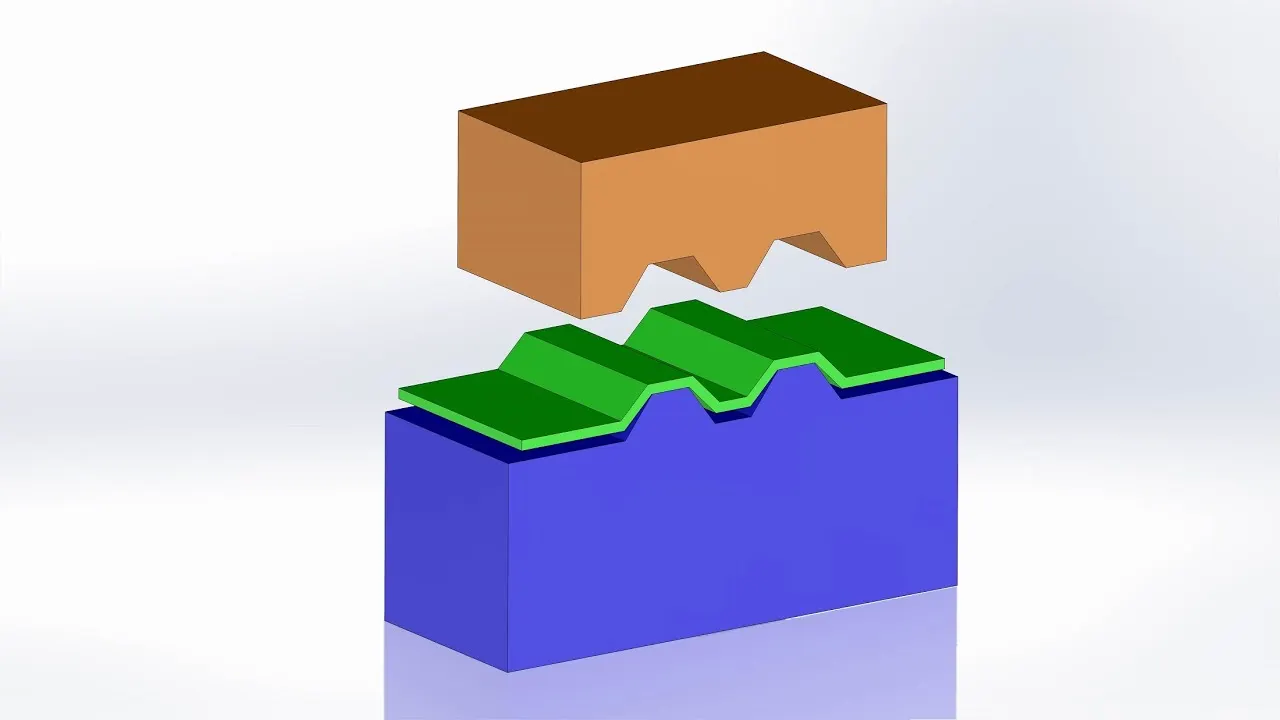
Hemming:
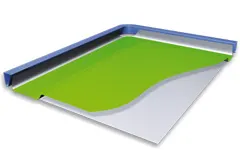
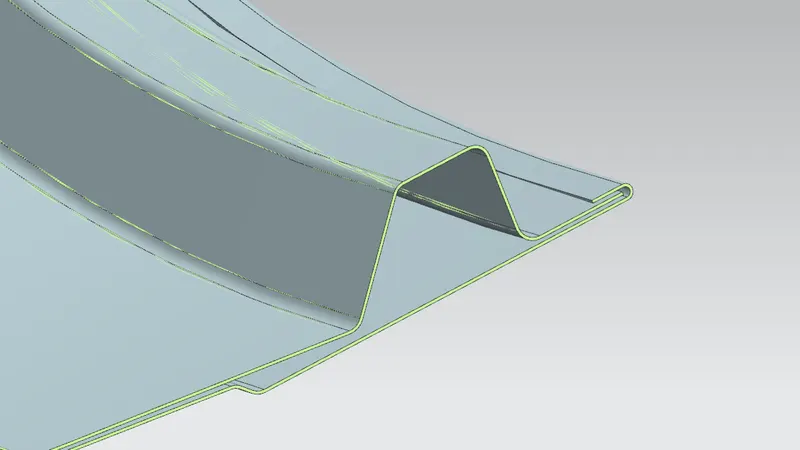
Hemming is a forming operation in which the edges of the sheet are folded or folded over another part in order to achieve a tight fit. Normally hemming operations are used to connect parts together, to improve the appearance of a part and to reinforce part edges.
In car part production, hemming is used in assembly as a secondary operation after deep drawing, trimming and flanging operations to join two sheet metal parts (outer and inner) together. Typical parts for this type of assembly are hoods, doors, trunk lids and fenders.
There are various types of hemming operations:
- Conventional die hemming: In conventional die hemming, the flange is folded over the entire length with a hemming tool.
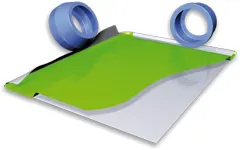
- Roll hemming: In roll hemming, the hemming roller is guided by an industrial robot to form the flange.
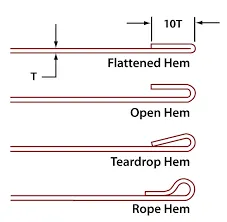
Open Hem: A Hem has a full round feature and a return flange. In open hem bend angle is equal to 180 degrees.
Tear drop Hem: In tear drop hem the bend angle is greater than 180 degrees.
Closed Hem: Hems without any inside radius are called as closed hem. Closed hems are not recommended if the hem geometry is to be painted or if the material used is SST or Aluminium.
Blanking:
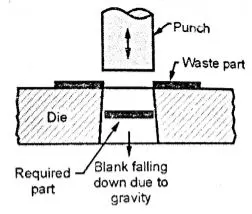
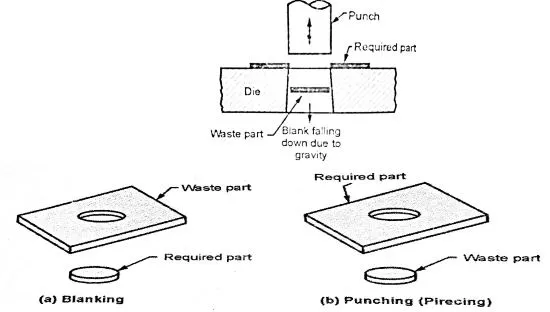
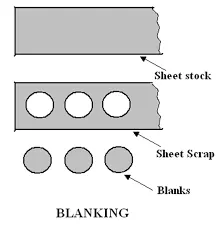
Blanking is a cutting operation of a flat metal sheet and the article punched out is known as blank. Blank is the required product of the operation and the metal left behind is considered as a waste.
Punching:
It is similar to blanking only the main difference is that, the hole is the required product and the material punched out from the hole is considered as a waste.
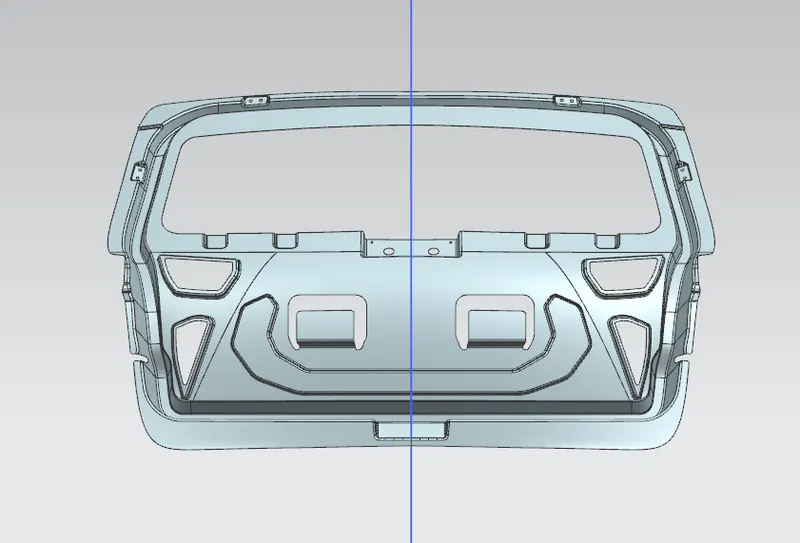
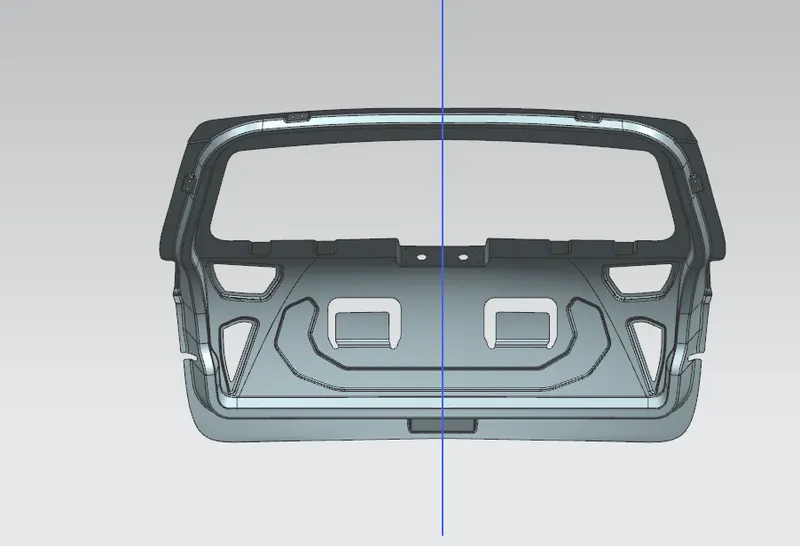
Design of Back door in NX CAD:
Door parts thickness is given below,
- Outer Panel - 0.75 mm
- Inner Panel - 0.75 mm
- Reinforcements - 1.5 mm
INNER PANEL :-
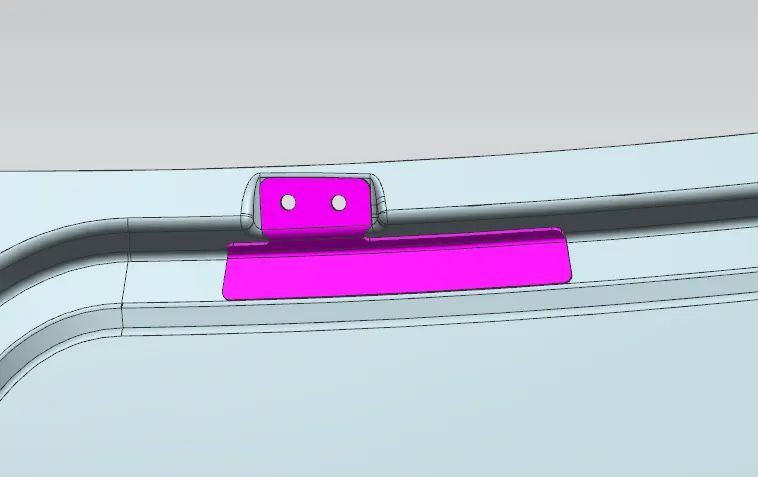
Hinge Reinforcement :
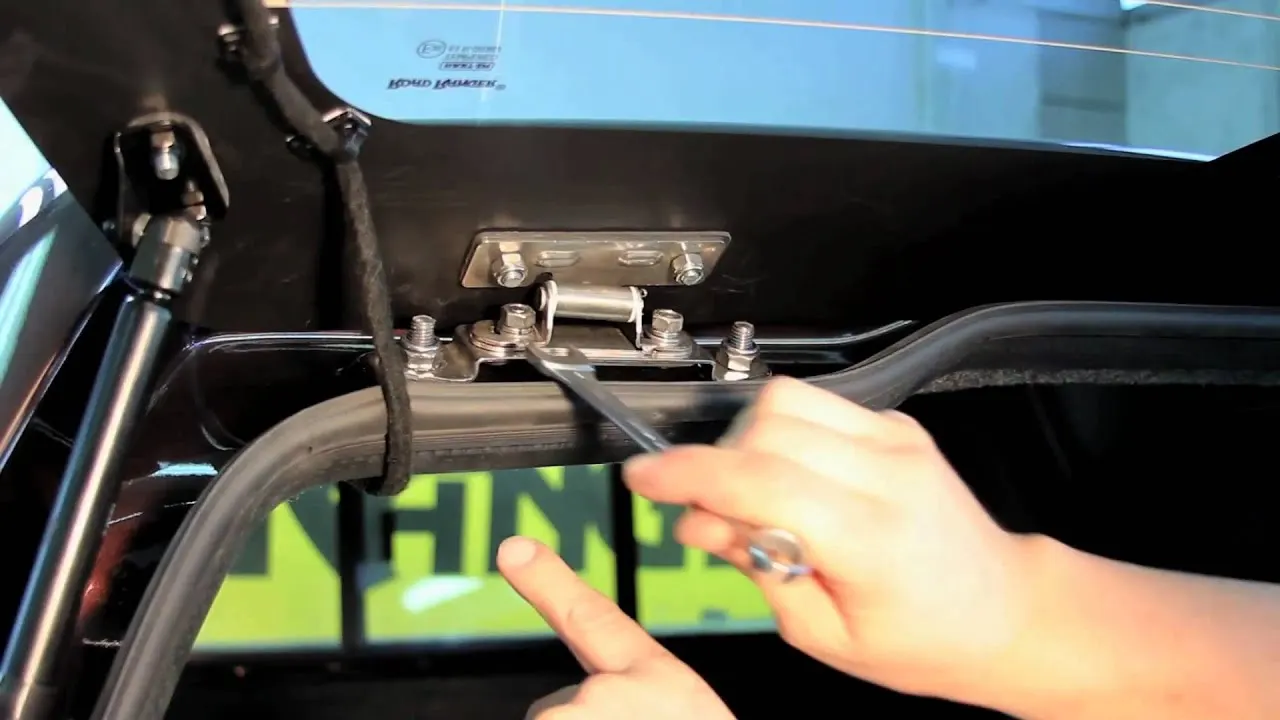
Hinges are the essential, that allows doors to pivot on one edge as they open and close. They are found on virtually all doors. It is a mechanical bearing that connects two solid objects, typically allowing only a limited angle of rotation between them.
Gas stay Reinforcement :
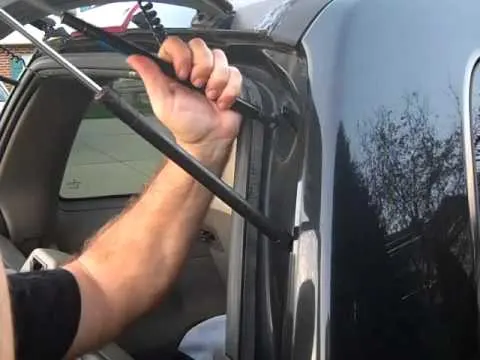
It is used to lift up the Tail gate.
There are two types of Gas stay reinforcement is there. That they are
- Manual System
- Power Lift System
Manual System :
This mechanism is most used in Indian cars. It is operated man by his own.
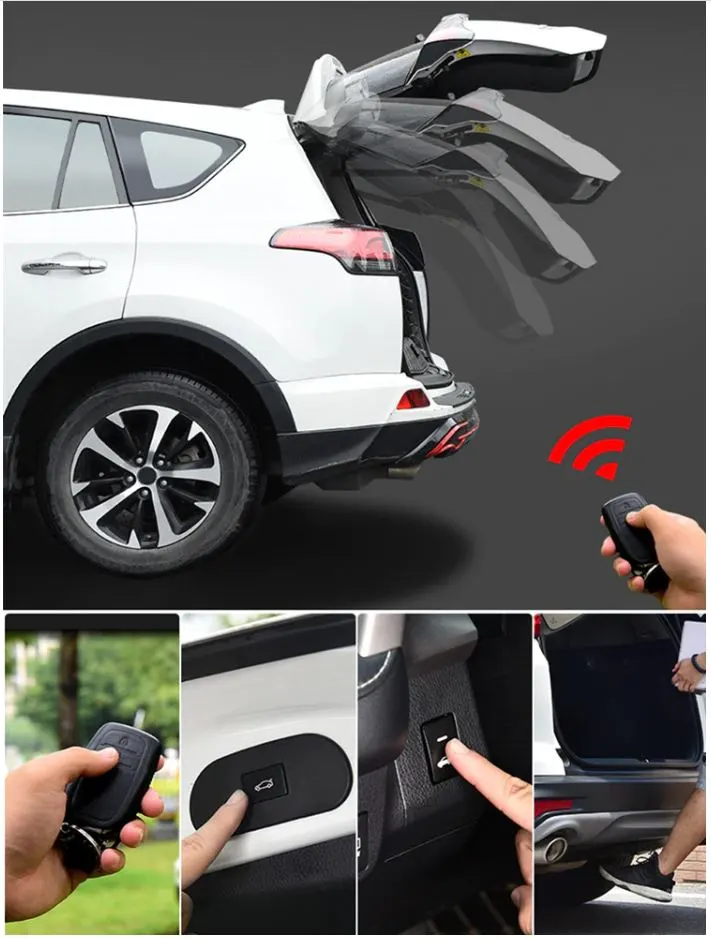
Power Lift System :
It works on the basics of Sensor.
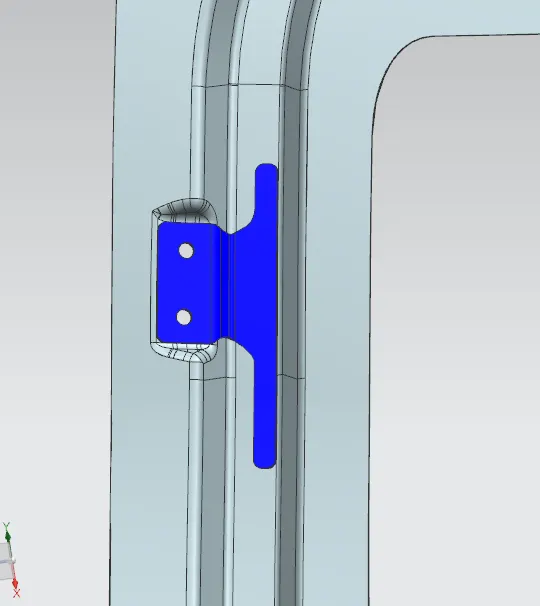
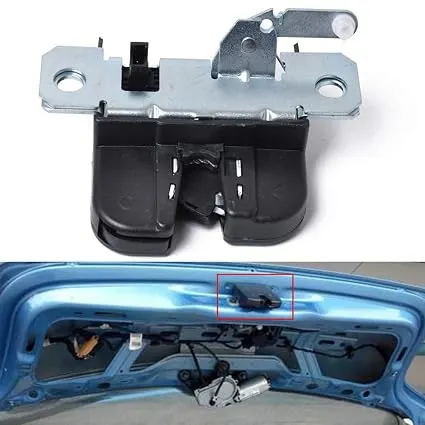
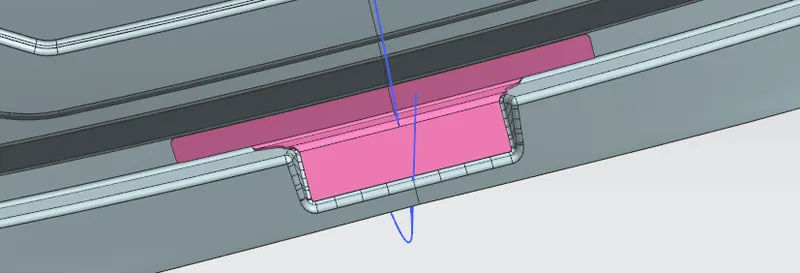
Latch Reinforcement :
A latch is not the same as the locking mechanism of a door or window, although often they are found together in the same product. Latches range in complexity from flexible one-piece flat springs of metal or plastic, such as are used to keep blow molded plastic power tool cases closed, to multi-point cammed latches used to keep large doors closed.
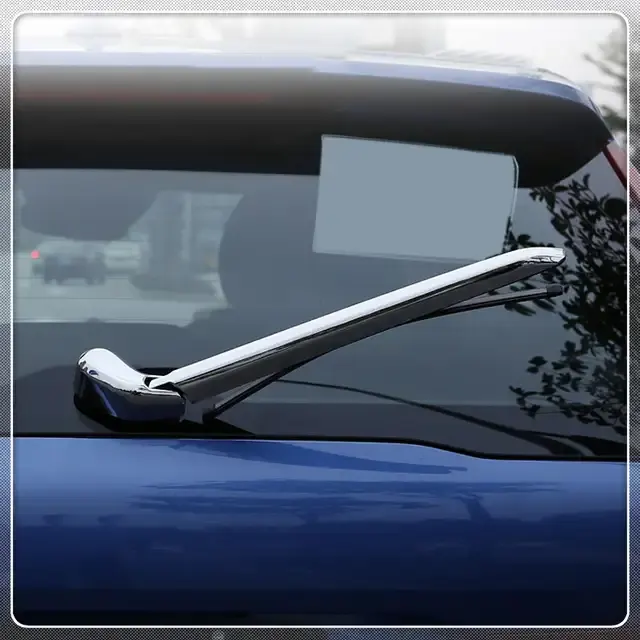
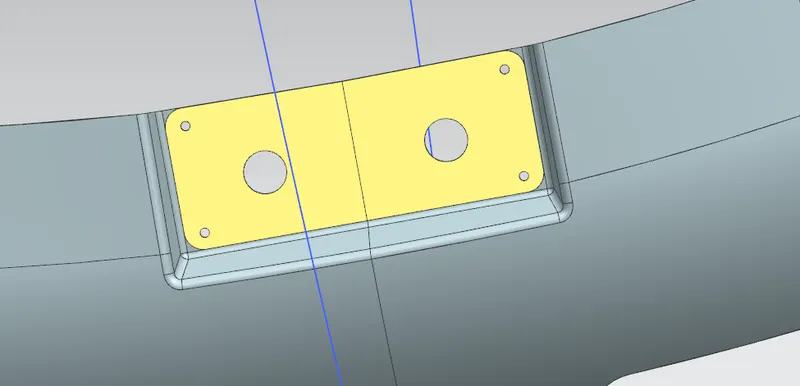
Viper moter Reinforcement :
It is small electric motor which is mounted in the rear Tail gate. It used to clean the rear wind sheid for clear visiability.
OUTER PANEL :-
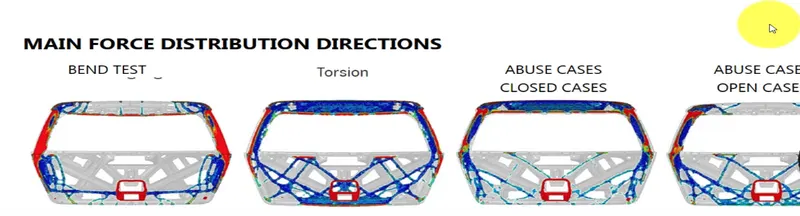
Force Distribustion :
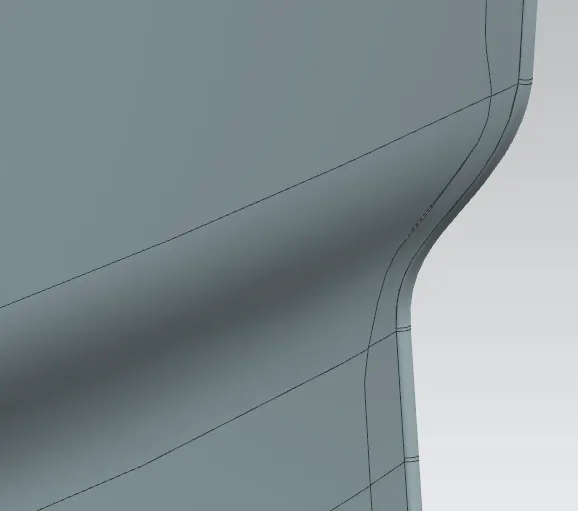
When the car hited at rear end, the force which acted should be react outside. The Y emboss which is helps to move the force to the outer end.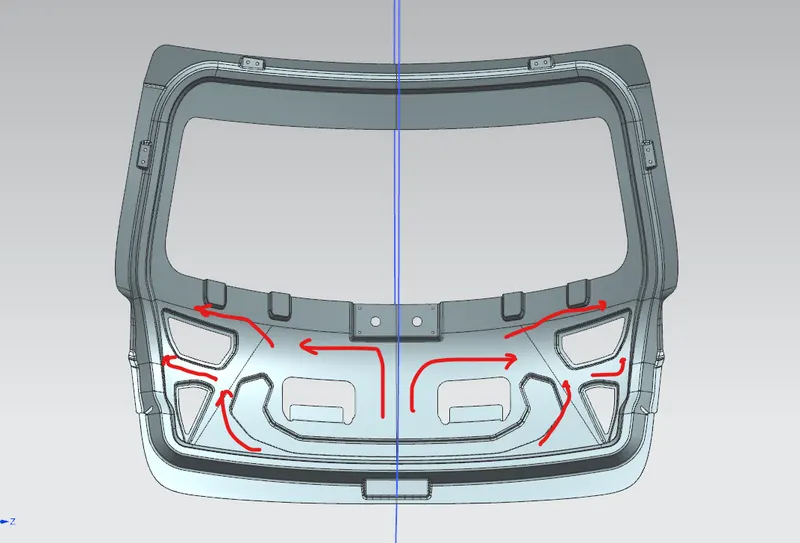
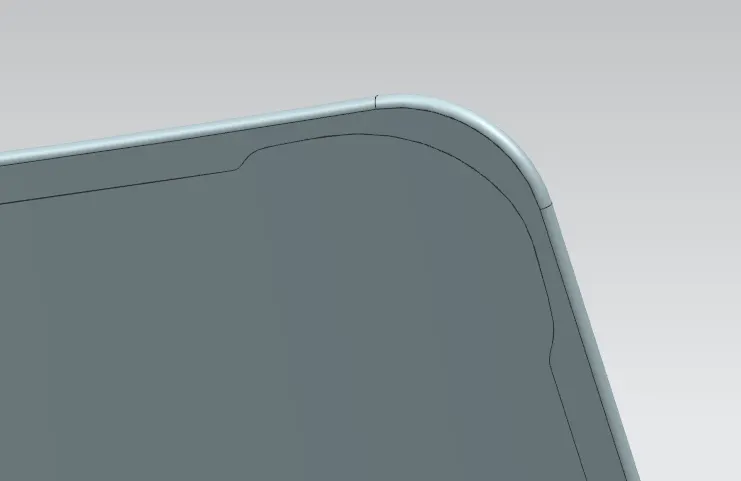
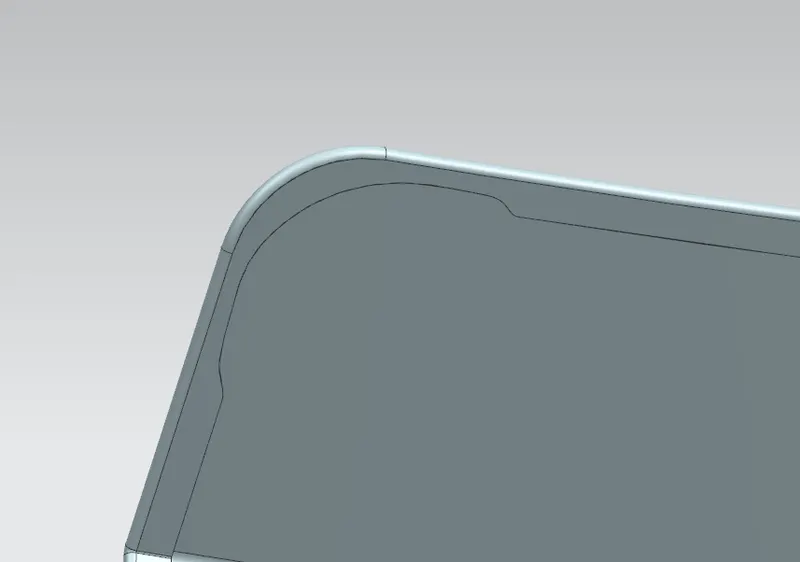
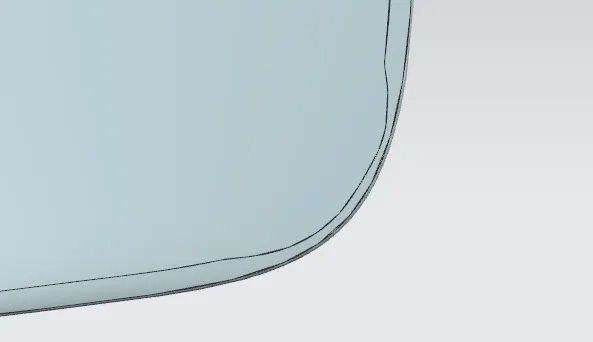
Corner Relief:
Relief helps to control sheet metal material behavior and to prevent unwanted deformation during unbend operations. So here i gave two cornor relief for Back door.
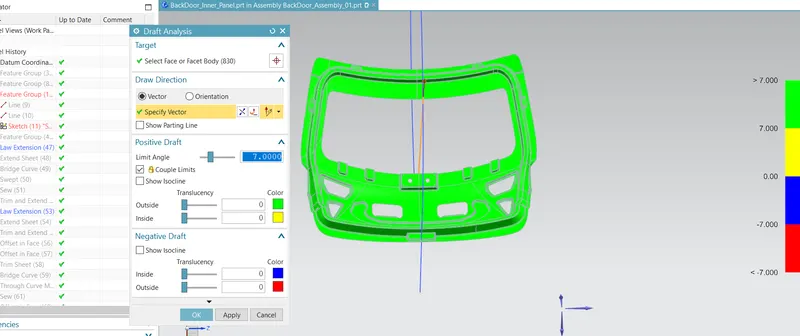
DRAFT ANALYSIS :-
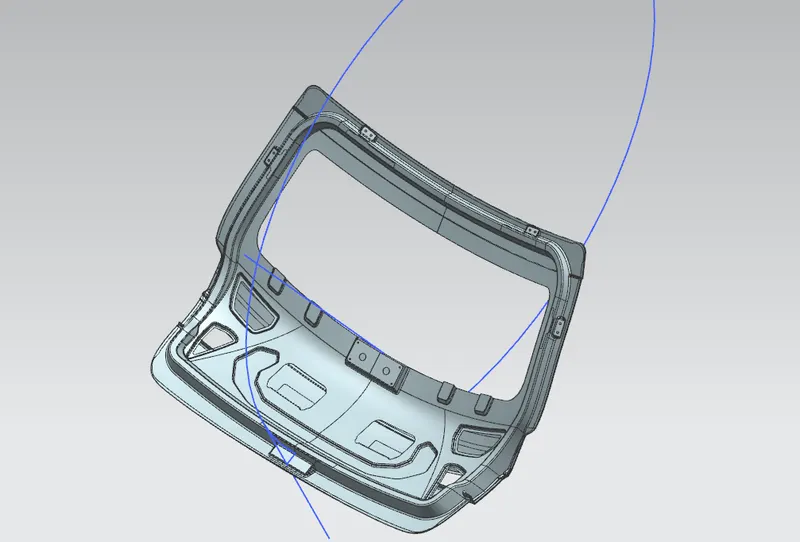
DIFFERENT VIEWS :-
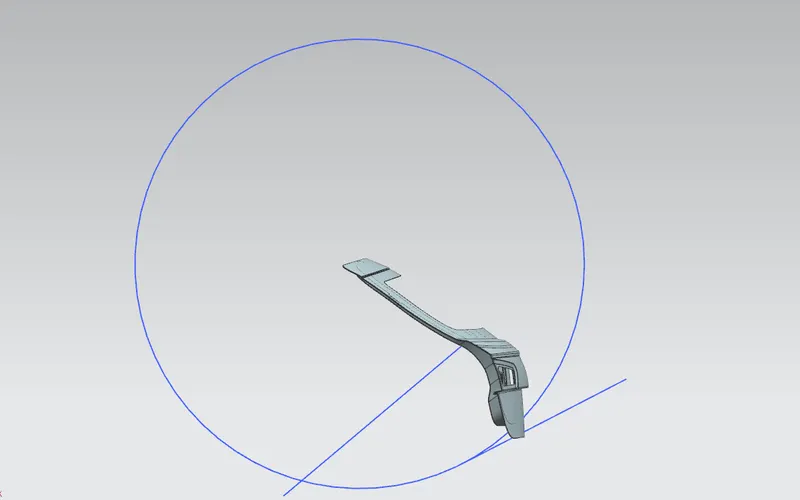
Top View with Door Trajectory
SECTION VIEW :-
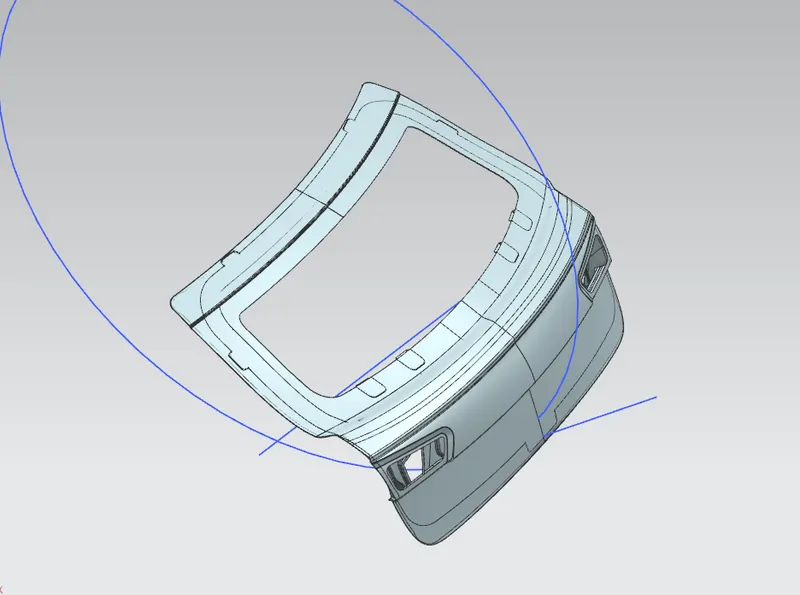
FINAL VIEW OF COMPONENT :-
Conclusion:
Thus,we have designed the back door by the provided styling surface of a back door design, I have used appropriate design methodologies and provided the necessary reinforcements and embosses for the BackDoor design.