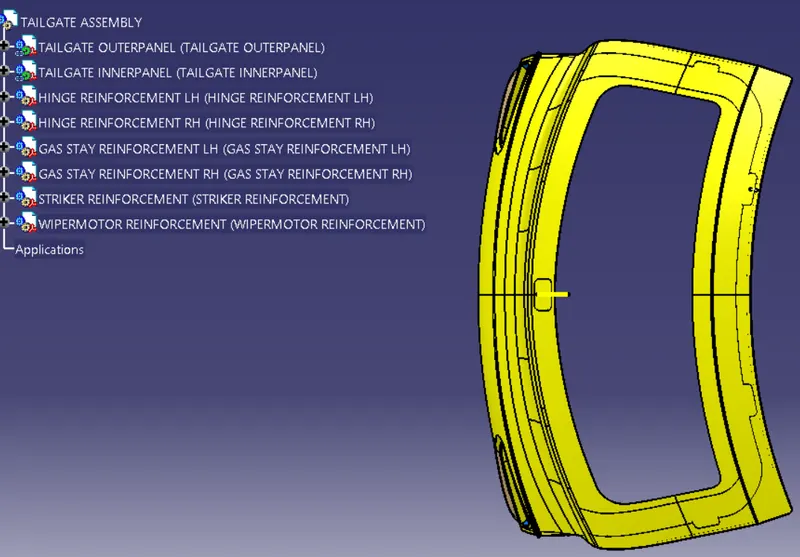
Design of backdoor
#8 BACKDOOR ASSEMBLY DESIGN AND ITS COMPONENTS
BACKDOOR
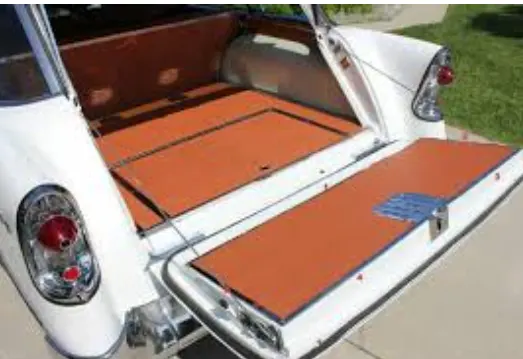
Back door or tail gate simply refers to the back of the car that can open and close.it covering the rear of the vehicle.It provide access to a cargo area (trunk/boot ).A tailgate hinged at the roof is a predominant characteristic of hatchbacks, estates/station wagons and liftbacks .The door or opening of a cargo area may be hinged at the top, side, or bottom. In most cars, usually this process will be done manually. One has to get down the car to open and close the tail-gate with the car key. Nowadays, automobile manufacturers providing Advanced features like the automated tail-gate. An automatic tail-gate in the car will do the process of shutting and opening the tail-gate electronically.
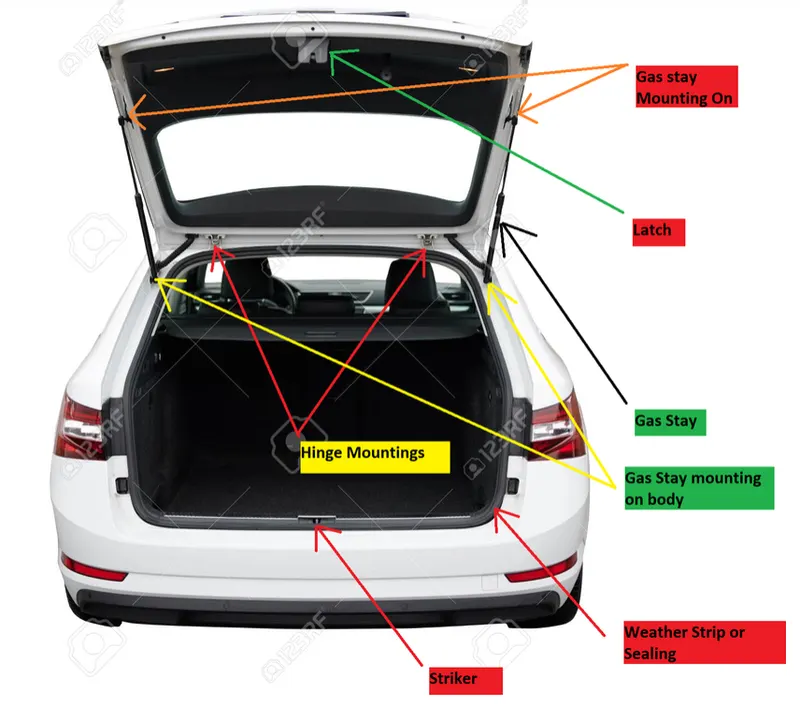

Types of doors based on working position,
1. Top mounted door:
This type of back doors is used in a station wagon, pickup trunk and some of the spot utility vehicles. Today's modern cars use top mounted tailgating system which are both powered and also gas stay supported. These top mounted tailgates provide greater rear visibility compared to side mounted or backdoor which have center pillars in it.
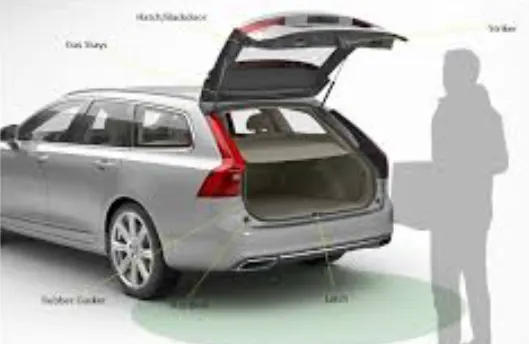
2. Side mounted door:
As the name signifies the side mounted doors are the one which is used in the van type MPVs, SUVs, pickup truck vehicles. These side mounted doors or barn doors are a lot easier compare to top mounted doors. These doors are generally smaller in size and can be easily accessed. These doors are more convenient for the goods handlers for long pipe and lengthy components where one door is kept open.
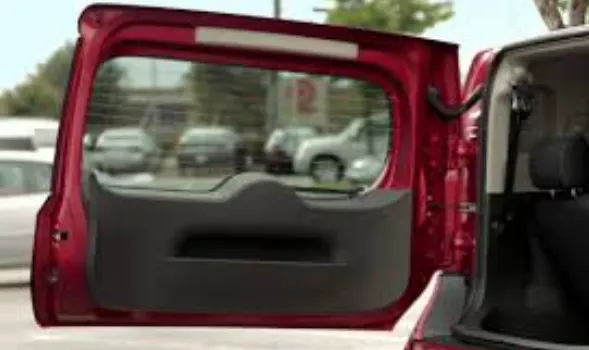
3. Bottom type door:
In bottom type backdoor system are used in the car type such as car, pickup truck and some luxuary SUVs. These are the most convenient type of back door in which the bottom split is used as a support or even as a table for the tour going people.
MATERIALS USED AND ITS ADVANTAGES:
1. ALUMINUM: Using aluminum improve the strength where we can improve the reinforcements. Aluminium parts are casted and we can vary the thickeness of the part. Because this will reduce the number of parts as compared to steel. Only drawback is cost of aluminium which is high cost compared to steel.
2. STEEL: Steel parts are tampered and we can't vary the thickness of the part because mode number of parts added. Which could increase the number of parts. So now a days most of the car manufacturers are using aluminum instead of steel and they reduce the number of parts and reduce cost drastically.
MANUFACTURING PROCESS INVLOVED IN BACKDOOR:
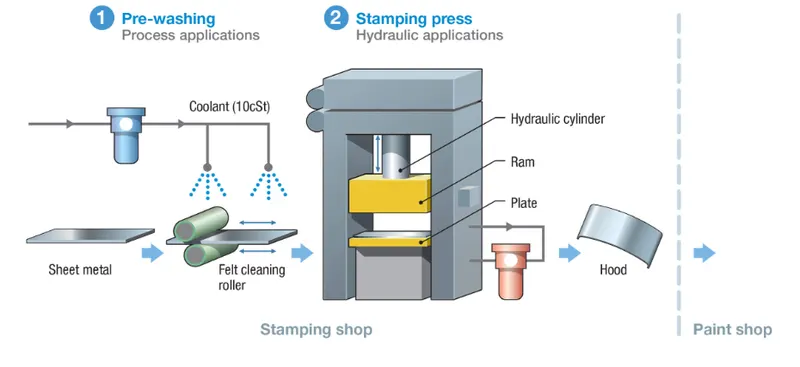
STAMPING PROCESS: Conventional tailgate assemblies are made from stamped metal panels welded together to form a tailgate. Latches are added on either side of the tailgate to engage a striker on the pickup sides. A handle operates the latches to open and close the tailgate assembly. Steel tailgate assemblies provide a durable and secure closure for the pickup bed.
Stamping processes to be used for a panel depend on its design. However, normally the processes used extensively are blanking, drawing, piercing, forming, notching, trimming,hemming, etc. Blanking prepares the initial approximate form of the part in flat sheet. Drawing is generally the first operation to attain depth related form. Piercing, notching, hemming, are product design related operations. Trimming generally removes the extra material on the periphery of the panel provided for blankholding during draw operation. Decision on trim line is very important and becomes deciding factor to obtain good draw.
SHEET METAL OPERATIONS
1. Punching
2. Blanking
3. Piercing
4. Drawing
5. Bending
6. Hemming: Hemming is a technology used by the automotive industry to join inner and outer closure panels together (hoods, doors, tailgates, etc.). It is the process of bending/folding the flange of the outer panel over the inner one. The accuracy of the operation affects significantly the appearance of the car’s outer surfaces and is therefore a critical factor in the final quality of a finished vehicle.
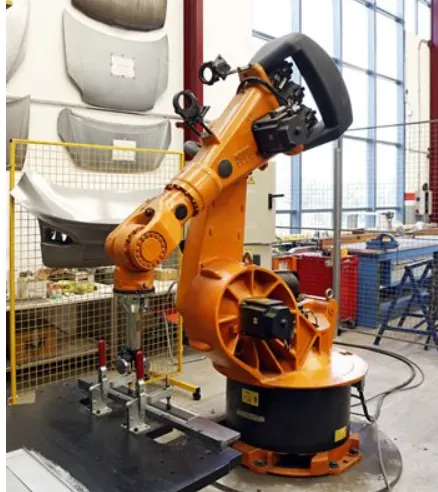
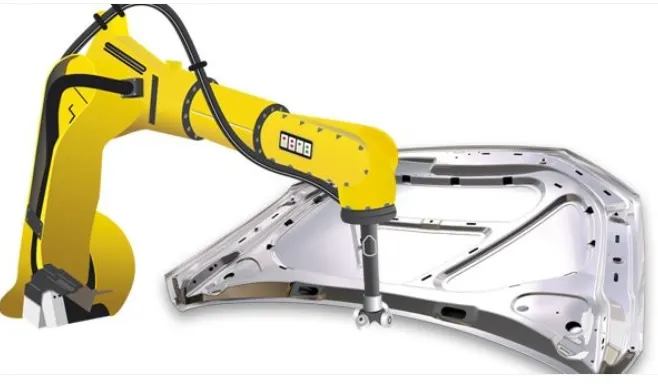
In ROLLER HEMMING, The robotized hemming systems use a standard industrial robot integrated with a roller hemming head, offering a very flexible solution. This roller hemming head consists of a body, some guides and a number of rolls that are designed according to the geometry of the part in each case.
DESIGN CONSIDERATIONS OF BACKDOOR:
1. Visibility criteria
2. Boot space clearance
3. Rear Crash regulations
4. Mounts for wiper motor and lights
5. Strength criteria
6. Draft Analysis
7. Support Structures like Hinge and Gas stay/ Power lifter
COMPONENTS IN BACKDOOR ASSEMBLY:
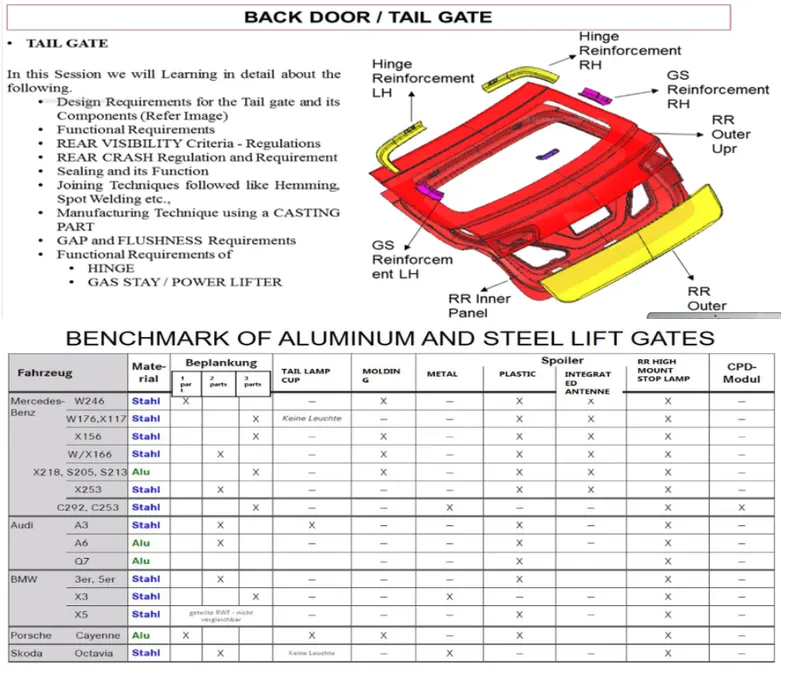
1. TAILGATE OUTERPANEL ( UPPER AND LOWER )
2. TAILGATE INNERPANEL
3. HINGE REINFORCEMENTS ( RH & LH )
4. GAS STAY REINFORCEMENTS ( RH & LH )
5. LATCH AND STRIKER REINFORCEMENT
6. WIPER MOTOR REINFORCEMENT
1. TAILGATE OUTERPANEL:
In this design tailgate is created as two different parts tailgate outer panel upper and lower. This outer panel designed based on visibility criteria and proper reliefs provided at the corner for hemming operation .The thickness of outer panel is 0.75 mm.
ORIENTATIONS OF TAILGATE OUTERPANEL
Isometric view
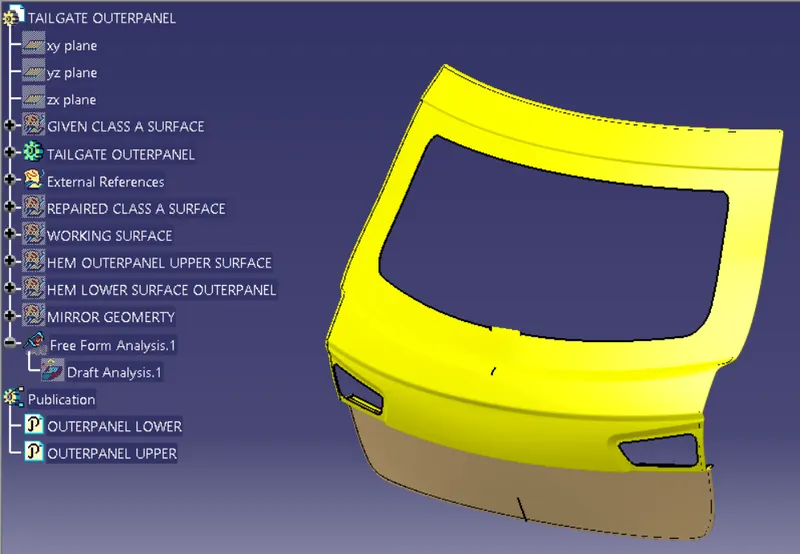
Front view
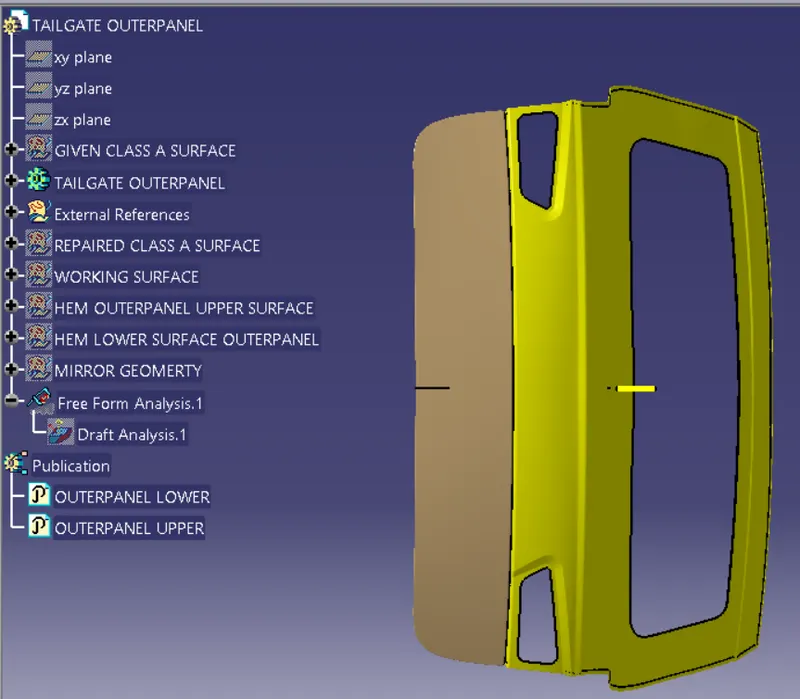
Top view
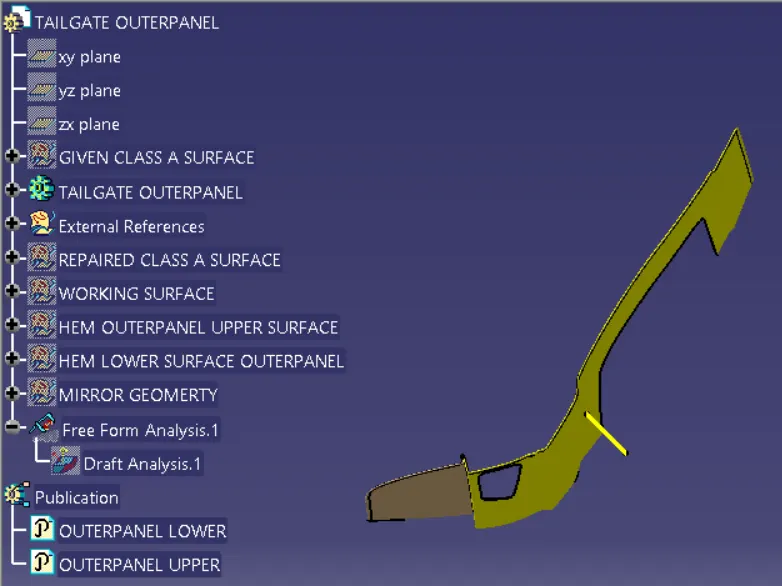
Right view
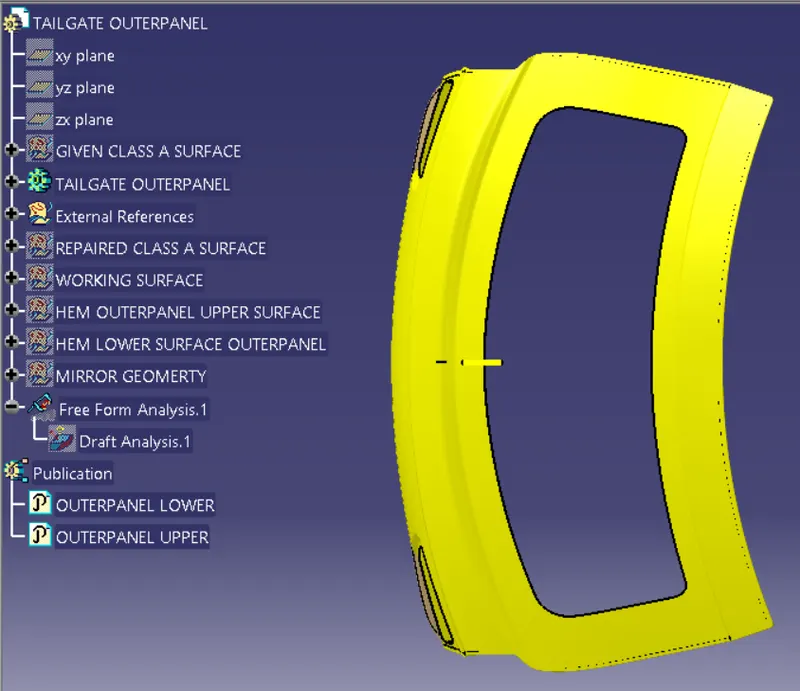
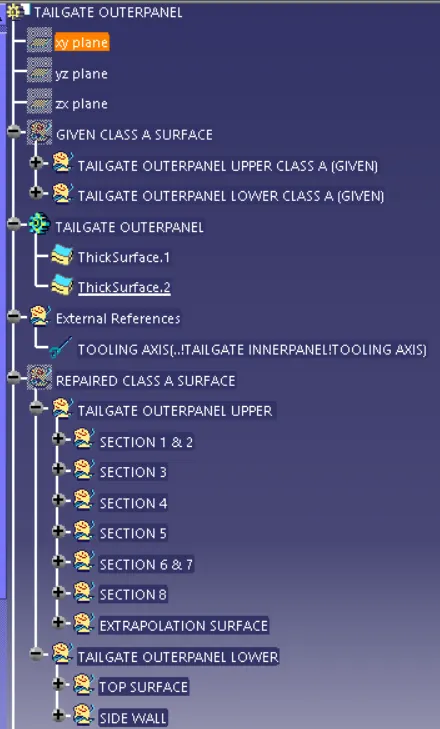
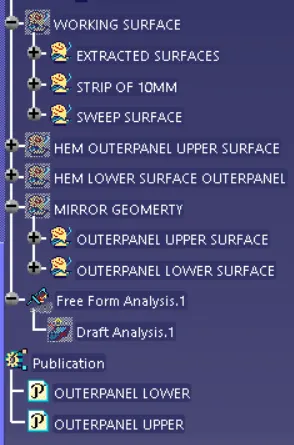
Non-detailed model tree
Draft analysis results
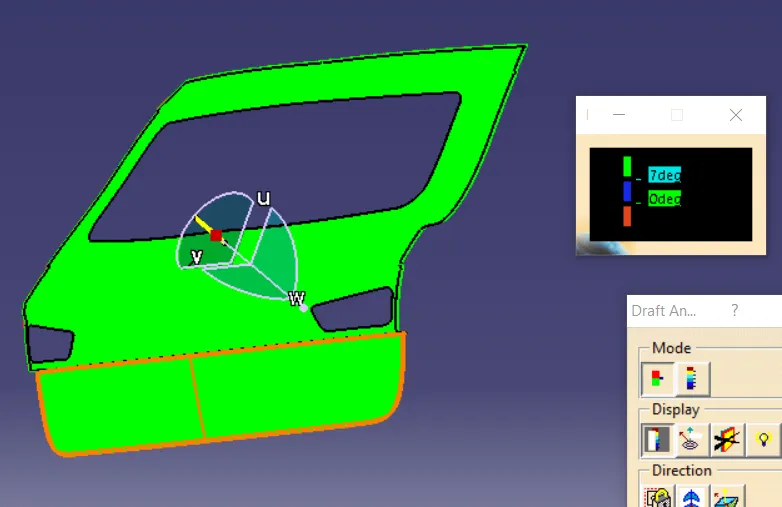
Thus from the above result, it is having a good positive draft of 7°
2. TAILGATE INNERPANEL:
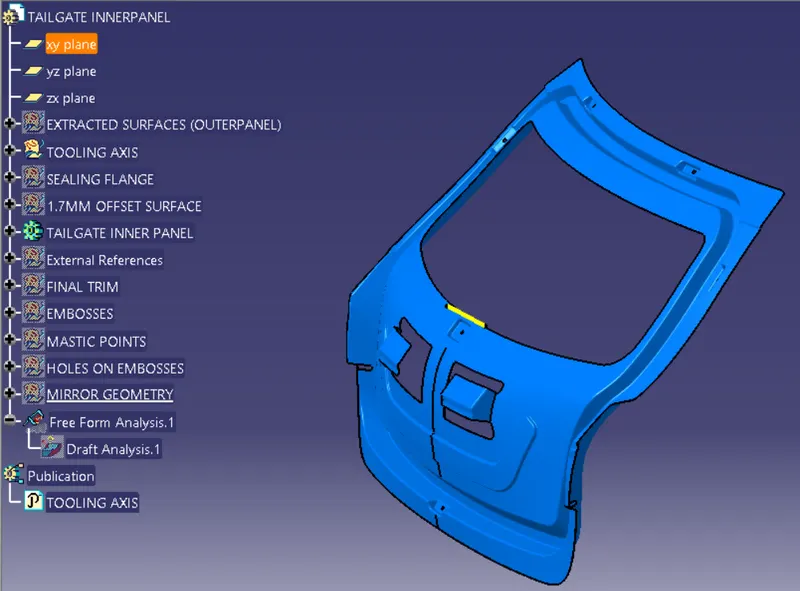
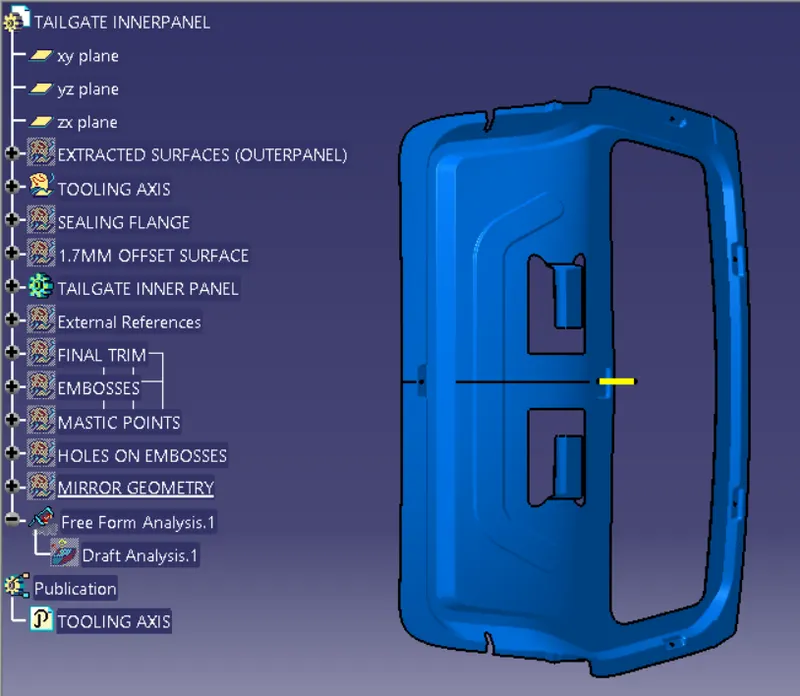
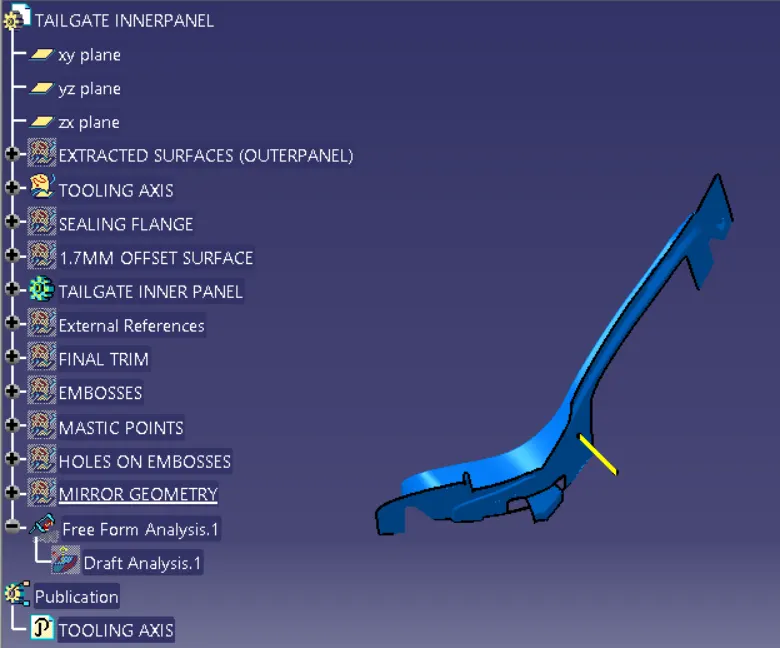
Inner door panel is a component which is use for strengthening the door assembly and it is one of the most important components on witch all accessories are mount like hinges, glass guide channel and gas stay.Back door inner panel is mounted with the the Roof.Inner is mounted with the outer panel with the help of hemming process.
ORIENTATIONS OF TAILGATE INNER PANEL
Isometric view
Front view
Top view
Right view
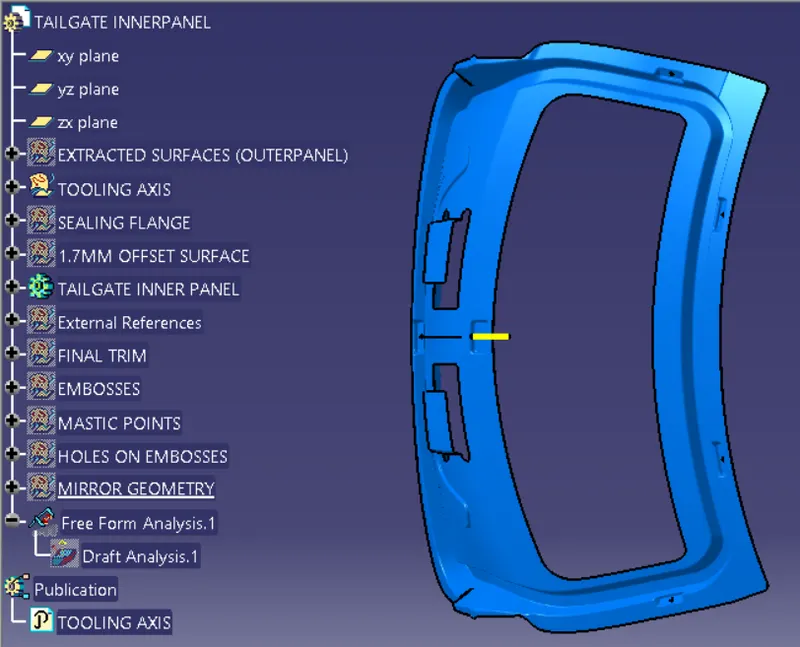
Non-detailed model tree
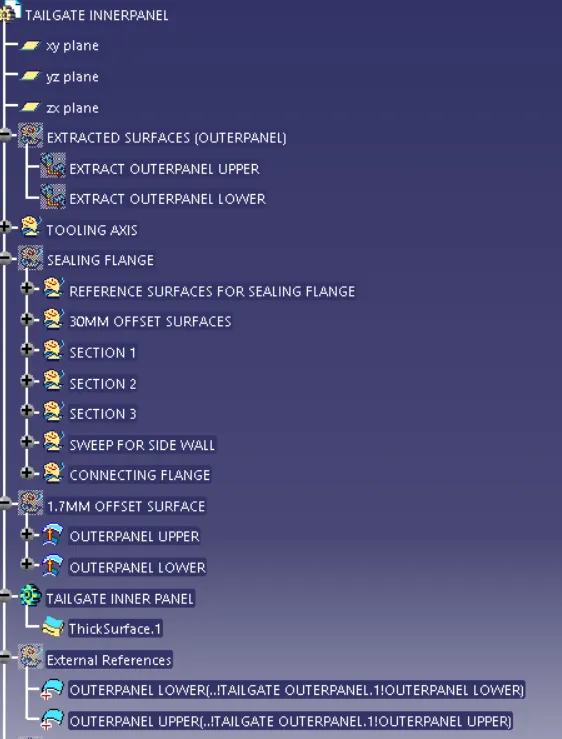
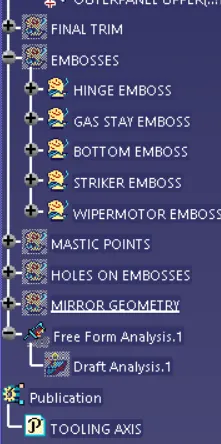
TOOLING AXIS CREATION:
After the repairement of class A surface, 3 points are created. Using the bisection line option, a line is created which is TOOLING AXIS. The purpose of tooling axis creation is to communicate the manufacturing team the core and cavity region for the movement of the tool.
Draft analysis results
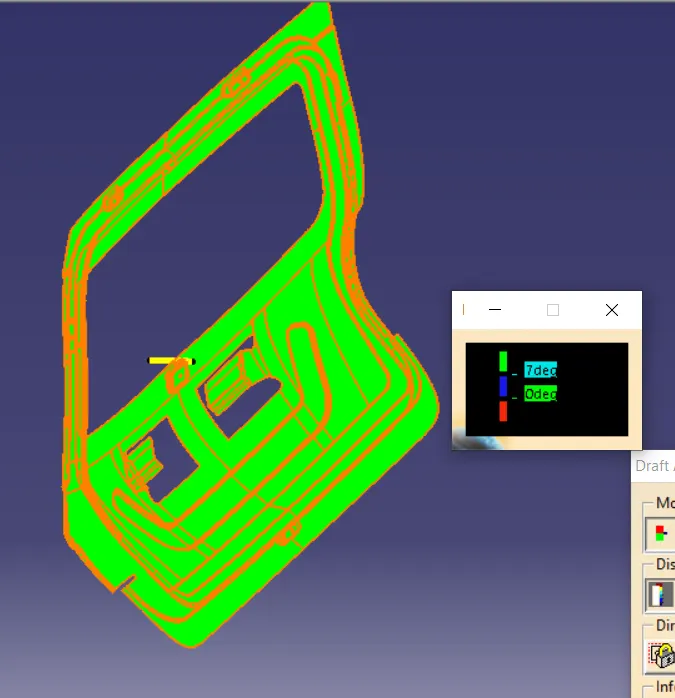
Thus from the above result, it is having a good positive draft of 7°
MASTIC SEALANTS:
A mastic sealant is a type of liquid sealant that cures in an elastic state, thus making it flexible while holding the bond of the surfaces that has attached together. It adheres to just about any material making an all-purpose type of sealant.
The main purpose of the outer panel is for the aesthetic looks. Thus we cannot use bolts or welding. This has to be done with the help of the hemming and mastic sealants. Mastic sealants are elastic compound that behaves like the rubber. It is placed between the outer and inner panel. Initially is it in paste form, but after the hot furnace bath it gets hardened thus joining the outer and inner panel. Mastic sealant has the tendency to increase the strength of the panel and has influence of 80mm diameter.
PROS
1. One positive characteristic of mastic sealant is that it has a very smooth exterior while keeping its rigid form underneath.
2. Surfaces do not have to be primed when using this type of sealant, and although applied thick, it adheres smoothly to any surface. It is important that the area to be joined or sealed be clean and dry, just like any other sealant on the market.
3. Mastic sealant may be used outdoors as well because of its waterproof quality. It can be applied on rain duct leaks outdoors, for example.
4. It is also favored for areas under high or low temperatures such as heater vents or drier vents and contains ultraviolet inhibitors to make sure that it is protected from damaging effects of the sun that will often weaken other types of sealants. That makes it a good choice for use on roofs, or any surface that is constantly exposed to sunlight. Most mastic sealants will also work well with metal because they do not corrode over time.
5. It functions well in areas with mild vibration and heat, like heating ducts.
CONS
1. Mastic sealant is not recommended for areas that have too much joint movement, or anything that will be moved a long length.
2. It works well with constant pressure on it, but not constant movement.
3. It also works best when applied thickly and is not recommended if only a thin layer is needed such as touch ups. Another sealant is a better choice for those types of repairs
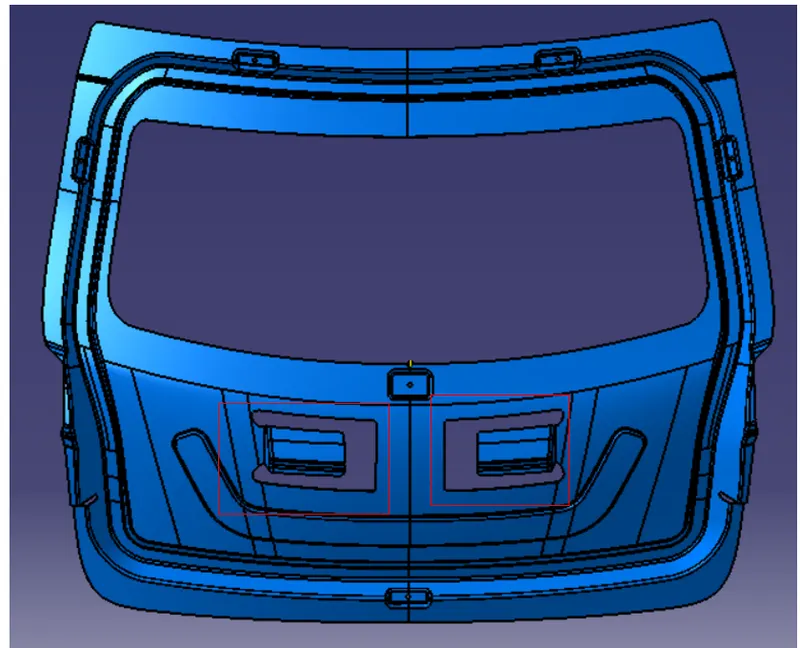
EMBOSSES:
Embossing is a metal forming process for producing raised or sunken designs or relief in sheet material by means of matched male and female roller dies, theoretically with no change in metal thickness, or by passing sheet or a strip of metal between rolls of the desired pattern.
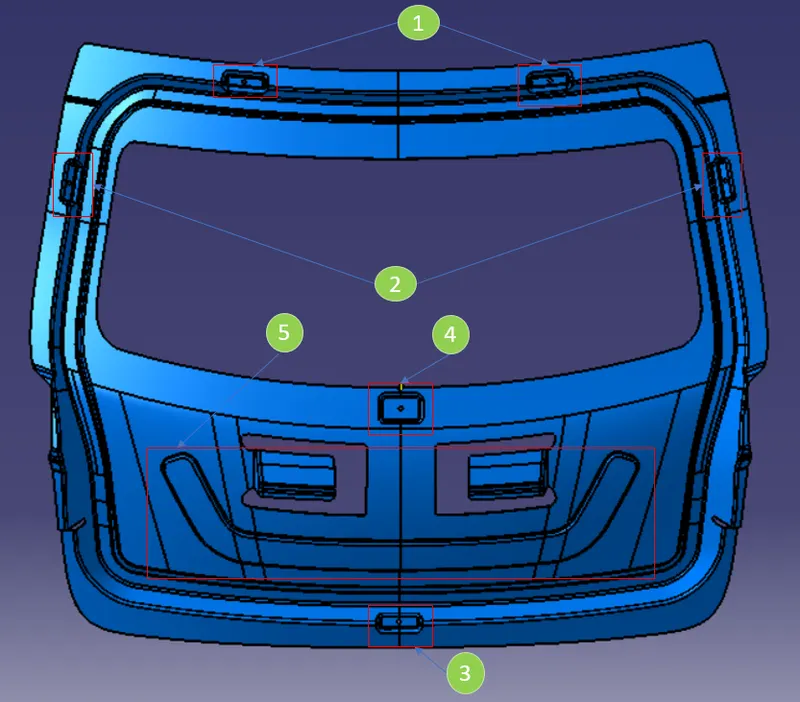
1. HINGE EMBOSS
2. GAS STAY EMBOSS
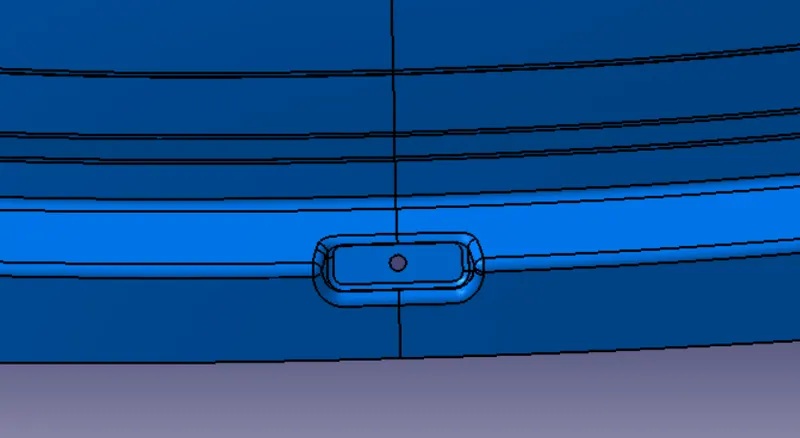
3. STRIKER EMBOSS
4. WIPER MOTOR EMBOSS
5. STRENGTHENING EMBOSS
The embosses are created in such a manner that force will dissipate in to sides of the back door during a collision and prevent reaching inside the passenger cabin.Y and V embosses provided in the back door for force dissipation and improve the strength of the metal.
LATCH TRAJECTORY
Criteria
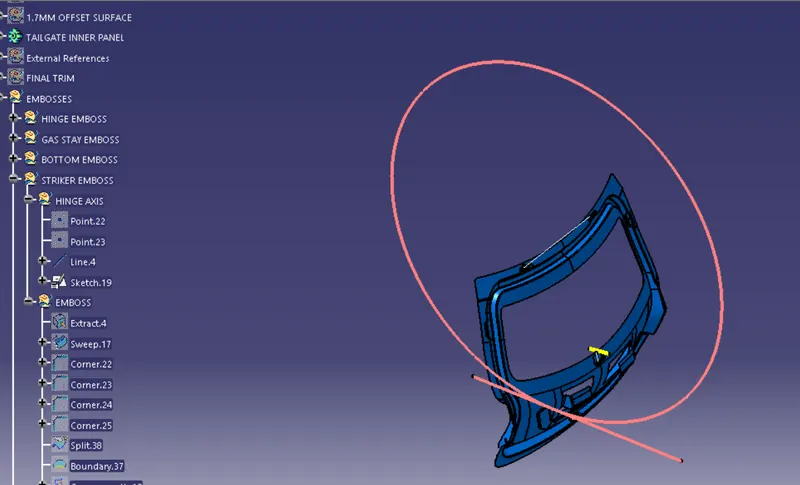
Position of latch and striker is perpendicular to the hinge then only then latch and striker mechanism works properly when the door closing and opening position. For the proper opening and closing of the Door, the striker should be perpendicular to the trajectory of the Door. For this, hinge is assembled at its position. Once it is placed, hinge axis is drawn.
A. To check the hinge axis as the center we draw a big circle to the position the latch in such a way that it is perpendicular to the hood trajectory.
B. In between the two hinges the striker is perpendicular to the midpoint of two hinges,Why because while closing and opening of latch and striker the opening position be similar actions.
3. REINFORCEMENTS:
Vehicle Door reinforcement structures as provided to reduce impact in collisions. In one embodiment, the structure is to include a lower reinforcement panel configured to mount to a vehicle chassis and an upper reinforcement panel welded to the lower reinforcement panel wherein the deflection of a front deformable wall of the upper reinforcement panel is configured to trigger deflection of rear deformable wall of the lower reinforcement panel.
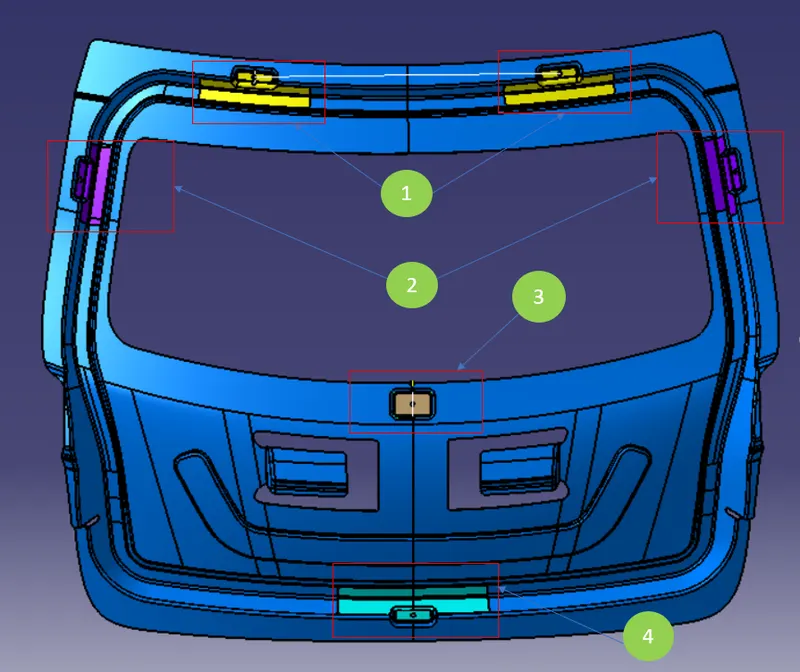
1. HINGE REINFORCEMENTS
Hinge rotates in the rotational axis in that it will loose some strength there,It means huge Back door opens with the help of small hinges only in this case hinge needs extra strength,For this we providing extra strength in the form of Reinforcement Hinge Reinforcement thickness be 1.2mm to 1.5mm.
2. GAS STAY REINFORCEMENTS
Gas springs, or gas struts, are rods that provide support for doors, hatches, lids and covers that are horizontally hinged. They act as support in a variety of ways including, lifting, positioning and lowering; because of this versatility they are used in a wide range of applications.
3. WIPER MOTOR REINFORCEMENT
During the rainy season/ hail, wipers will be used. During that time when we are suddenly using that there is a chance that it will lose its strength. As a result reinforcement is provided.
4. LATCH AND STRIKER REINFORCEMENT
To reduce the impact to the occupants inside the car, additional latch and hinge reinforcement to the hood. When latch and striker are placed, there is drop in strength at that position thus reinforcement is required. Also stiffness pads are placed to reduce NVH. Hinge and latch reinforcement thickness is kept at 1.5 mm but it may vary.
ASSEMBLY ORIENTATIONS
Isometric view
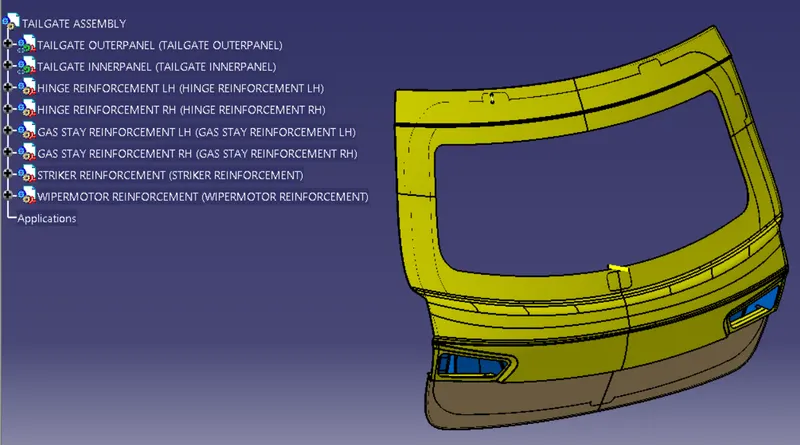
Front view
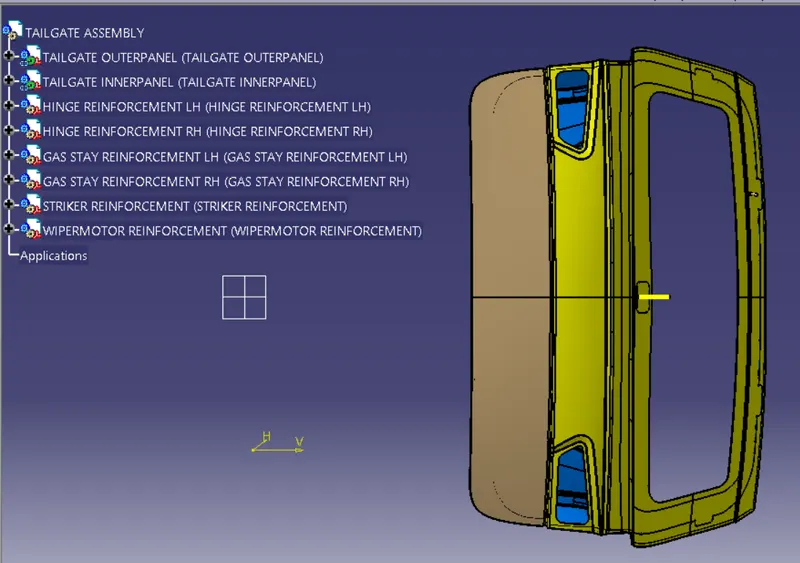
Top view
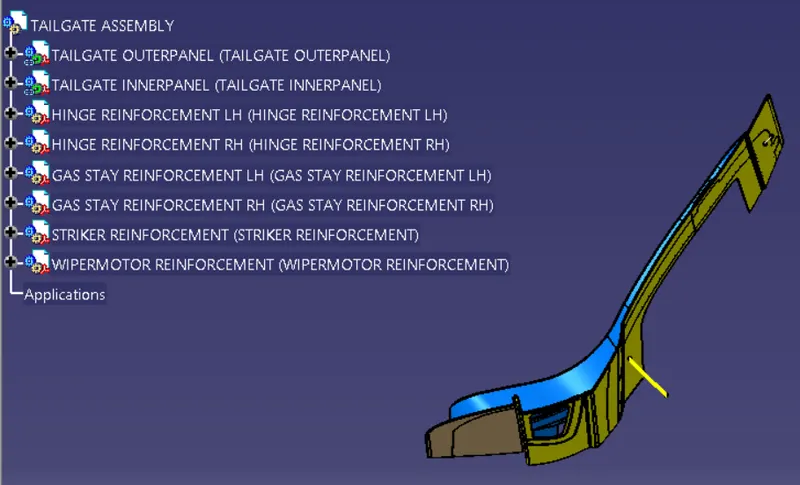
Right view