Design of backdoor
INTRODUCTION:
The back door of a car, also known as the trunk or tailgate, is an important part of any vehicle. It provides access to the storage space in the car and is designed to be secure and easy to use. In this report, we will discuss the features and components of the back door of a car, including its structure, locking mechanisms, and safety features.
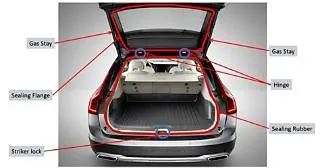
Car back door
- Structure:
The back door of a car is typically made of steel or aluminum and is designed to be lightweight and durable. The door is hinged to the car's body and can be opened either manually or electronically. The door's structure consists of several components, including the door panel, hinges, and latch mechanism.
- Locking Mechanisms:
The locking mechanisms of the back door are designed to provide security and prevent unauthorized access. The most common locking mechanisms used in cars today include key locks, remote locks, and electronic locks. Key locks are the simplest type of locking mechanism and are operated using a key. Remote locks use a remote control to lock and unlock the door, while electronic locks use a keypad or a biometric scanner to provide access.
Locking Mechanism of a Car back door
- Safety Features:
Safety features are an important aspect of the back door of a car. They are designed to prevent accidents and keep the driver and passengers safe. One of the most important safety features of the back door is the emergency release mechanism. This mechanism allows the door to be opened from the inside in case of an emergency, such as an accident or a child trapped inside. Additionally, many cars today are equipped with a rearview camera, which provides a clear view of the area behind the car, reducing the risk of accidents.
Components of the Back Door:
The back door of a car typically consists of several components, including the following:
-
Latch:
The latch is the component that keeps the back door closed. It is usually located in the center of the door, and it locks onto a striker that is mounted on the body of the car.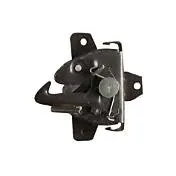
Back Door Latch -
Hinges:
The hinges are the components that allow the back door to swing open and closed. They are usually located on either side of the door and are attached to the body of the car.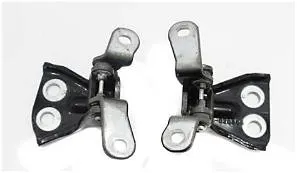
Back Door Hinge -
Handle:
The handle is the component that allows the driver to open the back door. It is usually located on the outside of the door and is connected to the latch mechanism.
Back Door Handle
Operation of the Back Door:
To open the back door of a car, the driver needs to first unlock the door using the key or the remote control. Once the door is unlocked, the driver can press the handle to release the latch, which will allow the door to swing open. The door can then be closed by pushing it shut until the latch clicks into place.
Maintenance of the Back Door:
To ensure that the back door of a car operates smoothly and reliably, it is essential to perform regular maintenance. This includes the following:
-
Lubrication: The hinges and latch mechanism should be lubricated periodically to ensure that they operate smoothly and do not seize up.
-
Adjustment: The hinges and latch mechanism should be adjusted as necessary to ensure that the door closes tightly and securely.
-
Cleaning: The back door should be cleaned periodically to remove dirt, grime, and debris that can interfere with its operation.
DESIGN INTENT OF A BACK DOOR:
The design intent of a car back door, also known as a rear door or trunk, is to provide easy access to the vehicle's cargo area or rear passenger seats. The back door design must balance functionality, safety, and aesthetic considerations to meet the needs of both drivers and passengers.
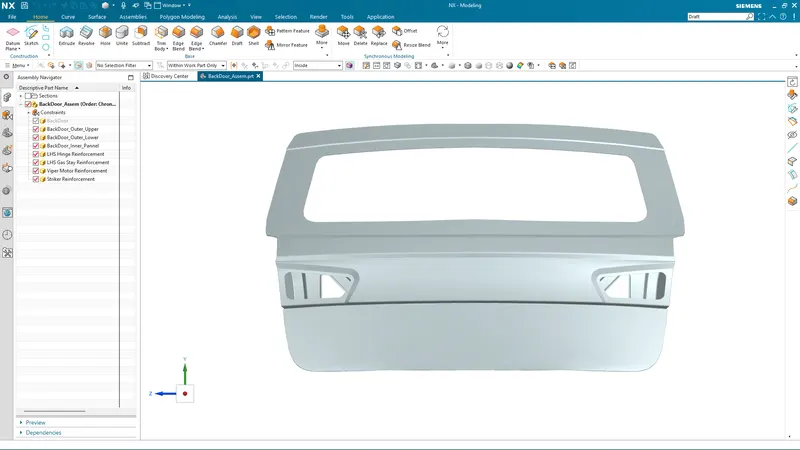
Overall, the design intent of a car back door is to provide easy and safe access to the vehicle's cargo area or rear passenger seats while also enhancing the vehicle's aesthetic appeal. By balancing these design considerations, car manufacturers can create a back door that meets the needs of drivers and passengers while also contributing to the overall functionality and style of the vehicle.
DESIGN CONSIDERATION FOR A BACK DOOR:
- Ease of use:
One of the primary design considerations for a car back door is the ease of use. The door should be easy to open and close, and the opening mechanism should be intuitive for the user. Depending on the car's design, the back door may be hinged at the bottom or the side, or it may be a liftgate that opens upward. In any case, the door should be easy to operate with one hand and without excessive force.
- Safety:
Another important consideration is safety. The back door must be designed to protect passengers and cargo in the event of a crash or collision. This requires careful engineering of the door structure and latching mechanism to ensure that the door stays securely closed during normal use and opens safely in the event of an accident.
- Aesthetics:
Aesthetics are also an important consideration in the design of a car back door. The door should complement the overall styling of the vehicle and enhance its visual appeal. This may involve using materials and finishes that match the body of the car, as well as incorporating design elements such as aerodynamic curves or chrome accents.
In addition to these basic design considerations, car manufacturers may also incorporate additional features into the back door design to enhance its functionality. For example, some cars may have a power liftgate that can be opened and closed using a button or remote control. Others may have a split-folding rear seat that allows for additional cargo space or passenger seating configurations.
DESIGNING OF A CAR BACK DOOR:
We have given a Class A surface & for that we have to design the Inner panel by following proper design aspects.
Outer Upper Panel
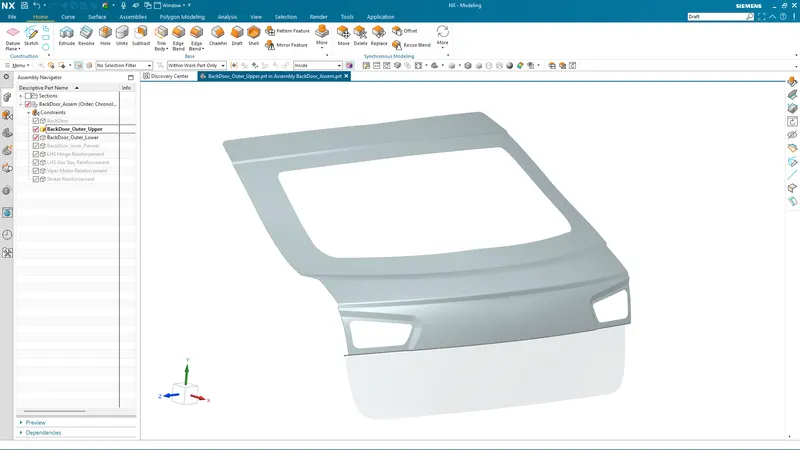
Also known as "Class A surface" in terms of designing. The outer upper panel has the thickness of 0.75mm. The outer upper panel & Inner panel is joined together by "hemming" because we cannot perform other joining process like welding & mechanical fastening, etc.
Outer Lower Panel
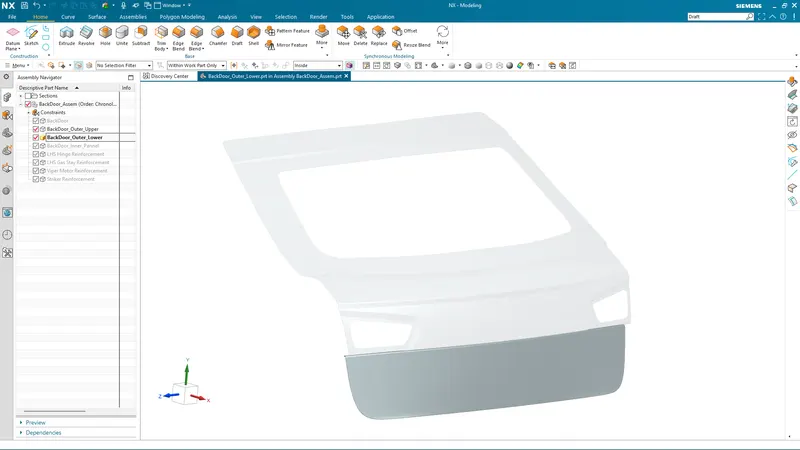
Also known as "Class A surface" in terms of designing. The outer Lower panel has the thickness of 0.75mm. The outer Lower panel & Inner panel is joined together by "hemming" because we cannot perform other joining process like welding & mechanical fastening, etc.
Reinforcments
Reinforcments plays a major role in providing extra strength to the weak areas or where the other parts needs to be attached or mounted.
Like we have to provide reinforcment on gas stay emboss, stricker emboss, hinge emboss.
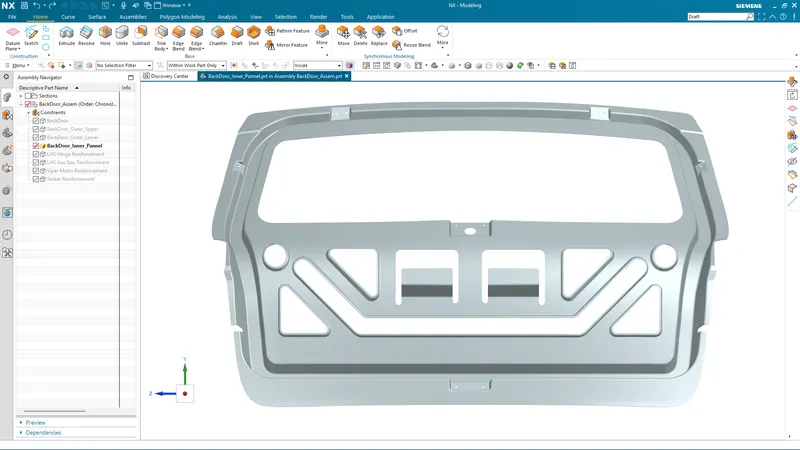
Back Door Inner Panel Reinforcements
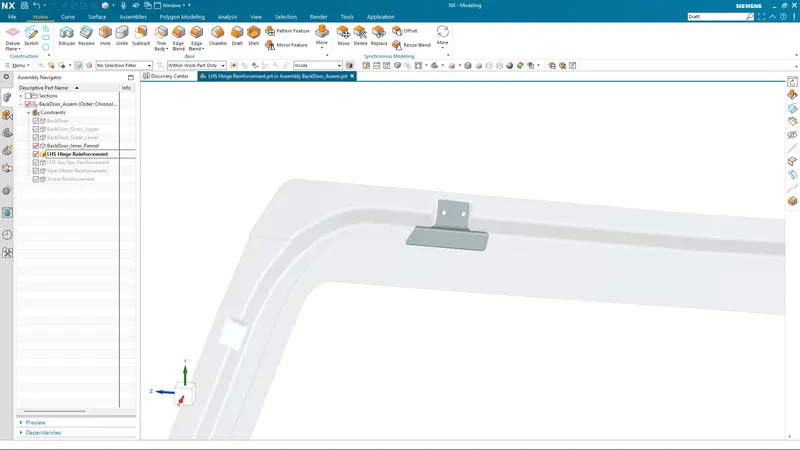
Back Door Hinge Reinforcement
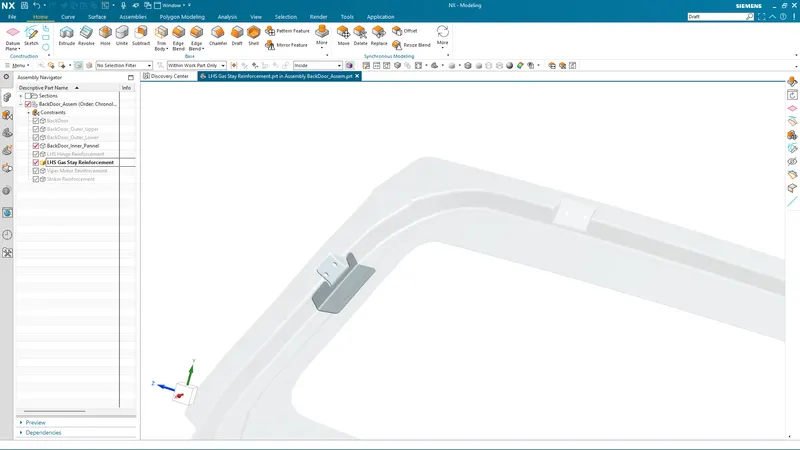
Back Door Gas Stay Reinforcement
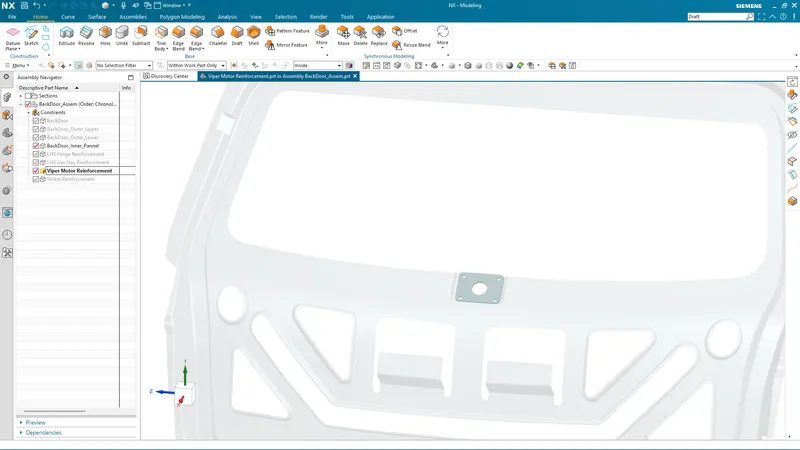
Back Door Wiper Motor Mount Reinforcement
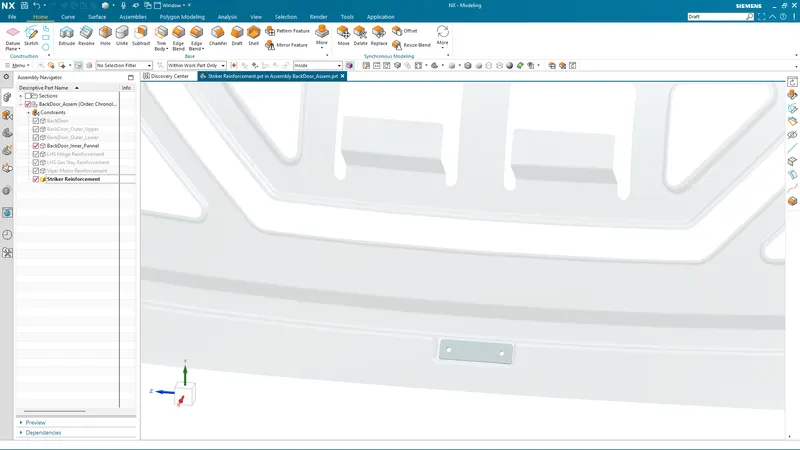
Back Door Lock Stricker Mount Reinforcement
JOINING PROCESS USED IN MANUFACTURING OF BACK DOOR
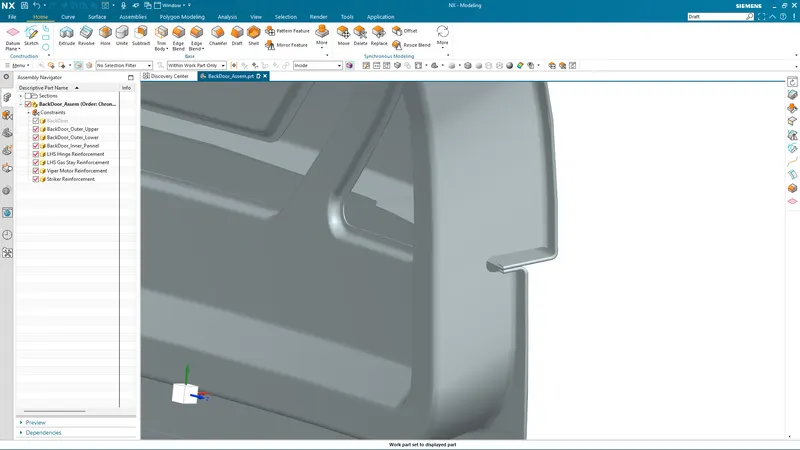
Hemming is a metal forming process used to fold the edge of a sheet metal part over onto itself to create a double thickness edge. This process can be used to increase the stiffness of the part and provide a smooth, safe edge. Hemming can be done using a variety of methods, including hand tools, manual hemming machines, and fully automated hemming systems. The process involves bending the metal along the edge, then folding it over itself to create a hem that is either flat or rolled. Hemming is commonly used in the automotive industry for applications such as door panels, hoods, and trunk lids, but can also be used in other industries where sheet metal parts need to be stiffened or have a finished edge.

The Inner & outer panel of the car back door is joined by hemming process as shown in below image.
CONCLUSION
In conclusion, the back door of a car is an important component of any vehicle. It is designed to be secure, easy to use, and safe for the driver and passengers. The structure, locking mechanisms, and safety features of the back door are all carefully designed and tested to ensure that they meet the highest standards of quality and performance.