Design of backdoor
DESIGN OF BACKDOOR
- INTRODUCTION:-
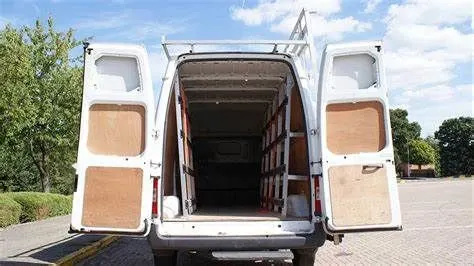
Backdoor of the car is also known as the tailgate. It is provided at the end of the vehicle opposite to which the engine is located. It is generally available in all automotive cars. Doors most often integrate side windows for visibility from inside the car and can be locked to secure the vehicle. Back door is constituted by a main body which includes an outer panel and an inner panel combined together. The material of the back door is aluminum and steel.
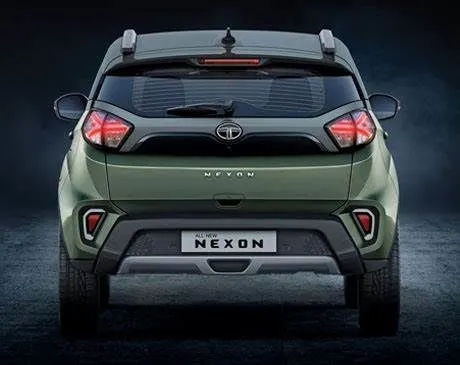
BACKDOOR CLOSE CONDITION VIEW
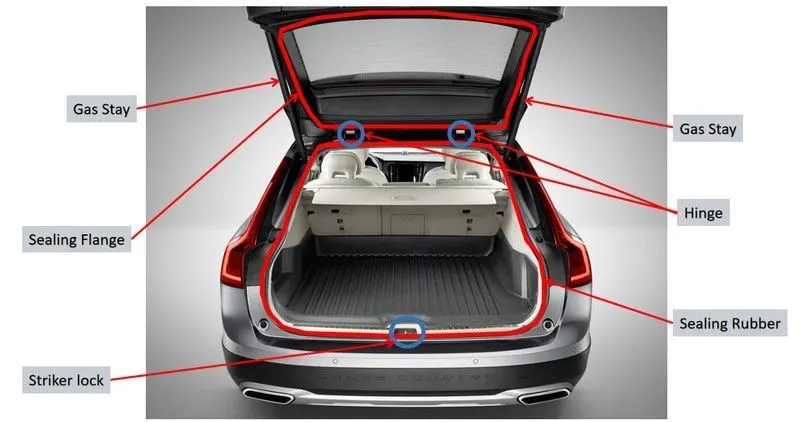
BACK DOOR OPEN CONDITION VIEW
- DIFFRENT TYPES OF BACKDOOR:-
- TOP MOUNTED BACKDOOR
- ONE SIDE MOUNTED BACKDOOR
- BOTHSIDE MOUNTED BACKDOOR
- TOP MOUNTED BACKDOOR:-
IN THIS TYPE back door is mounted by hings in top of the car. the opening and closing direction is upward and downward in top mounted backdoor.
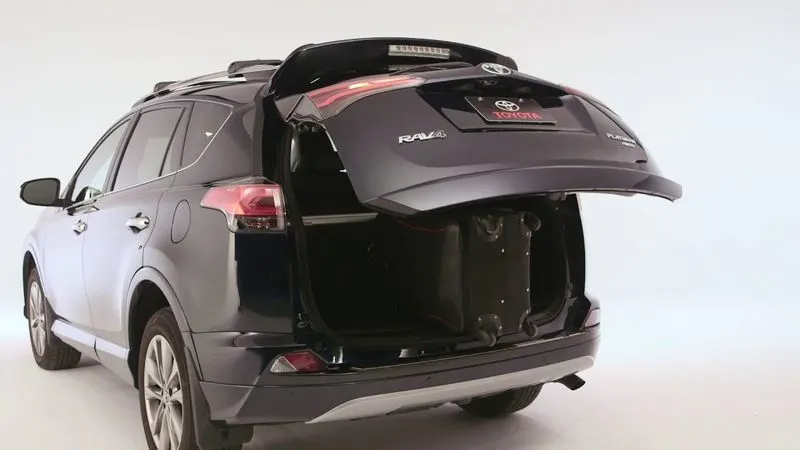
2. ONE SIDE MOUNTED BACKDOOR:-
in this type back door is mounted in side of the car, the opening and closing direction is left to right and closing right to left side , these doors also save accidential impacts.
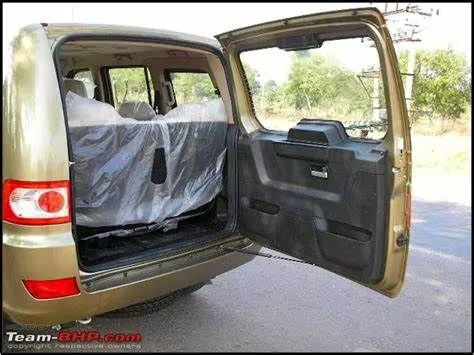
3. BOTH SIDE MOUNTED BACKDOOR:-
IN THIS type backdoor is mounted in both side of the car, the backdoor opening and closing direction is bothside left to right, right to left from mounting area. this door also save accidental head impacts. it is a easier to load and unload items in the side mounted doors.
- MATERIAL SELECTION FOR BACKDOOR:-
THE backdoor material depends on how expensive the vehicle and the budget for development .
| S.NO. | ALUMINIUM | STEEL |
| 1 | Component of aluminium cannot be deep drawn |
component of steel can be deep drawn |
| 2 | parts are casted | parts are stamped |
| 3 | density of aluminium is less than steel | density of steel is more than aluminium |
| 4 | reinforcement can be neglected | reinforcement is necessary |
| 5 | lighter in weight | heavier in weight |
| 6 | local thickness can be varied | has only uniform thickness |
| 7 | less number of component is used | more number of component is used |
| 8 | minimum angle can be given of 3mm | minimum angle can be given of 7mm |
| 9 | increase the luggage area | reduce the luggage are |
| 10 | overall cost of the product is more | overall the cost of the product is less |
- BACK DOOR DESIGN :-
THE SOFTWARE USED FOR DESIGN IS NX 12.0 CAD
- COMPONENTS OF BACKDOOR:-
- OUTER PANEL(UPPER PART)
- OUTER PANEL(LOWER PART)
- INNER PANEL
- LH/RH HING EMBOSS
- LH/RH GAS STAY EMBOSS
- WIPER MOTOR EMBOSS
- STRIKER EMBOSS
- LH/RH HING REINFORCEMENT
- LH/RH GAS STAY REINFORCEMENT
- WIPER MOTOR REINFORCEMENT
- STRIKER REINFORCEMENT
- COMPLETE BACKDOOR DESIGN ASSEMBLY IN STEPS:-
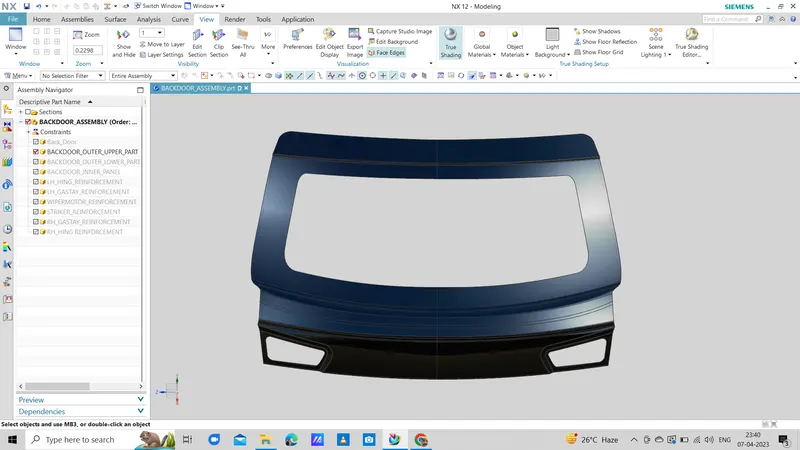
1. OUTER PANNEL (UPPER PART)
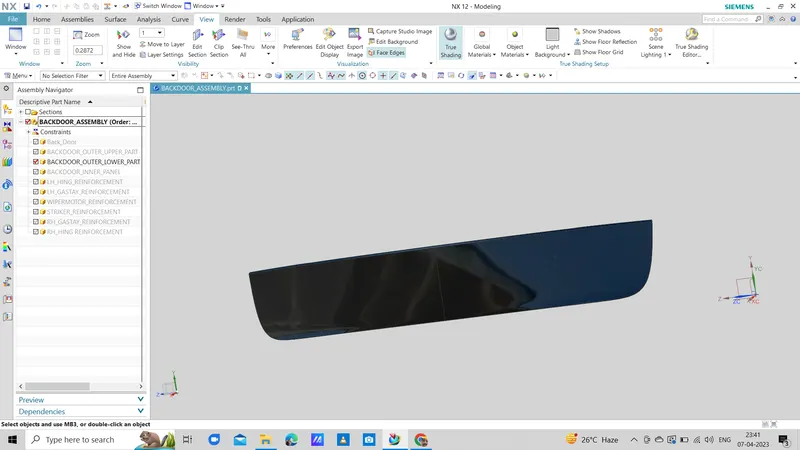
2.OUTER PANEL (LOWER PART)
COMPLETE OUTER PANEL:-
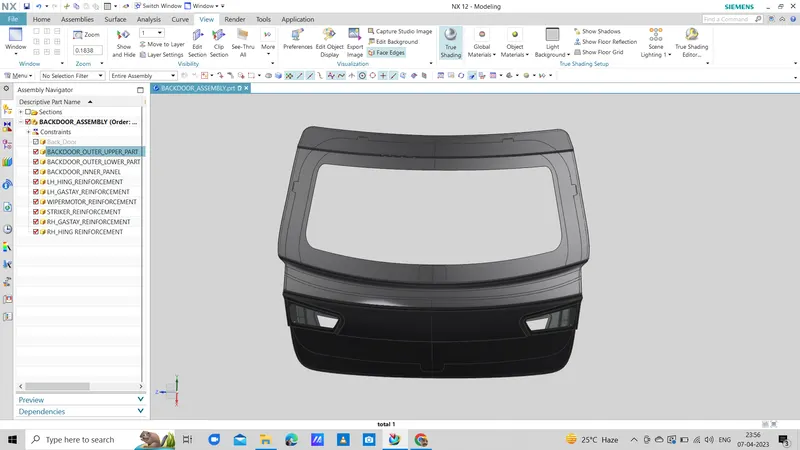
Outer panel is the outer part of the back door, if we see from the outside of the car. The outer panel give the outer look of the car. Outer panel is attached with the inner panel by a hemming process. The main function of outer panel is to cover the boot of car from the backdoor. The thickness of the outer panel is taken 0.75mm. It is created in two part as outer panel upper and outer panel lower.
3.INNER PANEL
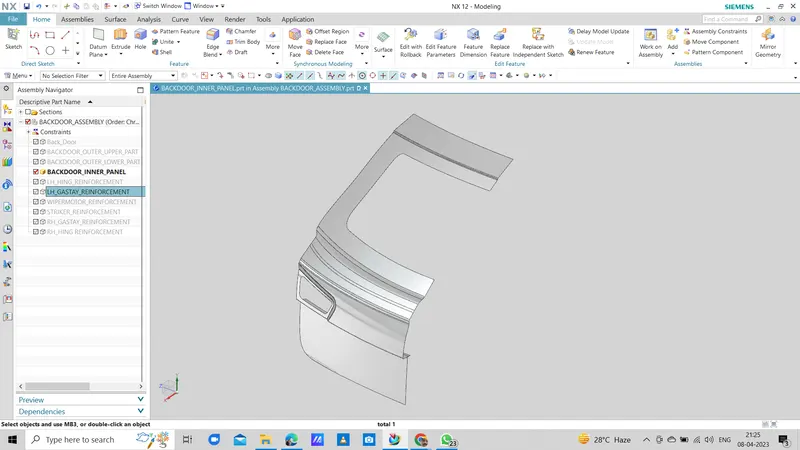
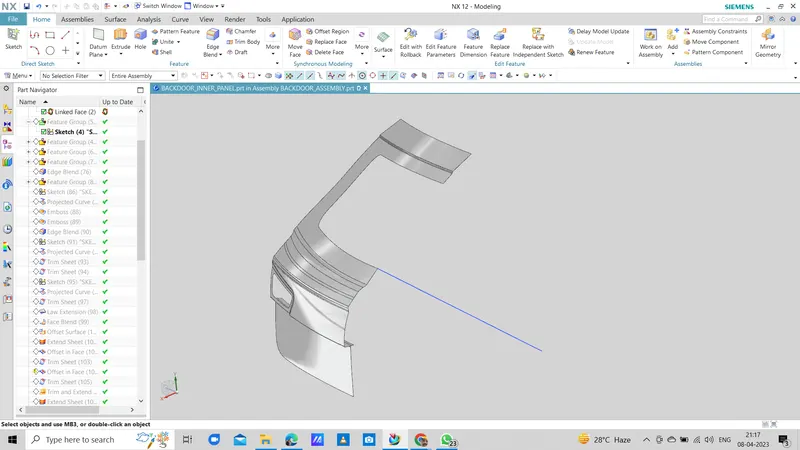
- INPUT SURFACE:-
- TOOLING DIRECTION:-
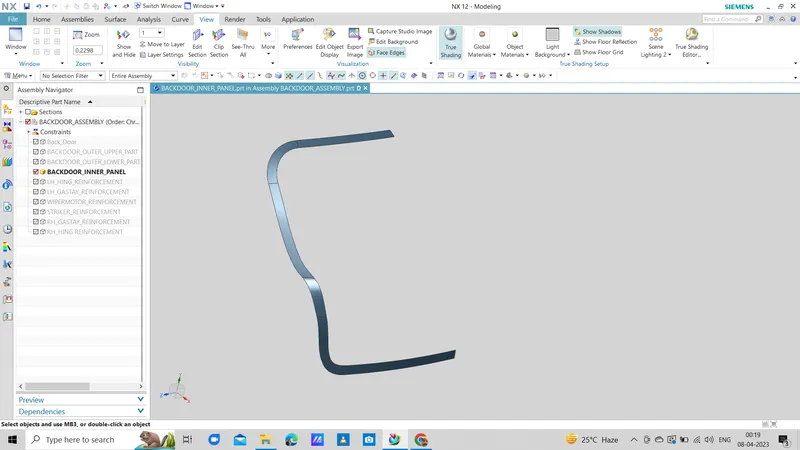
- SEALING FLANGE:-
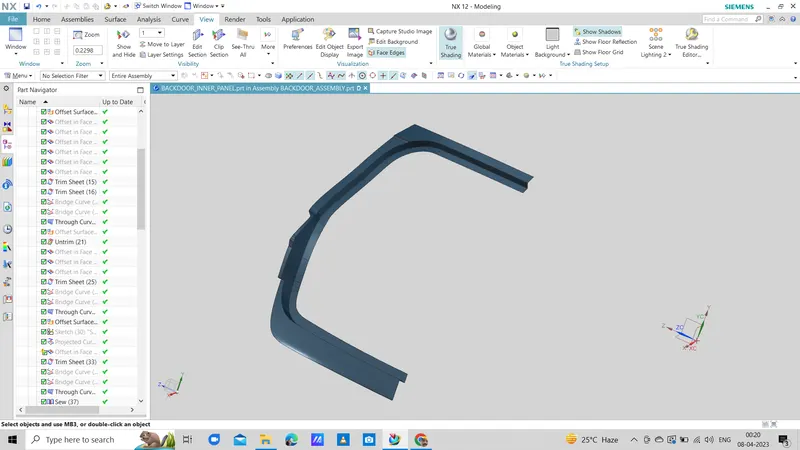
- CONNECTING FLANGE:-
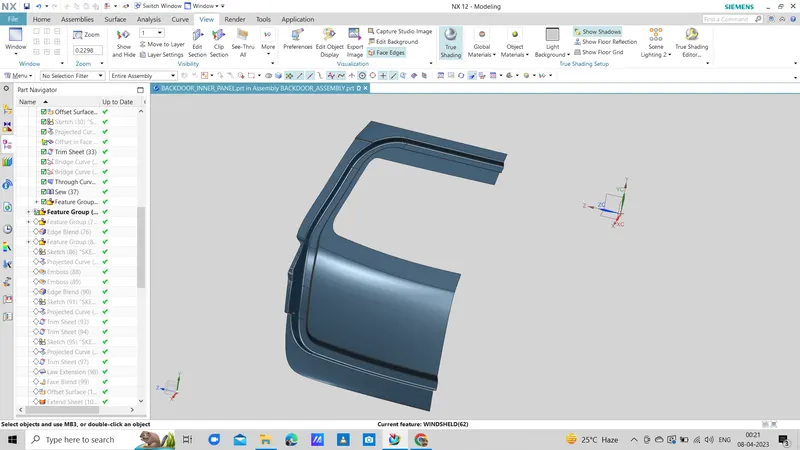
- WINDSHIELD AREA:-
- EMBOSS:-
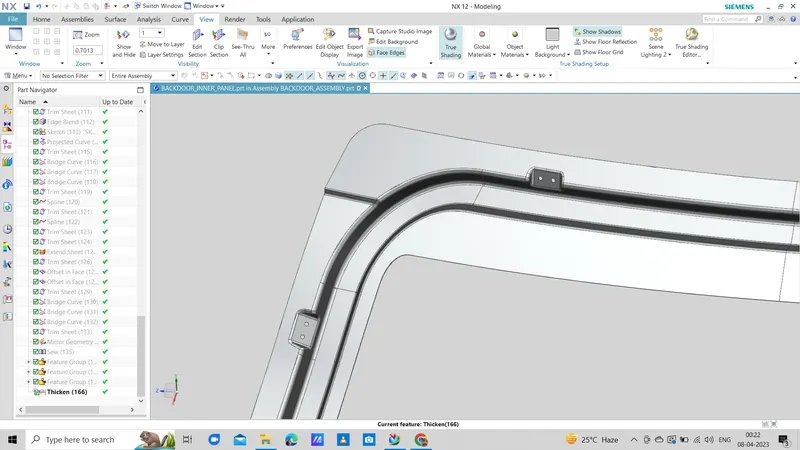
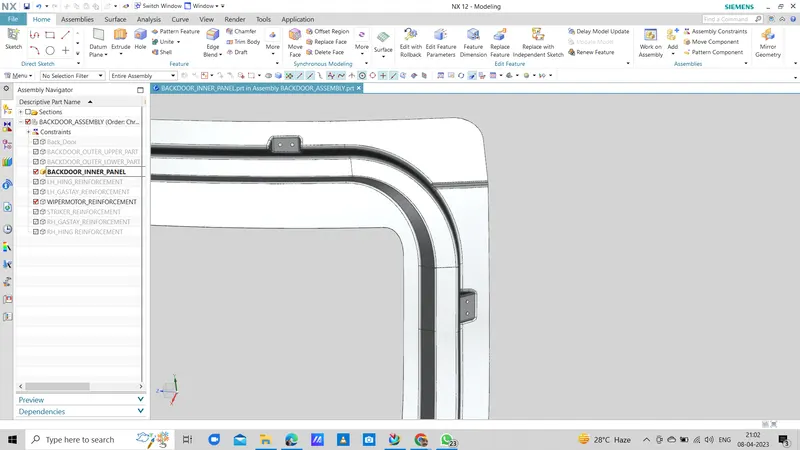
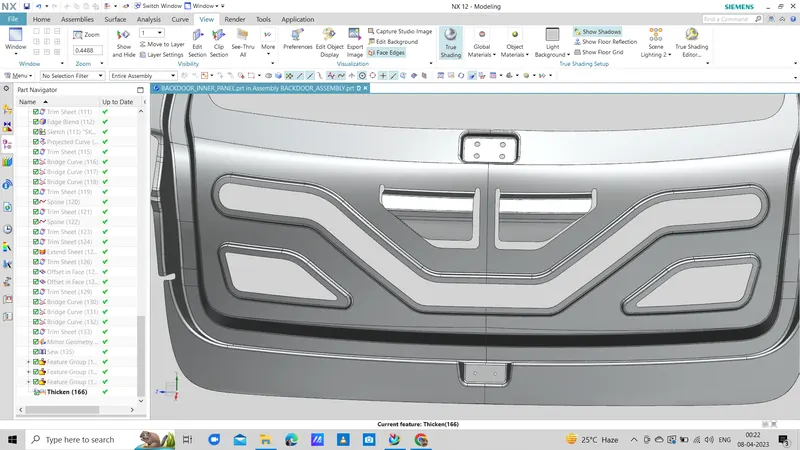 Embosses has been given to create extra strength in inner panel and embosses design needs to be inspired by force dissipation phenomena.This also help in weight reduction of inner panel.Emboss are designed in such a way that it divert the forces towards the hinge assembly. So that the force do not act on the passenger inside the car.Emboss is given so that during the crash the energy is dissipated outside / away from the vehicle occupants and along with the other cut outs to reduce the weight.
- LH HING/GAS STAY EMBOSS:-
- RH HING/ GAS STAY EMBOSS:-
- WIPER MOTOR EMBOSS :-
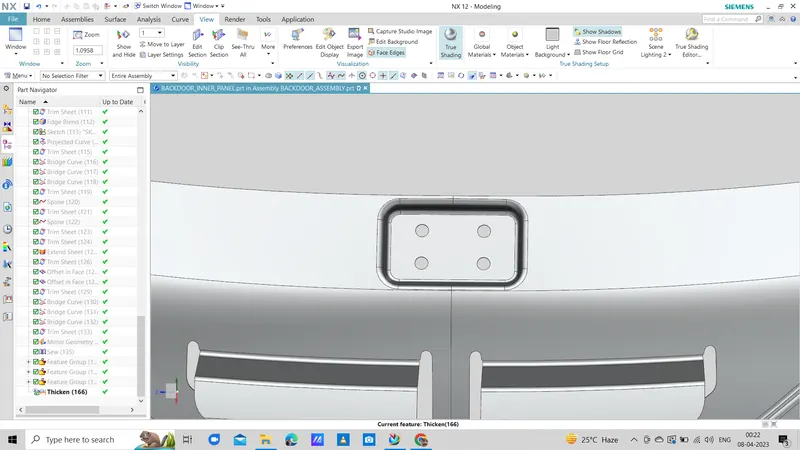
- STRIKER EMBOSS:-
FIRST CREATE TRYJECTRY CICRLE:-
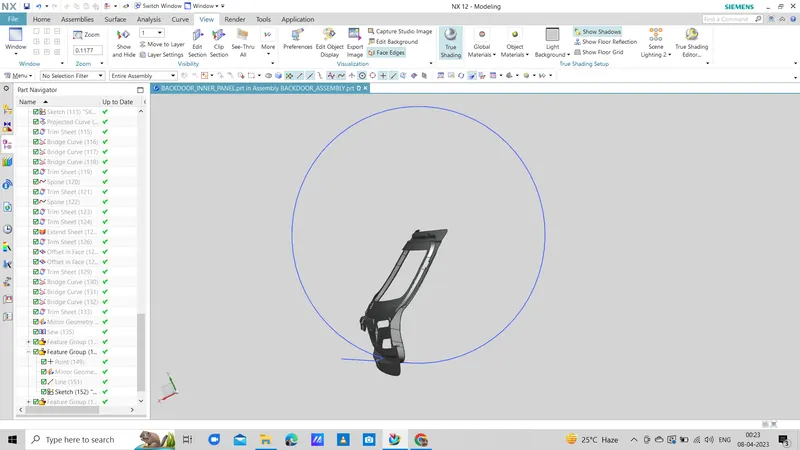
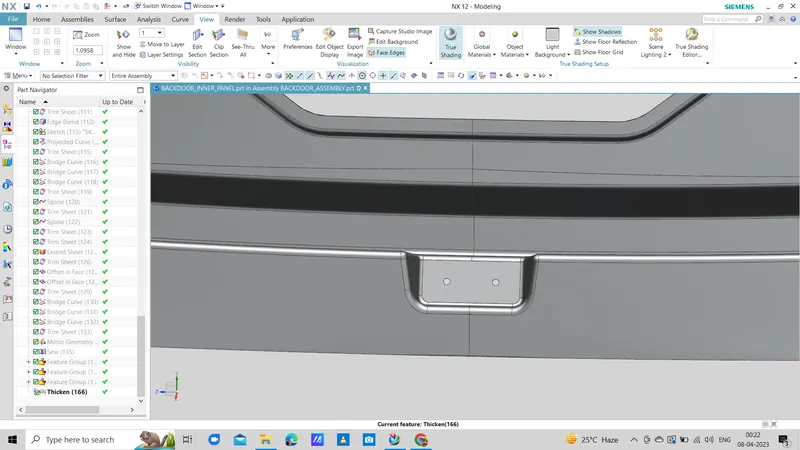
- COMPLETE INNER PANEL:-
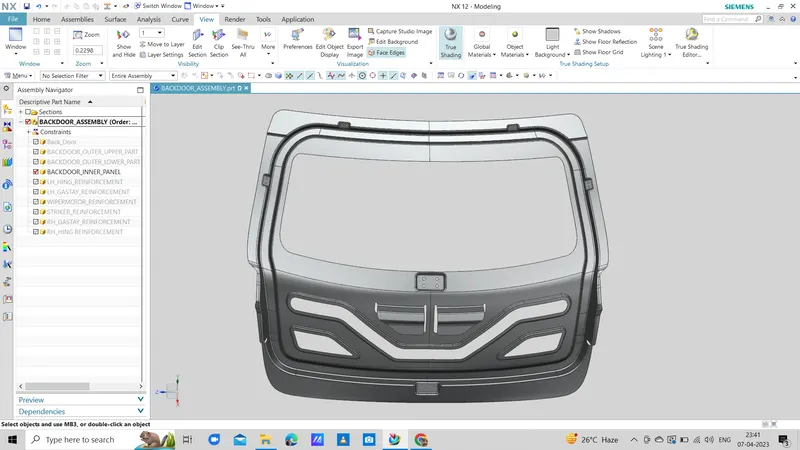
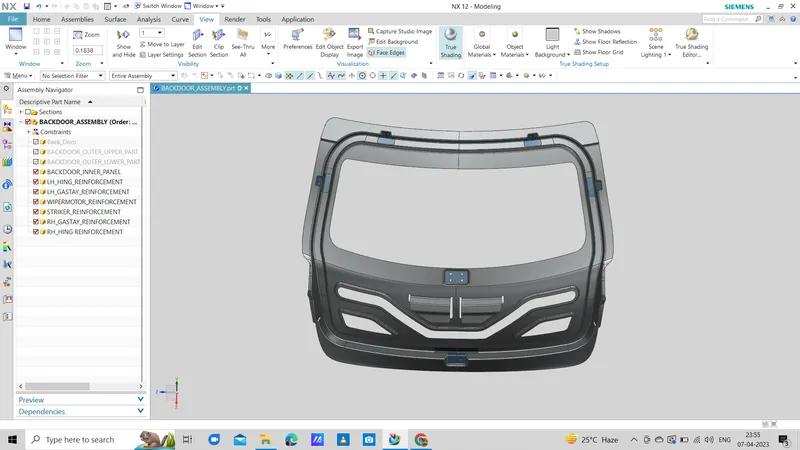
Inner panel is internal part of the back door, i It is the most important component of the back door. All the reinforcement is attached on the inner panel of the back door. So, emboss is created on the inner panel for mounting these reinforcement. Inner panel is attached with the outer panel by hemming process. This compartment is used to strengthen the door assembly.
4. LH/RH HING REINFORCEMENT:-
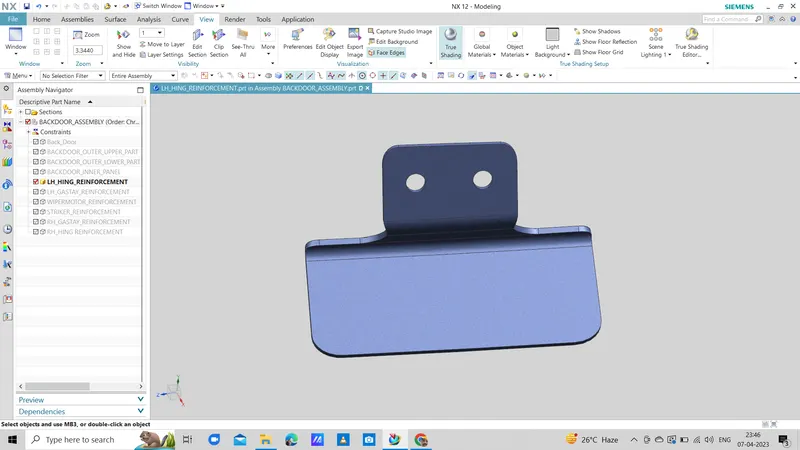
Hinge reinforcement is attached in given emboss of inner panel. It is fastened in the inner panel. The part should be strong enough to take the load of the back door and the forces act upon the back door
5. LH/RH GAS STAY REINFORCEMENT:-
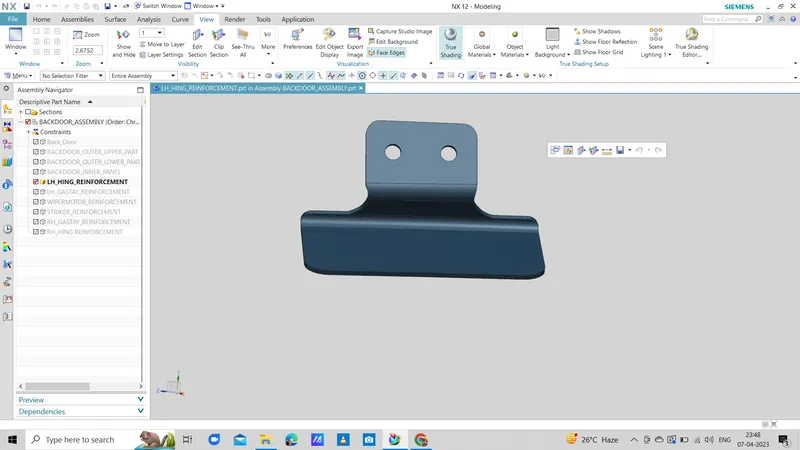
mount the gas stay in inner panel, gas stay mounting reinforcement is created. This gas stay mounting reinforcement is attached in emboss of inner panel with the help of gas stay socket.
6. STRIKER REINFORCEMENT:-
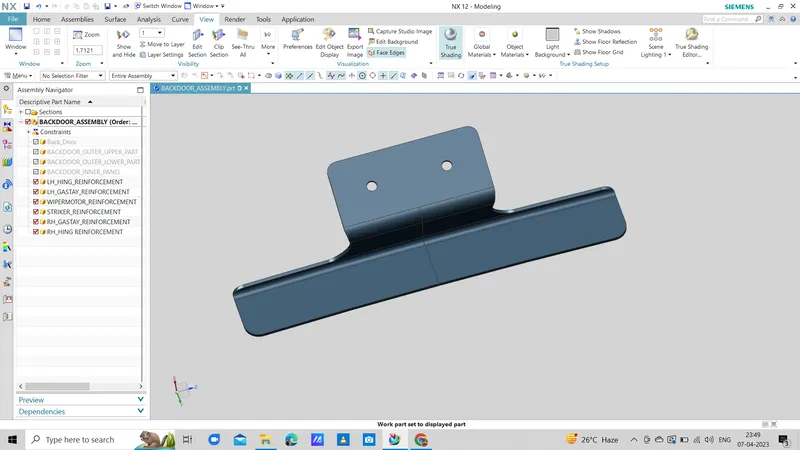
It is placed in bottom side of back door.
7.WIPER MOTOR REINFORCEMENT:-
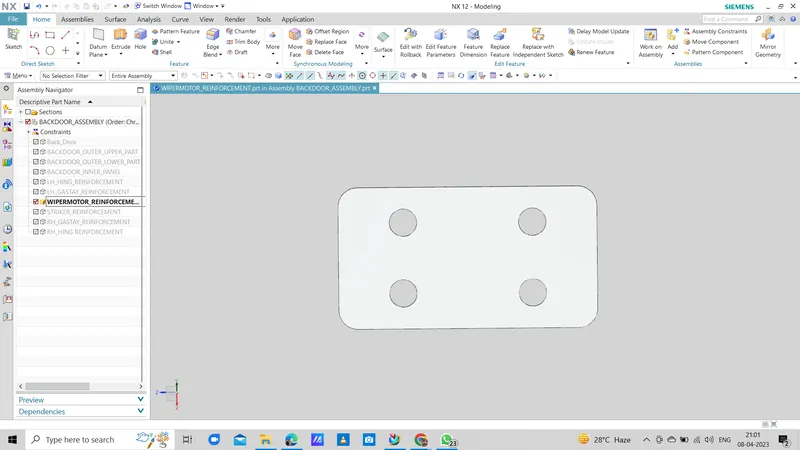
Wiper is use to wipe of the dust of sand, leaves etc. in back door’s glass. It is also use to wipe off the water which is stick on back door’s glass in rainy season or by any condition. Wiper mounting reinforcement give very important role for rear visibility area to the driver by cleaning the back door glass. It is placed in the middle of backdoor in inner panel given cavity and for other accessories. it is attached in inner panel by fastening.
8.INNER PANEL WITH REINFORCEMENT:-
9. COMPLETE DESIGN ASSEMBLY OF THE OUTER PANEL & INNER PANEL :-
TOP VIEW
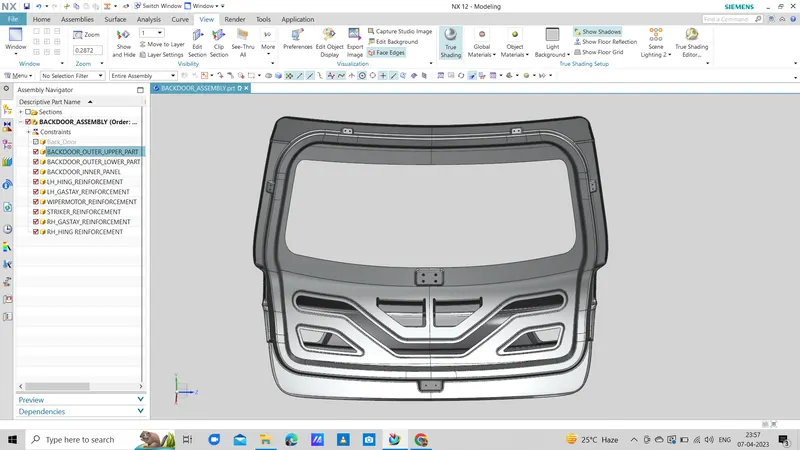
BOTTOM VIEW
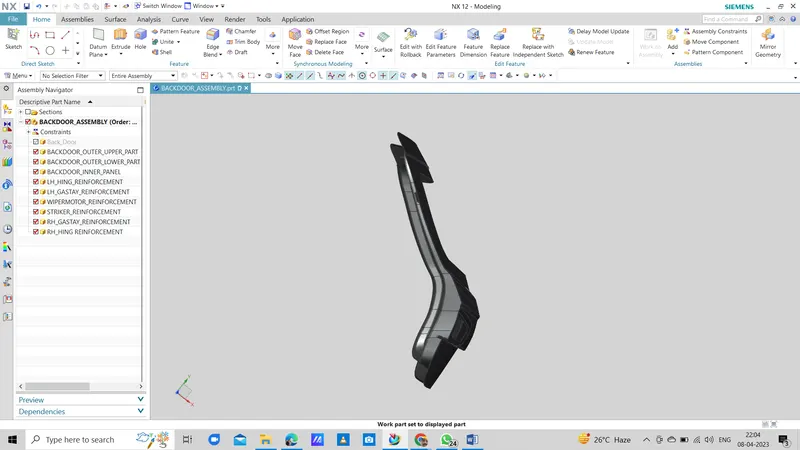
SIDE VIEW
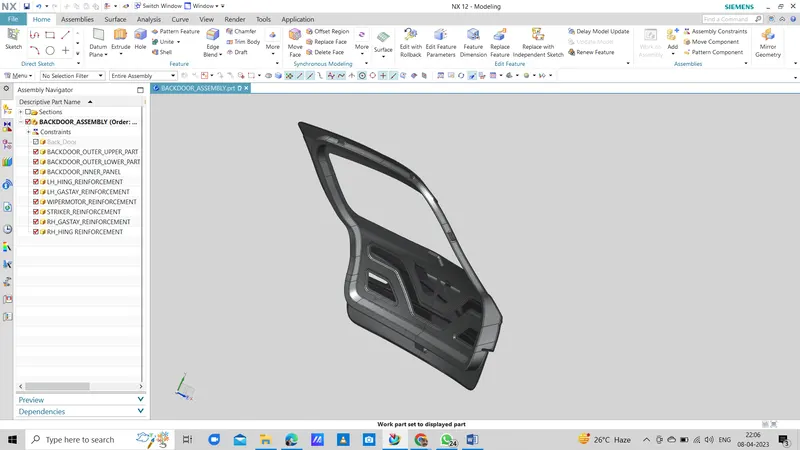
ISOMETRIC VIEW
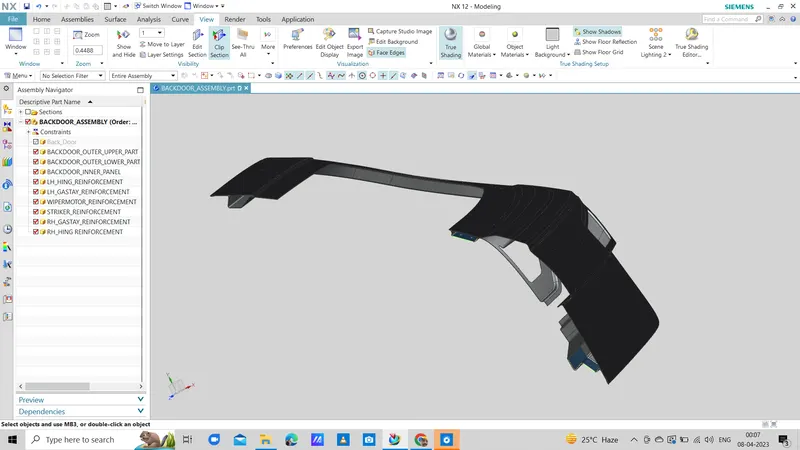
SECTION VIEW
10. MASTIC AREA:-
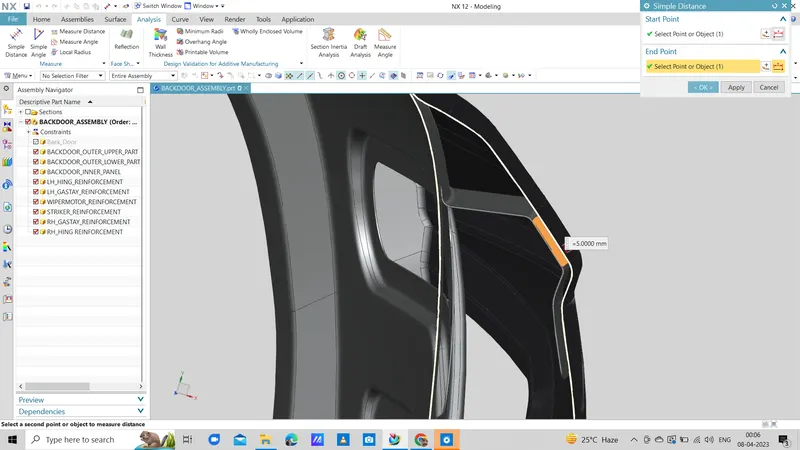
5MM DISTANCE PROVIDE BETWEEN OUTER PANEL & INNER PANNER FOR MASTIC BECAUSE JOIN OUTER PANEL AND INNER PANEL
11.THICKNNESS :-
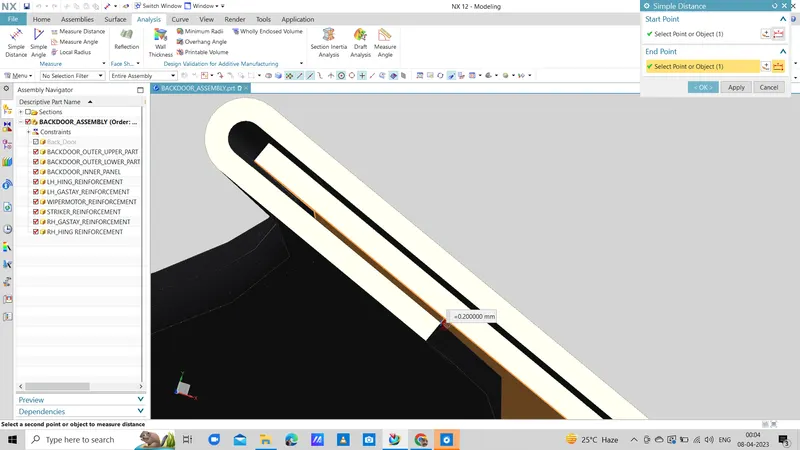
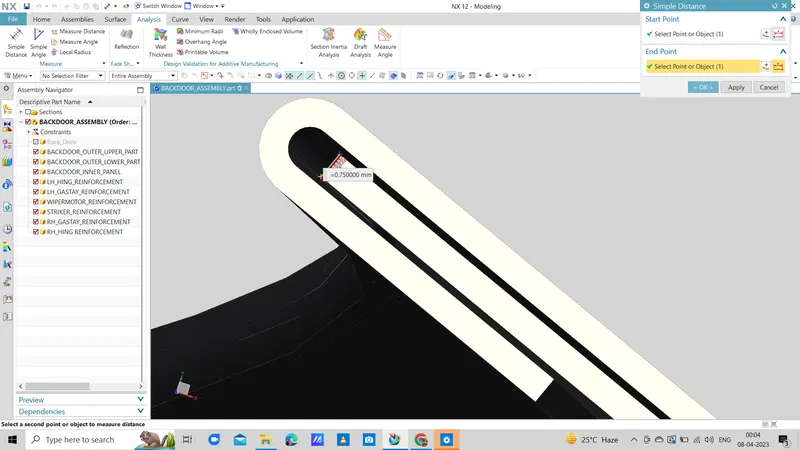
THICKNESS APPLY ON OUTER PANEL & INNER PANEL IS 0.75 AND THE GAP BETWEEN OUTER PANEL&INNER PANEL IS 0.2MM
- DRAFT ANALYSIS :-
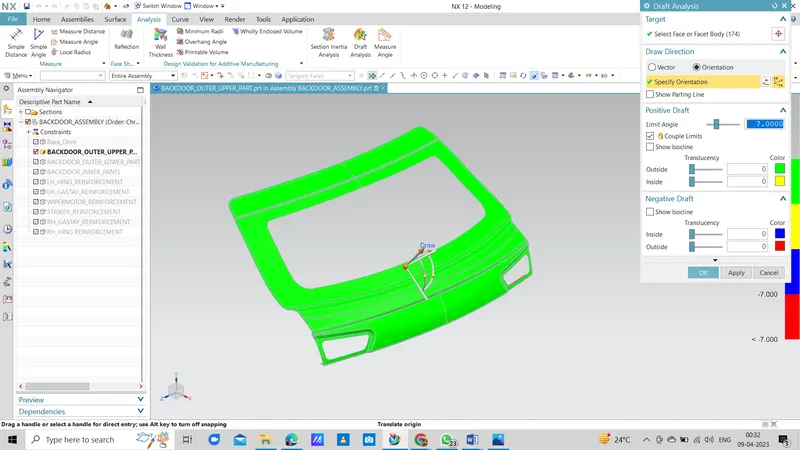
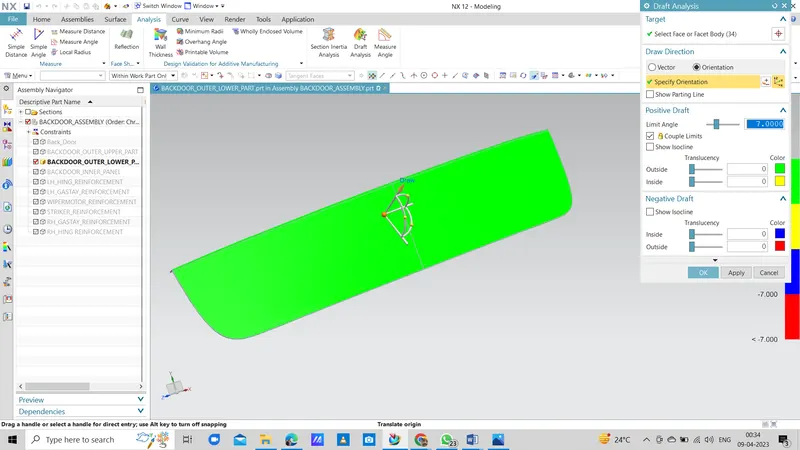
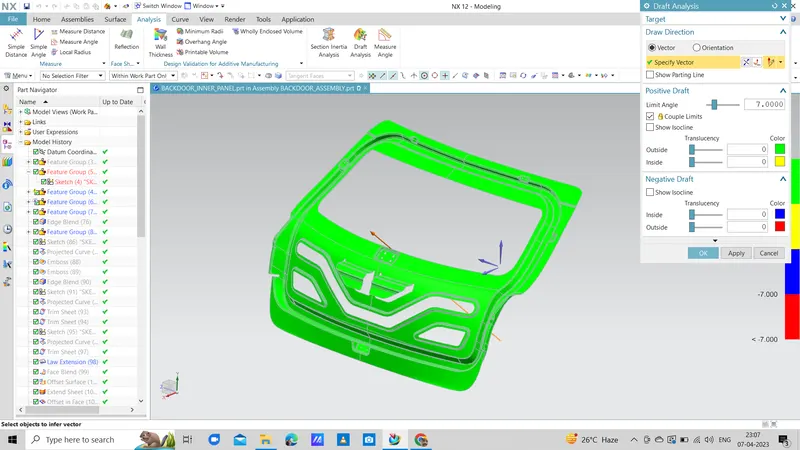
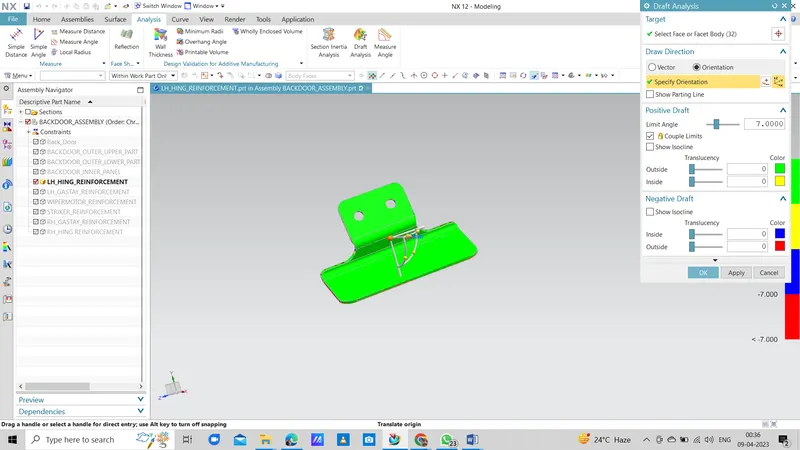
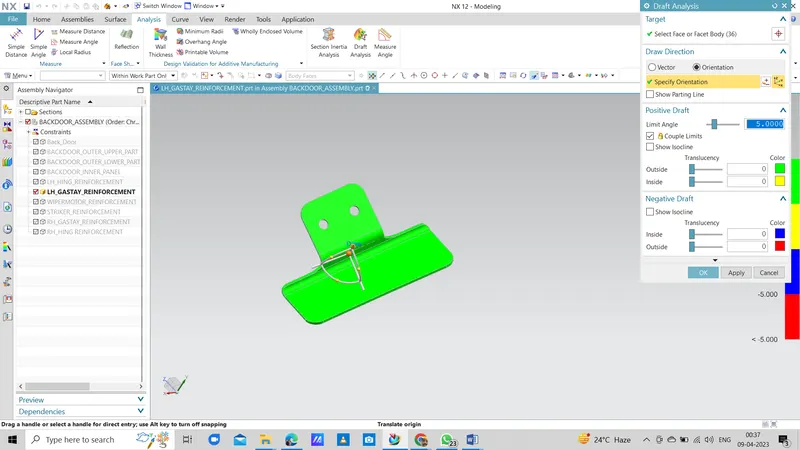
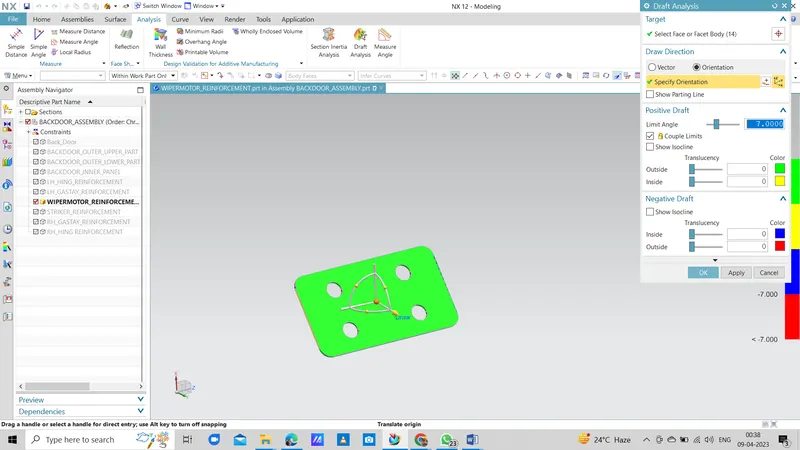
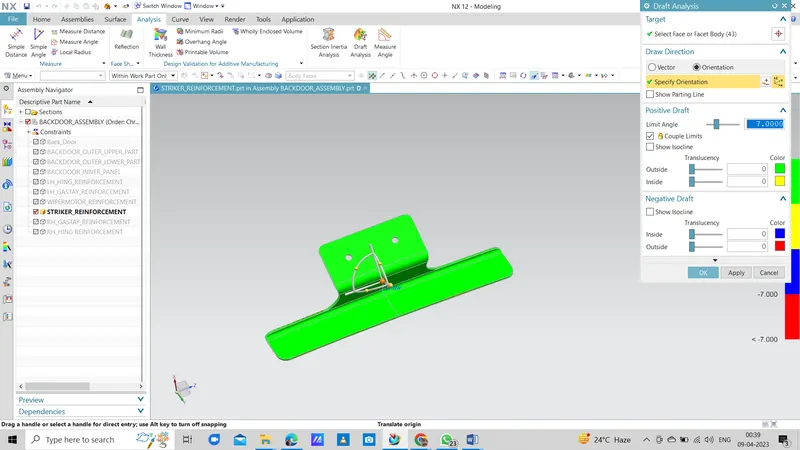
IT IS done to check it the features designed clear the minimum draft 7degree for manufacturability. this type of analysis is performed based on color ranges identifying zones on the analyzed element where the deviation from the draft direction at any point corresponds to specified values.
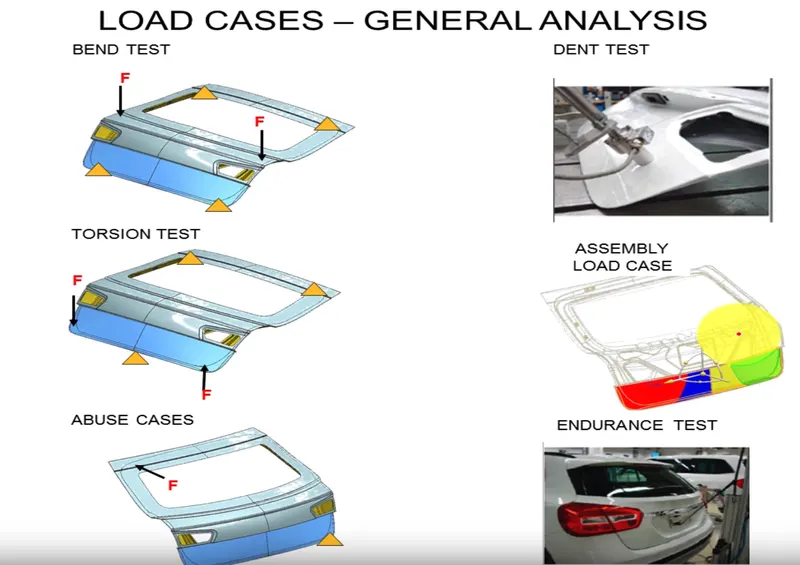
- LOAD CASES GENERAL ANALYSIS :-
- BEND TEST
- TORSION TEST
- ABUSE CASES
- DENT TEST
- ASSEMBLY LOAD CASES
- ENDURANCE TEST
- HEMMING PROCESS:-
in this process sheets rolled by roller in such of one by one different angles and joining of two surface .
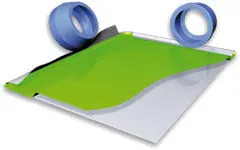
hemming should be done by provideing gap of 0.2mm between inner panel and outer panel.
- TYPES OF HEMMING :-
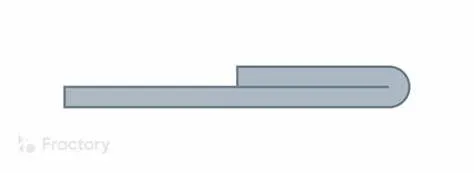
- CLOSED HEM -
hems without any inside radius are called closed hem. closed hems are not recommended if the hem geometry is to be painted or if the material used is sst or aluminum. in closed hems,return flange length from outside the bend should be equal to or greater than four times the material thickness. generally closed hems tend to fracture at the bend and cause entrapment of solutions during the finishing process. so one should try to avoid using those in their design until its design requirement.
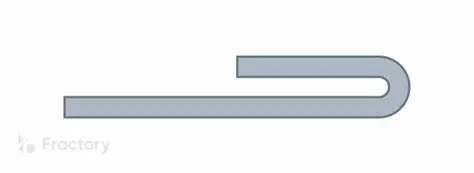
2. OPEN HEM -
HEM HAS A FULL round feature and a return flange. in the open type hem,bend angle is equal to 180
3. ROLLED HEM-
in the case of rolled hems there is no return flange available. here the only design criterias are available for bend radius of hems.
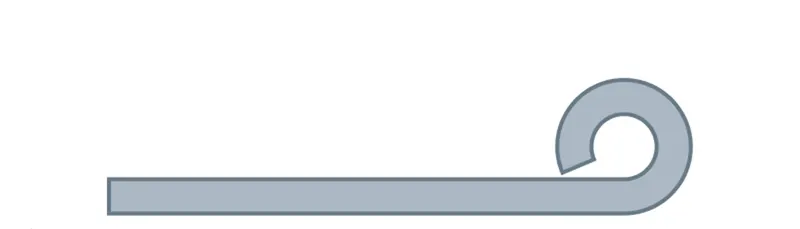
4. TEAR DROP HEM-
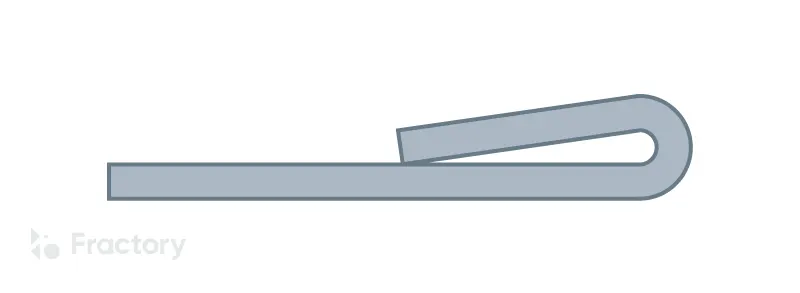
in tear drop hem the bend angle is greater than 180 degreea.
- Relief on the Corners :-
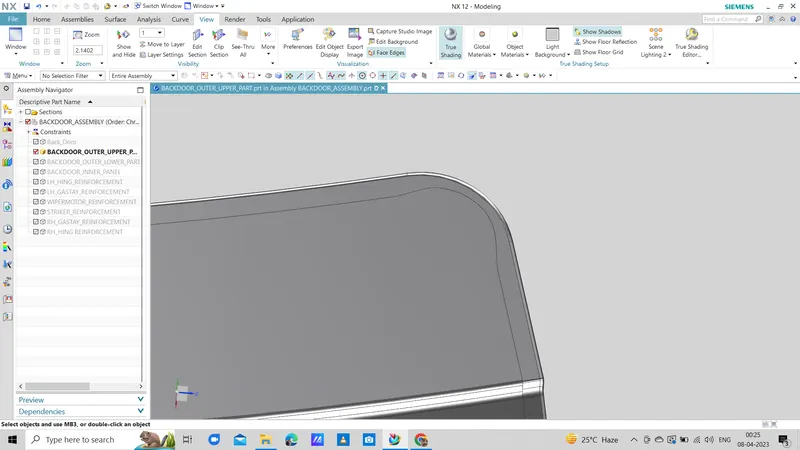
A relief on the corners is provided for the hemming process in order to avoid spring back issues .when the roller are moving on the panels the force that is used to bend the sheet metal has to be maintained within the limit to avoid spring back issue . Due to which a relief is given on the corners to avoid the red zone on the back door
- CONCLUSION:-
Back door is very important to protect the car as well as for locking luggage and other goods. So, we should follow all consideration while designing of back door and after designing,