Design of backdoor
DESIGN OF BACKDOOR
Objective: To design Back door of car using the given Class ‘A’ surface.
Back Door is also known as a "Hatch," a "Tailgate," a "Trunk-lid," or a "Boot-door." It is the rearmost part of the vehicle and gives access to the trunk. It has mounts for tail lamps, hinges, wiper motors, gas stays, etc.
Functions of the Backdoor:
- It houses the tail lamp assembly, the wiper motor, and other parts like parking sensors and a rear-view camera, etc.
- It has windshield glass, which improves visibility from behind.
- It guards against damage to the passengers and luggage.
- It serves as a point of entry and exit for passengers and luggage.
Types of Backdoor
- Top mounted (Tailgate/Hatch Doors)
Tailgates: These are hinged on top and rotate about a horizontal axis.
Hatch doors are a common type of rear cargo door notable for their upward opening motion. Because the opening can include portions of the roof, it provides a wider opening for smaller vehicles. Keeping the door up and out of the way also helps when moving cargo into and out of the vehicle.

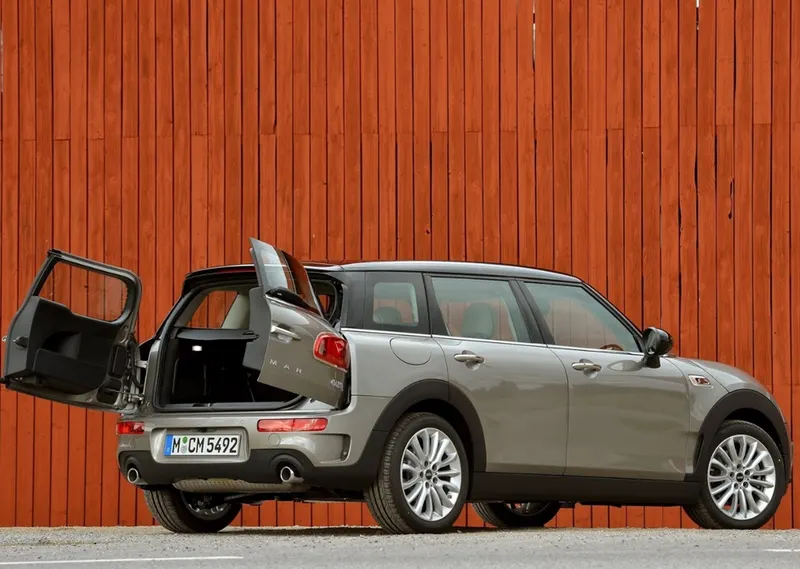
- Side mounted (Barn Doors)
Barn Doors - These are hinged on the side of the van and rotate about a vertical point.
Barn Doors: Barn Doors is common sight on vans, SUVs, and other large vehicles. Some are similar to conventional car doors and have a set of hinges on one side. Others feature two doors that open at the centre, especially on larger commercial vans.
- Bottom mounted
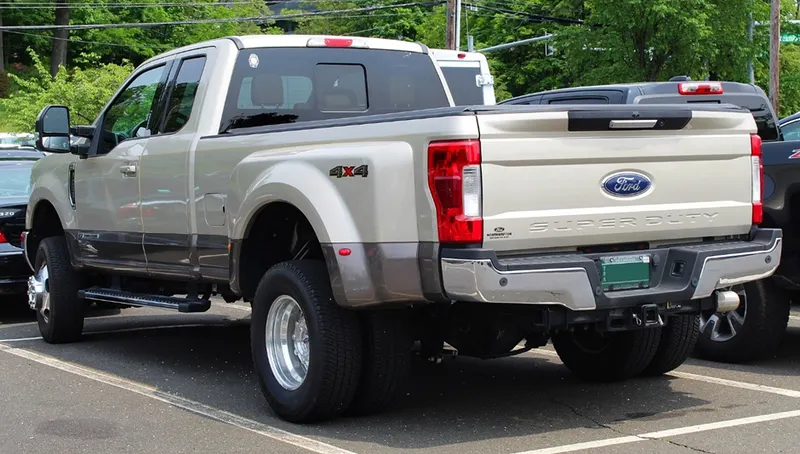
Estate cars, pickup trucks, and some premium SUVs use bottom type or split type backdoor systems. They are the most convenient types of backdoors, with the bottom split serving as a support or perhaps a table for tourists.
DIFFERENT METHODS OF MANUFACTURING FOR BACK CAR DOOR:
Blanking:
Blanking is a metal fabricating process, during which a metal workpiece is removed from the primary metal strip or sheet when it is punched. The control of the quality by the punch and die clearance. The ability to produce holes of varying shapes – quickly.
Deep drawing:
Deep drawing is a sheet metal forming process in which a sheet metal blank is radially drawn into a forming die by the mechanical action of a punch. It is thus a shape transformation process with material retention. The process is considered "deep" drawing when the depth of the drawn part exceeds its diameter.
Casting:
Casting is a manufacturing process in which a liquid material is usually poured into a mould, which contains a hollow cavity of the desired shape, and then allowed to solidify. The solidified part is also known as a cast, which is ejected or broken out of the mould to complete the process.
Trimming:
Trimming is a manufacturing process that is used as a finishing operation for forged parts, in order to remove flash. Most often it is desirable to perform this operation while the work is still hot for maximum efficiency, therefore it is usually incorporated into the larger production process.
Hemming:
Hemming is a sheet metal forming process in which sheets are joined by bending it usually to 180°. Automotive body panels and automotive parts such as deck-lids, trunk-lids, doors, hoods, and tailgates are formed by hemming process. Hemming is a forming operation in which the edges of the sheet are folded or folded over another part in order to achieve a tight fit. Normally hemming operations are used to connect parts together, to improve the appearance of a part and to reinforce part edges.
Spot welding:
Spot Welding is a form of resistance welding also known as Resistance Spot Welding (RSW). Spot Welding involves using heat produced by resistance to an electrical current to join materials together. The current heats the materials to a point where they become malleable. The use of strong pressure bonds them together (OR) it is the process where metal sheets are joined together by applying heat and pressure at the spot to be welded.
MATERIAL TECHNIQUES
1. Stamping / Deep Drawing
2. Casting
|
Casting |
Stamping / Deep Drawing |
|
|
Material |
Aluminium |
Steel |
|
Reinforcements |
Reinforcements can be neglected |
Reinforcements are necessary |
|
Thickness |
Thickness can be varied |
Thickness should be uniform |
|
Weight |
Lighter in weight |
heavier in weight |
|
Cost |
Costly as compared to Steel |
Cheap as compared to Aluminium |
|
No. of components |
Less No. of components |
More No. of components |
Design considerations
- Rear visibility
- Boot space & accessibility
- Sealing Flange
- Support structures like hinges and gas stays.
- Mounts for wiper motor, tail lamps, and other wiring loops
- Rear crash regulations
- Joining techniques such as hemming, spot welding etc.
- Gap and flush requirements
BACK DOOR ASSEMBLY:
The back door assembly of a car has the following components
- Inner panel
- Outer panel
- Hinge reinforcement
- Gas stay reinforcement
- Wiper motor reinforcement
- Latch/striker reinforcement
- Inner panel
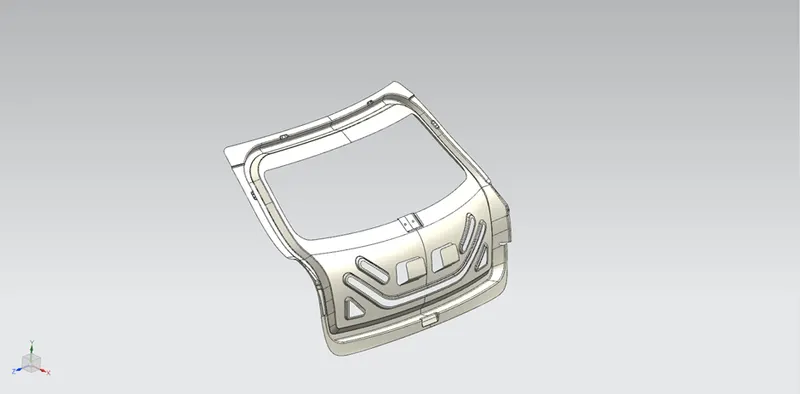
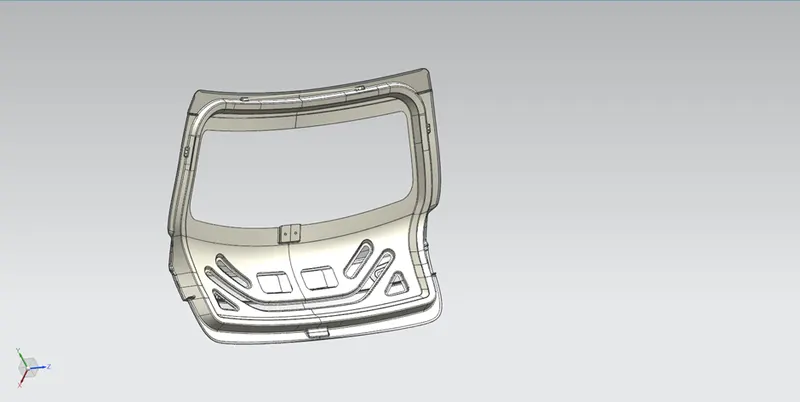
The inner panel is a part which is designed to increase the strength of the door. It is one of the most important components on which all accessories are mounted like hinges, glass guide channel, wiper Motor, latch etc. The inner panel is designed by offsetting the given class A surface as per the given inputs. The inner panel consists of Embosses and Mastic Points.
- Outer panel
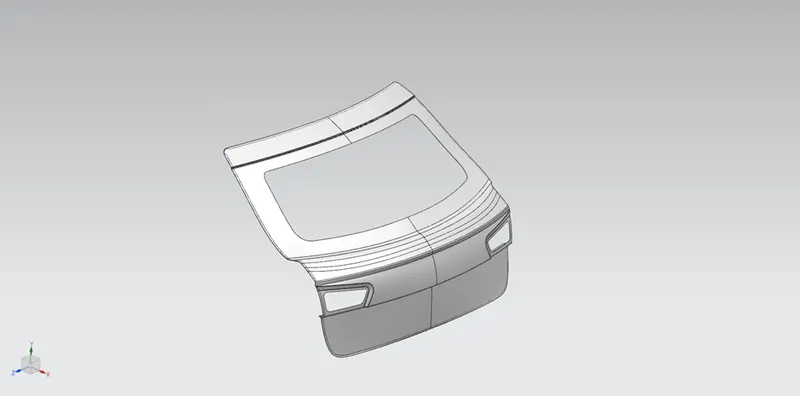
Outer panel is the aesthetic part of the vehicle, which is manufactured inside the OEM. The coating provided to this is multi-stage which has the property of scratch resistance, rust prevention, and smooth and attractive finishes. The outer panel also has the provisions for the tail lamp, rear fog lamp and has the provision for licence plate mountings. Most of the hatchback cars have the provision for wiper motor.
- Reinforcements
The Reinforcements basically strengthens or increases the stiffness of a part locally. These reinforcements are small compared to the sheet metal part. The hinge reinforcements are provided to increases the strength during fastening. Below are the reinforcements present in the door assembly. The reinforcements are usually 1-1.5mm thickness.
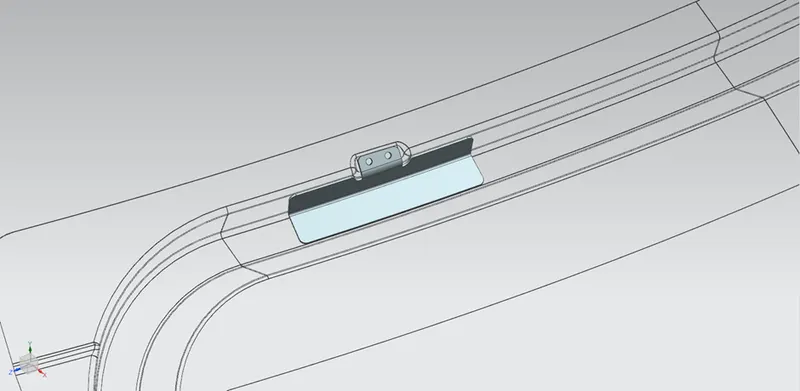
- Hinge reinforcement
Hinge is the link between car’s outer body and car door, it is also pivoting mechanism which supports the total weight of the backdoor, this added weight will result in deformation of the panel. So, hinge reinforcements are added in order to compensate the strength locally. Thus, they provide additional strength and rigidity to the door.
- Gas stay reinforcement
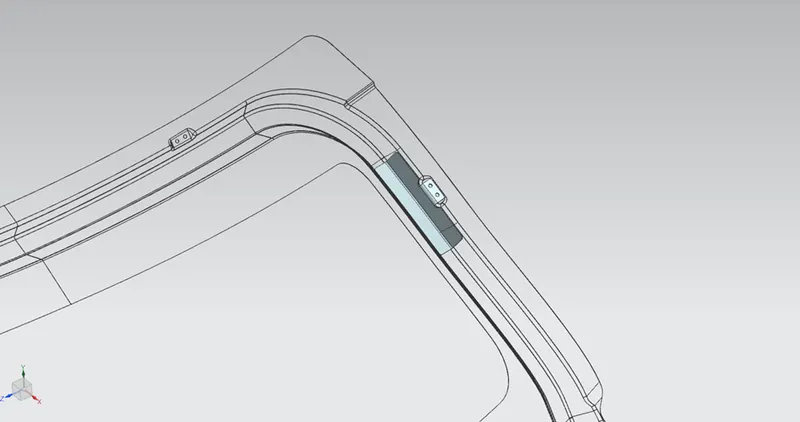
Gas stay is used to lift the backdoor automatically and is used to support the backdoor in its open position. In open condition the weight of the back door will be distributed between gas stay and hinge, thus prolonged exposure to open condition will result in deformation of the inner panel, which results in loss of strength & rigidity. So, the Gas stay reinforcements are used to increase the strength and rigidity locally. It can be of Two types Semi-automated and fully automated.
- Wiper motor reinforcement
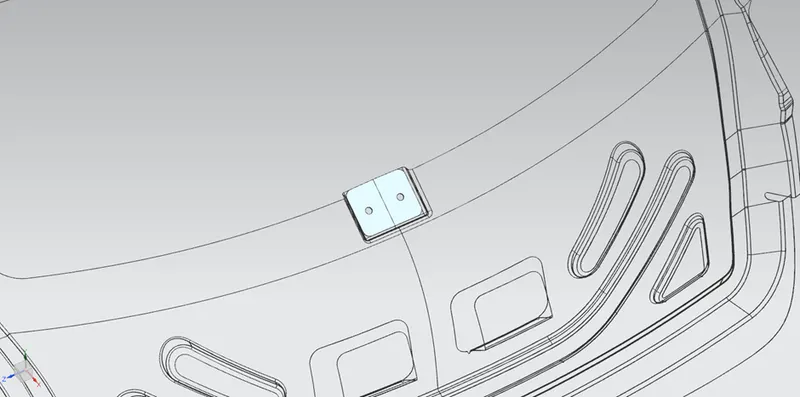
Wiper is used to wipe-out the dust particles/water on the windshield glass which affects the rear visibility. It is actuated by the motor which is mounted on the inner panel. Due to vibration and heat of the motor, inner panel gets deformed which results in loss of strength & rigidity of the panel thus leading to poor NVH. So, reinforcement is provided to avoid these conditions.
- Latch/striker reinforcement
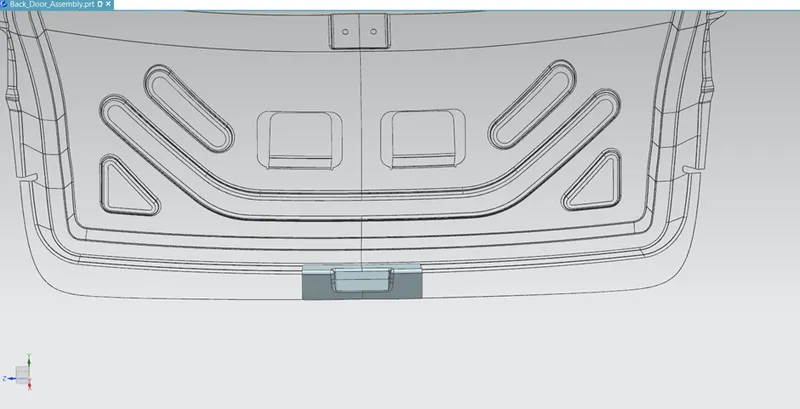
At the bottom of inner panel emboss is created for placing the latch and striker assembly. Generally, backdoor is subjected to over slamming and abusing while opening and closing of the door, thus arising the need for reinforcement to with stand over slamming.
Positioning of Latch & striker/ Latch Trajectory:
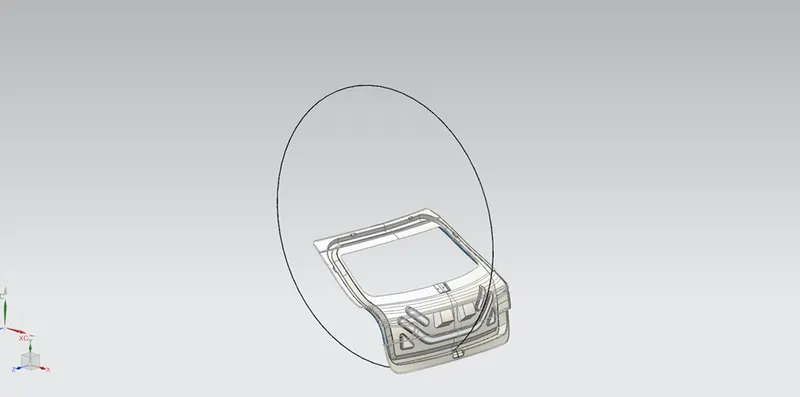
Backdoor is the swinging part which rotates about hinge axis. The position and orientation of latch striker is important for proper opening and closing of the backdoor. The positioning is done by sketching a circle with centre as the axis of the hinge which passes through the striker at appropriate position with respect to inner panel.
ASSEMBLY
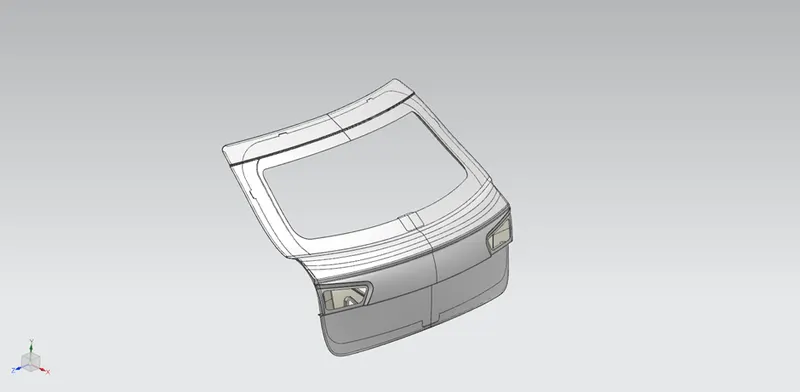
In this assembly Top-down approach was followed. Inner Panel, Outer Panel was designed using the styling using various tools/commands in NX. Than others parts were modelled as per the requirement.
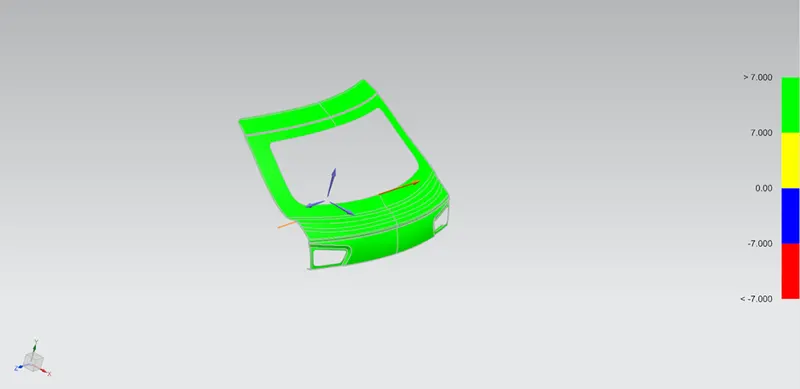
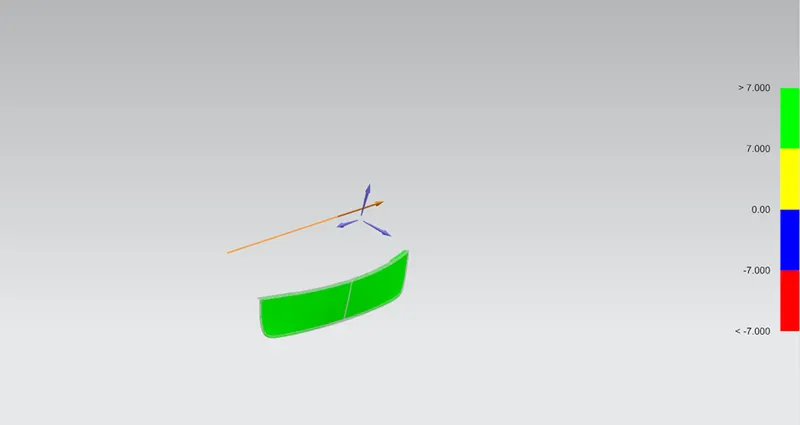
Analysis: Draft analysis
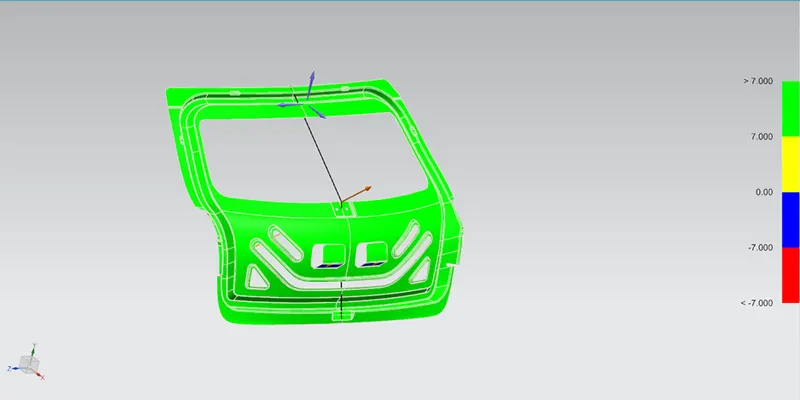
Draft Analysis is the simulation which is done to check the Manufacturability of the part. This allows the user to easily analyze a part for proper draft angle. Here the part should get easily removed from the panel dies (in case of Sheet metal part) or Mold (in case of plastic). No parts can be ejected from the tool if it is having a straight 90-degree profile from its base surface. A small draft angle (Sheet Metal - 70) is provided to each area of the component in order to get easy removal of the component from the tool. Here we are providing a direction in which components should eject in order to get easy removal of components from the tool.
Draft analysis - Inner panel
Draft analysis - Outer panel
COONCLUSION
Thus, the Back Door is designed as the design requirements.