Design of backdoor
'Design of backdoor'
Aim of Project:
To Design and develop the tail gate/Back door of a car in NX CAD considering all industrial design considerations.
Input:
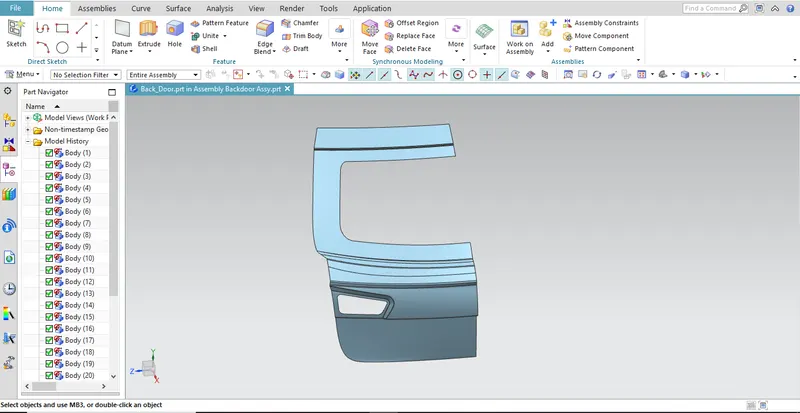
Class A/Skin Data
A back door is a hinged door attached at the rear end of the vehicle. It may be used for loading and unloading cargo, or to get passengers in and out, in case there are seats present at the rear. The back door comprises of certain components which form the back door assembly together.
- Inner Panel: The inner panel, as the name suggests, is the inner part of the door. It is where most of the reinforcements and components are mounted. It is manufactured either by casting (aluminum) or sheet metal stamping (steel).
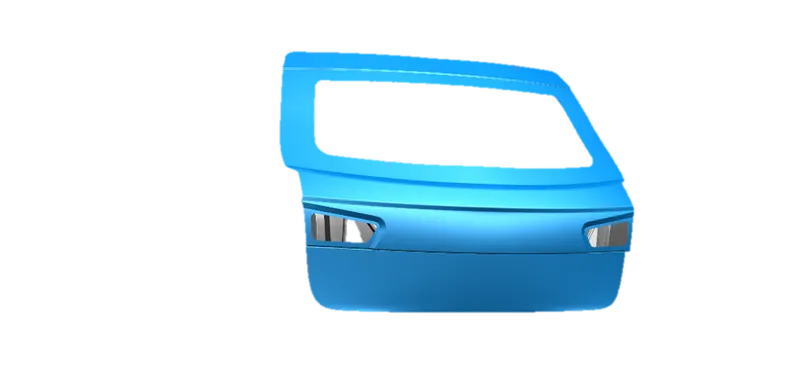
- Outer Panel: The outer part of the rear door and is mostly responsible for aesthetics of the vehicle. Outer and inner panels are connected by mastic sealants in center and by hemming process at edges. The outer door handle and in some cases. Outer panel comprises of windshield,wipers , parking sensors camera,taillights etc which is usually visible from outside.
Types of Backdoor
- Top mounted
These type of back doors are uually used in some sports utility vehicles. Today’s modern cars use top mounted tailgating systems which are both powered and also gas stay supported. These tailgates provide greater rear visibility compared to other types.
- Side mounted
It is generally used in van type MPVs, SUVs, pickup truck vehicles. These doors are generally small in size and can be easily accessed. These doors are more convenient for the goods handlers carrying lengthy objects, long pipes where one door is kept open. It also saves accidental head impacts. It is a lot easier to load /unload things in vehicles having side-mounted doors.
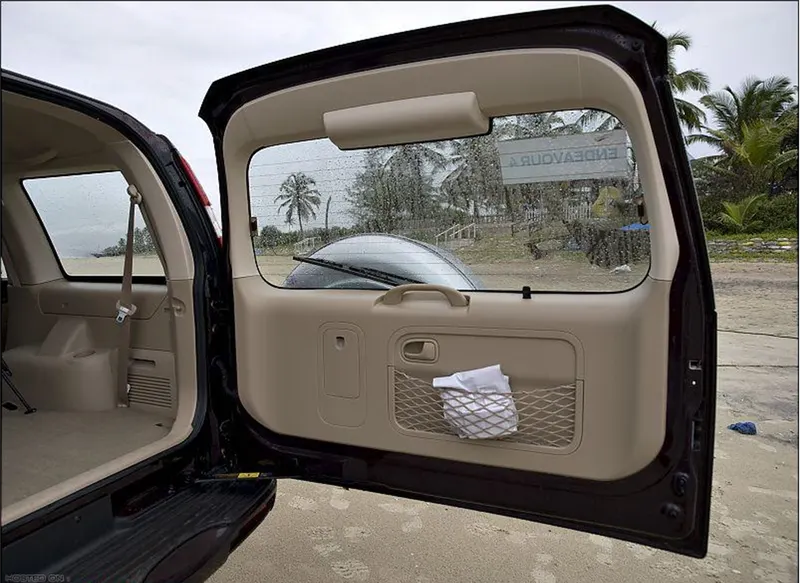
- Bottom mounted
Bottom type or split type backdoor system is used in pickup trucks and goods transportation vehicles . These are usually shorter in size and are hinged mounted.
We will be working on Top Mounted Backdoor in this project
Working Mechanism i.e (Opening and closing) of Backdoor
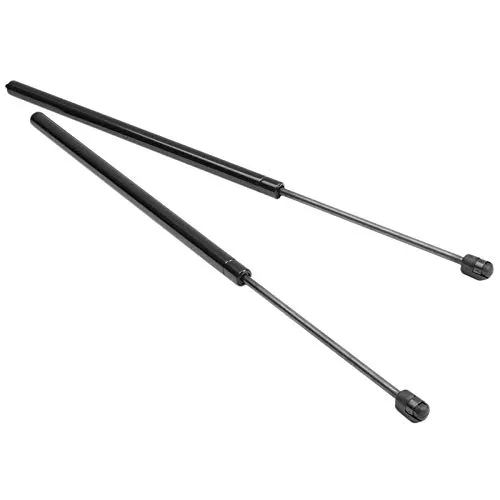
- Gas Stays type : Gas Stay type backdoor is an ideal and most commonly used tailgate mechanism from lower segment car to luxury car segment. The ideal components of tailgate consist of a hinge, door, gas stay and some rubber beadings for sealing of door.
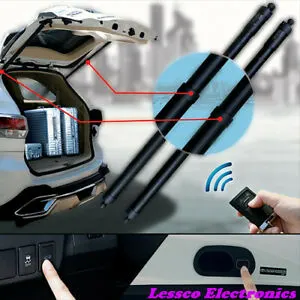
- Powered spindle system : Power trunk lift system is another liftgate opening mechanism which can automatically open and close the trunk and release of the latch by the touch of a button. Powered trunk Lift system consists of a power latch, anti pinch switch, PTG assly, PTG main switch. When the switch is pressed in the compartment or outside the power latch releases the latch and the entire backdoor is opened.These can also be operated with help of remote key.
Backdoor Major Part Assemblies:
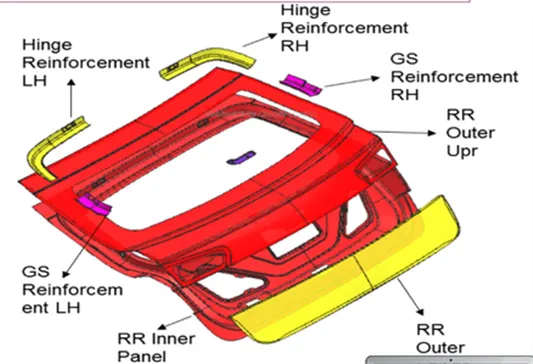
- Inner Panel
- Outer Panel
- Hinge Reniforcement.
- Gas Stay Reniforcement.
- Wiper Motor Reniforcement.
- Latch and Striker Reniforcement.
Design Requirements & Considerations:
- There should be proper visibility from the windshield area
- The backdoor should pass the crash regulation requirement and other testing methods like Bend test,Torsion test ,Abuse test,Dent test, Assembly Load case test and Endurance test
- Sealing should be provided between the car body and door panels
- Joing techniques like Hemming,spot welding and use of sealants should be implemented wherever required
- There should be proper gaps and flushness between the parts such as in between rear bumper and backdoor
- Embossing should be done using V o Y shape so that the forces get distributed outside the car during collision
- Between a blend and edge there should be a minimum flat surface of atleast 5mm
- The reinforcement should have a thickness of 1.5mm
- There should be hollow space for the wiring harness design routing for the mechanical or electrical components.
- A maximum gap of 5mm is to be maintained in between parts where mastics are to be applied.
Materials & Manufacturing Methods:
Materials: Generally Steel and Aluminium is used for manufacturing Backdoor inner and outer panels . Both have their own functionability let us look at the major difference between them in the below table.
| Aluminium | Steel | |
| Parts | Parts are casted | Parts are stamped |
| Reinforcements | Reinforcements can be neglected | Reinforcements are necessary |
| Thickness | Thickness can be varied | Thickness should be uniform |
| Weight | Lighter in weight because of lower density | Heavier in weight |
| Cost | Costly as compared to Steel | Cheap as compared to Aluminium |
|
No. Of components |
Less no of components | More no of components |
Aluminium is also resistant to corrosion when compared to steel,At present many OEM'S like Audi, Porsche are using Aluminium for their Body panels .
Sheetmetal processes used for manufacturing the Back Door
Deep Drawing:
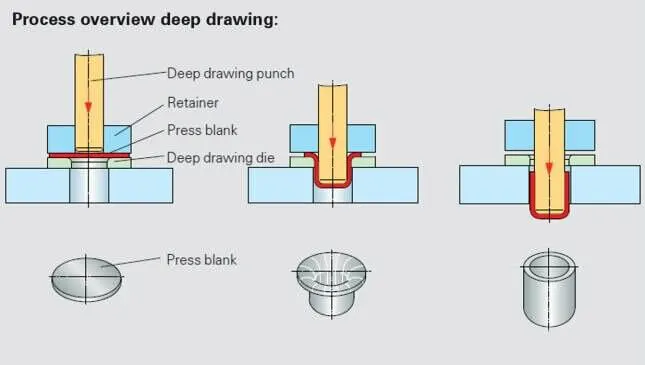
The metal deep drawing process is an effective method of manufacturing of cups, cans and other similar deep drawing products. The deep drawings having two main categories.
- First- stage drawing: The blank shape of metal is placed on the die and contact with the punch. When the metal specimen is flat piece of sheet metal used in forming and finish the product. Initially the punch moves in downward direction. The outer rim of blank is subjected to pure radial drawing (drawing toward in vertical axes) between die and blank metal. The metal become a bend and sliding over die and also stretched between die and punch. The metal in vicinity of punch head and contact with it bend and slide over radii and stretch over punch head.
- Redrawing: The components drawn from first stage again it is redrawn convert into more depth to form a cup shape in the die and punch. The second stage of drawing is called as redrawing.
3) Embossing:
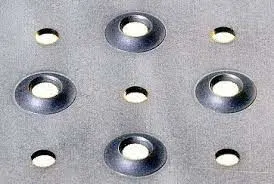
Sheet metal embossing is a stamping process for producing raised or sunken designs or relief in sheet metal. This process can be made by means of matched male and female roller dies or by passing sheet or a strip of metal between rolls of the desired pattern. The metal sheet embossing operation is commonly accomplished with a combination of heat and pressure on the sheet metal, depending on what type of embossing is required. Theoretically, with any of these procedures, the metal thickness is changed in its composition.
4. Hemming -
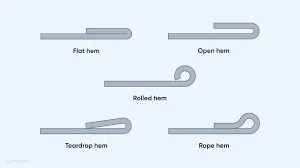
Hemming is a sheet metal forming process in which sheets are joined by bending it to 180°. Automotive body panels and automotive parts such as deck-lids, trunk-lids, doors, hoods and tailgates are formed by hemming process. In this process, usually a sheet is bent with the help of inner sheet in three different stages
There are various types of hemming operations:
- Conventional die hemming: In conventional die hemming, the flange is folded over the entire length with a hemming tool.
- Roll hemming: In roll hemming, the hemming roller is guided by an industrial robot to form the flange.
5) Blanking & Piercing -
Blanking and piercing are shearing processes in which a punch and die are used to produce parts from coil or sheet stock. Blanking produces the outside features of the component, while piercing produces internal holes or shapes. The web is created after multiple components have been produced and is considered scrap material . In blanking, the piece is cut off from the sheet, and it becomes a finished part. In piercing, the cutout portion is scrap which gets disposed off while the product part travels on through the remainder of the die. The terminology is different here, though both processes are basically the same and therefore belong to the same category, which is the process of metal cutting.
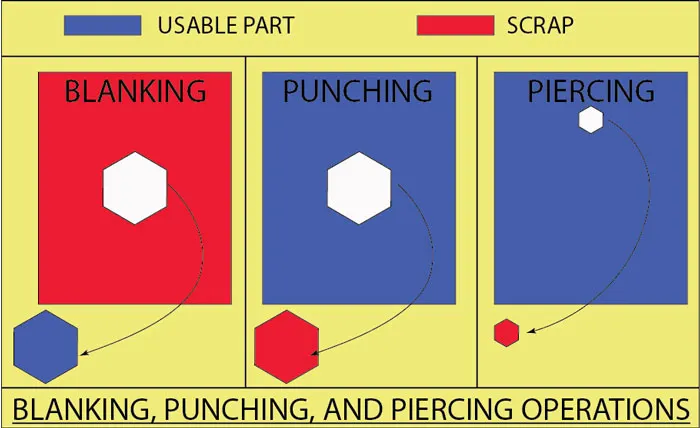
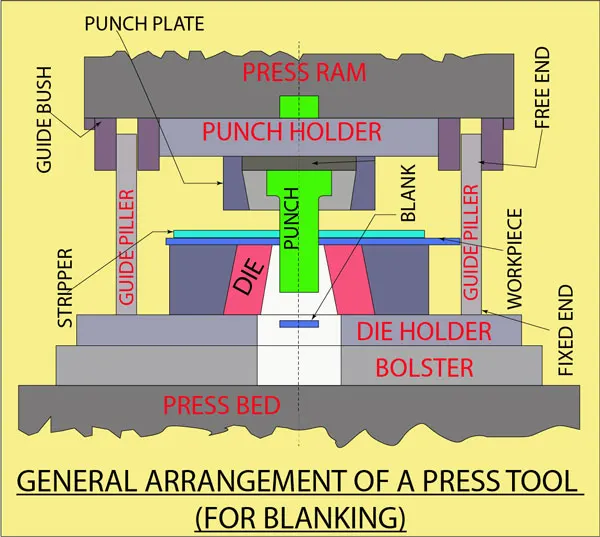
When we do punching, a piece of metal is removed from the inside of the part, and when we do blanking, the metal around the part is removed.
6) Spot Welding :
Spot welding is a resistance welding process used primarily to weld two or more metal sheets together. It is achieved by applying pressure and electric current to the spot-weld area. The required heat is generated by the metal’s internal resistance to the electric current.The electric current and pressure are applied by copper alloy electrodes whose tips are placed on the opposite sides of the metal pieces. The generated heat melts the metal while the pressure from the electrodes squeezes the molten metal to form a weld.
It’s called spot welding because this welding method creates a tiny dot weld, that looks like a spot. The weld created between the copper electrodes is also sometimes called a nugget.
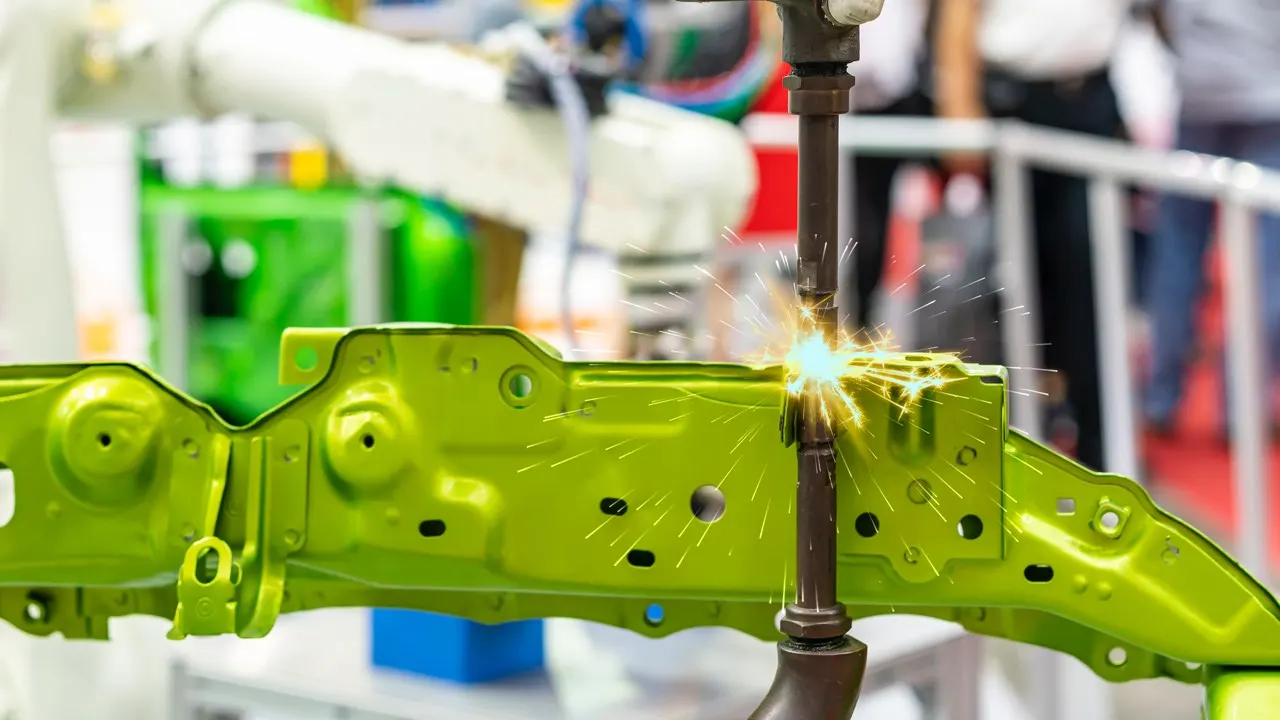
Robotic Spot Welding
Design Methodology:
Requirement:
- Outer Panel - 0.75 mm
- Inner Panel - 0.75 mm
First we will check surface regularity by applying sew command
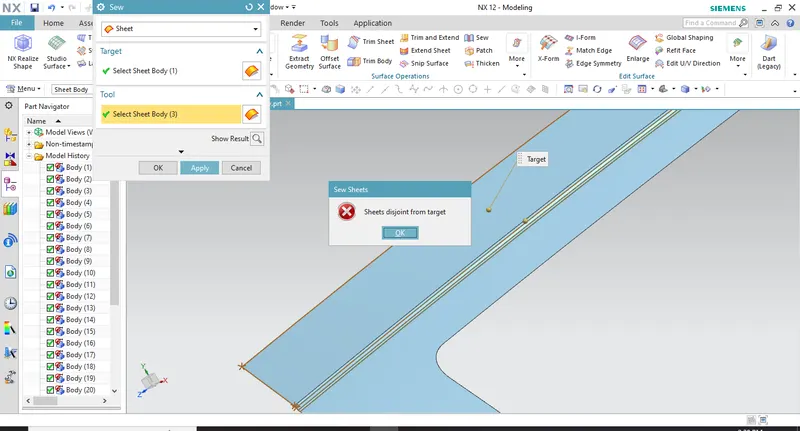
As we can see there are disjoints in sheet so we have to repair those disjoints with the help of surfacing commands and create new surfaces wherever required
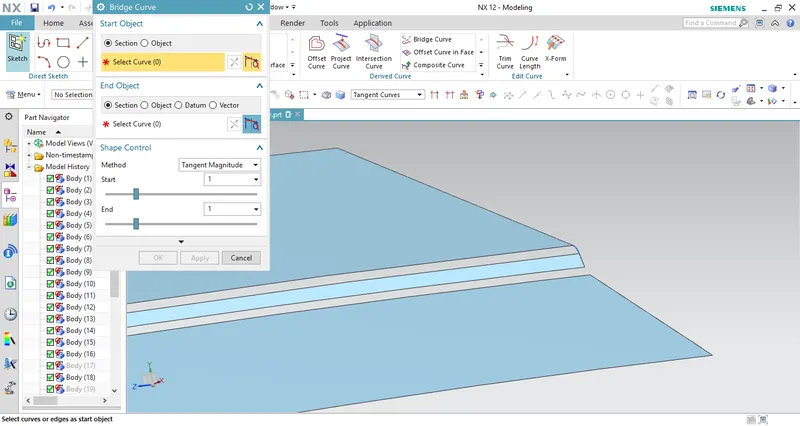
We can use Bridge curve and then through curves mesh for creation of surfaces
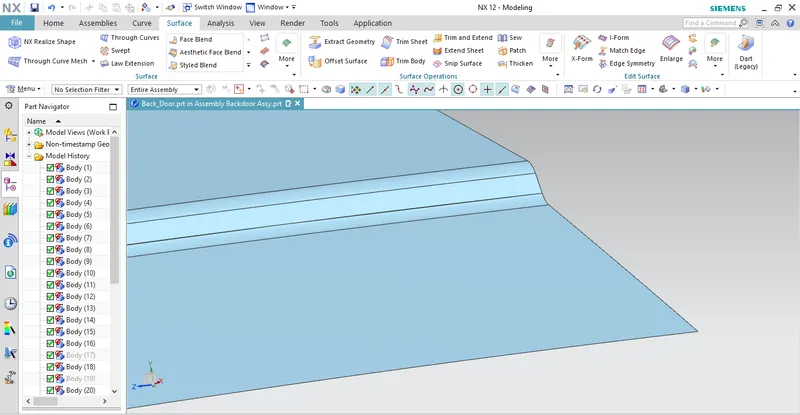
Recreated surfaces with 'Through Curves Mesh' command
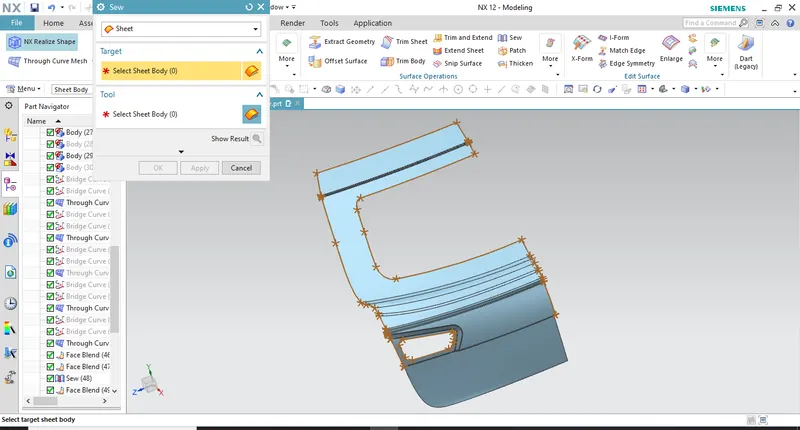
The upper surfaces are sewed and there is no disjoints
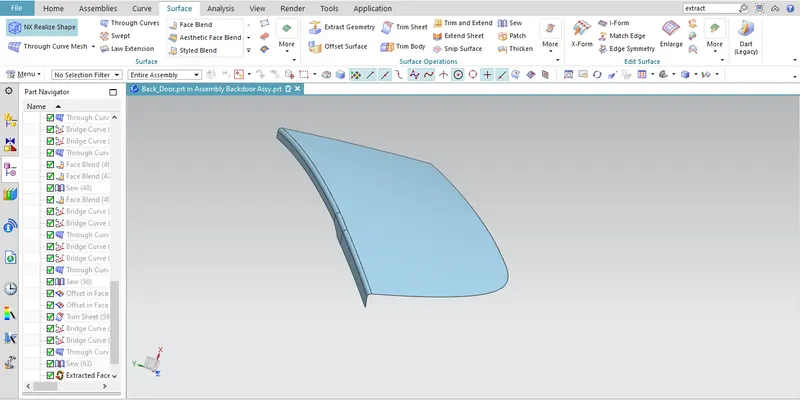
Next we will work on lower panel flange area and join it with upper body by first extending it to certain length and then using face blend between them.
Tooling Direction : Creation of tooling is very important for draft analysis , Sheet metal parts should have more than 7 degree of drafts.
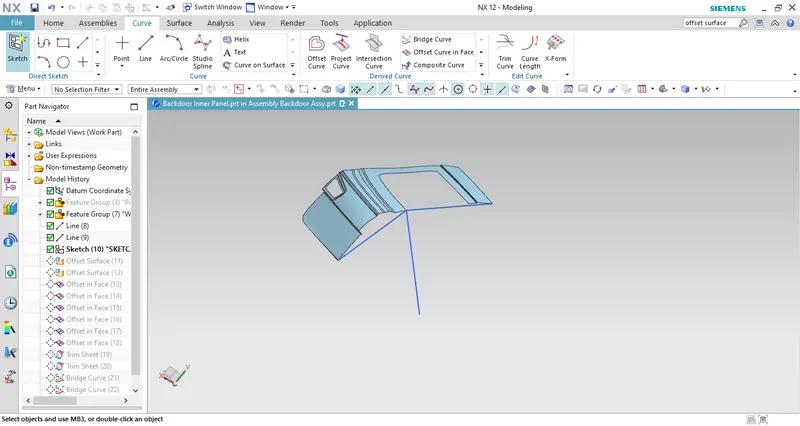
With the help of derived lines which will bisect the other two lines we have created the tooling direction
Then we will create assembly parts backdoor upper and lower outer
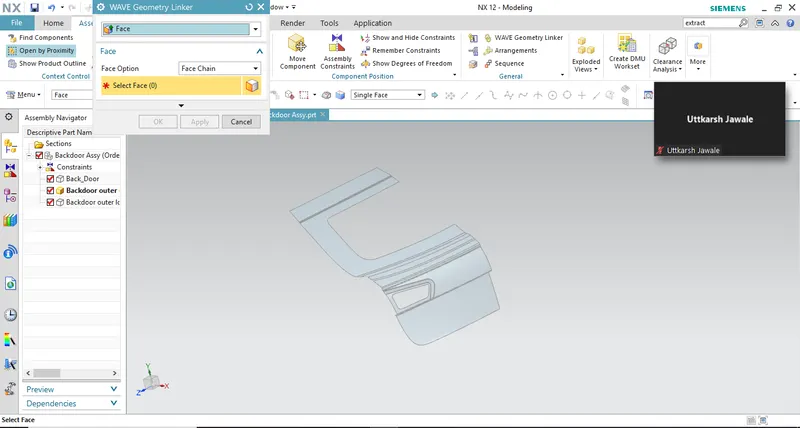
Thereafter we will work for the creation of inner panel and outer panel will be a reference. Inner panel will be a single panel and there will be no split like the outer panel.
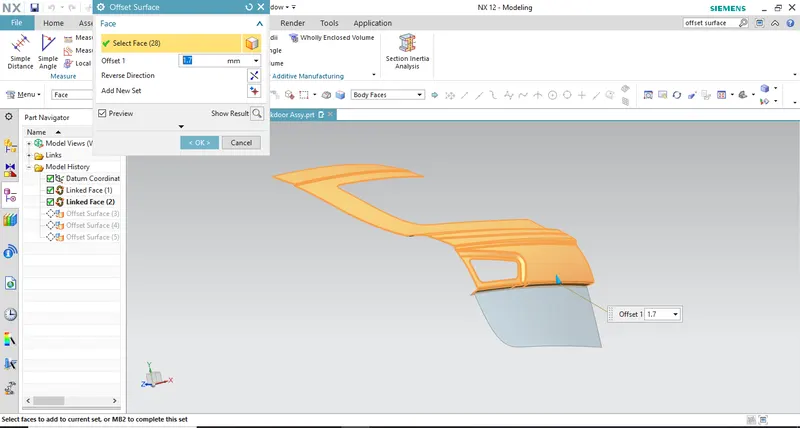
Creation of working surface by offset
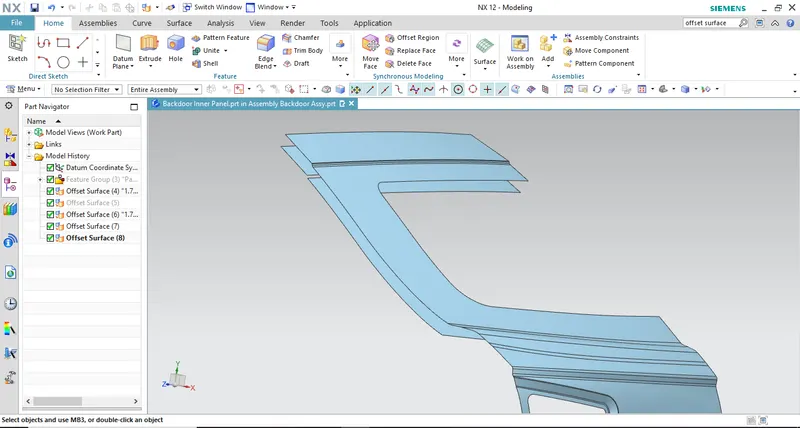
Sealing Flange creation : It is that section of the inner panel which enables the backdoor to sit over the rear body side of the car. Its design is important as it decides how a backdoor is mounted on the rear body side of the car and also restricts any external matter to enter inside the vehicle.
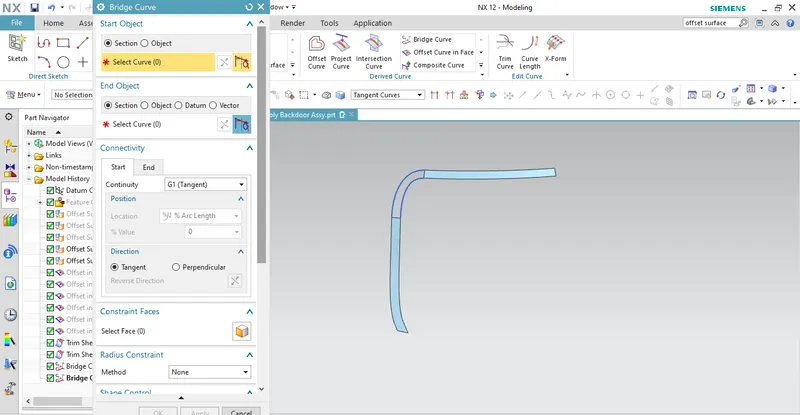
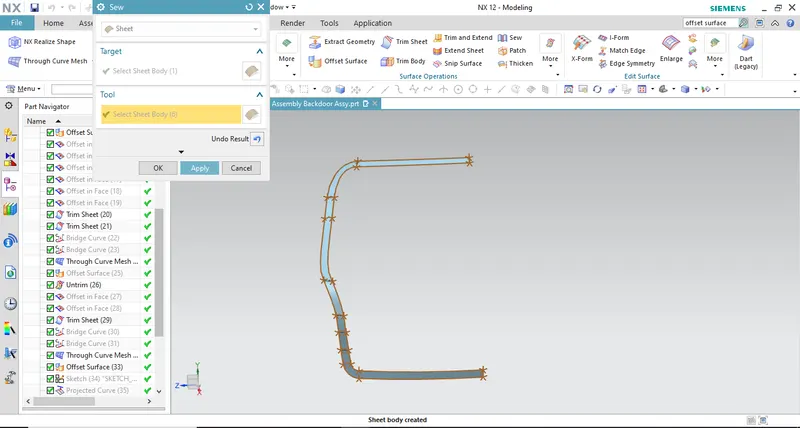
Sealing Flange
We will then create base of the inner panel by working on parent surface
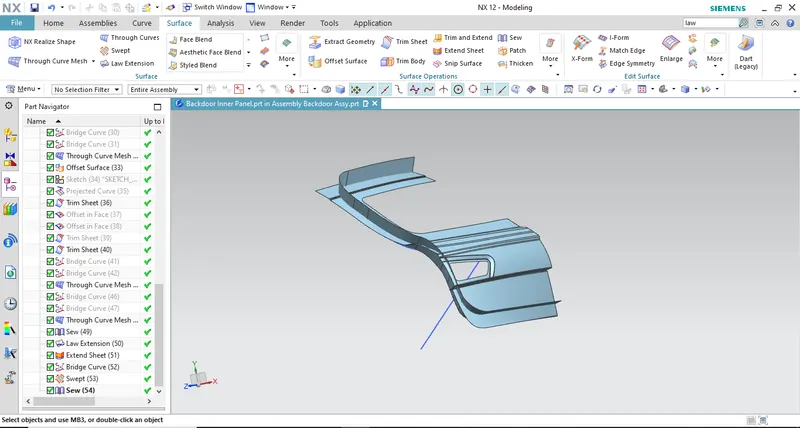
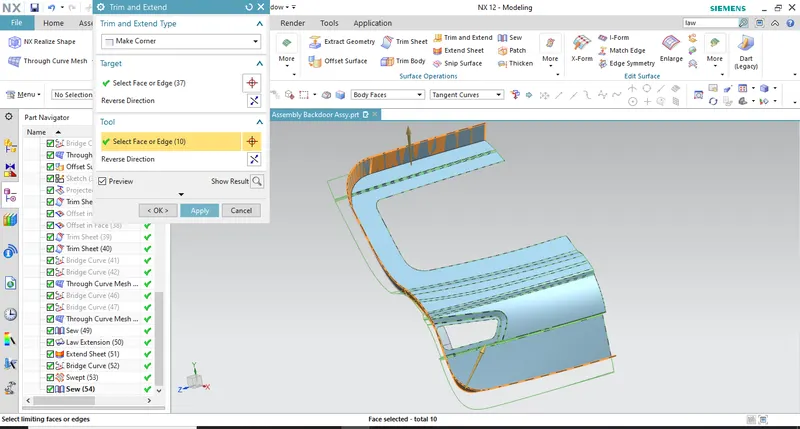
Law extension & trim
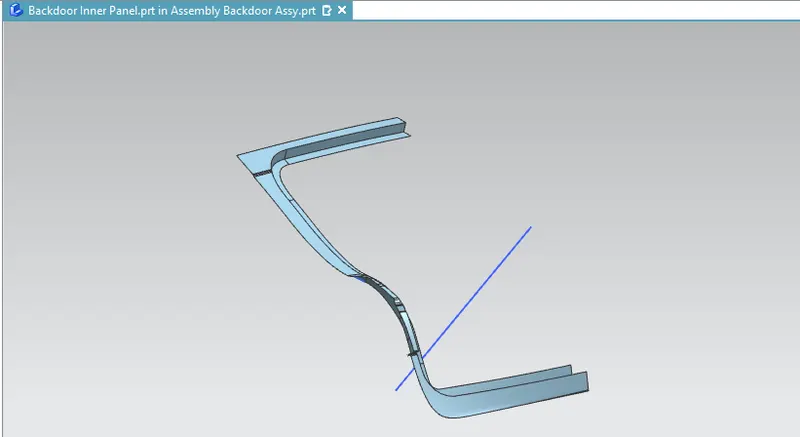
Creation of Windshield area
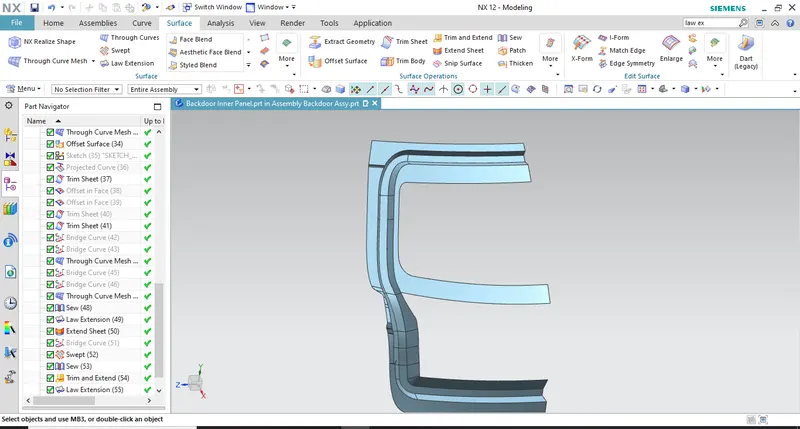
Wind shield area is also created with help of extract surface,law extension and trim & extend
Thereafter we will create lower area of the base
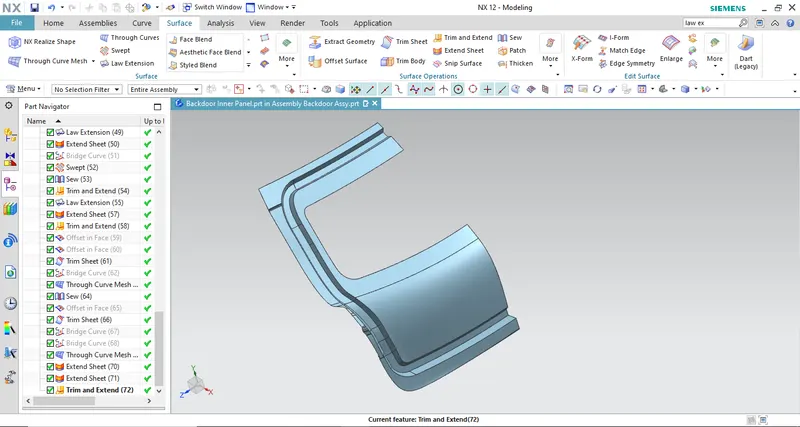
The lower area is also created with help of bridge curves ,through curves mesh, extend sheet ,Trim & extend by altering law extension values as well
So, now almost 70% of inner panel is designed
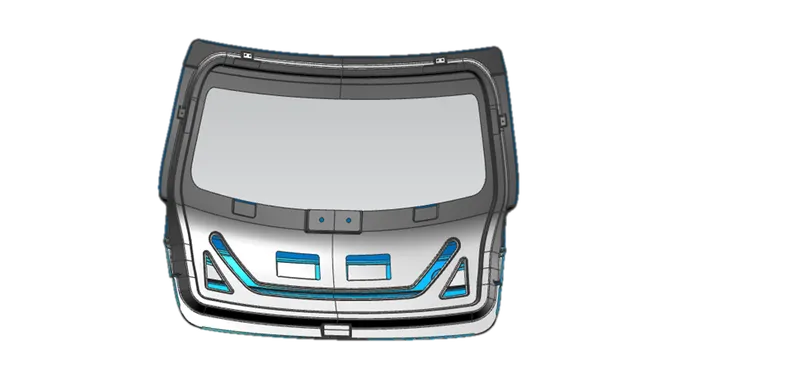
Now we have to work on Emboss for various functional and structural requirements.
- Hinge Emboss:
Hinge is a pivot mechanism which supports the total weight of the backdoor. So reinforcements are added for strength and rigidity.
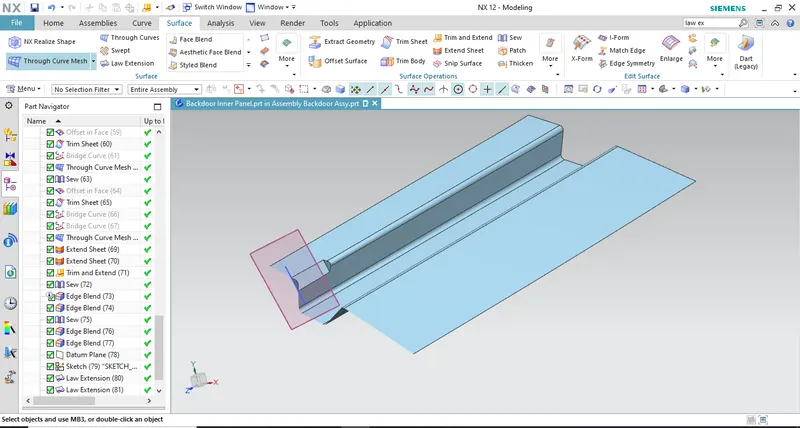
Hinge emboss creation with help of datum sketch and law extension
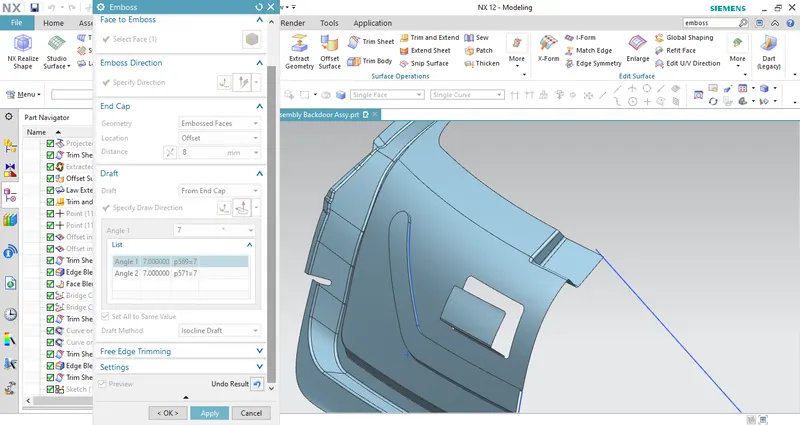
Emboss should be created with the tooling direction
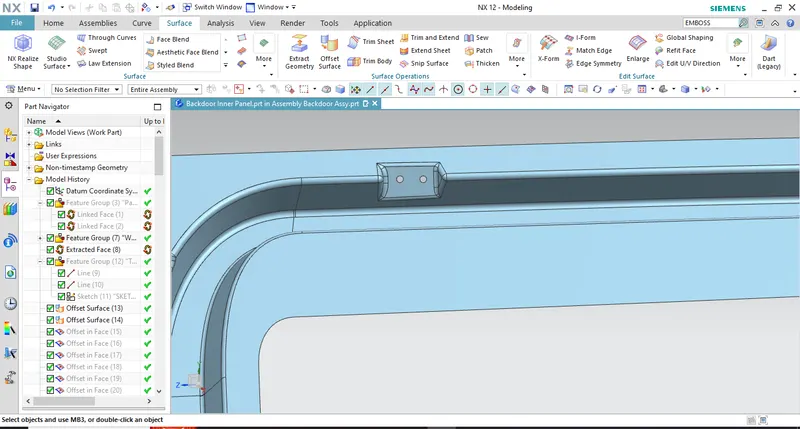
Hinge Emboss
- Gas Stay : It is used for holding or opening/closing of door
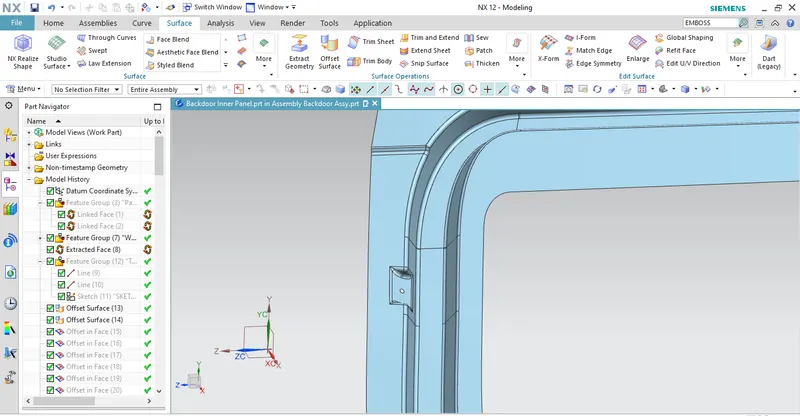
Gas Stay Emboss
- Wiper Motor : This area holds the motor for the windshield wiper
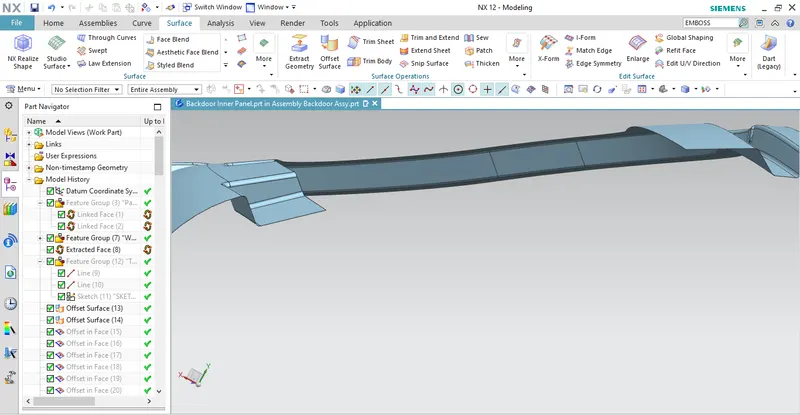
Emboss for the Wiper Motor Mount
- Flange for Mastic Sealants : This area can be used to join inner and outer panels together with mastic sealants
Mastic Sealants: As we know the outer panel gives the aesthetic look to the vehicle, so we can’t use bolting or spot welding or any other joining technique which damages the aesthetic looks of the panel. Thus mastic sealants are used for joining the Inner panel elements with outer panel. A maximum gap of 5mm is to be maintained in between parts where mastics are to be applied.
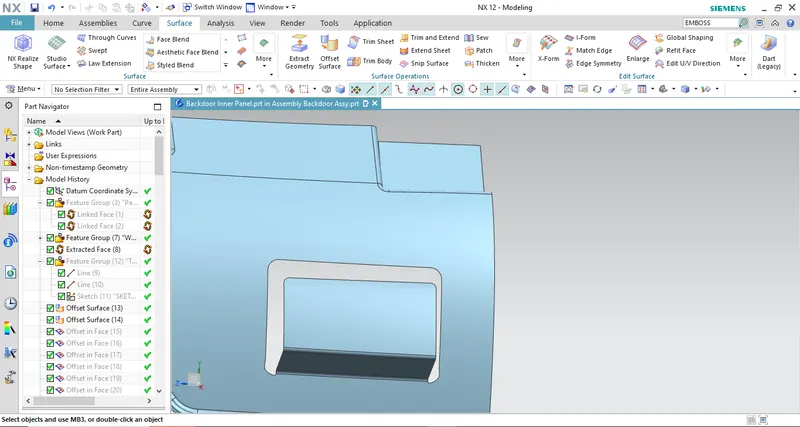
Flange for Mastic Sealant
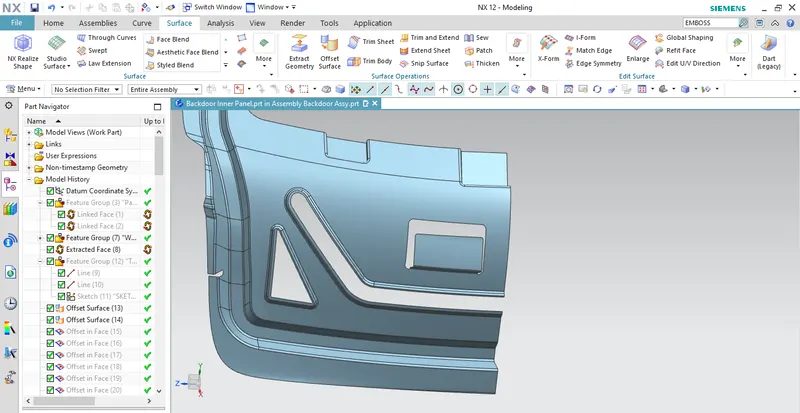
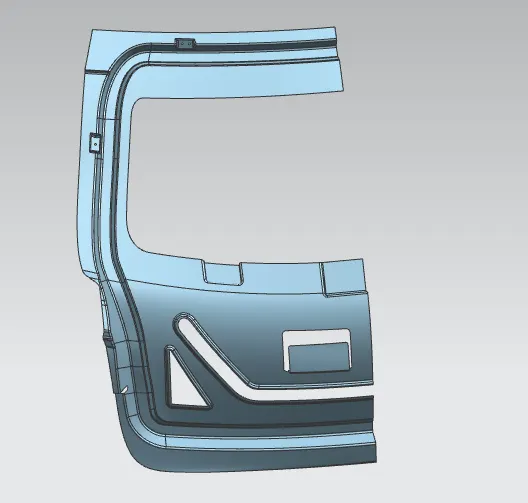
Creation of trajectory :
Position of latch and striker shpuld be perpendicular to the hinge then only the latch and striker mechanism will work properly when the door is closing or opening .
For the proper opening and closing of the Door, the striker should be perpendicular to the trajectory of the Door. For this, hinge is assembled at its position. Once it is placed, hinge axis is drawn.
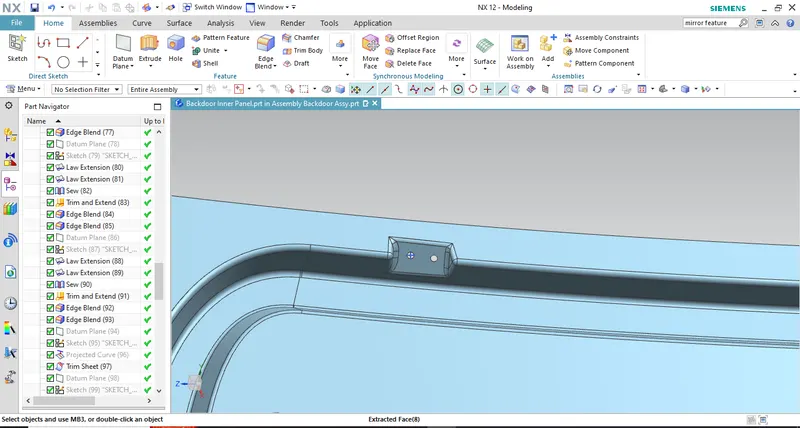
We will first take point on left Hinge & Right Hinge respectively
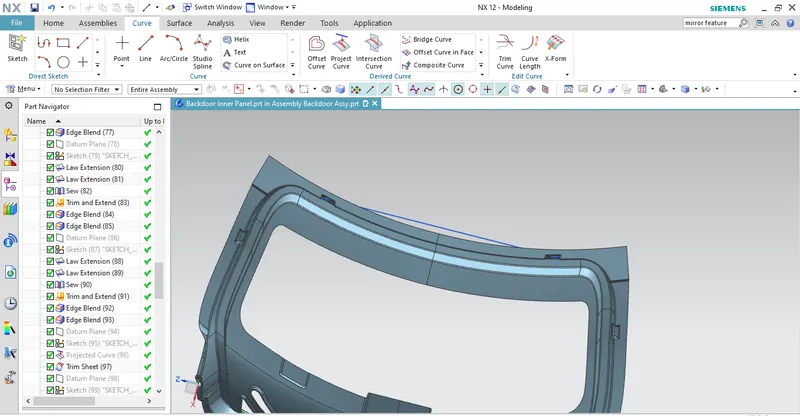
Then we have to connect it with line at point on right Hinge
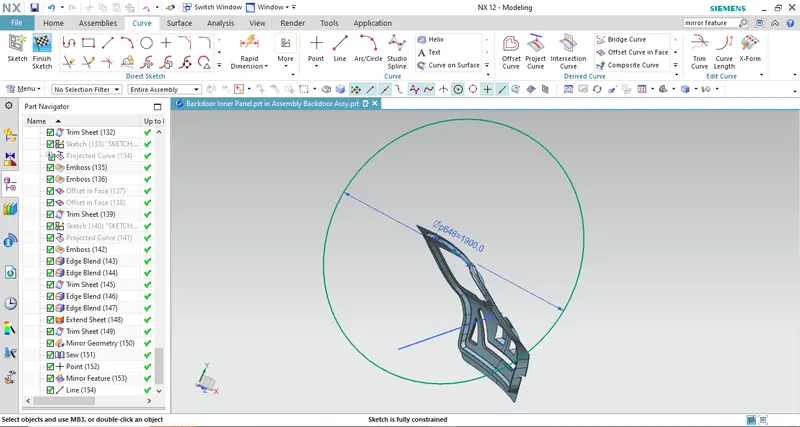
We will create a circle and give geometrical constraint to its centre point and the line
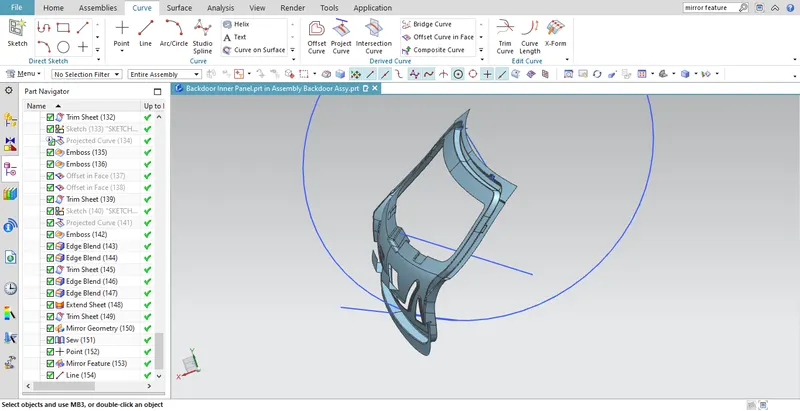
Then we will draw a tangent line in bottom
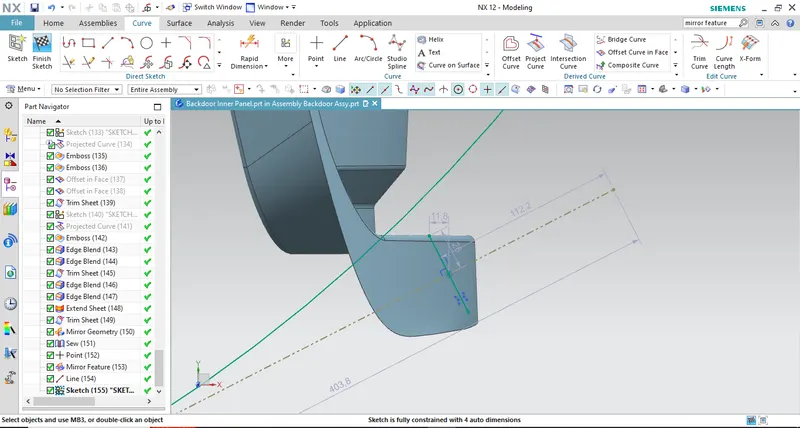
Thereafter we will create a perpendicular line from that tangent
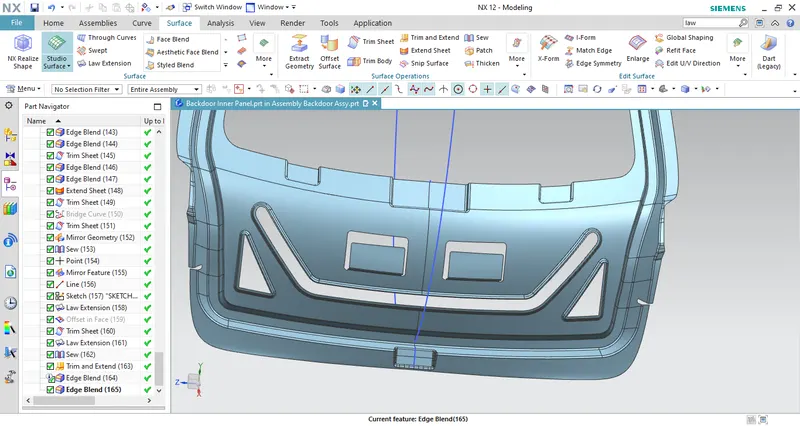
Finally with law extension, trim & extend command embossing is done in that area
Now we can work on outer panel and hemming
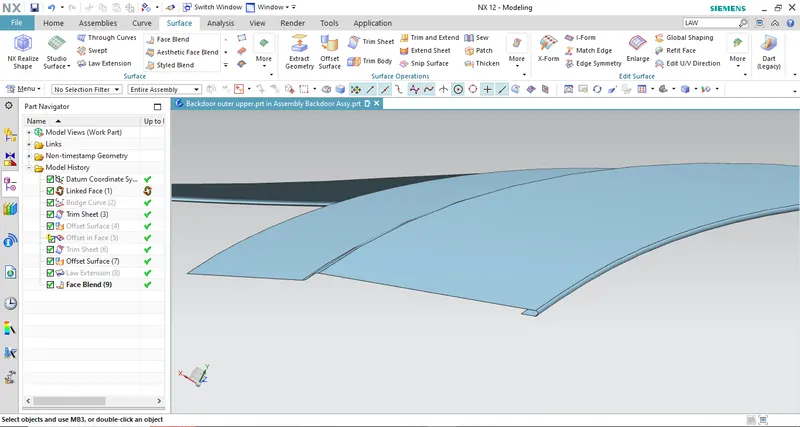
Hemming
We have to also give proper relief on corners
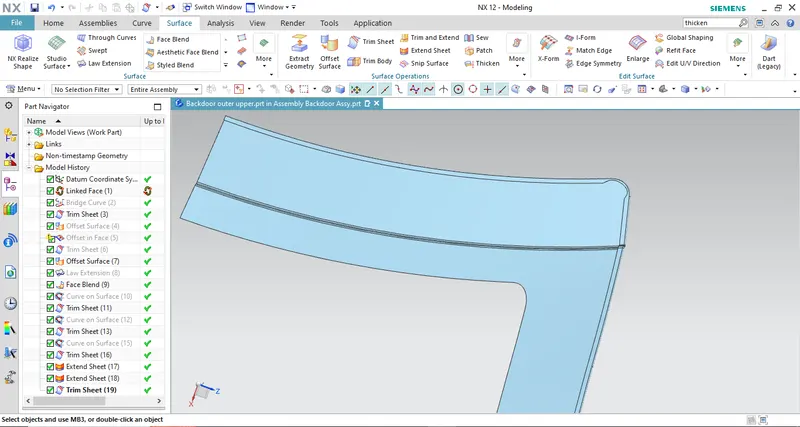
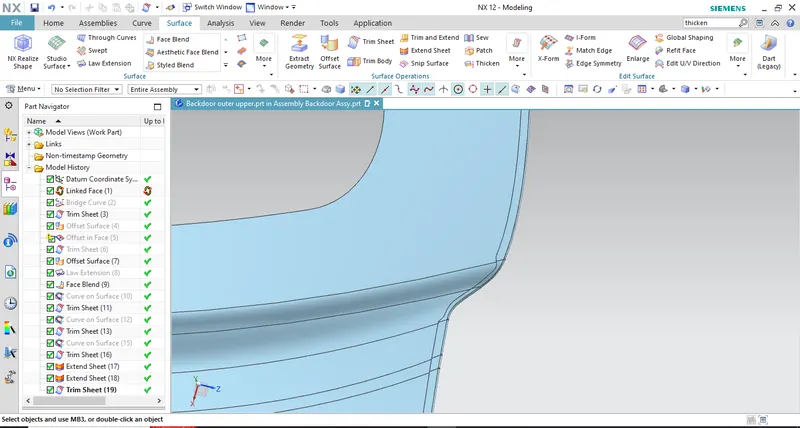
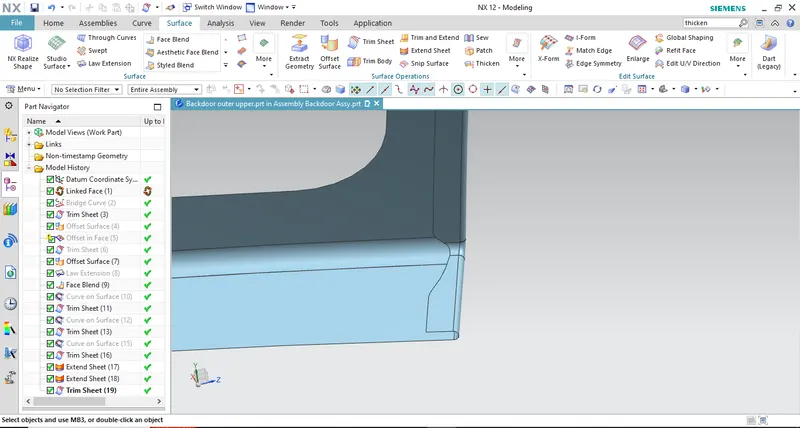
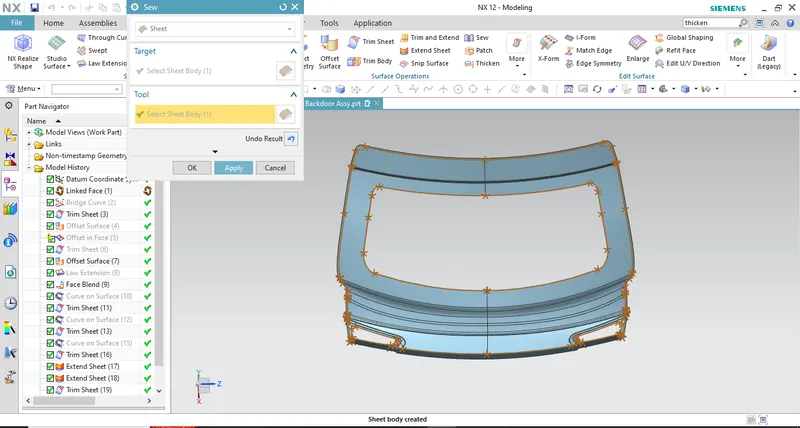
Then apply Thicken command on the body panel
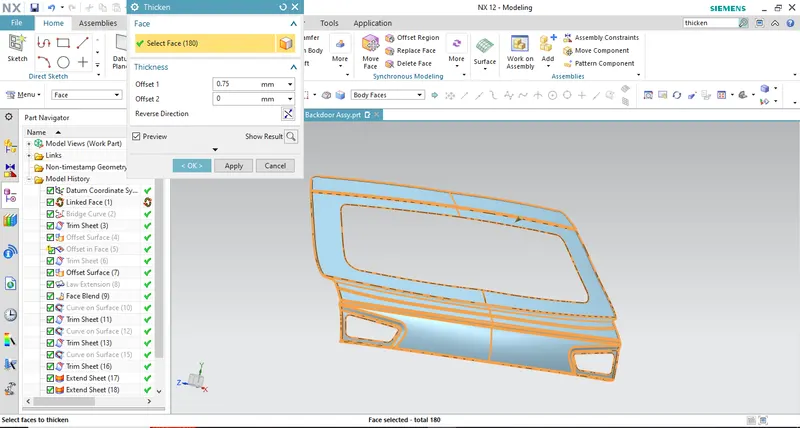
Thickness of 0.75mm
Backdoor outer lower hemming
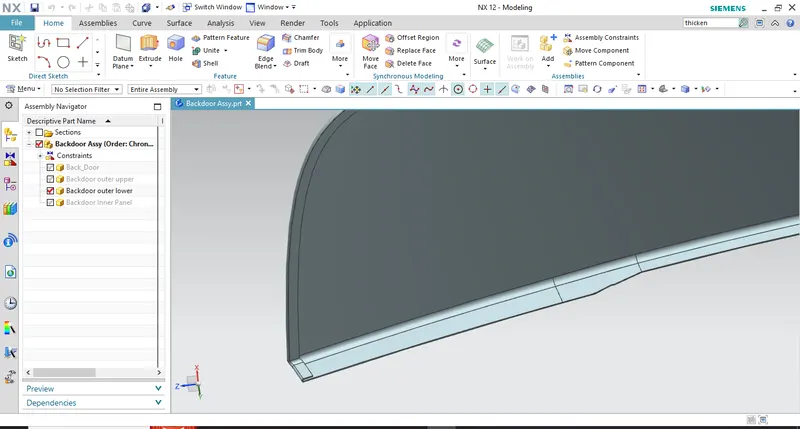
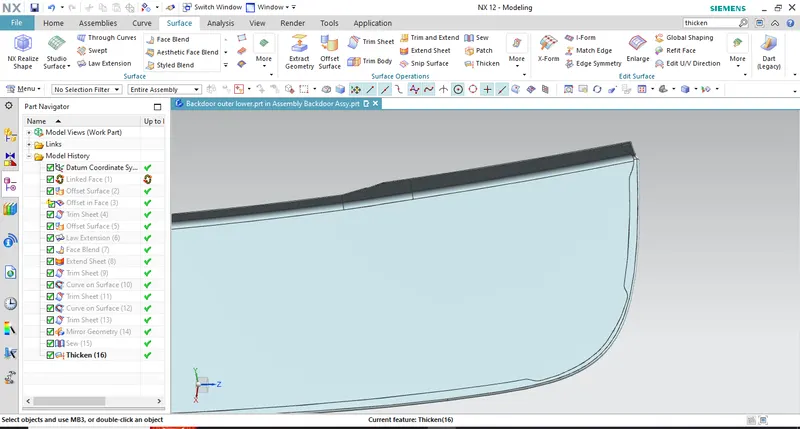
Relief provided on 2 areas
Reinforcements:
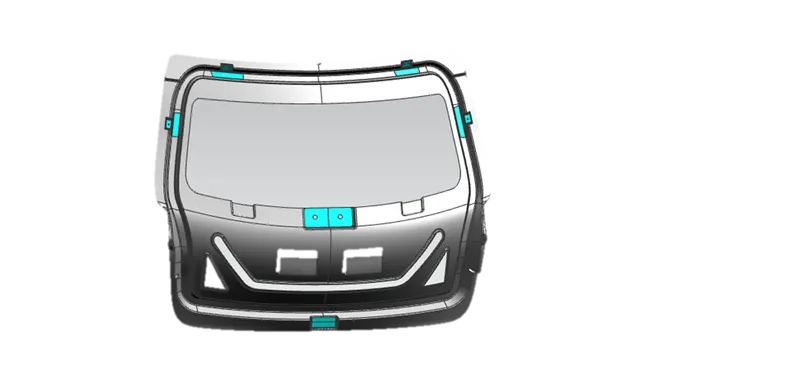
Then we will Provide Reinforcements for the required areas
Reinforcements are generally placed to increase the strength of the panel in localized areas which is relatively small compared to sheet metal parts for absorbing loads imposed there on and dissipating such loads throughout the panel assembly to help maintain rigidity of the panel assembly. The reinforcements are usually 1-1.5mm thick as opposed to 0.75mm thick panel used in this part.
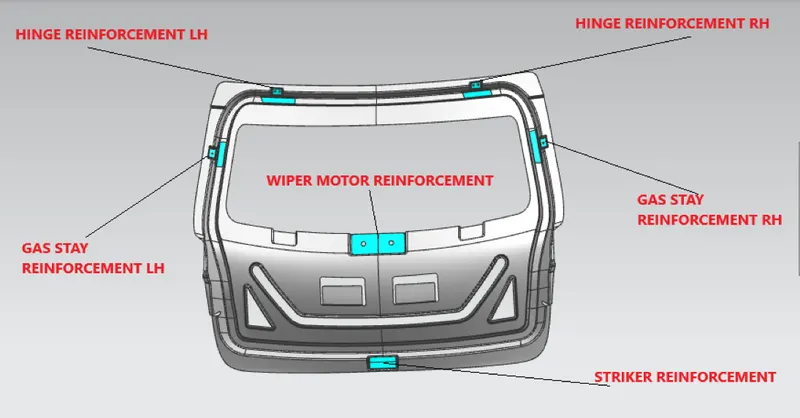
- Hinge reinforcements : Hinge is a pivot mechanism which supports the total weight of the backdoor. So reinforcements are added for structural rigidity.
- Gas stay reinforcements: Gas stay is used to lift the backdoor automatically and is used to support the backdoor in its open position. It can be of Two types Semi-automated and fully automated.
- Wiper Motor reinforcement: Wiper is used to wipeout the dust particles/water on the windshield glass which can affect the rear visibility. It is actuated by the motor which is mounted on the inner panel. Due to vibration and heat dissipation of the motor, inner panel can be deformed which will result in loss of strength & rigidity of the panel thus leading to poor NVH. So reinforcement is provided to avoid these conditions.
- Latch and Striker reinforcement: In the bottom part of the panel emboss is created for placemnet of latch and striker assembly. There is over slamming and abusing while opening and closing of the door, thus arising the need for reinforcement to be placed.
Final Assembly , Section analysis & Draft Analysis
Tree Structure:
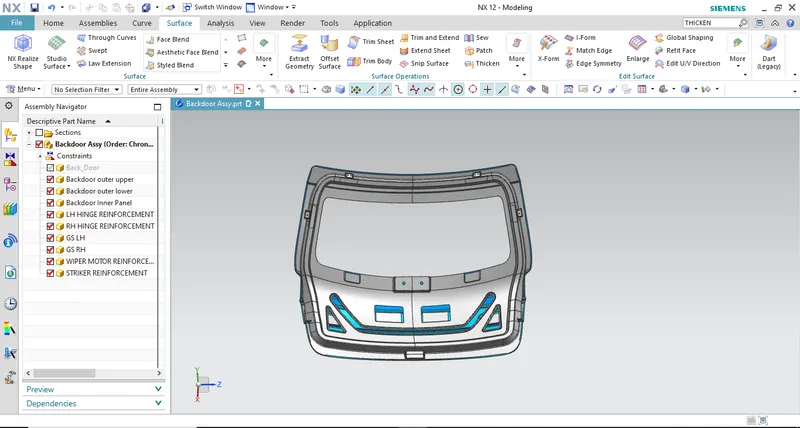
Section Analysis :
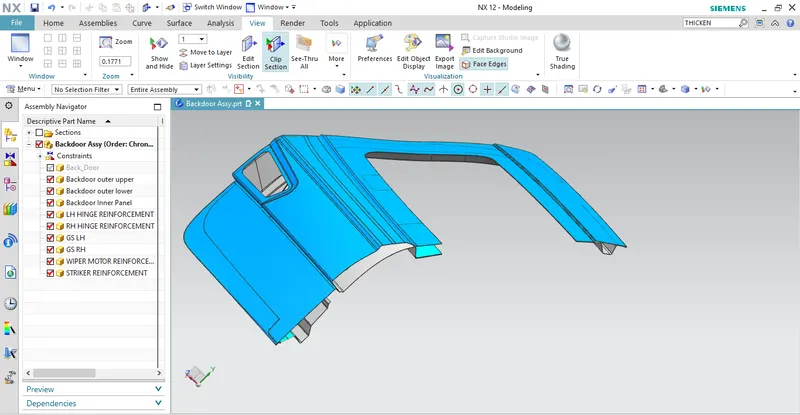
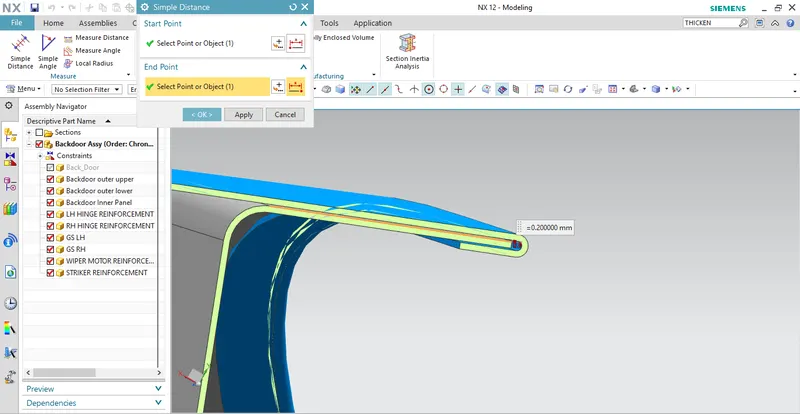
0.2 mm of gap between inner and upper panel from both up and down sides
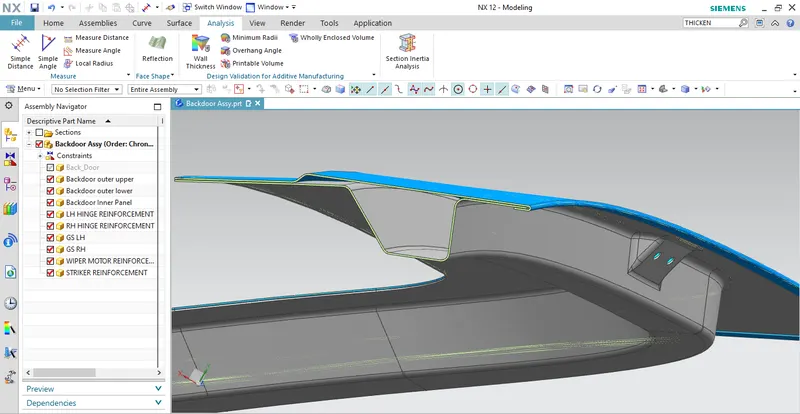
The hemming is having proper clearance and inner panel is inside the outer panel
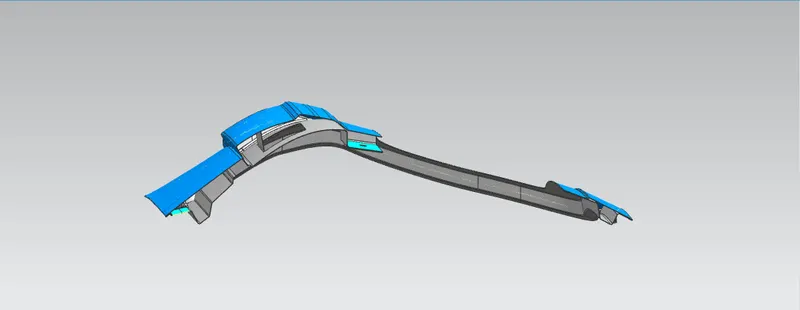
Draft Analysis:
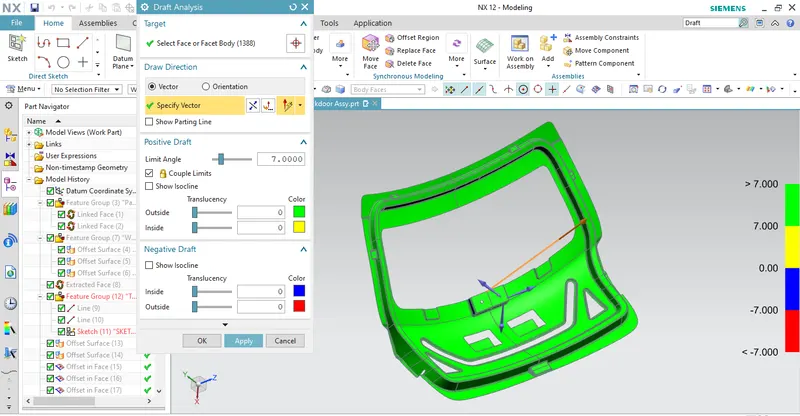
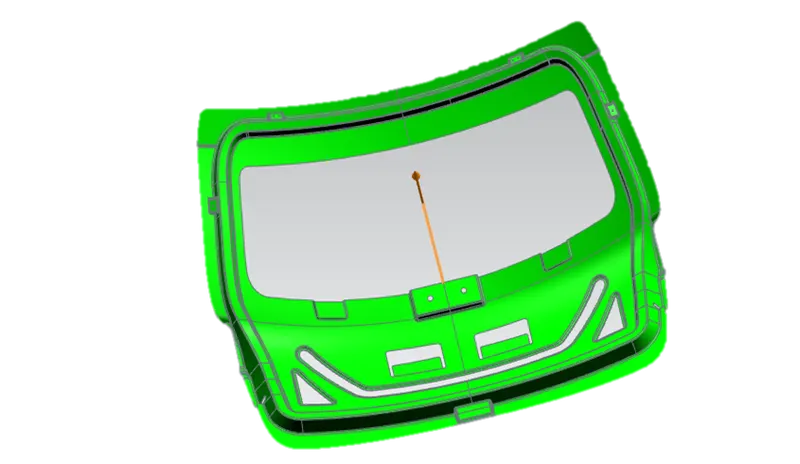
' 7 Degrees of Draft'
Output:
Thank You!