Design of backdoor
Objective:
Use the provided styling surface to come up with a back door design, use appropriate design methodologies and provide the necessary reinforcements and embosses.
Backdoor Introduction:
- An automobile back door or Tailgate is the panel that covers the boot (or trunk) of an automobile.
- It enables access to the main luggage compartment.
- A hinge allows the boot lid to be raised, while devices such as springs or gas cylinders hold it up in the open position.
- The Backdoor is an assembly of many parts such as inner panel, outer panel upper, outer panel lower and Reinforcement. Inner panel is attached to the outer panel using mastic sealant.
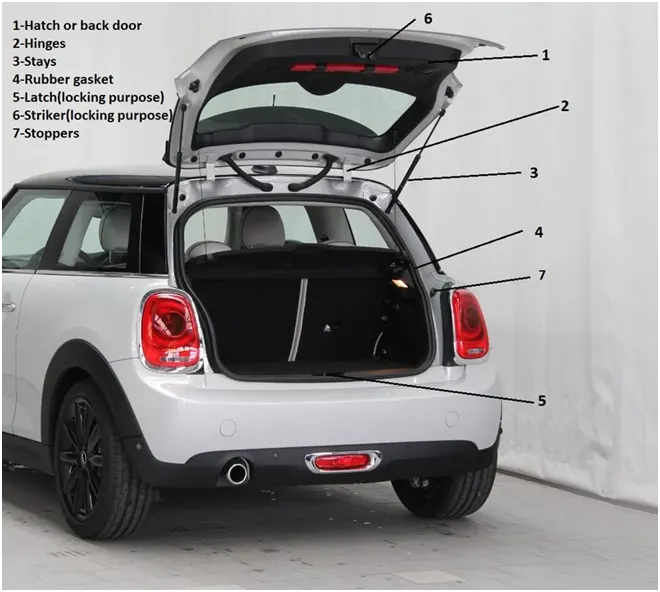
DESIGN CONSIDERATION OF A BACKDOOR:
- Functional Requirement of Hinge and gas stay
- Rear visibility criteria
- Luggage volume
- Crash Analysis
- Bend Test, Dent Test, Torsion Test & Endurance Test
- Rear Crash Regulation
- Gap and flushness Requirements
Material preference
- The inner panel is made out of steel which is manufactured through deep drawn process hence reinforcements are essential to compensate the strength.
- At this time aluminum panel are used for casting outer panel which significantly reduces the weight and thickness can be varied along the panel without the requirement of reinforcement mountings.
- Although with added advantages of Aluminum, steel drawn parts are used this is much cheaper than the former.
- Using Aluminium improve the Strength where we can avoid the reinforcements. Aluminium parts are casted and we can very the thickness of the part, because of this avoid or reduce the number of parts as compared to Steel. Only drawback is the cost of Aluminium, which is high cast as compared to steel.
- Steel Parts are stamped, we cannot vary the thickness of the part because of more number of parts are added. which could increase the weight of the part.
- So now a days most of the car manufacturers are trying to use Aluminum instead of Steel and they reduce the number of parts and weight of the car drastically.
|
Parameters |
Steel |
Aluminum |
|
Parts |
Parts are stamped |
Parts are Casted |
|
Reinforcement |
Necessary |
Can be neglected |
|
Thickness |
Constant |
Can be varied |
|
Components |
More |
Less in number |
|
Weight |
Higher |
Lighter |
|
Cost |
Less in cost as compared to Al |
More as compared to steel |
Tooling Direction
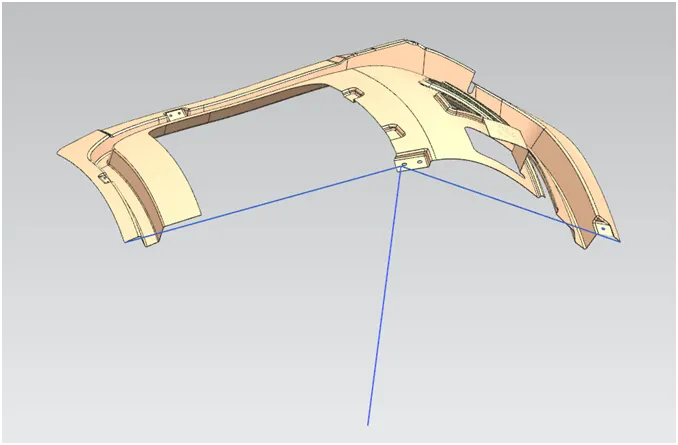
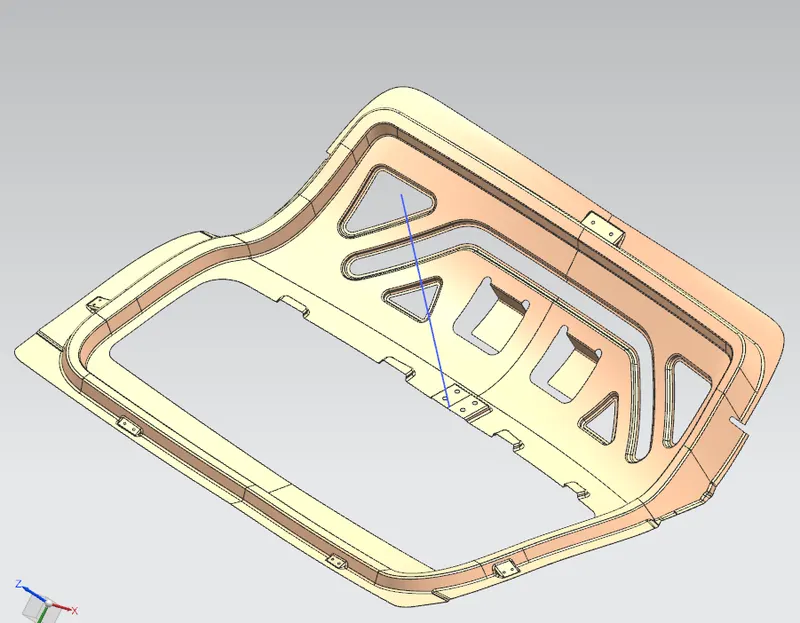
- Based on the styling surface the foremost step is definition of tooling direction for deep drawn steel process and all downstream metal operations are based on tooling axis.
- Then the styling surface needs to be checked and analyzed since it might have irregularities, hence it must be fixed first.
- Then the back door was designed using the top-down approach.
Major Parts and Reinforcements:
The backdoor consists of the following basic components:
- Backdoor Outer Panel (Upper)
- Backdoor Outer Panel (Lower)
- Backdoor Inner Panel
- Hinge Reinforcements (LH & RH)
- Gas-Stay Reinforcements (LH & RH)
- Latch and Striker Reinforcement
- Wiper motor Reinforcement
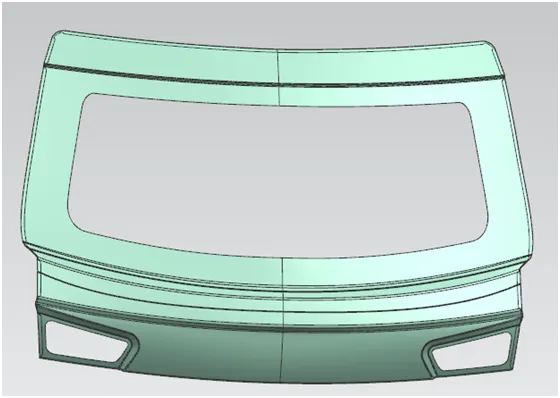
The Outer Panel is the styling surface of the back door. Before using back door styling surface as reference part it should repair and surface must be smoothened.
Other components of the backdoor are designed with reference to the outer panel. It acts as the outer cover and deals with the aesthetics of the car.
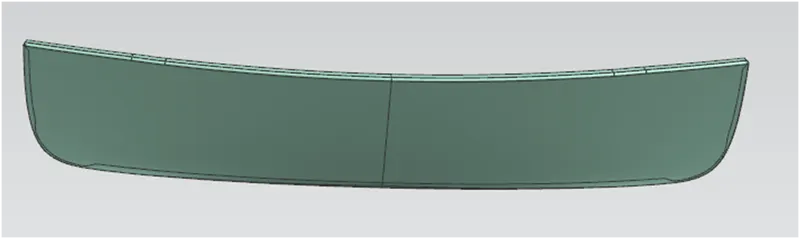
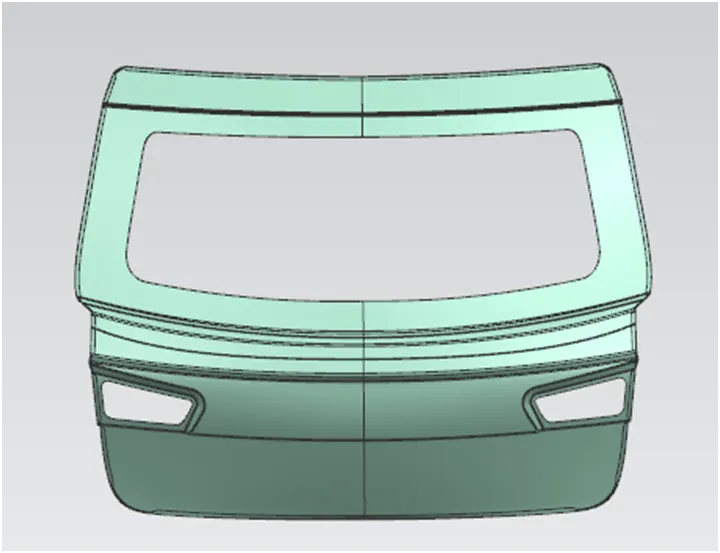
In this design outer panel is divided into two parts
- Outer Upper Panel
- Outer Lower Panel
Outer Upper and lower Panel:
- The Outer Upper and lower Panel Extracted from a styling surface.
- The panel is altered for the required design with the surface tools of NX CAD
- The thickness provided for the outer panel is 0.75 mm
- Corner relief is provided for the Hemming operation.
Outer upper panel Outer lower panel
Outer Upper & Lower Panel
DESIGN OF BACKDOOR INNER PANEL:
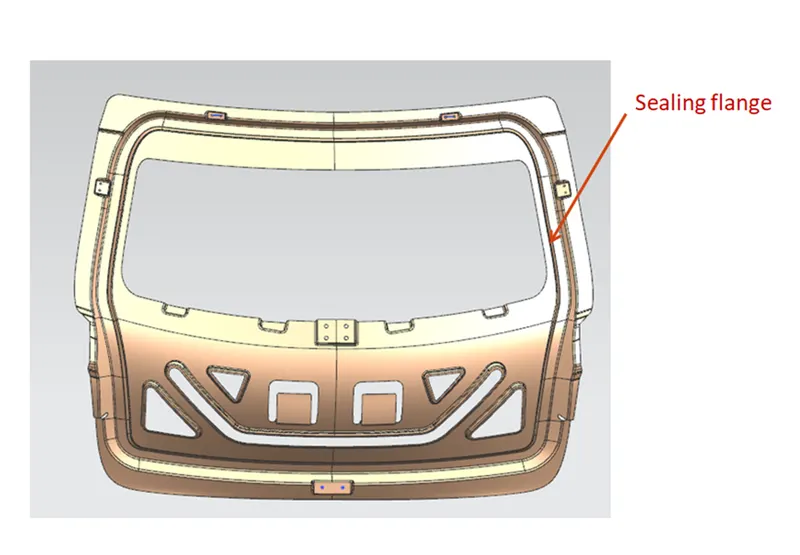
The Inner Panel Extracted from a styling surface.
The panel is altered for the required design with the surface tools of NX CAD
The thickness provided for the outer panel is 0.75 mm
After creating the tooling direction
The design of the inner panel will begin where we will first develop an effective sealing flange by checking all the boundaries and by following the shape of the inner panel design.
By creating multiple flanges and by using surface modeling techniques the concept design of the inner panel was created.
After the concept of the inner panel is developed, then the child components like a hinge, latch, gas-stay locations, and their reinforcements must be designed which completes the overall design of the tailgate.
Emboss definition
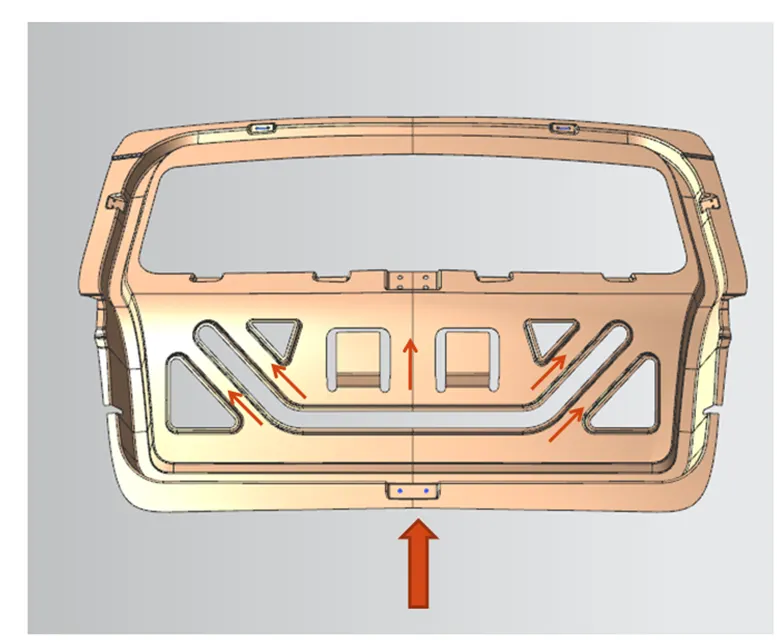
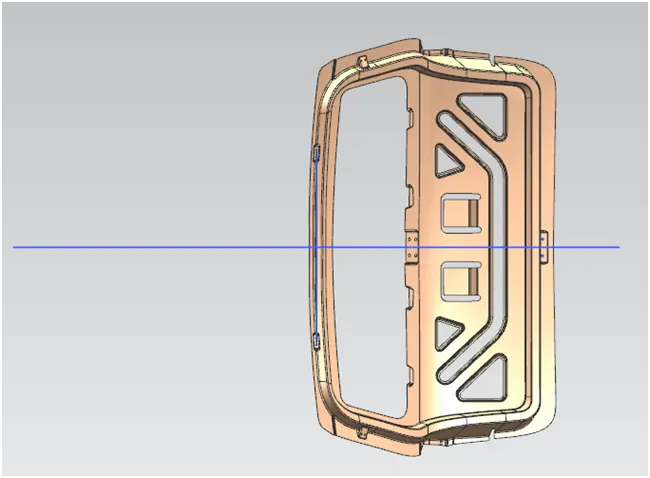
Based on the load simulation the force acts in y and hence emboss are defined on the inner panel to dissipate the force outwards caused due to slamming of door and crash situations.
Emboss are defined and drafted along the tooling direction for feasible manufacturing and imparts strength to the panel without the need for increase in thickness.
Force Distribution:
When the car hit at rear end, the force which acted should be react outside. The Y/V emboss which is helps to move the force to the outer end.
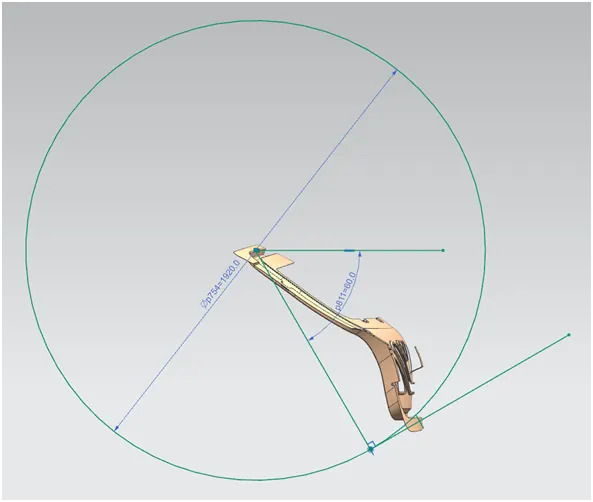
Latch and striker trajectory
To define the opening and closing trajectory, the hinge and latch are positioned based on the hinge axis and trajectory.
The circle drawn should perpendicular to the latch striker to satisfy the condition.
Based on the rotation trajectory the hinge axis, latch striker and predefined Gas stay are correlated for smooth kinematics of door opening and closing.
Hemming and Corner Relief
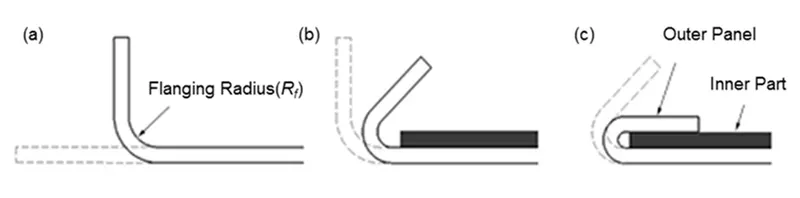
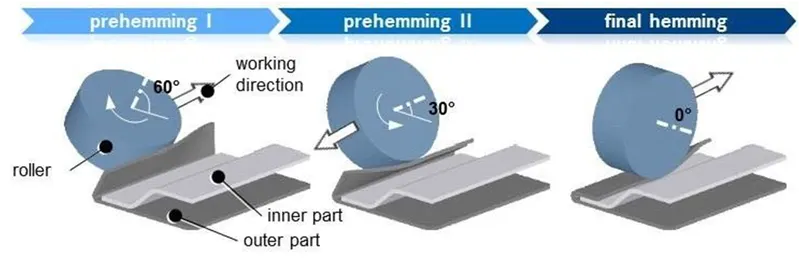
- Hemming is a sheet metal forming process in which sheets are joined by bending it usually to 180°. Automotive body panels and automotive parts..
- This assembly method is widely used in the final stages of production of automobile hoods, doors, or other closures for aesthetic purposes.
- It is a metalworking process that involves rolling the edge of sheet metal over and onto itself, essentially creating an area of two layers. During this process, the edge of sheet metal is folded over. The two newly formed layers then lie flush with each other.
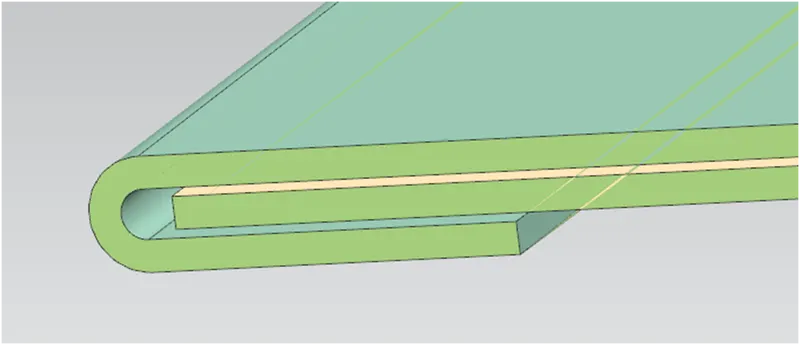
Hemming
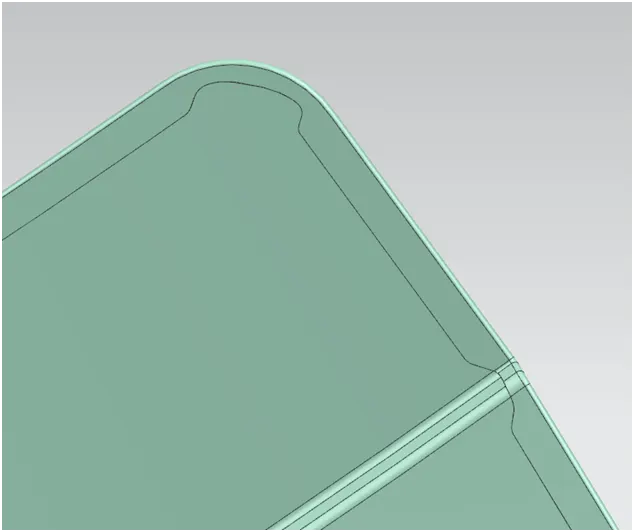
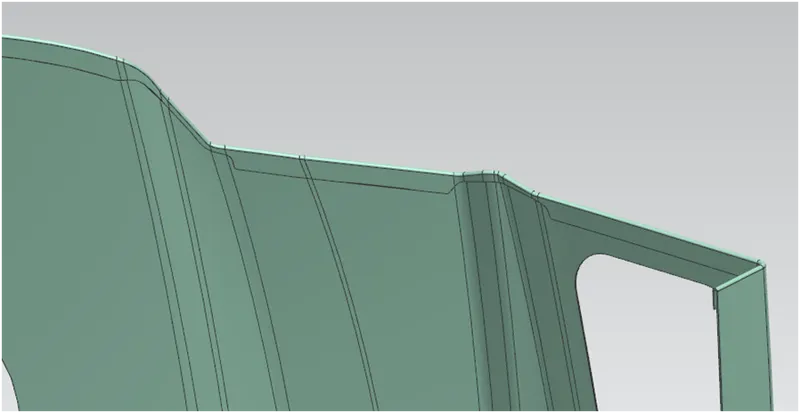
Corner relief
Mastic influence
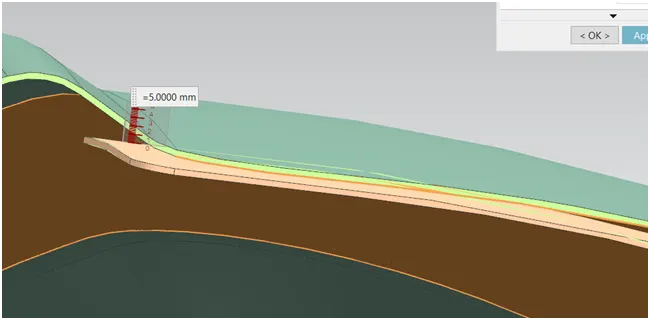
Apart from hemming the outer and inner panel are joined using mastic influence points to avoid the rattle noise and improve the NVH and trim part mounting points are provided which are usually snap fits.
DESIGNING THE REINFORCEMENTS:
The thickness provided for all reinforcements is 1.5 mm.
- Hinge Reinforcements (LH & RH)
- Gas-Stay Reinforcements (LH & RH)
- Latch and Striker Reinforcement
- Wiper motor Reinforcement
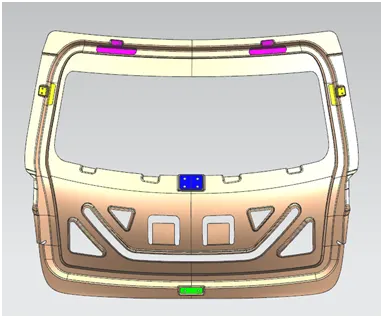
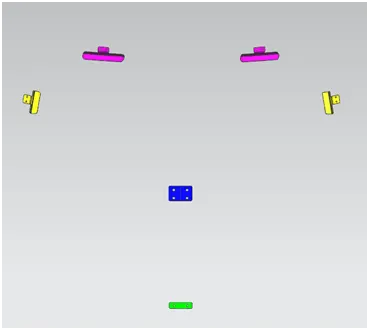
Reinforcement parts
All the reinforcements were created using the same method, first, the linked body was created separately for each with the help of extract geometry and then the required portion was trimmed out and then thickened.
Hinge reinforcement:
Hinges enable the opening and closing of the back door. One end of the hinge is fixed on the backdoor and the other end on the Roof, on both sides. Hinges can be placed outside or inside the backdoor.
The hinge reinforcements are added to compensate for the weak region due to the acting load over it.
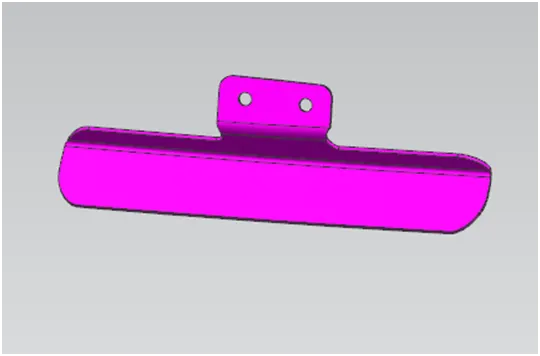
Hinge reinforcement
Gas Stay Reinforcement:
Gas Stay is a device used for supporting the back door in its open position. Gas stay requires no manpower and is engaged into support position automatically as the back door opens. One end of the Gas Stay is fixed on the backdoor and the other end on the Body Side or on the Back door stationary area.
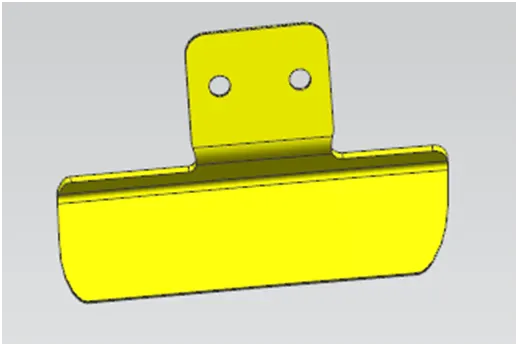
Gas Stay Reinforcement
Wiper Motor Reinforcement:
Wiper motor reinforcement is created to mount the wiper motor assembly
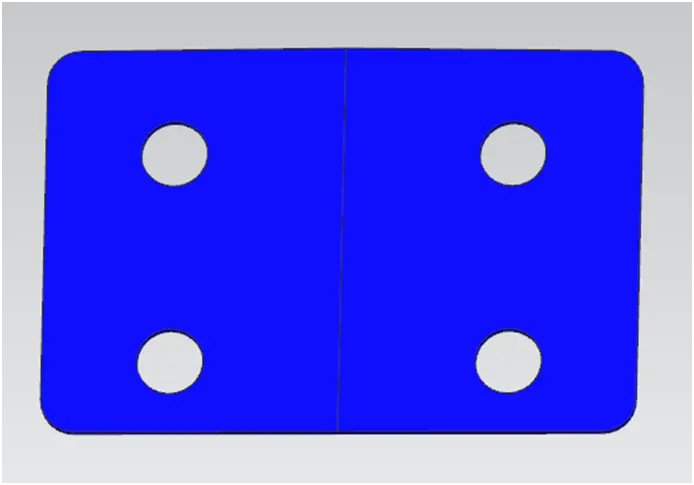
Wiper Motor Reinforcement
Latch and Striker Reinforcement:
The Latch & Striker forms the locking mechanism of the backdoor with the car. Due to regular opening, closing, and over slamming of the backdoor, there is stress developed in the Latch and Striker area. To compensate for the same, reinforcements are added in this area.
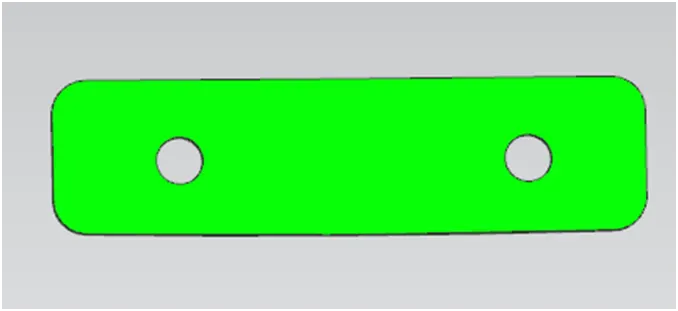
Latch and Striker Reinforcement:
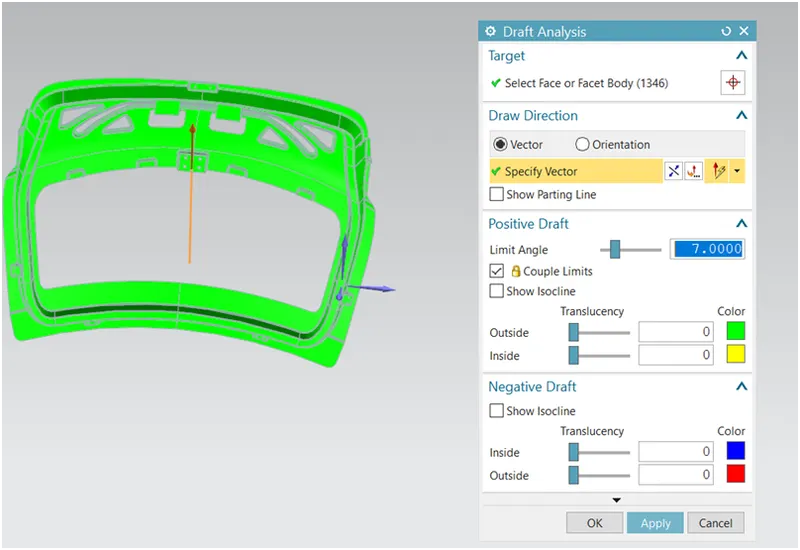
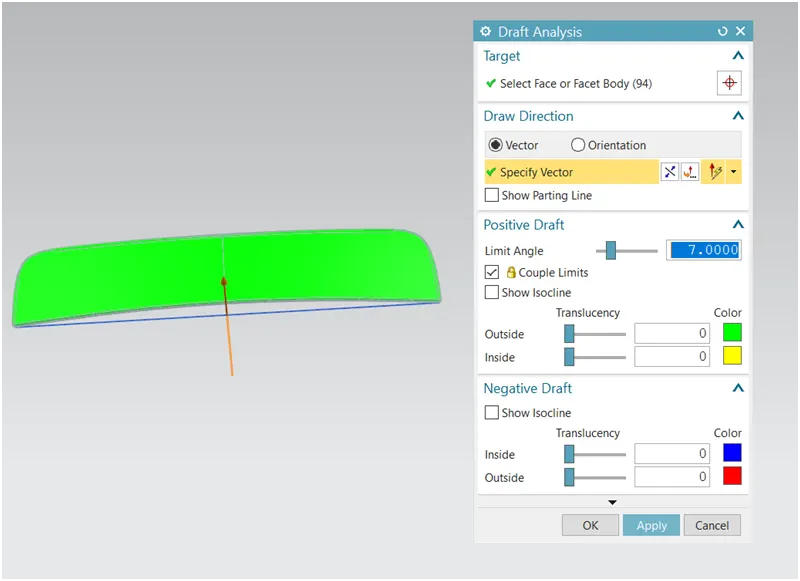
DRAFT ANALYSIS:
- The draft analysis will be performed for the tooling direction created at first and checked that the model is suitable for manufacturing.
- Then to get a complete green portion the necessary changes to the draft angle of the embosses were carried out by optimizing the model.
- The Draft Analysis command enables us to detect that the part drafted will be easily removed or not.
- This type of analysis is performed based on color ranges identifying zones on the analyzed element where the deviation from the draft direction at any point, corresponds to specified values.
CONCLUSION:
Thus the back door was designed from the given styling surface and Draft analysis is also done on the inner panel to check the manufacturing conditions. In this challenge i learned to design the Inner panel, the Outer panel, Wiper Motor reinforcement, Hinge reinforcement, Gas Gtay reinforcements, Latch and Striker reinforcement and its position.