Design of backdoor
BACK DOOR DESIGN
Aim-
To design a Back Door using the given Styling surface and appropriate design methologies and to provide the necessary reinforcements and embosses .
Objective -
- To design a Back Door using provided Styling Surface creating Outer panel, Inner panel and the Reinforcements.
- To develop a detailed report of the Back door design by explaining the design methodologies and about the components developed in the design.
- To perform the Draft Analysis along the tooling direction on the developed part .
What is Back Door ?
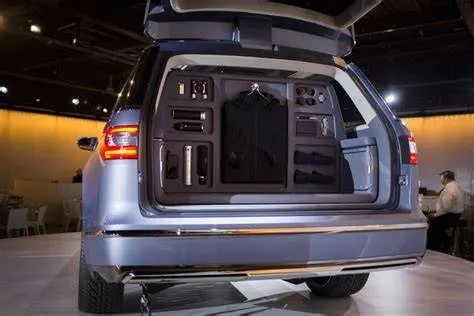
A door which is located at the rear side of a car which gives access for the boot space to store luggage, spare wheel etc.These doors can be operated manually or electrically powered. In most of the luxury cars door is electrically operated.
Back door is also called as 'Hatch','tailgate','trunk-lid' or 'boot-door' is basically the 5th door in a 4-door car. Its the rear most part of the vehicle which gives access to the trunk and has mounts such as wiper motor, tail lamps ,hinges for supporting its weight in opened condition , gas stay which helps in opening and keeping it open , radars and cameras etc.
Types of Back Door based on Working Mechanism -
Gas Stay Type -
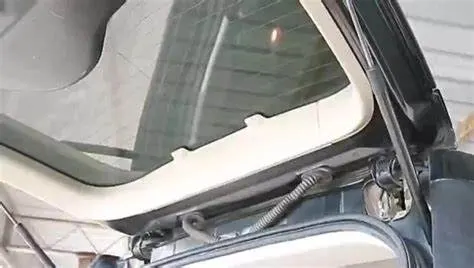
Gas stay types backdoor/liftgate/ta ilgate is an ideal and most commonly used tailgate mechanism from lowersegment car to luxury car segment. The ideal components of tailgate consist of a hinge,door,gas stay and some rubber beadings for sealing of door.
Powered Lift System -
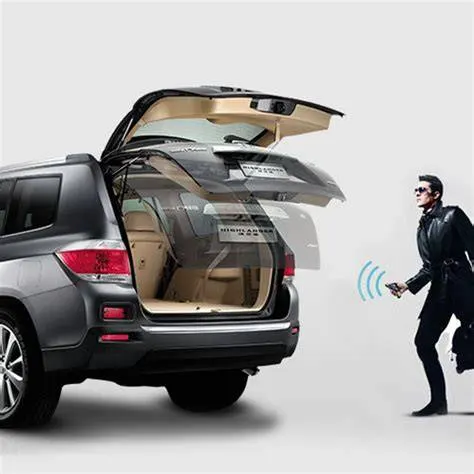
Power trunk lid system is another sophisticated way of trunk / liftgate opening mechanism which is to automatically open and close of the trunk / liftgate and release of the latch by the touch of a button. The following image shows the component as used in the powered trunk / back door lift system.
Powered trunk lift system consists of a power latch , anti-pinch switch , PTG assembly's , PTG main switch.When the switch is pressed in the compartment or outside the power latch releases the latch and the entire backdoor is opened . The anti-pinch switch is located in order to avoid accidental hand insertion during the operation of the door.
Types of doors based on Working position -
1. Top Mounted Door
2. Side mounted Door
3. Bottom Door / Split type door
Top-Mounted :
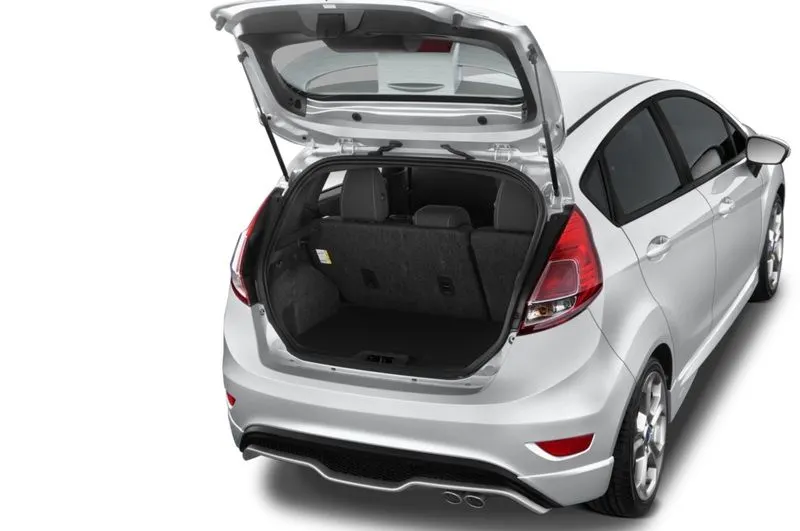
This type of back doors is used in a station wagon, pickup truck and some of the sport utility vehicles. Today’s modern cars use top-mounted tailgating systems which are both powered and also gas stay supported. These top mounted tailgates provide greater rear visibility compared to side-mounted or bar doors which have canter pillars in it.
Side Mounted Doors :
As the name signifies side-mounted doors are the one which is used in the van type MPVs, SUVs, pickup truck vehicles. These side-mounted doors or barn doors are a lot easier compared to top-mounted doors. These doors are generally smaller in size and can be easily accessed. These doors are more convenient for the goods handlers for long pipe and lengthy components where one door is kept open. These doors also save accidental head impacts. It is a lot easier to load and unload items in the side-mounted doors.
Bottom Door / Split type Door :
This bottom type or split type backdoor system are used in the car type such as estate type car, pickup trucks and some luxury SUVs.These are the most convenient type of back door in which the bottom split is used as a support or even as a table for the tour going people.
Diffrent Methods of Manufacting Car Back Door : -
- Deep Drawing
- Blanking
- Trimming
- Hemming
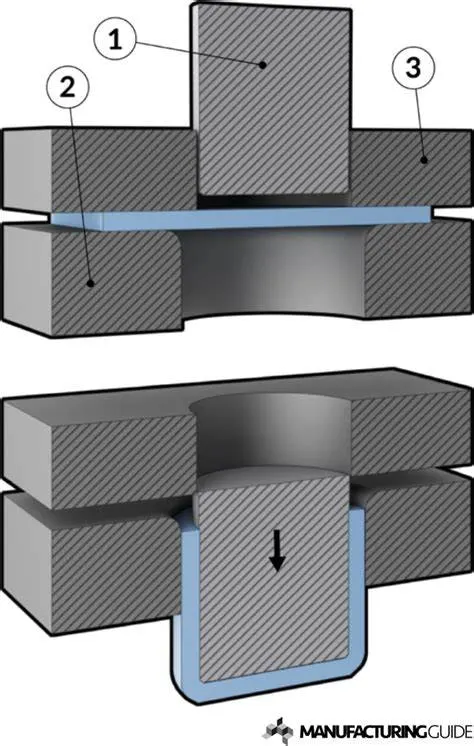
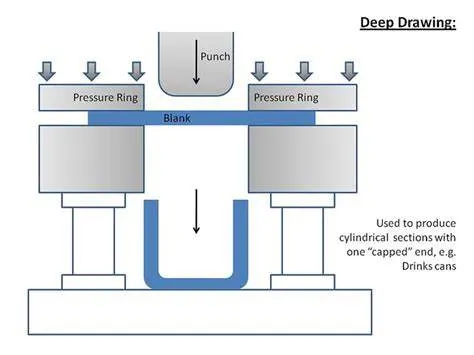
- Deep drawing
Deep drawing is a sheet metal forming process in which a sheet metal blank is radially drawn into a forming die by the mechanical action of a punch. It is thus a shape transformation process with material retention. The process is considered "deep" drawing when the depth of the drawn part exceeds its diameter.
- Blanking:
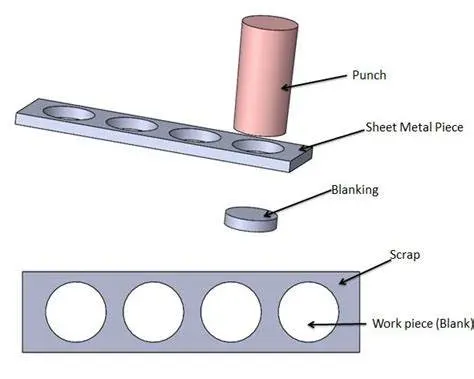
Blanking is a metal fabricating process, during which a metal workpiece is removed from the primary metal strip or sheet when it is punched. The control of the quality by the punch and die clearance. The ability to produce holes of varying shapes – quickly.
- Trimming
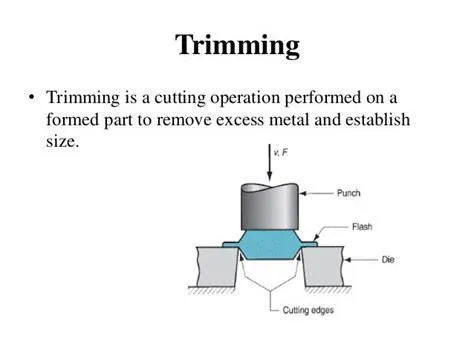
Trimming is a manufacturing process that is used as a finishing operation for forged parts, in order to remove flash. Most often it is desirable to perform this operation while the work is still hot for maximum efficiency, therefore it is usually incorporated into the larger production process.
- Hemming
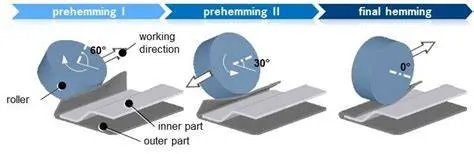
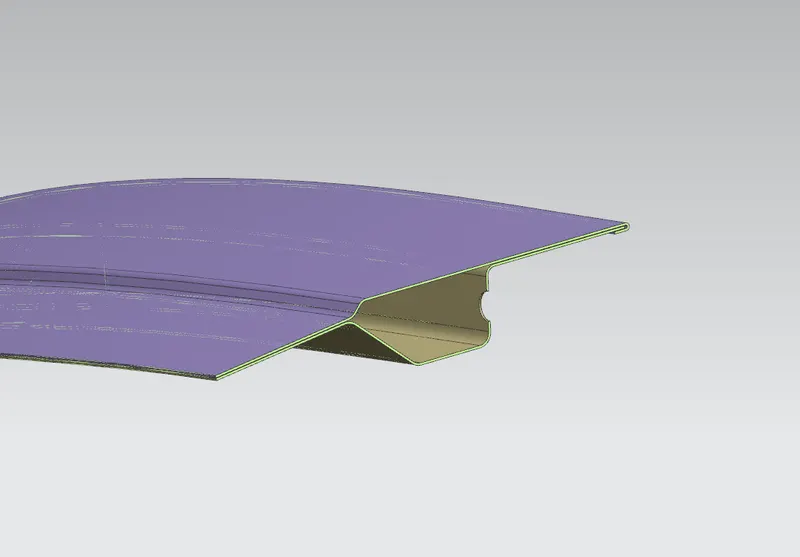
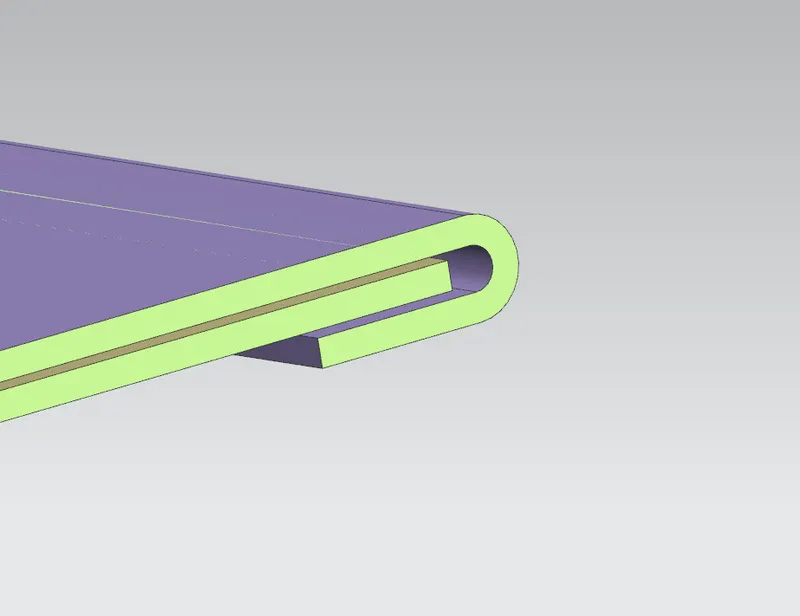
Hemming is a sheet metal forming process in which sheets are joined by bending it usually to 180°. Automotive body panels and automotive parts such as deck-lids, trunk-lids, doors, hoods and tailgates are formed by hemming process.Hemming is a forming operation in which the edges of the sheet are folded or folded over another part in order to achieve a tight fit. Normally hemming operations are used to connect parts together, to improve the appearance of a part and to reinforce part edges.

In this Project I have designed a Top Mounted Back Door using the Given Styling Surface -
Given Surface -
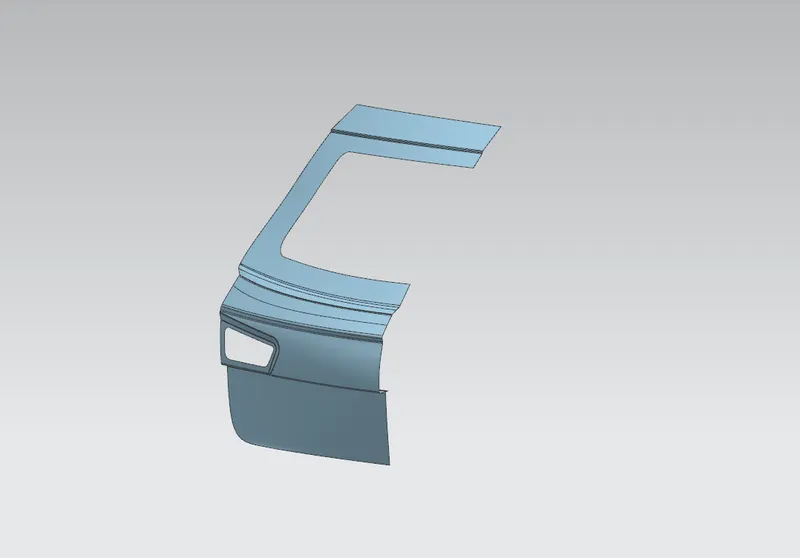
Note - There were lot of improper surfaces in the given Class A surface it is to be corrected before proceeding to create the Outer Panel & Inner panel surfaces.
The thickness of the Components in this design is taken as follows -
- Outer Panel thickness is taken as 0.75 mm
- Inner Panel thickness is taken as 0.75 mm
- Reinforcements thickness is taken as 1 mm
Design Considerations:
- Rear Visibility for safety and functionality.
- Support Structures like Hinge ,Gasstay/ Power lifter , Striker Mount and Wiper Motor .
- Rear Crash regulations
- Boot Space.
- Strength criteria ( Creaing Embosses & Reinforments for Hinges ,gas stay reinforcement & Striker mountings ).
- Draft Analysis.
The Main Parts or Components of the Back Door -
- Outer Panel Upper & Lower.
- Inner Panel.
- Reinforcements.
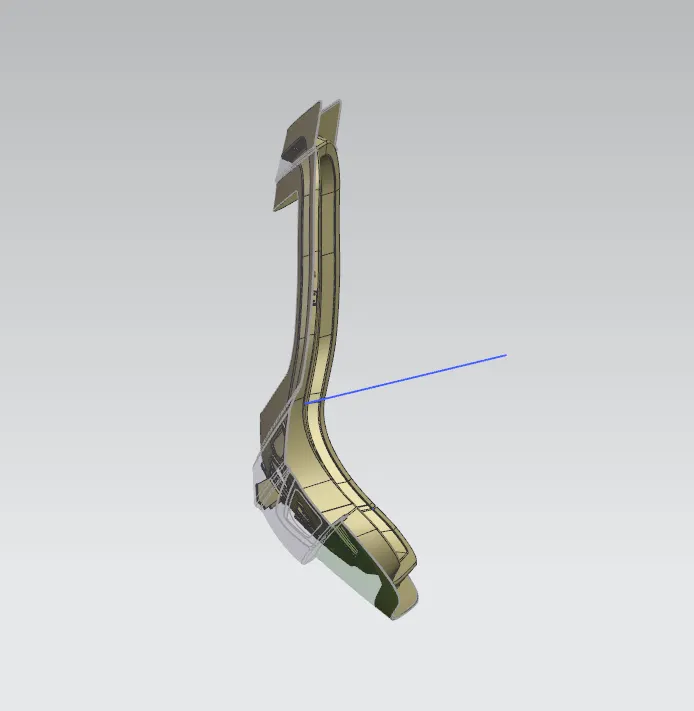
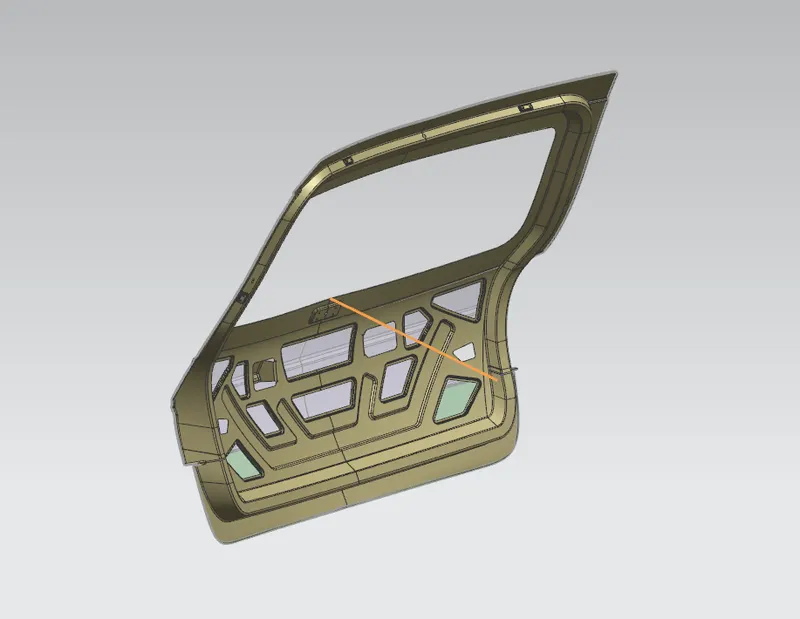
Toolinng Direction -
Tooling Axis is nothing but it is the directionin which the mold opens and closses while manufacturing in this project the tooling axis is createdas given in the picture below -
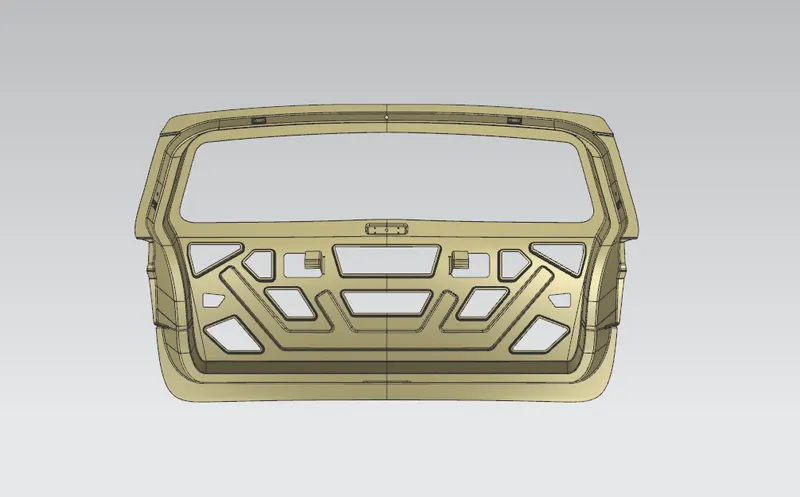
INNER PANEL:
The inner door panel is a component which is used for strengthening the door assembly and it is one of the most important components on which all accessories are mounted like hinges, glass guide channel, moulded trim, latch etc. The possible method is the integration method. In the integration method, the part is stamped out of a single blank. This reduces the number of tools needed; the assembly cost and eliminates any fit ability problem.The inner panel was designed by offsetting the given class A surface as per the given master section. The inner panel consists of Emboses and Mastics.
OUTER PANEL -
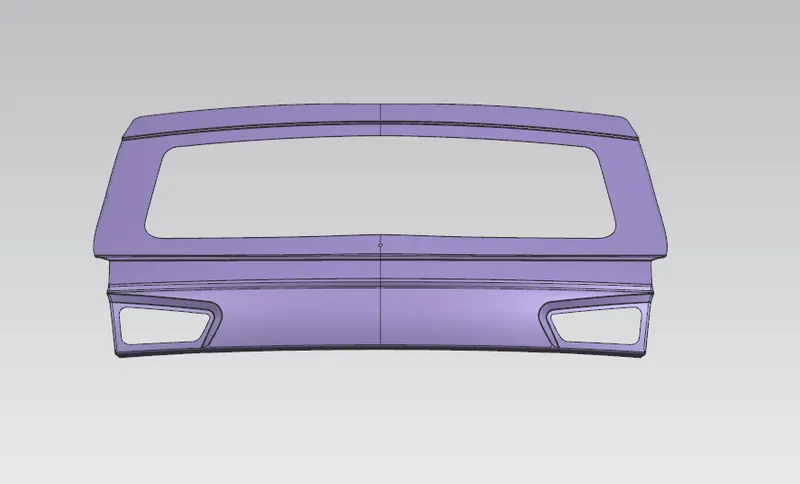
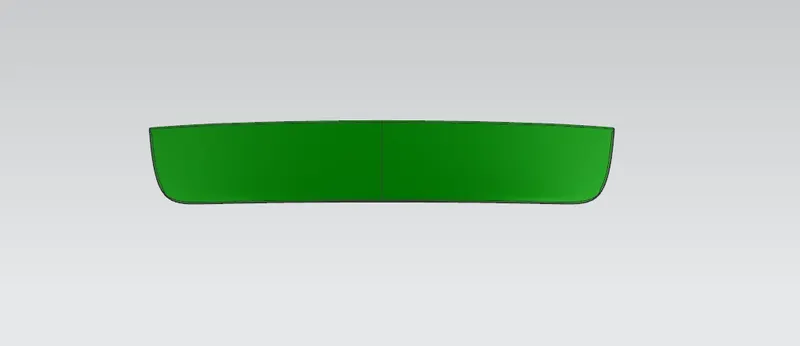
The outer panel of the back door is similar to other BIW components where it is the aesthetic part of a vehicle. The coating provided is of multi-stage which has the property of scratch resistance, rust prevention and smooth and attractive finishes. The outer panel also has the provisions for the tail lamp, rear fog lamp and also has the provision for licence plate mountings. Most of the hatchback cars have the provision for wiper motor.
Outer Panel Upper -
Outer Panel Lower -
REINFORCEMENTS -
Reinforcements basically strenghts or increases the mechanical properties of the material. The hinge reinforcements are provided so as to increases the strength during bolting.
The different types of reinforcements used here are
- Hinge reinforcement.
- Gas stay reinforcement.
- Wiper motor reinforcement.
- Latch/striker reinforcement.
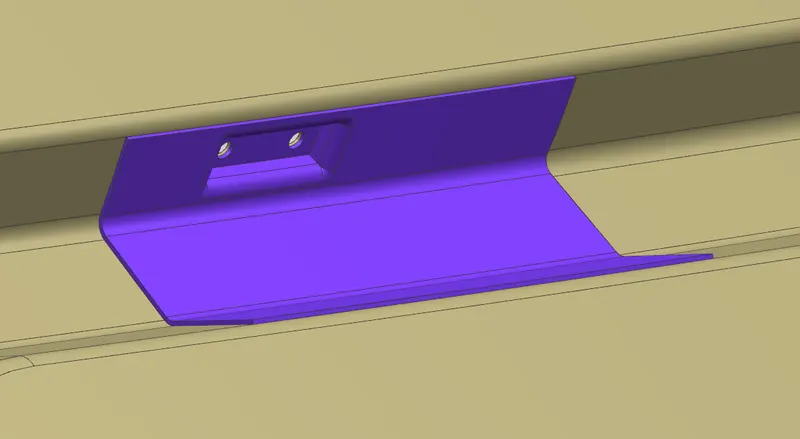
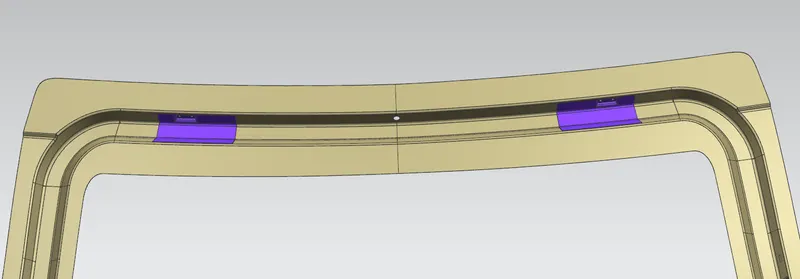
HINGE REINFORCEMENT:
Hinges support the weight of the whole backdoor.Hence, the reinforcements must be provided there too.The emboss is designed in such a way that the hinges should operate freely.The hinge is connected to the rear roof of the car.
GAS STAY REINFORCEMENT:
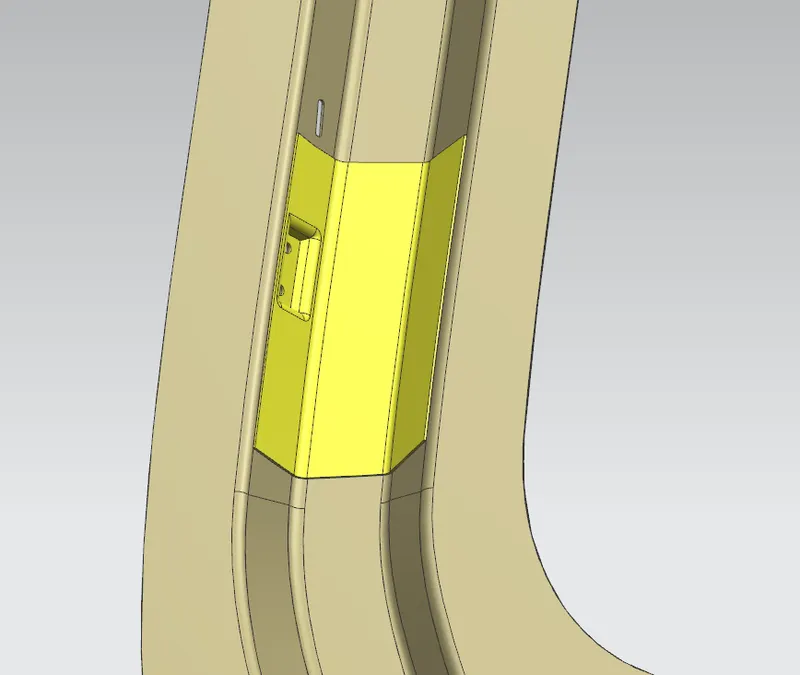
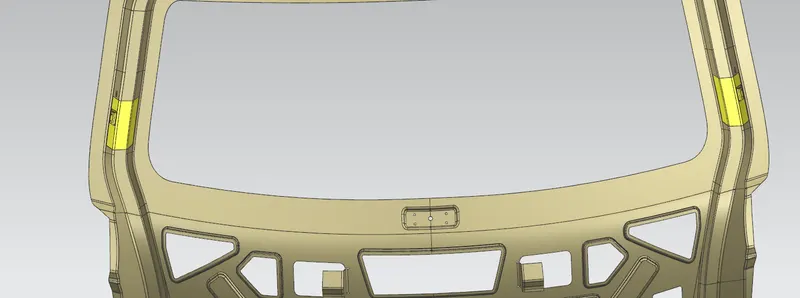
Gas stay is used to lift the backdoor automatically.There are two types of gas stay one is semi-automated and another one is fully automated.In semi automated type the back boor needs little force to lift after that it lift the backdoor automatically.In fully automated , it has power spindle which lift the backdoor automatically.
WIPER MOTOR REINFORCEMENT:
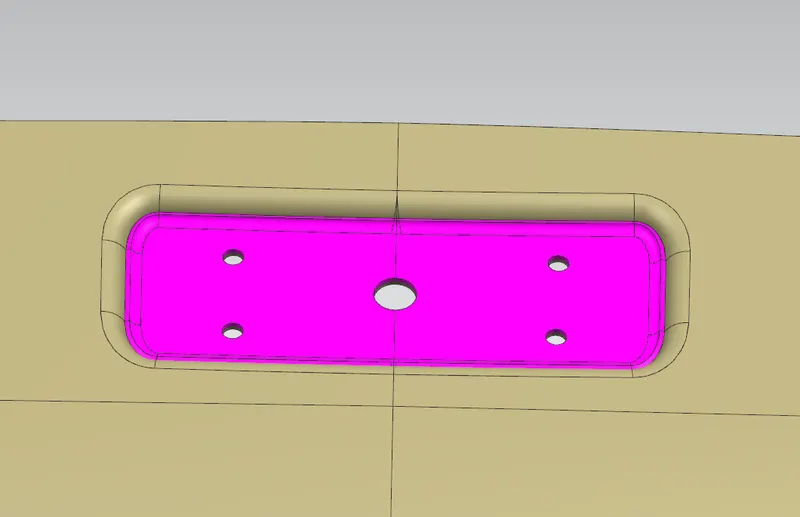
Wiper is used to to wipeout the rain water falls on the backdoor window.It is actuated by the motor which is mounted on the inner panel.Due to the vibration and heat created by the motor .the inner panel where the motor is mounted gets deform and the parts attached to the motor starts to vibrate which leads to poor NVH.So we have to provide the reinforcement where the wiper motor is placed.
LATCH REINFORCEMENT:
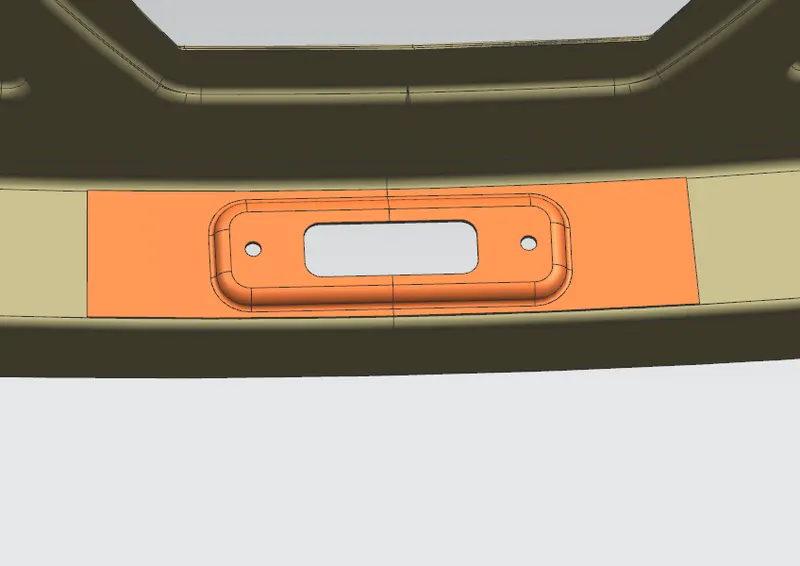
At bottom of the panel , reinforcement and emboss are given to accomodate the latch and striker assembly.Generally key operated or automatic remotly controllable mechanism is used to keep the door open or closed.The actuators , recivers and other electronic devices are mounted on the inner panel only.
DRAFT ANALYSIS:
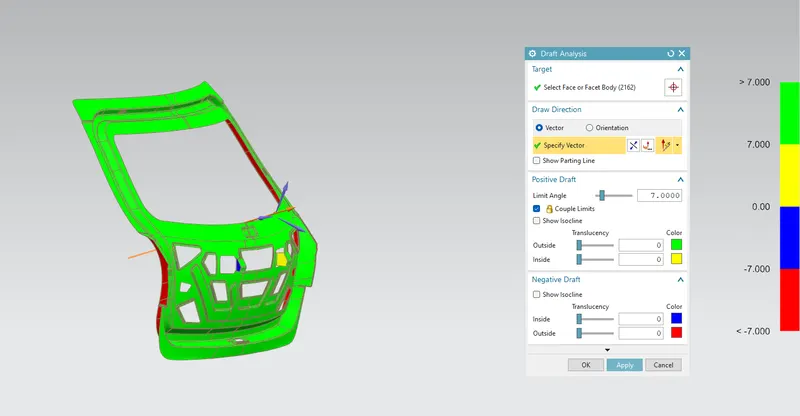
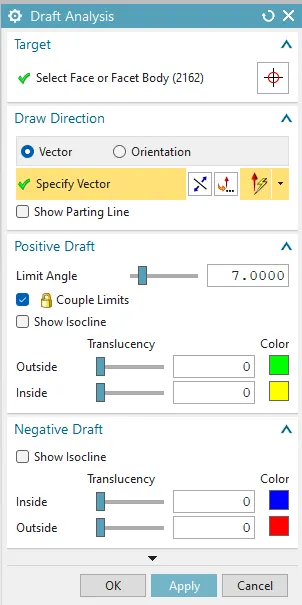
The Draft Analysis command enables you to detect if the part you drafted will be easily removed. This type of analysis is performed based on color ranges identifying zones on the analyzed element where the deviation from the draft direction at any point, corresponds to specified values.
Minimum draft angle of 7 degree is considered for analysis. Green colour show positive draft angle of the part more than 7 degrees.
MASTIC SEALANT:
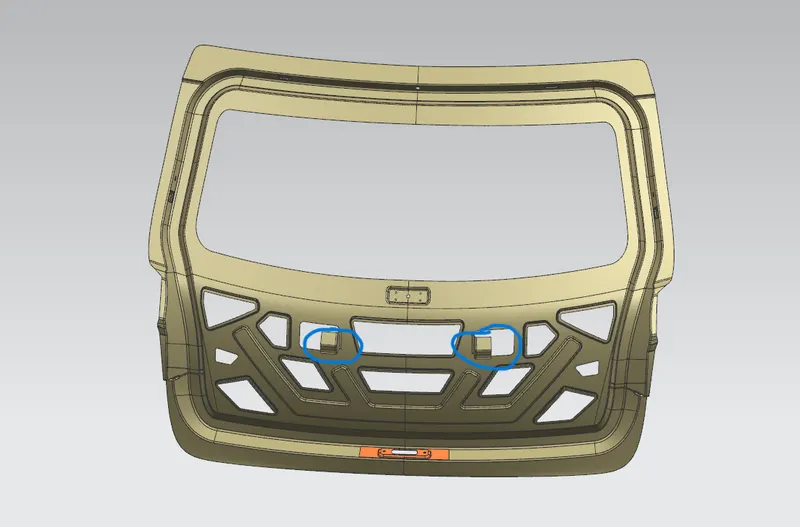
The mastic sealant is used to fix the inner panel with the outer panel which increases the NVH factor and stiffness of the back door.
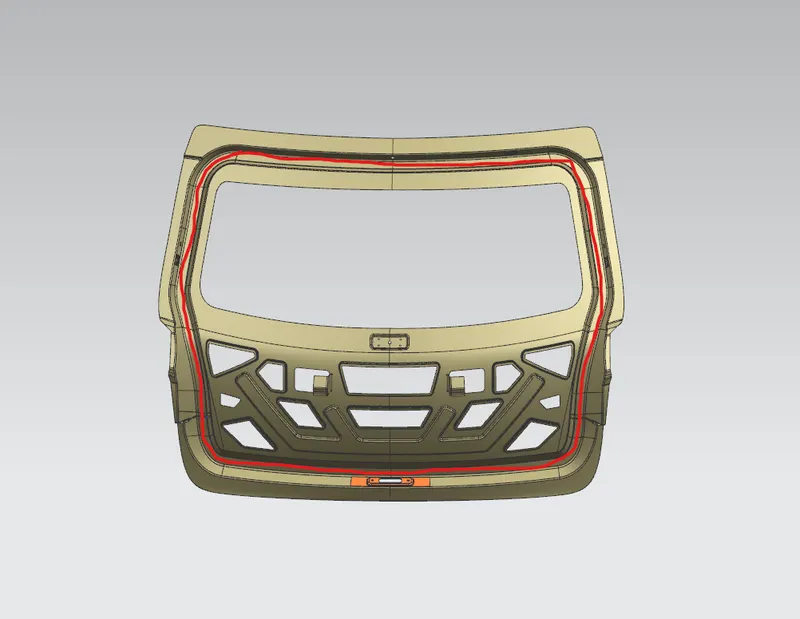
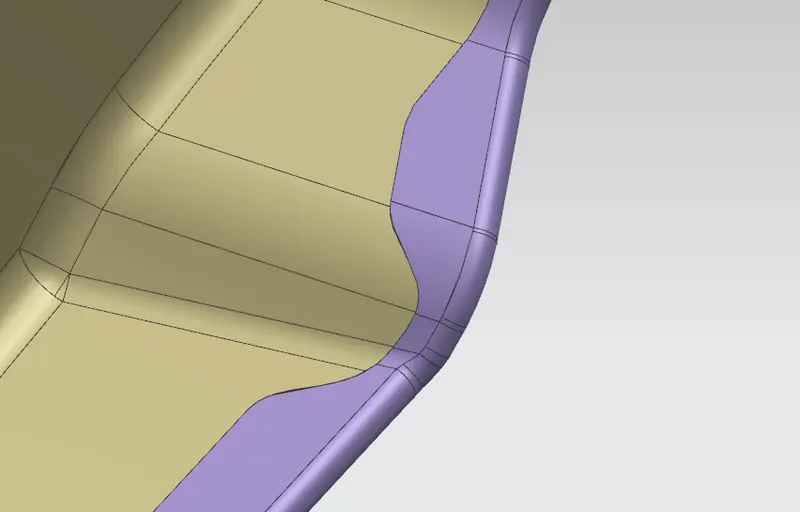
SEALING FLANGE:
by checking all the boundaries and by following the shape of the inner panel design. By creating multiple flanges and by using surface modeling techniques the concept design of the inner panel was created.
-
After the concept of the inner panel is developed, then the child components like a hinge, latch, gas-stay locations, and their reinforcements must be designed. Which completes the overall design of the tailgate.
-
The embosses were created in ‘V-Shape or Y-Shape’ so that if the vehicle undergoes the crash then the force dissipates over it which reduces the damage transferred to the trunk space.
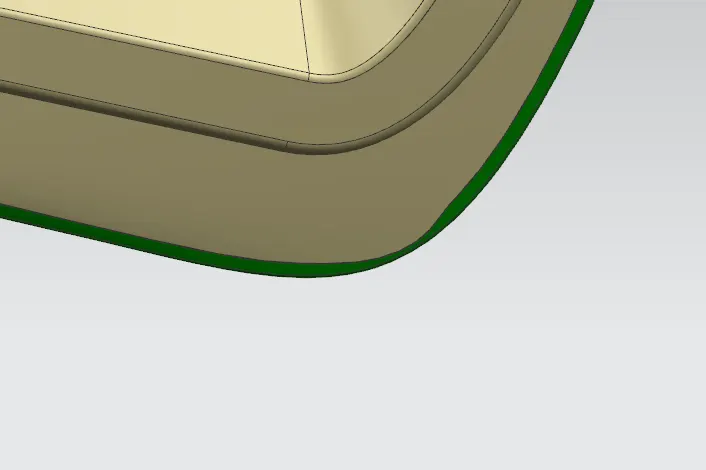
HEMMING:
Hemming and seaming are two similar metalworking processes in which a sheet metal edge is rolled over onto itself. Hemming is the process in which the edge is rolled flush to itself.
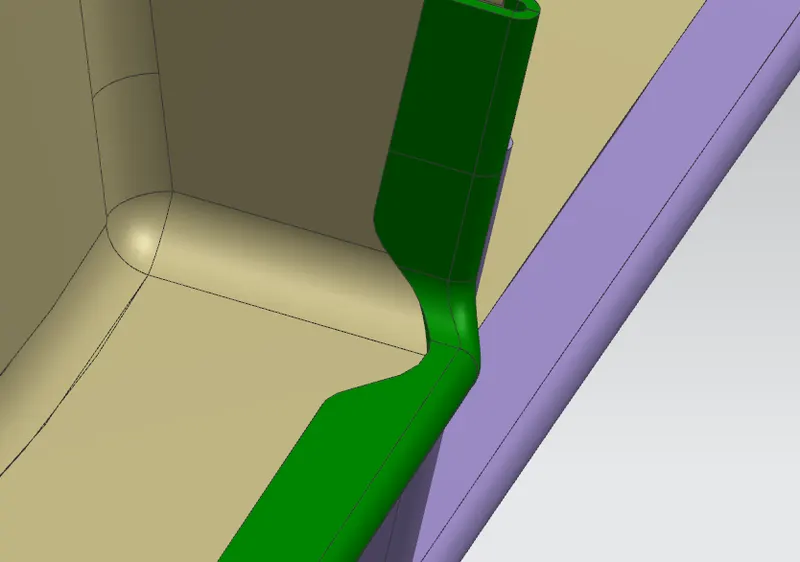
CORNER RELIEF:
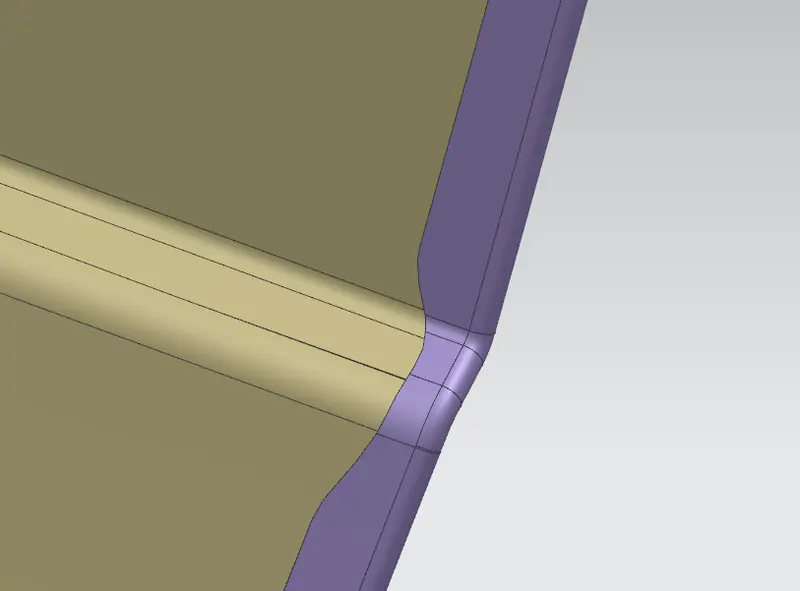
During the hemming process, when giving the Corner Relief helps to control sheet metal material behavior and to prevent unwanted deformation during unbend operations and also helps to reduce the number of passes in hemming.
Conclusion:
- The Car Back Door is designed using provided Styling Surface creating Outer panel, Inner panel and the Reinforcements.
- The detailed report of the Back door design is prepered by explaining the design methodologies and about the components developed in the design.
- And the Draft Analysis is performed for Outer panel, Inner panel and the Reinforcements in the tooling direction on the developed part for 7 degrees.
Hence ,
By doing this above operations I have successfully designed a Back Door which has all the parameters.