Design of backdoor
BACK DOOR DESIGN USING NX SOFTWARE:
OBJECTIVE:
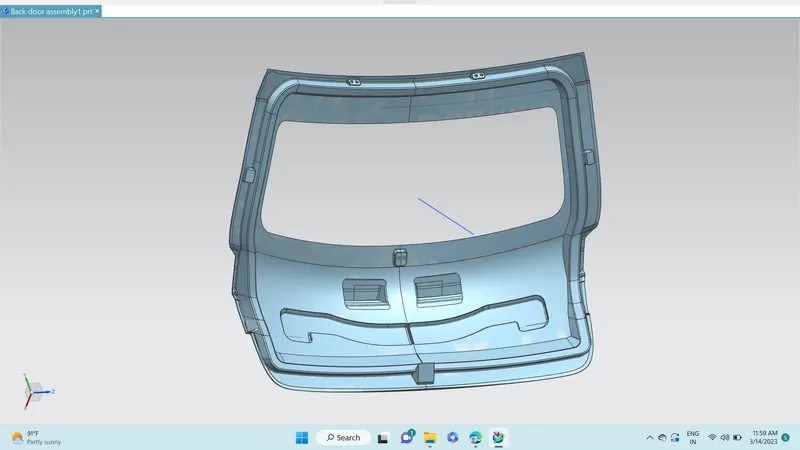
The main objective of this project is to learn the Basics of the BIW (Body in white) by designing the Back Door “also referred to as Tail Gate” of a car by considering all the Protocols and Standards of BIW Design.
What is BIW?
Body in white (BIW) is the stage in automobile manufacturing in which a car body's frame has been joined together, that is before painting and before the motor, chassis sub-assemblies, or trim (glass, door locks/handles, seats, upholstery, electronics, etc.) have been integrated into the structure. Assembly involves different techniques such as welding (spot, MIG/MAG), riveting, clinching, bonding, and laser brazing. Body in white refers to the stage in automotive manufacturing when a car’s sheet metal components are welded together which include:
- Hood
- Trunk lid
- Roof
- Front and rear fender
- Sidewall
- Side Doors
- Tail Gate (Back Door)
BACK DOOR
- The back door is a hinged door/tailgate at the rear of the vehicle.
- It may be used for loading and unloading cargo, or to get passengers in and out, in case there are seats present at the rear.
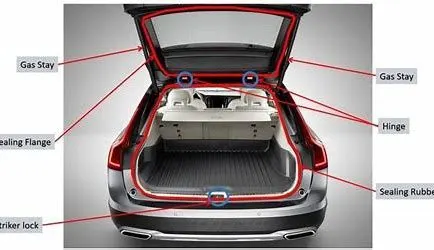
- The back door comprises certain components which form the back door assembly together.
Major Factors to Consider
- Material selection
- Stiffness and strength and weight of the part
- Rear visibility criteria
- Hinge position
- Latch position
- Distance from the outer panel to mastic points Should be maintained between 4-6 mm
- Drawability ( Minimum 7 degrees open)
- Hemming parameters
- Holes (to drain the primer from the cavities
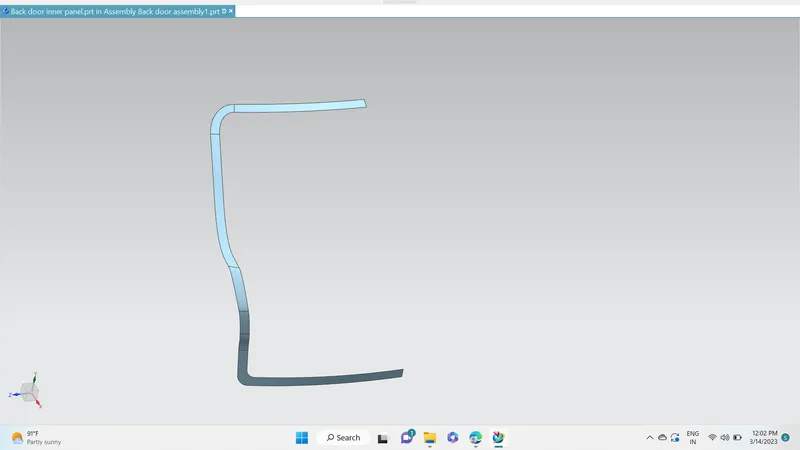
SEALING FLANGE
A door seal for an automotive vehicle that requires low insertion effort and high extraction effort, makes correct insertion onto a welded flange easier and provides a complete seal even in tight corners without adversely affecting door closing effort.
REAR VISIBILITY CRITERIA
This criterion deals with the visibility of passengers backward through the rear windshield glass. it mainly depends on the Wind glass area. Here in this case as we already have a styling surface wind included in the windshield area we need not worry about the Rear visibility criteria.
LATCH POSITION
- Placing a Latch/striker is one of the major factors to take care of. As a Latch/striker is a separate body and itself a reinforcement, there is no need to add extra reinforcements.
- But like in hinges it's compulsory to have a flat surface to mount it.
- The striker in the Body and the Latch in the back door must be normal to a trajectory path to have smooth locking and unlocking.
BACK DOOR PANEL
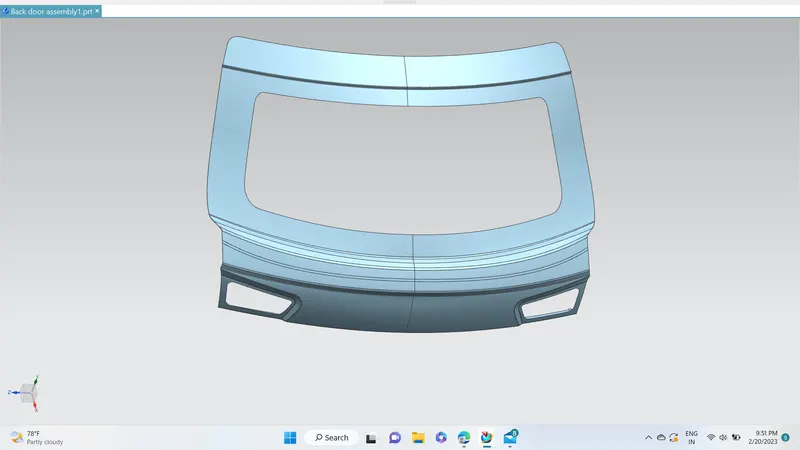
As we have the styling surface as the reference we do need not work more on the outer panel only need to create the hem flanges after the creation of the inner panel.
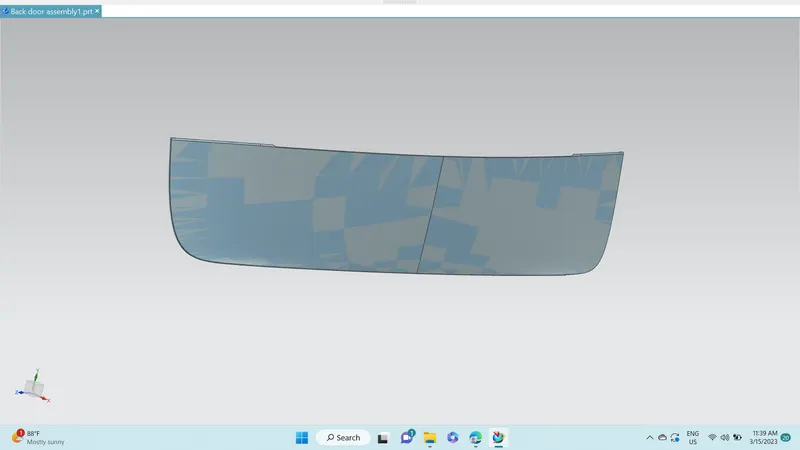
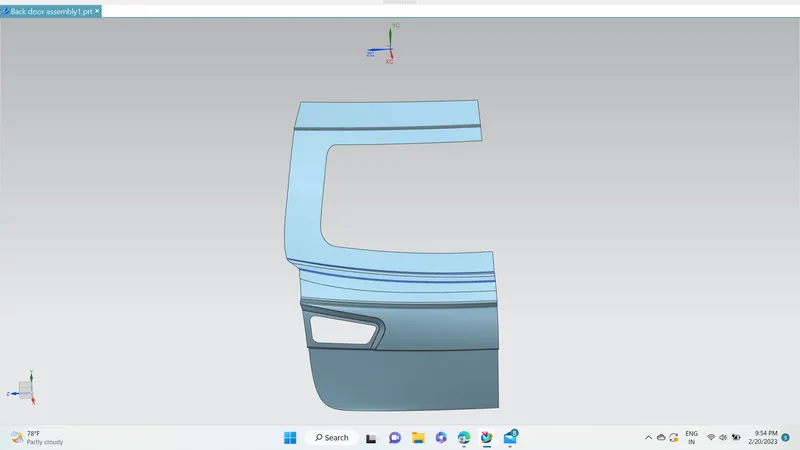
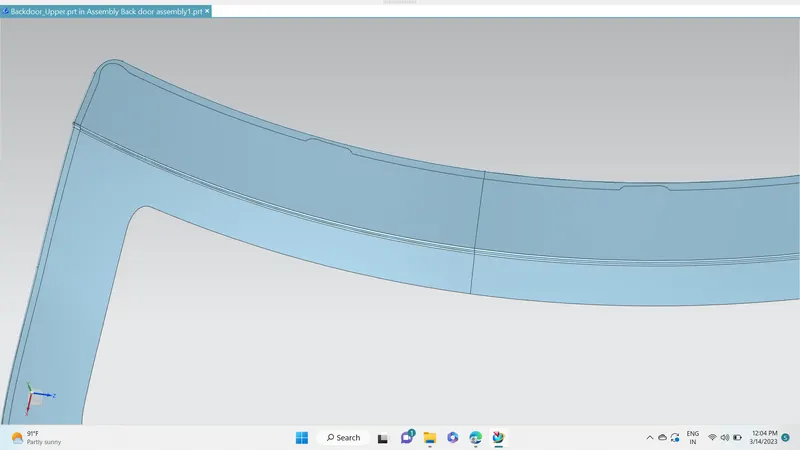
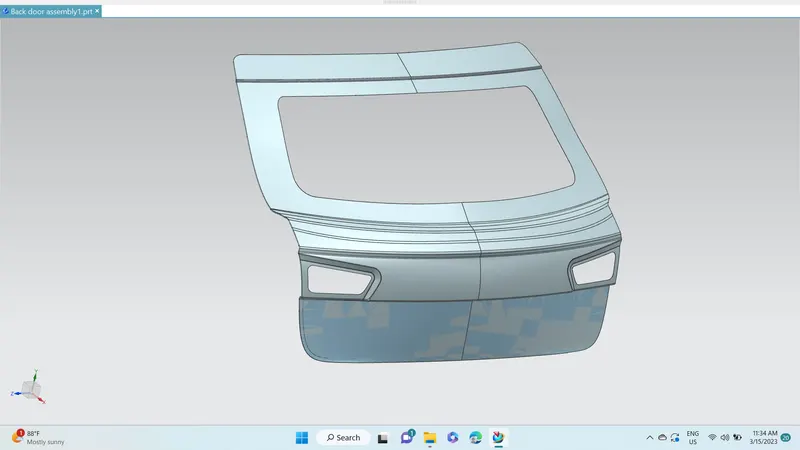
Here the outer panel of the tailgate consists of two parts which are the Outer panel upper and the Outer panel lower. These two components are joined using the Laser Brazing method
UPPER PANEL:
LOWER PANEL: