Design of backdoor
Back Door Design:
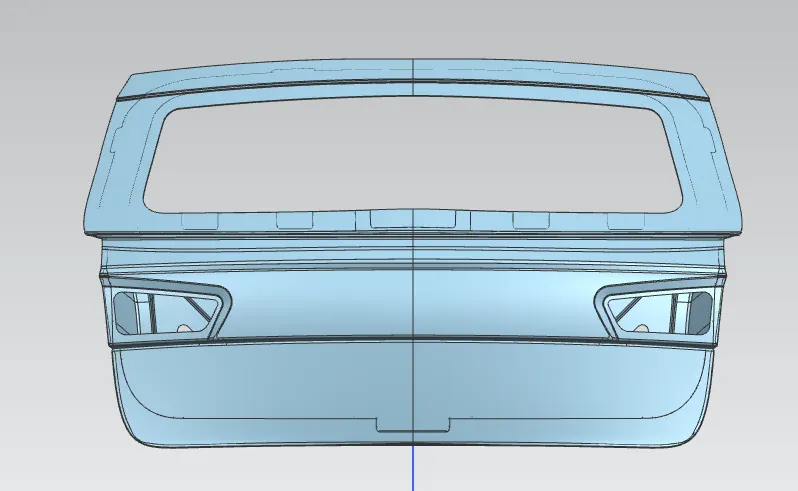
It is a hinged panel or door at the back of the vehicle that may be pushed up and down during loading and unloading. Back Door is also known as 'Hatch' or 'Tailgate' or 'Trunk-lid' or 'Boot-door'. It is the rearmost section of the vehicle and has mounts for tail lamps, hinges, wiper motors, gas stays etc.
Functions:
- It keeps the passengers and cargo safe.
- It houses the tail lamp assembly, the wiper motor, and other components.
- It acts as a point of entrance and departure for luggage/passengers.
- It stores windscreen glass, which aids with rear visibility.
- It has parking sensors and a rear view camera installed.
Door types according to their use:
- Top Mounted Door
- Side Mounted Door
- Bottom Mounted Door
Two sorts of commodities operate the rear door:
- Electrically operated
- Gas stay powered
Material Selection:
The material used determines the total weight of the rear door. Steel and aluminum are the most commonly utilized materials. Steel has a larger density than aluminum, which adds weight to the door. The material used in the manufacture of the backdoor is determined by the car's budget; most low-cost automobiles utilize steel since it is less expensive than aluminum. Another point to consider is that when casted aluminum components are used instead of deep drawn steel parts, there is no need for reinforcing, and the overall weight of the automobile is decreased by around 5-10kg, boosting the vehicle's performance. Also, the draft angle for casted parts is around 3 degrees, whereas deep drew sections have a draught angle of 7-10 degrees, which helps with luggage/cabin room.
The below table gives a comparative information about Steel and Aluminum:
|
Materials |
Aluminum |
Steel |
|
Parts |
Parts are casted |
Parts are stamped |
|
Reinforcements |
Reinforcements can be ignored |
Reinforcements are necessary |
|
Thickness |
Thickness can be varied |
Thickness should be uniform |
|
Weight |
Lighter in weight |
Heavier in weight |
|
Cost |
Costly when compared to Steel |
Cheaper when compared to Aluminum |
|
No. Of components |
Less No. of components |
More No. of components |
Back Door Assembly components to be designed:
- Inner panel
- outer panel
- hinge and its reinforcement
- wiper motor reinforcement
- latch & striker and its reinforcement
- gas stay reinforcement
Inner panel:
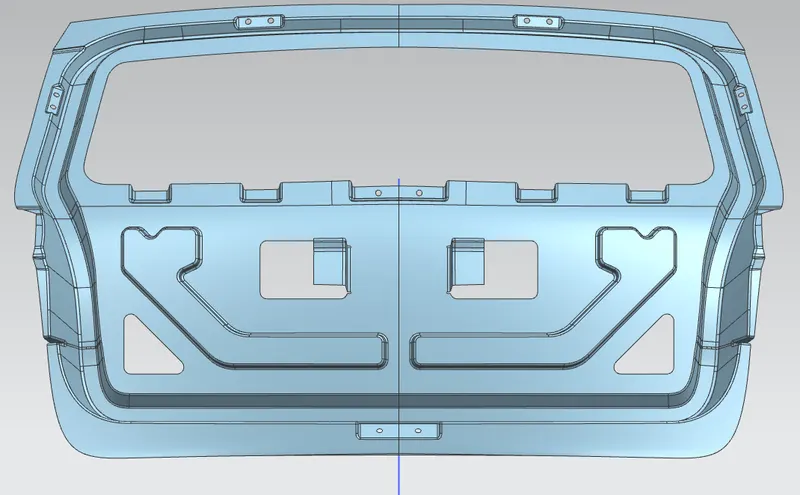
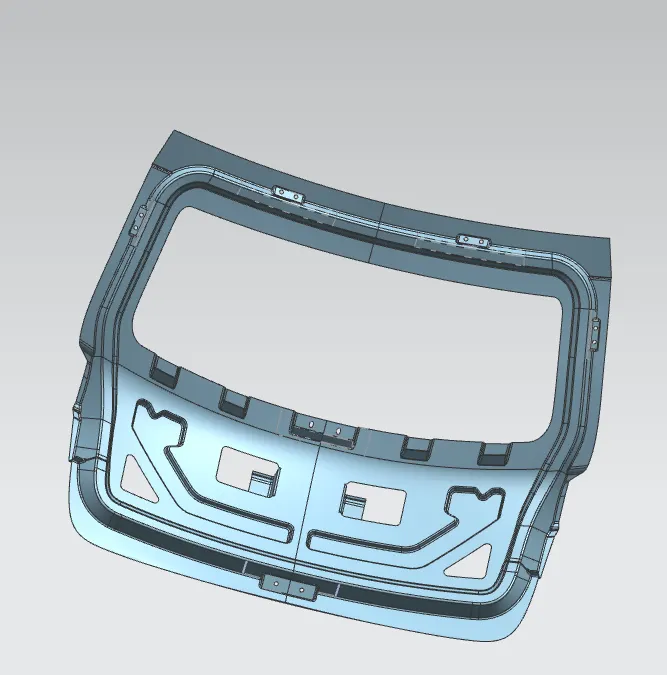
The inner panel is a critical component in backdoor construction. It offers strength and aids in the absorption of stresses outside the part by the use of embosses. It helps with the installation of accessories such as hinges, wiper motors, gas stays, latches and strikers, etc.The inner panel is created by either casting or deep drawing. The aluminum parts are casted, while the steel interior panels are produced by a deep drawing technique. If a panel is to be deep drawn, there must be a tooling direction through which it must be deep drawn.
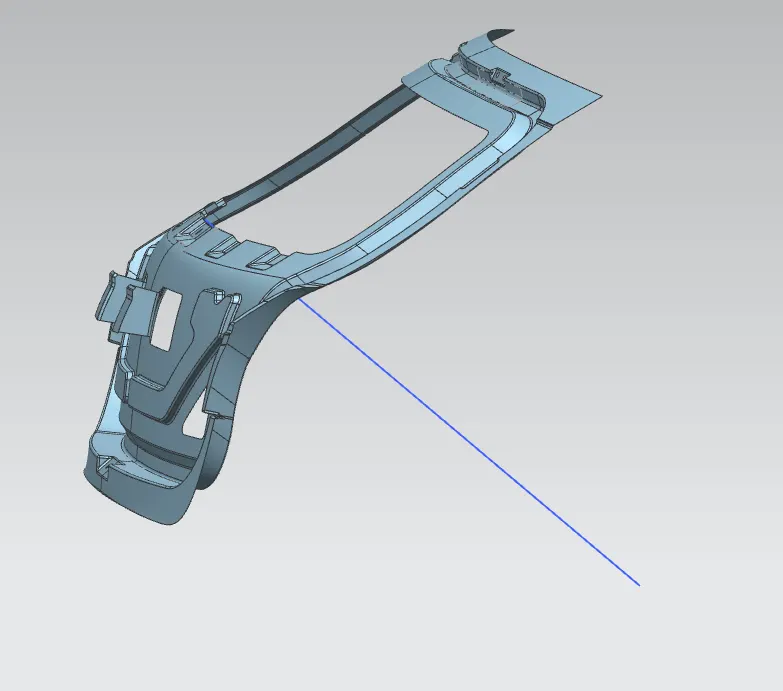
- Embosses:
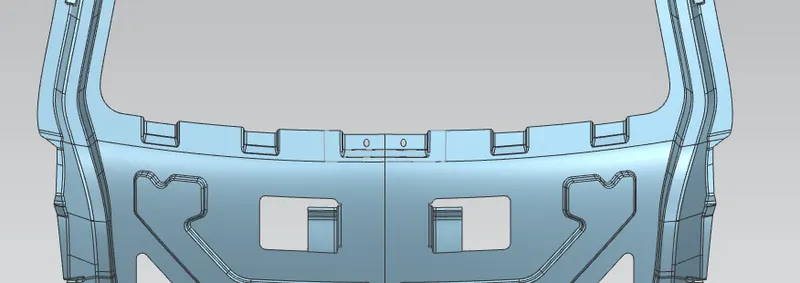
They are used to add strength to sheet metal panels and to assist distribute forces/energy in a certain direction. Here, the embosses (Y/V emboss) are meant to lead them to the outside end of the backdoor.
- Sealing Flange:
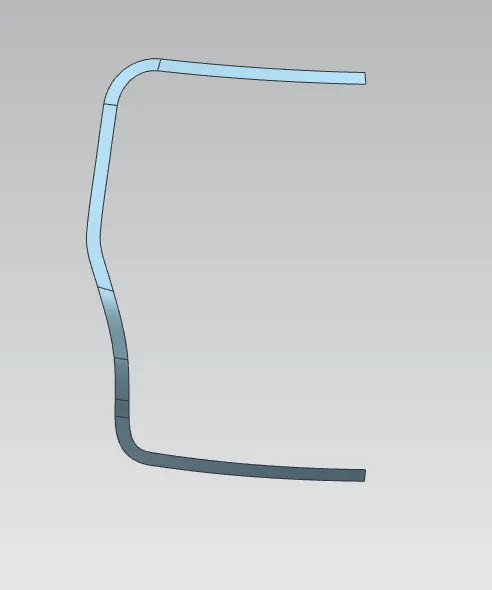
This is the piece of the inner panel that allows the backdoor to sit over the car's rear body side. Its design is significant because it determines how a backdoor is installed on the car's rear body side and also prohibits any external materials from entering the vehicle.
- Mastic Sealants:
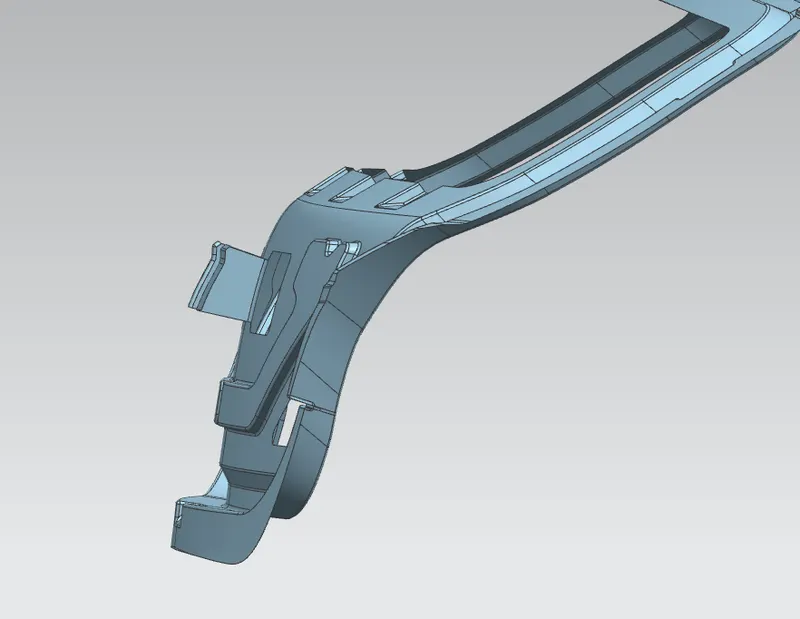
Because the outer panel adds to the vehicle's visual appeal, we cannot apply bolting, spot welding, or any other connecting technique that deviates from the panel's attractive appearance. Thus, mastic sealants are used to connect the inner and outside panel parts. A maximum separation of 5mm is required between sections where mastics will be applied.
- Reinforcements:
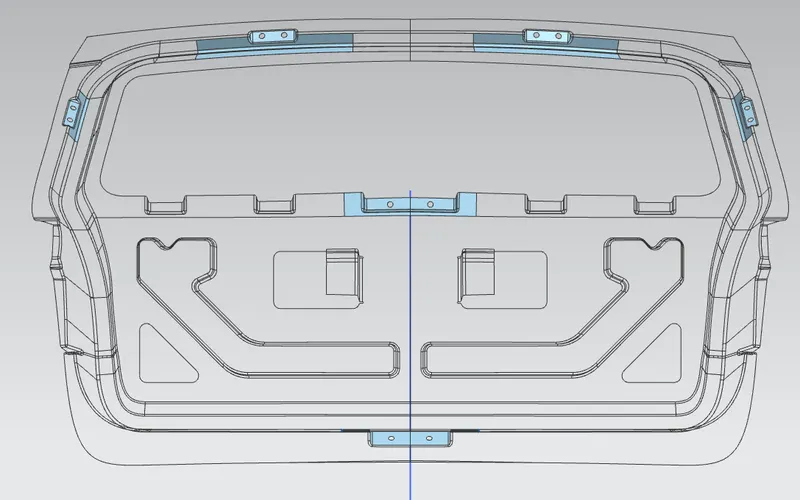
Reinforcements are generally installed to boost the strength of the panel in specific locations that are relatively minimal compared to sheet metal sections for absorbing and dispersing such stresses throughout the panel assembly to assist preserve panel rigidity. In most circumstances, the reinforcements are 1-1.5mm thick, as opposed to the 0.75mm thick panel employed in this portion.
- Hinge reinforcements
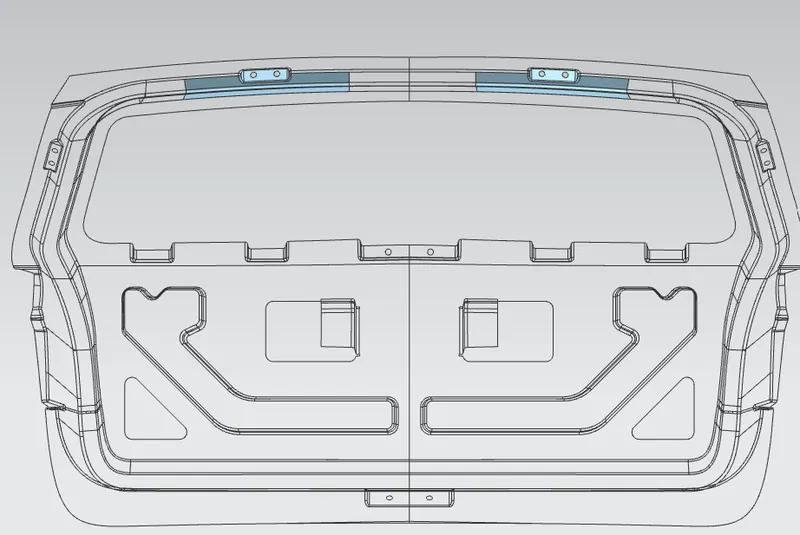
A hinge is a pivot mechanism that bears the whole weight of the backdoor. As a result, reinforcements for strength and stiffness are added.
- Gas stay reinforcements:
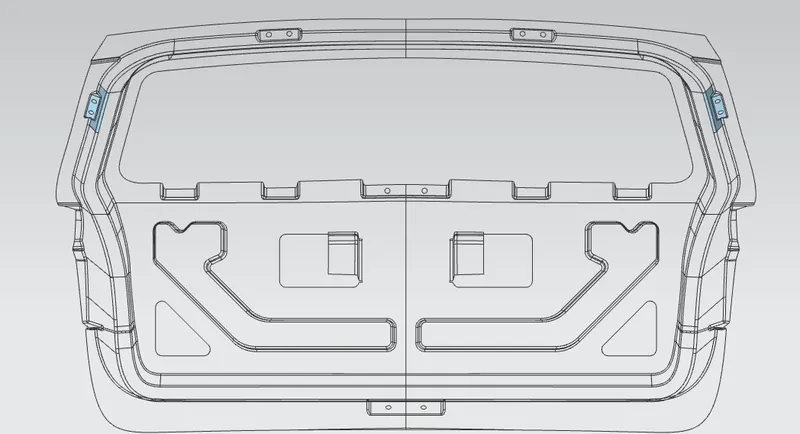
The gas stay is used to automatically lift the backdoor and to support the backdoor in its open position. It can be of two kinds. Semi-automatic and fully automated.
- Wiper motor reinforcement:
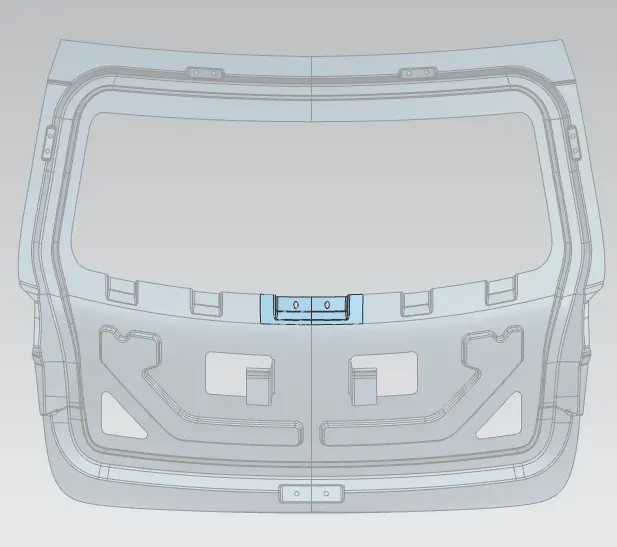
Wipers are used to remove dust and water from the windscreen glass, which reduces rear visibility. It is powered by a motor located on the inside panel. The inner panel deforms as a result of the motor's vibration and heat, resulting in a loss of strength and stiffness, resulting in poor NVH. As a result, reinforcement is supplied in order to avoid these circumstances.
- Striker and latch reinforcement:
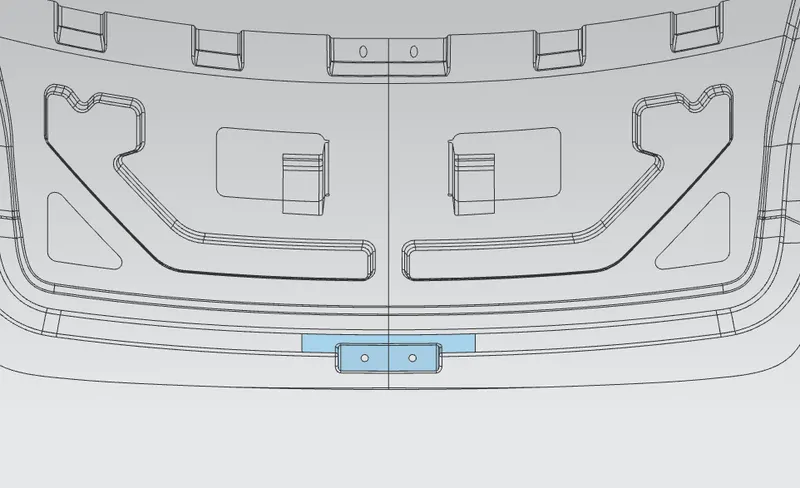
An emboss is made at the bottom of the panel for the placement of the Striker and latch. There is excessive smashing and slamming while opening and shutting the door, requiring the installation of reinforcing.
Outer panel:
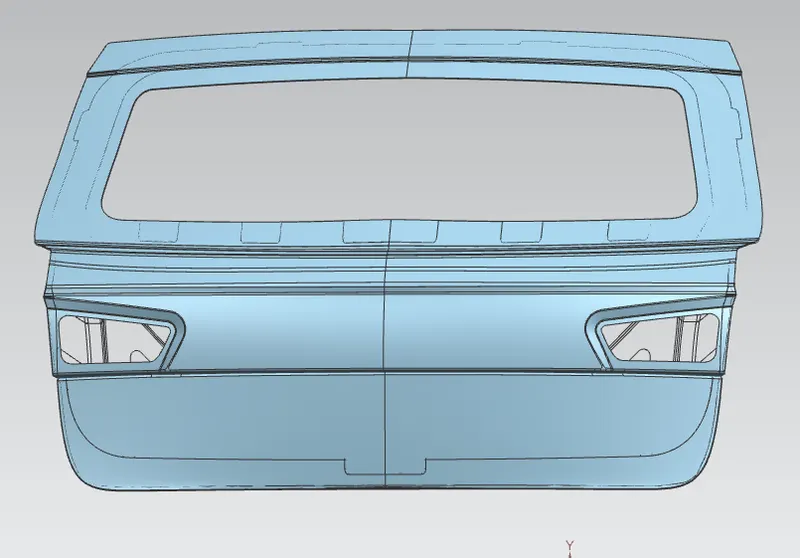
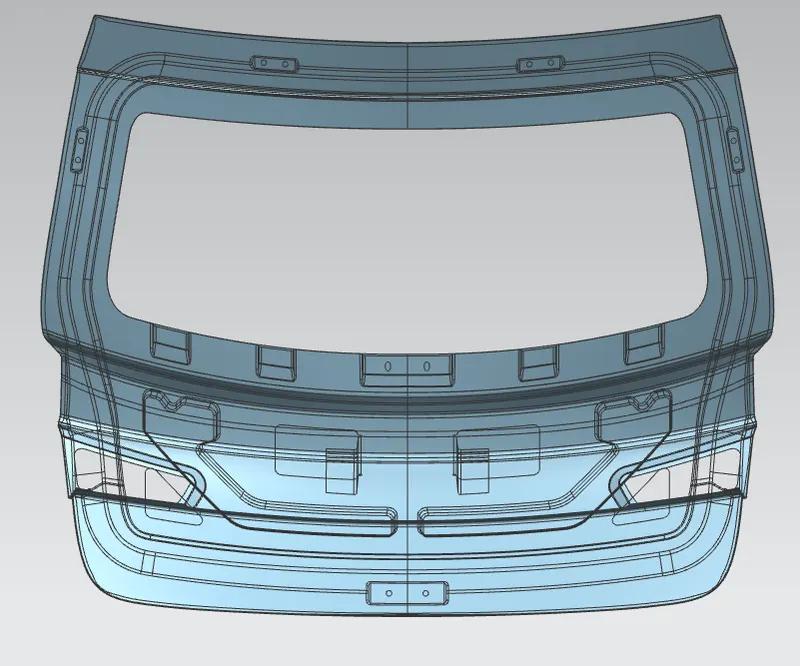
It is the back door's outside design covering surface. It contains multistage coatings that provide scratch resistance, corrosion avoidance, and other benefits. Hemming is used to wrap it around the inside panel.
- Hemming:
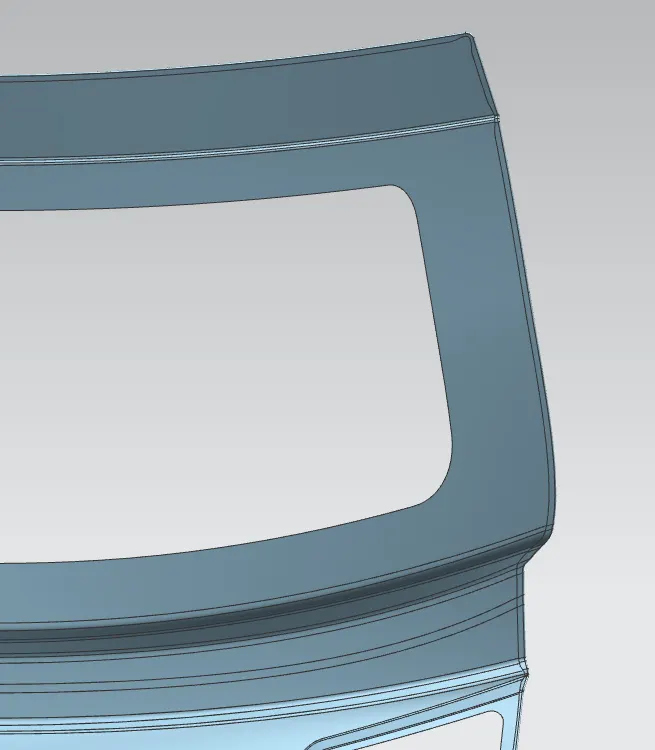
Hemming is a shaping technique that involves folding the edges of a sheet over another portion to obtain a snug fit. Hemming procedures are typically used to join components, improve the look of a part, and strengthen part edges. Hemming is used in automotive component assembly as a secondary procedure following deep drawing, trimming, and flanging to join two sheet metal parts (outer and inner). Hoods, doors, trunk lids, and fenders are common pieces for this sort of construction.
- Corner Relief:
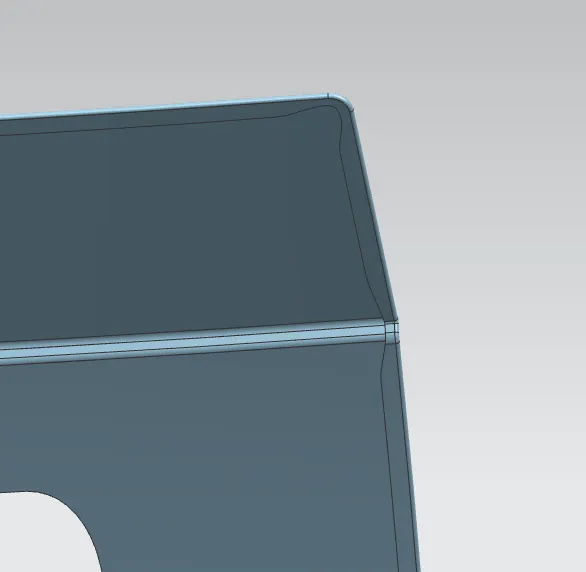
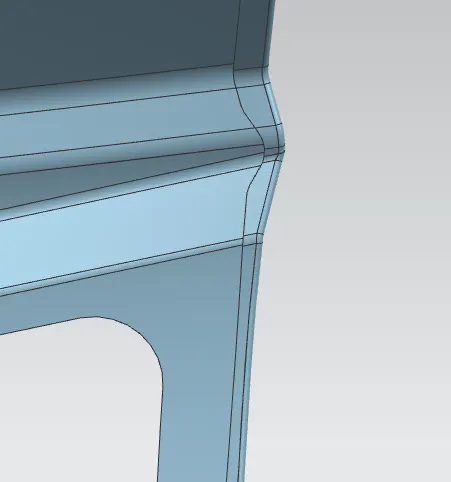
Multiple rollers are employed throughout the hemming process, causing vibrations and stress concentrations in specific areas, therefore the design objective of the panel should not be compromised so that the panel should spring back to original formation after roller is removed. However, this is not always the situation at corners, thus reliefs are supplied to prevent this situation.
Design considerations:
- Sealing Flange
- Rear visibility
- Boot space & accessibility
- Rear crash regulations
- Joining techniques such as hemming, spot welding etc.
- Support structures like hinges and gas stays.
- Mounts for wiper motor, tail lamps and other wiring loops
- Gap and flush requirements
Assembly:
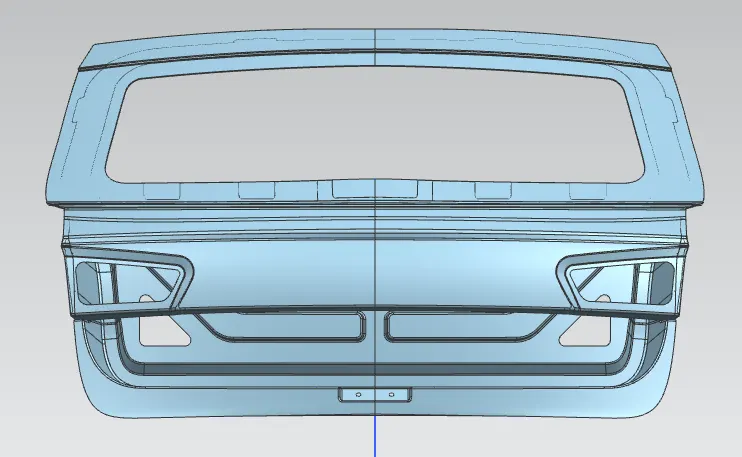
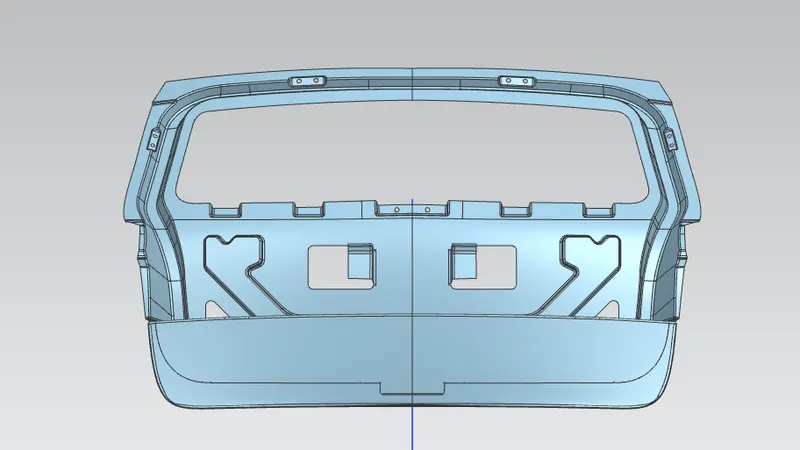
Draft analysis:
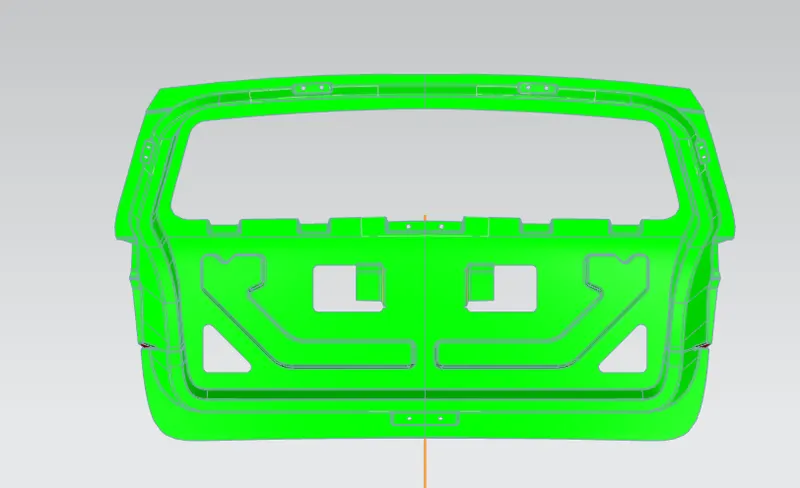
Every component made with a press tool or other forming tool requires some positive draft on the parallel sides to the tooling direction. If we don't provide draft zero or give negative draft on certain faces, it will bind to the mould surface and while the mould is in motion, it will degrade the surface, lowering its surface finish. Thus, the Draft Analysis command tells us whether or not the component we've drafted can be readily removed. It also provides information on the critical zones, allowing adjustments to the design to be made as needed.
Conclusion:
The Back door outer and inner panel are designed using the styling surface following the tooling direction.