Design of backdoor
BACKDOOR DESIGN
Objective:
Use the provided styling surface to come up with a design of backdoor, using appropriate design methodologies and provide the necessary reinforcements & embosses.
Software Used:
- The design of backdoor has been done in CATIA V5 environment.
- Thickness of each component is considered as 0.75mm.
Introduction:
It is also known as tailgate of car. These doors can be operated manually or electric powered. In most of the luxury cars door is operated electrically. It plays a vital role during rear crash of a car in case of an accident. So our design must satisfy crash requirements. Crash rating depends upon the design of the trunk and material used for fabrication. Flanges, embosses, type of joining of inner panel and outer panel etc are the parameter responsible for providing strength to the backdoor.
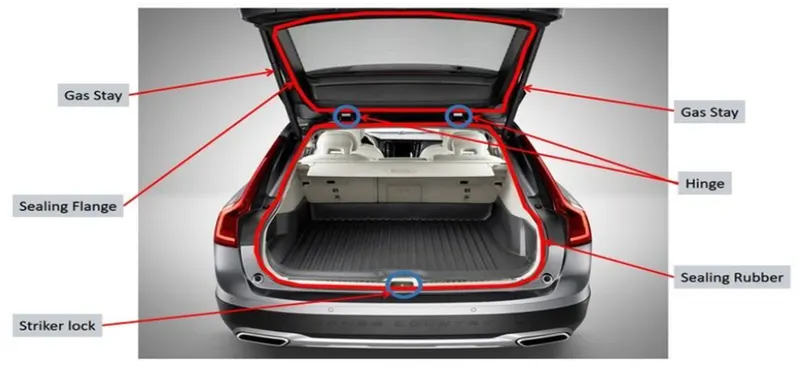
Fig.1 Backdoor Overview
Types of gate opening:
- Top mounted door
- Side mounted door
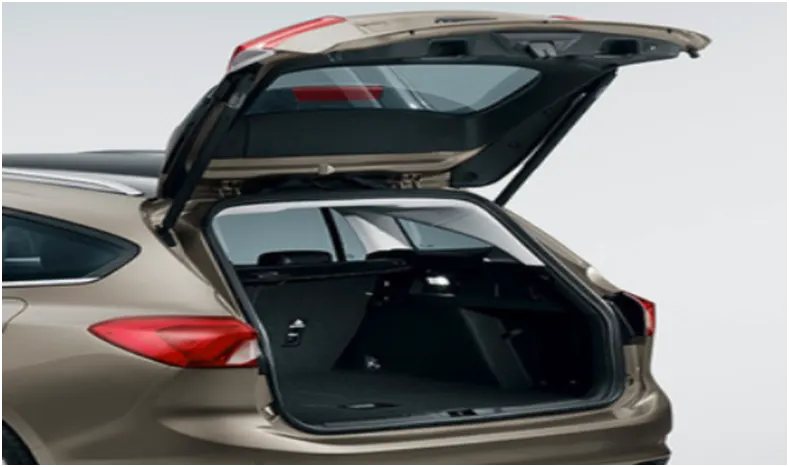
Fig.2 Top mounted door
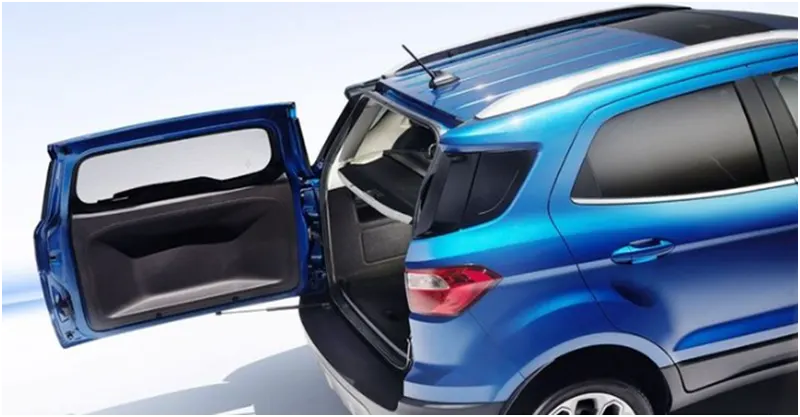
Fig.3 side mounted door
Major Parts and Reinforcements:
The backdoor consists of the following components:
- Backdoor Outer Panel (Upper)
- Backdoor Outer Panel (Lower)
- Backdoor Inner Panel
- Hinge Reinforcements (LH & RH)
- Gas-Stay Reinforcements (LH & RH)
- Latch and Striker Reinforcement
- Wiper motor Reinforcement
Design considerations for backdoor inner panel:
- Rear Visibility.
- Support structures like hinges and gas stays.
- Mounts for wiper motor, tail lamps, and other wiring loops.
- Boot space
- Rear crash regulations and requirements.
- Sealing and its functions.
- Joining techniques like hemming, spot welding, maestic etc
- Fit and clearances.
Hinge axis and striker position study:
The backdoor is opened and closed frequently so we have to position the striker correctly. This can be done by positioning the hinge and the hinge axis tentatively. And for that we take the centre plane with reference to the two-point we made on two hinges then from that plane we draw a circle in sketcher workbench. The circle represents the striker trajectory and the striker has to follow this trajectory. This can be adjusted by moving the trajectory back and forth or by rotating the latch area.
The materials used for manufacturing backdoors are Aluminium and steel.
The total weight difference between steel door & aluminium door is around 4.7 kg. Many of the companies are choosing to manufacture the aluminium door. Usually, Aluminium backdoor is lighter in weight and has lesser number of components. Steel backdoor is "deep drawn" with uniform thickness, added reinforcements and hence heavier in weight. But the production cost of latter is less.
Different types of Sheet-metal operations that are performed in the Back Door are:
- Deep Drawing:
The metal deep drawing process is an effective method of manufacturing of cups, cans and other similar products. Deep drawing is generally carried out in two or more stages.
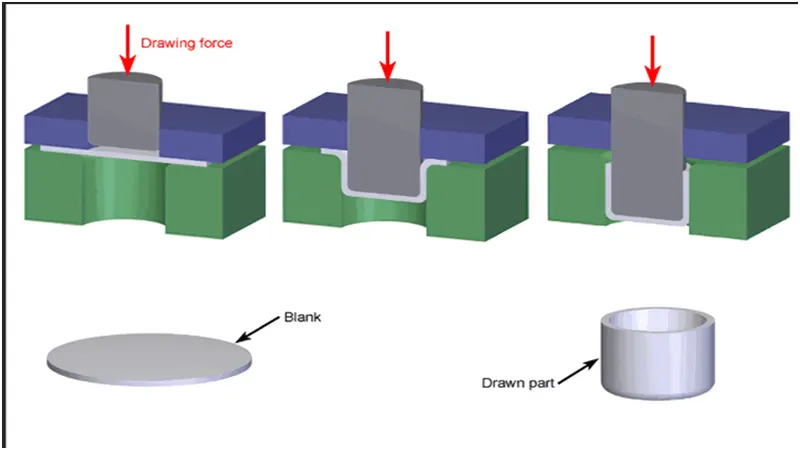
Fig.4 Deep drawing
- Embossing:
Embossing is a metal forming process for producing raised or sunken designs or relief in sheet materials by means of matched male and female roller dies, theoretically with no change in metal thickness or by-passing sheet or a strip of metal between rolls of the desired pattern. Metal sheet is drawn through the male and female roller dies producing a pattern or design on the metal sheet. Depending on the roller dies used, different patterns can be produced on the metal sheet.
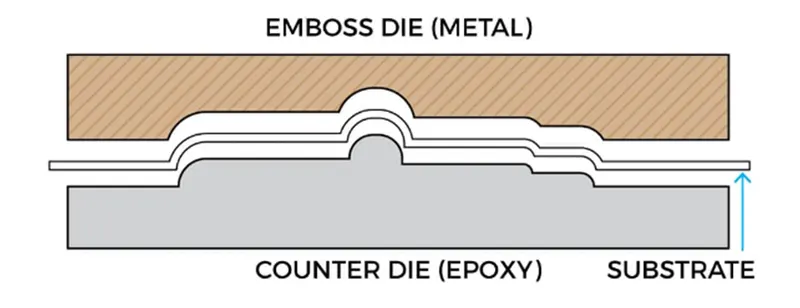
Fig.5 Embossing
- Hemming :
Hemming is a technology used by the automotive industry to join inner and outer closure panels together (hoods, doors, tailgates, etc.). It is the process of bending/folding the flange of the outer panel over the inner one. The accuracy of the operation affects significantly the appearance of the car’s outer surfaces and is, therefore, a critical factor in the final quality of a finished vehicle.
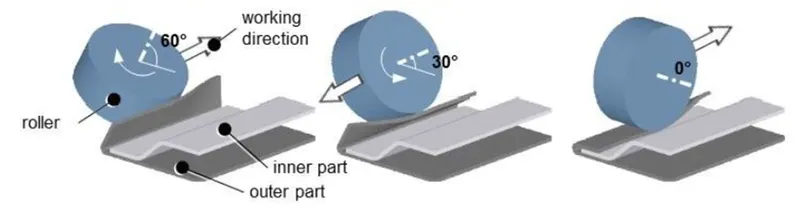
Fig.6 Hemming
Relief in hemming:
Relief helps to control the behaviour of sheet metal and to prevent wrinkles on sheet metal during hemming operations. So here corner relief has been provided at the locations where there are high chances of improper folding of sheet metal.
Hemming is the process in which the edge is rolled flush to itself, while a seam joins the edges of two materials.
- Blanking:
Blanking is a cutting operation of a flat metal sheet and the article punched out is known as blank. Blank is the required product of the operation and the metal left behind is considered as a waste.
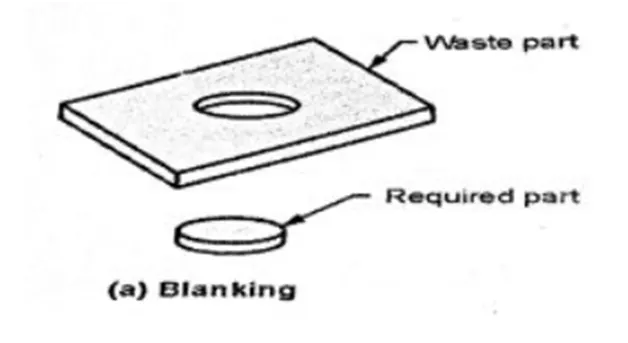
Fig.7 Blanking
- Punching:
It is similar to blanking only the main difference is that, the hole is the required product and the material punched out from the hole is considered as a waste.
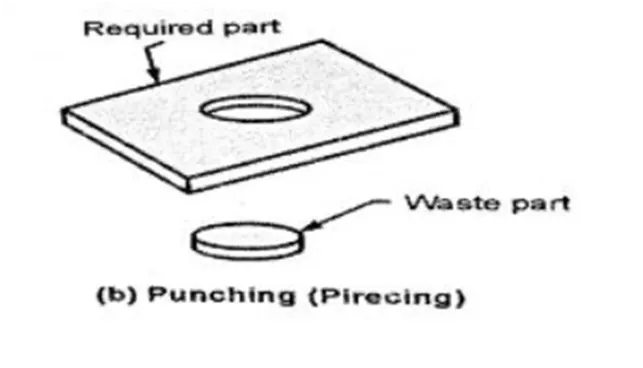
Fig.8 Punching
Fig.8 Punching
- Lancing:
It is a type of punching operation where the work-piece is sheared and bent with one strike of the lancing tool.
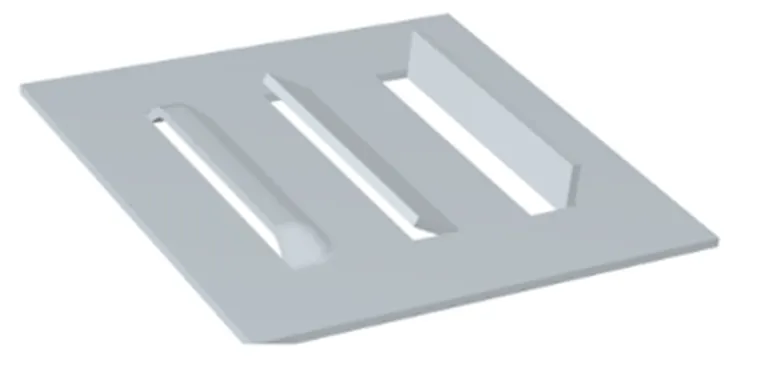
Fig.9 Lancing
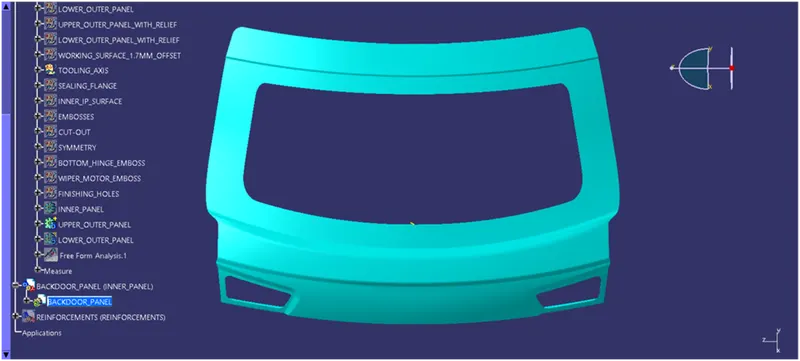
Fig.10 Upper Panel
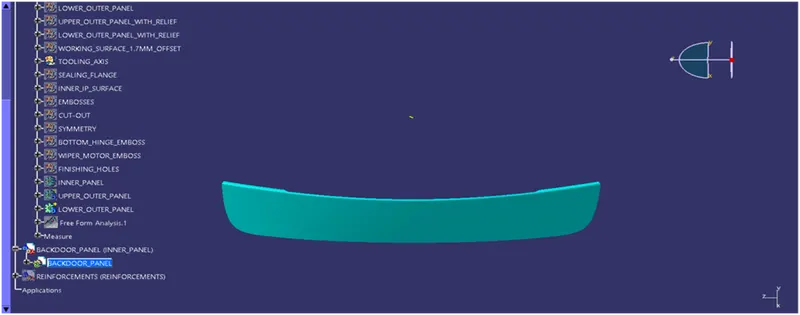
Fig.11 Lower Panel
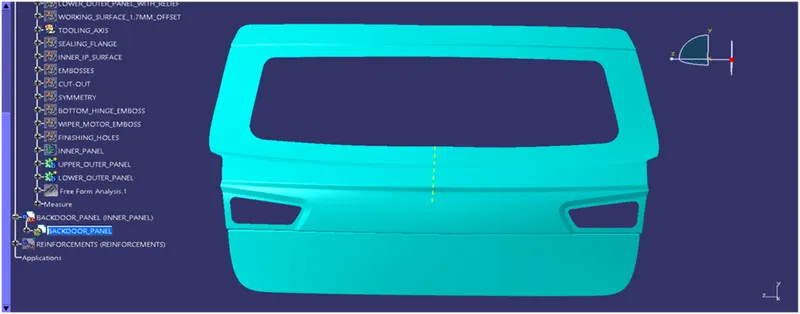
Fig.12 Backdoor outer (upper & lower) panel
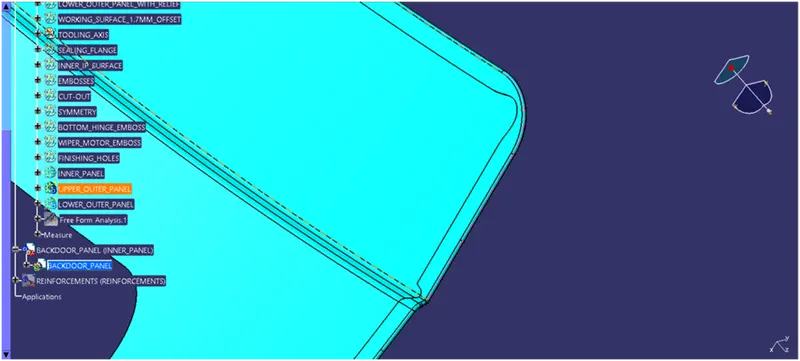
Fig.13 Relief 1
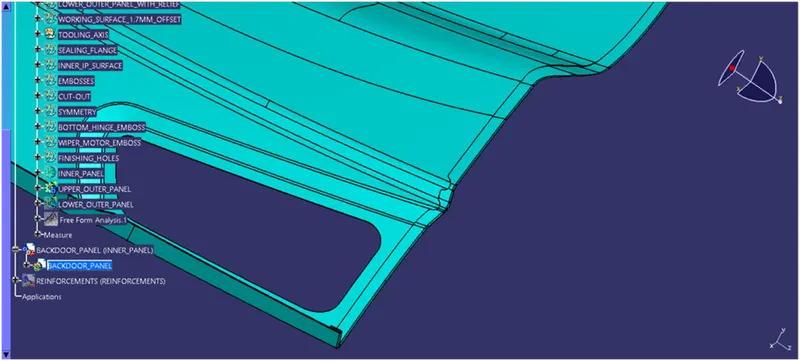
Fig.14 Relief 2
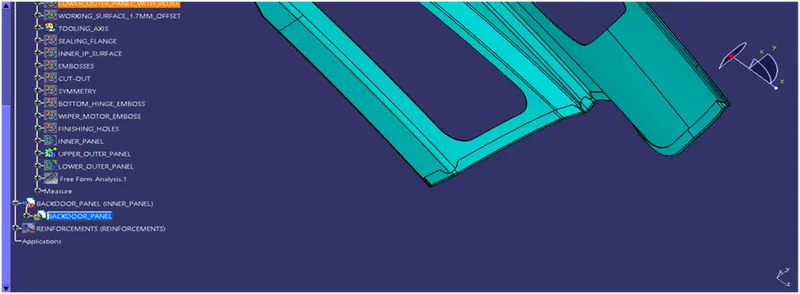
Fig.15 Relief 3
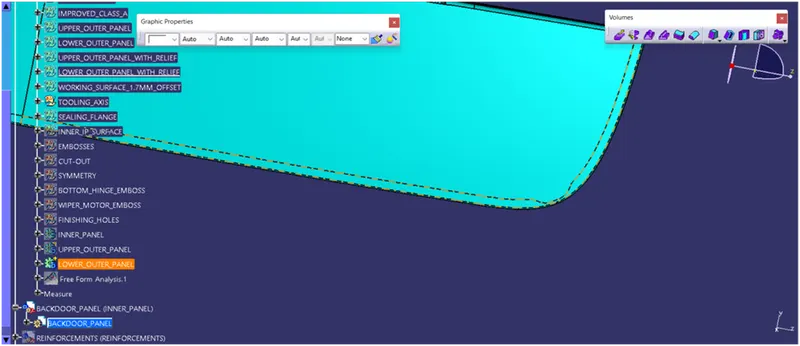
Fig.16 Relief 4
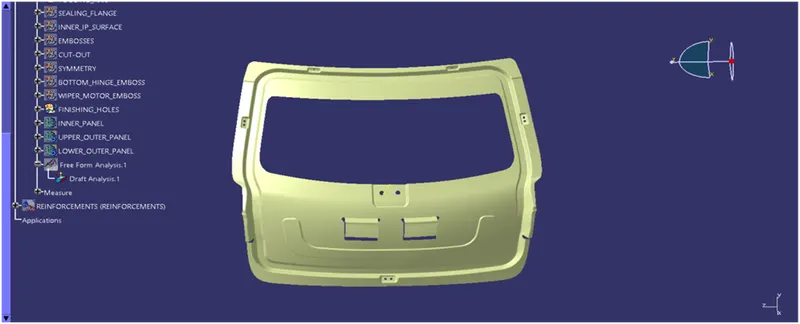
Fig.17 inner panel designed in GSD workbench
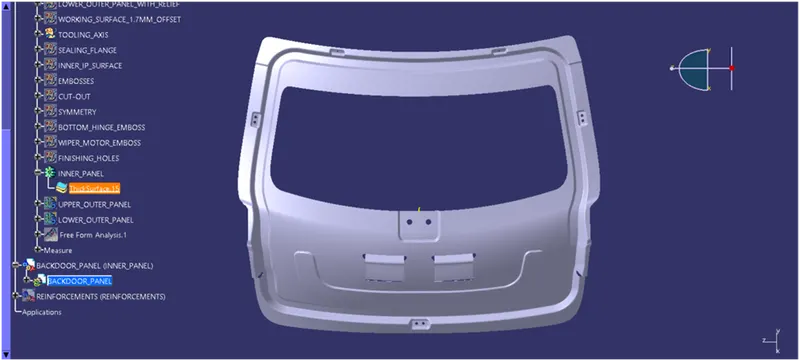
Fig.18 Inner panel as part
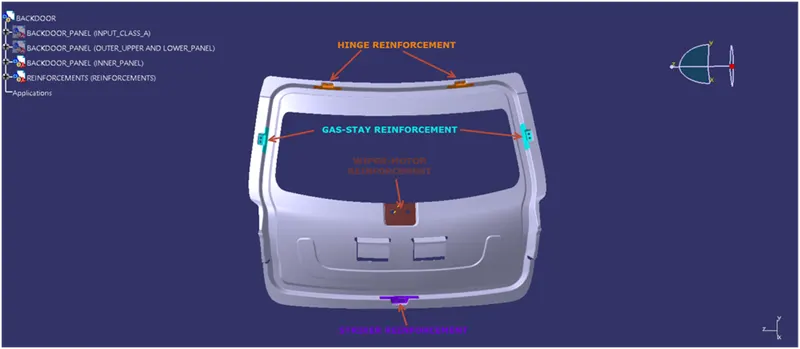
Fig.19 Different reinforcements
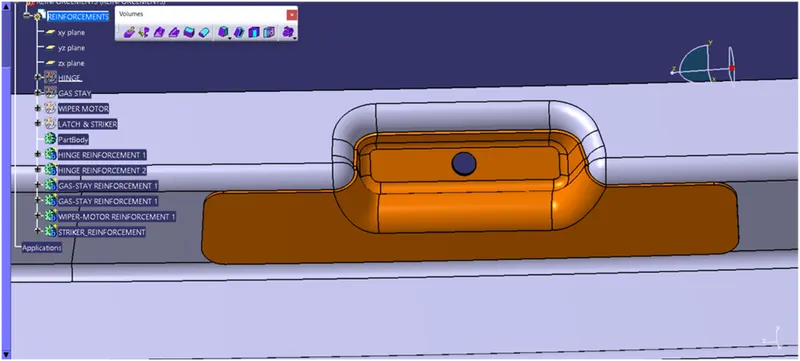
Fig.20 Hinge reinforcement
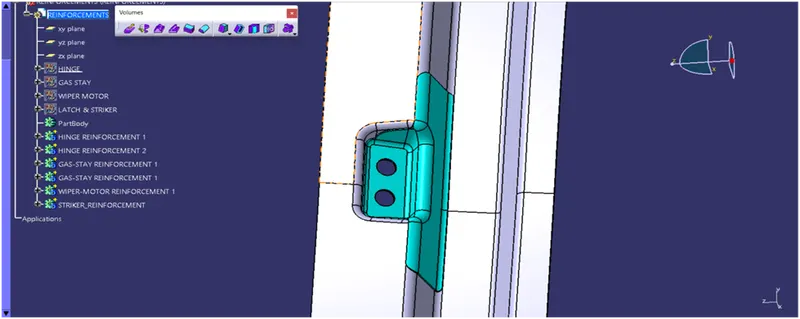
Fig.21 Gas-stay reinforcement
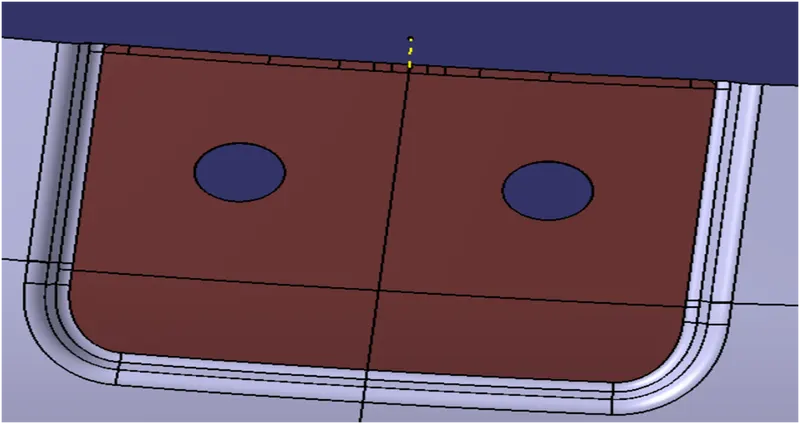
Fig.22 Wiper motor reinforcement
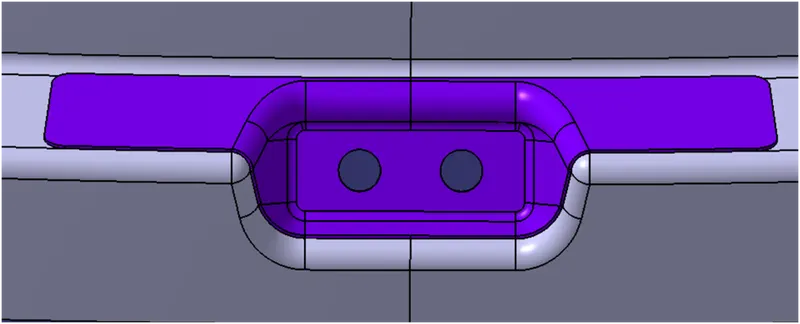
Fig.23 striker reinforcement
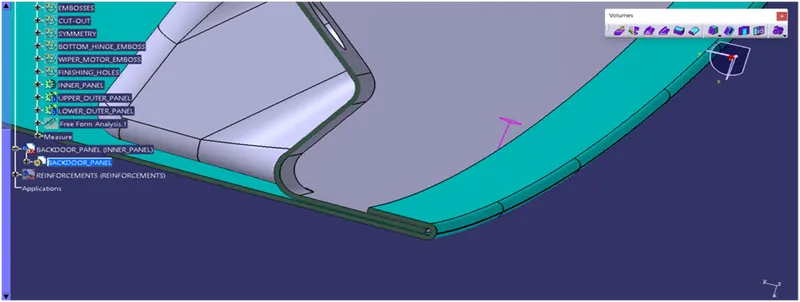
Fig.24 Hemming
Draft Analysis:
Draft analysis is used to analyze whether the parts are good for manufacturing. In case of sheet metal the draft angle should be at least 7 degrees for easy removal of part to be manufactured and less wear of dies. For this a tooling direction is created and with respect to this tooling direction draft is provided while modelling the part in CATIA environment.
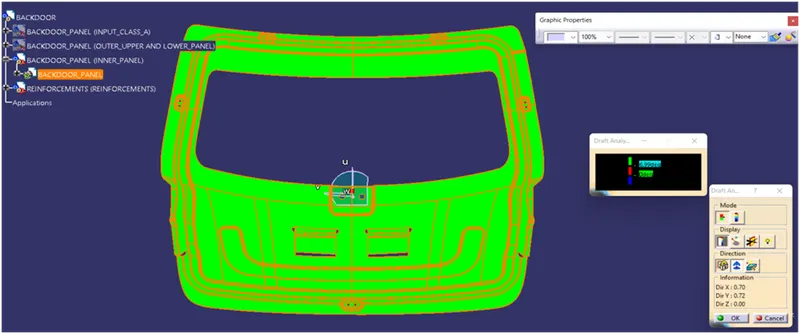
Fig.25 draft analysis at 7o
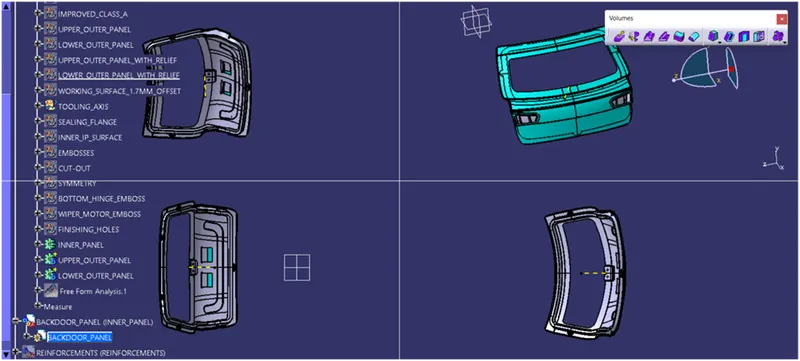
Fig.26 complete backdoor in different orientations
THIS IS ALL ABOUT THE DESIGN OF BACKDOR AND SAME CAN BE FOUND OUT IN THE FILES ATTACHED