Design and Assembly of Butterfly Valve by applying GD&T using CATIA-V5
Design and Assembly of Butterfly Valve by applying GD&T using CATIA-V5
BUTTERFLY VALVE:
A butterfly valve is from a family of valves called quarter-turn valves. In operation, the valve is fully open or closed when the disc is rotated a quarter turn. The "butterfly" is a metal disc mounted on a shaft. When the valve is closed, the disc is turned so that it completely blocks off the passageway.When the valve is fully open, the disc is rotated a quarter turn so that it allows an almost unrestricted passage of the fluid. The valve may also be opened incrementally to throttle flow.There are different kinds of butterfly valves, each adapted for different pressures and different usage.
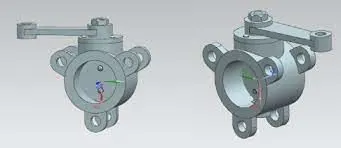
Applications of Butterfly valves
Butterfly valves can be used in many different fluid services and they perform well in large volume water applications and slurry applications. The following are some typical applications of Butterfly valves
- Cooling water, air, gases, fire protection etc.
- Slurry and similar services
- Vacuum service
- High-pressure and high-temperature water and steam services
- Compressed Air or Gas Applications
Advantages of Butterfly Valves
- Available in very large sizes.
- Light in weight.
- Quick operation requires less time to open or close.
- Low pressure drops and high-pressure recovery.
Disadvantages of Butterfly Valves
- Disc movement is unguided and affected by flow turbulence.
- Cavitation and choked flow are two potential concerns.
- Throttling service is limited to differential pressure.
Description of tools/ Features used for designing as shown as following:-
- Creating 2D Sketch:- Creating 2D sketch for Base thickness part.
- Line :- Line is one of the most basic commands inCATIA. TO DRAW BASIC LINES AND SATIRGHRT FALT SURFACES BY USING LINE COMMNAD.
- Arc/Circle:- Use this command to create associative arcs and circle features. The type of arc you get depends on the types of constraints you combine. You can create many types of arcs by combining different types of constraints.
- Hole:- In CATIA has a command that users could create or drill standard sized holes with it. This command is called Hole and you can activate this command by clicking on it. You can create various kinds of holes that generally used in mechanical structures according to accepted standards.
- PAD &POCKET:-PAD AND POCKET, makes body or surface by EXTRUDE OR PAD THE sketch, face or closed area. Also, you can pad curves, edges, surfaces, sections, areas. and make a hole by using pocket by remiving the material in requried palce
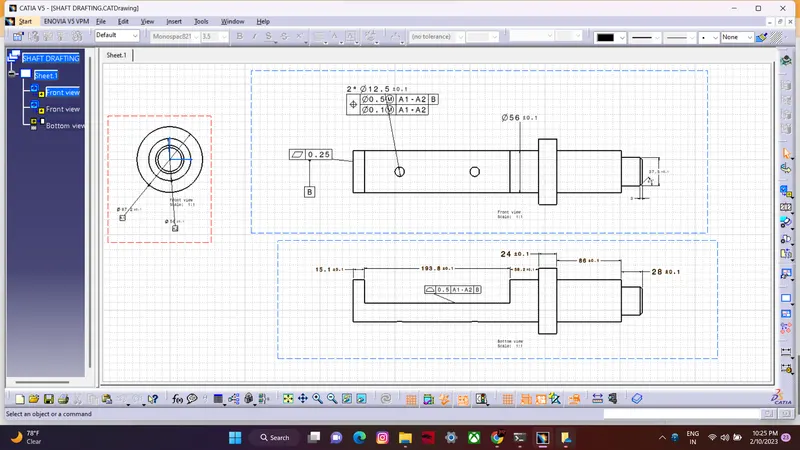
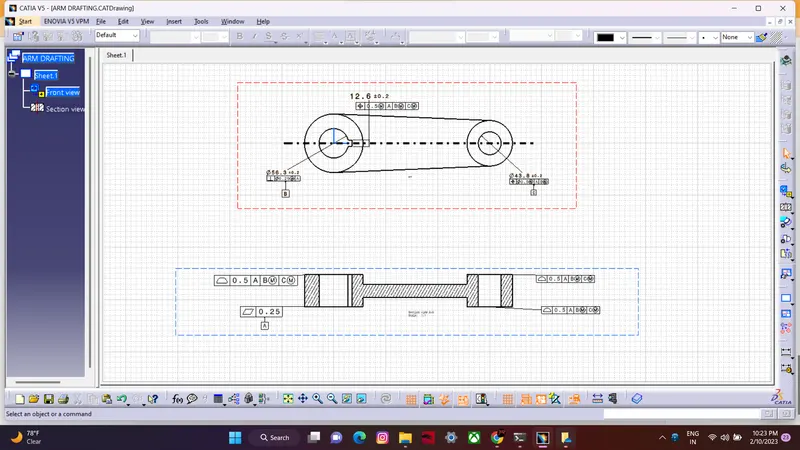
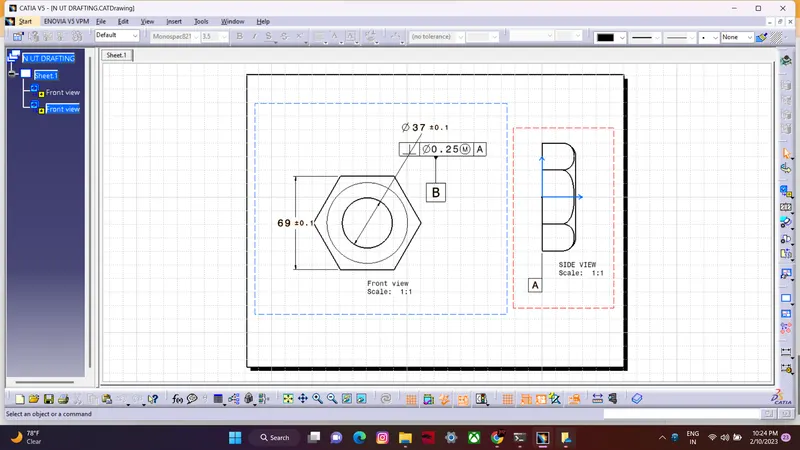
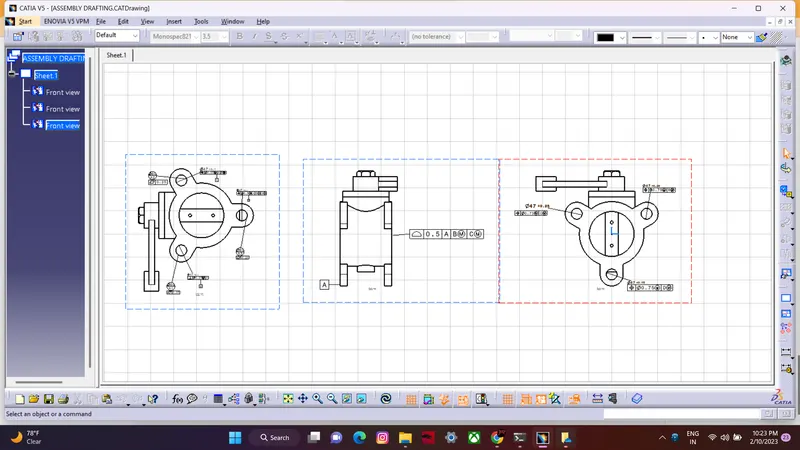
- Drafting:- Quickly and easily create engineering drawings from 3D models using highly efficient drafting tools. The drafting software automatically creates drawing views from 3D part and assembly models, and helps you align and scale drawing views and arrange drawing sheets.
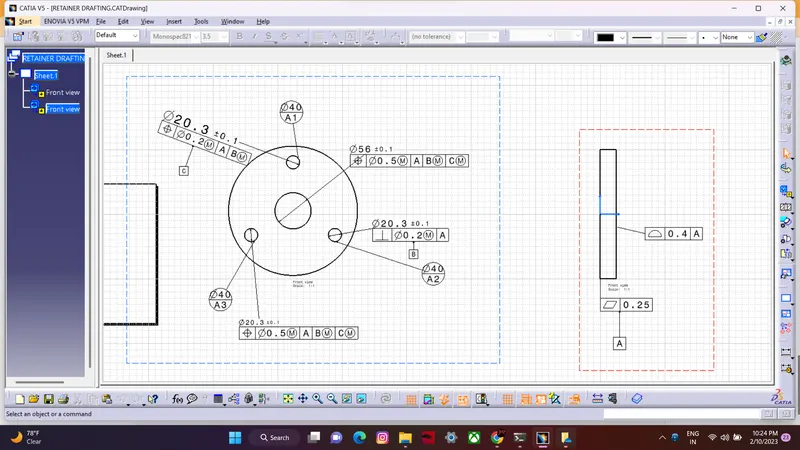
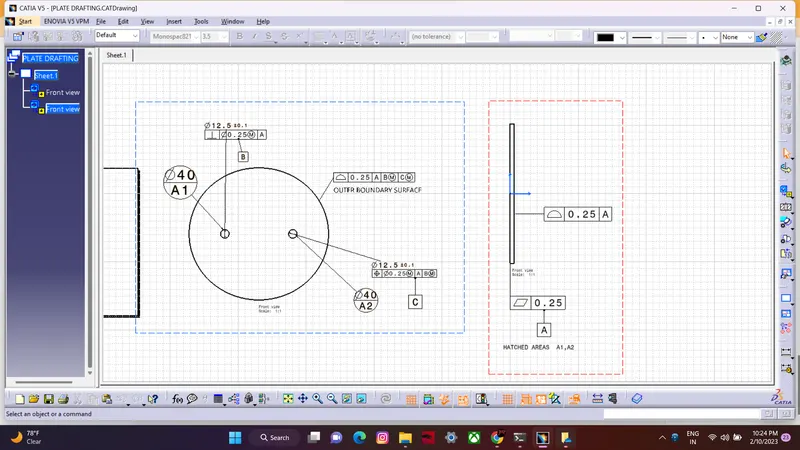
- And also used for applying the gd&t symbols.
- and also used for applying the gd&t symbols...
Name of the Component:
1. Body
2. Shaft
3. Retainer
4. Disc Plate
5. Lever Handle
6. Nut
BODY:
Butterfly valves generally have bodies that fit between two pipe flanges. The most body designs are lug and wafer.
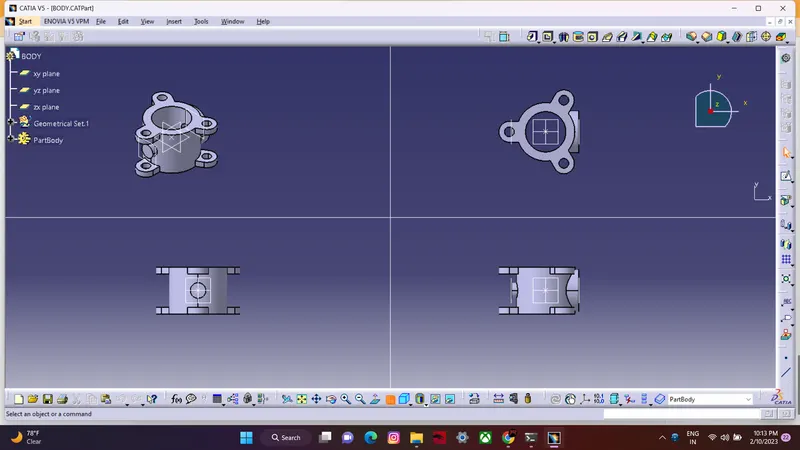
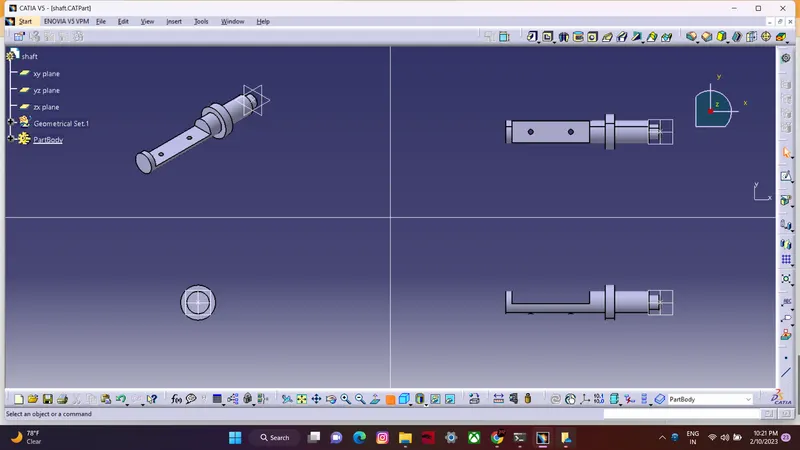
2. Shaft-stem:
In order for the disk to be held in the proper position, the stem must extend beyond the bottom of the disk and fit into a bushing in the bottom of the valve body.The disc plate and lever are assembled to this shaft.The butterfly valve stem may appear to be a small component, but it plays an important role. The stem is what connects the disk on the inside to the handle on the outside. Without it, the valve would be unable to open or close, and what good is a valve if it cannot open or close.
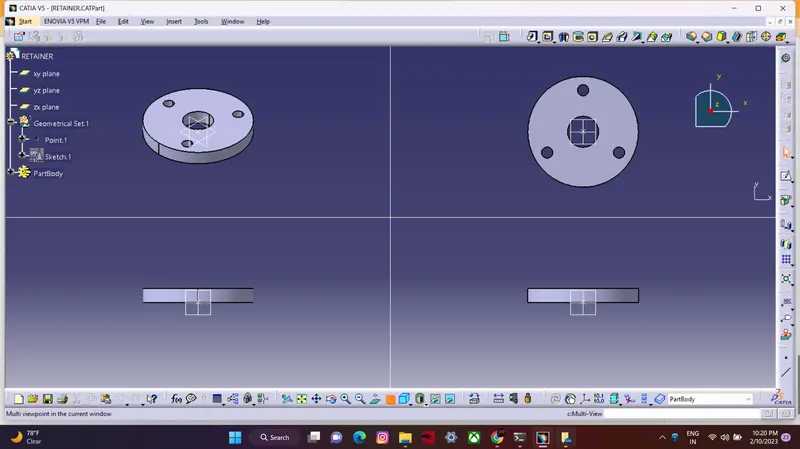
3.RETAINER:
It is a specially shaped washer that fits over the top of the valve spring. The keepers, or locks, fit into valve stem grooves, holding the retainer and spring in place.
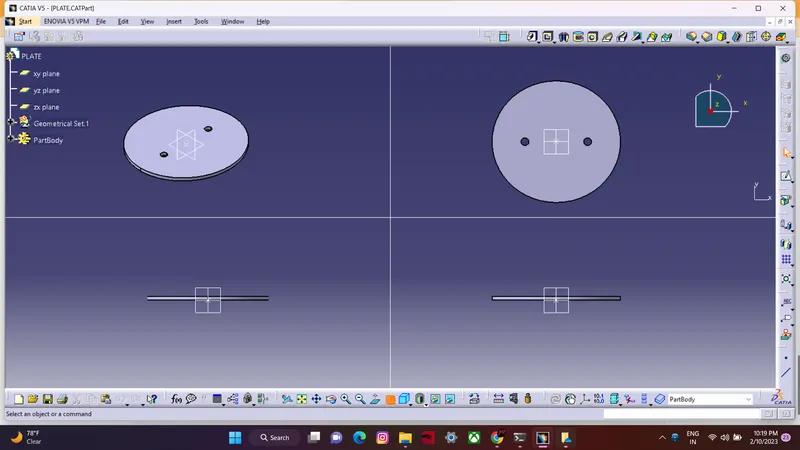
4.DISC PLATE:
It is a flow closure member of a butterfly valve in this assembly. The disk is equivalent of a plug in a plug valve, gate in a gate valve or a ball in a ball valve. Rotating the disk one-quarter turn on 90 Degrees opens and closes the butterfly valve.
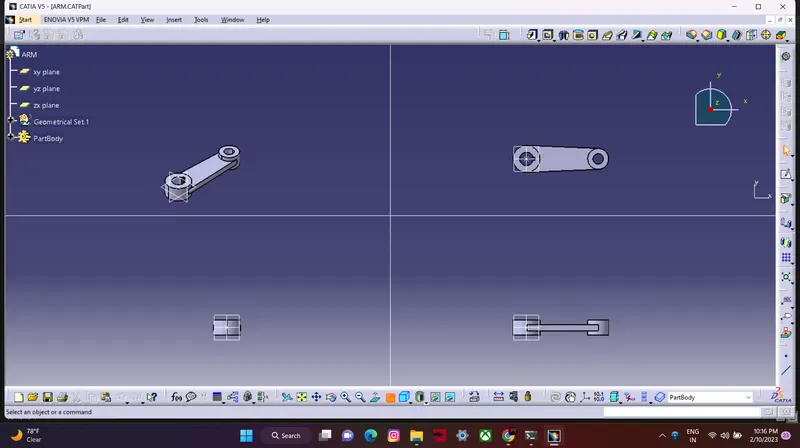
5.LEVER :
The hand lever is commonly used for small butterfly valves and is used to open and closing the valve. It has capability of being locked into a position of partially open or closed.
6. Nut:
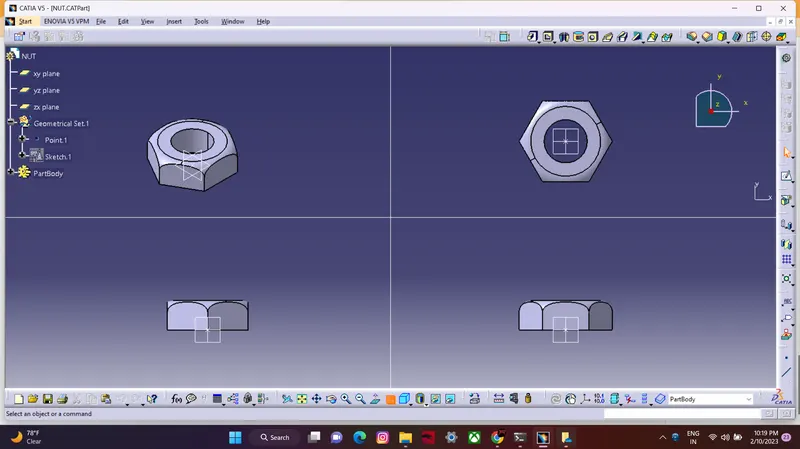
Nuts are always used mostly in conjunction with a mating bolt to fasten multiple parts together. The two parts are assembled together by a combination of their thread’s friction.
ASSEMBLY:
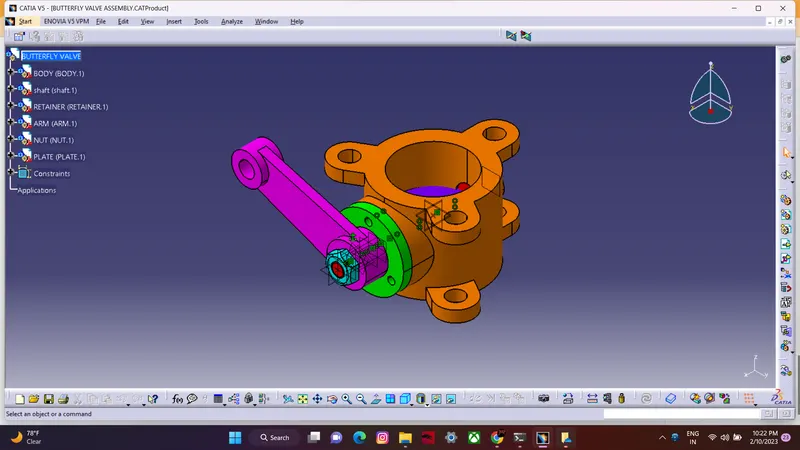
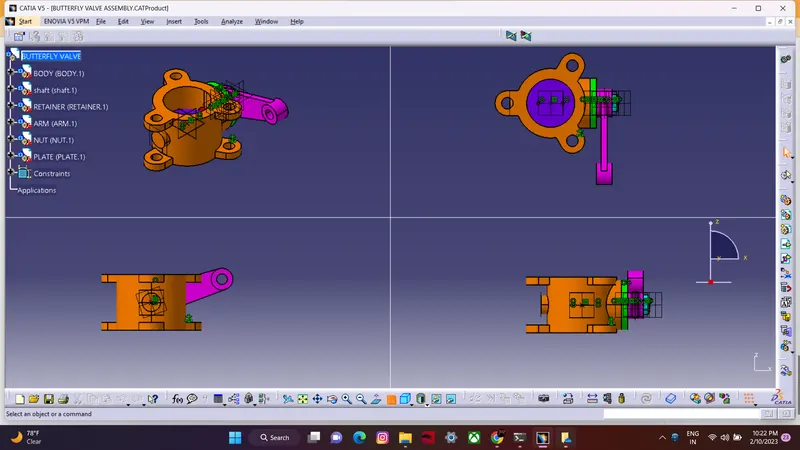
After modeling all the individual parts of the butterfly valve, all parts are assembled together in the assembly workbench of catia v5.
After the design, all the models should assemble with appropriate constraints. The assembly is created by first placing the body in position and mating other parts to it with the application of different joints provided in catia. First, the shaft and disc are joined together with the screws in place to create a sub-assembly which is then joined to the body in position. The retainer plate is then mated with the body and screws are used to fix them. After that, the lever is mated to the shaft in a position that is then fixed after the nut is mated with the shaft.
Conclusion :
The Butterfly valve is successfully created and GD&T is applied to all the different parts and the assembly of the Butterfly valve.