Combustion for methane-air model
Objective:
- Combustion simulation on the Methane-Air model. Variation of mass fraction for different species(inlet and outlet) at diferent locations.
- Effect of addition of water in fuel on the mass fraction of soot and Nox at the outlet.
Introduction:
Combustion is an exothermic reaction between a fuel and an oxident. In our case, fuel is Methane (CH4) and it is burnt in presence of Air(O2 and N2) resulting in the formation of CO2, H2O, Nox and Soot (particulate matter).
CH4 + 2(O2 + 3.76N2) = CO2 + 2(H2O) + 7.52(N2)
As there is no change in concentration of N2, therefore it is ignored under boundary conditions.
Taking turbulence into consideration, with Navier-stokes, Species transport equation is defined. It carrys out mass balance for Ith species. Rate of mass accumulation is equal to rate of mass entering into control volume minus mass leaving plus production or destruction of mass flux in control volume due to source term.

Yi = Mass fraction of specie.
Ji = Diffusion term
Si = Source terms producing or destructing mass flux.
Now to define this combustion modelling in ansys, there are many ways like using chemical kinetics etc. I am using Eddy dissipation model. We need to define soot modelling and NOX modelling as well.
Eddy dissipation model is a Turbulent chemistry reaction model. In this model chemical reaction is governed by large eddy mixing time scale. Combustion initiates whenever there is turbulence present in flow. It does not need any ignition source to initiate combustion. Mostly valid for non-premixed combustion but for premixed flames, reactants is assumed to burn at thr moment it enters the computational model which is a short coming as reactants need some time to get to the ignition temperature.
Production rate is mostly governed by ratio of K and epsilon. If the ratio is ideal, combustion takes place.
Geometry:
- Axis is always taken X-axis for axisymmetric option.
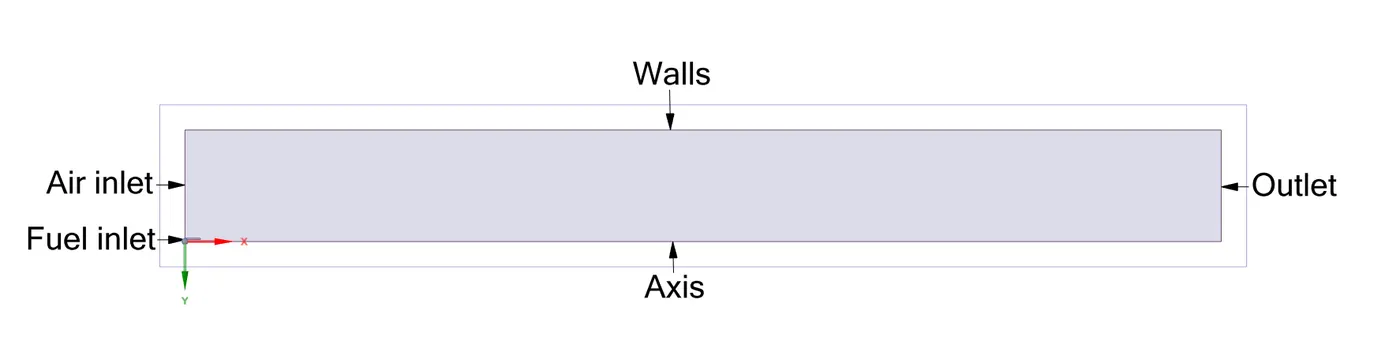
Mesh:
- Keep sizing accordingly and Capture proximity is kept on.

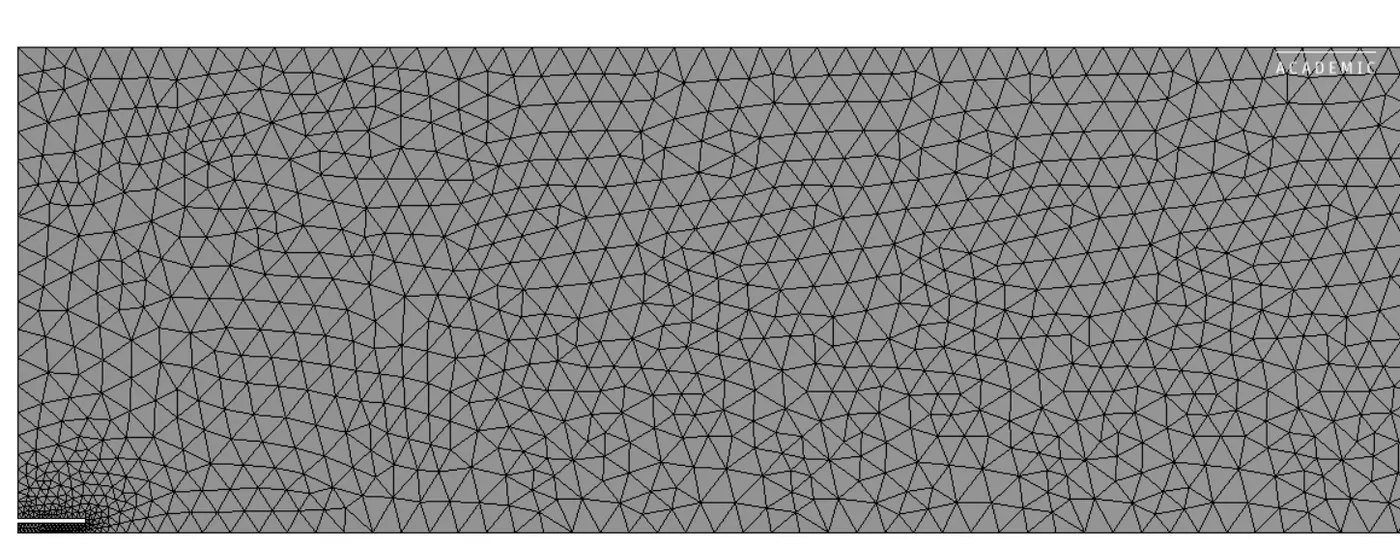
Figure-2 Mesh
Setup:
- Use axisymmetric option. Steady and Pressure based solver.
- Click on energy as temperature is innvolved. Use K-epsilon model to enable Eddy dissipation model.
- Go to species and use species transport equation. Use volumetric reactions and enable inlet diffusion and diffusion energy source. Take methane-air model. Use eddy-dissipation turbulencs-chemistry interaction.
- To enable Nox, Go to Nox model under species and enable thermal and prompt nox and use CH4 as fuel species.
- To enable soot formation, Go to soot model and use one step soot model.
- Boundary conditions:
Case-1: Without addition of water in fuel
Air-Inlet: Velocity=0.5 m/s, Temperature=300k, Species-O2=0.23(mass fraction)
Fuel-Inlet: Velocity=80 m/s, Temperature=300k, Species-CH4=1(mass fraction)
Case-2: With addition of water in fuel
Air-Inlet: Velocity=0.5 m/s, Temperature=300k, Species-O2=0.23(mass fraction)
Fuel-Inlet: Velocity=80 m/s, Temperature=300k, Species-CH4=0.9,0.8,0.7(mole fraction) H2O=0.1,0.2,0.3(mole fraction).
- Use Hybrid initialization and iterate it for 500 iterations.
Results:
Case-1
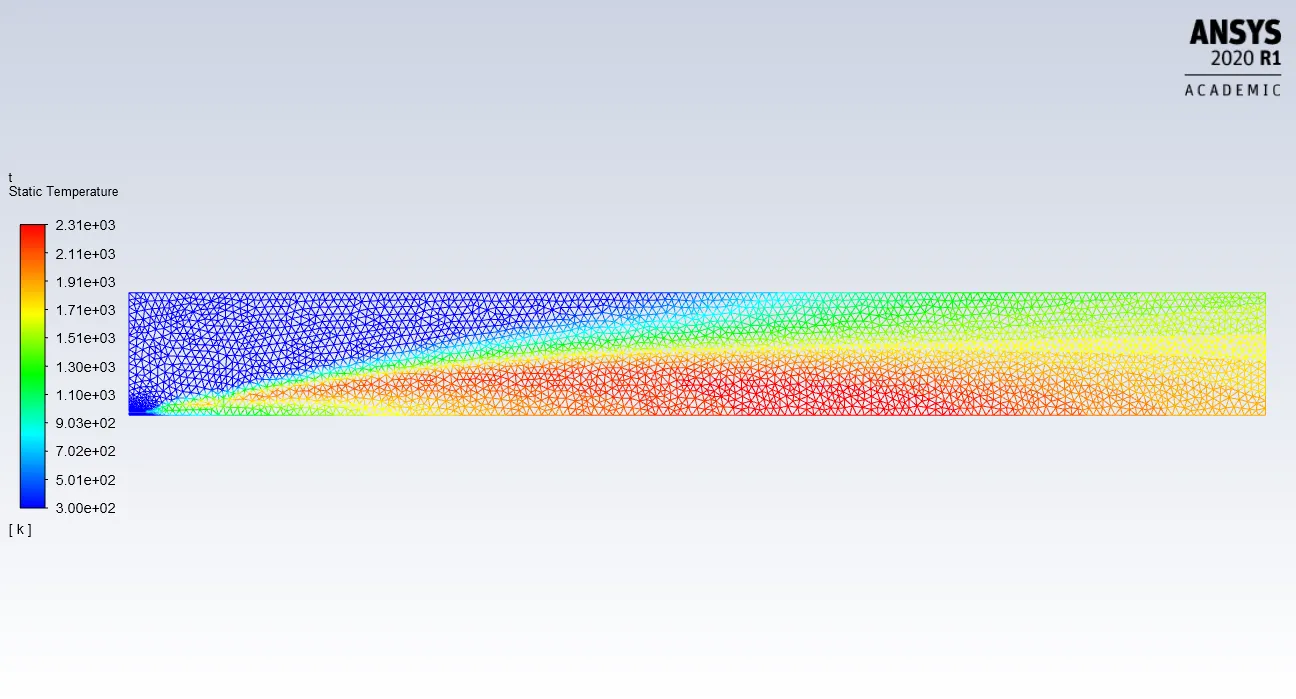
Figure-3 Temperature
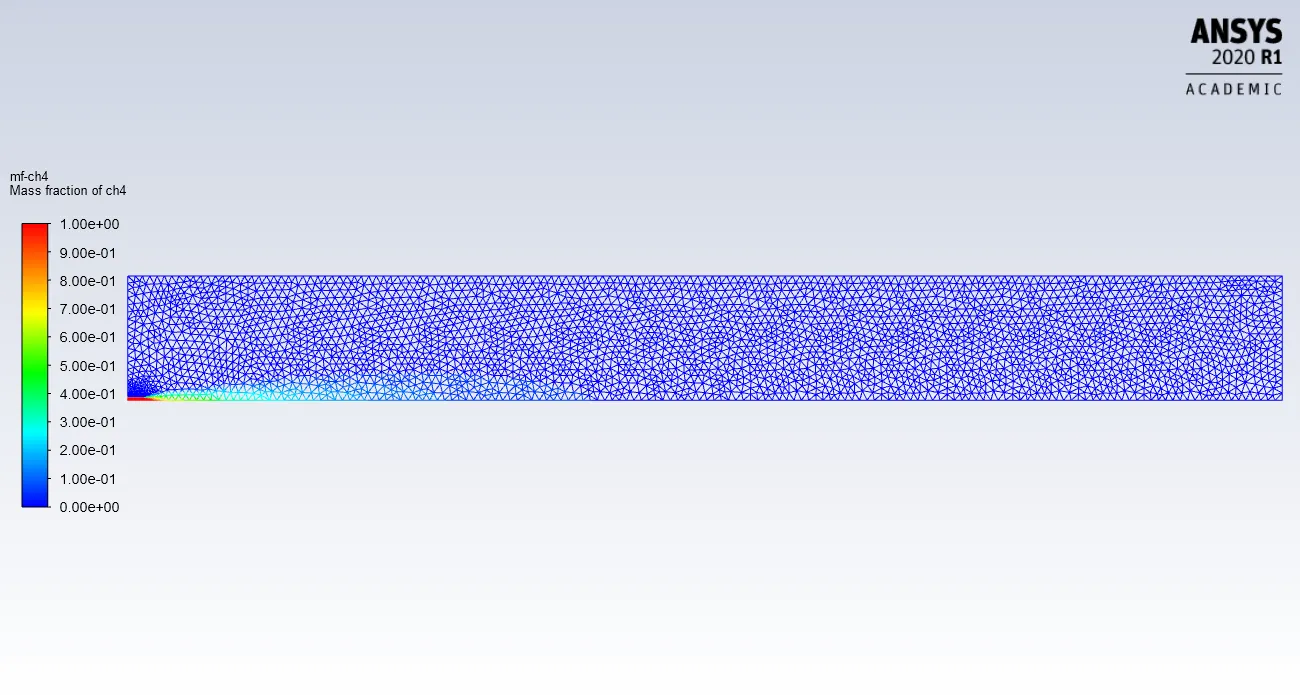
Figure-4 Mass fraction of CH4
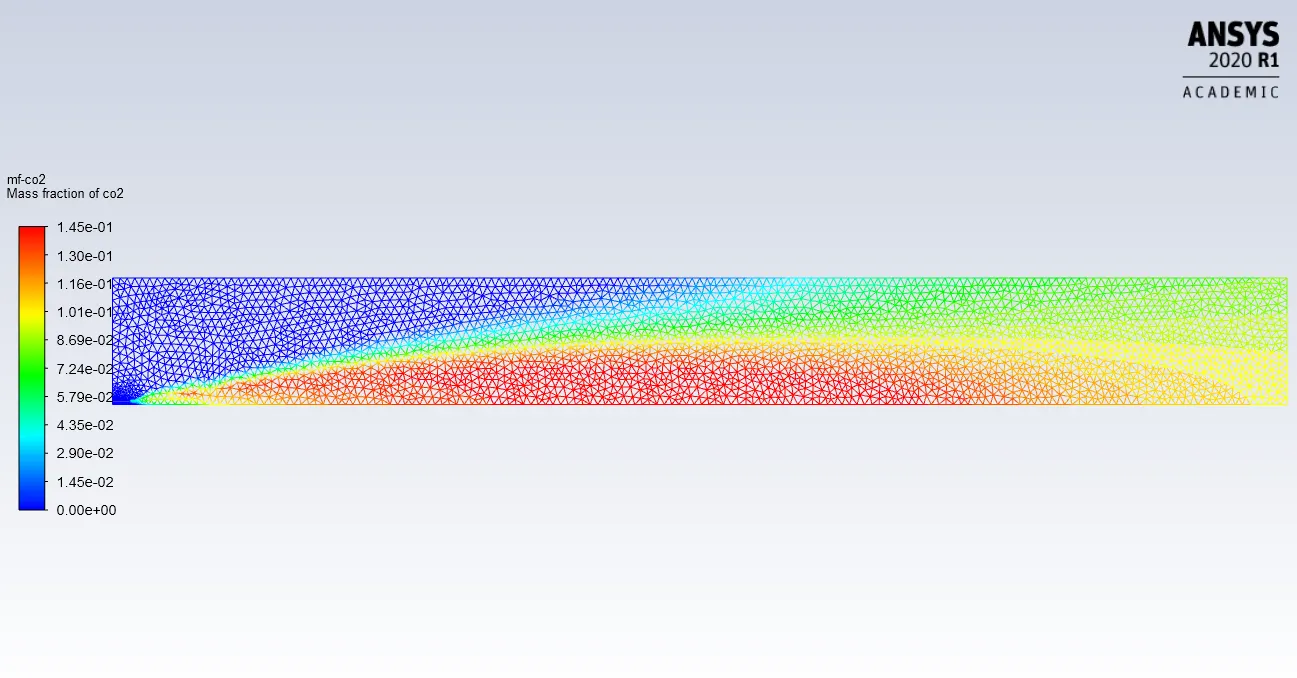
Figure-5 Mass fraction of CO2
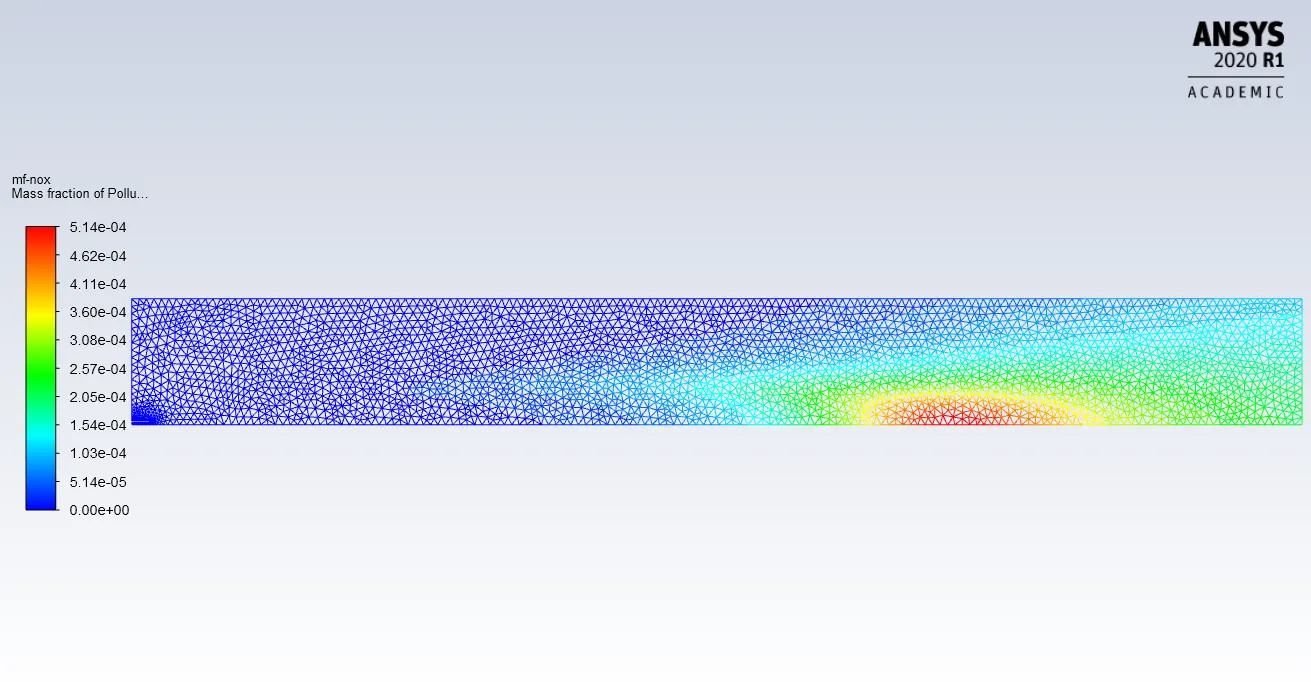
Figure-6 Mass fraction of NOX
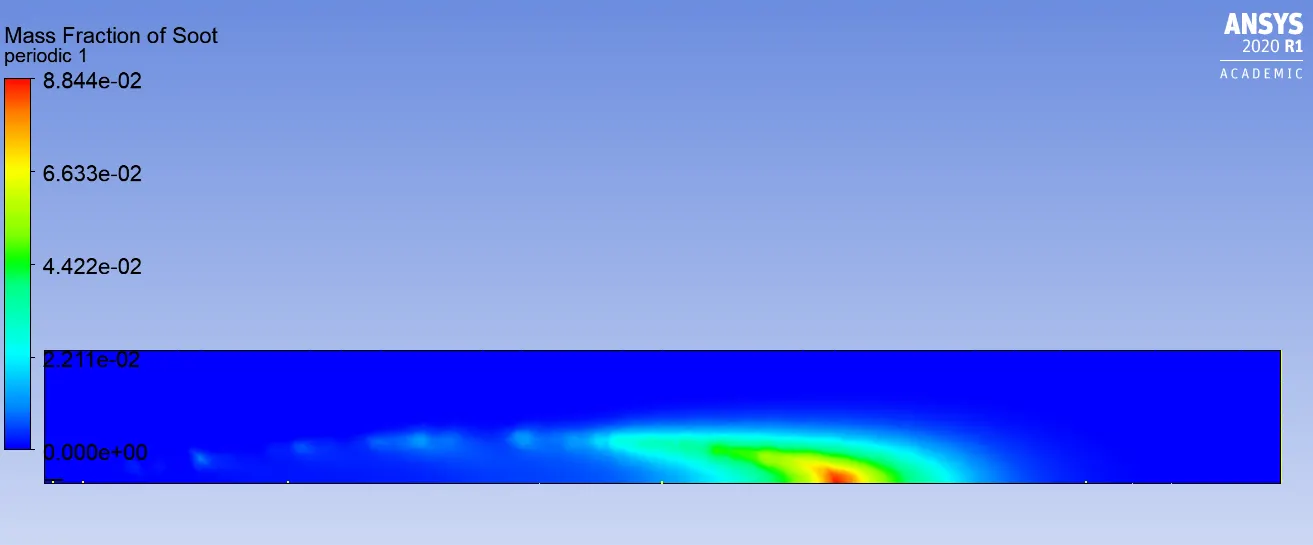
Figure-7 Mass fraction of Soot
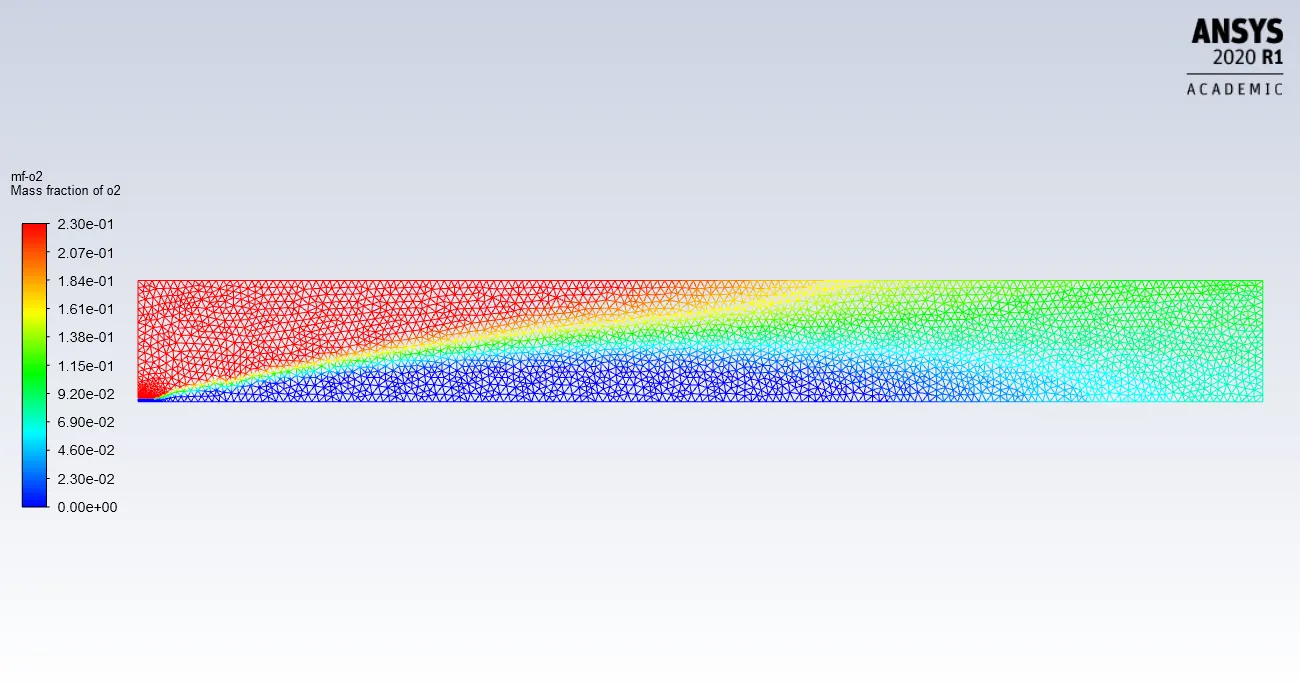
Figure-8 Mass fraction of O2
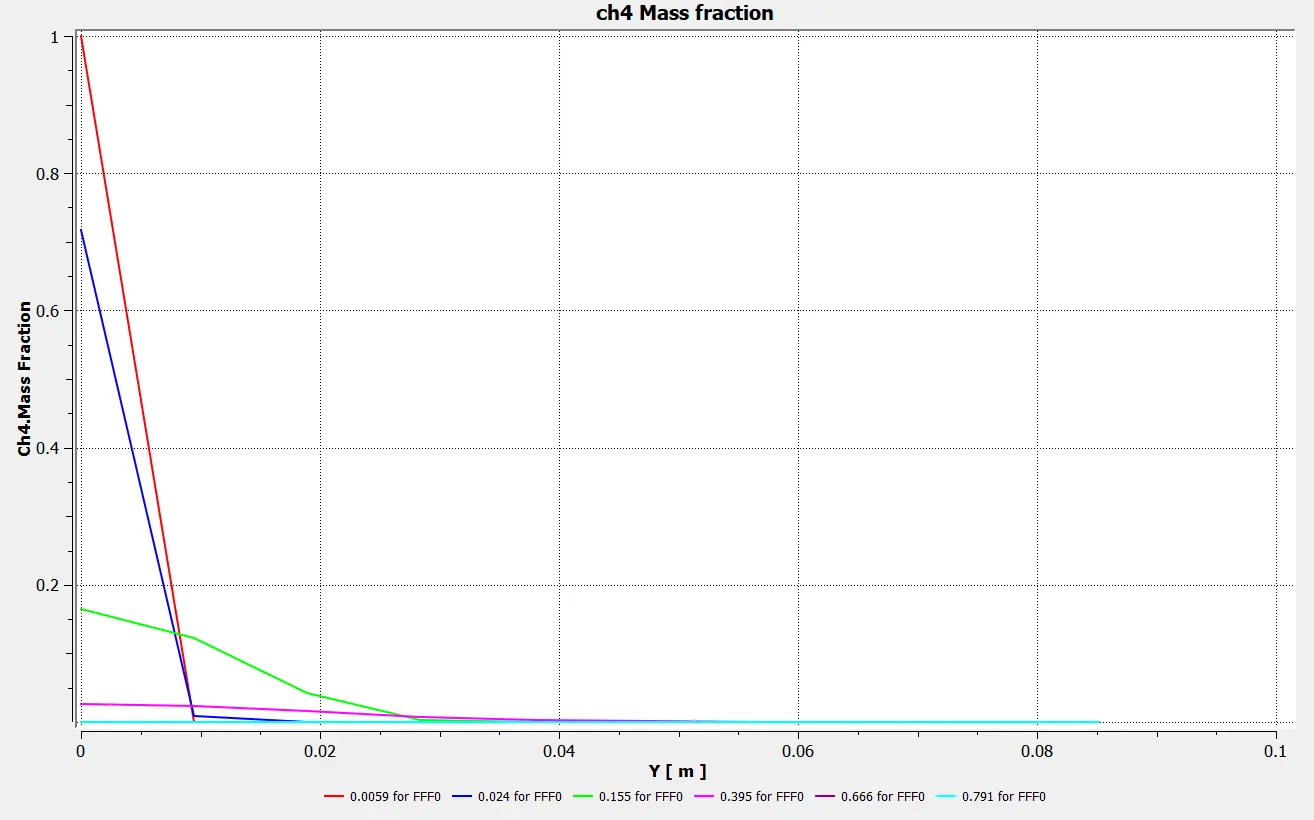
Figure-9 Mass fraction of CH4 at different locations
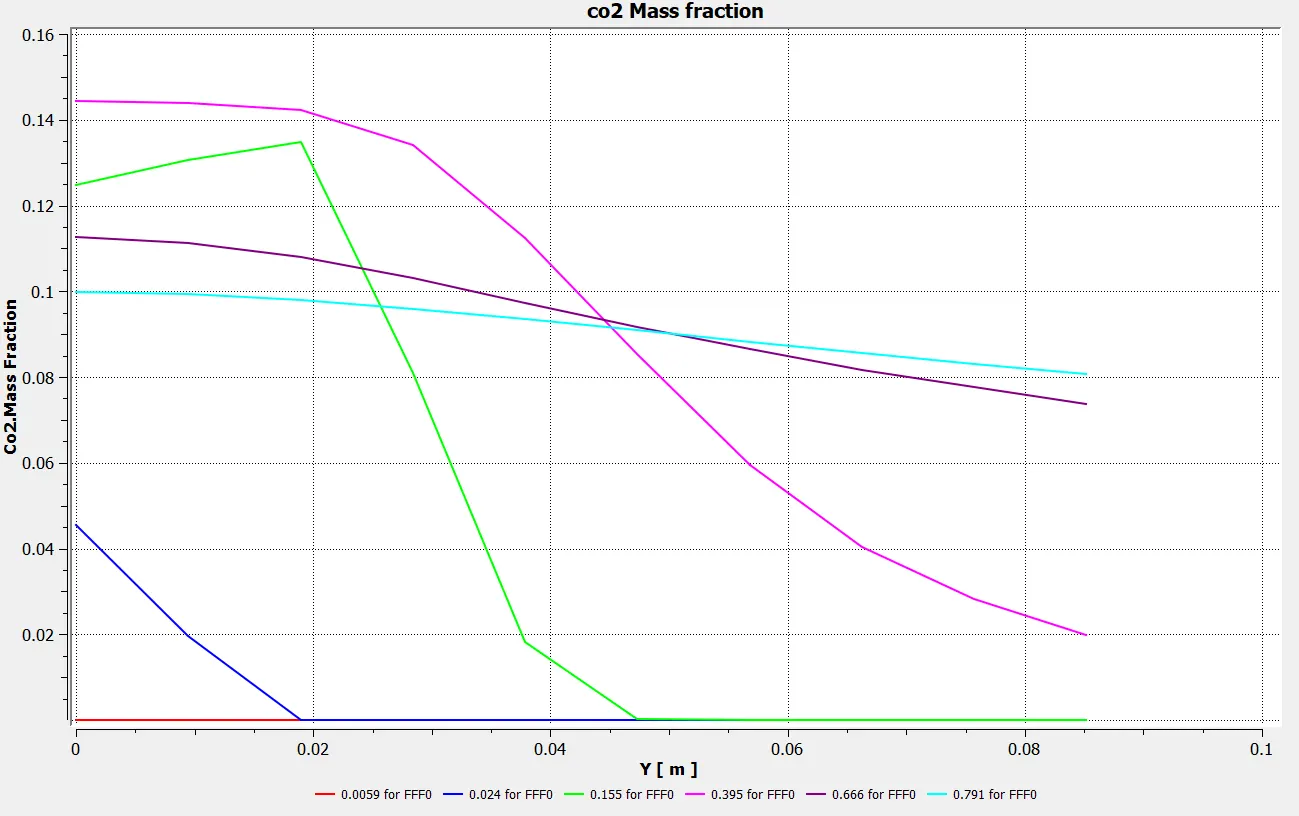
Figure-10 Mass fraction of CO2 at different locations
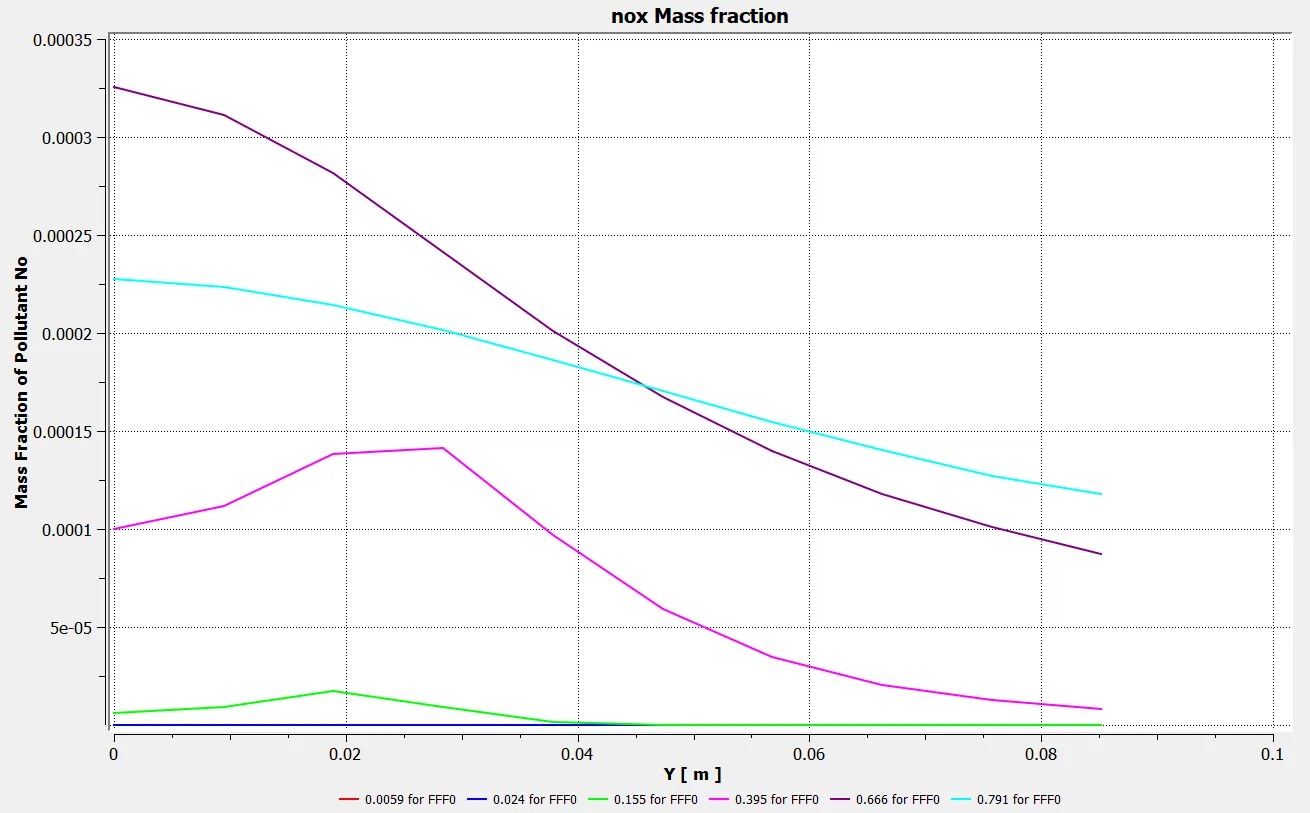
Figure-11 Mass fraction of NOX at different locations
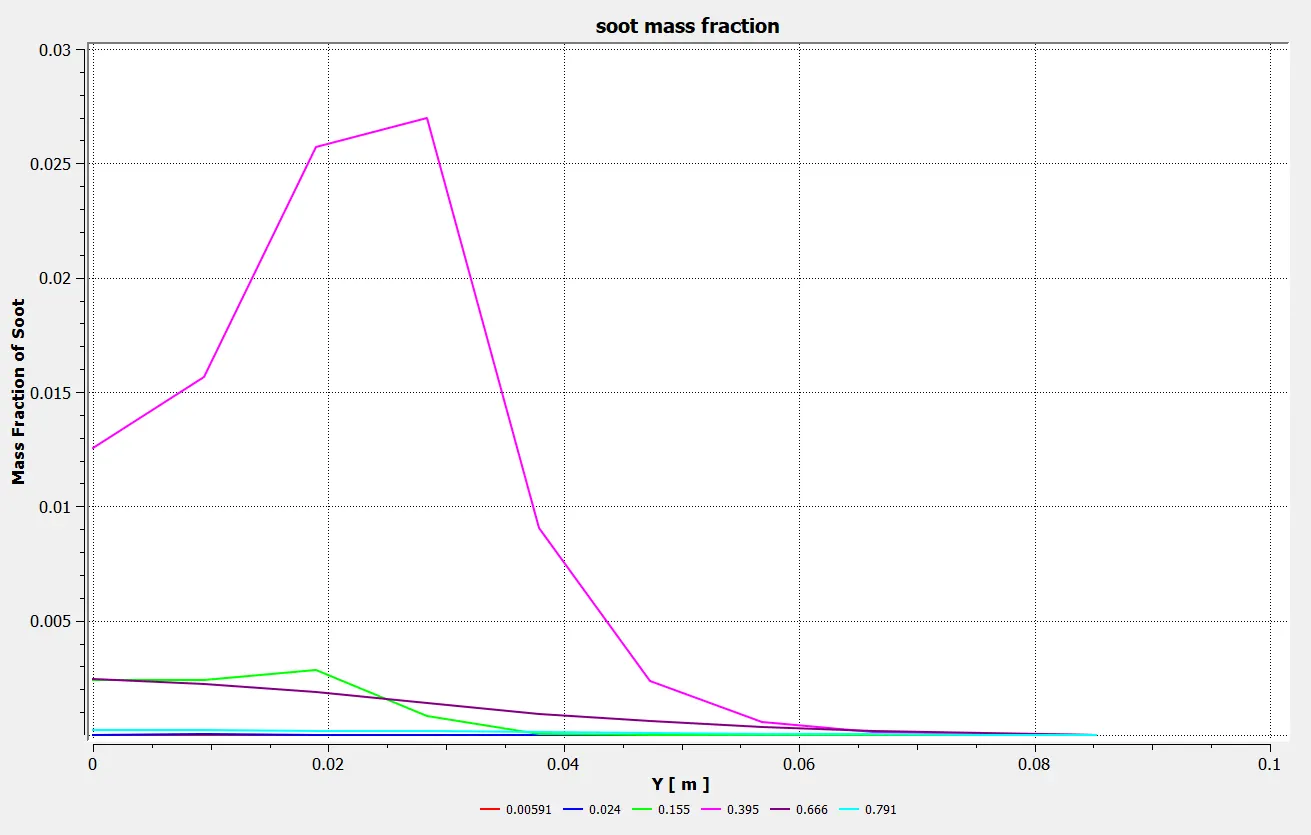
Figure-12 Mass fraction of Soot at different locations
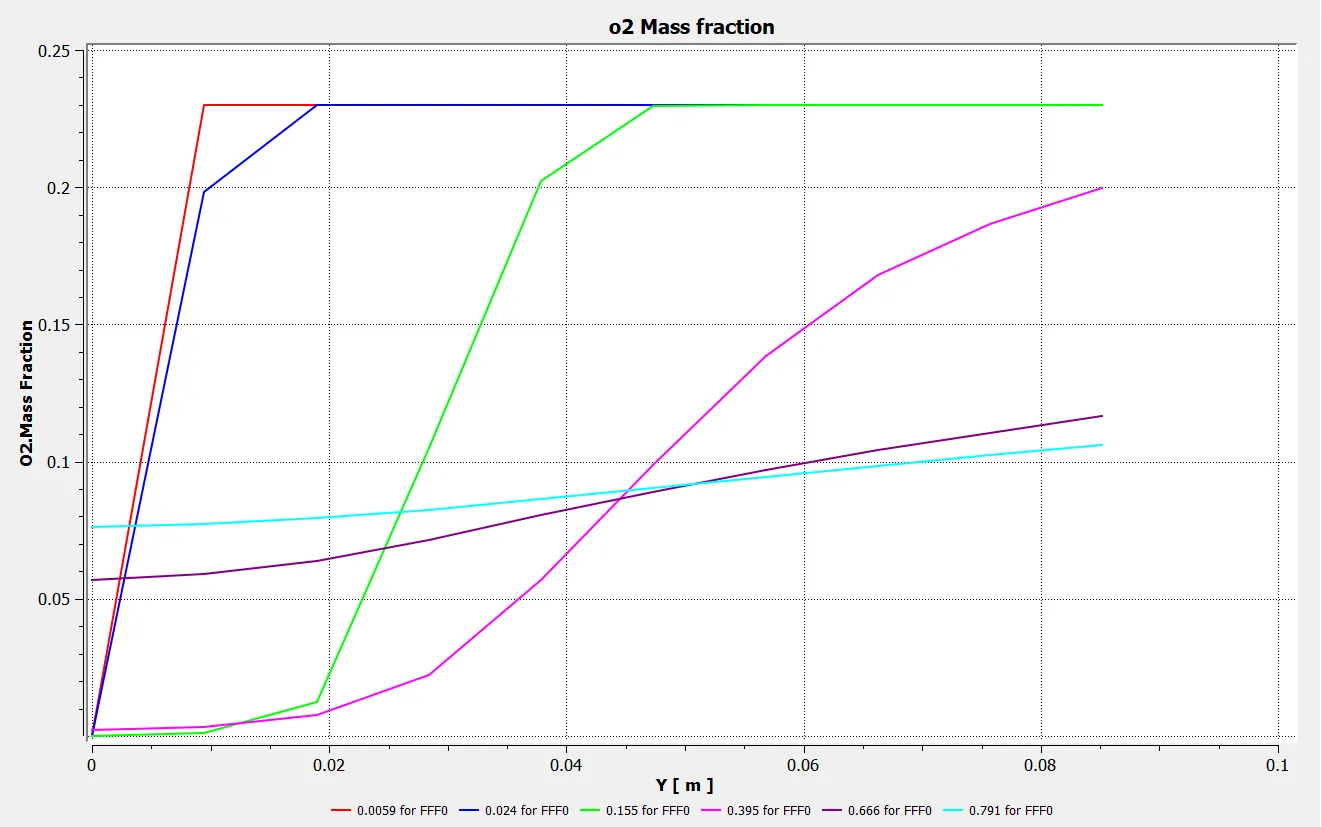
Figure-13 Mass fraction of O2 at different locations
Case-2
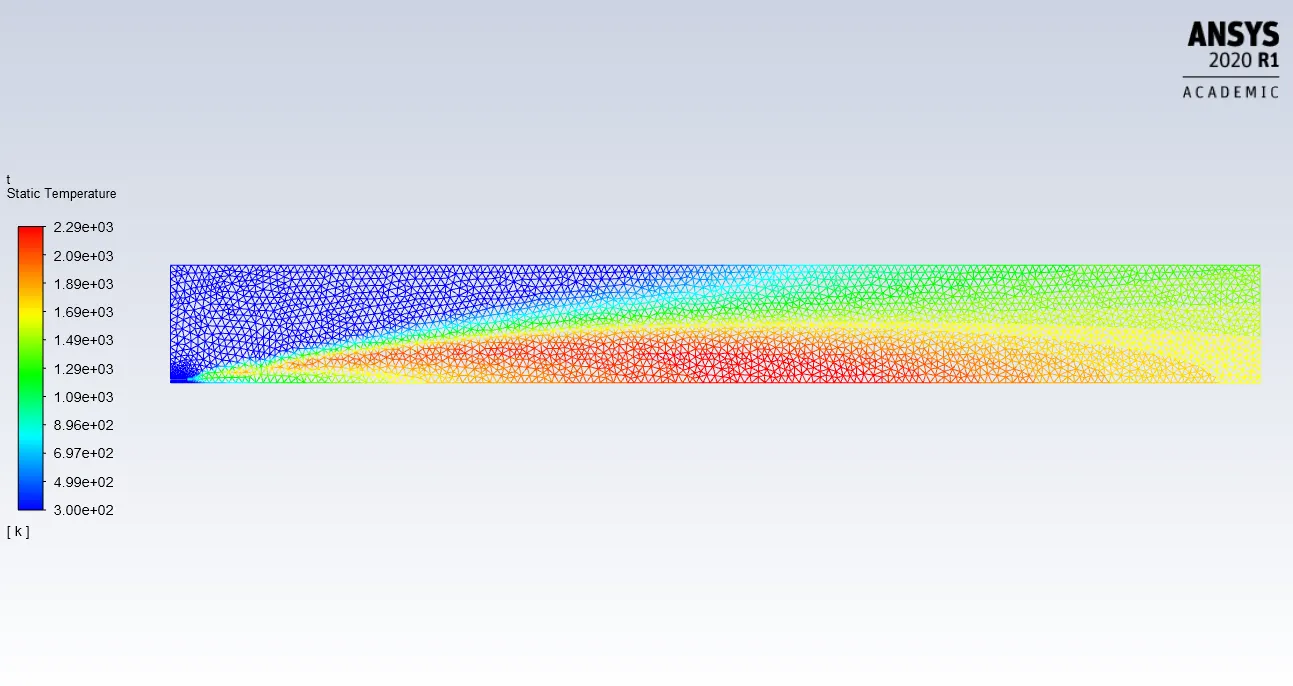
Figure-14 Temperature with 0.1 mole of water
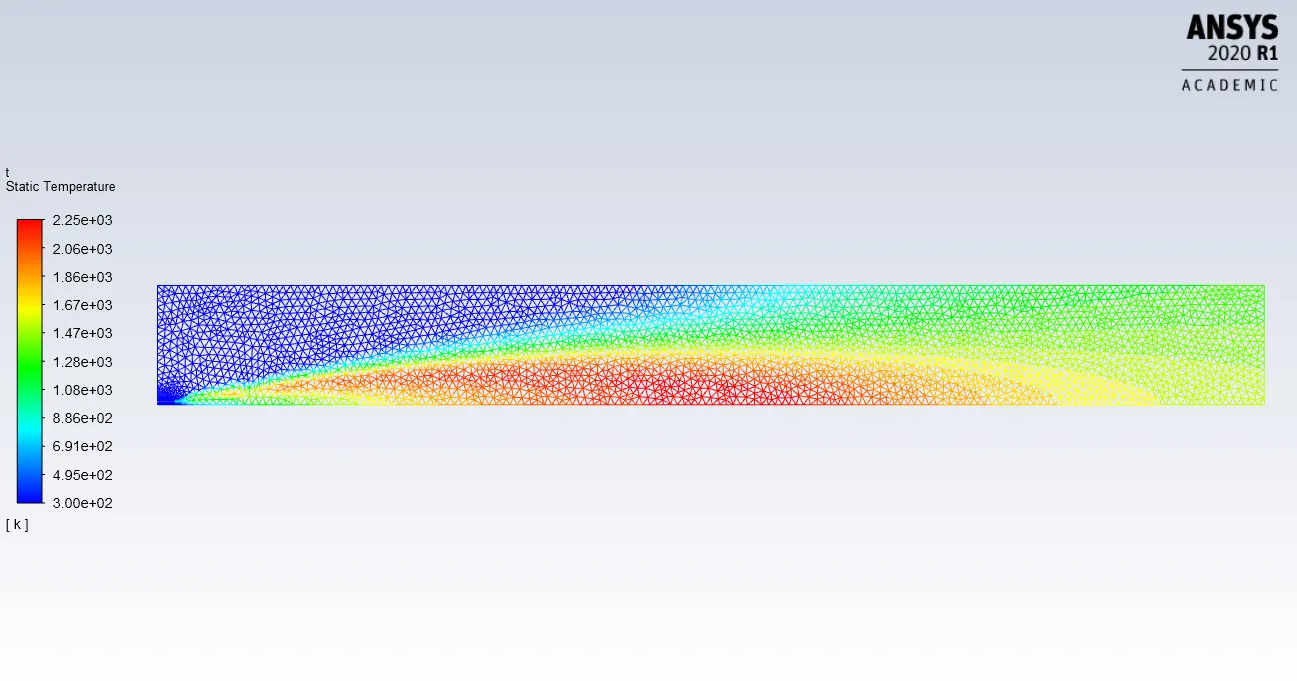
Figure-15 Temperature with 0.2 mole of water
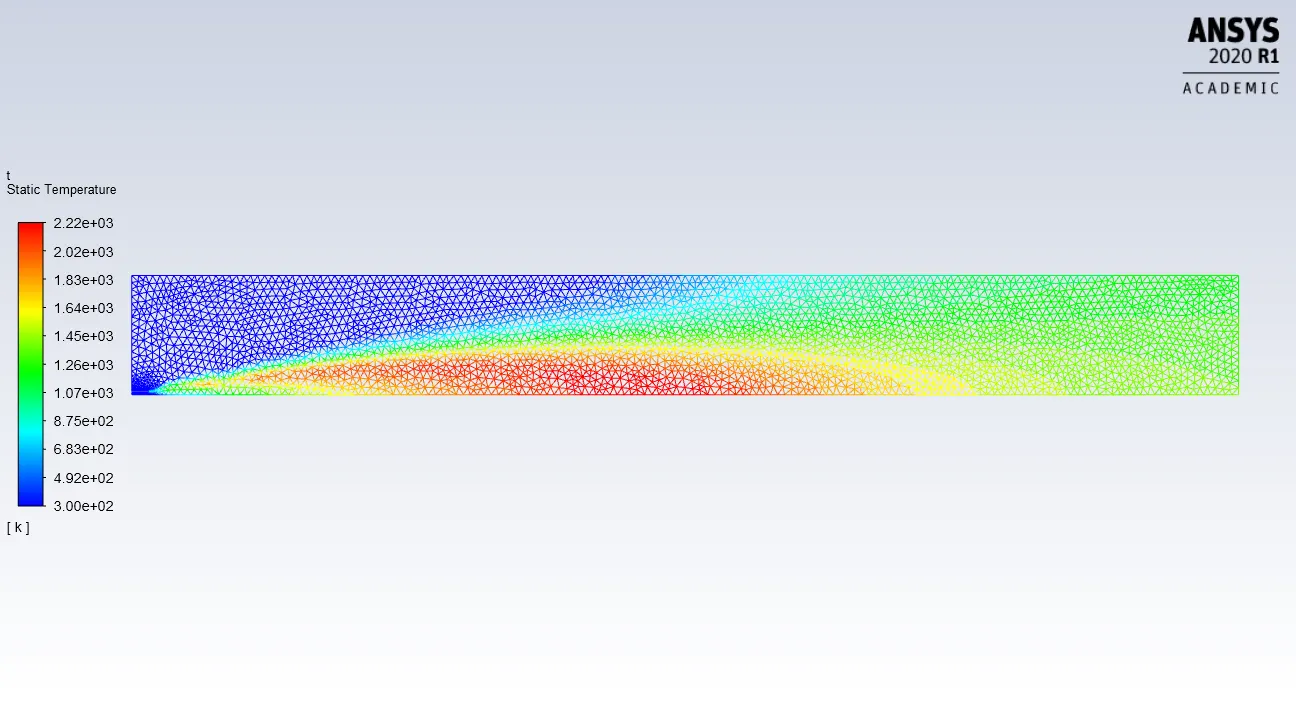
Figure-16 Temperature with 0.3 mole of water
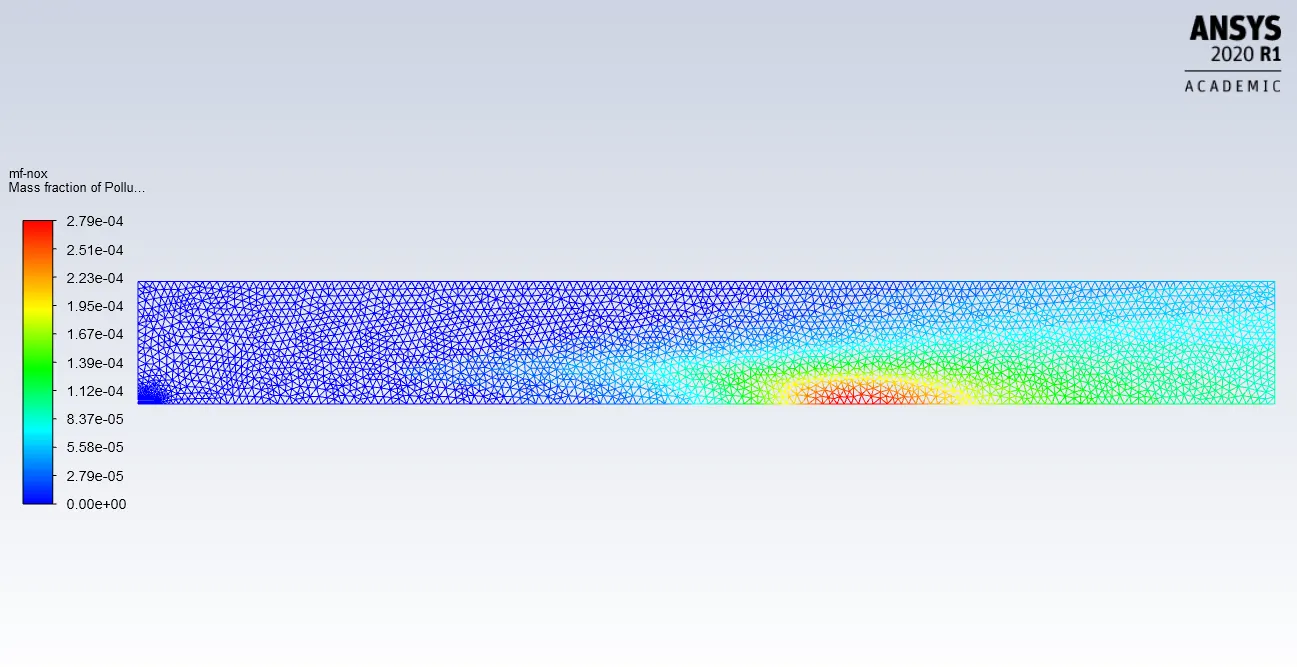
Figure-17 Mass fraction of NOX with 0.1 mole of water
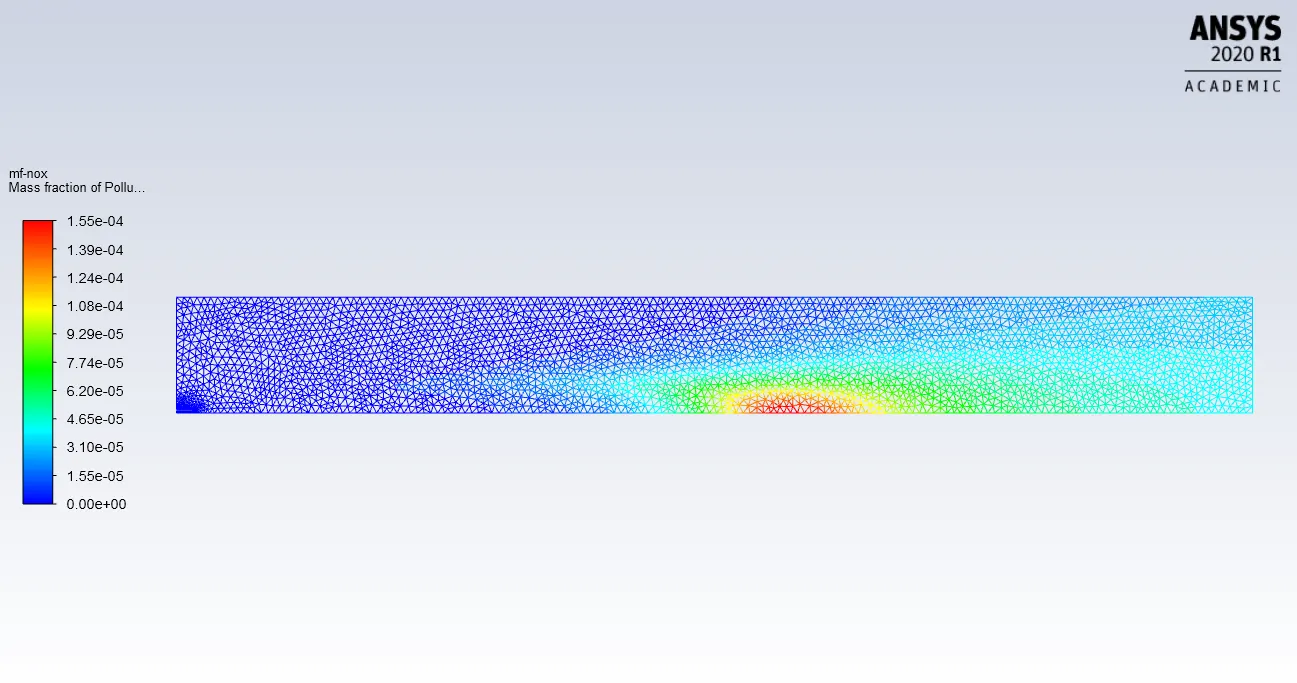
Figure-18 Mass fraction of NOX with 0.2 mole of water
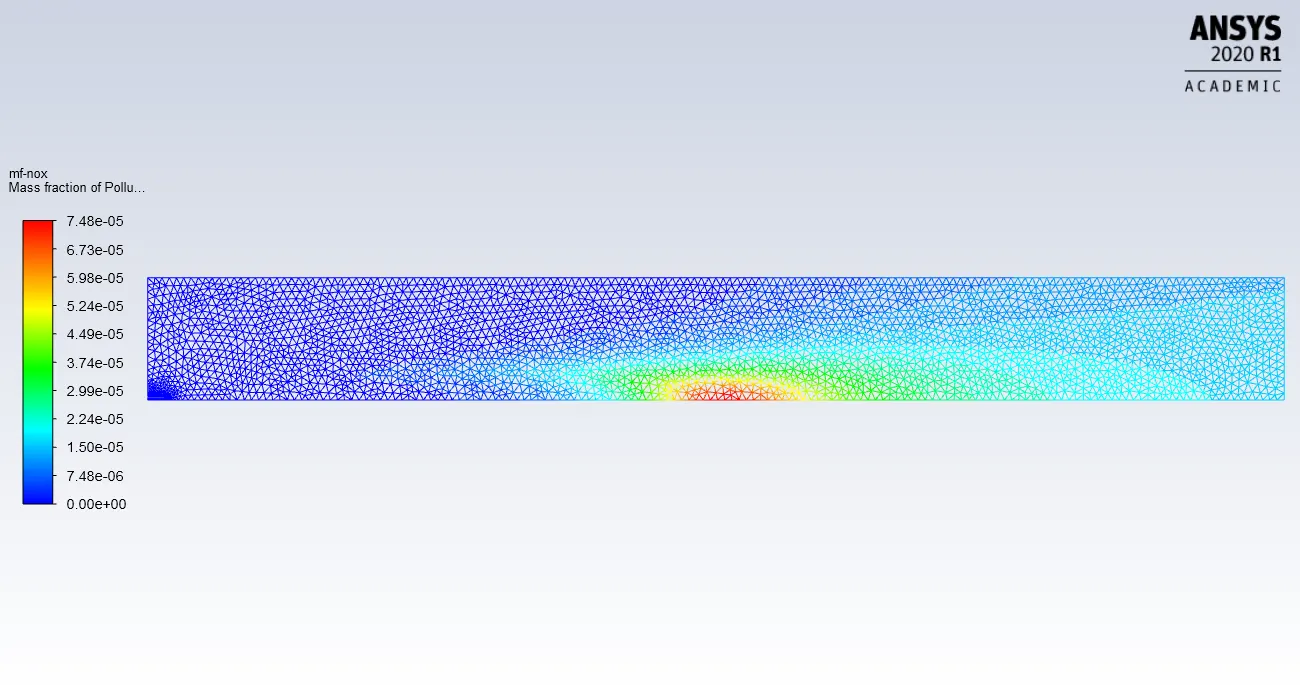
Figure-19 Mass fraction of NOX with 0.3 mole of water
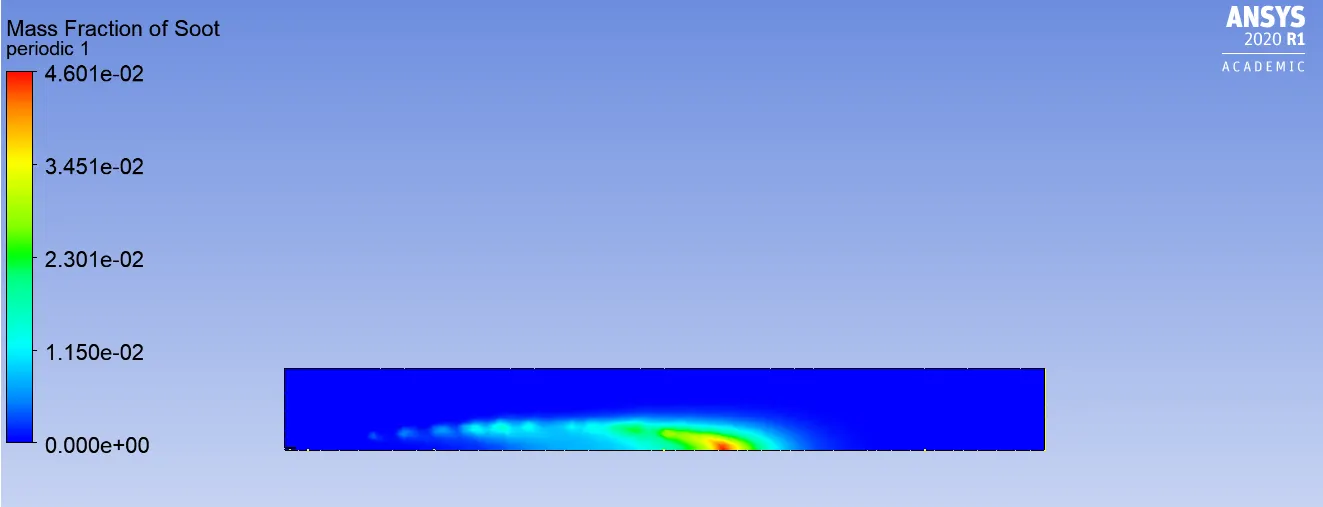
Figure-20 Mass fraction of Soot with 0.1 mole of water
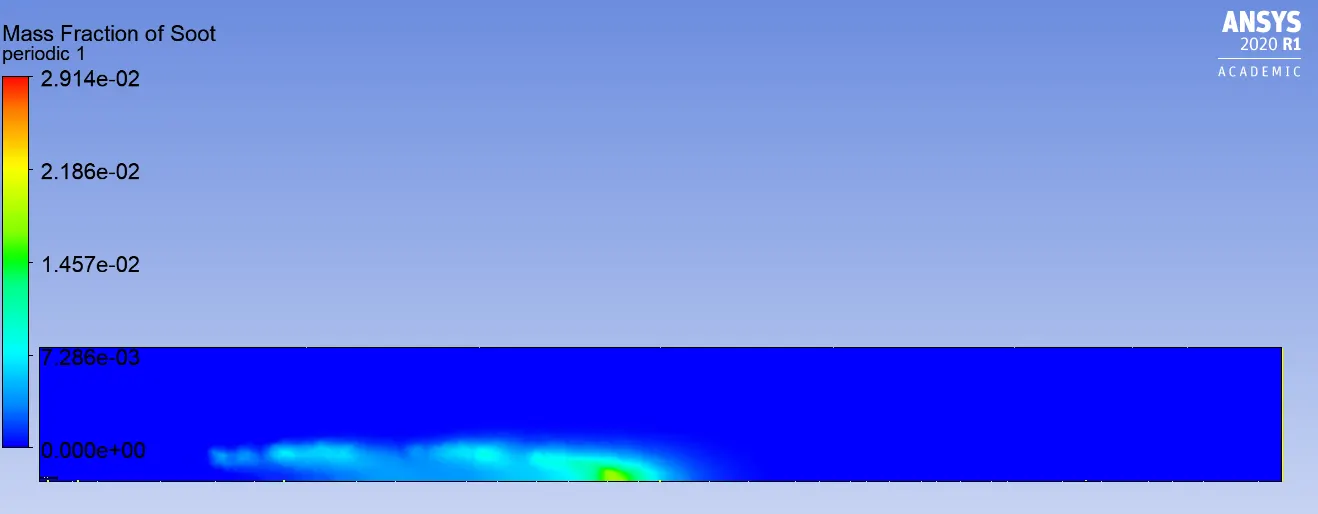
Figure-21 Mass fraction of Soot with 0.2 mole of water
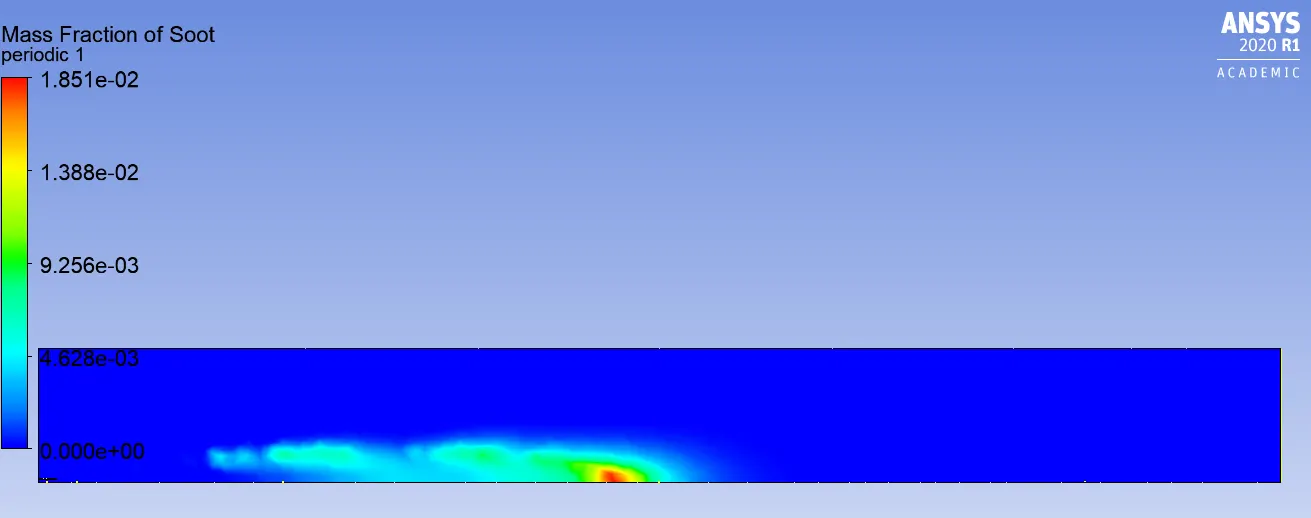
Figure-22 Mass fraction of Soot with 0.3 mole of water
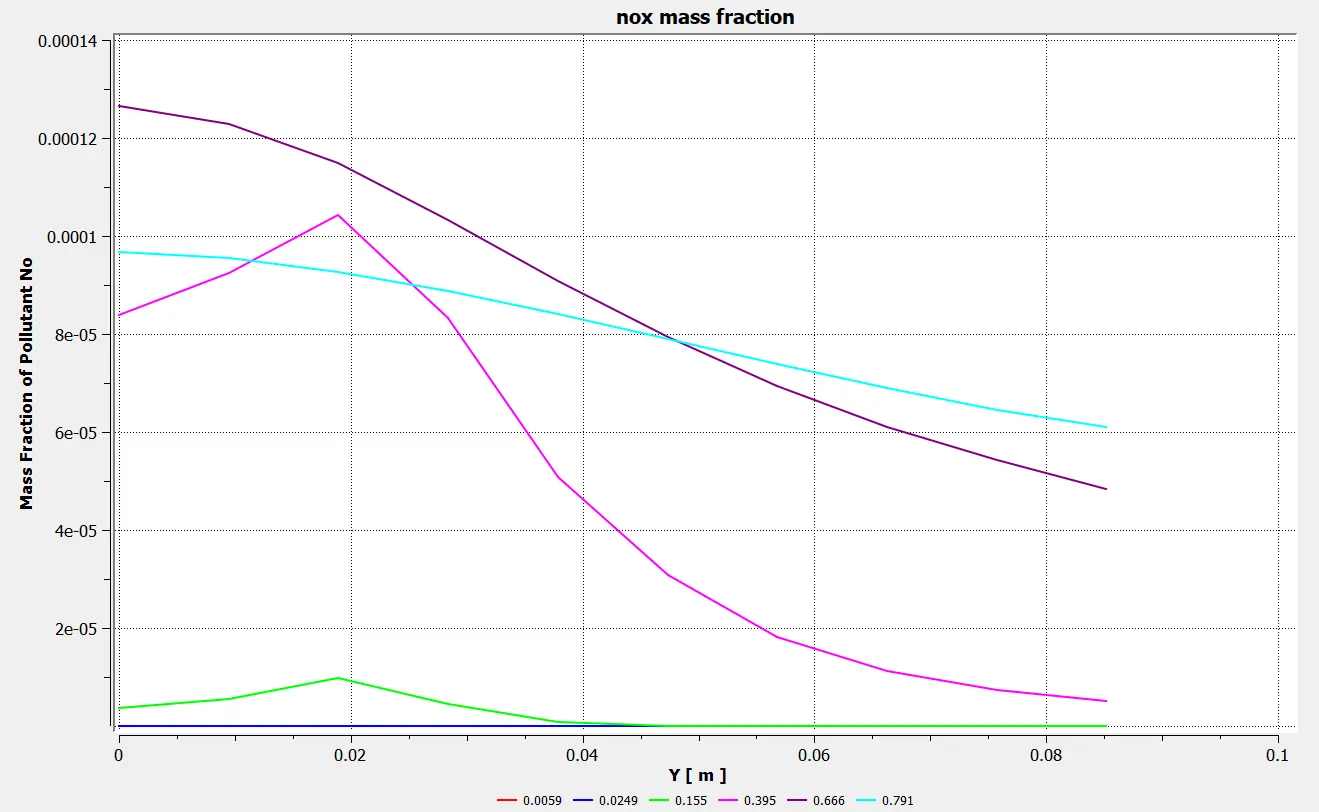
Figure-23 Mass fraction of NOX with 0.1 mole of water at different location
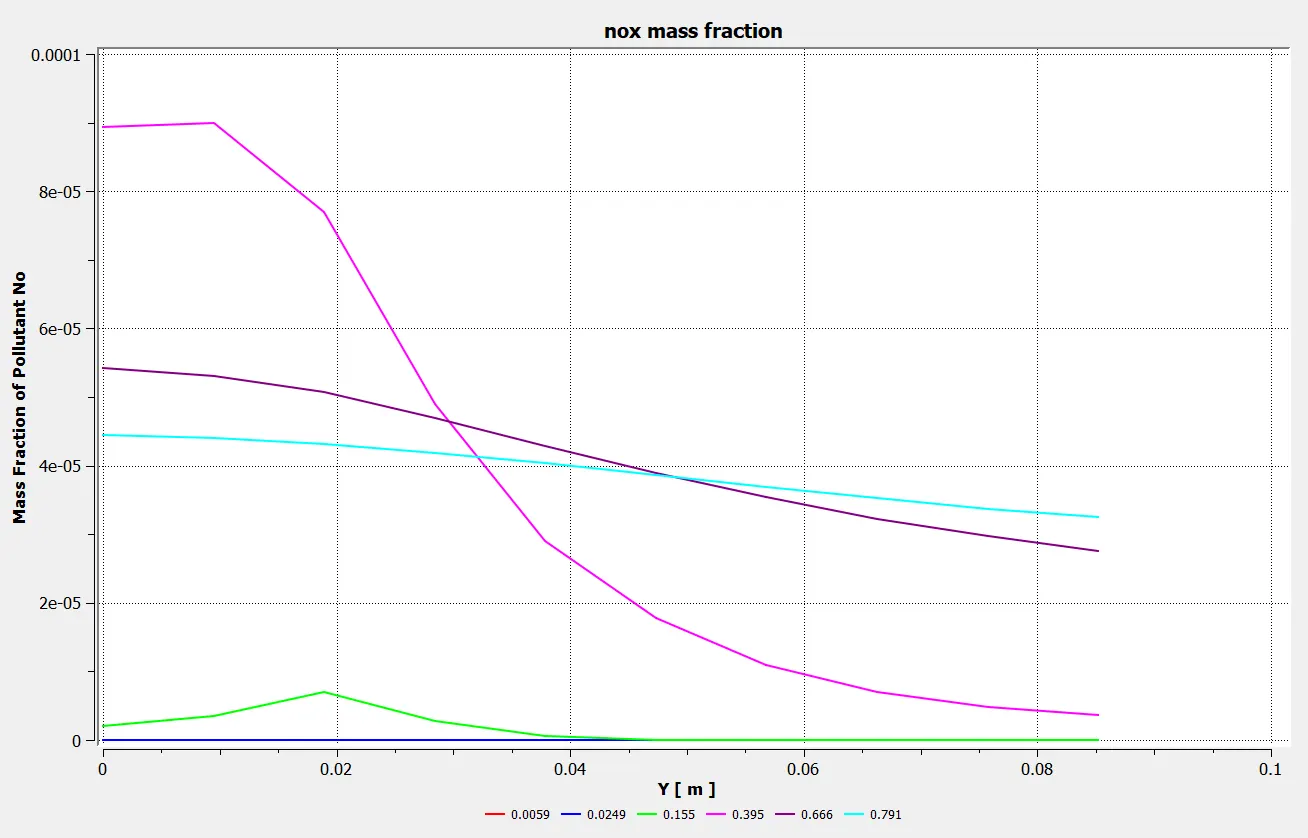
Figure-24 Mass fraction of NOX with 0.2 mole of water at different location
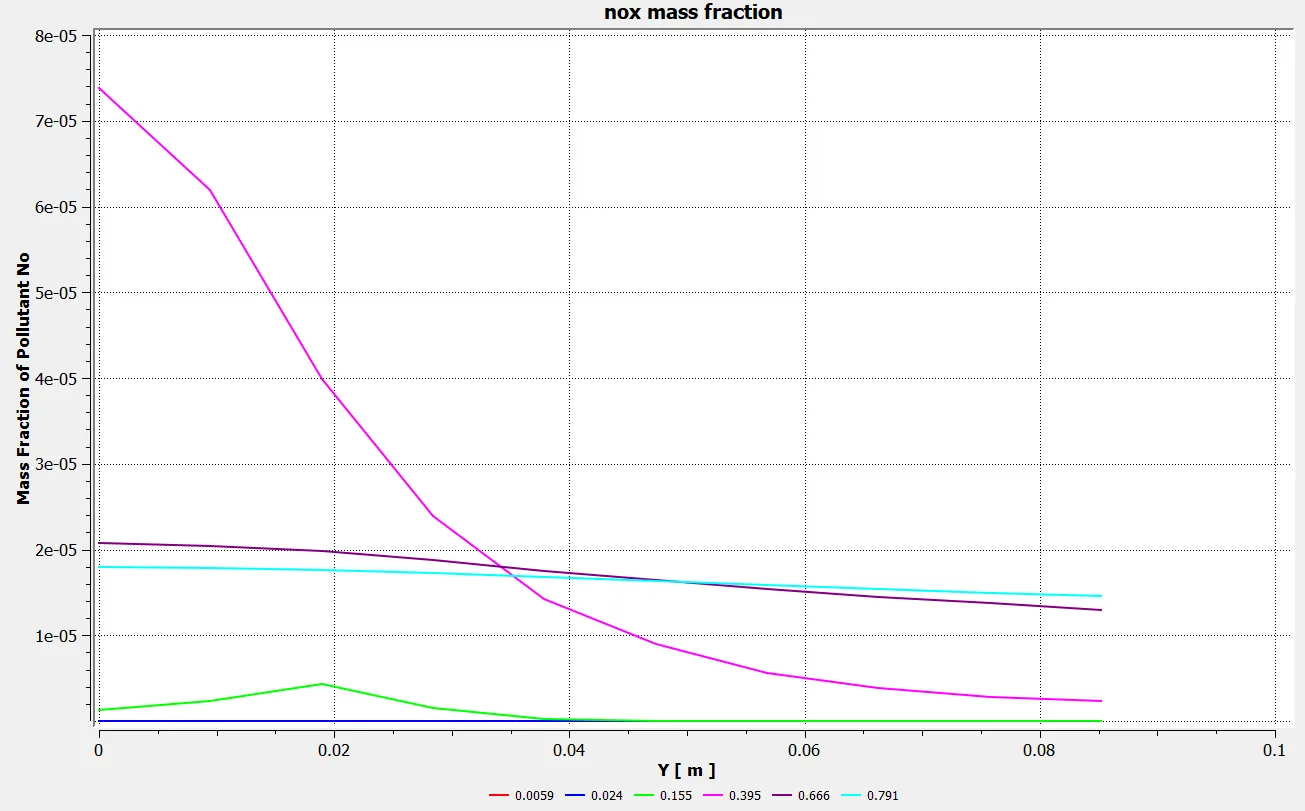
Figure-25 Mass fraction of NOX with 0.3 mole of water at different location
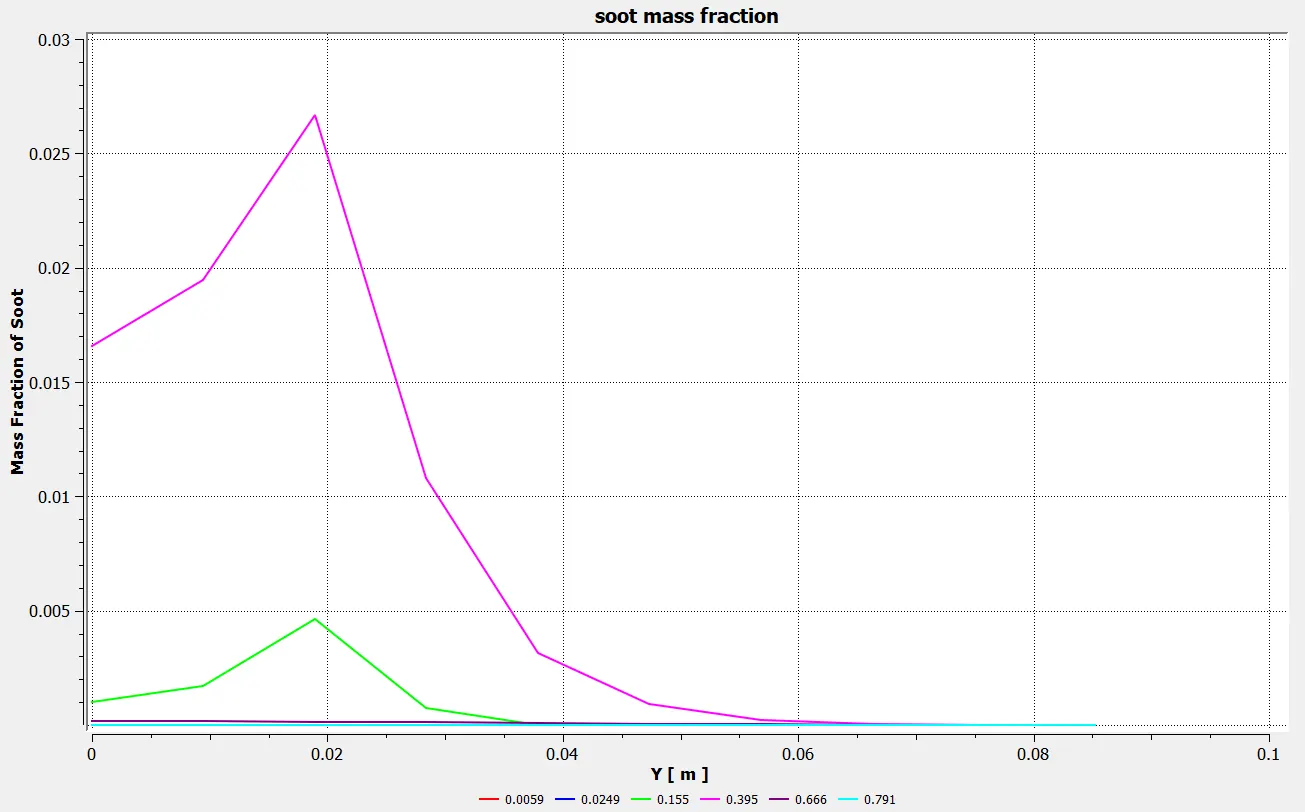
Figure-26 Mass fraction of Soot with 0.1 mole of water at different location
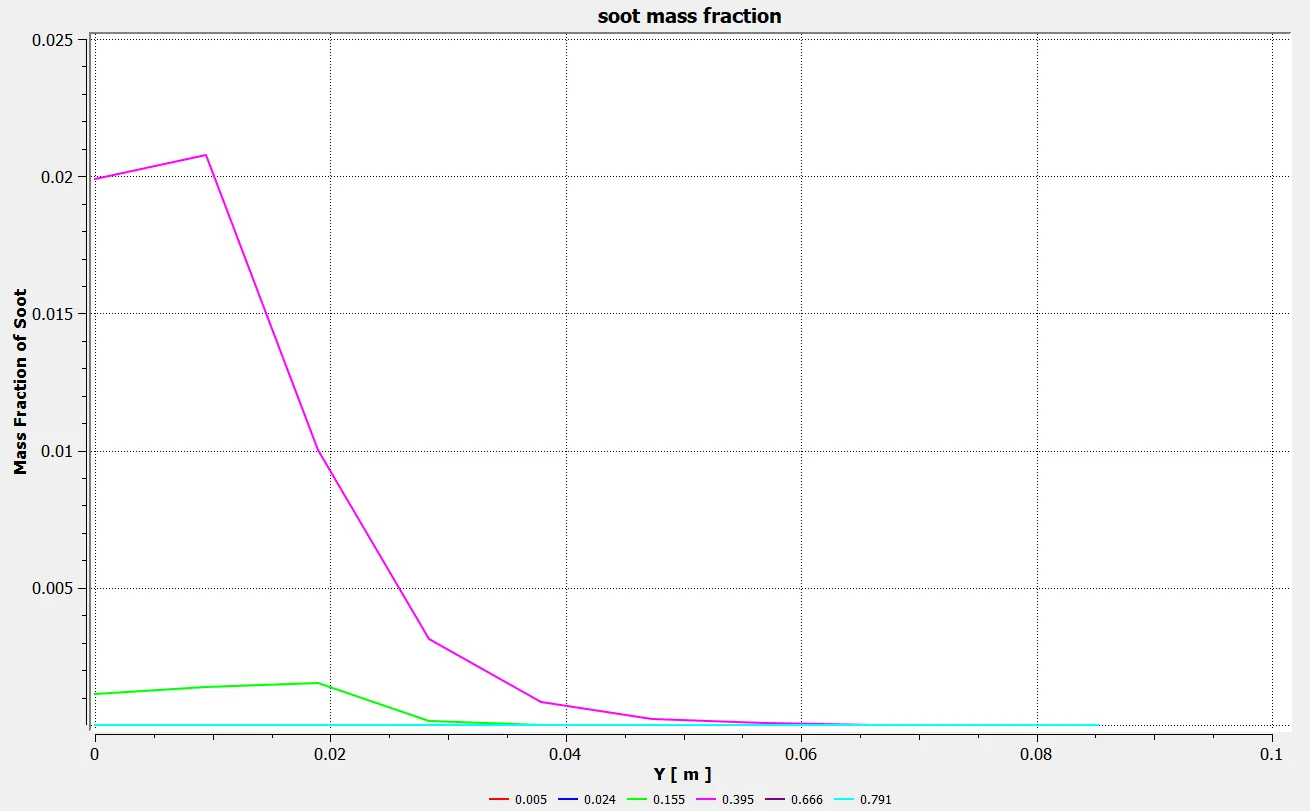
Figure-27 Mass fraction of Soot with 0.2 mole of water at different location
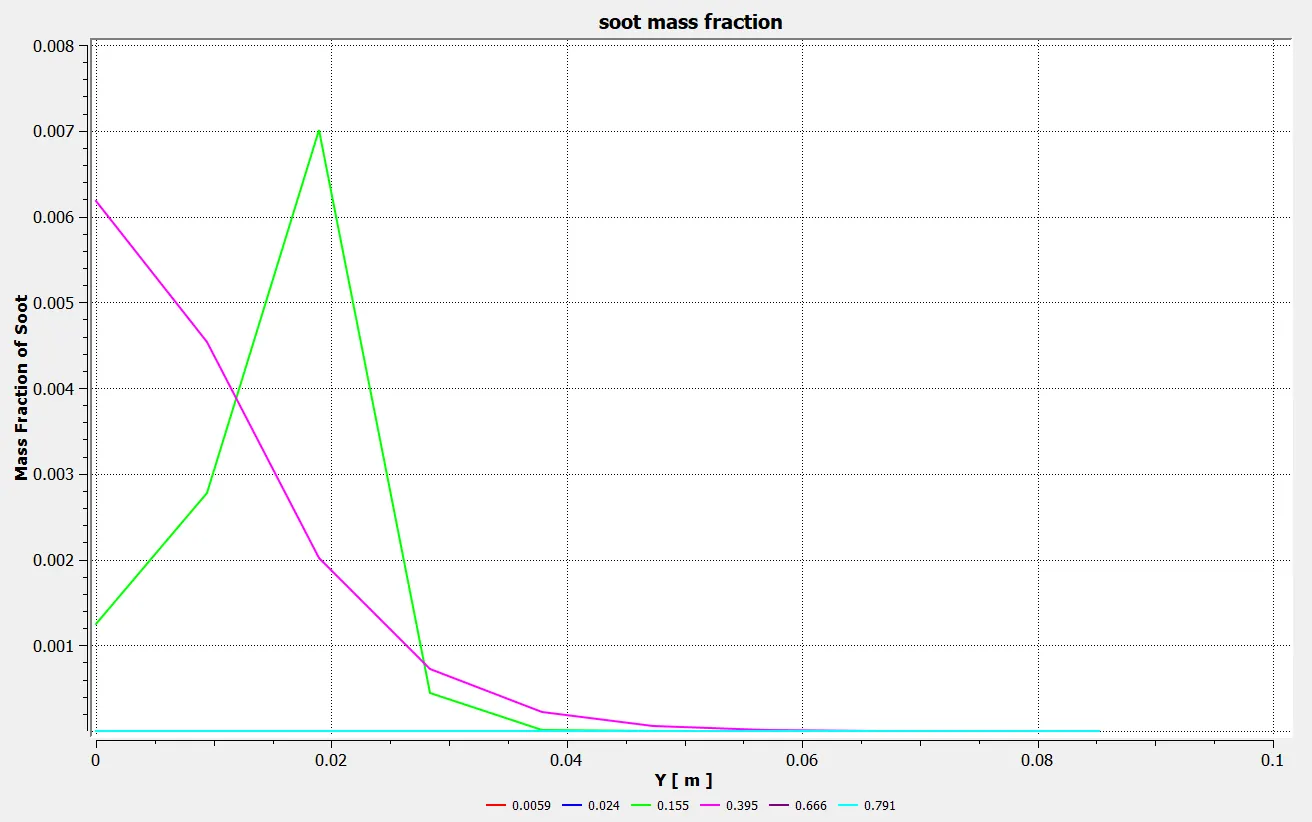
Figure-28 Mass fraction of Soot with 0.3 mole of water at different location
| Parameters | No water | 0.1 mole of water | 0.2 mole of water | 0.3 mole of water |
| Maximum temperature | 2310k | 2290k | 2250k | 2220k |
| CH4 mass fraction | 1 | 0.9 | 0.8 | 0.7 |
| CO2 mass fraction | 0.145 | 0.142 | 0.14 | 0.138 |
| O2 mass fraction | 0.21 | 0.21 | 0.21 | 0.21 |
| NOX mass fraction | 5.14e-4 | 2.79e-4 | 1.55e-4 | 7.48e-5 |
| Soot mass fraction | 8.84e-2 | 4.6e-2 | 2.91e-2 | 1.85e-2 |
Table-1
Conclusion:
- From table-1, It is quite clear that with increase in amount of water in fuel, Temperature decreases.
- Soot particles and NOX are quite harmful but with increase in water content in fuel, mass fraction of these particles decreases as well.
- Mass fraction of CO2 decreases as well, with increase in water content in fuel.
- Addition of water can affect the lubrication layer, but with proper water addition methods (Emulsion method, Fumigation), contact between water droplets and lubrication layer can be avoided by evaporating water droplets.